

Boston Beer Company is willing to fail fast with new fourth category products in order to find its next big brand, founder and CEO Jim Koch shared during last week’s Barclays’ Global Consumer Staples Conference.
Koch admitted the company has had “a lot of failures,” joking that he hoped the audience had never heard of discontinued offerings Loma Vista, a tequila-based RTD launched in 2022, or General Admission, a 40% non-alcoholic beer and 60% fruit water released in 2024.
“If we do 10 of those and one becomes a 10-million-case, $250-million brand, I’m good with that,” Koch said. “We’re kind of built around regular failure as a company.”
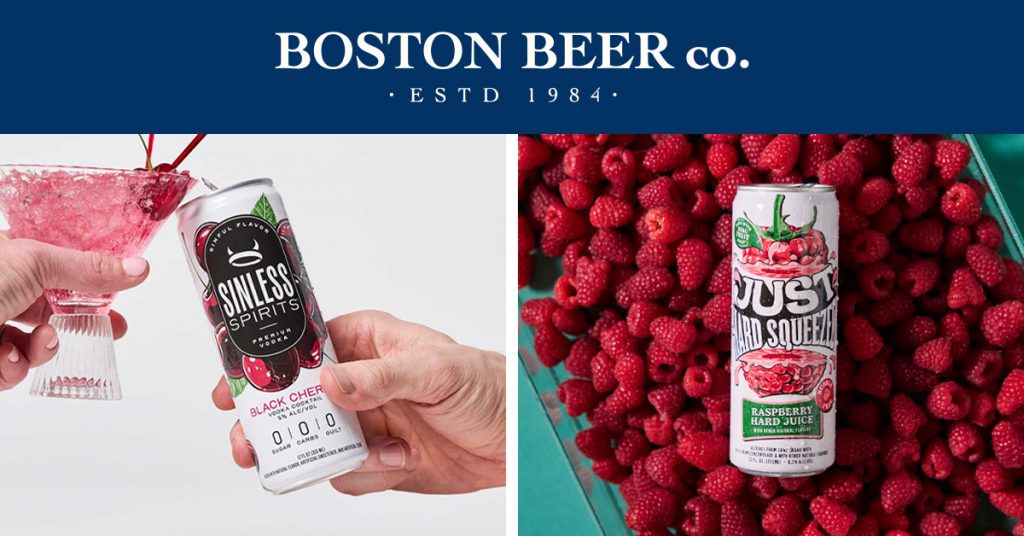
Boston Beer is letting it ride with more fourth category bets, from Sinless, a zero carb, 100- calorie vodka cocktail line; to Just Hard Squeezed, a 4.2% ABV flavored malt beverage (FMB) made with real fruit juice and alcohol from cane sugar; to Social Pop, which Koch described as an alcoholic version of Poppi.
No other details of Social Pop were shared, and the company declined to offer additional information when asked by Brewbound.
Boston Beer’s new product philosophy comes from hitting big with Truly during the hard seltzer boom and now riding a growth wave with Sun Cruiser, a vodka-based iced tea. After a summer of triple-digit gains, the company is increasing its advertising investment in the latter brand.
Koch acknowledged that growth is expensive, as evidenced by the rush to build Truly. Sun Cruiser‘s ad spend has paid off thus far, giving Boston Beer a “significant new brand,” which he described as “a holy shit thing.”
Asked about the lessons from building Truly that are now being applied to Sun Cruiser, Koch said Sun Cruiser is being built “from the bottom down.” Instead of national ads or programs, the company is zeroing in on the 30 major metros that make up the majority of the brand’s demand. Boston Beer is also focused on building Sun Cruiser in bars and restaurants, which is “more expensive but it builds a stronger brand,” he continued.
Additionally, Boston Beer is more hesitant to add SKUs, Koch said. Where Truly at its peak had seven different flavor families, Sun Cruiser has two (lemonade and tea).
Koch touched on several other topics. Here are a few highlights …

On Twisted Tea’s slowdown: Two decades of double-digit growth made Twisted Tea a top-10 beer category brand family. However, the brand has slowed from single-digit growth to low-single digit declines this year, catching Boston Beer by surprise, Koch said.
After dissecting Twisted Tea’s issues this year, Boston Beer found that the company had raised prices too high too fast on its 12-packs in about one-third of the company’s markets, Koch said.
The data clearly showed that the company “overreached,” he added, with 12-pack sales off anywhere from 15% to 20% in Circana scans where the price exceeded $20. Koch said those increases put the packs in league with craft instead of in the sweet spot near domestic beers. The company is now working with its wholesalers to address the pricing issues, which are expected to be resolved in a few months, Koch said.
Boston Beer also found it needs to strengthen its connection with Hispanic consumers. The company is launching its first-ever Spanish language Twisted Tea ad, as well as sponsoring boxing, which over-indexes with Hispanic consumers.
Koch noted the company has also renewed its NASCAR sponsorship to reach traditional blue-collar tea drinkers – the brand’s core consumer base.
On Boston Beer’s CEO succession plan: Former CEO Michael Spillane stepped down from the role last month, with the position filled by Koch, for now. Koch noted he’s in the role for the “first time this century,” adding that he’s “avoided it for a long time.”
Koch claimed the move hasn’t been a “big change” for him since he’s stayed engaged as executive chair. He added that he’s learned to delegate duties more while focusing on a two-by-two matrix of whether he can add value or not and if a task is important to the company’s success.
As for how long he plans to stay in the role, “I don’t want to do this for a long time,” he replied.
“It’s going to be a few years, but I’m working on developing multiple CEO candidates internally because my experience has been, and the statistics are very much in favor of, internally promoted CEOs,” he added, citing a success rate of internal CEO promotions of around 80% compared to 50% for external candidates.
On recapturing gross margin: Boston Beer still has “significant savings” to come out of the business. Boston Beer is about to get out of some of its legacy can contracts that it took out five years ago during the hard seltzer explosion, when the company’s volume doubled over a three-year period as it pursued a “once in a lifetime opportunity,” Koch said.
As the company pursues gross margins over 50%, Koch said there are production efficiencies in its breweries to be achieved and network optimization opportunities as it exits additional warehouses.
“We’re built around growth and the fuel for that is continued cost savings that will enable us to properly realize the potential of our existing brands and get incremental growth on top of that through innovation,” he said.
On whether the bev-alc industry’s issues are cyclical or structural: Koch admitted he’s unsure.
He pointed to the “Three Hs:” health concerns as more consumers moderate consumption; Hispanic consumer pressures as the Trump administration’s Immigration and Customs Enforcement (ICE) raids cut down on occasions and shopping trips; and hemp-infused beverages that are claiming space in bev-alc retailers in some states.