
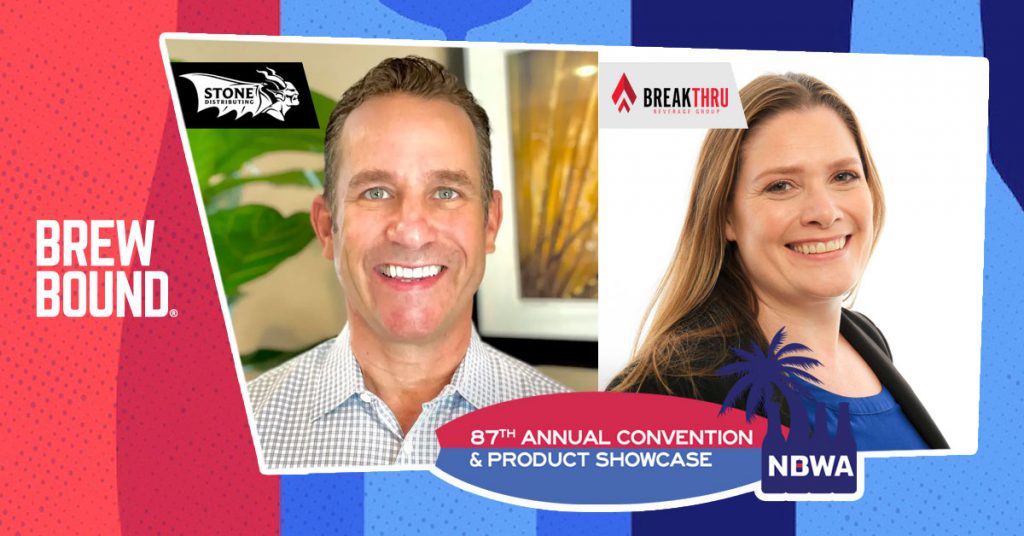
With the National Beer Wholesalers Association’s 87th Annual Convention and Product Showcase kicking off next week (September 29 to October 2), Brewbound checked in with a pair of California distributors on the trends they’re seeing in their respective markets.
Sinead Carey, director of beer for Breakthru Beverage California, and Brian Fried, general manager of Stone Distributing, share what is and isn’t working in their territories.
Breakthru Beverage entered California last year when it acquired Wine Warehouse, a statewide total bev-alc distributor founded in 1973, according to its website. Its portfolio includes regional craft beer (Abita, Anderson Valley, BrewDog, Flying Dog, Maine Beer, Shipyard, Uinta), local craft beer (Almanac, East Brother, Healdsburg, The Lost Abbey, Third Window) and imports (Chimay, Delirium, Duchesse de Bourgogne, Hacker-Pschorr, Schlenkerla), as well as wine and spirits.
Stone Distributing was founded in 1999 and spun off during its namesake brewery’s sale to Sapporo in 2022. Its portfolio includes regional craft beer (21st Amendment, The Alchemist, Avery, Coronado, Russian River, Stone, Victory), local craft beer (Beachwood, Crowns & Hops, El Segundo, Figueroa Mountain, Societe), hard cider (Austin Eastciders, Blake’s Cider, Coronado Cider), flavored malt beverages/hard seltzers/ready-to-drink offerings (6666 Grit & Glory, AriZona Hard Iced Tea, Ashland Hard Seltzer, Crooked Owl Hard Tepache, Jiant, JuneShine) and non-alcoholic offerings (Best Day, AriZona Iced Tea).
Here are responses from Carey and Fried, lightly edited.
What’s a product or style or format that’s working in your market?
Fried: Six-pack/16 oz. across all segments, variety 12-packs. 19.2 oz and 22 oz. singles.
Hard tea, hard juice are both growing. Local craft. Lighter craft beer styles like ambers, lagers, pilsners.
Carey: Single-serve options are still working well in our market along with RTDs [ready-to-drink bev-alc]. We continue to see growth with non-alcoholic brands and with some of our strategic importer partners.
Craft has been slower across the board, but we continue to focus on driving core items within our craft portfolio. Partnering with our suppliers to identify areas of opportunity and collaborating on a game plan has been critical to success.
What’s a product or style or segment that is underperforming in your market?
Fried: 6-pack 12 oz., 4-pack 16 oz.
Large craft brewers. Hard kombucha.
Which new products have excited you the most in the past year?
Fried: The newer innovation brands that are competing with established brands. Specifically AriZona’s Hard Tea and Juice growth and the introduction of brands like Nectar’s seltzer line have been exciting to see.
What’s surprising you in your market?
Fried: The continued softness of alcohol, seems to be a trend that will be around for a while.
How are you feeling coming out of the summer and heading into the fall/winter?
Carey: Coming out of the summer, our California team is focused on driving Oktoberfest beers right now. We have several German brands within the portfolio, and we always look to capitalize on the occasion.
Oktoberfest season is a great time to celebrate an occasion that is unique to beer and puts beer front and central with consumers through activations, seasonal placements and unique beer displays.
Which new products or segments are you interested in adding to your portfolio?
Fried: FMB [flavored malt beverages] and RTDs, especially items that are more focused on bringing new consumers to the plate. Not just knock-offs of other brands.
Non-alc as it continues to grow. I am looking for innovative non-alc companies that are investing in building consumer awareness or have built in brand equity.
Carey: We are open to hearing about new items.
We are a multistate operator and understand that consumers are drinking across all categories, so we will look at brands and make decisions based on what is right for the business and the opportunity in the market.
What is a product, style or segment you don’t want to be pitched at this point?
Fried: I stay away from saying that I don’t want things pitched to me. I believe that we should always be open to discussing opportunities. However, the ones that face the most headwinds.
Out-of-state craft beer and to a lesser extent out-of-market craft beer from the same state. Below premium beer.