
Molson Coors Beverage Company’s overall business remained in the red as the company closed its 2024 fiscal year. However, the fourth quarter showed improvement over the double-digit declines reported in Q3, and leadership is confident the company can return to growth in 2025, according to Molson Coors’ earnings call today with investors and analysts.
Molson Coors’ full-year net sales were nearly flat in 2024 (-0.6%), totalling more than $11.7 billion, while financial volumes (similar to shipments, or sales to wholesalers) declined -5%, and brand volumes (similar to depletions, or sales to retailers) declined -2.5%.
For Q4, net sales declined -2% versus Q4 2023, as financial volumes declined -6.4% and brand volumes -3.4%.
In the Americas, Molson Coors net sales declined -2% for FY24, with financial volumes declining -5.7% and brand volumes -3%. In Q4, net sales declined -2.6%, while financial volumes declined -5.9% and brand volumes declined -2.2%.
The biggest hit to Molson Coors’ shipments was lower contract brewing volume, which contributed to “almost half of the decline,” along with “the impact of the macroeconomic environment [in the U.S.] resulting in industry softness.”
Recall, Molson Coors pulled out of its contract brewing partnership with Pabst, resulting in a 450,000 hectoliter (nearly 384,000 barrels) headwind for the company. Additionally, Molson Coors has “fully exited” from its contract brewing partnership with Labatt in Canada as of the end of 2024.
The contract brewing agreement “wind down” also contributed more than half of the company’s full-year shipment declines in the Americas.
While the contract brewing changes had a significant impact on Molson Coors’ 2024 results, the company expects the move to have a “positive impact” in 2025 and beyond, CEO Gavin Hattersley told investors.
Some of the positive impact was already noted in Molson Coors’ 2024 financials through its price and sales mix, which increased +4.5% in Q4, “primarily due to favorable sales mix for both segments [regional territories], including as a result of lower contract brewing volumes,” the company shared.
Molson Coors’ latest declines may be misleading, as 2024 is cycling large gains in 2023, following a boycott of competitor Anheuser-Busch InBev (A-B) that year. In FY23, Molson Coors’ financial volumes in the Americas increased +2.2% and brand volumes increased +4.4%, while Q4 recorded a financial volumes increase of +2.2% and brand volumes increase of +6.7% in the region.
Hattersley noted that Molson Coors’ core brands Coors Light, Miller Lite and Coors Banquet have maintained more than 80% of the shelf space gained during the A-B boycott – equivalent to +1.7 share points since Q2 2022 – and that leadership “feel[s] really good” about the company holding onto share gains through 2025 resets.
Hattersley also emphasized a stronger than expected performance for beer in Q4, which he said was the strongest quarter of the year for the category. The quarter followed a tough summer for the category, with Molson Coors itself posting a net sales decline of -11% in the Americas, resulting in an adjustment of its full-year net sales guidance from “up low single-digits” to down -1%.

2025 Outlook
Molson Coors has “work to do” in the U.S., but the company has “big plans in 2025,” including “further fine-tuning” its portfolio, Hattersley shared. He noted that without the financial burden of the “underperforming craft breweries” it divested of in 2024, Molson Coors is now able to focus its resources on “scalable opportunities within our expanding above-premium portfolio brands in both beer and beyond beer.”
Hattersley called out “signs of stability” for Blue Moon, which remains the No. 1 craft beer brand in off-premise scan data. Blue Moon not only “held share of the industry in both the third and fourth quarters,” but gained share of craft in both periods, Hattersley said. The turnaround is the result of incremental growth from Blue Moon Light (previously Blue Moon LightSky) and Blue Moon Non-Alcoholic.
Molson Coors plans to “build on these results” in 2025, and continue to expand the Blue Moon family, including with Blue Moon Extra, an 8% ABV version of the Belgian white ale launched earlier this year.
Molson Coors is also “betting big” on Peroni, its Italian import brand. Molson Coors moved production of Peroni for U.S. consumption stateside in 2024, which provided not only cost savings, but added flexibility for the brand, including the ability to introduce new pack sizes in 2025. Hattersley said. Commercial plans for Peroni are expected to take off in Q2, and Hattersley sees “no reason why Peroni can’t rival the size of other major European imports in the U.S. over time.”
For FY25, Molson Coors is projecting low-single-digit net sales growth for its total business. The company did not provide forecasts for the Americas, but noted that price increases between +1% to +2% are expected, in line with previous trends for the company.
The company’s guidance does not factor in the “rapidly evolving” global macro environment from “geopolitical events and global trade policy,” or potential impacts on consumer trends, CFO Tracey Joubert clarified. This includes any impact by proposed tariffs by U.S. president Donald Trump.
However, Hattersley later clarified that Molson Coors benefits from sourcing its supplies – including aluminum, barley and hops – almost entirely in the markets where they are produced, and producing the majority of its offerings in the markets where they are consumed.
“We have great plans in 2025 and remain focused on our long-term strategy to grow the revenue of our core power brands, premiumize our portfolio in beer and beyond beer, and invest behind our capabilities to unlock sustainable, long-term growth,” a spokesperson added in a statement shared with Brewbound.
Other Hot Topics
Health guidelines: Hattersley noted that “beer has long been the drink of moderation” and Molson Coors is poised to tackle any shifts in consumer habits around alcohol consumption, including with its low- and non-alcoholic options.
“I would point out that we’ve had a surgeon general’s warning on labels since the 1980s, which includes that alcohol consumption may cause health problems,” he added.
“American” beer: Hattersley was asked by analyst Bill Kirk (ROTH Capital Partners) if he agrees with the recent push by A-B to rebrand the domestic beer segment as “American beer.” Hattersley did not say yes or no, but emphasized that Molson Coors’ brands “go back many generations in both Canada and in the United States, and we’re obviously very proud of our heritage.”
“And I would suggest that everybody knows about the roots of our great, iconic brands,” he added.
“Our focus is on our acceleration plans and our portfolio. And as I’ve said on this call, and we said in our opening remarks, our brands are in a great place – particularly our core brands – which have gained substantial shares since 2023 and retained a lot of that, so that’s where our focus is.”
Early 2025 trends: Hattersley encouraged industry members to be “cautious” of short-term trends, noting that “there was a lot of noise” in 2024, and similar trends are happening again in 2025, with “noise around weather and timing of holidays.”
“Once you get to the full quarter and you remove noise that exists on a week-to-week basis, you get a much better sense of what’s happening in the industry,” Hattersley said. “I would caution you not to draw assumptions based on a very short period of data.”
Stone payout: On January 29, Molson Coors paid $60.6 million to Stone Brewing, the “final resolution” in a multi-year legal battle between the two companies over the branding of Keystone Light, which was “fully accrued as of December 31, 2024,” according to the earnings release.
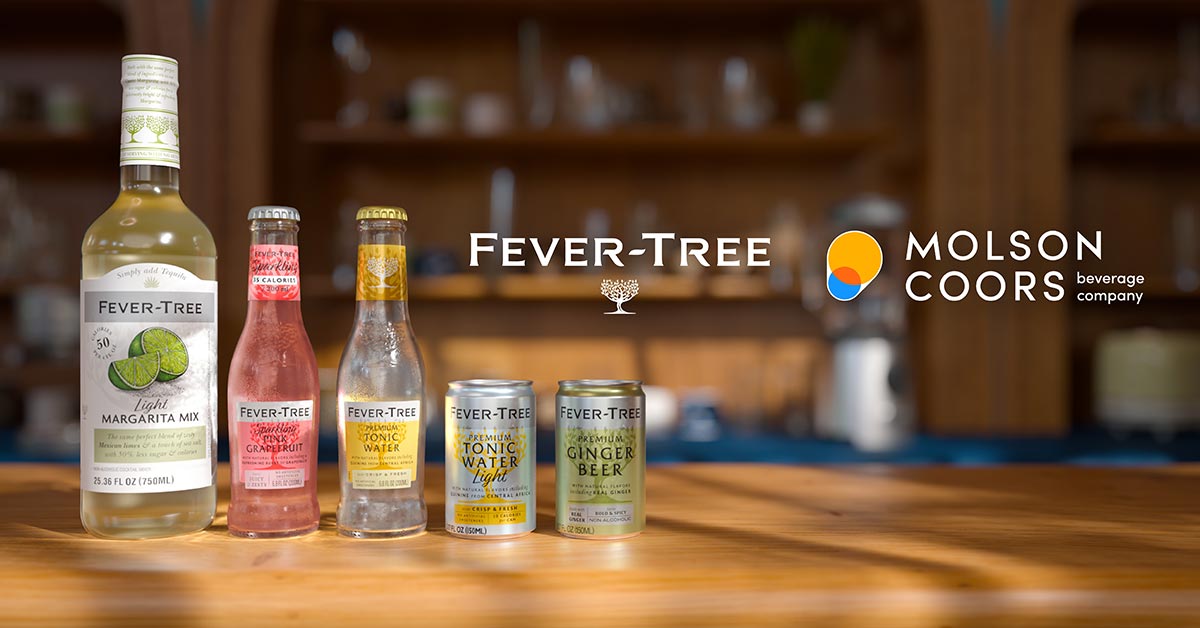
Fever-Tree: Molson Coors’ licensing agreement with Fever-Tree went into effect February 1. The company now has the exclusive rights to produce, market and sell the beverage mixer brands’ products in the U.S. The deal included a $90 million investment in UK-based Fever-Tree, with Molson Coors claiming a 8.5% stake in the company.
“We expect to incur certain one-time transition and integration fees related to the transactions over the next several months,” the company wrote in its earnings release. “The amounts of such fees will be dependent upon the progression of our integration plans.”