
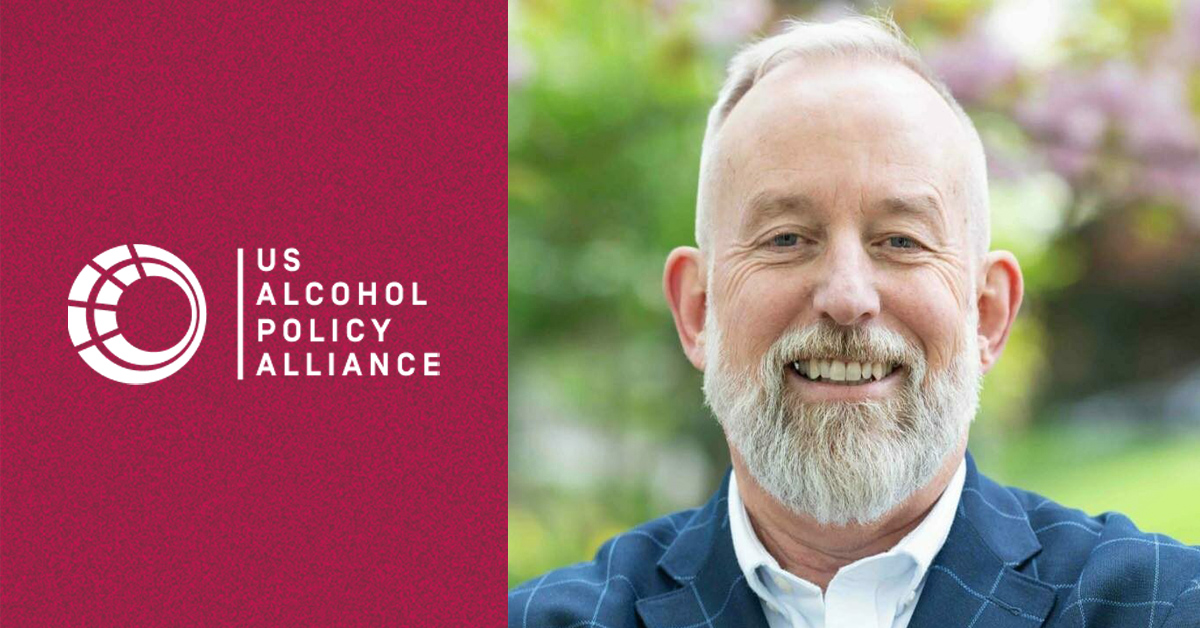
Mike Marshall, a staunch anti-alcohol proponent, has been named CEO of the U.S. Alcohol Policy Alliance (USAPA), a self-professed nonpartisan nonprofit built to prevent and reduce “alcohol-related harm,” and turn “alcohol policy research into public health practice.”
Marshall is also the co-founder and former executive director of Oregon Recovers, which works to address addiction and substance use disorders in the Beaver State. He founded Oregon Recovers in 2017, inspired by his own experience with addiction.
Marshall’s appointment comes one year after a viral Facebook post that resulted in his dismissal from Oregon’s Task Force on Alcohol Pricing and Addiction Services.
Marshall made headlines in December 2023 when he reposted an Oregon Live story on the death of Vanguard Brewing co-founder Don Anderson, who died of a heart attack at age 58.
In his now-deleted repost on Facebook, Marshall quoted a John Hopkins report, writing “Heavy drinking is linked to a number of poor health outcomes, including heart conditions. Excessive alcohol intake can lead to high blood pressure, heart failure or stroke. Excessive drinking can also contribute to cardiomyopathy, a disorder that affects the heart muscle.”
Marshall’s post drew outrage online, with some accusing him of blaming alcohol for Anderson’s death and using an untimely death to promote his anti-alcohol agenda.
The post also sparked the Oregon Brewers Guild and then-president Ben Edmunds to write a letter to Oregon Gov. Tina Kotek, asking for Marshall to be removed from the state’s task force. Recall, the task force was created in the 2023 legislative session to study alcohol addiction and prevention, Oregon’s distribution of resources for treatment, existing funding for programs, the “cost of alcohol addiction to the state,” and the “benefits and drawbacks of imposing taxes on beer and wine.”
“Mike Marshall, executive director of Oregon Recovers, used social media to publicly denigrate him [Anderson], humiliating his family and making false and unsupported assumptions about his death,” Edmunds wrote in the letter.
“How can you ask other members of the Task Force on Alcohol Pricing and Addiction Services to serve alongside someone who is lacking a moral compass, baseline compassion, and respect for our fellow Oregonians?” he continued. “No one deserves this kind of treatment. Mike Marshall is not fit for a governor’s endorsement as a task force member.”
After an alleged conversation between Marshall and the governor’s office, Marshall wrote his own letter – addressed to then-public safety adviser Constantin Severe (now deputy general counsel) – writing: “Don’t be fooled. Their opposition to my inclusion on the task force is not about a single Facebook post. This is about five years of effective public education about the harm the alcohol industry is causing Oregon families – advocacy that has forced them to the table for the first time in 50 years. Of course they want me replaced.”
He added: “A final thought: according to your colleagues at the Oregon Health Authority, on average, six Oregonians die each day due to alcohol. In other words, since my post on December 7th, over 120 people have been killed by alcohol.
“Every one of those deaths could have been avoided if the alcohol industry, including the brewery upset with me, had acted more responsibly. Shouldn’t we prioritize the feelings of their families as well?”
Marshal allegedly refused to step down from the task force on his own accord, and was removed by the governor’s office in January 2024.
Marshall went on to run for Portland’s City Council. In September, he announced he would step down as executive director of Oregon Recovers “regardless of the outcome of the election results,” Willamette Week reported. Marshall did not win one of the three open council seats, and handed over the reins to True Colors Recovery founder Amanda Ireland-Esquival in December.
Meanwhile, the Oregon task force submitted its final report and recommendations at the end of the year. Read highlights from the report here.
Why it Matters
Marshall’s appointment to the USAPA comes as alcohol’s impact on consumer health is under a national microscope, and the bev-alc industry waits for updated dietary guidelines to be released later this year.
The dietary guidelines are released every five years by the Dietary Guidelines Advisory Committee (DGAC), a collaborative effort between the U.S. departments of Agriculture (USDA) and Health and Human Services (HHS). Existing recommendations are two drinks per day for men, and one for women.
The latest efforts by the DGAC have come under scrutiny – mainly by those within the bev-alc industry – as the process concerning alcohol consumption guidelines has been altered from the DGAC’s traditional process, and is being influenced by reports conducted by the Interagency Coordinating Committee on the Prevention of Underage Drinking (ICCPUD) and the National Academies of Sciences, Engineering and Medicine (NASEM).
Bev-alc trade groups have heavily criticized ICCPUD’s participation in the process, alleging a lack of transparency in the review process, and the use of biased studies.
NASEM’s report was released in December. The 230-page report found that moderate drinking is better than not drinking when it comes to certain health issues, but may also increase risks for female breast cancer.
ICCPUD’s report was released earlier this month, and found that “the risk of dying from alcohol use begins at low levels of average use,” and that “higher levels of alcohol consumption are linked with progressively higher mortality risk.”
The Science Over Bias coalition, which represents more than 85 trade organizations, called ICCPUD’s report “the product of a flawed, opaque and unprecedented process, rife with bias and conflicts of interest,” noting that “several members of the six-member ICCPUD panel have affiliations with international anti-alcohol advocacy groups, and the panel has worked closely with others connected with these advocates.”
Meanwhile, there has also been significant discourse around bev-alc labeling, including an advisory issued by then-U.S. Surgeon General Vivek Murthy on January 3, which called for the addition of cancer risks to health warning labels on bev-alc, as well as “a reassessment of the guideline limits for alcohol consumption to account for cancer risk.”
Two weeks later, the U.S. Treasury Department’s Alcohol and Tobacco Tax and Trade Bureau (TTB) released a 164-page report and proposed new rules for bev-alc labeling, including mandatory statements on alcohol content, calories, carbohydrates, fat and protein per serving.
The TTB is seeking public comments about which nutrients should be included on bev-alc labels, as well as the best way to present the volume of alcohol content per serving. The comment period is open through mid-April.