
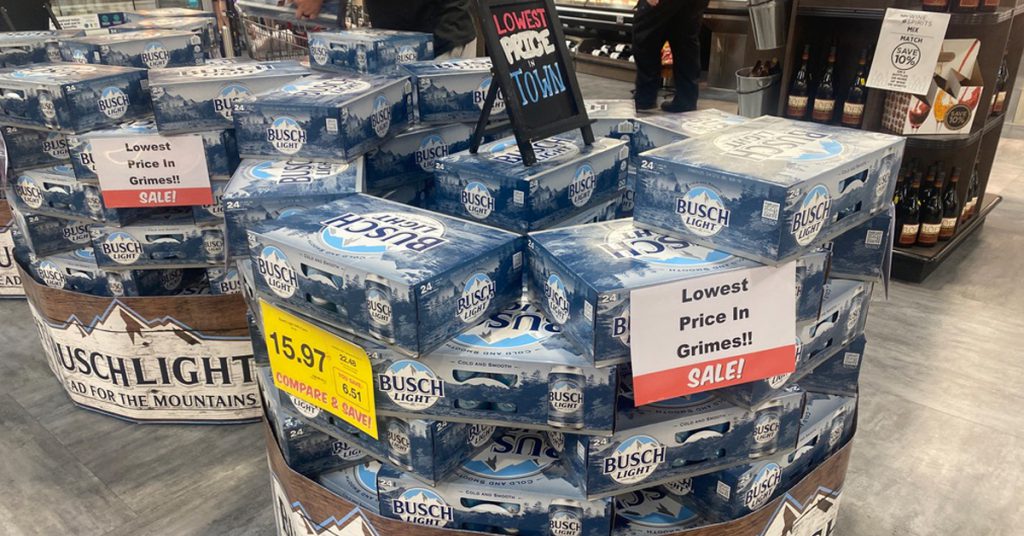
Winners of the July 4 holiday weekend are expected to mainly fall within the non-alcoholic (NA) beverages, domestic beer and and ready-to-drink (RTD) segments – all segments that have been able to find growth in 2025 despite industry-wide headwinds – according to the latest monthly report from Bump Williams and Bump Williams Consulting (BWC).
Just days before the start of the July 4 weekend, Williams shared who he believes will win the holiday, the floor space gainers in and outside of the beer category and the pack sizes and segments outperforming trends.
Williams projected winners will include NA beer; Anheuser-Busch’s (A-B) Michelob Ultra; flavored budget beer, such as A-B’s Busch Light Apple; Boston Beer’s Twisted Tea; and spirit-based RTDs of the non-carbonated variety.
Williams based his analysis on shopper loyalty card data that showed the pack sizes and segments with momentum heading into Independence Day weekend. Among the takeaways from his report are changes in consumer spending, including:
- Trading down to smaller pack sizes or shifting their purchases to “value” packages;
- Cutting back on visits to bev-alc retailers;
- Eliminating bev-alc purchases altogether;
- Disappearing core demographic groups;
- Shrinking volume/shopping basket while consumers pay the same amount for less.
Those shifts have also led to changes in retail displays for all-important beer holidays. Williams shared several trends he’s seeing, including:
- A proliferation of larger below premium brands on the “floor at hot prices,” notably “Busch Light Apple everywhere;”
- A “mixed bag of 12-packs” sharing the same display with domestic premiums, FMBs (primarily hard tea), imports and a lot of Michelob Ultra;
- “Massive support” for spirits-based RTDs, where legal, with multiple spaces in store for brands such as Stateside’s Surfside; Boston Beer’s Sun Cruiser and (malt-based) Twisted Tea; and A-B’s Nütrl and Cutwater; and BeatBox;
- “More THC-infused beverages” than Williams has ever seen before in package stores, for which retailers said they are sourcing space from wine;
- And less beer inventory on the floor in stores across the country leading to “smaller displays,” which are located at the back of stores.
Some retailers are implementing “a new strategy” of shifting floor space previously dedicated to traditional beer to energy drinks, prebiotic and probiotic sodas, flavored sparkling beverages, NA beer and mocktails and celebrity-endorsed offerings, Williams said, citing conversations with 132 retailers. The goal of the new display strategy is to drive “impulse purchases.”
Nevertheless, “beer drinkers are still seeking larger formats than usual over key holidays,” “still exhibiting diverse purchase behavior” and “beer still has scale on its side,” despite RTD products being “a rising star,” Williams wrote.
“This weekend remains an essential opportunity for beer to connect/re-connect with consumers and take the first step toward stabilizing an otherwise forgettable 2025 thus far,” he added.
Helping drive that belief is past holiday trends – even the underwhelming Memorial Day weekend. During that weekend, Williams noted shoppers gravitated toward larger packs, including 12-pack cans (dollar share increased to 20.4% during the two-week stretch ending May 31 compared to the year-to-date average of 19.2%) at the expense of 6-packs and large-format singles.
Both 24-pack cans and bottles increased dollar share compared to their YTD average, “which is all objectively good news given the typical prioritization of larger formats via retail floor/endcap displays and/or promotions during these key beer holidays,” Williams wrote.
Williams pointed to hard seltzer 12-packs as a top three segment/format combo for the beer category during Memorial Day, “showcasing a persistent demand for flavor amidst all of the noise and contraction taking place within.” Those trends are despite the pack’s share declines from 2023 to 2025, going from 5.6% to 3.9% share of beer dollars.
Meanwhile, several of the premium segment’s larger packages (12-, 24- and 30-pack cans) have seen their share of beer dollars “erode” during the holiday stretch. Those trends “run a bit counterintuitive” to the volume-seeking-shopper narrative, but their losses are being picked up by super premium larger packs (Michelob Ultra), imports and a little bit going to hard seltzers/FMBs, Williams wrote.
Spirits-based RTD 8-packs are also receiving “elevated positioning” after ranking on par with craft 12-packs in 2024, Williams wrote. He added they’ve received “notable expansion at chain retailers across the U.S. from leading brands in the category.”
Despite the beer category’s headwinds, Williams struck an optimistic stance heading into the weekend.
“Pair that volume-seeking behavior along with recent images/commentary around the clear implementation of volume-driving promotions at retail this year and it sure seems like the industry is putting forth its best efforts to make the most of this crucial holiday moment,” he wrote. “To what degree the consumer responds within beer however … well, that is yet to be determined.”