
Nosotros Tequila and Mezcal was one of the largest self-distributed brands in California before it nabbed a statewide distribution partnership with Republic National Distributing Company (RNDC) in 2022. But after RNDC shuttered its California operations last week, the agave spirits brand joins hundreds of other suppliers scrambling for a new distribution partner.
“As you can imagine, [there are] a lot of decisions ahead,” said Carlos Soto, CEO of Nosotros. “We’ll lean into our internal structure to navigate this, and make sure all of our partner restaurants, hotels, chains and bars continue to receive the top level service they’re used to when dealing with Nosotros.”
Soto’s response underscores the current-day adage that brands should rely less on distributors and more on their own teams and budgets to build their brands. But California is one of the largest wine and spirit markets in the world, and brands are now faced with a new distributor landscape upon which they’re still dependent on to scale.
While soon-to-be former RNDC suppliers plot their next move in the state, what will be the impact of the distributor’s exit on independent spirits and ready-to-drink (RTD) brands in California, and beyond?
A Shifting Hierarchy
To many industry insiders, RNDC’s exit from California was no surprise and could be a precursor to further moves.
With departures from Sazerac in late 2022 and Brown-Forman nationally last week, and Anheuser-Busch InBev’s Cutwater, Gallo’s High Noon and Tito’s in California earlier this year, the company has admitted to have looked for merger and acquisition options at least for its California business. RNDC tried to merge with competitor Breakthru Beverage in 2017, but was blocked by a Federal Trade Commission (FTC) review. According to RNDC’s CEO, the company is now “moving forward with renewed focus” and reinvesting in its other markets, such as Texas and Kentucky.
Consolidation has been a theme of distribution for over a decade: As of last year, the top 10 wholesalers held 80% of market share with the top two accounting for more than 50%, according Shanken’s April 2024 Impact Newsletter. But as the number of distributors have shrunk, the number of brands has proliferated. Craft spirits representatives, such as the American Craft Spirits Association, have partially ascribed their sector’s recent sales struggles to brands’ access to distribution.
“In the current environment you have lots of new brands seeking representation, with no place to go, and obviously what’s transpired most recently with RNDC is only going to exacerbate an already chronic situation,” said John Palatella, president and CEO of JP Brand Advisors.
However, as major suppliers scatter, we’re already seeing a bolstered mid-tier distribution. Companies such as Joshnson Brothers, Breakthru Beverage and even more craft-focused Skurnik, have expanded footprints in recent years. Regional distributors may see a boost too as suppliers take new statewide approaches to penetrating markets.
“That’s where we’ve really seen the rise of that mid-tier distribution that has a smaller book,” said Stephen Myers, president and founder of Dynamic Beverage Consultants. “Relatively speaking, they have a lot more feet on the street – and more brands, rather than doing a nationwide shotgun approach, are starting to look at that narrow and deep philosophy.”
Technology-focused distributors like LibDib and newer distributors are also now looking to fill the gap.
“This is exactly why I started my distribution company, because a lot of the big distributors are just not prepared for the amount of brands and support they are going to need across the country,” said Adam Spiegel, who recently launched a boutique spirit and import company Freebrook Imports in California. “This move leaves brands who were locked in on never-ending contracts with no KPI’s hopefully free to make better decisions moving forward.”
Changes Brewing At Beer Distributors
Here’s another shift: As ready-to-drink (RTD) spirits lead growth for the category, many spirits groups and brands are aiming to optimize their positions with beer distributors, who have been faster to embrace total beverage and are equipped with appropriate capacities.
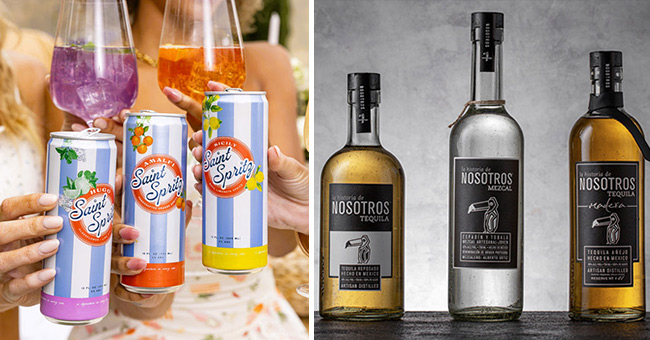
Mallory Patton, co-founder of Saint Spritz, is among the scaling RTD brands looking for a new California partner. Saint Spritz has expanded fast, going from direct-to-consumer and Texas distribution to 40 states in six months. The company already works with a mix of distributors including Johnson Brothers, RNDC and select Molson Coors houses – one of which paved the way in Texas. Meanwhile, the wine and spirits network helped the company to scale fast and quickly launch nationally.
As category leaders like Cutwater and High Noon shift to beer distributors such as the Reyes Beverage Group, smaller brands in those books (new arrivals or otherwise) are now going to need to compete even more for attention. Patton doesn’t seem worried about possibly being an emerging brand in a larger RTD-filled house, sticking to an “all ships rise together” mantra. Plus, carrying a higher margin than most other RTDs is a “good proposition” for a distributor, she said.
With Tito’s and Brown-Forman moving to Reyes in California, the beer distributor now has an opportunity to slide deeper into spirits, but will need to expand its expertise.
“The Reyes execution, especially at retail and especially in the c-store channel is excellent, and that is the part of the allure of their business model,” said Palatella.
But what remains to be seen is what Reyes, and other beer distributors, do with spirits on-premise, particularly white tablecloth restaurants, he added.
What Account Universe Do You Want to Be In?
With key placements in California at Target, Walmart, and Total Wine, all of which Saint Spritz can fulfill warehouse direct, Patton said RNDC’s withdrawal won’t impact its business much and is in “no rush to make brash decisions” about its next partner.
For other brands looking to scale, there may be more competition now to get into, and get attention from, the remaining distributors that can service major chain accounts in a chain-driven marketplace. Some smaller distributors don’t have the “manpower” to service as many large accounts, said Daniel Lust, co-founder of advisory firm Pints LLC, putting brands in a tricky spot when it comes to scaling.
“When you’re a smaller brand, you’re going to get attention from the smaller distributors,” he said. “But once you scale to a certain volume size, then, you’re really stuck in that zone, or you’ve got to move to a bigger house to continue to grow.”
The challenge for suppliers is to then build a partnership with a distributor that is servicing the right “universe of accounts,” as Palatella calls it, and has the brands that are must-haves for those accounts.
Another factor to keep in mind: With mergers and acquisitions part and parcel of the distribution business, brands need to have a pivot plan if they end up in the acquired or acquiring house, added Lust.
“Are you going to go with that larger acquirer or do you have contract stipulations that you can move and assign your distribution rights elsewhere?” he said.