
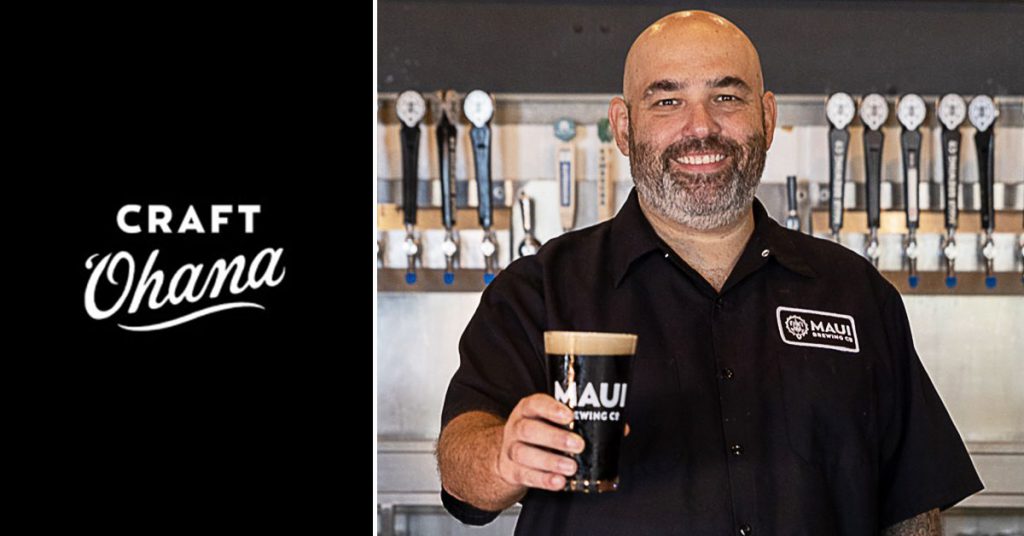
On the heels of the 2024 Craft Brewers Conference (CBC), Brewbound caught up with Craft ’Ohana president and COO Scott Metzger for our weekly Insider-exclusive A Round With Q&A series.
Metzger shook up CBC with a real talk chat titled “Your Brewery Is a Business, Not a Hobby.” Metzger discusses the talk, the path forward for craft brewers and how Craft ‘Ohana brands Maui Brewing and Modern Times are performing.
Here are excerpts from our Q&A.
The vibe of CBC was much more positive even with the dose of realism. What was your biggest takeaway from this year’s event?
Scott: I was encouraged by the level of “seriousness” I witnessed at this year’s event, which is not an easy thing to do in Las Vegas. That isn’t to say no one was having fun, but there just seemed to be an underlying tone that a greater level of effort and care was required in our industry and in our businesses … that the tide wasn’t able to lift all boats anymore.
During CBC, your talk was titled “Your Brewery Is a Business, Not a Hobby,” but I believe you called it an “intervention.” It’s always been a business, but for those who maybe didn’t realize it, is it too late?
Scott: For many people, I’m afraid it is. Las Vegas was an appropriate place for CBC and this talk in particular, because at this point some breweries might be better off taking a 1-in-37 chance on the roulette wheel as opposed to fighting the inevitable realities they’ll eventually face.
Yes, it’s always been a business, but I’m not sure everyone fully recognized what that means. This is an industry that has manufacturing at its core, but is generally filled with people with little to no experience in manufacturing, or even business in general. That is not necessarily a killer, if you have the right people and mechanisms in place to share and teach those principles of manufacturing and business.
It seems to me like there are a lot of brewery owners and executives frustrated they can’t move the business in the right direction, but overlooking that they’ve not taught their teams to think and act like manufacturing and business professionals.
One of the things I stress in this idea of acting like a business is that “management” is not solely confined to the traditional leadership roles we think of. “Management” is the collective responsibility of every single member of the organization, but each member can only be successful if given the proper level of transparency to data, empowerment and autonomy. These are some of the fundamental building blocks of a good business that are missing in a lot of breweries who may rely on outdated command-and-control managerial frameworks.
How can they start to turn it around?
Scott: The first steps are ones borrowed from The Great Game of Business by Jack Stack, which I was happy to see was talked about quite a bit in various talks this year. To win any game, we must first know the rules and know the score. This seems obvious and fundamental, but this way of thinking comes off as revolutionary or alien to a lot of brewery leaders.
The rules are established by the “why,” “what” and “how” of a business. If those things aren’t clear in your company – start there. Everyone in the organization should generally know these things. I’m not talking about some fancifully written mission statement, but the core of what you are trying to accomplish and the framework in which it must reside. Part of that is establishing the winning conditions. What does success look like?
This transitions very well to the “knowing the score” part. Lots of businesses try to keep score by KPIs that hide the real score. I’ve never met a business owner that measures success by KPIs.
Success is usually measured in terms of profitability, cash generation and value created. If those things are the real score, then be transparent with them and make them the focus of the company’s efforts. KPIs can be useful, but they are indicators (as is expressed right in their name: Key Performance Indicators), not the true score, and if you aren’t transparently sharing the score with your team, they are flying blind.
There was a lot of real talk in your speech. You said the “whole category can be replaced” but there’s no need for “a pity party.” And brewery owners must earn their place with customers every day. How are Maui and Modern Times earning their place with consumers these days?
Scott: It’s a fun challenge – earning our place with two completely separate brands with their own, usually non-overlapping, identities. At the most basic level, “earning our place” is the same for both brands: creating a value proposition for our wholesalers, retailers, and drinkers. How we go about doing that, however, is completely different.
Part of “earning in” for Craft ‘Ohana at this stage of our evolution is leaning into marketing and investing in our brands in ways we haven’t had to before. We’re reinforcing and building brand awareness through sponsorships and events that haven’t made a lot of sense in the past that do now, which has meant that our team’s approach has had to grow and evolve alongside our business.
With Maui, we have a lifestyle brand with broad appeal that evokes one of most beautiful places on earth. That sets a high bar in terms of the value proposition, but we’ve hit a really nice stride in being able to do that with beverages that are not only delicious but also deliver a sense of place.
With Modern Times, we have a very different brand personality and identity that allows us to explore some different value propositions. Admittedly, the space that Modern occupies is also the space that has gotten the most crowded in the modern craft beer marketplace, so it creates new challenges for us in trying to establish our value proposition and identify new ways to maintain and expand our relevance.
These challenges manifest in both the need for innovation on the beer side, but also in the way our voice reaches and appeals to our wholesalers, retailers and drinkers.
What are some wins those brands have picked up lately that stand out to you?
Scott: We’ve hit a few important milestones recently that have put some perspective on our business internally and really shown us what is possible going forward. One huge one for us is becoming the leading craft brewer at a major chain in Hawaii (based on trailing 26-week Circana data). Considering some of the major players in the craft space and the heft they carry, this is a pretty major accomplishment.
We launched a new year-round offering, Da Hawaii Life, that has quickly become a top-five brand for us in just two months, pulling in mainstream drinkers with a light, low-carb craft lager available in 6- and 15-packs, the latter of which is a new size for us.
Maui Hard Seltzer is +28% YTD (on a significant base, seltzer is a major piece of our overall volume) in a hard seltzer segment that is struggling.
On the Modern side, we’ve been really focused on reconnecting with San Diego through events and sponsorships. Another huge win is our coffee business has picked up a lot of steam, especially in the direct-to-consumer whole bean space. We see a lot of appeal in the Modern Times brand beyond just the traditional beer space, and our success in coffee provides some early confidence in that feeling.
What’s the biggest challenge Craft ‘Ohana is facing at the moment?
Scott: In Maui, it’s always a matter of keeping up! We’ve invested a lot recently into our capabilities at the Kihei brewery, and our recent challenges have mostly centered around dialing in and optimizing a bunch of new equipment.
For Modern, it’s a bit of the opposite. It’s a very labor-intensive, relatively inefficient operation, so our main focus has been working with that team to identify efficiencies anywhere we can. The two facilities could not be any more different in that regard, so for our operational leadership it means a lot of switching hats.
When you look at the next 12 months, what is the biggest opportunity for the business?
Scott: The biggest opportunities will arise from some of the market forces we have seen recently and I expect to continue into the future. The biggest of these I believe will be continued consolidation in the craft space. This should necessitate some SKU rationalization simply by virtue of efficiency seeking by these newly consolidated entities.
Coupled with continued SKU rationalization by wholesalers and retailers, and the resurgence of flagship bands, I think this will open some new space in drinkers’ coolers. The battle for this newly created space will be extremely competitive and earning a spot in it won’t be easy, but the potential rewards are apparent.