
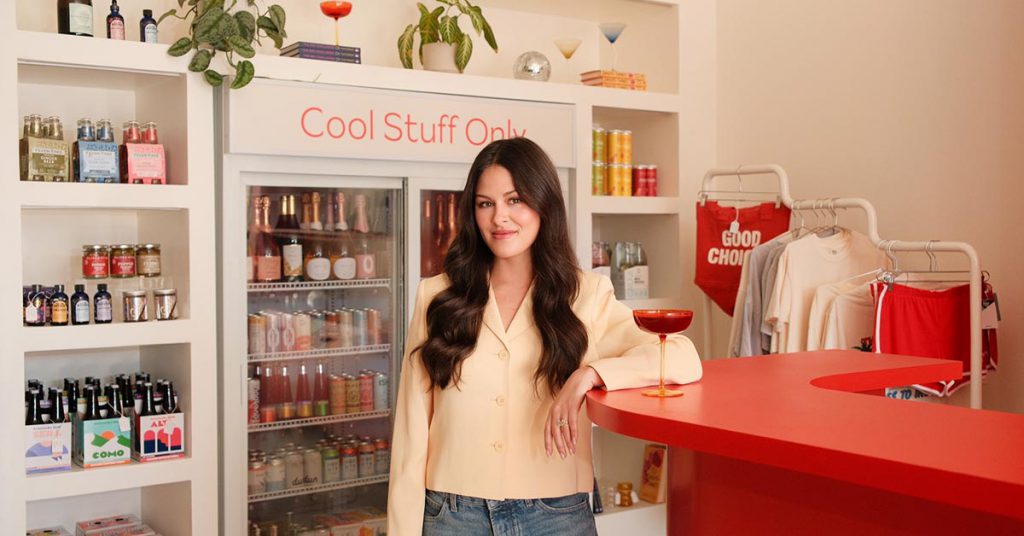
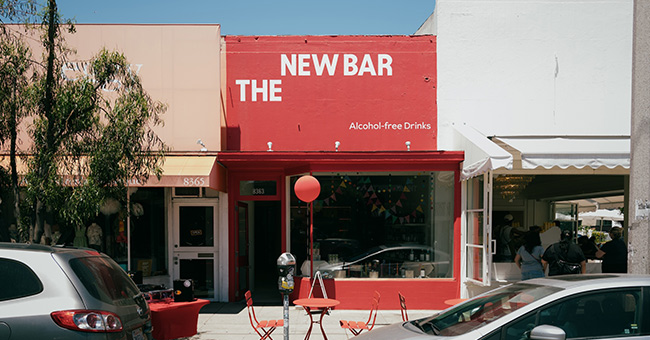
In 2022, Brianda Gonzalez opened The New Bar, an adult non-alc bottle (ANA) shop and platform in Venice Beach, and only a year later, expanded to new locations in West Hollywood and San Francisco. But in May Gonzalez announced that the company is joining the way of other ANA bottle shops and consolidating its retail footprint, while focusing on other ANA opportunities.
We chatted with Gonzalez about what’s next, where the hurdles are for ANA, and how ANA brands can take cues from their full-proof counterparts. Answers have been lightly edited for length and clarity.
You’re shifting the business model for The New Bar, why?
We have always had two goals: build demand for ANA options and make it easier for people to access them. Retail was a great proof point because it let us introduce the category, build relationships and understand what sells. Off-premise is scaling quickly and will remain an important driver for the category. At the same time, there is a massive opportunity in hospitality, entertainment and cultural spaces that is still underdeveloped.
When we launched three years ago, ANA drinks had almost no presence in these spaces.
We created a platform for them in our stores and then took the category out into the world through community events, major festival activations like Coachella and Stagecoach, and curated programs for restaurants and bars. By the end of 2024, 40% of our revenue was already coming from this work. We hear again and again from brands that the current infrastructure leaves a lot to be desired. Traditional alcohol distributors know ANA is growing, but it is still a small slice of their business. Their teams are not incentivized to educate an entire market for a product that sells for the same price as tequila without the same built-in demand.
The next big opportunity is making ANA a natural part of every place people gather – living alongside alcohol in restaurants, hotels, venues and cultural spaces. Our focus is helping brands not just get in the door, but stay there, with the right strategy, menu integration and programming to drive results.
It seems as though the pathway for NA bottle shops is morphing into online retailers, distributors, or curators: what will your next steps look like and how will the business differentiate from others?
We’re focused on building the strongest nonalcoholic programs in the places people gather most. Restaurants, hotels, venues, and arenas are all on our roadmap. The New Bar has always shown up in spaces where people did not expect ANA to be and made sure it was presented in a way that feels world-class. Where others may simply sell a product, we deliver a full program. That means smart curation, storytelling, menu integration, staff training and activations that create awareness and drive velocity.
In the store what have been recent top-sellers so far in terms of brands or categories?
Sparkling wines and adaptogenic drinks have been leading the pack for us in-store and online, and they’re big drivers of repeat purchases. They deliver on flavor and have clear occasions they map to, which consumers naturally gravitate toward. Outside of those categories, there are a few standouts that our customers keep coming back for. The Pathfinder, St. Agrestis, and Tilden all have a distinct point of view and flavor profile, and they have built a loyal following with our audience.
What are some of the educational gaps from customers around ANA? How are you approaching those gaps?
A few years ago, most people had never heard of ANA or assumed it meant Martinelli’s. Awareness has grown, and now many customers have tried a product or two. The gap is that they still have not experienced the full range of what is possible or seen ANA integrated into enough parts of their daily and social lives. We believe the future of education is not just telling people ANA exists, but creating moments where it becomes part of their culture. That means tastings and staff trainings, but also larger-scale cultural touchpoints like festivals, high-profile events, and collaborations that put ANA in unexpected places. These moments accelerate adoption because they let people experience ANA in contexts that feel aspirational, social, and memorable.
Where do you think there’s room for improvement from ANA brands?
There is a lot of opportunity for ANA brands to think more about how they build long-term loyalty and cultural relevance. The most successful alcohol brands have been intentional about where and how they show up, creating memorable experiences that connect with their audience and keep them coming back. ANA can take a similar approach, while also embracing what makes this category unique.
I would like to see more brands invest in storytelling, education, and presence in the right cultural moments before racing into mass retail. The category is still young, and the brands that will last are the ones building strong connections with consumers and creating demand that pulls their products off the shelf. As more alcohol players enter the category and bring significant resources, this level of execution will no longer be optional. It will be necessary to compete.
What are you most excited about in terms of innovation?
I’m so excited by how far the quality of ANA wine has come and how much further it can go. Producers are getting more thoughtful in how they approach dealcoholization, and some are rethinking the process entirely by improving the base liquid before they even remove the alcohol. French Bloom’s Le Cuvée is a perfect example and one I’ve been enjoying a lot lately. You end up with a wine that has more complexity and a profile that can really hold its own next to traditional wine.
I’m also loving what’s happening with mixed fermentation, functional ingredients, and drinks built for specific moments instead of just being a nonalcoholic version of something else. That said, sometimes the NA version of a popular cocktail really works. The margarita is the most-ordered cocktail in the country, and when brands like De Soi create a Haute Margarita, a Tres Rosé, or an Italian Spritz instead of something more abstract, they see it resonate. Pair that clear mental framing with functional ingredients like adaptogens, and you often get stronger consumer pull and better sell-through.
The real opportunity is creating products that are easy for consumers to understand and place into their lives, whether that means a new ritual or a twist on something they already love.
Taking a poll: do you like “adult non-alc” as a title or think there is a better category name?
I think “adult non-alc” is helpful for right now because it signals what the products are and who they are for, but it is still a subcategory defined by what it is not. It also carries the assumption that nonalcoholic is somehow less adult, which I do not think is true. It reminds me a little of terms like “girlboss” (meant to empower, but still framed in comparison to the default). I do not think we have landed on the perfect category name yet. Sometimes I joke about it being “old bar” or “new bar,” but the truth is the language will evolve as the category becomes more mainstream. The best name will probably be one that does not need to reference alcohol at all.