
Editor’s Note: 3 Up, 3 Down with 3 Tier Beverages is a quarterly insights series available exclusively to Brewbound Insiders, via the Chicago-headquartered, bev-alc-focused consulting and data firm.
In this latest installment of 3 Up, 3 Down, 3 Tier consultant Danelle Kosmal analyzes data trends in flavor-forward bev-alc, high ABV offerings, pricing and more. Additionally, Ben Tilton, client solutions manager at CGA by NIQ, offers on-premise insights, including positive trends for non-alcoholic (NA) beer and continued losses for hard seltzer.
(For more from 3 Tier Beverages, listen to the latest edition of the Brewbound Podcast.)
Below is Kosmal’s and Tilton’s analysis, using NIQ off-premise data through April 19, and CGA on-premise data through March 22.
THREE UP:
Flavor-forward Innovation
Flavor and function continue to lead and serve as the heartbeat of new productions for 2025 in the beer industry. Innovation in beer and flavored malt beverages (FMBs) remain vibrant, but fragmented – built around extensions of trusted brands and a few emerging players.
Fifteen of the top 20 new brand extensions in NIQ-tracked off-premise channels year-to-date (YTD) – ranked by actual dollar change – are flavored entries, spanning from high ABV hard seltzers, to malt-based cocktails, to hard juice or nectar, lemonade, soda and flavored lagers.
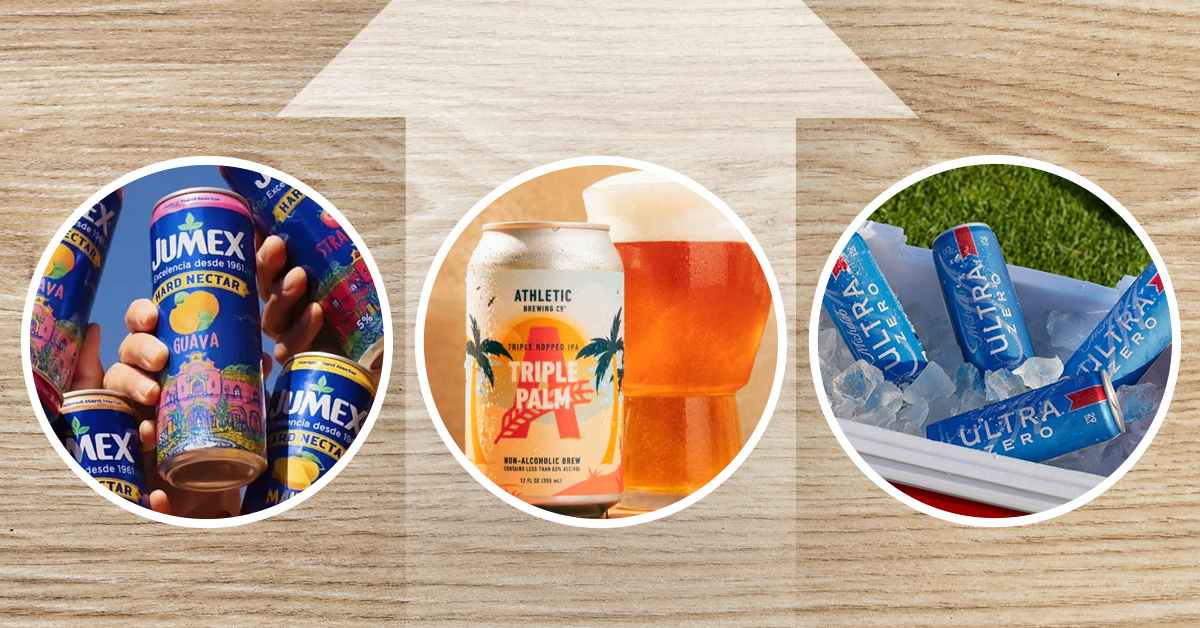
Jumex Hard Nectar (assorted), created in partnership with AriZona Beverages, is the No. 1 innovation brand extension across the entire category YTD through April 19. This underscores the consumer appetite for flavor and novelty.
Jumex is also driving a new subsegment, hard juice, which has now surpassed hard tea as the top-growth driver in FMBs.
Off-Premise Non-Alcoholic Beer
YTD growth for NA beer stands at strong double-digits, up 19.3%, with a slightly slower growth rate of 18.5% for the latest 13 weeks (L13W).
While this indicates a slight deceleration, the category remains remarkably strong when compared to other segments within beverage alcohol. This suggests that despite slowing growth, NA beer continues to build momentum, particularly as we head into the crucial summer months.
Recent product launches have also played a pivotal role in sustaining consumer interest and reinforcing the segment’s vitality.
Athletic Brewing remains the dominant NA player, but even outside of Athletic, NA craft beer is up 32% YTD in off-premise channels. Other big-name players such as Anheuser-Busch InBev’s Michelob Ultra, Constellation Brands’ Corona, Deschutes, Heineken, Molson Coors’ Blue Moon and Sierra Nevada are all contributing to the segment’s upward trajectory with their NA extensions.
Despite this promising performance, shelf space is limited, and many retailers may not be in a position to take on new brands, especially as established players already command a significant presence. The space situation in the on-premise environment is likely even more challenging.
On-Premise Packaged NA Beer
Despite being slightly less than 1% of total beer volume in the on-premise, NA beer provides a bright spot in the category, showing 21.7% dollar and 17.8% volume growth over the L12W, ending March 22.
While the beer category appears to be facing challenges in both draft and package formats (down 7% and 10.3% in volume, respectively), NA’s positive performance is attributed to packaged serves, showing +18.7% volume change compared to the same period in 2024. It is important to note that NA draft declines (volume -13.4% YoY in the L12W) are outpacing traditional beer (volume -7% YoY). As retailers and consumers learn to navigate NA’s ideal place in the on-premise, it remains to be seen how NA draft will develop.
NA’s overall volume growth has come largely from the independent channel, with 79% of volume sales coming from these outlets. Volume growth increased 14.4% compared to last year.
A commanding 98% of the NA independent volume came from packaged can or bottle sales. Meanwhile, chain outlets contribute 21% of total on-premise NA dollar sales, chain volume and value trends are outpacing independent performance, possibly as NA beer finds traction with new cohorts of consumers and aligns with food-led occasions. Chain NA package is up 34.2% in volume and 38.4% in value growth for this latest period.
THREE DOWN:
Hard Seltzers in On-Premise Retailers
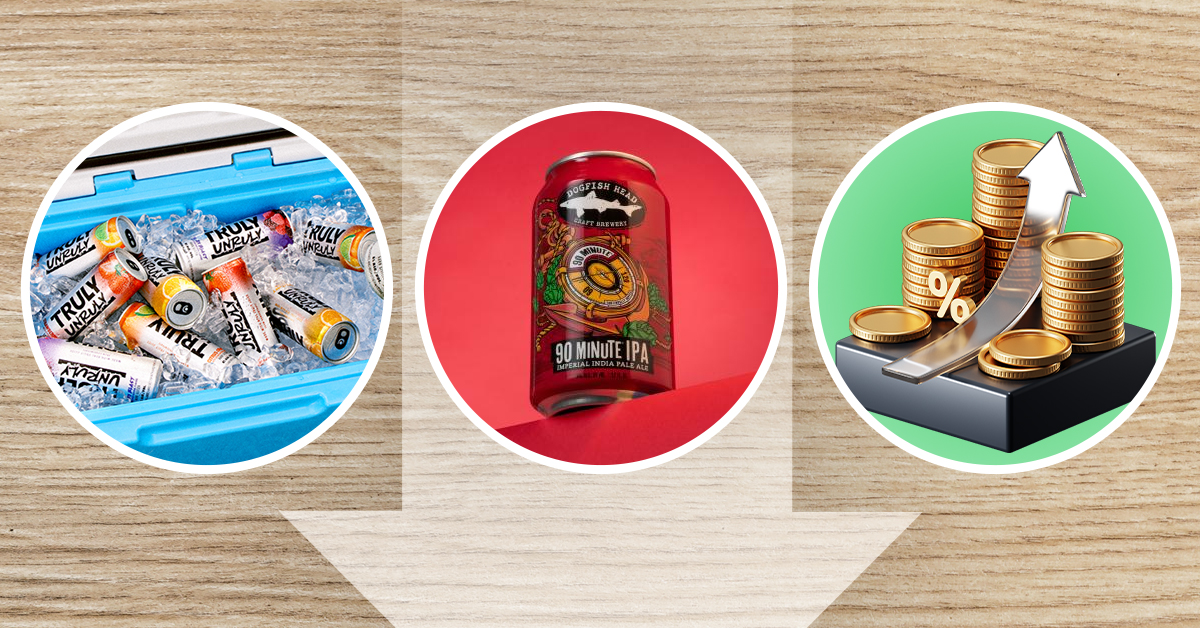
Looking at the L12W in CGA On-Premise Measurement (OPM) data through March 22, the beer category (including beer, FMB, cider and NA) declined 6.5% in value and 8.5% in volume compared to the same period last year. Of the category subsegments driving this, hard seltzer stands out with double-digit declines in the L12W, showing volume declines of 18% and dollar declines of 16% YoY.
Within eating outlets, hard seltzer performance is showing volume declines compared to 2024 (-33.5%), in part from a drop in distribution (-3.7%). Drinking outlets, which represent 71% of hard seltzer total volume over the L12W are showing slightly more resilient trends, down 9.2% in volume and 7.1% in dollars.
As the lines continue to blur with spirit-based RTDs and flavor-forward RTD packaged options capturing the attention of younger consumers eager to explore new offerings in the on-premise, it will be interesting to see how hard seltzer performs in Q2 and Q3, where seasonality could work in its favor.
Craft High ABV Beer
Across the total beer category, high ABV dollars are growing, with the 7% to 9.9% ABV segment up 4.2%, and the 10% ABV and above segment up 5.1% in dollar sales, in NIQ off-premise channels. However, this is largely fueled by the success of high-ABV FMBs.
In contrast, craft beers between 7% and 9.9% ABV are down 1.3%, and craft beers 10% ABV or above are down 2.2%.
Still, it’s worth noting that these declines are less severe than those seen in the moderate craft ABV segment (4% to 6.9% ABV), which is down 6.7% in dollars. Part of this shift could be driven by the rise of high-ABV cocktails, which are replacing some traditional beer-drinking occasions.
Craft Beer Pricing (Still up, but Lower Than Category Increases)
For years, craft beer price increases have lagged those of other mainstream segments in the beer category. Current price increase trends illustrate similar patterns, with the average price of the total beer category (including FMBs) up 1.8% YTD, imported beer up 2% and craft beer up 1.5% in NIQ-tracked off-premise channels.
Premiumization trends in beverage-alcohol suggest that consumers are willing to pay more for products that offer unique flavors, high-quality ingredients and compelling brand stories. By raising prices, craft brewers can reinforce their premium positioning, emphasizing craftsmanship and authenticity that differentiate them from other players in the category.
Additionally, the craft consumer is typically an established, higher-income consumer, and may have more bandwidth and disposable income to maintain their existing purchases of craft beer.