
Search across the BevNET CPG Media network including BevNET, Nosh, Brewbound, Taste Radio, Nombase and CPG Jobs.
Brewbound Podcast
The Brewbound Podcast is an extension of Brewbound's leading B2B beer industry reporting, featuring interviews with beer industry executives and entrepreneurs, along with highlights and commentary from the weekly news. New episodes are released every week. Subscribe on Apple Podcasts or your streaming platform of choice.
Podcasts
January 8, 202643 mins
Brewbound Podcast: The Year in Booze News
A new year means it’s Brewbound’s annual roundtable conversation with our peers in beer industry journalism.
This year, the Brewbound team is joined by Kate Bernot, lead analyst for Feel Goods Insights, and David Steinman, VP and executive editor of Beer Marketer’s Insights. The discussion covers the biggest bev-alc news stories of 2025, including middle-tier consolidation, overall category health and consumer sentiment.
Although full-year scan data has yet to arrive, the beer category is poised to finish 2025 with low- to moderate-single-digit declines in dollar sales and volume, if the trends of the first 11 months hold.
“We’re looking at decline after decline after decline – it’s something like 30 million barrels down from our recent peak,” Steinman said, adding that “some of that was inflated from the pandemic gains.”
“It felt like it was going to normalize at least multiple times over, and it just keeps on declining at this rate,” he continued. “It’s hard to really put a finger on exactly one thing, but it’s easy to look at the broad-brush of impacts on the trends, and it’s just a tougher business now than it really ever has been for a consistent stretch.”
The usual suspects of health and wellness trends, Gen Zs’ alleged broad aversion to alcohol and the rise of intoxicating hemp dominate conversations elsewhere, but Bernot posited that there’s something bigger at play.
“The story that maybe went under-discussed for me last year was the broader macroeconomic factors going on in the U.S. and the pressure on the average consumer and how that fits into the choices people are making,” she said. “We hear so much about health. We hear so much about cannabis, THC, etc, competing categories.
“I just didn’t hear enough about how pressured the average U.S. consumer feels,” Bernot continued. “We’ve known for a long time that well-off Americans are carrying a lot of water for the U.S. economy, but they can’t do it forever, and especially not in general CPG. You can only go out to a restaurant so many times. You only need so many cases of beer if you’re a wealthy family.”
In addition to high-level impacts on the beer business, the conversation also explored granular topics, such as the rise of Guinness in the on-premise, seismic shifts in California distribution and Anheuser-Busch InBev’s growing strength in beyond beer.
Listen here or on your preferred podcast platform.
Listen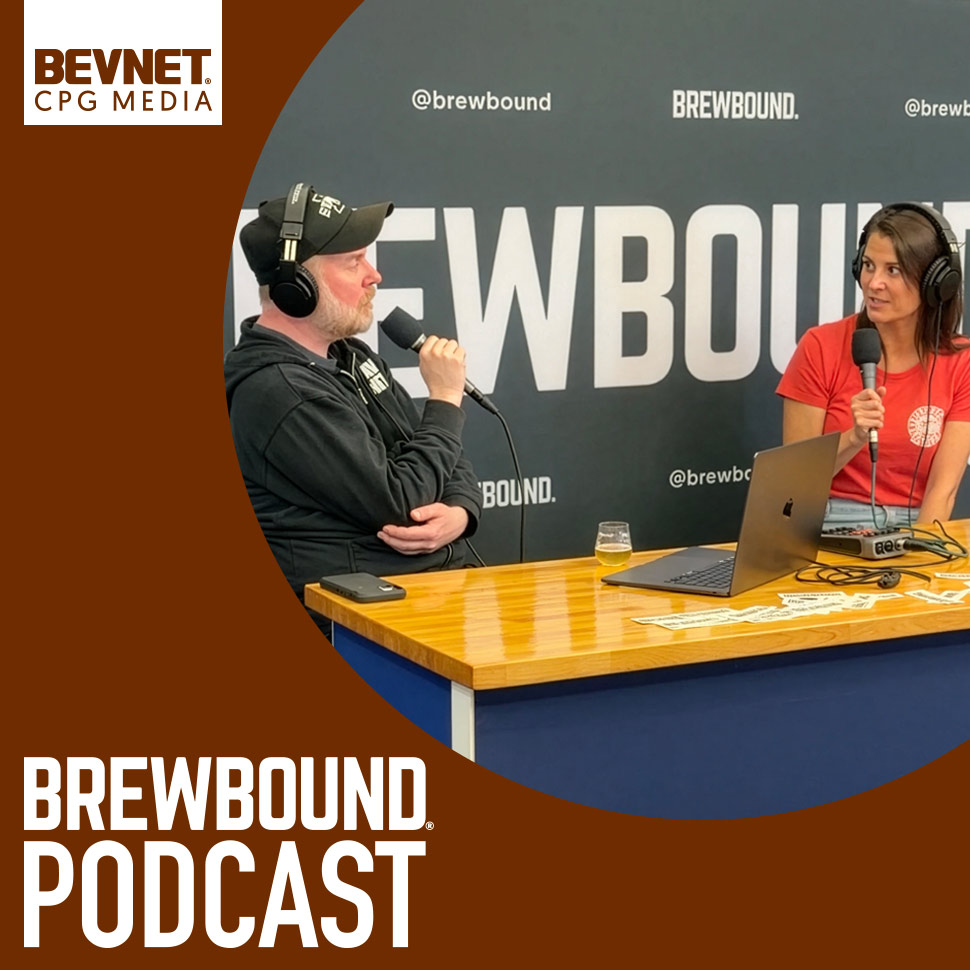
December 10, 202539 mins
Brewbound Podcast: A SoCal Vibe Check with Pizza Port’s Jill Olesh
Pizza Port wants to be a staple of your Southern California grocery run.
“I call it the Southern California grocery basket,” Pizza Port director of sales Jill Olesh said on the latest episode of the Brewbound Podcast. “It’s your chicken, your tortillas, your black beans, your spinach and your 6-pack of Swami’s [IPA].”
Pizza Port is riding a wave of momentum as the 38th-largest craft brewery by volume in 2024, growing 9% to 53,450 barrels of beer. Olesh credited the connection the brewery has forged across generations, as well as the value of the brewery’s flagship 16 oz. can 6-pack format, which the company launched in 2013.
“Part of the magic recipe, the lightning in the bottle of Pizza Port, is we’ve been so many things to so many people throughout their lives and a lot of those people who were coming as kids are now bringing their kids here,” she said.
In the conversation, Olesh discussed the pillars of Pizza Port’s sales pitch – “consistency, quality, affordability, availability” – as well as the mindset that carried her through the recent SoCal distributor consolidation as Hand Family Companies bought and merged Stone Distributing, Classic Beverage and Scout Distributing into Sunset Distributing earlier this year and why she’s optimistic for 2026.
Plus, hear the real-time reactions from the Brewbound team on Anheuser-Busch InBev’s $490 million deal for 85% of party punch maker BeatBox, as well as quick recaps on a proposed class-action lawsuit against Boston Beer and how the night before Thanksgiving busted this year.
Justin, Jess and Zoe also share their Spotify Wrapped results, with some surprising – and not-so-surprising – results.
Listen here or on your preferred podcast platform.
Listen
November 26, 202533 mins
Brewbound Podcast: Smog City’s Laurie Porter on the Life in the Middle
Smog City Brewing co-founder Laurie Porter is a prepper. Even during craft’s days of double-digit growth in the middle 2010s, Porter, who calls herself “an incurable optimist,” was eyeing a future when that growth wouldn’t be there.
So Porter and her husband, Jonathan Porter, built Torrence, California-based Smog City with diversified revenue streams – distribution, exports to international markets, four taprooms with over-the-bar sales and an intentional cap on production around 10,000 barrels – that allow the company to shore up its business if things go sideways.
“At our level, between the 5,000 and 12,000, 13,000 barrel, a lot of our revenue is built off the taproom, direct-to-consumer, which has a little bit higher profit margin, it helps us float that wholesale,” Porter says in the latest edition of the Brewbound Podcast, recorded on location at the California Craft Beer Summit. “So if wholesale is struggling or we’re seeing dips and changes in seasons and customer changes, we have a little bit more buffer.”
Porter admits that Smog City has looked at what life would be like as a 15,000-barrel brewery but has been “apprehensive to break that” ceiling due to the loss of the ability to pivot, flex and manage costs.
“When you hit 15,000 barrels, you are playing so deep in the chain world because it’s all about volume,” she explained. “Chain can be very fickle. It can be really difficult to maintain. A beer buyer changes and boom, you’re off the shelf. And that’s now, whatever, 450 barrels of beer for that one style of beer that you had committed to that grocery, and it’s gone. And you can’t just predict it.”
In the interview, Porter discusses the pressures on LA locations, consumers heading back into taprooms, the impending closure of its Steelcraft Long Beach facility after a decade due to being unable to extend the lease and the launch of a new restaurant concept in December to replace it.
Before the interview, Jess, Zoe and Justin cover the latest news, including the Siebel Institute of Technology’s planned exit from Chicago and move to Montreal; Athletic Brewing’s big 2025 and new products coming in 2026; and a Gen Z take on the rumored Anheuser-Busch InBev acquisition of BeatBox.
Listen here or on your preferred podcast platform.
Listen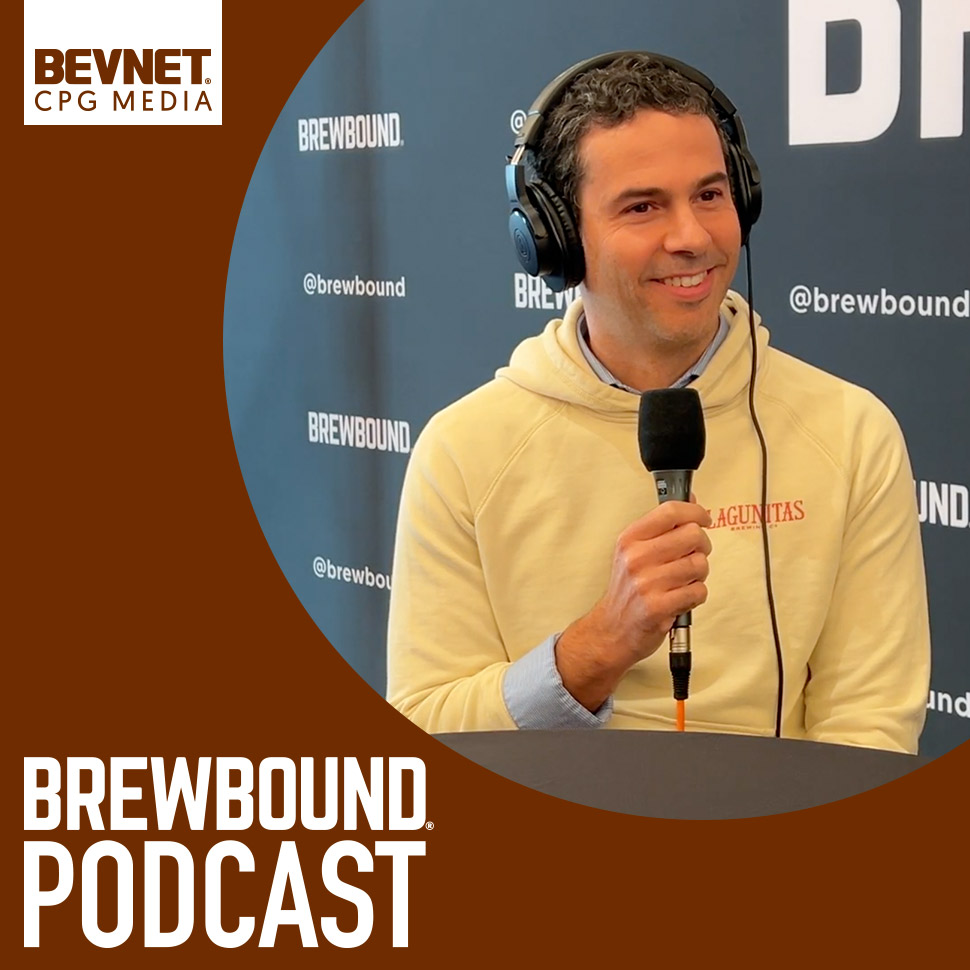
November 20, 202536 mins
Lagunitas CEO Bernardo Spielmann on Green Shoots and Party Legends
Nearly a year on the job, new-ish Lagunitas CEO Bernardo Spielmann is seeing opportunities for the legacy California craft beer brand.
Those opportunities include expanding Lagunitas Hazy IPA from a draft-only release to package, building on the successful launch of 9% ABV Hazicus Maximus hazy IPA, which now boasts 20,000 points of distribution, and revamping the packaging for non-alcoholic hop water Hoppy Refresher.
On the latest edition of the Brewbound Podcast, Spielmann shares that it’s also about listening to consumers, who demanded the return of seasonal Unrefined Shugga’, the 10% ABV strong ale that returned this year as a national play in bottles and club packs.
Spielmann tells Brewbound managing editor Jess Infante that the goal is to see what resonates and respond quickly.
“More and more as the craft segment matures, we’re going to have to be sharper per channel, per market, per SKU how you want to build your proposition,” he said. “There will be a rationalization and that’s the expected approach. We need to facilitate that for retailers but also our distributors. It’s also part of our strategy to be very sharp on how we launch or roll out innovations and the tradeoffs.”
Spielmann also discusses the beer category’s need to bring back socializing and capture those occasions. He explains how Lagunitas is doing its part with its “Party Legend” brand activation, which celebrates consumers who are the life of the party.
But first, Brewbound editor Justin Kendall and managing editor Jess Infante discuss the sudden closure of Rogue Ales & Spirits and why the shuttering of a top 50 craft brewery is jarring for the public and industry. They also dig into the rumored sale talks of party punch maker BeatBox to Anheuser-Busch InBev.
Jess and Justin also share their experiences, including a visit to Tree House’s country club/golf course/taproom and the scuttlebutt from the California Craft Brewers Association’s Summit and the Iowa Craft Brewers Guild’s I-Best meeting.
Listen here or on your preferred podcast platform.
Listen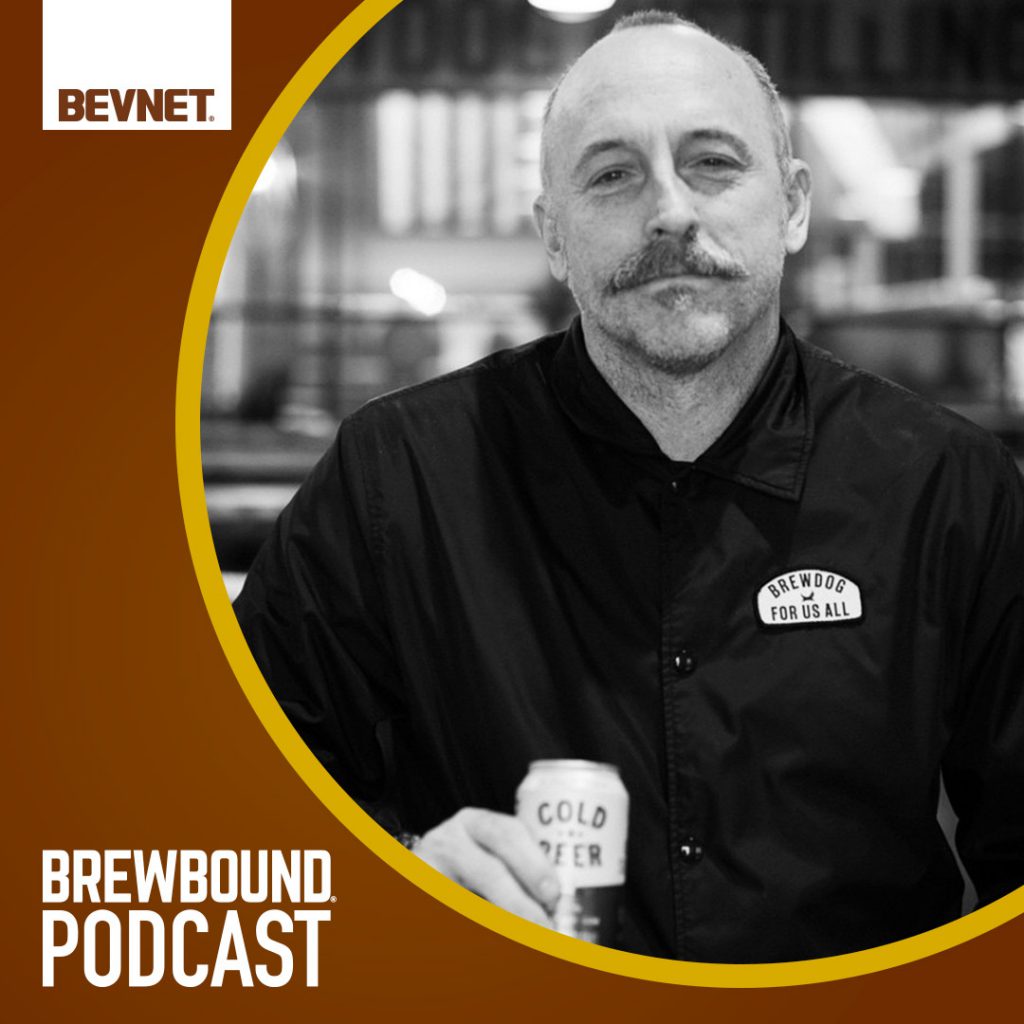
September 11, 202554 mins
BrewDog USA’s Eric Franco on Gaining Greater Autonomy and Getting Focused
Less has been more with BrewDog’s U.S. business over the last year and a half.
On the latest episode of the Brewbound Podcast, BrewDog USA chief sales and marketing officer Eric Teodoro Franco explains how the business has “done fewer things better,” leading with a focus on its core brands, which helped the brand increase volume 26% last year, to 89,084 barrels of beer, according to data from the Brewers Association (BA).
“We were very, very famous and very willing to be famous for throwing a lot against the wall and seeing what would stick for many, many years,” Franco shared. “We can do that in the U.K. where you have a 50-plus share and you can develop a lot of things and trial and try new things.
“In this market, we did that and it didn’t work. We’ve really taken our range plan, we’ve taken our focuses down to really doing fewer and better things.”
That’s led to improved wholesaler partnerships and led to a redeployment of BrewDog’s teams to better support its core markets, Franco said.
Additionally, BrewDog USA has been given the opportunity to run its operations with some autonomy from its homebase in Scotland as its U.S. leadership team has earned the trust of the global team.
“We’re running things the way we need to run them,” Franco said. “Same on the food side and on the retail side of our business.
“For many years, we were very much driven by what the U.K. or international bars looked like, and we would apply that narrative, if you will, or business plan to the U.S. bars. That’s gone away as well.”
Franco also discusses how the exits of founders James Watt and Martin Dickie have affected the U.S. business, how the company is approaching innovation and how the company has rethought both its distribution footprint and its taproom strategy.
Before the interview, Brewbound’s Justin Kendall, Jessica Infante and Zoe Lica break down the impending closure of 21st Amendment Brewery, the removal of a study from the dietary guidelines process and the challenges of making an alcoholic version of better-for-you soda. They also dig into TikTok trends and the latest grousing about Generation Z’s bar habits.
Listen here or on your preferred podcast platform.
Listen
August 28, 20251 hr
Lessons on Navigating California’s Turbulent Craft Distribution Market with Kevin McGee
Kevin McGee used his law degree more than he expected when his family took over legacy California craft brewery Anderson Valley Brewing Company (AVBC), including in legal battles over distribution rights.
Now that the family has sold the brewery, a move announced in March, McGee is putting his degree to use full time.
On the latest edition of the Brewbound Podcast, McGee recounts recent franchise law cases and victories in the Golden State and shares his expectations for more challenges to craft brewers’ ability to switch distributors in the future.
McGee, who acted as AVBC’s president and CEO, also shares when he and his family knew it was the right time to sell the brewery. He explains what brewery owners thinking about selling need to consider, how they should prepare and what the current buyer market looks like.
Before the conversation, Brewbound editor Justin Kendall and senior reporter Zoe Licata discuss Anheuser-Busch InBev’s sale of its New York City wholly owned distributor to Southern Glazer’s Wine and Spirits and why they believe more moves are on the way.
Plus, Justin and Zoe play Another Round or Tabbing Out on Spindrift pulling the plug on its spiked seltzer brand and the crossover bev-alc market.
Listen here or on your preferred podcast platform.
Listen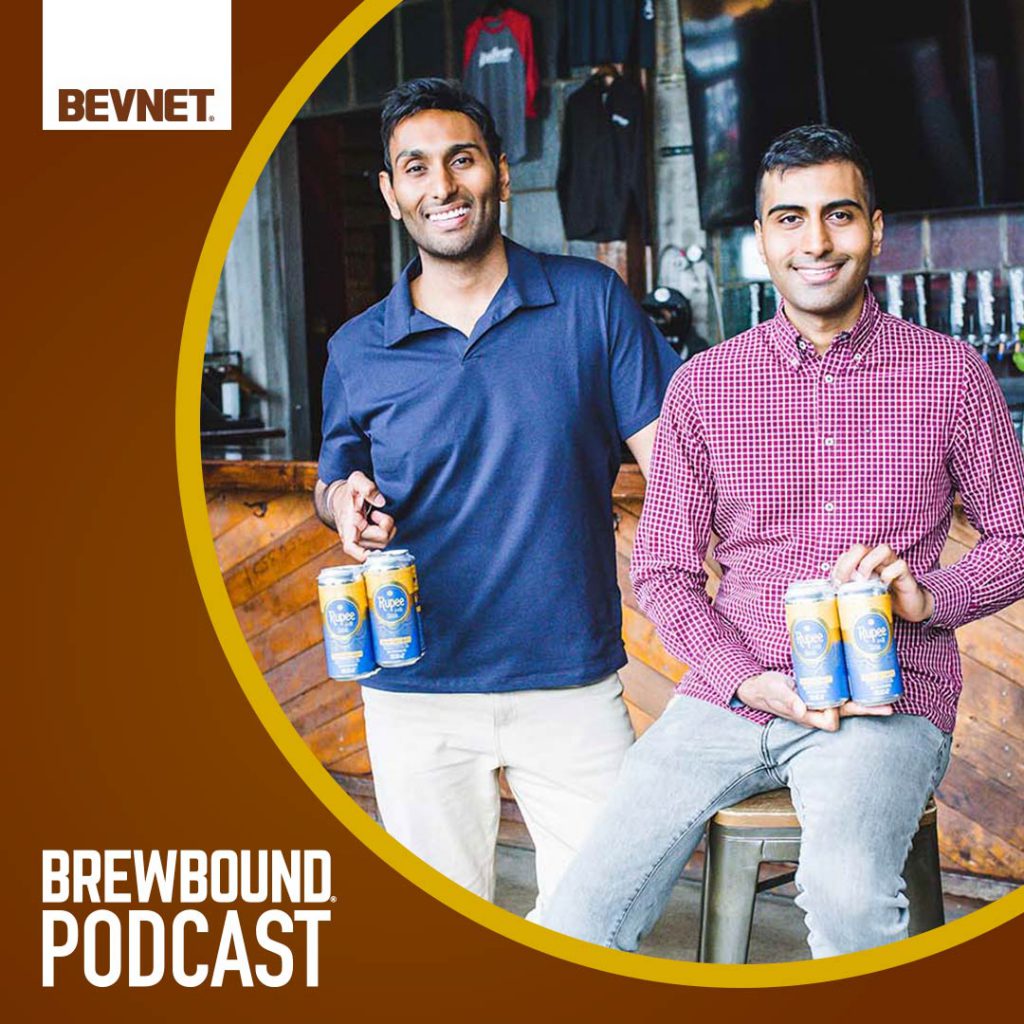
August 21, 202554 mins
Rupee Beer Poised for Indian Cuisine’s Breakout Moment
Rupee Beer founders Van and Sumit Sharma believe they’re ready to meet Indian cuisine’s moment.
On the latest edition of the Brewbound Podcast, the brothers share their journey of launching the Indian American beer brand during the COVID-19 pandemic as an add-on purchase at their family’s restaurant. Today, Rupee has expanded distribution to 18 states – most recently California – and the Sharmas are readying for an “explosion” of Indian restaurants entering the U.S market.
“We’re doing something that really directly ties it into the only story that we know, which is restaurants,” Van Sharma said. “That’s what we grew up in, more specifically, Indian restaurants.”
Rupee’s beer has found its way onto menus in Thai, Middle Eastern, Persian, Latin American and Caribbean restaurants.
“Anywhere global flavor, spice, those things hang out, that’s where we’re operating these days,” Van Sharma said. “Legacy brands out there definitely paved the way, but we’re doing something a little bit different, which also involves a little bit more of the local, craft American space as well.”
Although the Shamras built Rupee’s business primarily through the on-premise channel, they’re now getting the attention of national retailers and they’re leaning into their chain business.
Rupee is bringing new innovation to the Indian beer segment, which hasn’t seen an influx of new brands, Van Sharma added.
Later in the episode, the Sharmas discuss their strategy for engaging consumers and gaining their attention in retail stores, as well as their approach to building their distribution network and where they want to go next.
Plus, Justin, Jess and Zoe catch up on the latest headlines, including why it’s not time to panic despite the Gallup survey’s recent results on Americans drinking habits. They give a legal update on Uncle Nearest and the recipe agreement dispute between Schilling Cider and Incline. They also recap recent bev-alc experiences, from a growing dislike for black cherry flavors, to a sweaty trip to the Iowa State Fair.
Listen here or on your preferred podcast platform.
Listen