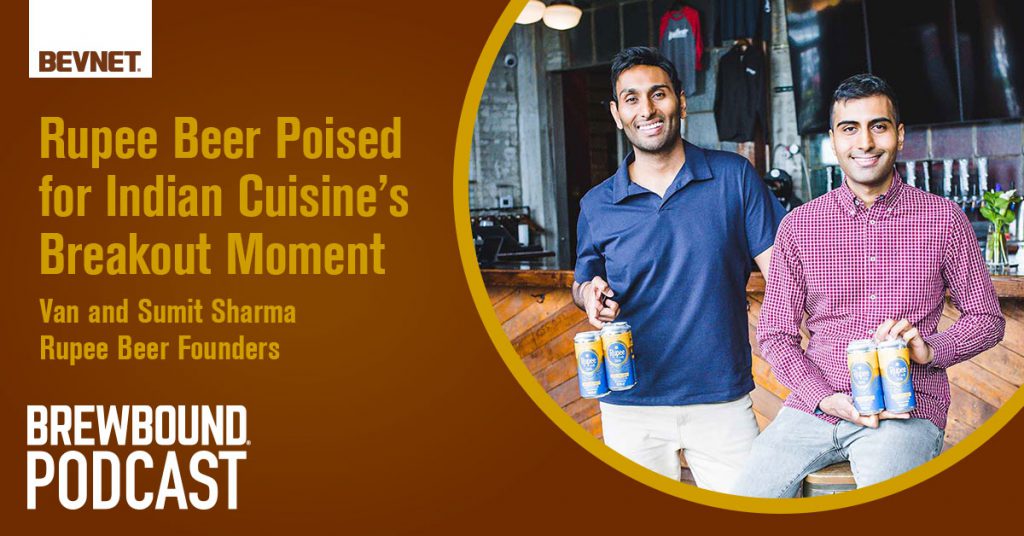
[00:00:00] Justin Kendall: Heading to CBC? Kick things off the day before at Brewbound's meetup at Love City Brewing in Philly, Sunday, April 19th from 5 to 7 p.m. Connect with beer industry leaders, grab a drink, and catch up with the Brewbound team. It's free to attend and walking distance from the convention center. Head to Brewbound.com slash lovecity.rsvp. And don't forget to catch the Brewbound team at booth 956 during CBC. Next on the Brewbound Podcast, Rupee Beer founders Van and Sumit Sharma share their expansion plans. Hello and welcome to the Brewbound Podcast. I'm Justin Kendall.
[00:00:50] Jessica Infante: I'm Jessica Infante. And I'm Zoe Licata.
[00:00:53] Justin Kendall: How y'all doing? How was your weekends? How you feeling?
[00:00:57] Rupee Beer: Zoe had a way more fun weekend than I did. So I just want to go first so that I don't sound sad. I took a paddle boarding class yesterday. It was yoga and paddle, but like yoga on the ground. That's very exciting. I didn't fall in. That's extremely impressive. Right? Like I am the clumsiest person on earth and I was like fully prepared to be like diving into Salem Harbor. Not once. A few times, but I caught myself. I'm so proud.
[00:01:23] Justin Kendall: Anybody fallen? Nobody. No fall ins?
[00:01:26] Rupee Beer: No. That's shocking. One woman lost the paddle part of her paddle. I'm sure that's got a name. You know what I mean? And we just declared it gone. And the instructor's gentleman companion gallantly gave up his paddle to this fellow classmate. And he like laid down on his board and like swam paddled. But that was it. Only mishap. Really nice to see Salem Harbor from Salem Harbor. Usually I see it from my living room window.
[00:01:56] Justin Kendall: You're becoming a Renaissance woman.
[00:01:58] Rupee Beer: A little bit. I don't know that I'm going to go buy a paddle board, but I would rent one again.
[00:02:02] Justin Kendall: Is this the first of many classes or just one and done?
[00:02:07] Rupee Beer: No, no, it was one and done. It was run through my local YMCA. I don't think they have any more scheduled. Next weekend is yoga on the paddle boards. And I got to say I'm out on that. Zoe, you had a super fun summery North Shore of Massachusetts weekend.
[00:02:24] Jessica Infante: I did. I went to Newbury and Newburyport for the weekend for a friend's birthday. Our family lives up there. Went to Plum Island and went to the beach on Saturday, and then of course had to make a stop over at Sunset Club afterwards, which I have never gotten so many DMs from people who saw that I was in Newburyport and said, oh, you have to go to Sunset Club. And I was like, well, I'm already here, but thank you. So apparently this is the spot to go. It is. I had a very, very strong frozen margarita, which was delicious, but yeah, quite a good spot. I'm into it. This is the second year we've done this and second time stopping at Sunset Club.
[00:03:05] Rupee Beer: Oh, here I'm all, you should go here and here. You've been, you know. I apologize.
[00:03:10] Jessica Infante: No, it's good. It was a good time. I liked it. It was with a lot of Gen Zers who were drinking basically exclusively high noon the whole weekend. The other things on the beer run list were Coronas and there was a bottle of Tito's and a bottle of tequila. I don't remember what brand it was.
[00:03:29] Rupee Beer: Did any of the unwanted black cherries make their way in?
[00:03:32] Jessica Infante: No, no. So what Jess is referring to is I send a screenshot from this group chat talking about the beer run, and everybody was requesting high noons saying, do not get a pack with black cherries, please. So black cherry is out, I guess now. People are not into the black cherry flavored high noons or seltzers, which I've been advocating against black cherries since day one. So I'm for this new flavor banishment.
[00:03:58] Justin Kendall: That's a very hard flavor to get right.
[00:04:01] Jessica Infante: It's just so weird to me that it was like the flavor. Every single brand, like seltzer brand and everything, had to have a black cherry. And I was not into it. They're always the ones left over.
[00:04:13] Justin Kendall: The ones that aren't good always taste like cough syrup.
[00:04:16] Rupee Beer: I wouldn't think there really are any that are good. Yeah.
[00:04:21] Jessica Infante: So what do people like? I feel like peach is really popular. Just like a classic lemon is pretty popular. I think that's partially because everyone's also drinking teas half the time. They mix well.
[00:04:34] Rupee Beer: Are there lemon high noons?
[00:04:36] Jessica Infante: Yes. Really interesting. In the variety packs, yeah. Some of the more tropical flavors I feel like are the most popular ones.
[00:04:44] Rupee Beer: Guava.
[00:04:44] Jessica Infante: I enjoy watermelon. I am a fan of the cranberry, which is only in a certain variety pack. But I like the more like tart ones. Fair. I'm also a defender of grapefruit, even though people have a love-hate relationship with grapefruit.
[00:05:00] Justin Kendall: I like grapefruit.
[00:05:02] Jessica Infante: It's fine. Justin shook his head in disgust.
[00:05:06] Justin Kendall: No love for grapefruit.
[00:05:08] Jessica Infante: So yeah, I'm curious if we get another flavor report for this year. What's now the number one flavor with the seltzer crew?
[00:05:16] Rupee Beer: I don't know. I think the three of us could share a variety pack pretty nicely. Yeah.
[00:05:22] Jessica Infante: Did we just demonstrate the positives of a variety pack? I think we did.
[00:05:26] Justin Kendall: I didn't hear any spicy flavors though. Were there any spicy flavors? Because remember that was like the whole thing.
[00:05:33] Jessica Infante: Yeah.
[00:05:34] Justin Kendall: I feel like coming into the year.
[00:05:35] Jessica Infante: Yeah. The flavors for this year was supposed to be like fruity and spicy. No, the only spicy thing around was I brought a couple tall boys of Modelo, Cholada, the mango chili ones. That's as close as we got. And no, no one was partaking of those. Those were for me, me, myself and I. No, we even went out for Mexican food one night and I don't think anyone got any spicy drinks either. Go to Agave. And we went to Puerto Vida because they like to do crazy birthday celebrations. Oh, fun. Yeah. Lots of flashing lights and sombreros involved there. And tequila shots, of course. As one does. Yeah. It was a good time. So I highly recommend a weekend in Newburyport.
[00:06:22] Justin Kendall: The tourism board thanks you.
[00:06:25] Jessica Infante: I don't really think they need it. I'm sure they're fine.
[00:06:29] Justin Kendall: I think they're doing all right. The Iowa State Fair might need it.
[00:06:34] Rupee Beer: Justin, you went to the fair. How was it?
[00:06:36] Justin Kendall: I did. I don't remember the last time that I went to the Iowa State Fair, but I do have a three-year-old who does not recommend.
[00:06:44] Jessica Infante: Oh no.
[00:06:45] Justin Kendall: Yeah, she went from being super excited about it to like, it was hot. It was nearing 90 degrees and the humidity here has been disgusting. So we went super early in the morning to try and get everything in that we could do before it was a complete meltdown in multiple ways. Started off well, got a picture with the Iowa State Fair sign and we were trucking along and maybe she walked too much, you know, and just overheated. But my daughter, Sophie, just... wasn't having it after a while. And some of the games weren't open early enough. So it was a mix of timing and all that. But I did take a look at the Iowa State craft beer tent. The craft beer tent was massive and it was kind of impressive to see. And I would have liked to have seen it at night to see how much people were indulging in craft beer there. pretty good spot next to a very good barbecue joint, which is smoking. And I didn't have any beers because it was 9 a.m. in the morning, but there were definitely people who were getting beers by, I want to say around 11 a.m. Was there a new fried food on a stick item this year? The big thing that was getting promoted this year was a $600 lobster roll. I think there was a drink pairing too with it, but it was absurdly priced. And of course, it's one of those things that the local news is always going back to. I did not get that. We did get $5 cookies.
[00:08:25] Rupee Beer: So $600 lobster roll because it had to travel from the coast or because it was huge? What are the pricing factors at play here?
[00:08:34] Justin Kendall: I couldn't tell you. Greed and gluttony.
[00:08:36] Rupee Beer: And how many lobster rolls generally are there in Iowa?
[00:08:40] Justin Kendall: Not that many, other than the ones you sent that I'm aware of.
[00:08:45] Jessica Infante: Yeah. So this roll includes gold flakes and caviar. Oh, fancy. It's bougie.
[00:08:53] Justin Kendall: I know that they sold one, not to me.
[00:08:58] Rupee Beer: I asked this question because, so I went to college in New York and the great New York fair, I think is its official name, is in Syracuse. As a journalism major, I'm sure you both know, like we had to read the local paper, which was the post standard. And there was so much coverage of the fair food every year. And it was always one of those things where I was like, this sounds fun. Like, I think I should go to this. And I have been to that fair once only to see James Taylor who was performing.
[00:09:23] Justin Kendall: Jeff Leppard was a headliner this year.
[00:09:25] Rupee Beer: Oh, very nice. Did you go? You should have.
[00:09:30] Justin Kendall: Uh, no, that was the night before. I kept asking Sophie, you know, what was your favorite part of the fair? And she's like, I did not have fun. She mowed through some cookies. So maybe by next year, she'll forget that she didn't have the best time this year. And maybe it won't be 90 plus degrees and high humidity.
[00:09:54] Rupee Beer: Do they make like those neck fans for children? I don't know. Probably.
[00:09:58] Justin Kendall: Maybe they do.
[00:10:00] Rupee Beer: Well, I know what Sophie's birthday present will be.
[00:10:03] Justin Kendall: Yeah. A neck fan.
[00:10:04] Jessica Infante: Yeah. All right. Should we talk about beer news?
[00:10:07] Justin Kendall: Yeah, probably. Yeah. This week we've got guests. As we mentioned, Jess and Zoe are going to chat with Rupee Beer Founders Van and Sumit Sharma. So stay tuned for that. We also got to plug Brewbound Live. That's coming up December 10th and 11th. And we're going to be joined by the great Burkhard Nessen from Rabobank, who's going to be talking about the myths and realities of Generation Z and other generations. So you can get your tickets now, brewboundlive.com. But yes, let's get into some news. It wasn't good news from Gallup because they reported Latin American are drinking less. They said that 54% of Americans reported that they drink, which is the lowest point in the Gallup polls near 90-year history, a record low. 24% said they had a drink within the last 24 hours, and 40% said it's been more than a week. But there's a disclaimer, and our usual reality check comes from Brewers Association CEO Bart Watson, who said, take the data with a grain of salt. He reminded us that around 1,000 people take this survey. It's relatively small. Plus, it might be skewed by some underage consumers, because they do poll 18 to 20-year-olds as well. And I'm gonna throw mine in there. People lie.
[00:11:27] Rupee Beer: Yeah. People do lie and people like misremember, you know? Yeah.
[00:11:31] Jessica Infante: I also think it's notable that this is a phone survey. And I don't know how many people, especially young people, are answering phone calls from random numbers these days. So I am sure there's some skewing in the demographics of people who will answer and complete those phone calls with who is drinking alcohol. There's definitely a lot of other factors going on here.
[00:11:53] Justin Kendall: I believe Gallup said that 80% of the responses came from cell phones and 20% landlines.
[00:12:00] Jessica Infante: I'm not answering a random phone on my cell, ever. A random number on my cell phone. No thank you.
[00:12:07] Justin Kendall: A couple of other notable points, number of drinks per week is down to 2.8. That's down from 3.8 last year and around for the previous seven years. And women drinkers are declining a little more rapidly than men.
[00:12:24] Rupee Beer: Which is interesting because I know Burkhardt's research does not point to that among younger LDA consumers. I also think people have been so beat over the head lately with stories questioning the relationship of alcohol and health, and not at all that I'm putting on a tinfoil hat, but I feel like people hear this a lot more. It's just been in the background, like a really steady drumbeat all year. And so I think people are being slightly influenced by that. And I'm team Bart on this. I think huge grain of salt here. There's a lot of trendiness at play. And we'll see if people are still feeling the same way next year.
[00:13:00] Justin Kendall: And they played that up too in the report, was talking about moderation and cutting back due to health reasons and that sort of thing. Also a bigger drop in the number of Republicans who said they drank than Democrats. Like a large share, like a 19% swing within the last two years, I think it was.
[00:13:22] Rupee Beer: Well, I think there are very prominent influential voices on that side of the fence that don't drink alcohol. And I think that's trickling down.
[00:13:31] Justin Kendall: But that's the Gallup poll this year, and you fully expected people to overreact. I don't think any of us are overreacting. I'm certainly taking this with the thinnest grain of salt, but we'll see where it is next year.
[00:13:45] Rupee Beer: Yeah. It's like a good snapshot from this moment in time.
[00:13:51] Justin Kendall: Well, Zoe, you were very busy last week reading court documents in the Schilling-Incline-Sider dispute with Schilling-Suing-Incline, and this is over a recipe agreement.
[00:14:04] Jessica Infante: Yes. So Schilling Cider has filed a civil complaint against Incline, who they have been, Schilling has been producing the ciders for basically since Incline's inception in 2015. So they've had numerous agreements over the past 10 years because of that partnership. And one of those agreements was this recipe agreement that they signed a few years ago. And so it hasn't been happening since the inception. This was 2019 was when this started. And that basically mapped out that Incline owned the recipes for the ciders that were being made for them by Schilling at Schilling's facilities. But if Incline acted in a certain way and there's numerous listed things that could happen, then Schilling Cider the option to buy those recipes for $1 and they would have ownership of all of them. So what then happened recently as of June was Incline informed Schilling that they were going to move their production away from Schilling to another facility. That facility was not named at first, but we later found out in court documents that that was Ninkazi's facility in Eugene, Oregon. And Schilling Cider, well, you can't do that. You can't bring these recipes for these drinks that we basically created for you and have been producing for you for years. Those are ours now. You are breaking this contract. You have allegedly, according to Schilling, have already shared these with this other third party, their backing for that is all they thought that Incline had cut back on their production at Schilling Cider was already starting to try things out at Ninkazi. And so Schilling took that option to buy the recipes and saying they have ownership now. So that was up for debate in the courts. The judge has now enacted a preliminary injunction saying that Incline cannot share the recipes with a third party. If they have shared it, they need to tell that third party they have to get rid of them, that they cannot use them. They have to guarantee that they are not going to use them. Where this gets really messy is just the disagreements and still after this injunction continues to be disagreements about what even is a recipe, what elements of what goes into a cider counts under this recipe agreement, what Incline can share with other people or can't. Incline is saying, you know, we never even had certain details on the cider base or on the amounts of certain ingredients that are going into our ciders. All the information we have allegedly is already public information that is shared with third parties such as the TTB. So you can't protect that information that is allegedly already out there. And so they intend to continue to make their ciders what that's going to look like. We don't really know. It's going to have to continue to see what the courts say about it. Schilling Cider saying, we want the public to continue to have these ciders, but we created these, we want to keep these. So they have teased that they're going to come out with a whole new brand that uses the same recipes, but will be owned by Schilling. There's a lot going on. I dove into lots of court documents. If you go into the story on Brewbound.com, there's more quotes from everybody on their perspective on this. But It's quite a mess. And it's a bit of a reality check on some of these contracts that people might have made 10 years ago when they were much smaller companies about when it comes to co-packing or things like that, maybe needed some more ironing out or more specific language. And I'm pretty sure this is not the only case where an agreement or contract like this exists that now as breweries and cideries and other companies are starting to move on or go to other places or explore other contract options. They're finding themselves in a bit of a murky situation.
[00:17:46] Justin Kendall: I was shocked. And I mean, this isn't a judgment or anything, but I was shocked that Incline claimed to not know the recipes. That'd be like Colonel Sanders or, you know, Coca-Cola being like, I don't know the recipe.
[00:18:02] Rupee Beer: There's 11 herbs and spices, but who knows which ones?
[00:18:05] Justin Kendall: Yeah. Take your own guess.
[00:18:08] Rupee Beer: Yeah. I don't know how much this factors in, but I'm pretty sure that recipes are like super loosely defined as intellectual property. So like with recipe bloggers, you know, somebody will take a recipe from somebody else, change one very small thing. And then they can publish it as their own and there's no real problem. So I don't know if that factors in here. It's a wildly complicated story. You did a really good job breaking it down and making it understandable.
[00:18:35] Jessica Infante: Yeah. There was a temporary restraining order and then also the preliminary injunction that came afterwards. One of those documents, the judge had defined it as plus or minus 15% of what the actual recipe outline was for some of these ingredients. So that might be where the baseline is. for if they can like change things up and how much they can change things up. But yeah, there's a lot going on and a lot of differing opinions between the two companies. And I am very curious to see how it's going to continue to play out because even with this injunction, they seem to still disagree on what that means for what happens next. But Schilling Cider going to continue to produce for Incline, they say through the end of the year when their contract is officially over. Right now, they said they're producing about like 60 to 65% of what they normally would be for Incline, but that is Incline's decision. So we'll see how it continues to play out.
[00:19:32] Rupee Beer: A lot of courtroom drama last week. Yeah.
[00:19:35] Justin Kendall: Yeah, and the one that we talked about on last week's podcast came back around and the judge in the Uncle Nearest case is going to appoint a receiver. However, the weavers are going to stay involved in the brand through this process. And they all have until August 20th. So midweek this week, they're all supposed to submit their nominations for a receiver. So the Weavers submit their candidates for a receiver and the bank gets to do the same. Anything else to talk about in this case?
[00:20:13] Rupee Beer: I don't think so. I feel like Farron did a great job last week, so.
[00:20:18] Jessica Infante: She'll continue to cover it, so you'll see it both on Brewbound and BevNET as it happens.
[00:20:24] Rupee Beer: Yeah.
[00:20:25] Jessica Infante: A lot of news.
[00:20:26] Justin Kendall: Yeah. You all did great last week in covering, in my absence, some of the stories out there, like Total Wine CEO leaving. We've got a lot of data dives that are going to be on the site this week. We have a story that just did on new investment at Ballast Point. We've got the update on Scout selling off its last distribution piece in Idaho. We've got a profile of Tip Top Cocktails, Kindred Spirit Series with Craft Brewers and much more. So if you're an insider, you can read all of that. So subscribe now, but before we get out of here, let's do another round or tabbing out. And Jess, you brought this one up that's coming to Walmart stores.
[00:21:08] Rupee Beer: Yeah, so you know you hear about collaborations all the time, breweries with other breweries, breweries with clothing brand lines. I will admit those I don't always understand, but here's one that you don't hear that often. And though, you know, everything about it to me makes sense. So Pabst Blue Ribbon is pairing up with Campbell's for their Chunky Soup line, which, you know, I believe these are the soup commercials that have football players in their moms, right? Yes. Very cute. Very cute. So these two brands have paired up to create two different new products that are exclusively available at Walmart. Is that what you just said?
[00:21:45] Justin Kendall: I believe they are. Yeah. Available exclusively at Walmart.
[00:21:49] Rupee Beer: So yeah, cross collaboration between Pabst and the Campbell's Chunky Soup line. And I don't know, I want to hear your thoughts. We've talked about this before we started recording in a weird way. I never thought I would say this, but I think I'm on board. So there's two soups coming out here. There is the Campbell's Chunky and Pabst Blue Ribbon Beer Cheese with potatoes and chorizo. And then there is also the Campbell's Chunky Pabst Blue Ribbon Beef Bacon and Beer Chili with beans. I personally would not eat that, this is a me thing. And Zoe, I know you're out on both. And I don't really know how in I am on canned soup in general, or mostly soup. I'm not a big soup guy, but controversial, right? Sorry, we'll save that one for when we get into soup season. But a rare one of these where I am not gonna curmudgeon out, I think I'm on board.
[00:22:41] Justin Kendall: I'm not gonna poo-poo it either. As a former chunky soup eater, ate a lot of sirloin burger in my youth.
[00:22:49] Rupee Beer: Well, I mean, I feel like the you of your youth is absolutely who this is going for.
[00:22:54] Justin Kendall: Yeah, I think that this would probably speak to him a little more. You know, I'm more likely to get chili now from an actual restaurant or deli. I don't have any canned chili sitting around here. I'm going to Palmer's here in Iowa.
[00:23:11] Rupee Beer: Yeah, I feel like that's probably illegal in some parts.
[00:23:14] Justin Kendall: Yeah, but I wouldn't poo-poo this either because I think that it actually feels like it works. The soups work, brands, kind of that blue collar. So yeah, I see it.
[00:23:28] Rupee Beer: Yeah. Zoe, what do you think?
[00:23:30] Jessica Infante: Yeah, it doesn't feel as much of like a stretch as some of these collaborations have in the past, not specifically with PBR, but just beer brands in general. So I'm into it and I love soup. I cannot participate in consuming either of these flavors, but if they had a vegetarian option, I would. Also, I love canned vegetarian chili, highly recommend. So if they want to throw that one out there, I'll eat it. Nice.
[00:23:56] Justin Kendall: There you have it. I'm a little bit surprised that we had a consensus on this one.
[00:24:02] Rupee Beer: I feel like we never agree on this.
[00:24:04] Jessica Infante: I know. I don't know if that is telling of just the state of beverage alcohol right now or the world. Maybe you're just happy with a very simple collaboration.
[00:24:16] Rupee Beer: Beer cheese soup, I am here for all day. If it works, it works.
[00:24:20] Jessica Infante: Yeah. I don't necessarily see people lining up at their local Walmart to stock up on cans, but...
[00:24:27] Rupee Beer: No, but look, I mean, this is like a really easy pairing.
[00:24:30] Jessica Infante: Yeah. I see a blue collar guy going in after work, grabbing one, and then maybe a six pack of PBR. And yeah, he's good to go. Yeah. There's his Friday night. Exciting.
[00:24:44] Justin Kendall: It might be a Tuesday too. Who knows? Well, I think with that, we should get to our featured interview with RoopieBeer founders, Van and Sumit Sharma.
[00:24:58] Rupee Beer: Our guests today are Van and Sumit Sharma, the brothers who founded Rupee Beer, a fast-growing beer brand inspired by Indian cuisine. Guys, it's great to have you. Van, you and I and Zoe connected, what was that, March, in Portland during the Craft Brew Summit. It's so good to be with you again. How are you doing?
[00:25:14] Sumit Sharma: Very well. Thanks for having us. Really excited to be here. And yeah, great to see you in a warmer time of the year.
[00:25:20] Rupee Beer: So right, I mean, we just had a whole conversation about neither of us are sitting in air conditioned rooms. So you may hear that as this conversation progresses, but Sumit, it's so great to meet you. How are you doing?
[00:25:30] Brewbound Podcast: Likewise, doing well. We appreciate you having us on as well.
[00:25:33] Rupee Beer: I feel like we've gotten your press releases for Rupee for years now. And I always assumed that your press releases were so professional looking and so well done. And you were always touting like these huge chain launches like Trader Joe's or whatever. And I was super impressed and I assumed the organization was huge. But in getting to know you both and the brand, I feel like you're out kicking your coverage here. You guys are super scrappy and you're doing really well. So congrats, super impressed with what you've been able to do in a short period of time.
[00:26:01] Sumit Sharma: Thank you. It's not our first rodeo. So we come from a startup world. I exited a business previously in London, done different things before, and we come from a family of entrepreneurs. So very much so. Yeah, we're always doing something. Auden used to always share from Rupee Beer, and we are grateful. What started as a small little project during COVID-19 has now grown into something a lot larger and continues to grow. So yeah, kind of a hashtag startup life, leaner team, but definitely as we scale, as we grow, and as we naturally have interest from a wider consumer base, we are very grateful.
[00:26:36] Justin Kendall: Why did you want to get into beer? Because you mentioned that you've done the startup thing before. You come from a family of entrepreneurs. The category has hit some rocky times lately, but what made you see an opportunity here and why did you want to get in?
[00:26:50] Sumit Sharma: Had I known all the things I know now, would it be the right choice? I'm sure a lot of people say that obviously because of three tier being one of the big things. Also, a lot of folks don't recognize and realize that that's part of the industry. Yeah, for us. So we're from the restaurant business or our family over half a century in Indian restaurants. Their first car started in Germany, then the United Kingdom where we were born. And then when we immigrated to Maine in the late eighties, going into that world. So for us, we've always known Indian restaurants and also. When we were younger, we used to sell Indian beer in these restaurants when we worked there to make extra tip money during high school, during middle school, etc., helping out. So yeah, we like beer. We've traveled a lot. So one of the first things we always do when we travel somewhere cool or exotic is try a local lager, the national lager on tap, whether you're in Africa, whether you're somewhere in Asia, Latin American. That's a really big format, even when we weren't old enough to drink. You definitely need to dabble in the local beer scene wherever you are in the world. So that was kind of always something really interesting to us. And yeah, I think figures like Anthony Bourdain, right? A very sort of culinary first type of personality that really made the restaurant space look cool and growing up in that space, really aspiring to kind of operate in that world. So I never thought I'd be in beer or some as well, but I guess as any good entrepreneur says, finding a problem at the right place at the right time. And I think that's what happened during the pandemic. And from there, the rest kind of just brewed into something, you know, a little bit larger.
[00:28:13] Rupee Beer: I know the idea struck you during COVID and you were both helping out at the family restaurant. Walk us through the thought process there, because I feel like that time for people in the hospitality was really scary and uncertain, but something really great came of it for you guys. What was that like?
[00:28:30] Sumit Sharma: Very scary time for sure, very uncertain. But for us, I think it was, looking at it from an optimistic standpoint, I had just moved back from London. I was in England for a decade. Sumit was in Australia. We didn't really have much going on. I had exited a previous company I was with. So naturally our parents put us to work and said, hey, we need help, we're busy. And this was also during the time when there was a big push on, you know, support your local owned businesses, your family run restaurants, go to takeout, add on a bottle of wine, add on some beer to really boost their sales. So it was during that era where a lot of people were just trying to support local family-run restaurants in the community. And naturally during that phase, we saw a really interesting problem with this push from the government and media saying, listen, like add a bottle of wine onto an order to help them with their sales. People were doing that locally asking, can I get a bottle of Indian wine or can I get some extra beer to add on? And naturally we just didn't have Indian beer available. Taj Mahal just wasn't available during that era. And they just weren't sending containers from India, right, during that era. So from there, that was an interesting problem that we saw that had come up previously also in the 90s, into the 2000s as well, just having regular supply of Indian beer in the US market. So we knew that and customers would often ask, where is this beer? Can I get it? It's not on the menu. So we wanted to brew a beer that was just specifically actually designed to pair with the food that we grew up with and solve this problem. So yeah, it was a very interesting time to get the project started and really kind of look at things from a different lens.
[00:30:00] Justin Kendall: It's always said that brands are built in the on-premise and building a brand in the on-premise at that time sounds extra difficult. So how did you get moving, get things up and running at that time to allow you to add on beer to those orders?
[00:30:18] Sumit Sharma: Yeah. So I think for us, we were busy, obviously helping with the restaurant and doing our R and D. This was probably during that phase where all this R and D was happening. Sumit and I, as much as we love drinking beer, we don't know how to brew it. And we knew that very well. So we knew we had to align with someone that could really help us. So we researched consultants and brew masters all over the world. in Canada, in Australia, in Belgium, in the Netherlands. We spoke to various people and randomly came across Alan Pugsley. He was a local gem of a resource. He's one of the co-founders of Shipyard, which is one of Maine's most successful beer brands. I believe it's a top 25 brand still, but also has launched almost 100 other breweries around the world. And coincidentally, he was a customer of our family's restaurant. He's British. So he had a huge understanding of Indian culture, Indian cuisine. England is a big part of this sort of conversation. Also, we were born there and we have some really great people from the UK helping us also. But in that sense, that's kind of how it started. We sat down, started doing R&D, looking at beers we liked, the profile of beers. And also just wanting to reverse engineer a recipe that was less carbonated, that was super smooth, that was actually going to pair with a really spicy meal you're about to eat or something super full. If anyone's had Indian food before, there's a lot of flavor profile, a lot of spice. So we really wanted to tone down a lot of the extra craziness that you see often in craft and create something with also an interesting brand that not only resonated with Indians and Indian American, but more of an international consumer. So hopefully that answers the question.
[00:31:48] Brewbound Podcast: Yeah. Even though we weren't selling or making sales at the time, we were still in more of the brand research, the R&D stages. Even with the lockdowns and COVID going on at that time, that actually slowed down that process even further, just getting through government compliance, getting hearing back from lawyers, getting samples, working with contract breweries. So it was definitely like a snag on that end also, even though we hadn't started selling the actual product until after the lockdown had lifted.
[00:32:13] Justin Kendall: Yeah, I was going to say, how long did it take you to go from R&D to getting that product out during that period?
[00:32:19] Sumit Sharma: It was about a year, I would say 12 months. And also a lot of problems. During that time, a lot of people just didn't believe that this would ever go anywhere. They were not taking us seriously. It was really interesting. We got some introductions, obviously, through the people that have helped us in the beginning. If it wasn't for those, uh, yeah, a lot of people just saying, no, I don't think Indian people drink beer like that. Or I don't think there's an actual void in the market for this, or I just don't think that this is really going to be what you all think it is. Do you all have even the expertise or the resource to make this happen? So that was really interesting. And fast forward, you know, through all that ended up in Boston where we launched our product. And that's kind of where we would have loved to have the product, you know, launched in Maine and brought it home to where we grew up. But Boston was our first port of call. And we're really grateful that that's actually where the journey did take us for the first five years in our brewing journey.
[00:33:08] Justin Kendall: Who were the most skeptical?
[00:33:11] Sumit Sharma: We're not going to name names on the podcast.
[00:33:13] Justin Kendall: I just mean, like, was it Middle Eastern? Is that what you were hearing from distributors? Or was it retailers? You know, where was that critical feedback really coming from?
[00:33:22] Sumit Sharma: Yeah, that, but also I would say more importantly, even was just finding a place to actually contract brew. So I think even five years ago, the contract brewing space wasn't as robust as it is now, where for a lot of people, they just maybe didn't have the mean, a lot of excess capacity, but perhaps necessarily not the commercial knowledge to capitalize on that and figure out an actual business model for that, especially in Maine. So I think in that sense, there was just a lot of people that didn't know, kind of wished us well. And from there, it was great. We will drink your beer and move on to the next step.
[00:33:52] Rupee Beer: I can't believe somebody told you that Indian people don't drink beer. Like what a wild thing to say about over a billion people.
[00:33:59] Sumit Sharma: Yeah, we hear some wild things. I can't even imagine.
[00:34:05] Rupee Beer: So I know we talked about like the Indian brands of beer that just weren't getting here, but how much have they been able to really break through the market in general? Because I don't know that they're really ever get mentioned like Kingfisher, like sometimes comes up in terms of in court conversations, but they're not really set in the same breath as say like a Sapporo. Yeah. What was their market presence before?
[00:34:28] Sumit Sharma: the world. diaspora community, but if you look at Japanese beers, they're nowhere even near the population levels that we're at, yet they've been so successful and they dominate the space. Sumit and I are always in the market and we go to some really rural places also. And when you're in like a Kroger in the Midwest or Kroger somewhere in Texas and you see a massive Sapporo build out or display in a very rural part of America, it really makes you sort of see a very interesting sort of standpoint that Japanese beers have really had really great success. in the last few decades in the US. So for us, yeah, to answer the first part of the question, there's legacy brands like Kingfisher that we grew up selling. I have tons of pictures of me when I was like four or five years old behind the bar at one of our restaurants holding a Kingfisher or behind like a Kingfisher Taj Mahal sign. We knew how to sell those beers from a very early age, very early on. And from that, I think there hasn't been as much innovation going on in that category. So for us, yeah, we're doing something that really, I think directly ties it into the only story we know, which is restaurants. That's what we grew up in, more specifically Indian restaurants. But even just beyond that now, Rupee's placed on so many international menus across America. We're in like, you know, Thai restaurants, Middle Eastern restaurants, Persian restaurants, Latin American, Caribbean restaurants. So it's really interesting to see as we grow and scale, anywhere global flavor, spice, those types of things hang out. That's kind of where we're operating these days. And the legacy brands out there definitely paved the way, but we're obviously doing something a little bit different, which also involves a little bit more of the local kind of Latin American space as well.
[00:36:20] Brewbound Podcast: Also, if you look even like just Japanese cuisine, you see probably the kind of the boom for Japanese cuisine when it kind of took off was probably around the 90s, early 2000s. So if you're looking at Indian cuisine in comparison, we're kind of having our moment now. Right now. So yeah, you see Indian cuisines like just so much more common knowledge for people, you know, Chinese restaurants were probably also in the 90s, a lot of common knowledge, but Nowadays, Americans are more global. They have a lot more immigrants in the U.S., so the knowledge of Indian cuisine is on the rise right now. I would say this is kind of our year, the year that's kind of taking off the past several years. So I think with that increase in consumer knowledge on Indian cuisine, Indian food, seeing more Indian brands showing up on grocery store shelves in the food aisles ready to made, you're going to see also congruently like an increase in the Indian beer segment as well.
[00:37:06] Rupee Beer: Let's kind of get into your volume right now because you obviously, like you guys grew up in the on-premise, the brand was built that way. How does your volume split today, like four some odd years on? How much is off and how much is on?
[00:37:19] Brewbound Podcast: Yeah, so definitely, like we mentioned before, this was a brand originally built with the idea of going to the on-premise, like Indian restaurants, for example. So right now we're around 60% on and 40% off, but obviously now we've seen the importance of chains and chain off-premise placements. So we're definitely leaning into that a little bit more, making that more of an emphasis over the past year and going forward also.
[00:37:39] Sumit Sharma: Yeah, so it's at the point now we're so grateful. National retailers are reaching out to us during reset time. So that's really exciting when that happens. We never would have even looked at this angle five years ago because we didn't know much of it, right? For us, it was literally, we're just trying to brew some beer for our restaurant. And now it's, hey, you should actually be focusing on these specific avenues, these channels. So for us, definitely, it is a huge focus moving forward as we build out our brand, as we really get the Rupee name into more verticals. Yeah, naturally, it takes time also. So we're definitely sort of, you know, doing all those things with our distribution networks to really create a really strategic strategy.
[00:38:17] Brewbound Podcast: Is draft part of your business? So currently draft is not, but that's probably a number one question we get from distributors and restauranteurs is when are you guys going to come on draft? Are you available on draft? And that is something definitely we have started the process on getting going. We definitely realize that we will need it. But when we first introduced the brand, we really wanted to have consumers that are sitting at a restaurant, see the packaging on our cans, the labels, because on each label we have a story to tell. about the history of the rupee the currency but also the history of our brand and why it's made specially to pair with Indian and spicy cuisine. And if we were just going through a draft we would lose that storytelling ability. It would just be another name on a menu and then people get a glass and it shows up on their table. So that was why it was really important for us to start at least to have the can packaging available because it's free. It's billboard space for the consumer for us to share our story. But yeah that is definitely something we know we need to go into.
[00:39:14] Rupee Beer: that's such a great point about just having a physical item to be able to tell your story to the consumer in, you know, the on-premise setting. Packaging, what are we in right now? Only cans?
[00:39:24] Brewbound Podcast: Yeah, so right now we're exclusively, we have 16-ounce four-packs in a carton that we're doing. We are experimenting possibly in the future with going into 12-ounces, 12-ounce six-packs, or even 12-ounce 24-packs, just seeing what kind of demand is coming from off-premise. The 12-ounce is selling in scan data, so that we look at that also.
[00:39:43] Sumit Sharma: As we grow, as we scale, and also as we have more resource, we have a roster of things we want to do, new innovation, product formats, etc. Draft is definitely one of the first things we will be introducing probably in 2026. So we feel now pretty confident that our brand is out there. Customers not even in the Indian American space beyond that are familiar with this brand. And now slowly as we get there, we're at draft is on even for me, right? If I go out, I probably want to draft beer. And whether you're a local bar or at a Japanese restaurant, an Indian restaurant. So for us, we want to create that experience where if someone is at an Indian restaurant, they can have a really great pint of beer that was freshly poured by a draft. So we're getting there. So, yeah, we will be really excited when we get there.
[00:40:26] Rupee Beer: Great. I know you just expanded distribution to California for the first time, which is enormous. Congrats on that. Mostly NorCal, focusing on Costco's. What's your plan to support that rollout out there? Because it's a ways away from Maine, you know? How many trips have you guys taken?
[00:40:43] Sumit Sharma: We're literally, I think, hitting the shelves in, I think, maybe 24 hours or so. So from that, we're extremely excited. And yeah, being from Maine, right, and thinking about California coast to coast, to be able to say that, we're very excited. But also when you look at just the demand and inquiries that have come in over the last five and a half years, California has sent a lot. We have actually restaurants in California that are so loyal to the brand that literally buy our beers online. pay the markup of the fees that you get from online just to buy like five cases, right? So it's really interesting and put it on their menu. So we do want to be statewide eventually, but to start, we're in the San Francisco Bay Area, second largest South Asian Indian community in the United States after the New York City Tri-State area. So for us, the Bay Area makes a lot of sense. And yeah, we're rolling out with Costco in select locations in San Fran and the Bay Area. So we're super excited. California is a beast of a market. We read Brewbound every day, so we obviously know there's a lot of noise and stuff happening in that market, specifically with a collapse recently. So yeah. It's a market we want to be in. We will also want to expand to SoCal, San Diego. We have a lot of even craft beer enthusiasts that definitely always hit us up asking when we'll be available at like a Trader Joe's as an example in San Diego. So we definitely want to engage further with the CA market. And that's like launching a country. We recently just did Texas. So we even understood the nuances of that market. So we definitely are excited for California and also other markets coming up as well.
[00:42:11] Rupee Beer: being able to go to a wholesaler and say, hey, retailers in your state are buying my beer over the internet to be able to sell it to their customers. That's a great selling story.
[00:42:22] Sumit Sharma: Totally. We're grateful. I think that's how much, I guess, yeah, loyalty that some of these are just interests and excitement. A lot of Indian restauranteurs and also the next generation. A lot of these restaurants that have been around for equally as long as our family's restaurants, the next generation is taking over and the younger guys and girls that are taking over are doing something different. which is Rupee kind of meets the moment. It's a little bit younger. It's a bit more youthful. It's kind of the Indo-American identity that we are. And I think some of the other brands out there historically have been more like my mom, my dad and mom generation. So it's a little bit more, I guess, different. And these younger guys and girls want to stalk something and represent something that kind of meets their storyline also.
[00:43:02] Rupee Beer: I mean, who better to tell this story than the two of you? This was your life. This was how you grew up and here you are offering this new and refreshed and modernized product to, like you said, meet this moment. So cool. What a great story. Thanks. You're welcome. So California is your 18th state in under five years. How would you describe that distribution channel strategy so far? Like when you are considering a new market, what kind of wholesaler are you looking at? Is your network mostly Molson Coors? Is it AB? Is it kind of a mix? What's going on?
[00:43:34] Sumit Sharma: Yeah, five, six years ago, we did not know the importance of this and the nuances that are also involved with this. We obviously now try to work with best-in-class distribution. They make or bake or brand. And for us, yeah, so it's a mixed, it's a curated mix. We recently launched Texas with an AB house. So for us, we do have some Molson Coors distributors as well, along with some independent craft-centric players as well in some larger markets. So as we scale, when we were first getting started in the Northeast, Just getting the brand out there, we made some decisions, right, that if we were five years in, we probably wouldn't have. But I think as you grow, as you scale and as also you learn more about the nuances of getting your product to the masses, we know the importance now of good distro. So it's a mix to answer your question. And as we continue to scale and as we continue to grow, our question answering sort of process that we have with distributors also has gotten much more robust. to really make sure that they're able to hit X, Y, and Z equally honest, because we asked lots of questions as well, as much as they ask questions of a new brand. We know that for our brand to be successful, specifically in balancing on and off premise, there's a lot of things that we need to make that strategy work.
[00:44:42] Justin Kendall: Are there other states that you're looking to add in the next six months or even next year that you can share?
[00:44:50] Brewbound Podcast: Yeah, on the roadmap for us, definitely. We look at different demographics, where the largest South Asian populations are, where there's the most concentration of Indian restaurants. And for us, the next logical states would be the state of Illinois, the state of Washington, and also filling out the remainder of California, since we've only started out in the San Francisco Bay Area. the LA San Diego area. And just in addition to that, also on the roadmap, Rupee is like an international global brand. It's our story, but also the diaspora of India is all over the world. There's Indians everywhere. There's also the currency, Rupee. It at one point was the currency of almost 20 different nations around the world. So the brand resonates around the world and we get organic inbounds from consumers, restaurants, but also importers from around the world. So that's also another avenue of distribution that we're looking at in the future. It's a lot more work, but it's something that is on the roadmap also.
[00:45:44] Rupee Beer: You both just mentioned how we talked about this is a global beer, but you happen to be based in Maine, which has a long established and mostly thriving craft beer scene. How has being in that environment affected your thinking and approach to the beer category? What do you learn from your fellow Maine brewers?
[00:46:00] Sumit Sharma: Yeah, a lot. So I think growing up and being in Iowa State, even when we were not old enough to drink, and more recently, even after coming back, living overseas for a decade, Maine is cool now. And the craft scene here has emerged to a point where it's, I think, one of the world-class hubs for beer. And I think even small things like being in a 16-ounce can is very Northeast, right, and very Maine as well. So those types of small nuances are Sumit and I strategically making those choices from the start saying, let's do that and let's try to be an offering in a can that kind of feels like home and resonates with the part of the world that we're from. So yeah, I think we've learned a lot about the way main brewers brew beer, the way there's an appetite for beer, and also a lot of strategic people from Shipyard and also who connected us, Jess, Naomi from formerly of Allagash White. We love Naomi. Roymee is great. So we work with her in some really cool capacities also, always picking her brain and helping us also with really interesting, you know, trains of thought for new things that we want to do. And yet two British Americans at that, right, in Portland, Maine, which is really interesting. So all of us were born in England, which is kind of the common thread, and enjoy Indian food. So that's kind of cool to have that connection. So I think, yeah, Rupi is very much so, you know, Maine homegrown and from here. I just think often now that we're entering even California, Is the consumer going to know that? For us, that's really important in small little nuances and hidden clues that we always have the main factor of, you know, in that capacity somehow, since now we're in so many places. So, yeah, it's shaped a big chunk of our strategy of what we know today about beer. Yeah, we also had to do something different. So it's really balancing where craft meets import. And five years ago, Rupee, definitely we would be comfortable saying we kind of created our own category. Distributors and even small independent package store owners would call us and say, do you guys want this in the craft section of Massachusetts loggers? Or do you want this in the import aisle with Sapporo or Kirin or Asahi? So for us, it was really interesting hearing those things five years ago. And now naturally, as we've grown, it's kind of in its own little bubble on the shelves and kind of having to wear two different hats.
[00:48:06] Justin Kendall: Tell us a little more about that. I'd like to know more about how you view your brand proposition, whether it is sort of a lifestyle brand, or if it bridges to craft, or if it's in that in-between space with import.
[00:48:22] Sumit Sharma: Yeah, it's a combination of all those things. Lifestyles, obviously, I think beyond Indian restaurants, people say Rupee Beer are always so crushable, very light, non-offensive. And also from the start, we wanted to brew beers like that. Nothing over complex, like a very crazy IPA or something super bitter. So for us, we have Indian moms who perhaps don't necessarily ever reach for beer say, yeah, you're a Basmati rice lager, which is our flagship product. It was very enjoyable and very easy to palate and drink. You know, it was, it was, it was crushable. So for us, as we continue to build that out, we obviously want to meet our customer where they are. So whether that's at an Indian restaurant or whether that's at an HEB in Texas, really being able to meet them wherever they are. And I think that kind of plays into the whole lifestyle element. So you can see a rupee can at Indian weddings now when people are on the dance floor or wherever you are. So it really takes time to really build that brand resignation. But slowly in the last five years, we've definitely seen it enter more verticals and People, you know, from both sides of walks of life, whether they're Indian American or, you know, like a craft beer, super centric American drinker are enjoying the product.
[00:49:30] Justin Kendall: And then as far as where you want to be placed on shelf, when you're given that opportunity, whether it's craft or import, where do you choose? Because you mentioned sort of being in that middle bubble. So, you know, given that opportunity, what's your response to your distributor, to the retailer?
[00:49:48] Brewbound Podcast: Originally, I think a lot of the time when we first started out, we were going into the local craft sections. Over time now, we've actually decided to go a little bit more on the import side. The reasoning kind of behind that is generally the people going into the import section, the demographic of people there, you know, maybe a little bit more worldly. They're looking for something international and maybe at home they're cooking an international meal. So they're looking for an import beer to pair it along. So we've seen a lot of success with that of that strategy now. But a lot of times we still do see the beer at retail stores and some of the retail owners maybe are putting it into the craft section naturally. But that's fine. But I think for our strategy we are leaning a little bit more towards the import side nowadays. That makes a ton of sense to me.
[00:50:26] Rupee Beer: It just seems to be logical. So great call. And then you've got three different beers, the Reislagers, the flagship, but tell us about the other two and where do you really place your focus? Obviously I would assume on the flagship, but you never know.
[00:50:40] Sumit Sharma: Yeah, so our flagship, our first product we ever launched was our Basmati rice lager. Just a light, really less carbonated, crushable beer that pairs excellent with Indian food, spicy food. We also knew that at some point we needed to brew an IPA, and that was a question we often got at craft beer festivals. but we knew we wanted to really bring it back to the history and the origin of a proper English British style Indian IPA that we would have seen during the 19th century, kind of the homage to the name. So when we brewed that, we did a lot of research and history and also pulling really great people into brewing that recipe. So it's a less bitter, less hoppy British Indian style IPA. And we also on World Mango Day a few years ago, launched our mango wheat ale. Mangoes are the national fruit of India. So we knew we wanted to play in that space So those are the three current products we have. We have some cool stuff that we're working on also right now, which we're really excited to bring to market soon. So definitely doing a lot of stuff, so many avenues that we want to be in and do. So we're kind of slowly getting there.
[00:51:39] Rupee Beer: One thing I want to follow up on that you mentioned, you were doing beer festivals. Are you still? Are those important to your brand at all? How's that going?
[00:51:45] Sumit Sharma: Totally. For almost five years, Suman and I were in the market all the time, doing a lot of those things ourselves. We're grateful now that we've grown to the level that we are now. We have some people that help us out, so that's really helpful. But yeah, from Maine to Florida, to various places across the United States, we've done lots of beer festivals. We're also the title sponsor of a lot of great hot sauce festivals across the United States. So smart. Yeah, and another interesting thing, even just last week, the top Indian restaurants from the United Kingdom broke the news in the American market with New York Times and Wall Street Journal all running features on them. The biggest names in Indian food are coming to the United States this year. So I always say this in interviews. what Indian food has always been to the United Kingdom, where chicken tikka masala is the national dish. Mexican food has always been to the U.S. market. And now slowly there's a massive push right now coming to the U.S. with the biggest sort of players. Dishoom, which is like, I would equate it to like the P.F. Chang's Cheesecake Factory of the United Kingdom. But Indian is now making its first move into the U.S. market in New York City. They just got $300 million from LVMH. So they're really going into the luxury kind of space of wanting to bring Indian lifestyle to America. Gymkhana, which is part of the JKS group, they're London's first ever two Michelin star Indian restaurant. They're bringing two of their concepts to Las Vegas and New York City, along with a few other Indian chains. So right now, there's an explosion about to happen of Indian restaurants coming into the U.S. market from overseas that have had really successful concepts. So that's really interesting. Obviously, we play in that space every day. We also sell in so many regional, fast, casual concepts Indian American from Texas, Florida, the DMV, that are also all fighting to be the next Indian-style Chipotle. There hasn't really been one player that's cracked that code yet for kind of having Indian food for the masses. So a lot of people right now in the North American market are trying to do that. So it's a really interesting time for Indian cuisine, Indian flavor. And we're kind of in it with our background being in Indian restaurants and kind of on the sidelines through beer. So it's a different avenue now. Awesome. Well, I think that's the perfect place to leave it.
[00:54:07] Rupee Beer: It's Indian Cuisine's about to meet the moment and your beer is here and ready and absolutely perfectly able to be paired with all of it. So great timing. It's been so nice to catch up with you both and hear more about your story. And we just can't wait to see what's next for you because this is a really exciting time. So thank you both so much for joining us.
[00:54:27] Brewbound Podcast: Appreciate you having us. Thank you. Thank you.
[00:54:30] Rupee Beer: That's our show for this week. Thank you so much for listening. If you enjoy the Brewbound Podcast, please rate it five stars and leave a review on your podcast platform of choice so more people can find the show. As always, a huge thank you to Joe, Joshua, Ryan, the whole Brewbound BevNET technical team. Thanks to Justin and Zoe for being great co-hosts. We will see you back here next week.