
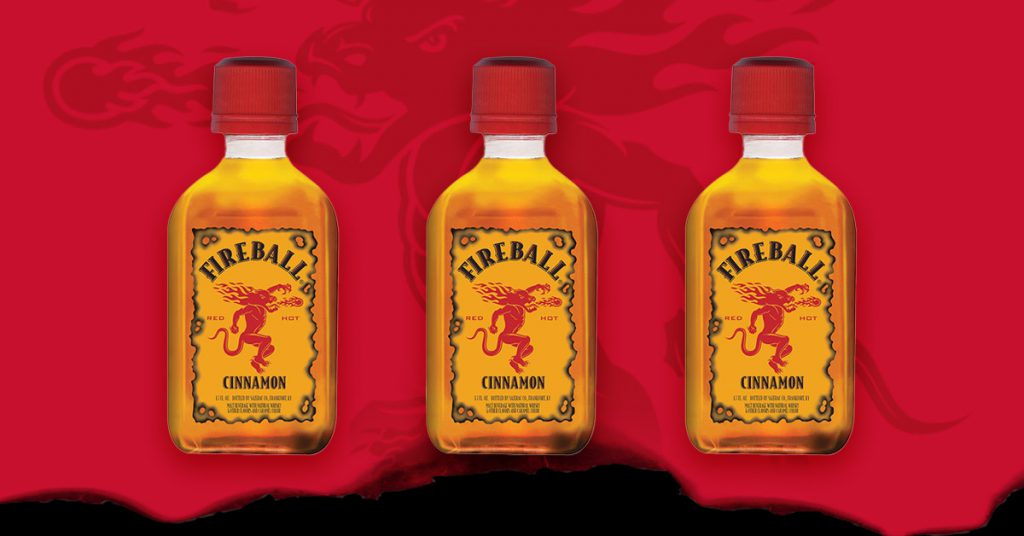
Sazerac is facing legal heat again for selling malt-based versions of Fireball and Parrot Bay that allegedly misled consumers who believed they were spirits-based products.
U.S. District Judge Kenneth M. Karas ruled on September 18 that a class-action lawsuit accusing the whiskey giant of deceiving customers with malt-based spinoffs of the two brands can proceed.
The lawsuit, originally filed in April 2023 in the U.S. District Court for the Southern District of New York, is led by customers Sharon Pizarro and Cindy Koonce, who alleged that the company’s deceptive labeling practices violated New York’s consumer protection statutes.
In many states, including New York, distilled spirits are prohibited from being sold in certain retailers, but the malt- and wine-based cousins of Fireball and Parrot Bay are offered at hundreds of thousands of retailers across the country that are allowed to sell beer and wine. Fireball’s SKUs in the flavored malt beverage (FMB) segment rank the brand as the 16th largest vendor in the beer category in multi-outlet grocery, mass retail and convenience stores year-to-date through September 7, according to market research firm Circana.
The plaintiffs argue that labels and packaging on the malt-based products are nearly identical to the spirits versions, and that Sazerac is trying to make a larger profit by circumventing liquor laws.
Sazerac has argued that the malt version make its Fireball and Parrot Bay brands available to customers at grocery stores and other places that are open when liquor stores are closed.
The plaintiffs aimed to certify a class of New York-based customers who bought Fireball whisky from April 2, 2020, to the date of judgment, and a class of New York-based Parrot Bay customers who bought malt versions of the product from May 24, 2020, to the date of judgment.
This isn’t the first time a class-action suit has been brought against Sazerac for the similarity between mini bottles of its 33% ABV Fireball Cinnamon Whisky and the non-whisky spinoff, which contains about half the ABV strength. A similar lawsuit in Illinois was voluntarily withdrawn in May 2023. But the high-profile class-action lawyer who filed the first case is at it again.
Spencer Sheehan, a New York-based plaintiffs’ attorney dubbed the “Vanilla Vigilante” for his hundreds of food labeling lawsuits involving vanilla, is joined by two other firms in the latest case. Sheehan also assisted in a case against Molson Coors’ Topo Chico’s hard seltzer Margaritas, part of an upswelling of class-action lawsuits against bev-alc companies in recent years.
Major arguments of the previous suit against Fireball reappear in the current case, including that the packaging is nearly identical except for the word “whisky” and that the term “natural whisky and other flavors” was “a clever turn of phrase” because customers might misread it as “natural whisky,” thinking it was a reference to the spirit versus a flavor.
Whether the labels are in fact misleading has not been addressed yet by the court. But the judge did side with the plaintiffs that the question can be resolved on a classwide basis. Judge Karas invited Sazerac to challenge the plaintiffs’ damages model and expert testimony through conflicting evidence and differing testimony as the case proceeds to summary judgment, or a later jury trial.