
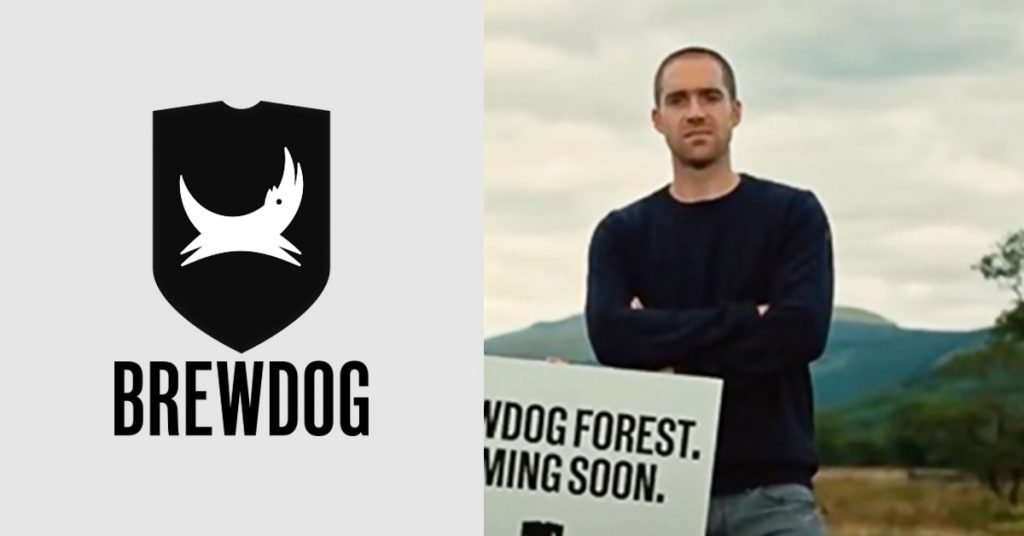
BrewDog co-founder Martin Dickie has departed the Scottish brewery, several news outlets have reported.
“This business has been my life for the last 18 years and I have enjoyed (almost) every minute,” Dickie wrote in an email to BrewDog’s staff obtained by The National and republished by Yahoo News. “I have been inspired by and loved working with and learning from so many interesting people who have worked in our business over the years from all over the world.”
An unnamed worker characterized Dickie’s departure to The National as “out of the blue.”
This is the most recent in a string of c-suite departures in the past year-plus. James Watt, who co-founded the brewery with Dickie in 2007, resigned from his role as CEO in May 2024. Watt’s later years leading the brewery were marred by allegations of inappropriate behavior toward female employees and other elements of workplace toxicity revealed in a 2022 BBC documentary.
Following Watt’s resignation, James Arrow took over the CEO role, but stepped down in January 2025, according to Startup. Former chief financial officer James Taylor was promoted to backfill Arrow in March. At the same time, chief marketing officer Lauren Carroll was named chief operating officer.
Dickie’s LinkedIn profile lists August 2025 as the end date for his employment as co-founder of BrewDog and CEO of BrewDog Distilling. It appears Dickie will be turning his attention to Waterside Pharmaceuticals, the medicinal cannabis company he founded last year.
A Financial Times piece from July cites Dickie as BrewDog’s third-largest single shareholder at 21%, behind private equity firm TSG Consumer Partners (23%) and Watt (22%). “Others” – ostensibly the company’s Equity for Punks crowdfunding shareholders and additional investors – own the largest piece of the company at 29%.
TSG invested in BrewDog in 2017, when craft beer was riding high, a deal that placed a $1.2 billion valuation on the brewery.
In their time building BrewDog into a global brand, Dickie’s quiet demeanor appeared to take a backseat to Watt’s bombastic public persona. The reticence may have served him well, as the ire Watt’s alleged behavior drew never fell on Dickie.
Dickie’s resignation comes as BrewDog has come under fire in the United Kingdom, where the brand has lost nearly 2,000 on-premise accounts in the last two years, according to Startups. The company has not turned a pre-tax profit since 2019, CityAM reported.
Last month, BrewDog shuttered 10 U.K. bars, including its flagship location in Aberdeen, Scotland.
Just two years ago, BrewDog had told the Morning Advertiser it aimed to operate 300 bars worldwide by 2030. Expansion seems to have stopped, as zero locations are listed under the “Coming Soon” tab on BrewDog’s bar locator.
BrewDog’s website lists 61 remaining pubs across the U.K., 11 in the U.S. and 29 around the globe. Other strongholds for BrewDog’s hospitality business include Germany and Australia, where it operates five bars each, and Sweden and the Netherlands, which are both home to four BrewDog locations.
In 2024, BrewDog retrenched its U.S. sales, pulling out of 19 states, leaving a 14-state footprint, with exports to Canada and Bermuda, according to a Form 1-K Annual Report filed with the Securities and Exchange Commission on April 30. However, the company’s U.S. operations may still be unsettled as the filing says it is continuing to evaluate its “sales distribution and focusing on more profitable markets.”
Insiders can revisit prior coverage of BrewDog USA’s shuttering of its Cincinnati, Ohio-based outpost in June, as well as catch up on the company’s stateside operations.