Zoe Licata joined Brewbound in 2021 after several years of freelance reporting and documentary work. She’s a Massachusetts native, guinea pig for bev-alc innovation and savant in Gen Z culture.
The Senate advanced a spending package Monday that includes language that would effectively ban all hemp products. The package now moves to the House, which could pass it through to President Trump as early as today. Industry members for and against the ban have been vocalizing their stance online and in D.C. Below are some of the latest updates.
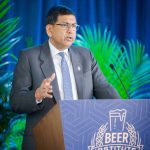
Beer industry members’ shoulders are heavy these days, weighed down by continued declines, rising costs and piling-on headwinds. But when you zoom out to see greater consumer trends, you discover the battle isn’t unique to beer, and the category is poised to have some of the greatest opportunities for growth, Beer Institute (BI) chief economist Andrew Heritage shared last week during the trade group’s Annual Membership Meeting in Washington, D.C.
Allagash Brewing founder Rob Tod admits that craft beer is in a rocky period, but tackling headwinds is something he’s done before, he shared Monday during a virtual press briefing hosted by Portland, Maine-based craft brewery.
Thirty years after Allagash Brewing’s founding, the Portland, Maine-based craft brewery’s flagship beer Allagash White remains the primary driver of its overall volume and growth, leadership shared Monday in a press briefing.
Molson Coors president and CEO Rahul Goyal has plenty on his plate in his first month in the top spot, having taken over for Gavin Hattersley in October, but he’s added one more responsibility to his list: Beer Institute (BI) board chairman.
Bev-alc industry members have been more vocal than ever this week about their stances on intoxicating hemp beverages, and the Beer Institute (BI) was no exception at the trade group’s annual Membership Meeting held Wednesday in Washington, D.C. BI president and CEO Brian Crawford dedicated the majority of his remarks to intoxicating hemp, and the BI’s desire for regulation.
Consumers are increasingly concerned about “managing health and wellness” and it is “drastically” changing beverage trends across bev-alc and non-alc (NA), according to a new report from Circana and the market research firm’s EVP of BevAl Scott Scanlon.
New entrants on bev-alc shelves have been a bit lackluster this year in terms of the sheer number of new items, and how much they are contributing to overall sales, and the impact of those “underwhelming” trends could bleed into 2026 and beyond, according to Bump Williams Consulting’s (BWC) Bump Williams in the firm’s latest monthly report.
There may be signs of stabilization for the beer industry. September domestic tax paid shipments increased 1% year-over-year (YoY), to an estimated 12.2 million barrels, up from 12.08 million barrels in September 2024 (+116,375 barrels), the Beer Institute (BI) reported today, citing estimates from the Alcohol and Tobacco Tax and Trade Bureau (TTB).
Molson Coors’ Q3 financial performance brought expected declines as the beer giant and others in the industry continue to tackle macroeconomic headwinds and soft beer trends.
After eight months in market, available through direct-to-consumer (DTC) shipping and at live music venues, JuneShine is ready to bring Willie’s Remedy+ and its lineup of THC-infused beverages to retailers.
Molson Coors’ declines persisted, but softened slightly in Q3, remaining “largely aligned” with expectations for the quarter, the company shared this morning.
Anheuser-Busch InBev’s (A-B) business continues to be primarily driven by its core traditional beer brands, but the company believes it can also be a leader in non-alcoholic (NA) and beyond beer, CEO Michel Doukeris shared Thursday during the company’s Q3 earnings call with investors and analysts.
Anheuser-Busch InBev’s (A-B) U.S. volume declines accelerated in Q3, but the beer giant’s business continued to outperform category trends, the company reported today.