

Forgotten Boardwalk Brewing is winding down operations after losing its lease, founder Jamie Queli announced earlier this month.
“To all of our loyal customers, friends, family and supporters – we wish you a heartfelt thank you for being a part of the Forgotten Boardwalk story for the past 10 years,” she wrote in the brewery’s newsletter and on social media. “We have vigorously tried to sign a lease extension with our landlord to no avail as our next door neighbor has leased out the space from underneath us.
“We are extremely disappointed and quite frankly, appalled at the actions of both companies and their adamant refusals to negotiate with us,” she continued.
The 10-year-old, Cherry Hill, New Jersey-based brewery will keep regular business hours until its last day on February 29.
The issues began in September, when Cherry Hill, New Jersey-based Forgotten Boardwalk’s landlord approached the brewery’s neighbor, also an owner in the same complex, and offered to rent them the brewery’s space. Representatives from that business came into the brewery to take measurements for renovations, which took Queli by surprise, as she had been in the process of negotiating a renewal of the brewery’s lease.
But by December, the deal was done and Forgotten Boardwalk would lose its home.
“We were still trying to work with the landlord on it, and they just dug their heels in,” Queli told Brewbound. “They’re like ‘We’re not even considering it.’”
Coincidentally, the space previously housed Flying Fish, one of New Jersey’s oldest craft breweries, before it vacated the Cherry Hill facility for a new one in nearby Somerdale. Last month, Flying Fish filed for Chapter 11 bankruptcy.
Forgotten Boardwalk filed for its own Chapter 11 bankruptcy protection on January 12, the same day it announced it was shutting down. Documents filed in the U.S. Bankruptcy Court’s District of New Jersey reveal that Forgotten Boardwalk’s estimated assets are between $100,001 and $500,000, and its estimated liabilities are between $1,000,001 and $10 million.
A balance sheet filed with the court lists the brewery’s rent expenses for 2023 at $159,522.53.
In her farewell to Forgotten Boardwalk’s fans, Queli asked for supporters to share any business opportunities for the brewery. Her request drew a deluge of possibilities that she’s sifting through cautiously.
“Everyone thinks I’m going to figure it out and everyone’s rooting for me to figure it out,” she said. “I feel awful trying to tell them I don’t know if I’m gonna.”
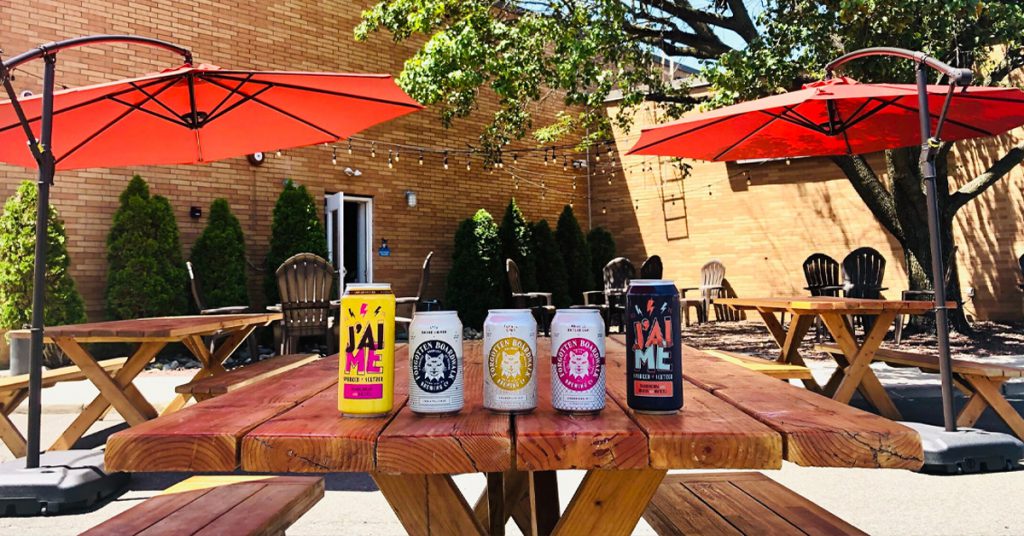
Forgotten Boardwalk is far from the only craft brewery to close due to a landlord dispute or the non-renewal of a lease.
“Leases are definitely one of, if not the most, common issues I see cited when reviewing brewery closings,” Brewers Association (BA) chief economist Bart Watson told Brewbound. “The landlord not renewing is one dimension, but equally common is the lease coming up again and the business not working at the new rates.”
Everett, Massachusetts-based Bone Up Brewing closed its doors on December 31 after its landlord decided to remove the brewery, which had been working on a long-running expansion project, from the building.
“For reasons we’re still not entirely clear on, our landlords have informed us that they no longer wished to keep us as tenants and may have started taking actions to remove us from the building,” co-founders Liz ad Jared Kiraly wrote on Instagram.
Pittsford, New York-based Seven Story was forced to shut down in June 2023 when its landlord elected not to renew its lease.
“This is a damn tough pill to swallow for our team and loyal, talented employee crew, especially given our five years of growth and our best year yet on the horizon,” the brewery wrote on its website.
Even the country’s largest craft brewers aren’t immune from the changing commercial real estate landscape. In 2022, Boston Beer announced it was closing Dogfish Head’s Miami taproom because a proposed rent increase made keeping the location open “not a sustainable option,” Boston Beer senior director of local brand and taprooms Scott Hempstead wrote.
A building at the taproom’s former address is listed for rent for $1.13 million annually.
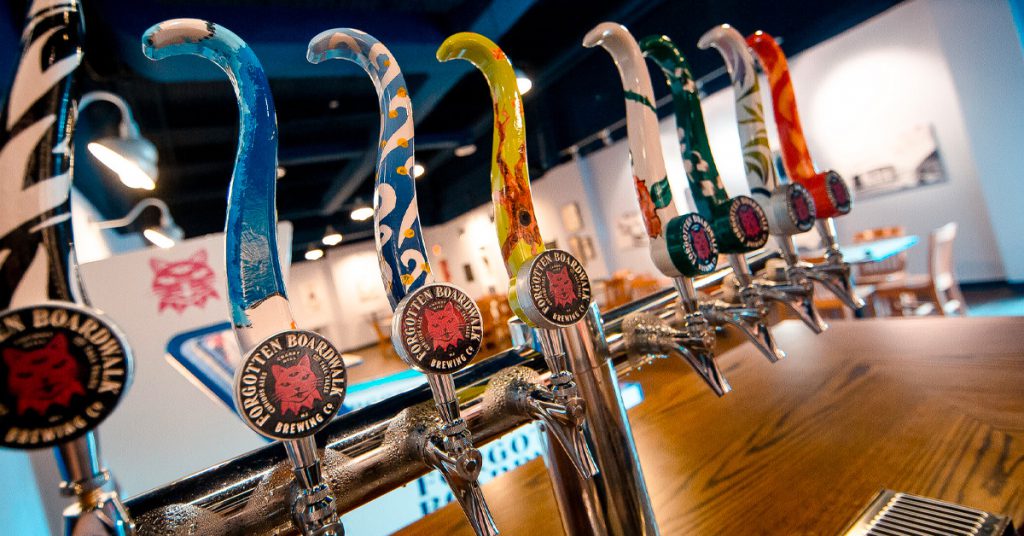
Lease issues aside, Forgotten Boardwalk operates in New Jersey, where until this month, craft breweries had to adhere to stringent restrictions that barred them from having more than 25 events in their taprooms – which included trivia nights, yoga classes and showing televised sports – coordinating with food trucks and restaurants and selling snacks and non-alcoholic beverages.
Gov. Phil Murphy signed a bill into law repealing these restrictions, which Queli called “a step out of the Stone Age” but said it didn’t go far enough to ease conditions for breweries.
In an ideal world, Queli would have a brewpub with a full liquor license, and mused that she’d like to open inside the Hard Rock Casino in Atlantic City. Rather than a full “fork-and-knife concept,” she’d serve boardwalk-inspired snacks such as butterfly fries and funnel cake, and host musicians.
“I think if I ultimately did this again, I’d need a really nice space that’s not in a really crappy industrial warehouse that has a liquor license attached to it and a very concise distro footprint,” Quelie said. “I feel like sometimes you’re just running across the state.”
Forgotten Boardwalk self-distributes to more than 1,100 accounts in New Jersey, mostly “very independently owned liquor stores” as most grocery and convenience stores in the state aren’t licensed to sell beverage alcohol. Queli isn’t interested in finding a contract partner to keep the brand in distribution at the moment.
“There’s tanks everywhere right now and I could contract with my recipes and continue on with that, but it’s literally my least favorite part of the business,” she said, adding that New Jersey’s version of the off-premise trade has diminishing returns.
“It’s not the easiest business and I’m finding more and more and more people aren’t buying craft beer in liquor stores,” she said. “They are going to the brewery itself.”
For now, Queli is weighing her options for the future of her business, many of which are unappealing to her at the moment.
“I love Forgotten Boardwalk and I love the whimsical nature of it,” she said. “And if I could find a solution for it, I would do it. It’s just that all the solutions that are presenting themselves to me are uphill and a very large battle. I’m not Wonder Woman. I just know that there’s certain things that you’re going to lose when you’re outnumbered and that’s exactly how I feel right now – just completely outnumbered and trying to solve this.”