Search across the BevNET CPG Media network including BevNET, Nosh, Brewbound, Taste Radio, Nombase and CPG Jobs.
Brew Talks Denver 2023 - Panel Discussion: Exploring Draft Challenges
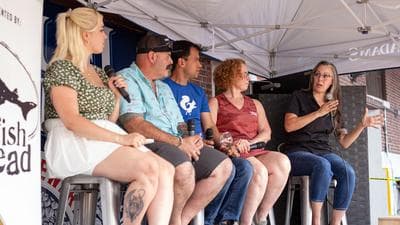
Panel Discussion: Exploring Draft Challenges
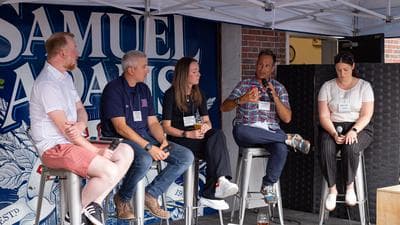
Featuring:
Sam Calagione - Co-Founder, Dogfish Head
Lori Scheiffler - Co-Founder and President, Tamarron Consulting
Jason Murphy - Director of Beverage Strategy & Innovation, Buffalo Wild Wings
Transcript
Note: Transcripts are automatically generated and may contain inaccuracies and spelling errors.
Speaker 1 [00:12] Glad to see you all. Thanks for all coming out to Brew Talks. Thanks for supporting the guild with us. We really appreciate it and thanks to Dogfish Head for presenting this talk. So, uh, let's get into some draft beer talk. and I see a lot of cans and hands out there, but you can get a draft pour if, with one of your free tickets. So if you're into some 60-minute, pick one up. So. Man, you should, uh, hire me to, you know, do
Speaker 2 [00:40] pitches on-prem specialist.
Speaker 1 [00:42] So we've heard for years that brands are built in the on-premise. So what happens. When the on-premise is struggling, draft is struggling. So draft has historically been an important piece of the business for craft brewers. It accounts for about 30% of distributed draft. It serves as a brand building theater. It has in the past, but draft has been on a slide since the mid-2010s, and it's not returned to pre-pandemic levels. That's from Brewers Association chief economist Bart Watson. Watson has estimated that 2023 distributed draft volume is 2 million barrels below historic trends. So through the halfway point of 2023, distributed draft volumes are down around 30% year over year. It's stalled at about the same place that it was in 2021. I'm not trying to depress you people. I'm sorry, but you know that's the state of the situation. We can all point to a variety of reasons for why this is happening. Consumers are going out less. They're ordering other things. They're ordering seltzers, spirits, wine, F&Bs. They're not drinking at all, some of them, so, or they're drinking non-alcoholic products. Cans have become a much bigger part of the industry. Just look around here. I mean, we're serving cans too at this event. That's just the state of the situation right now. And the number of beer drinking accounts that have permanently closed is pretty high coming out of the pandemic. And finally, consumers are getting priced out. So let's talk about what's going on with draft and hit on some strategies for maybe turning it around that are, you know, more than a, uh, so joining me on stage right now is Dogfish Head co-founder, Sam Calagione. Thanks for being here, Sam.
Speaker 2 [02:36] Thank you, Justin, psyched to be with you guys.
Speaker 1 [02:39] We also have Buffalo Wild Wings, director of beverage strategy and innovation, Jason Murphy. Thanks for being here, Jason.
Speaker 3 [02:46] Appreciate that uplifting intro.
Speaker 1 [02:49] I have to turn it on and Tamarron Consulting co-founder and president Lori Scheiffler, thanks for being here, Lori.
Speaker 4 [02:56] Thank you for having me.
Speaker 1 [02:58] So before we get rolling here, we have a text line. If you have questions, text them to me at 617-336-8560. I'll try to get you some answers. We'll start with you, Jason. What does draft mean to Buffalo Wild Wings business? Why is it so core to your business model?
Speaker 3 [03:16] I mean, it's everything for us. Uh, we're a huge draft place for a sports bar, right? So inherently it makes sense that we're gonna pour a lot of draft beer. Um, but it's, it's in our DNA. We really pride ourselves in pouring a good draft beer for every guest that comes in. Uh, if you look at our beer sales, uh, 93% of our beer mix is draft. Uh, 7% of that is packaged and half of that 7% comes from one brand. So, uh, we rely on draft and everything that we do. And if draft beer fails, then. Uh, our Bevel program is a total fails.
Speaker 1 [03:48] How often are you tapping a new keg?
Speaker 3 [03:51] Oh, I have this stat. I knew that. I think it's something like every 30 seconds we tap a new keg. I think it was
Speaker 1 [03:57] 32, but
Speaker 3 [03:57] yeah. Thank you. Thank you for fact checking me. I appreciate it.
Speaker 1 [04:01] So, uh, Sam, how big of a piece of the business is draft for Dogfish and how big is it for Boston beer? And how have you adjusted your mix as it's become more challenging?
Speaker 2 [04:13] Yeah, so, uh, before I answer, I just want to make sure I, I get my, uh, thank yous in. So, you know, we've been proud to be doing this with you guys for a number of years now and always look forward to learning from each other. I do want to thank all of our co-workers, especially Matt, who put a lot of hours into setting this up with Team Brewbound and with Cervantes's masterpiece. I also want you know, take a moment to say I'm proudly double-fising uh right now cause my buddy Dave, uh, from Scott's in the house and he's class of '95 as well. We've been doing this over half our lives. Dave, where are you, buddy? I'm proud of you. Wherever you are, brother, excited to hear your guys' panel. Um So for us we we our our drop was not that dramatic. Like I looked at it before this, and 1015 years ago we were about 25% draft as brand Dogfish, and now we're about 20% draft, 23% on-prem Dogfish business of which that 23%, 20% is draft, and that's, I think, because we, we kind of came up as a brand that focused on higher ABV beers even in the era of, you know, 750 mLs bigger packages that were more. Wine-like in their presentation. So as a mix, we didn't feel it as much. But, you know, as you referenced, uh, you know, Bart, this is not a pandemic problem. It's a generational problem, you know, we're now in almost a decade of the, of the declines, uh, for beer. So, you know, we have felt that a little bit and honestly, for, for us, you know, we'll talk a little bit about ways that we're trying to reinvigorate excitement into, into, uh, our draft offerings with the. Success of Citrus Squall. You know, I also think, you know, we got some great craft distributors in, in the building today. Shouts to Terry. We're going to hear from one of her co-workers on the, on the next panel. But I think over, overall, and this isn't like saying there aren't other things our distributor partners have been amazing at, particularly during COVID, but I do think while the draft challenge has not been COVID-related, it's more generational, I do think when the world had to shift to a focus on. on off-prem, our distributors were there for that moment beautifully and helped to get the the drinks to the consumers, but I feel like there's been a little bit more of a hole for bringing the resources back from the average distributor to the focus on on-prem post pandemic. That is something that I think would really help move the needle. Um, and then I'd say for our Sam brand, it's even a higher ratio. Ratio of draft, uh, uh, than, than Dogfish and particularly not, not our core uh uh lager. We basically chose to focus on, on the, uh, on our seasonal program and keeping a dynamic line with one handle and that we mix really well. I know Jason, you guys are doing an awesome job with Oktoberfest. So, um, overall down for both brands a little bit, but excited about the moment we have in front of us.
Speaker 1 [07:03] So Lori, Sam referenced that big shift in prioritization for wholesalers to package during the pandemic, which is obvious, but you know, what's, what's the mindset you're hearing now from distributors on prioritization of package versus draft?
Speaker 4 [07:20] You know, I wanted to just first start with kind of setting the context a little bit. So when we first had this discussion, I reached out to the NBWA because I work with them a lot and we'll talk about a lot of the tools that they're developing not only for distributors but also for every industry member. And um their economist is Lester Jones. I'm sure many of you have heard of Lester and he's equally as awesome as Bart is. Um, so I certainly don't want to be up here and try to pretend like I'm as knowledgeable as they are because I certainly am not. Um, but one of the things that Lester sent me was um a spreadsheet and I'm gonna kind of be looking over at it as I talk about it, but Um, and this is all like January through June this year. Um, and what he talked about is that the total industry is down by 5%. So draft has come back to be 9% of that industry volume where it used to be about 10% pre-pandemic, but when you think about what that means, so you've got even cans, cans are down, uh, bottles are down, draft is down, um, but the size of the pie is so much smaller, so that just makes it. Such that everybody, um, every package is, is struggling, and I think that really shows that it's more of a systemic issue as opposed to any one specific tier, um, and we see that a lot of venues have shifted to that large format can. Um, which, which is a loss of a lot of draft opportunities. And so while we work through that supply chain, all of the cans that are still in the industry and the pricing that goes along with it, I think you'll see some shifts going back and forth. But at this point, the distributors are prioritizing draft to the extent that their suppliers are asking them to do that from what I've been told.
Speaker 1 [09:24] Jason, what are you hearing about wholesale, wholesaler level of engagement from your operators?
Speaker 3 [09:33] I think we Have seen a little bit of a dip in engagement from a lot of our wholesalers. Uh, a lot of the prioritization is still going to off-prem, specifically CStore. Uh, CStore seems to be the priority from all of the conversations we have, and we know the reasons why the 19.2 format is just blowing trends out of the water. Um, that's where the consumer is going. Um, but we're not seeing the same level of engagement that we used to, uh, pre-pandemic with the support that we would like to see folks coming in, doing, uh, samplings or pint nights or things like that. We're just not getting the same level of support that we have been in the past.
Speaker 1 [10:13] So sticking with you for a second, what, what's the appetite then like for package placement in your accounts, you know, as draft sort of struggles?
Speaker 3 [10:22] Yeah, I mean, I think I set the, the, the tone earlier. Like we're a drafthouse and we always want to be a drafthouse. So, uh, package is going to play a role for us in certain spots, but we have 30 tap handles. Um, I pride myself on the fact that we can offer a wide variety. Of uh styles of ABVs, uh, of different breweries and brands of different locales for what we say, uh, every guest for every occasion, um, and I can do that with 30 draft handles. Uh, what I use my package cooler for, uh, is to maybe pulse in some things that haven't really earned their way to a draft spot yet, but everything in the package cooler is like trying to figure out can this earn its way up to a draft spot. Uh, draft is always going to be the most important part of our business for us. Um, we really pride ourselves on making sure that, uh, our servers and bartenders know how to pour a good quality draft beer, uh, and I don't think we'd want to do it any other way other than that.
Speaker 2 [11:18] I got a question of the different beer categories you guys sell, does craft do better on draft than in cans compared to, say, like domestic or Mexican?
Speaker 3 [11:28] You didn't prep me for this question, Sam. Uh, I, I don't, I don't know. If I was to be honest, I would say Kraft probably does a little bit worse in package. I think Kraft does better for us on draft. Uh, we have a great prominent section of great craft brands on draft. My opinion of Kraft on draft, um, is that if you can't find what you're looking for with one of our 30 handles, like, you probably didn't want to drink a beer anyway, but to the point of what we use packaged. For it's to add incrementality to our program for something that we probably wouldn't put on draft, and that's talking like, you know, we're probably not going at a Buffalo Wild Wings we're not going to put a 14% ABV, you know, triple IPA on draft, but there's the guest who wants that. That's a package placement. So we really want to focus on what we can move the most velocity on with the things on draft, and you can probably find that in all of our crafts.
Speaker 1 [12:17] Sam, it seems you have a success story though that is both in draft and in a 192 ounce single serve can. Can you talk a little bit about the strategy behind Citrus squall and how that's sort of, you know, ridden both of those rails.
Speaker 2 [12:35] Yeah, so I mean, we started brewing that maybe 3 or 4 years ago is Tilia like we wanted to phonetically suggest it was a cocktail and we've been, we had our, we opened our brewery 28 years ago, our distillery 21 years ago. So we've been, you know, playing around with different fermentable sugars to make bases to distill, including agave from us that long and as we were kind of coming out of the Pandemic and we know that the draft sales uh shrinking were pre-pandemic, but we're definitely accelerated by the pandemic. But what that kind of crossed also the line of a lot of these younger drinkers moving out of beer towards seltzers and towards cocktails, both foolproof cocktails with the rise of tequila and canned cocktails. So like, all right, well that's in our wheelhouse too. Can we do beer wise that could be a draft focus that's intentionally more of a Trojan horse, basically saying the average 21 to 31 year old that walks in a bar, they're likely going to gravitate towards a seltzer or cocktail first. What can we do to turn them on to craft beer for the first time by making that beer have a lot of the cocktail DNA in it? So for us, citrus squalls. You know, primarily fermented from sugars from barley, but double digit fermentation sugars come from both agave and grapefruit juice, so it has real like Paloma vibes and DNA. It splits the difference in 8BV, kind of between a traditional cocktail or beer at 8, and we intentionally priced it. Lime priced it with. Our core beers to try and make it an attractive offering, uh, profitable offering for our partners, and we talked about should I have a special garnish, should have a cocktail centric glass, but we're like, you know, our, our, our partners right now don't want another glass. They don't want another giant grapefruit in, in their, in their. Stall of fruit for for for garnishes, but we did say let's go for it and make a really distinct standout tap handle bright fluorescent, uh, pink, and uh spent extra money on that and it really has kind of paid dividends. And so yeah, with Citrus squall, it's our fastest growing release that we've done as a core beer in the last five years.
Speaker 1 [14:42] So we're getting a few questions into the text line 617-336-8560. Jason, following up uh on the distributor engagement question, how is the engagement post-COVID from suppliers?
Speaker 3 [14:58] I think we've seen the same level of engagement, um, same, same level of interest. Uh, I think the area where we, we would like to see some improvement, and we talked about this a little bit on, on our pre-call, but, um, We seem to have lost a bit of the fun in the on-premise, and it feels to me like a lot of those fun engaging events have started to move to on-premise, uh, which is great, and I think everyone who is operating out of their own taproom should make sure they have those events that are driving consumers into their own taprooms, but it seems to have been at the expense of the on-premise and maybe this is unpopular opinion. Um, but I don't know the last time. Do people care about Perkins anymore? Someone told me they didn't. Uh, but I don't know the last time I saw a Firkin tapping at a taproom or a bar. I mean, I would love to see that some of that kind of stuff come back. I used to feel like I saw you'd go out to sports bars and you'd see. Uh, trivia nights hosted by a dogfish head or, uh, football bingo hosted by Creature Comforts, things like that. That's the kind of stuff I don't feel like has come back, uh, since, uh, since pre-COVID. I feel like a lot of that stuff has moved to on-premise, and I think for on-premise for bars, sports bars, restaurants, taprooms to start to claw some of that draft business back, we have to make the on-premise fun again, and I think it's lost a little bit of that in the last. Do
Speaker 1 [16:19] you feel go ahead
Speaker 4 [16:20] Laurie. Oh, I was just going to say that when we get to it, some of the on-premise activation kits that we've been working with Boston Beer and the NBWA, they're designed to be exactly that. So it's designed to be, you know, music is better with beer and how can you make music fun and games are better with beer. So if you're having a trivia night, how can you incorporate beer? So we've got Some tools that we think would be really helpful and they're available to everyone in the industry, so we'll talk a little bit more about that.
Speaker 1 [16:52] Yeah, and you can see some of the point of sale items out there. There are table tents, there are signs, I think you got a table over there. So we'll talk about that in a minute, um, but one thing I wanted to ask you, Laurie, is we, month over month, we keep seeing the consumer price index for beer uptick for out of home pricing, uh, as far as that goes. How much of that is a factor going on with what we're seeing in the on-premise with Draft? Are consumers being priced out?
Speaker 4 [17:23] So I can't speak to that certainly as well as somebody like Lester can. I know that um we have worked over the years with John Lane from Winking Lizard, and some of you may know John. He's um has a chain of restaurants in Ohio. Um, he's very passionate about draft beer, very passionate about quality of draft beer, um, and he did express that concern to me, um, about 6 months ago that You know, he's looking at the price of draft and it's making it almost harder for him to sell draft versus the price of package and that was a real concern to him because he feels that, you know, as many of us do that. That draft is beer's big advantage. It's something that um wine and spirits don't have, and the presentation of draft and the quality of draft. So I do know that there are concerns about that. I can't speak fully on the price index.
Speaker 1 [18:26] I was obviously going to ask you, so go
Speaker 3 [18:28] for it. I mean, it, it's an issue. It's something we're paying a lot of attention to. Uh, there's a major craft brand, uh, who in my head over the last 56 years, maybe even longer, their half barrel was always around kind of that $140 150 dollars price, uh, and I got a note back from our supply chain team the other day saying that we're paying an average of $180 for that, uh, same half barrel that we were buying what felt like for just a couple of years ago, $140. and We've got to figure out, can we take price and pass that on to the consumer or are we going to take a hit, uh, to our profits and neither are, are a good solution. Uh, the, the pricing seems like it's gone up. A pretty out of control in the last couple of years and we've got to figure out what we can do to make that back for the consumer and then something that is very concerning that we are keeping a very close eye on is student loan repayments restarting next month and we are very concerned on what's going to happen to what choices consumers have to make because an establishment like mine. Uh, where the main occasion drivers are sports and wings, we need to turn beer into a third main occasion driver, but right now sports and wings. They're going to come in for sports that you don't have to pay for that. You're going to get your wings. What you might sacrifice on is you were going to have 2 60 minutes and now you have 1, or you were going to have a 60 minute and now. You've traded to whatever we have on special for 4 bucks. So that's something that is really concerning me that we'll see what happens in the next few months.
Speaker 1 [20:02] Do you have a beers per check stat that you can share?
Speaker 3 [20:07] Yeah, I haven't updated it in the last couple of months, but tracking since 2019, uh, similar to kind of, you know, Lester's overview of on-premise being in decline over the last decade, our drinks per check overall are down since 2019. Uh, down fairly consistently, um, across the board, uh, for every kind of beer style that we have, uh, across craft, domestic, and, and import, um, so, but even though average beers per check are down. Our drinks per check for beer down lower than anything else that we have. So spirits is maintained a little bit, wine is maintained a little bit, uh, but beer we're seeing going lower. I will say the one bright side to that is if you look at units per 100 checks, uh, we're down a significant percentage across all categories. If you look at sales per 100 checks. We're up quite a bit and so we're up more than the price that we took over that same time period. So what that tells me is even though consumers are drinking less when they come into our bars, they're trading up and they're drinking better. So we were getting 2.5 drinks per check. Now we're getting 2, but that guest is spending more on the beers that they are getting when they come in.
Speaker 1 [21:20] Sam, how do you see craft brewers sort of playing the, the balancing act in this moment when pricing is what it is, the inflationary environment is what it is, but craft has been a, you know, a premium item. So, how, how do craft brewers sort of strike that balance?
Speaker 2 [21:39] I think, uh, at this moment, it's a different story for the taproom brewery that's going direct to consumer and, and, uh, and I think that's one of the great gems of the trajectory of draft is I think they've definitely done a great job in general of appealing to, to a younger drinker, and it's a little scary, frankly, I think that it's kind of a tale of two cities where it's like, you know, the 4, the, the 4 pack direct to consumer from the, from the, uh. From the brewery is something that you see more in younger drinkers like social feeds, more so than the 12 pack at a big chain store that they bought. And the other thing that I think we haven't talked too much about, I, I think you did on the pricing thing, which is, you know, venue sales count as on-prem sales for, for us, and I do think this is one place where legal marijuana has had a really big impact. Because I do think, you know, it's funny. 3 nights ago I was with Rob Todd in Maine. I traded him a 6 pack of actually 4 pack of Ali I stout for a 55 gallon or 55 pound bag of organic barley. I got fucking ripped off in that deal. Uh,
Speaker 1 [22:50] and that's not the type of bag I thought you were were going to say that you were getting
Speaker 2 [22:53] behind the dumpster in Portland, Maine. Uh, and, uh, and he was saying shit, I can't. Take up price fast enough. I'm a draft-oriented brewery. I can't take price up fast enough to keep up with my increase in costs. And then last night I was with John Lane at an event in Ohio, and he was saying brewers are on a precipice where they're pricing themselves out of relevance. So you can see the tension is really there for smaller producers and the entrepreneurs, uh, you know, on premise. So I want to make that point, but I forget what your question was.
Speaker 1 [23:24] I forgot you at this point. I,
Speaker 2 [23:27] we nailed it. Yeah,
Speaker 1 [23:28] let's just say that somebody is asking something that, you know,
Speaker 2 [23:32] you can I finish up on that one. So we have an example in our home state, which is kind of the Bonnaroo of the mid-Atlantic called Firefly Festival. And in essence, you know, when 192 and 24s go up to 18 $22 definitely the suppliers not getting the gain of that exorbitant pricing. And I don't know, like here at Red Rocks. What that looks like for craft breweries or the other great venues, but it definitely does accelerate that that choice to maybe have an edible and one drink instead of enjoy a whole night of drinking. We got to figure that out with the younger consumer, not just the younger drinker, the consumers of good times.
Speaker 3 [24:09] To, to that point, it might have been in in your publication that I read it. But there was a study that came out recently talking about Gen Z drinkers, uh, and of LDA Gen Z drinkers, uh, 34% of them say they don't drink alcohol of any kind, and of that what they're turning to are edibles to marijuana. And so that is a, a huge percentage of an upcoming generation that as of now we just don't have access to.
Speaker 1 [24:34] You, you just can't wait to get edibles into Buffalo Wild Wings, right?
Speaker 2 [24:39] boneless and on the wing.
Speaker 3 [24:41] It, it's, it's the next LTO sauce.
Speaker 1 [24:45] So, you, you mentioned bringing fun back and you know, the things that were fun when you, you know, some of us were coming up in craft in the mid-2010s probably aren't appealing to consumers today, you know, like we, when was the last like Beer, you know, like our beer dinners still a, a thing that are driving some traffic or tap takeovers or release theme nights, you know, the meet the brewer, brewer events. I mean, I, I feel like we may be past that, but is that something that You know, needs revisiting it can it appeal to a younger consumer? Like, are we just, you know, well, I,
Speaker 2 [25:23] I, I'm looking for, Laurie's been an awesome catalyst at, at, uh, bringing together different groups that care about bringing draft back from, from, uh, Stainless Keg Association, and BWABI, and, and I'm looking forward to hear what you say about that because Creative ways to engage with the younger customers is something that you're thinking about every day. But yeah, for us, let's face it, you know, the average consumer that's coming into a beverage now grew up with 60 Minutes, Sam Adams, Sierra Pale Hill in their parents' fridge to steal, and you don't necessarily want to drink what your, your parents drink, and that's reality and show up at a beer. Six-hour beer dinner to meet some guy who started a brewery 30 years ago. It's like, who gives a fuck? 10 10,000 people start a brewery, you know, I don't need to meet the person. Everybody starts a brewery, right? So that might have mattered a lot meeting the founder, you know, but to Jason's point, come up with creative ways to make it about your brand, but not necessarily try to engage with someone who'd rather be on TikTok for one minute. for 4 course beer dinner, do something experiential, engaging, you know, last night Megan and Devin and I did a really fun event at our Ci taproom all about sustainability and talking about the different, whether it's regenerative grains, organic unmalted barley, skipping the step of a malting house, and talking with people that don't just care about beer but care about, you know, climate change. John Lane mentioned that one of his most successful nights. In the last 5 years was an old school vertical tasting of 3 Floyd's, you know, Dark Lord. You know, Nick Floyd wasn't in the room, but he made sure that they got that in every one of their accounts and could execute, you know, excitement for it on social, which drew a younger drinker. So I think you can get more creative and more experiential, but you should not give up on making something special come to life on-prem. We need it now more than ever.
Speaker 1 [27:11] Laurie, can you talk a little bit more about that, about making things an occasion or, or special because you've been working with the NBWA on the beer first Friday's agenda, which it doesn't have to be a Friday, but, you know, can you talk a little bit about that and, you know, maybe some success stories that have come out of that, the, the lift that accounts have seen from doing that?
Speaker 4 [27:34] Yeah, for sure, so we started the beer first umbrella and first let me explain what that means. It means that we're trying to sell the category of beer first, so it's always starting with, you know, what does beer mean to this account, how, how does beer deliver profitability and bring traffic into the account, and then We can segue into, you know, this is the brand, this is the beer that I'm representing today, um, but we want to always prop up the category first, so that's what beer first means. We decided to start these on-premise activation nights and one of the distributors coined them beer first Fridays, and we always say it doesn't have to be a Friday, it doesn't have to be the first Friday of the month. It can be any day. The week um but what it's designed to do is just bring some more fun back into the account so um so we started with last year we decided let's do some kits like let's just make it really easy for people to implement these programs and it doesn't have to be a distributor and it's better if it's a distributor and a supplier a brewer partnering together to really sponsor their brands um so we have a series. We call Better with beer. So we started with, I believe we started with Music is Better with beer. So if you're in an account that is like this one that features music or has music trivia nights or, you know, a DJ or a band one night of the week, there's some tools that just make it fun to, you know, be part of that. So we've got for music is better with. Beer we've got some napkins that can also be just printed out on a piece of paper that are Mad Libs. You get to write your own song and it mentions beer in it, so you can mention your beer style or your beer brand and you come up with a song. So that's kind of fun, I think. There's a country, there's a blues song and a rap song that you can write, so you could make that into a contest if you wanted to, but just kind of fun. And then there's others that are just kind of table tents that say, hey, what brand do you pair with a certain song? So I'm going to put Sam on the spot here because we're up here drinking some dogfish, dogfish beers. Um, what would you pair? Pick, pick one of your brands, a song to pair it. We got 60
Speaker 2 [30:00] minutes on tap. So, uh, I would do a ridiculously long. So I do, uh, Built to Spill does a cover of Neil Young's, uh, um. Uh, Pocahontas song, uh, so I would, I would do that because it goes on for almost 60 minutes, so you could sip for 60 minutes while the song goes on. I thought you were going to say
Speaker 1 [30:22] the painkillers,
Speaker 2 [30:24] the pain relievers, relievers. I thought I was IP infringement. Yeah, yeah, no, I wouldn't do that. I wouldn't fo that on my worst enemy. We,
Speaker 1 [30:32] we won't make you rap.
Speaker 4 [30:34] All right, well, well done, Sam. That's exactly how you'd pair a beer with a song, so I love that. Um, and, uh, let's see, we have Games are Better with beer, so if you're having, um, Retro game night or trivia nights, um, we can have different ways to pair beers with that um and then the last one is food is better with beer and that's such an opportunity to really focus on how we can suggest more beer with food for accounts and so we've got some ways to just have consumers. A vote on which which beer went best with which foods or having the waitstaff be recommending beer with food because a lot one of the biggest ways that consumers decide what beer they're going to order is by wait staff recommendation. So really important to engage the wait staff when you're trying to make sure that consumers buy beer in an account. So one of the biggest success stories I'm going to lean back on John Lane. We had a beer first Friday at his account with Great Lakes Brewing Company in Cleveland and by featuring, and one of the key learnings that John had was to make sure that you do choose specific brands to feature with your beer first Friday and by doing that and really focusing on a couple of the Great Lakes brands, he was able. To see a 10% lift that night um by doing a beer first Friday so they had a lot of giveaways um they gave away some koozies and I'm trying to think what else, um, but he felt it was really successful in driving business for his account.
Speaker 1 [32:18] Jason, uh, you recently put out a 2024 RFP to your partners. You've got a pretty specific message to them. What was that?
Speaker 3 [32:28] Uh, the beer is losing, uh, at, at Buffalo Wild Wings, but, but in the on-premise, it's, it's been losing for a while, and we've got to come up with some fun ways to, to bring that back. So, uh, interestingly enough, we just went out and did a, a big Bev Elk research study to understand kind of what consumers wanted out of the Buffalo Wild Wings beer program. Um, I shouldn't say beer out of our out of our Bev Elk program, um. And I look over all the beverage now, not just beer anymore. So to be honest, like I had a slight slant to like, OK, I'm going to go out and I'm going to do this study, and I'm going to get some really great ideas for spirits and cocktails to come back on this. We recruited 1500 people. We did focus groups. We went out and dined with people, and the overwhelming response that we got was like, you guys are a beer place. You went on TV for 10 years like saying wings, beer sports. Like that's what I'm, that's what I know you for. Yet we found out that people stopped coming to us because they don't think we have the beers that they want, and that's the beers that all of you in this room brew. They think that we have nothing but domestic light lagers and imports, and I don't want to talk badly about any of our domestic or import partners. They do great business for us, but there's this huge section of people who don't come to Buffalo Wild Wings because they don't think we have the craft beers we want. I'll use one example. I was talking to this lady in California and she said, God, I just I would like to go to Buffalo Wild Wings. You guys just don't have the selection of local crafts that we want. I'm like, Well, that's interesting. Like, I built the menu in California. I know we've got a decent selection. So I poked her a little bit and I said, like, what do you actually want? What does local mean to you? And she brings it up, she's like, I just want, I just want beers from modern times or Alesmith or Firestone Walker. And she starts rattling off these breweries. I'm like going crazy out of my fucking mind because I've got all of those beers on tap. Like, what is she, what is she thinking about? And I show her the menu. Uh, and she's like, oh my God, like you have these, like, I'm going to go into Buffalo Wild Wings tonight and I'm going to get these beers. We've got this huge awareness problem, and I don't think it's an issue with us. I think it's an issue with a lot of casual dine, a lot of on-premise. Um, and one thing we asked in the RFP is like, we need the help of our brewery partners to let people know, let your fans know that we've got your beer, and I'm going to single out the folks from Holiday who are in the room. Holiday has done a really great job at like going onto their socials and being like, Hey, our beer is on at Buffalo Wild Wings. You want to go get great wings and our beer? Like go check out BWubs. But that happens with like 1 out of every 100 of our partners. Like we've got to make that happen more often. Like you've got to help your on-premise partners. Let people know you've got fans out there who want to go drink your beer when they go out. They just don't know where. Go get it. And so on top of all of the beer first Friday stuff that we should be participating in, and I think sports is better with beer too. We can have some fun toolkit stuff there, but I think there's a lot of things that we can do with our partners to really let people know, like we've got your, let the consumers know we've got your beer on tap, and like Buffalo Wildling is a cool place to come drink a craft beer too.
Speaker 4 [35:35] You know, I should say that we have tons of social assets as well on the portal, so. Use those to advertise all of that and, and this year it was awesome because the BA um allowed us to access all of their library of images. So we're able to really um uh in my mind upgrade substantially with what those social assets look like because they're true. Um, photos and the beer looks really good and um so it's portrayed the way it should be, so use those to advertise. I mean that's just an easy download for you. Um, so, and there's a sheet in the back that will tell you how to access all of that, so please use them.
Speaker 3 [36:18] Can I add one last thing? I'll be quick.
Speaker 1 [36:20] Nobody's here to hear me talk. They're here to hear from you guys.
Speaker 3 [36:24] I would like to see some interesting product innovation too, uh, and I'm hearing that from a few other folks. I don't need another hazy IPA. I know that's what drives a lot of the traffic in the own premise, but I need 2, maybe 3 hazy IPAs. What I think is really interesting are the breweries who are doing really great innovation with flavors. I see Justin from Station 26 in the room. That tangerine. Like, that's an awesome beer and that showcases like flavors that people are going for. Um, and honestly, it's the flavors that people got out of White Claw and High Noon, and truly, that as they start to come back into beer, that's the flavors that they want in a beer. There's a mix pack that you guys are doing with the Sam brand, right? Uh, what's the name on that one?
Speaker 2 [37:09] Yeah,
Speaker 3 [37:09] no, the
Speaker 2 [37:10] Epic squeeze. Squeeze flavors is
Speaker 3 [37:13] this great Sam Adams mix pack that is just full of flavor and you're like, holy cow, I wouldn't expect this in a beer. And that's where consumers are going to spirits and cocktails or things that are really full, punch you in the mouth flavor, and I would like to see a little bit more of that come from beer.
Speaker 1 [37:28] So I've got one more question and I, I've got a ton of questions here that I'll do like lightning round at the end, but What is the risk of inaction because Bart Watson, and I, I've referenced him at the top, put it out there that this is really sort of an existential crisis potentially because if bars and restaurants don't invest in draft systems, then it becomes a much larger problem and you mentioned that it was a generational issue that we're seeing here. So I want to hear from each of you as far as if. Team beer isn't able to sort of turn the tide on draft. What are the risks here?
Speaker 2 [38:10] So yeah, I think it's a, it's a critical moment, you know, uh, Shani mentioned the great work that the guild's doing here in the state for sampling opportunities, and that's, you know, for 1 or 2 hours at an off-premise opportunity is I think what that change evolution legislation would mean. But every day, every minute that a restaurant is open is an affordable sampling opportunity to try a new craft beer by the pint before you commit to buying it off-premise for a six-pack or a. I really feel like this inflection point is very similar to the one, you know, 15, I don't know how many years ago when liquor brands were allowed to advertise again like on TV and magazines, etc. I feel like it kind of, it caught the beer industry, you know, on, on the heel of our feet like, oh, we're already gaining, you know, we're already bigger than them, da da da. They're not going to gain share on us, and they did a great job of marketing to younger consumers, and I feel like the moment coming out of COVID was the right moment for us as an industry of beer people to say, oh my gosh, our occasion is back, getting people out in bars, enjoying pints together, and I feel like we're a little late to come together collectively as the restaurateurs, the distributors, and the brewers to right that ship and get the trajectory back. But I don't think the train's left the station. I think, you know, in the next year or two we've got to really focus on it. The last thing I'll say about that is the BA is in an interesting position for this because the vast. Majority of our members and the vast majority of the 10,000 Indie raft breweries in America don't need to, frankly worry about the three-tier system and is beer gaining share in that as long as they're growing revenue, profits, jobs, great things in their local community at their own local store. So you know, honestly this is, this is an issue that affects our whole industry, but right now it's being felt more by the distributing breweries I feel than the tapper oriented breweries.
Speaker 3 [40:09] Yeah, I mean, I brought up earlier asking brewery partners for help, you know, getting the message out that your beer is on tap at our place. We're going to do a better job of that too. So to Sam's point, you know, the next year or two is going to be, how do we let people know that we're, uh, wings beer sports doesn't mean wings domestic beer sports. We're wings all beer sports, uh, but, there's going to be an inflection point soon where those handles are going to go to wine. They're going to go to batched cocktails. I might put on a nitro cold brew line. And I used to be a place that had 20 handles available to our brewery partners in each restaurant. Now I have 10, sorry, 30 handles. Now I have 20 because the other 10 are going to RTDs and things like that. So it's a decision we're already, it's something we're already talking about and a decision we're going to have to make soon.
Speaker 4 [40:56] Yeah, and I think I mentioned, I mean, I think draft is such a point of difference for beer and it's something that we should celebrate and it's better if we band together as an industry to address some of the challenges than if we kind of divide and think that we can each tier can do it on their own. Um, it's just important to work together. Instead of against one another. So I think the, the opportunities here, um, we definitely want to um to drive the beer category and, and to drive draft beer because it's, it's, it showcases what, what is so great about beer.
Speaker 1 [41:35] So I'll go lightning round. We got to go through this pretty quick. Uh, we got a couple of minutes, but Have you considered whether service is a factor in some of the on-premise declines, Jason?
Speaker 3 [41:47] Absolutely, yeah, um, specifically for us, I, I go back to, um, You know, being known as a domestic place, like our servers need to be doing a better job of, say, instead of saying, hey, this is what's on discount today, it's, hey, we just tap this fresh keg at 60 Minutes. It's so fresh you've got to try it. Like that's, that's going to be a huge driver for us in 2024 in figuring out how to grow draft beer again.
Speaker 1 [42:10] How much of the price issue is being driven by suppliers versus distributors?
Speaker 3 [42:17] Uh, I think it's both.
Speaker 2 [42:20] Yeah, I, yeah, I'd say it's, uh, I, I don't know, I'm not a distributor. I don't know, maybe, maybe, but I'd say we know we're facing increased, uh, prices to a degree that's, that's made it challenging for us to hold price.
Speaker 1 [42:32] And you mentioned social is one way people can support. Are there other ways that are sort of in your mind that you can get direct support?
Speaker 3 [42:40] Social, email, anything that's going that's coming out from your channels to talk to your fans. Like I said, we're going to try to do the same. Already brought it up. Would love to start talking about sports bar toolkits. Let's do pigskin bingo on Monday Night Football. Let's do live trivia. Let's bring that stuff back. Shit, let's do karaoke at Buffalo Wild Wings. I
Speaker 2 [42:59] do got the screens. We got the screens. Yeah, we got.
Speaker 3 [43:01] That'll be great.
Speaker 1 [43:02] All right, well, give it up for Laurie, Jason, and Sam. Thanks to them. Please stick around. Zoe will be back up here with Sky Hola Daily and Elite Brands. We'll take a twenty-minute networking break. Let's get some beers, get some drop beer. Thanks, Justin. Thank you.