
Documentary Film Coming To USA: Where Beer, Food, and Cigars Meet
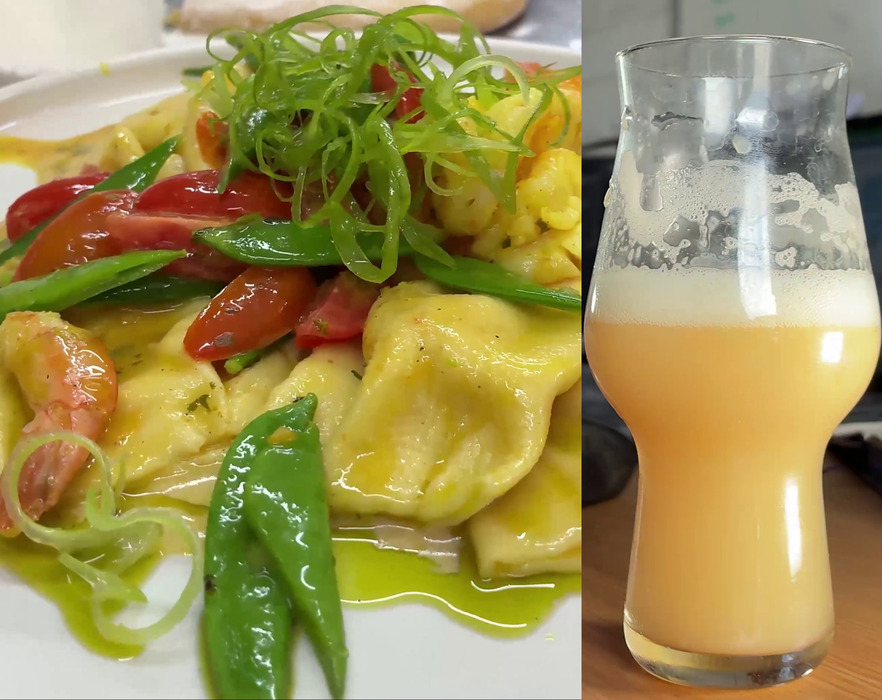
Pairing beer, food, and cigars is a sensory craft that sits somewhere between science and instinct. While wine pairing has long dominated the conversation, beer and cigar pairing follows a different, equally complex logic—one rooted in flavour chemistry, agricultural conditions, and how the human palate interprets taste over time.
This documentary explores that intersection: how bitterness, sweetness, aroma, texture, and memory come together to shape a complete experience.
The Language of flavour
in beer brewing, flavour is evaluated through six key dimensions: aroma, appearance, flavour, mouthfeel, balance, and finish. When pairing beer with food, brewers often rely on either complementing flavours—matching similar notes—or contrasting them to create balance.
Cigar pairing operates differently. Rather than contrast, cigars are usually paired using a like-with-like philosophy, where overlapping flavour characteristics reinforce one another.
A simple example illustrates this approach.
A chocolate-infused cigar pairs naturally with chocolate truffles. Add a chocolate stout, whose flavour comes from roasted malt rather than additives, and the result is a seamless trio: chocolate stout, chocolate truffles, and a chocolate-forward cigar working in harmony. Recognising Flavours in Cigars
Premium cigars often reveal flavour notes such as leather, roasted peanuts, cocoa, cashew nuts, walnuts, coffee, and earth.
These flavours are not added artificially. They develop through the tobacco’s interaction with soil, climate, fermentation, and aging.
For Obakeng Malope, flavour recognition came through experience rather than instruction. When she first smoked an Olivier Serie O, she found it enjoyable but difficult to define.
Later, while eating roasted peanuts offered by her niece, a familiar flavour surfaced. Research confirmed that nutty, roasted peanut notes are a hallmark of the Olivier Serie O. The experience highlighted how cigar appreciation often deepens over time, as memory and repetition sharpen perception.
Between the Olivier Serie O and Serie V, Obakeng preferred the Serie O for its smooth, nut-forward character. The Serie V, by contrast, is known for its bolder, richer, more intense profile.
Beer Styles and the IPA Experiment
For the documentary, the beer being brewed is an Indian Pale Ale (IPA)—a style defined by hop-forward bitterness, citrus aromas, and herbal or spicy undertones.
This particular IPA uses Mosaic, Columbus, Cascade, and Centennial hops, contributing flavours of citrus peel, pine, spice, and tropical fruit.
Traditionally, IPAs are paired with spicy foods. Hop bitterness cuts through heat and fat, making them a natural match for curries, bold Asian dishes, and even sweet desserts like carrot cake. Mild blue cheeses such as Gorgonzola or Cambozola also pair well, as do desserts like caramel apple tart, ginger spice cake, and persimmon rice pudding.
In this experience, convention is deliberately challenged.
The IPA is paired with Birria and green mole, spiced corn ribs, pickled onions, and tortilla chips. The pairing amplifies chili heat, acidity, and hop-driven brightness, creating an energetic, high-impact combination designed for spice lovers. To match this intensity, the cigar must be full-bodied, capable of standing up to both the beer and the food.
The opposite end of the spectrum: Stout pairings where IPAs are bright and aggressive, stouts are dark, rich, and deeply roasted. Their flavour profile makes them ideal companions for hearty dishes such as barbecue, meat stews, thick-cut steaks, and smoked rib roast.
Cheese pairings lean toward washed-rind, abbey-style cheeses and French Morbier, while desserts like milk chocolate, butter truffles, and chocolate bread pudding highlight the stout’s roasted sweetness.
Tobacco, terroir, and time
Like wine grapes, tobacco plants are shaped by terroir—the combined influence of soil, climate, and environment. Unlike grapevines, however, tobacco plants live for only one season. Each year’s crop must be grown from seed, making consistency a constant challenge.
No two harvests are identical. Variations in sun exposure, wind, and rainfall can dramatically affect flavour and strength.
Excessive rain, in particular, weakens tobacco, forcing blenders to adjust their recipes—often by increasing the proportion of stronger leaves—to maintain balance.
How taste works: Food vs cigars tobacco tasting relies on four primary taste sensations: sweet, salty, bitter, and sour.
Food tasting expands this list to include umami, fat, and kokumi, the mouth-coating richness that gives depth to dishes.
Cigar experts argue that cigars are less about isolated tastes and more about combined sensations—aroma, texture, temperature, and mouthfeel. Sourness, common in food, is rarely a dominant characteristic in cigar tasting.
The Anatomy of a Tobacco Plant
A cigar’s flavour and strength are determined in part by where each leaf grows on the plant:
Seco: Lower leaves, mild and aromatic
Viso: Middle leaves, balanced flavour and strength
Ligero: Upper leaves, bold, strong, high in nicotine
Sandblatt: Lowest leaves, prized in Sumatra for European wrappers
Medio Tiempo: Rare top leaves, famously used in Cohiba Behike
When smoked individually, these leaves tell different stories. Seco expresses light sweetness at the tip of the tongue. Viso stimulates the sides of the tongue, where salty sensations are strongest. Ligero activates the back of the tongue, delivering powerful bitterness and intensity. In one example, Ligero is paired with a Nicaraguan binder and an Ecuador-grown Habano wrapper.
Why Ecuador Excels at Wrapper Tobacco
Ecuador’s volcanic soil and near-constant cloud cover create ideal conditions for wrapper production. The clouds act as natural shade, allowing leaves to grow thin, elastic, and visually flawless. As a result, Ecuador produces some of the world’s most sought-after wrappers, including Ecuadorian Sumatra, Connecticut, and Habano.
The pursuit of consistency despite climate variability and agricultural challenges, cigar makers strive to deliver a consistent experience year after year. Achieving that balance requires constant adjustment, blending skill, and deep knowledge of tobacco behaviour—an ongoing dialogue between nature and craft.
In the end, pairing beer, food, and cigars is not about rigid rules.
It is about attention, memory, and experimentation—learning to recognise flavours, understanding their origins, and allowing them to evolve together in a single, shared moment.

Stay Informed, Stay Competitive
Unlock the articles, expert interviews, and data reports that power the beer and beyond industry. Join our community and stay ahead with exclusive insights from Brewbound.