
Brewing Across Continents: An American Pale Ale in South Africa, Paired with Sorghum Meal — A Documentary Film
In this documentary, we brew an American Pale Ale on South African soil a meeting of continents, cultures, and brewing philosophies. Brewing an American beer style is still a rare sight in South Africa. Most local brewers either craft entirely original recipes or take established styles and bend them gently to reflect their own identity. This film captures something different: an American Pale Ale brewed true to style, followed from grain to glass, revealing the science, the art, and the soul behind it.
South Africa is in the midst of a frothy, flavour-packed revolution. Across all nine provinces, microbreweries are springing to life—fermentation tanks humming, mash tuns steaming, and passionate brewers stepping boldly into a new era. We are still standing at the foam line of a massive craft-beer wave, just as it begins to crest.
Craft beer is born from passion. It refuses to apologise for flavour. It insists on wholesome, natural ingredients. And perhaps most importantly, it brings people together. Beer is the great equaliser—race, religion, gender dissolve when pints are raised and aromas rise. Every craft beer offers a new experience, a new expression, a new story waiting to be told.
Craft beer doesn't just taste good, it speaks. It tells stories of place, of ingredients rooted in the land, of brewhouses rich with heritage and beers brewed with intention. Craft is philosophy as much as process: a relentless pursuit of perfection, a restless chase for the next great pour. Every brew is different. Every batch demands respect. And when a beer is brewed with soul, you feel it—it's beer with a heartbeat.
Yeast: The Living EngineDuring the brewing process, Obakeng Malope is impressed by the sheer volume of grain poured into the mash tun, a mountain of malt that forms the foundation of flavour. But what truly captures her attention is the yeast. This brewery uses Fermentis SafAle AY4 yeast, a strain of Saccharomyces cerevisiae. Like all yeast, it is alive—a microscopic organism that feeds on sugar, multiplies, and transforms sweet wort into beer.
What surprises Obakeng most is the way the brewer prepares the yeast. Instead of pitching dry yeast directly or using liquid yeast, the brewer activates it first. The brewer, gently pours hot water over the yeast, stirring patiently until the mixture comes alive. Left to ferment, bubbles soon rise to the surface—proof of life, proof of readiness. Only then is the yeast poured into the fermenter, where the wort waits.
Why ferment the yeast first? Dry yeast cannot perform until it is rehydrated and awakened. This step confirms viability—the yeast is healthy, active, and strong. It ensures a robust population and predictable fermentation behaviour. This moment becomes a perfect bridge to the next chapter of the film: fermentation itself.
Fermentation: From Grain to CultureIn this documentary, fermentation is not only a brewing process—it is a cultural language. We explore sorghum and allow fermentation to reveal itself naturally, visibly, and patiently.
There are two main types of fermentation: alcoholic fermentation and lactic fermentation. In this film, we witness lactic fermentation from beginning to end. Milled sorghum is mixed with warm water, stirred, and left in the sun. Over several days, the mixture turns sour and gently acidic. From this fermented base, soft porridge is made and enjoyed with sugar for breakfast, while the firmer version is served with meat, vegetables, or fish. The dish prepared in the film pairs beautifully with the American Pale Ale—two fermentations, two worlds, one table.
We then move into alcoholic fermentation, still guided by sorghum. To understand this, we step back and clarify the process.
When white mielie meal (maize meal) ferments on its own, it becomes sour pap (hard porridge). Natural microorganisms feed on its carbohydrates, producing acids that create its tangy flavour and thick texture.
When milled sorghum ferments alone, it becomes sour sorghum pap (hard porridge). Sorghum's unique nutrients and proteins create a deeper flavour, darker colour, and higher nutritional value.
When maize meal and milled sorghum ferment together, they produce umqombothi a traditional South African sorghum beer. Maize provides starch, body, and smoothness. Sorghum contributes enzymes, proteins, minerals, and fermentation strength. Together, they create a drink that is thicker, more nutritious, and rich with complexity. In this documentary, you will see Obakeng Malope craft sorghum beer from beginning to end.
Soil, Land, and Ancestral KnowledgeThe earth beneath us holds immeasurable treasures. Living soil is the foundation of life not sandy soil that fails to retain water, nor soil with excessive permeability that dries too quickly. In villages where sorghum is planted, chemical fertilisers are not used. This is why the grain carries such a distinctive, honest flavour.
December brings the harvest of pumpkins and mealies, while sorghum is planted in August. The film shows vegetables grown naturally in backyard gardens often larger and healthier than those from industrial farms. The reason is simple: the soil is alive, rich with nutrients, and respected.
Fermentation Before ScienceBefore microbiology had a name, fermentation was considered magic. Grain mash transformed itself into intoxicating drink without explanation. What we now understand is that wild yeast and bacteria floating in the air, living on plants, clinging to fruit skins were doing the work.
Grape skins, in particular, are rich in yeast because yeast evolved to thrive on sugar-rich fruit. As grapes ripen and split, yeast multiplies rapidly. Early brewers observed that fruit, vineyards, and winemaking tools could reliably spark fermentation.
This knowledge helps us understand why traditional sorghum beer requires no added yeast—yet still ferments and produces alcohol. While we do not reveal every secret, this documentary aims to build understanding rather than mystery.
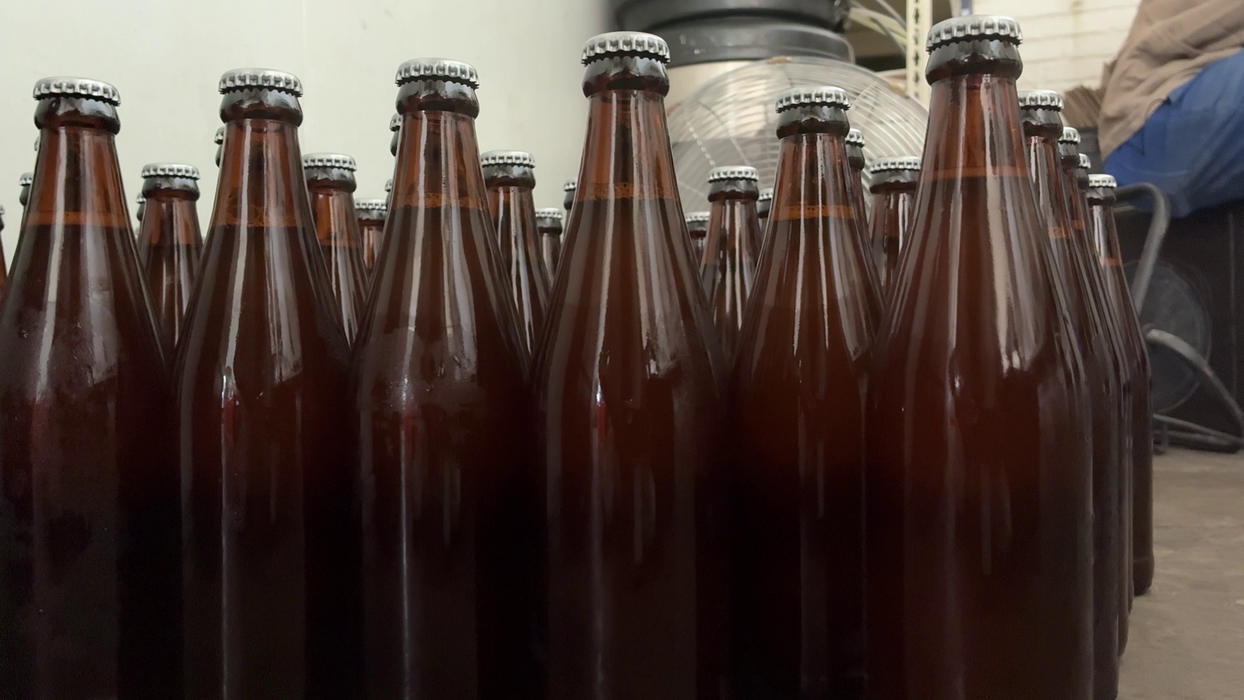
From Tank to BottleThe final session of the documentary shows how beer is bottled and packed. This brewery uses a small-scale, manual bottling line made up of two separate machines. First, beer is filled directly from the keg using a two-head bottle filler.
Empty bottles are placed beneath the nozzles, and beer flows in using counter-pressure filling. Two bottles are filled at once, then removed by hand. The brewer caps each bottle using a heavy-duty bottle capper. A crown cap is positioned on the bottle, and the machine crimps it securely onto the neck—either one bottle at a time or with a tabletop lever system. Finally, the bottles are labelled, ready to leave the brewery and tell their story.
This documentary is more than a brewing process—it is a conversation between tradition and innovation, science and intuition, grain and people. From American Pale Ale to sorghum beer, from yeast cells to living soil, it is a celebration of fermentation as culture, craft, and connection.

Stay Informed, Stay Competitive
Unlock the articles, expert interviews, and data reports that power the beer and beyond industry. Join our community and stay ahead with exclusive insights from Brewbound.