
Sapporo-Stone Brewing’s strategy for 2026 is to double the size of Sapporo Premium while tapping into pockets of growth for incremental gains, company leaders shared during a virtual distributor meeting last week.
Sapporo-Stone CEO Zachary Keeling emphasized that the U.S. remains the company’s “priority growth market,” echoing growth targets he shared during last year’s meeting.
Sapporo leaders emphasized the company’s outsized 73.5% dollar share of Asian import brands, with the next closest shareholder, Kirin, at 9.4%, followed by Asahi (7.9%), Tsingtao (5.5%) and Singha (3.2%).
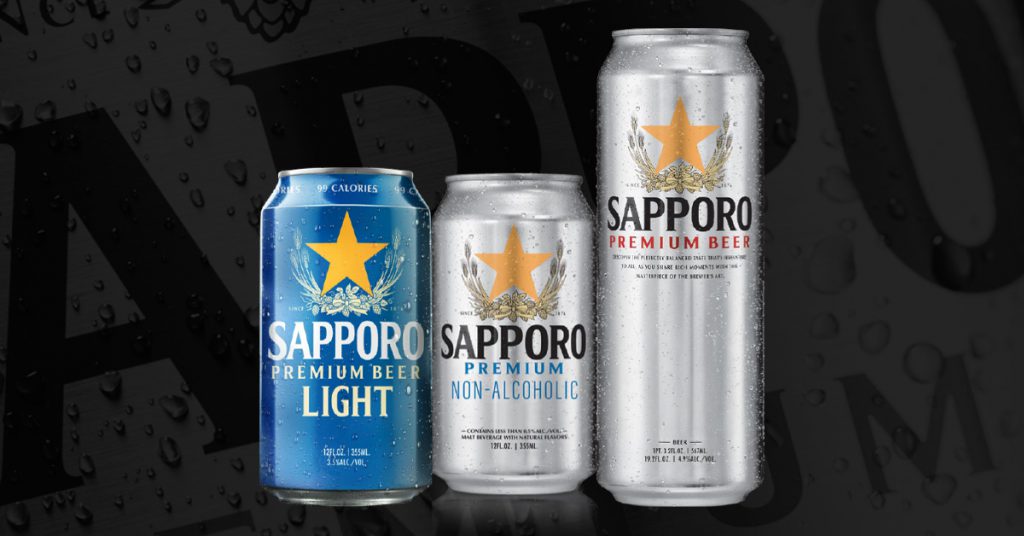
In 2026, the company will add three new SKUs aimed at meeting consumer needs in the beer category’s growth areas: health and wellness, high-end, non-alcoholic (NA) and flavor-forward.
They include Sapporo Premium NA; a reformulated Sapporo Premium Light; and 19.2 oz. single-serve cans of Sapporo Premium. The latter two are slated to ship to distributors on December 8.
Sapporo NA is available now and is “outperforming” initial expectations and “doubled our initial forecast for 2025,” Sapporo-Stone chief revenue officer Tom McReavy said.
“We really have the big opportunity in front of us with Dry January,” he added.
Sapporo Premium NA will launch in 12 oz. can 6-packs, and company leaders say it will complement its on-premise offerings.
Meanwhile, Sapporo Premium Light has been reformulated to 3.5% ABV and 99 calories. The beer will be available 12 oz. can 12-packs with refreshed packaging, as well as 12 oz. bottle 6-packs.
“Sapporo Light, sitting along Sapporo Non-Alc, are two strong players in the health and wellness space,” McReavy said.
The final piece of the innovation strategy is the addition of Sapporo Premium singles to expand upon the company’s “very low distribution” in single-serves, McReavy said. The package will be targeted to convenience stores to drive trial and also hit the key two-for-$6 price point.
Sapporo leaders laid out the opportunity in an $8.5 billion single-serve category in which imports are the top-selling segment. The company, citing NIQ scan data for the 26 weeks ending August 23, noted that import singles are growing 8% in convenience and 10% in U.S. xAOC.
However, McReavy stressed that 19.2s are not meant to replace its existing 22 oz. chalice cans. Instead, they are part of a “dual single-serve approach,” with the 19.2s targeted to convenience, venues and mass grocery retailers, while the chalices play in restaurants, venues and high-end grocery stores.
“This is a strategic move to capture more distribution in a high growth category, the import single-serve,” McReavy said.
In addition to connecting with sushi-buying consumers, Sapporo’s marketing plans for 2026 include reaching games through its Ghosts of Yōtei sponsorship, the return of artist Tokyo Hiro for limited-release Year of the Fire Horse packaging and cherry blossom 24-pack packaging.
The company will also celebrate its 150th anniversary starting in March with callouts on Sapporo Premium packs, and a six-episode animated manga video of Sapporo founder Seibei Nakagawa via package QR codes.