
After more than 40 years together, the American Homebrewers Association (AHA) and the Brewers Association (BA) are parting ways, the non-profit organizations announced today.
“We know that many of our brewery members originated as homebrewers, which was instrumental in the growth of the craft beer movement in America,” BA president and CEO Bart Watson said in a press release. “Since 1978, the AHA has been the preeminent organization for homebrewing enthusiasts and we look forward to supporting them as they transition into an exciting future.”
The AHA, which represents more than 23,000 homebrewers, has been part of the BA since 1982. Support for a move to independence bubbled up “over the course the past few years,” AHA executive director Julia Herz told Brewbound, via a spokesperson.
“We’ve been increasingly hearing from members and the AHA committee that the AHA needed a reinvigorated new vision and have been working diligently to steward the organization to a new future,” she said. “Beginning in 2023, AHA member leaders and staff voiced their desire to leave the parent organization, BA, and form their own hobbyist-focused organization.”
BA at-large board member Shawna Cormier, who is also the founding chairperson of the AHA’s board, spent “an incredible amount of time” on “a comprehensive strategic planning process” to chart AHA independence with the organization’s committee and BA staff, Herz noted.
“We did extensive research, surveyed members and interviewed numerous stakeholder groups to determine the next best steps for the AHA,” she said. “The move to independent 501(c) status for the AHA was recommended to the Brewers Association Board and they approved it late in 2024.”
“Our members should be excited to have front-row seats to history,” Cormier said in the release. “We’re eager for the AHA to chart its new path and meet the needs of the homebrewing community.”
As a nonprofit trade organization, the BA is classified as a 501(c)(6), but the AHA has applied to become an independent 501(c), according to Herz.
The AHA plans to be functioning independently of the BA by the end of this year, according to the release. As it works toward the goal, the AHA is on the search for an association management company to handle daily operations currently under the BA’s purview.
The BA will provide “one-time seed funding” to the AHA as it separates, as well as “deferred revenue from membership dues,” Herz said, via the spokesperson.
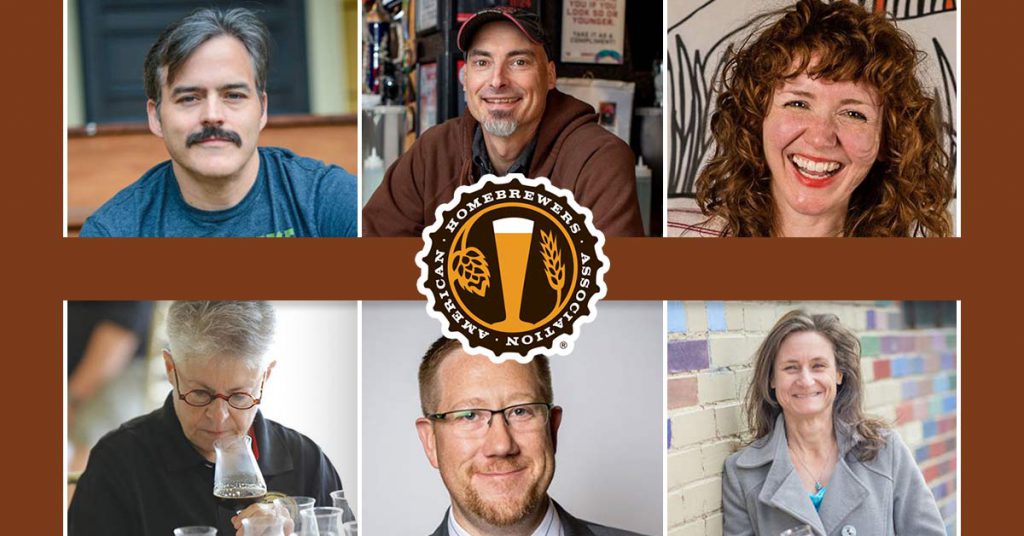
A founding board of directors has been slated and includes Herz (who also serves as the staff liaison to the board), chairperson Cormier, Drew Beechum, Sandy Cockerham, Gary Glass and Greg Roskopf.
Cormier was named an at-large member of the BA board in February 2024 after by-laws changes removed two dedicated board seats for AHA members.
Glass precedes Herz as AHA director and had worked at the organization for 20 years before his role was terminated in a round of job cuts in 2020. Herz, then the BA’s craft beer program director, was included in the same round. The organization brought her back to lead the AHA in 2021.
The founding board “will act as a transition committee to steward the AHA to organizational independence in 2025 and establish our budding organization’s bylaws, vision, mission, strategic priorities, and leadership elections that will begin in 2026,” including a “full financial review and plan,” Herz said.
Homebrew Con – the AHA’s signature event, which included the National Homebrew Competition (NHC), educational seminars and social events – was put on hiatus in 2024. Instead, the BA absorbed some of Homebrew Con’s elements into the Great American Beer Festival (GABF) in October 2024, including announcing NHC winners during the GABF competition’s awards ceremony and designating a portion of the festival’s floor space exclusive for AHA members.
The BA and, by extension, the AHA, has grappled with the loss of revenue since the COVID-19 pandemic forced the cancelation of events, its largest source of revenue. In 2023, the most recent year for which BA revenue data is available, the trade organization’s revenue from events declined -2%, to $13,886,191. The BA’s overall revenue declined -2% YoY, to $22,914,025.
Homebrew Con could return next year, Herz said.
“Unfortunately, we have yet to find a suitable partner to execute a cost-effective 2025 Homebrew Con (HBC), the AHA’s annual member gathering, and the usual location of the awards ceremony,” she said. “However, we are on track with an ongoing search for options to bring back HBC as a valued and important annual event in 2026.”
The AHA is working toward hosting an in-person NHC awards ceremony after judging wraps in Kansas City, Missouri. Competition registration is slated to open January 28. First-round judging locations include Chicago, Illinois; Indianapolis, Indiana; Longmont, Colorado; New York, New York; San Diego, California; Seattle, Washington; and Tampa, Florida.
In addition to declining events revenue, AHA membership has been declining, depleting another source of revenue. In 2021, membership was clocked at 38,000 homebrewers, which dipped to “over [30,000]” in 2023. Today, membership is nearly 10,000 fewer, at 23,000, according to the release.
Existing AHA membership rates are set at $4.99 per month or $49 annually. Annual members receive a print version of Zymurgy magazine, while monthly members get a digital version. In addition to the magazine, members also have access to recipes, seminar recordings, early event ticket sales and discounts at more than 2,000 participating beer-centric businesses, including breweries, homebrew supply stores, retailers and restaurants, according to the AHA’s website.
“For 2025, AHA member benefits will stay the same,” Herz said. “In the future, look to see benefits refined based on member input.”
Watson, who stepped into the BA’s top role earlier this month, praised the AHA’s pending split.
“This is a highly appropriate time for bold change and innovation for both organizations,” he told Brewbound, via a spokesperson.
“Homebrewing is near and dear to our hearts. Many of our craft breweries started as homebrewers. The craft beer revolution of the 1990s and early 2000s sprang from the shoulders of homebrewers who went pro and started their own breweries,” Watson continued. “But times change. And so, after 42 years of integration and partnership, the time has come for both organizations to venture on to new journeys independent of one another.
“We look forward to supporting the AHA throughout 2025 and beyond as they transition to their new future, and I’m excited for the AHA to have the autonomy and flexibility to pursue their own path.”