
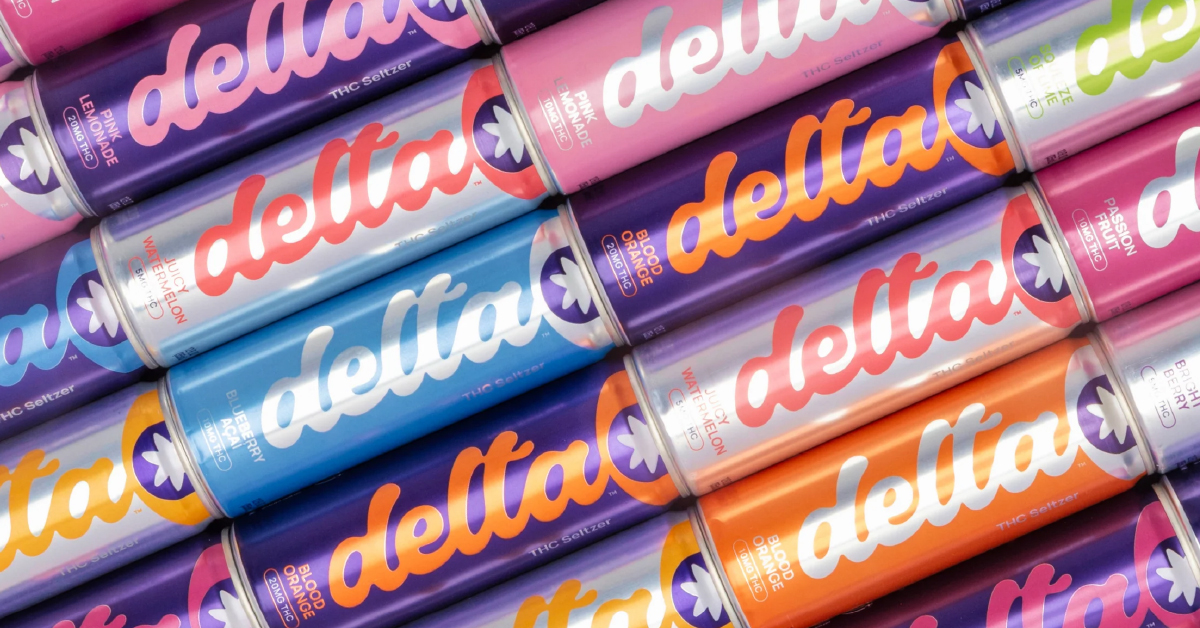
Hemp-derived THC seltzer brand Delta Beverages recently unveiled a new visual identity and a marketing campaign that seek to “humanize” the brand while eliminating the stigma often associated with cannabis use.
“The THC [beverage] category is reaching a tipping point,” said founder and CEO Jack Sherrie “The largest percentage of consumers that are in the category right now are new and haven’t formed strong brand loyalty, generally speaking.”
“The number one goal of [this rebrand] is to give this first generation of THC drinkers a memorable experience,” added Gabriela McCoy, VP of marketing at Delta.
Standing out is as important as ever within Delta’s corner of the beverage industry. When the brand launched in 2020, it was one of the first hemp-derived THC beverages sold outside of dispensaries, according to Sherrie. With that market now forecasted to reach $750 million in sales by 2029, Delta is looking to better communicate its position as a leader in the space that has achieved product consistency at scale: its largest production run to date was 11.2 million cans.
The refresh was executed in collaboration with creative agencies Tattoo Projects and McClean Design and includes an updated logo, standout packaging and a vivid color catalog. Delta’s new cans are intended to be “more inviting for everybody,” leaning 60% female and 40% male, compared to its old design, which leaned 70% male and 30% female.
The new look coincides with Delta’s latest marketing campaign, “There’s a Delta for That.” Amid a shift in alcohol consumption trends, the ad seeks to destigmatize cannabis and usher in a new way to enjoy adult beverages by tapping into meaningful “micro moments,” from a concert pregame to a cozy bonfire. It includes a 360-degree digital, social and out-of-home marketing strategy that humorously nods to life’s lows and highs, positioning Delta’s 5mg, 10mg or 20mg drinks as offering something for all consumers.
“The campaign is helping us [destigmatize] through relatable, joyful, imperfect human micro moments,” said McCoy. “If you think about Thanksgiving, the meal may not be the key event or the most memorable experience. The best part [of the holiday] may be going for a walk with your cousin and having a Delta together and connecting.”
Getting Cans in Hands
During its first two years on the market, Delta failed to bring on any distributors as hemp-derived THC beverages were considered by many to be too risky. To convince naysayers it was a legitimate category, Sherrie built a wholesale model on the back of the brand’s website – “basically a DSD model.”
Over time, the brand secured support from alcohol distributors– primarily wine distributors at the time – and “worked its way up from there.” According to Sherrie, the brand has always put its distributors first, as they’ve “helped us build and get to where we’re at.”
“The only way this works is going through distributors. That’s the long-term plan. But I also recognize the importance of the margin and gross margin with direct-to-consumer. All of the profits we get from [DTC] are used to support and grow distribution in the retail channel,” said Sherrie.
Delta’s approach has proven fruitful. In the 13 weeks ended August 29, it became the No. 1 hemp-derived THC beverage brand in the convenience store channel nationwide with $1.43 million in sales, according to Nielsen data. Its seltzers are currently available in 8,500 doors nationwide, including select Total Wine and Circle K locations.
Investors are taking notice. The brand secured $6 million from Listen Ventures, a VC group that “invests in consumer-obsessed entrepreneurs building at the tipping point of behavior shifts,” according to its website. The firm has also backed meal delivery company Factor, non-alcoholic beer producer Go Brewing and rye whiskey maker This Is Stolen.
While “the stroke of the pen risk is very high” for investors dabbling in hemp-derived THC, Sherrie said that Listen Ventures – which allegedly vetted over 50 brands in the category – was drawn to Delta because it is profitable, has the “highest gross margins” and is a leader in the space.
Delta’s legacy, coupled with its product consistency, is what has helped it stand out in the rapidly-growing category.
“Some of the smaller players are having issues with THC leaking in the can or other things happening to their products, but we’re consistent across the board with customer communication, product formulation and getting product out on time,” said Sherrie.
Delta is actively seeking another $10 million to support operations and, according to Sherrie, already has “significant interest.”
“I always like to have a good amount of cash in the bank for a rainy day. It allows us to be nimble, and it allows us to keep the economies of scale so we have higher net profitability,” said Sherrie. “Having cash ready to deploy is important and I think a lot of our competitors don’t think that way.”
Forging Ahead
Competition in intoxicating hemp beverages has been heating up since the market was opened by the 2018 Farm Bill, which provided a loophole for legal THC if sourced from industrial hemp with THC concentration of no more than 0.3% by dry weight. Other major players in the space include Cann, BRĒZ and Happi.
However, as ever-evolving state-by-state regulations continue to put pressure on the category , its future hangs in the balance. Most recently, Texas governor Greg Abbott signed an executive order mandating age restrictions of on the sale of hemp-derived THC products, roughly three months after he vetoed a bill that would have outlawed the intoxicant entirely in the Lone Star State.
Sherrie believes that educating policy makers and legislators for guidelines, regulation and enforcement is key to the category’s growth as consumer demand rises. He praised the efforts of organizations like the U.S. Hemp Roundtable and the Coalition for Adult Beverage Alternatives (CABA)
“Georgia wants a specific logo with a specific color, while Minnesota has its own specific packaging requirements. Collectively, the hemp industry is going to legislators and asking for them to stay consistent in their requirements,” said Sherrie.
Next year, the brand is hoping to “continue to own” the convenience store channel and “aggressively” building out its sales team while dialing into its biggest markets of Florida, Chicago and New Jersey.
“I think liquor stores have accounted for the majority of gross sales in THC beverages, but there’s a huge opportunity when it comes to convenience. There’s more foot traffic and higher visibility in that channel,” said Sherrie.
There’s a path to $100 million in revenue, which Sherrie strongly believes “is doable” as early as 2026.
“We have to work through the legislative pieces, but we have many ways of hitting that goal that I’m keeping close to my chest right now,” he said.