Martín writes news articles and feature stories covering the non-alcoholic beverage industry for BevNET. A graduate of Boston University, Martín's previous work has appeared in USA Today, The Boston Globe and The Boston Herald.
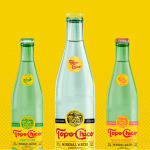
Sparkling water fans are bracing themselves for a prolonged drought after The Coca-Cola Company confirmed that Topo Chico mineral water is temporarily unavailable in the United States due to production issues at the source in Monterrey, Mexico.
New York may allow licensed alcohol retailers to sell THC-infused drinks if a new measure introduced in the State Legislature earlier this week gains passage.
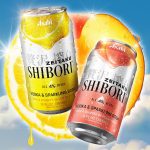
Japanese beer giant Asahi is deepening its U.S. presence with the national launch of its premium ready-to-drink (RTD) vodka and soda cocktail Zeitaku Shibori, the first such product to be manufactured in the States.
President Donald Trump issued an executive order on Thursday directing the U.S. Attorney General to move cannabis from a Schedule I to Schedule III controlled substance, marking a watershed moment in the history of U.S. marijuana policy and a significant step forward for the nascent THC-infused beverage industry.
PepsiCo allegedly created a soft drink “price gap” with Walmart, creating a system that allowed the world’s largest retail to obtain preferential promotional payments, while those same payments were reduced for Walmart’s competitors, according to court documents unsealed last week.
While bev-alc is in flux, zero-proof partying is still in full swing with the announcement of a new multi-year partnership that brings Hiyo Social Tonics into Live Nation venues across the country.
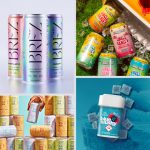
Even for an industry born out of risk and uncertainty, hemp beverages are now officially in uncharted waters. As part of the funding bill to reopen the government signed into law last night by President Donald Trump, hemp-derived products will be required to contain less than 0.4 mg THC per container, as of November 13, 2026. Swept away like a storm in the night, the multi-billion-dollar, hemp-derived THC industry is waking up this morning to the stark reality that, barring the creation of a legal federal framework, they will be virtually extinct within a year.
A last-ditch effort to remove language prohibiting virtually all THC beverages failed in Congress, placing the intoxicating hemp industry’s fate in the House’s hands.
Intoxicating hemp beverages could be sacrificed in a deal to reopen the federal government. As political factions in Washington, D.C., spar over how to end the longest-ever federal government shutdown in U.S. history, legislators – led by Sen. Mitch McConnell (R-KY) and Rep. Andy Harris (R-MD) – are attempting to use the situation to shape the future of hemp and intoxicating THC products and restrict the market created by the 2018 Farm Bill.
Hemp beverage manufacturers are rallying grassroots support to help defeat a potentially industry-killing ban on intoxicating hemp products currently working through the U.S. Congress.
Of all the hurdles (self-inflicted and otherwise) facing beleaguered hydration drink brand Prime, sugar may not appear to be the most obvious. Nevertheless, the influencer-led, Congo Brands-owned company is seeking to spark a sales and popularity rebound with Prime Zero. Meanwhile, soccer superstar Leo Messi’s Más+ by Messi will shift to slim cans next year.
by
Lukas Southard, Jeffrey Klineman and Martín Caballero
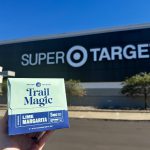
One of the largest retailers in the country is dipping its toe into the intoxicating hemp beverage category. In its home state of Minnesota, Target has stocked the shelves of 10 stores in the Twin Cities region with intoxicating hemp drinks from 10 different brands, marking a potentially seismic shift in distribution for the category.