Jessica Infante joined Brewbound in 2019 after nearly a decade in a variety of marketing roles in the craft beer industry. Prior to that, she was a daily newspaper reporter at the Jersey Shore. Jess holds a bachelor’s degree in magazine journalism from the S.I. Newhouse School of Public Communications at Syracuse University and a master’s degree in integrated marketing communication from Emerson College. She is a certified Cicerone and lives in Salem, Massachusetts.
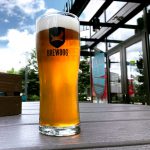
Five months after an unsuccessful bid to buy back BrewDog, co-founder James Watt is at it again. The Scottish entrepreneur announced today that he has made an offer to Tilray Brands to reacquire BrewDog via his Second Best brand, which he founded in May. Details of the offer were not made public.
Beer remained an outlier among beverage-alcohol, with June price increases nearly keeping pace with overall inflation, according to the latest Consumer Price Index (CPI) report from the U.S. Bureau of Labor Statistics (BLS).
Two years after appointing dual CEOs, Cleveland, Ohio-based Great Lakes Brewing Company (GLBC) is down to one, following the May departure of Steven Pauwels, who returned to his native Belgium to be closer to family, Crain’s Cleveland Business reported.
Southern Glazer’s Wine & Spirits (SGWS) will slash 1% of its workforce as it implements a more tech-heavy business model, the beverage-alcohol distributor announced Tuesday afternoon.
Beverage-alcohol off-premise dollar sales plunged back into red in the week ending June 28, according to the latest weekly report from market research firm Circana.
Trends improved for only five of the beer category’s 25 largest vendors between the year-to-date (YTD) and latest four-week (L4W) periods ending June 14, according to market research firm Circana.
After a rocky end to Q1, things are looking up for Constellation Brands in Q2, CEO Nicholas Fink shared during his first earnings call with investors Wednesday morning.
Total beverage-alcohol dollar sales turned positive year-over-year [YoY] (+0.8%) and week-over-week [WoW] (+1.7%) in the week ending June 21, according to the latest weekly report from market research firm Circana. Off-premise dollar sales reached $1.542 billion during the week, which featured several drinking-centric occasions, including Father’s Day celebrations and nearly two weeks of World Cup play. Volume, measured in case sales, declined 1.9%.
Craft dollar sales declines stabilized to start the summer selling season after a period of worsening trends. In the four-week period (L4W) ending June 14, craft dollar sales declined 4.6% year-over-year (YoY) at multi-outlet grocery, mass retail and convenience stores (MULO+C) tracked by market research firm Circana. This marked no change in momentum from Circana’s previous monthly report (data ending May 17), which itself reflected a doubling of dollar sales declines compared to the prior period (-2.3% YoY L4W through April 19).
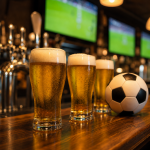
The FIFA World Cup 2026 on-premise boost has emerged from coast to coast, according to the latest report from data firm BeerBoard. Those gains are much steeper in states with the 11 stadiums hosting World Cup matches, often by several orders of magnitude.
Boston Beer Company and two former sales representatives have reached a settlement in a lawsuit over the company’s use of non-compete agreements, according to a court order filed Monday.
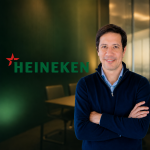
The search for the next CEO of Heineken N.V. has met its end beyond the beer industry. The Dutch brewing giant’s supervisory board has named Rafael (Rafa) Oliveira as the company’s CEO and executive board chair, according to a press release. If Oliveira’s nomination is approved at the company’s August 5 shareholder meeting, his four-year term will begin October 1.
Lost Coast Brewing founder Barbara Groom is looking for a buyer for her nearly 40-year-old craft brewery. Groom plans to retire after 37 years of running the Eureka, California-based craft brewery, she told ProBrewer.
As the FIFA World Cup enters its second week at host cities across North America, craft breweries’ experiences are mixed. The globe’s most-watched sporting event rolled into 11 U.S. cities last week, bringing millions of international travelers and providing craft breweries in host cities with an opportunity for a much-needed boost to kick off the summer.