
More than 125 licensed producers craft more than 5 million gallons of cider annually in New York, making the Empire State the largest cider-producing state in the U.S. by active cideries, according to the New York Cider Association (NYCA).
New York is also the second largest state by apple growers, and the state’s hard cider industry contributed $1.7 billion in annual economic impact last year.
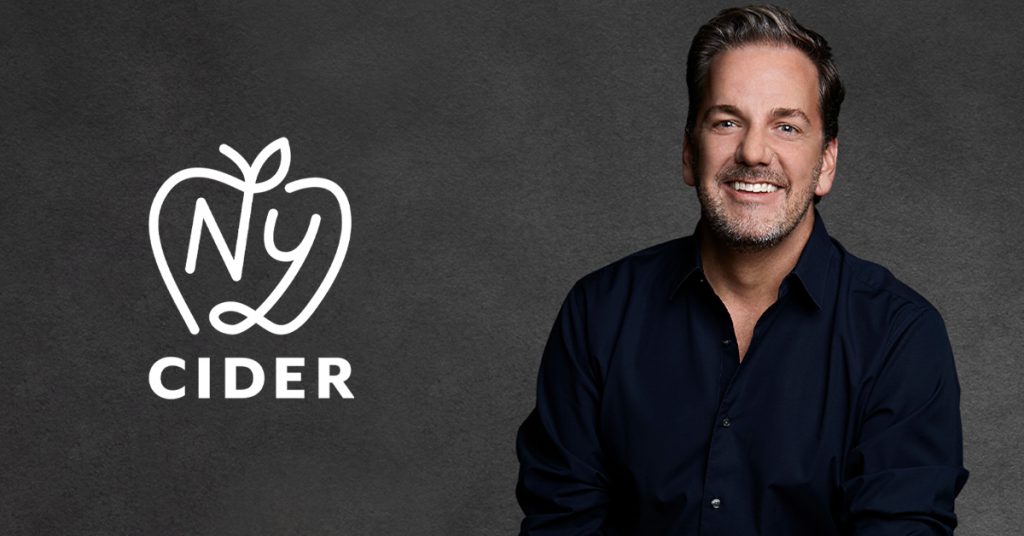
NYCA executive director Scott Ramsey is in charge of advocating for New York’s bustling hard cider scene, and the overall industry, in a role that he’s held since 2020.
That work paid off in August 2024, when New York Gov. Kathy Hochul signed Senate Bill S2852A, allowing direct-to-consumer (DTC) shipping of spirits, hard cider, mead and braggot from in- and out-of-state manufacturers to New York consumers. The American Cider Association (ACA) awarded Scott the Significant Impact of the Industry Award earlier this year for his efforts.
In the latest edition of A Round With, a Brewbound Insider-exclusive Q&A series, we caught up with Scott to discuss the New York cider industry’s recent milestones, and what he’s setting his sights on next.
Here’s the full Q&A, edited slightly for clarity …
The NYCA recently celebrated its 10 year anniversary. How does New York’s cider industry look now compared to 10 years ago?
Scott: I love this question because it’s almost hard to believe how far we’ve come! Ten years ago, NY Cider was a movement with a few passionate producers but with limited visibility, few coordinated resources and not much public understanding of cider as a serious craft.
Now, thanks to a decade of relationship-building, shared learning, and strategic investment, NY Cider is in a whole new category. We’ve grown from scattered dots on a map into a $1.7 billion connected statewide industry complete with the NY Cider Trail app, a certified NY Cider Mark on our labels, and the passage of direct-to-consumer shipping legislation.
And I love the fact that we’re not just telling the story of NY Cider anymore – we’re living it together. Producers, growers, retailers, chefs, beverage directors, lawmakers … they’re all part of it now. And that’s what makes this next chapter so exciting. There’s trust, momentum and a shared sense that NY Cider has its well-deserved place at the table.
How would you characterize the New York cider industry compared to other regions?
Scott: There are so many incredible cider regions across this country but NY Cider is definitely in a league of its own. With more than 99 cideries spread across every region of the state, NY Cider offers an incredible range of styles and approaches all very deeply rooted in place – and that connection shows up in every glass.
Thanks to a long history of apple growing and a deep commitment to regional agriculture in this state, we have access to incredible fruit that produces some of the best ciders in the world. What also really defines us is the creativity and intention behind the cider. NY Cider is a story of land, legacy and sustainability. Our producers are working with apples, many of which are grown in long-standing, multi-generational orchards and so many of our cideries are small, independently owned businesses committed to keeping agriculture strong in their communities.
Add to that the tourism experience we’ve created – tasting rooms that welcome visitors, orchard tours, our annual Cider Week New York, plus our newly launched NY Cider Festival events and the NY Cider Trail app that connects it all – and you start to see what makes this region so special.
The state of New York celebrated the anniversary at the State Capitol during NY Senate Cider Day. How has cider been able to form such a relationship with local legislators?
Scott: It’s been all about consistency, storytelling and showing up. From the beginning, we’ve made it a priority to help legislators see cider not just as a beverage, but as a symbol of New York’s agricultural strength, rural economies and regional pride.
I’ve paid very close attention to putting in the time to build real and meaningful relationships with lawmakers, staffers and agencies, so they understand who our producers are, what they contribute and what they need to thrive. Events like NY Senate Cider Day create opportunities to bring the full story to life: Legislators get to taste the cider, meet the growers and see firsthand how this industry connects farming, tourism, small business and sustainability.
That kind of connection doesn’t happen overnight. It’s taken years of showing up with clarity, consistency and collaboration, but the results speak for themselves. The passage of direct-to-consumer shipping legislation last year was a major milestone, and it wouldn’t have happened without the trust and understanding we’ve built with our partners in government. And that bill didn’t just unlock sales – it validated the work our community has been doing for years.
What’s the biggest challenge for your members now?
Scott: Cider makers in New York are farmers, entrepreneurs, producers and hospitality leaders all rolled into one. They’re navigating rising production costs, labor shortages, climate volatility and a marketplace that still often lumps cider into a misunderstood corner of the beverage industry. It takes real courage and grit to keep going, let alone to grow. The biggest challenge right now is balancing creativity and quality with the hard realities of operating a small agricultural business in an unpredictable climate both economically and environmentally.
At the same time, distribution and access to market remain ongoing hurdles. That’s why the passage of direct-to-consumer shipping legislation and all of the market development programming we do is so important – it gives many of our producers a vital new pathway to reach customers directly.
But there’s still work to do to level the playing field and educate consumers about the value and craft behind NY Cider. I see my role and the role of the New York Cider Association as essential in the work to keep advocating, storytelling and building the kinds of opportunities that help our NY Cider growers and producers not just survive but truly thrive.
You’ve been leading the NYCA since early 2020 – what drew you to the role?
Scott: I was drawn to the role because it sat at the intersection of everything I care about: storytelling, community, entrepreneurship, authenticity and impact. I’ve always been fascinated by industries that are rooted in place, where people are making something meaningful and working toward a larger vision. Being in this role has given me a chance to help shape an emerging category and support people who are truly passionate about what they do.
Coming into the role in early 2020, right as the pandemic began, was its own kind of initiation. But it gave me a front-row seat to how agile and values-driven this community really is. And it taught me quickly how important relationship building and consistent communication are, especially in a fragmented landscape.
Compared to my decades in corporate, agency and nonprofit settings, leading a niche trade group has been more hands-on and more personal. And I’ve been able to bring structure, strategy and brand discipline to the table – skills honed over years in larger organizations – and apply them in a way that helps elevate the entire category. In this role you have to be creative, resourceful, and deeply connected to the people you serve and that’s what makes it so incredibly rewarding for me. You can feel, see, and experience the impact of your work in real time.
Many craft breweries are starting to explore cider. How do you feel about other industry members dipping their toes in the cider pool?
Scott: Curiosity is always a good thing. In many ways, it’s a sign of cider’s growing relevance. When breweries or other craft producers explore cider, it means they’re recognizing its potential, its versatility and its growing consumer appeal. That’s a win for all of us.
At the same time, cider is its own craft – with its own agricultural foundation, fermentation practices and flavor profiles. It’s not just beer’s cousin or a placeholder for seltzer, which several of our members who are also brewers deeply understand. I hope brewers who are newly exploring cider are not just looking for a placeholder on the menu to satisfy a customer who doesn’t want beer. I want people to step into the cider space because they’re genuinely interested in what it takes to make a great cider. The best collaborations or crossovers come from people who take the time to learn from the cider community, understand the fruit, and approach the process with real respect.
Ultimately, it’s always a great thing to welcome new energy, especially when it comes with a spirit of learning and celebration. Cider thrives when more people understand it, enjoy it and want to be part of the story. So if someone’s dipping their toes into the cider pool, I say: Come on in! But be sure to take time to taste, listen and learn the depth of what cider can really be from all of our NY OG cider makers who have already been in the deep end of the pool for decades making world-class ciders.
If you could wave a magic wand and change one thing about (or affecting) the cider industry, what would it be?
Scott: If I could wave a magic wand I’d ask for three waves!
First wave (and many people have heard me say this, with all the love for the beer and wine industries) I want us to live in a world where we don’t have to mention wine or beer in the same sentence in order to talk about cider. Cider deserves to be thought of as its own, distinct category with deep agricultural roots and an incredible range of styles and it would be amazing to experience a world where, just like other beverage categories, there is no need to compare. It stands alone in its very own special way.
Second wave would be for people to think of cider as a year-round beverage, not just in the fall. Cider is so much more than just seasonal. It pairs beautifully with any event across the calendar, it illuminates any type of food, and it has something to offer in every moment and mood.
Third wave would be the full achievement of consumer, media, and food/beverage industry education with an ultimate goal of having at least three NY Ciders on every restaurant menu across this state. What a world that would be!
This is an incredibly exciting time for NY Cider and cider as a whole because I can see the beginnings of so many of these magic wand waves. That means the world to me for our growers and producers who are making such an incredible agricultural beverage. NY Cider isn’t a trend, it’s a tradition. And I can’t wait to see how it continues to expand because I so strongly believe that it’s not just what’s in the glass – it’s where it comes from, who made it, and how it invites people to explore and engage.