
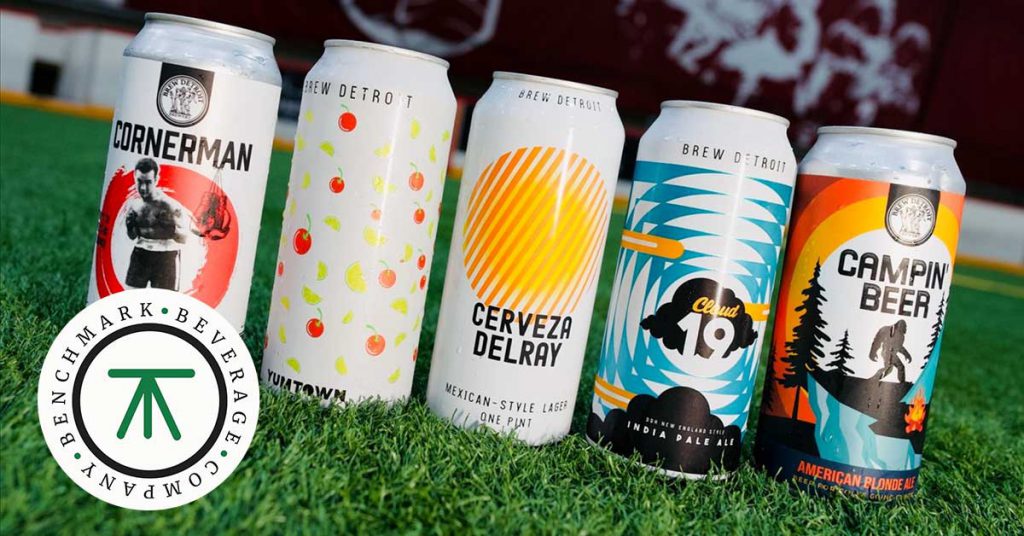
At a time when brewers are exploring spirits and ready-to-drink offerings as avenues for incremental revenue, Michigan-based spirits producer Benchmark Beverage Company is doing something similar: bolting on beer brands to expand its portfolio.
In recent months, the company has acquired Marshall, Michigan-based Dark Horse Brewing and Roak Brewing, contract producer Brew Detroit (which also produces beers under its own name) and Great America moonshine-inspired flavored malt beverages (FMB).
The Brew Detroit deal took place in February 2025, and Benchmark acquired Dark Horse/Roak and Great American in late 2024.
Benchmark was founded in 2016 and produces a broad portfolio of mid-tier spirits brands, as well as imports for near-national distribution. In 2020, LKI, an investment firm founded by the Lipari family, acquired the company. The family sold Lipari Foods, a major Midwestern food distributor, to private equity firm H.I.G. Capital, in 2019.
As the spirits landscape changes, the beer and beyond beer categories attracted Benchmark.
“Like anything, it’s a pendulum, and if you’re smart about it, you can get on the right side of things, and that’s where we’re going,” CEO Auday Arabo told Brewbound. “That’s why we want to diversify. We were all spirits, now we’re getting into beer. We’re also getting into non-alcoholics and wine in time. We want to be a comprehensive beverage company.”
One of the first orders of business for Benchmark’s burgeoning beer division was to consolidate brewing operations at Dark Horse and Roak’s shared facility in Marshall, 124 miles west of Detroit. With the move, any Brew Detroit equipment that did not relocate to Marshall was listed for sale in an auction that closed Thursday, March 27.
Although production of Brew Detroit has shifted, Benchmark would like to regain a toehold in the Motor City, Arabo said.
“If we bought the building, we’d still be there,” he said. “We’d love to be in Detroit, but the opportunity just wasn’t there to make it happen. But if we find another acquisition in Detroit, we’d love to stay. We really want to make things as local as possible.”
In addition to contract brewing services at its 100,000-barrel capacity facility, Brew Detroit brews and sells several SKUs under its own brand. Those beers were largely what attracted Benchmark, which discontinued Brew Detroit’s contract work.
Brew Detroit’s portfolio includes Cerveza Delray Mexican-style lager (4.2% ABV), Campin’ Beer blonde ale (5% ABV), and Yum Town (4.7% ABV), a lager with Michigan cherries and key limes.
In Brew Detroit’s emphasis on easy-drinking session beers, Benchmark has found an apt balance to Dark Horse’s IPA-heavy portfolio and Roak’s stouts. Add Great America’s FMBs and Benchmark’s broad portfolio has a player in most major beer segments.
“None of them compete against one another, they fit in,” Arabo said. “That’s part of our acquisition strategy – any purchase that we make, we don’t want to cannibalize something that we’re trying to grow out currently.”
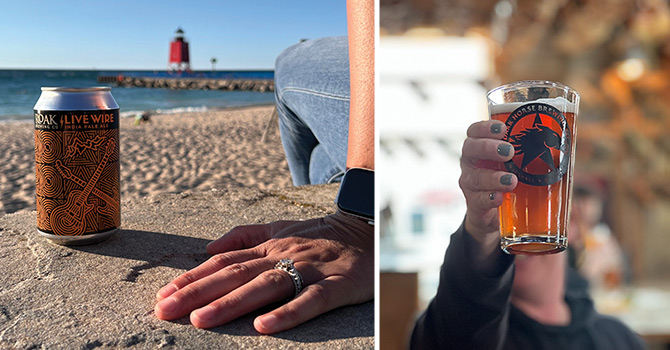
The company will focus on Dark Horse’s flagship Raspberry Ale (5% ABV), Crooked Tree IPA (6.5% ABV) and Hazy Crooked Tree IPA (7% ABV), along with Roak’s Devil Dog oatmeal stout (8.3% ABV).
To expand its offerings beyond beer, Benchmark acquired Great America from Brew Detroit, which had acquired it from its founders. Available in a variety of flavors (Tea With Lemon, Apple Pie, Lemonade, Strawberry and more), Great America’s moonshine-inspired FMBs are sold in mason jars and are north of 10% ABV.
“We see what’s happening with BuzzBallz, Big Sipz, BeatBox and some of the other brands, and hopefully Great America will be one of those in line as well,” he said.
Benchmark aims to broaden distribution footprints for its beer offerings, with the eventual goal of reaching its spirits footprint of 40 states. The company’s wide, multi-category portfolio is attractive to middle-tier partners, as spirits giants are shifting to beer networks and beer wholesalers are morphing into total bev-alc houses.
“The beer distributors, those that are hungry and see the future, have really put their arms around us,” Arabo said. “We could give them both beer and spirits.”
At present, Dark Horse’s formerly 15-state footprint has been pared down to Michigan, Illinois and Pennsylvania, with plans to expand to Ohio.
In the company’s home state of Michigan, Dark Horse is aligned with Molson Coors houses, but Brew Detroit is in Anheuser-Busch InBev houses. Benchmark doesn’t plan to change this, even though it’s “double the work for our team,” Arabo said.
“Legally, it’s very hard to do, from a franchise standpoint,” he said of a potential wholesaler realignment. “And I don’t know if we want to pick that fight. They’re good folks on both sides.”
The combined output of Benchmark’s beer portfolio is slightly more than 14,000 barrels, which excludes volume that would have come from the Brew Detroit contract relationships the company terminated.
Benchmark is keen to continue its acquisition streak, Arabo told Brewbound.
“We’ve actually had a lot of people call us in the last few weeks, and we’re listening to everybody,” he said. “We want to grow and we want the right partners.”
Potential acquisition targets range from beer – both craft and not – to spirits to non-alcoholic offerings. On the craft beer front, Benchmark is more interested in Midwestern brands that can strengthen roots locally, rather than diluting “authenticity” by expanding too far from a brewery’s home market, Arabo said.
“It’s a business, it’s not a hobby for us, and we want to make sure we can make a living for not just us, but everybody that depends on the brewery and the distillery,” Arabo said. “We want to be able to grow it, and any acquisition we make, we like to bring back as many people as possible from that.”