
Search across the BevNET CPG Media network including BevNET, Nosh, Brewbound, Taste Radio, Nombase and CPG Jobs.
Brewbound Podcast
The Brewbound Podcast is an extension of Brewbound's leading B2B beer industry reporting, featuring interviews with beer industry executives and entrepreneurs, along with highlights and commentary from the weekly news. New episodes are released every week. Subscribe on Apple Podcasts or your streaming platform of choice.
Podcasts

January 24, 20191 hr 6 mins
Brewbound Podcast Episode 20: House Beer Founder on Lager Beer and Marketing to Millennials
Brendan Sindell is on a mission to bridge the gap between major domestic and craft beer offerings.
“I grew up drinking major domestics in college and I found myself drinking them out of habit,” he said.
So Sindell created House Beer, a sleek-looking lager brand targeted to millennial consumers who “don’t want to drink their dad’s beer.”
The Venice, California-based beer company, which counts Ashton Kutcher and the Winklevoss twins among its investors, only makes one product – a “premium crafted lager.”
“The strategy behind just creating a sessionable craft lager in five different SKUs allows us to be extremely focused,” Sindell said.
He’s betting drinkers still want to drink lager beer, despite the fact that some of the country’s largest brands – Budweiser, Heineken, Pabst, and others – are in decline.
“We’re starting to get a lot more attention,” he said. “I think the rise of Modelo, [Michelob] Ultra, Pacifico, Corona has a lot to do with it. The consumer that was once drinking the big four is trading up to those beers, and that is kind of where we lie.”
In episode 20 of the Brewbound Podcast, Sindell discusses House Beer’s value proposition, the company’s distribution and growth strategy, the challenges and opportunities of selling a single product offering and why his investors remain interested in the beer category despite declining volumes.
Also in this episode: Brewbound editors Chris Furnari and Justin Kendall discuss Super Bowl storylines, the closing of the Widmer taproom in Portland, Oregon, and key executive hires at Sierra Nevada and MillerCoors. They also share some social media accounts to follow and discuss the latest “Beer Twitter” debate over craft breweries using unpaid volunteers on packaging day.
Listen to episode 20 of the Brewbound Podcast above, as well as on iTunes, Google Play, Stitcher, Spotify, and Soundcloud. New episodes of the Brewbound Podcast, which is co-hosted by Furnari and Kendall, are published every Thursday.
Episode 21, featuring former Guinness brewmaster Fergal Murray, will be released on Thursday, January 31.
For questions, comments or suggestions, please email [email protected].
Listen
January 17, 20191 hr 9 mins
Brewbound Podcast Episode 19: Josh Landan on His Return to Beer
Josh Landan is back in the beer business.
Landan, who co-founded Saint Archer in 2013, sold the San Diego craft brewery to MillerCoors in 2015, and departed the country’s second-largest beer company in 2017, has launched a number of new startup ventures based in Southern California.
Those new businesses include a craft-focused beer and wine wholesaler called Scout Distribution, and a new craft beer brand called Harland Brewing, and a wine label called Claxton Cellars.
Landan is also the co-founder of Villager Goods, a company that makes non-alcoholic beverages, as well as organic kids juices and snacks.
But the impetus to rejoin an ultra-crowded and intensely competitive craft beer segment was not only aimed at building new companies with his closest friends but also helping other alcohol beverage entrepreneurs avoid some of the pitfalls associated with running being a startup.
“When I got into Saint Archer, I didn’t know anybody or anything,” he said. “I needed help. There were so many questions. I didn’t know anything.”
In episode 19 of the Brewbound Podcast, Landan talks about his time building the Saint Archer brand and the lessons he learned as a first-time entrepreneur. He also discusses the differences between building a beer company and a non-alcoholic beverage company.
Also in this episode: Brewbound editors Chris Furnari and Justin Kendall discuss the early 2019 headlines and storylines. Furnari and Kendall also make some predictions for the new year and provide an update on the Goose Island field goal challenge.
Listen to episode 19 of the Brewbound Podcast above, as well as on iTunes, Google Play, Stitcher, Spotify, and Soundcloud. New episodes of the Brewbound Podcast, which is co-hosted by Furnari and Kendall, are published every Thursday.
Episode 20, featuring House Beer founder Brendan Sindell, will be released on Thursday, January 24.
For questions, comments or suggestions, please email [email protected].
Listen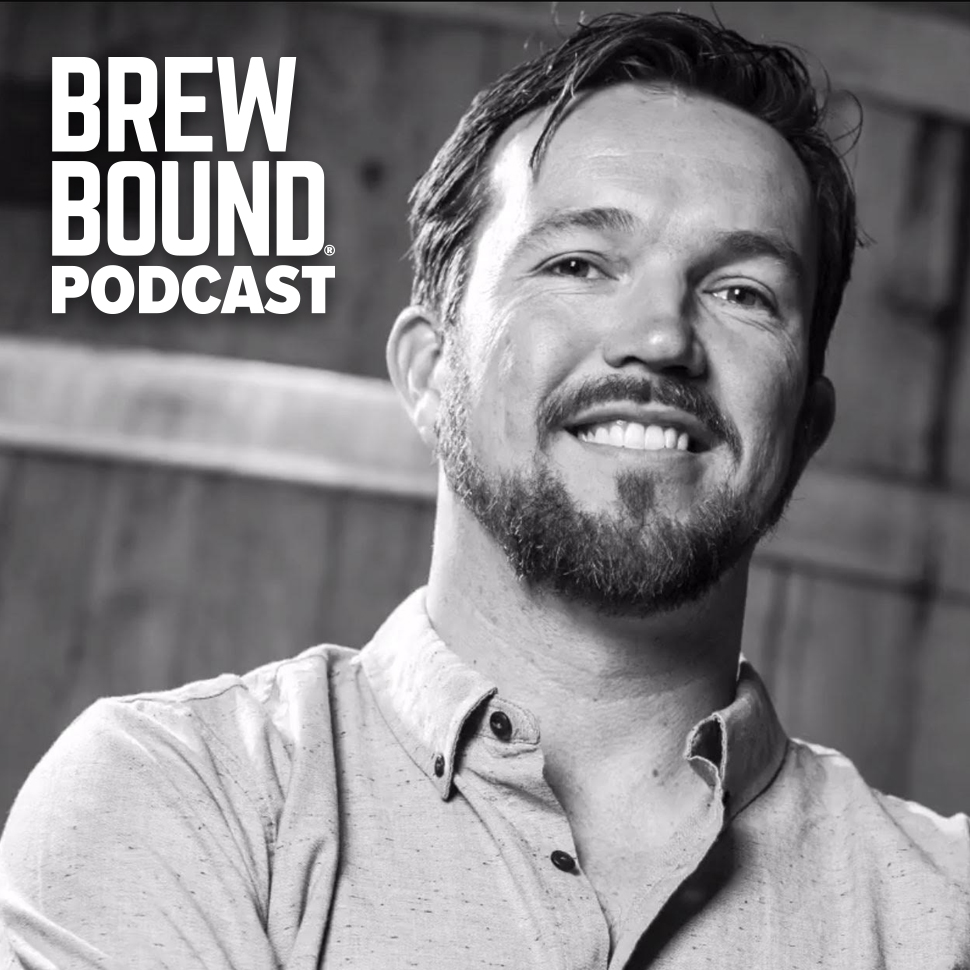
December 20, 201854 mins
Brewbound Podcast Episode 15: Jim Woods on Pivots and Perseverance
Jim Woods, the founder of Bay Area-based Woods Beer Co., opened his first brewpub location in San Francisco’s Mission District in 2012.
But in the six years leading up to the opening of what he calls the “Woods Cervecería,” Woods had been selling a yerba mate-infused IPA called MateVeza, as well as two other offerings, that were brewed under contract and distributed to a handful of Western states.
That exercise – brewing bigger batches of beer, partnering with distributors in non-local markets, and attempting to sell consumers on a relatively unknown brand – proved to be both costly and inefficient.
“I was doing a lot of ride-alongs and growing the business, but I wasn’t seeing the kind of growth that I wanted to,” Woods said.
“I just didn’t feel like I was making an impact or doing anything for my brand,” he added, noting the daily visits to retail accounts such as Whole Foods.
So Woods did what any smart entrepreneur would: He pivoted.
“I wasn’t seeing the scalability and I wasn’t breaking into the awareness of the customer that I wanted to, solely through being on the shelves,” he said.
In 2012, Woods — who now oversees five locations throughout San Francisco and Oakland – began focusing his resources on a taproom-focused business model that enabled him to have a “more tangible relationship with the customer.”
“Having a mecca, a brick-and-mortar where people can, you know, slip on a puddle and fall into the arms of their future wife,” he said.
In episode 15 of the Brewbound Podcast, Woods discusses his company’s shift from a distribution-focused business model to a retail-minded operation. He also talks about the difficulty of trying to build a new product segment – in his case yerba mate-infused beer – and the challenges small breweries face now that thousands of competitors have flooded the space.
Also in this episode: Brewbound editors Chris Furnari and Justin Kendall share the latest news, including information about a new co-packing facility in New Hampshire, details about equipment manufacturer DME’s receivership, and an update on Drizly’s latest round of funding.
Listen to episode 15 of the Brewbound Podcast above, as well as on iTunes. The episode is also available on Google Play, Stitcher, Spotify, and Soundcloud. New episodes of the Brewbound Podcast, which is co-hosted by Furnari and Kendall, are published every Thursday.
Episode 16, featuring Brooklyn Brewery CEO Eric Ottaway, will be released on Thursday, December 27.
For questions, comments or suggestions, please email [email protected].
Listen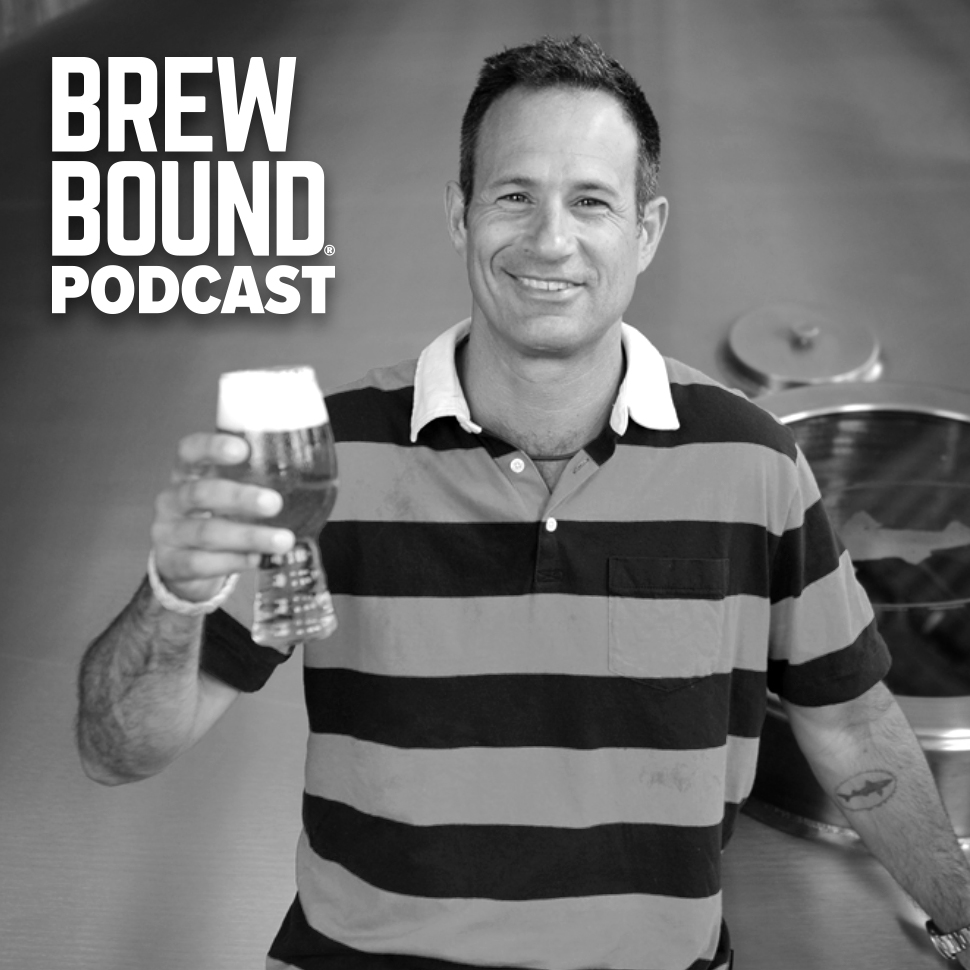
October 18, 201855 mins
Brewbound Podcast Episode 006: Sam Calagione on Craft Beer’s ‘Smiling Jaws of Death’
Delaware’s Dogfish Head Craft Brewery is bucking industry trends, growing off-premise volume sales at a double-digit clip, while many other similarly sized craft beer companies struggle to stay out of the red.
So how is Dogfish doing it?
If you asked co-founder and CEO Sam Calagione, he’d tell you that a relentless focus on producing high-quality and well-differentiated beers has helped his company avoid being chewed up by what he calls the “smiling jaws of death.”
“There is the lower jaw, that has tons and tons of tiny teeth – which are the local and hyperlocal breweries, mostly oriented toward the tasting room,” he said. “And then the top level, there are the big ass teeth. The volume brands that are either indie brands like Dogfish, and Sam Adams, and Sierra, and Yuengling, and Bell’s. And then affiliate brands, that are really owned by global conglomerates, but market themselves like they are American indie craft breweries.”
Calagione believes that, as the industry approaches 7,000 craft breweries, successful beer companies will need to either remain small and hyperlocal or be forced to invest large amounts of money in an effort to “break through the noise of the top 50 brands,” and “go up the ladder of your distributors.”
“There are very little opportunities in-between,” he told Brewbound. “There are breweries that are over their skis in terms of investment in their equipment, but also over their skis in terms of five, 10, 20-state distribution networks, but they don’t have the resources to support a broad geographic distribution base.”
In episode six of the Brewbound Podcast, editor Chris Furnari and Calagione discuss how Dogfish Head is “navigating the noise” of 7,000 small breweries, how other craft breweries can grow without taking on too much debt, and how Dogfish Head has financed its own expansion in recent years.
Throughout the conversation, conducted during Dogfish Head’s annual distributor meeting last month in Baltimore, Calagione explains the benefits of remaining a small, taproom-focused brewery in today’s competitive marketplace, why he is bullish on the Brewers Association’s independent craft brewer seal, and how he envisions the marketplace evolving in the coming years.
Also in this episode: Furnari and Brewbound assistant editor Justin Kendall share the latest news and run down segments.
Listen to episode six of the Brewbound Podcast above, as well as on iTunes. The episode is also available on Google Play, Stitcher, Spotify, and Soundcloud. New episodes of the Brewbound Podcast, which is co-hosted by Furnari and Kendall, are published every Thursday.
Episode seven, featuring Hops & Grain founder Josh Hare, will be released on Thursday, October 25.
For questions, comments or suggestions, please email [email protected].
Listen