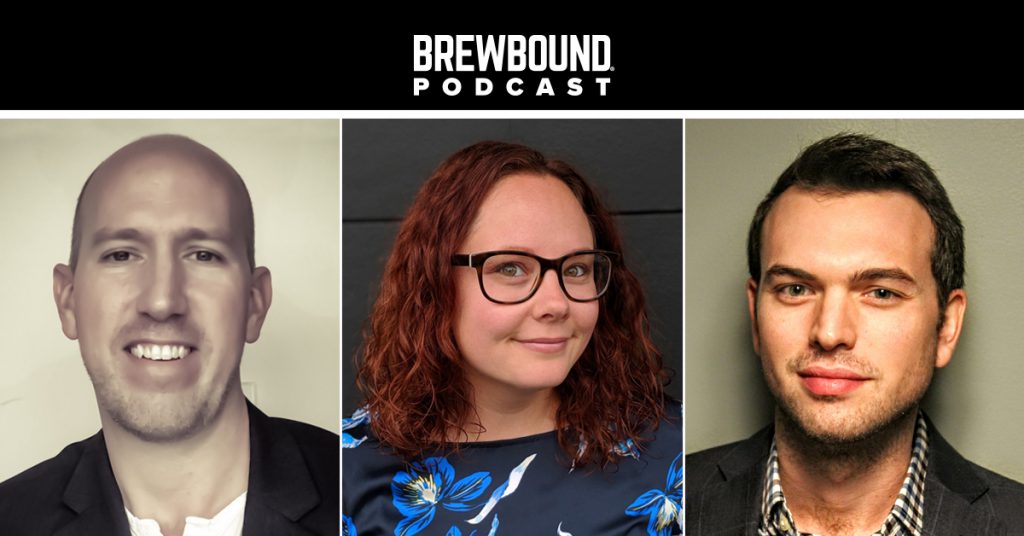
[00:00:00] Jessica Infante: Heading to CBC? Kick things of the day before at Brewbound's meetup at Love City Brewing in Philly, Sunday, April 19th from 5 to 7 p.m. Connect with beer industry leaders, grab a drink, and catch up with the Brewbound team. It's free to attend and walking distance from the convention center. Head to Brewbound.com slash lovecity.rsvp. And don't forget to catch the Brewbound team at booth 956 during CBC. Atlanta's Sweetwater is being swallowed by a Canadian cannabis company. GoPuff inhales Bevmo Out West and much more on this week's Brewbound Podcast. Hey everyone, welcome back of the Brewbound Podcast. My name is Justin Kendall and I am the editor of Brewbound. And joining me as always on this audio adventure is my co-host, the most Twitter literate person I know, Jessica Infante. Jess, are you ready to talk about cannabis and things that sound like cannabis? Dude, I don't know that that's a compliment, but yes, I am definitely ready to talk about all of the things. Well, you did call me out for my GIF use this week, so. Mm, and I'm gonna call you out again because it's actually GIF, but. GIF, see, I've already screwed this up, so. Joining us this week to discuss the AFRIA deal for Sweetwater and the cannabis beverage market as a whole are Liz Connors, Director of Analytics for Headset, a firm that tracks cannabis data and analytics. Liz, thanks for joining us.
[00:01:41] Liz Connors: Yeah, thanks for having me.
[00:01:43] Jessica Infante: We also have Rick Maturo, Associate Director of Client Services for the Cannabis Practice at Nielsen. Thanks for being here, Rick. Thanks, everyone. Really excited to be here. Also here for the Afria Sweetwater Conversation and much more is Sean McNulty, the host of the Selling Craft Beer podcast and a friend of Brewbound. Thanks, as always, for being here, Sean. Thank you, Justin. You said, come talk weed and beer, and I'm like, I'm in.
[00:02:08] Sean McNulty: So that was easy.
[00:02:10] Jessica Infante: It's always the easiest way to get somebody to get on this podcast, I think. Weed and beer. We have a lot to discuss, so let's get going here. The big news of the last couple of weeks was Canadian cannabis firm Afreya's $300 million deal for Atlanta's Sweetwater Brewing Company, which makes the 420 Extra Pale Ale, the 420 Strain Series, and a terpene seltzer line. This deal is an outlier as we've previously seen larger beer manufacturers invest in cannabis companies but not really the other way around. And it's no small deal either. Sweetwater is the 14th largest craft brewery by volume in the U.S. according of the Brewers Association. Although this particular deal may not have been seen coming, a deal for Sweetwater was pretty much inevitable due to a minority investment from private equity firm TSG made about five years ago. So that money had to unwind somehow, and this is the way. as the Mandalorian says Rick and Liz you track the cannabis space closely. What are the potential opportunities for a Canadian cannabis company weeding itself or wetting itself. I should say to a U.S. craft brewery that's embraced the cannabis lifestyle. And I'll start with Liz.
[00:03:28] Liz Connors: Sure, yeah. So when we think about cannabis beverages, it's still a really new and growing space, especially in Canada. So in Canada, despite federal legalization for about two years now, it's not even been quite a year that beverages were allowed in the space. So it was just January of 2020. Feels like a lifetime ago, less than a year though. So these are still relatively small segments of the market. We're checking like 2% to 3% of total sales in Canada. Though in the US, we do see some kind of major cannabis beverage brands. So Lagunitas has a deal with Can of Craft for Hi-Fi Hops, which is a non-alcoholic THC infused beer. And then I think two or three weeks ago, maybe two or three months ago, time is tough for me to remember how long it is right now. A little while back, PBR announced THC seltzer water. So it's like a lemon seltzer water in California that's already launched and selling quite well. So I think that of the goal is to bring the brand in to do cannabis beverages, there's probably space for that. in the Canadian market.
[00:04:32] Jessica Infante: Rick, what do you see the opportunities with a deal like this for a craft brewery brand?
[00:04:38] Rick Maturo: You know, there's a lot of opportunity for Sweetbar and Afria to cross-promote each other's brands and potentially even, you know, create some products that can complement one another. So whether it's, you know, taking very interesting terpene profiles from cannabis strains that Afria is working with and translating those into new flavors of beer or new flavor varieties of beer there, you do that. But then certainly I also think there's opportunity for Africa to also bring sweet water to a Canadian market. And if people know Africa and think that they're really cool, I assume that they're going to translate some of that onto sweet water up in Canada as well.
[00:05:17] Jessica Infante: So one of the freest goals with sweet water is to be ready for federal legalization in the US. And that's still a ways of the federal government seems to be willing to let the states decide. And we've seen a lot more states legalize it in the past few years and even quite a few on Election Day this year. But Sweetwater's home state of Georgia is one of the states where cannabis is still illegal in recreational form and medicinal form, just completely illegal across the board. So before we get to federal legalization, what are the opportunities and challenges you guys see for a free with Sweetwater? Let's start with you, Liz.
[00:05:51] Liz Connors: Sure. Yeah. I mean, I think just integrating an alcohol brand, um, will probably be a bit challenging. I can't imagine it's super easy to integrate that large of a company, but I think at the same time, as we think about what that does for them, uh, and some of the opportunities, Fria's brands in Canada. So they have a lot of flower brands, uh, and they've done a good job of diversifying themselves. So they have a good supply, which is a value brand. So it plays in that like value segment. And then they have Broken Coast, I think, and Riff, both which kind of play in the core, maybe core premium segments. So doing a good job of diversifying themselves, sort of the way we think about traditional CPG brands diversifying themselves and having either different product lines or crossing a lot of categories. So to me, this is kind of a step for them to start to look like some of the really big companies that we see in the CPG space that are pretty diversified in their product offering, whether it's totally categories or different product lines.
[00:06:50] Jessica Infante: Rick, what challenges do you see ahead for these guys?
[00:06:53] Rick Maturo: Yeah, so assuming that AFRI is going to want to make a move into the U.S. market with some of the legal marijuana products, I mean, right now it's going to be a little bit challenging just because if things keep going that state-by-state route that you described earlier, they're going to need to get operations set up in all those states where they want to be playing in the marijuana space. You know it's not like it is up in Canada at least now where you could grow in one region and then ship it over to another province or in this case another state. So that in itself I think is going to be something that could be hard to scale if we're thinking specifically about a beverage type product. be trying to launch down markets. You know, there' said, you know, some stif going to be coming up agai brands are releasing diffe by the time that they get ready for the U. S. Mar be even more players in t are getting a little bit I would also say that jus beverages and we'll probably talk about this a little bit as we go on. But beverages as Liz said are pretty new and novel format both here in the States and in Canada. And what we've seen is there just hasn't been this huge shift just yet with U.S. customers shifting over into beverages. So really kind of building that market and finding the right audience I think is going to be a little bit of a challenge especially if we know that those core consumers, those kind of daily or very frequent consumers just haven't really embraced beverages as much as what we've seen from sort of the kind of curious users or those folks who maybe are just trying to get back into cannabis. Maybe they used it in college and haven't used it in a while. So
[00:08:27] Sean McNulty: Do you guys think there is a market here with, I guess, beer specifically, but we saw ABI, MillerCoors, and Constellation all enter this space two years ago with these billion-dollar investments. And we've really seen nothing, as far as I can tell, outside of a product come out, not in the US, and I don't think in Canada either. We've only seen Constellation continually write off billions of dollars of the value of what they paid for a canopy. Is this kind of emperor has no clothes here with the beer and the THC or what's kind of what is your thought as you start to see this beverage category start to have some traction in the US? But is it in the beer space or is it the opportunity somewhere else? Do you think what are you seeing?
[00:09:06] Liz Connors: For the beer companies, I think it is just an investment or a hedge. If there is going to be substitution into cannabis, whether it's inhalable cannabis or infused beverages or edibles, I think there likely is substitution. I think most consumer research will say there is some. People aren't going to trade everything, but there is some substitution between them. And cannabis is a it's a difficult industry, especially in the US regulations are hard to figure out they differ county to county. We can't have any of the synergies that you know major major categories have because you can't really ship across state lines you can't you know marketing is really difficult so. It's very startup industry. And I think like in any startup industry, likely what these brands are doing, these alcohol brands are doing, is trying to purchase a few. You know that not all will win, but you're hoping that one does, right? And that's really just an investment strategy to kind of hedge for your future. I do think that the space had a bit of irrational exuberance for a while. Maybe back two years ago, a year and a half ago now, there was some pretty high valuations that have maybe come back down to more reasonable levels.
[00:10:12] Sean McNulty: know, it was big beer too early on this. I mean, this price tag seems a little more reasonable than what they pay to get into the space. So what is your, what's your take on that aspect?
[00:10:21] Rick Maturo: Yeah I don't think that they were too early at all. I fully agree with what Liz is saying in the sense that this was a very smart sound investment play at least in my mind that is. I think initially the thought was hey if we know there's going to be some substitutability at that point you know people were thinking that could be the sky is falling. Could this be the end of year. Clearly it's not. And I don't think perhaps I'm hyperbolizing there. Maybe they didn't think was all that bad.
[00:10:43] Sean McNulty: I don't think you were, but that conversation was definitely out there at that time, and we haven't heard about it in a long time.
[00:10:49] Rick Maturo: But yeah, so I think it was probably investment, at least early on, to potentially offset some of the losses that they may have anticipated coming. I think now the view has really shifted more to an opportunity mindset. In particular, obviously, we're calling that cannabis in the US could be $41 billion by the end of 2025. But I think for them, not just those big price tags, but the fact that they can potentially leverage some of the existing distribution networks can potentially give them a leg up once we get national legalization, or potentially if they can leverage some of that in states where it's already legal. So yeah, I think there's definitely a lot there. I think it was a smart play, and I think it's going to pan out for them.
[00:11:29] Jessica Infante: Rick, when we talk about cannabis beverages, I guess the question in my head is whether a non-alcoholic beer infused with THC can be successful. Sort of bringing this back to Sweetwater, is the play here in an NA version of 420 that is infused or is it taking that brand name and extending it to other types of products because the ones that seem to be most prevalent are or at least those are the
[00:12:02] Rick Maturo: Yeah, yeah, it's a great point. And to be honest with you, I can't really say with certainty which direction they should absolutely go. What I can say is I don't think anyone has cracked a non-alcoholic beer that's infused with THC, not just yet. We've seen a couple of folks try, and I think there's been some success there. But what we've seen in our research is that these non-alcoholic, cannabis-infused type beverages, they certainly do have a niche audience. They certainly have occasions where people want them. But relative to those seltzers that you described, relative to some of the more functional waters and fruit juices and things of that nature, it seems like people just don't have all that many occasions where they want to reach for a non-alcoholic, alcohol-style beverage that's infused with cannabis. You know, they might go for something that's a little bit easier, like a, you know, a tea or a fruit juice or even like an energy drink or something like that. So again, not to say that it can't work, it's just I think there may be some more obvious beverage styles that they may want to explore where they could get a few more opportunity use occasions for them.
[00:13:07] Jessica Infante: Liz, on that point, we've seen other beer companies try and make that work. Syria being one of the trying to infuse a non-alcoholic beer with THC and CBD. What have you seen at Headset in either successes or failures in that regard?
[00:13:25] Liz Connors: Yeah, sure. So there definitely are a handful of, we call them can of beers. So definitely are a handful of can of beers. Like you said, Syria was one of the. I don't think that they are investing as heavily in this space anymore. I think they're just going to non-alcoholic beers without THC, if I'm remembering right. But there's two roots is one, like any of the hi-fi hops is one. I mean, there's a handful out there. There's even some wines. Rebel Coast is a wine. But I think for the most part, this space is generally dominated by carbonated beverages or mixes and powders. And I think right now, not just in alcohol, but I think in cannabis, seltzers are becoming quite a bit more popular. It's a way that you can have a zero calorie drink. It's a way that you can make something that's very hydrating. And you can make a seltzer kind of taste like whatever you want. A can of beer really is just going to taste like a non-alcoholic beer. And in seltzers, we can do all sorts of flavors, especially something to keep in mind is cannabis itself has a flavor. of the new nano emulsions are pretty close to flavorless, but some people are putting those terpene profiles back in along with like botanicals or herbs. And so it makes kind of a, you know, like a herbaceous drink that has like a light flavor. And so I think that that's kind of maybe a bit more where the opportunity will stay is in that space that we can really make things that are I believe I heard from some surveys that what people want in beverages most is that they're yummy. They kept saying the word yummy. And what we can do in beverages is make them yummy. You can make them taste like whatever you like.
[00:14:57] Jessica Infante: I don't know how I personally feel about the word yummy, but if that's what the people are asking for, that's what the people are asking for.
[00:15:04] Rick Maturo: I just wanted to also go back to your question earlier Justin just about you know if it's going to be these non-alcoholic beers or if it's going to be something else. I got to say you know I want to jump right to beverages because my thought is you know with this partnership certainly you know AFRI has a lot of different directions they can go with you know trying to leverage that sweet water name. Even things that you know compare the two together. Obviously you know people should be responsible if they're going to pair cannabis and alcoholic beverages together as always. But, you know, I'm thinking out loud here a little bit, but even something that, you know, has a certain terpene profile that we know could accentuate the flavor or enhance the flavor of a sweet water beverage, you know, maybe it's a drop that you get in a tincture, maybe it's a dissolvable gummy or tablet that, you know, you could take orally or you could just drop into a sweet water beer or something like that. I can see those things doing really well, especially if those flavor pairings or combinations were meant for specific strains or Afria products to go with certain Sweetwater products.
[00:16:02] Jessica Infante: Really interesting. Great point, Rick. What are you guys seeing in terms of how these beverages are performing? What kind of data do we have to indicate that these are going to be a hit?
[00:16:14] Liz Connors: Yeah, so it was just pulling up a little bit of it while you were asking. So today in Canada beverages are anywhere from two to 3% of the unit share. So it's still a relatively small category. The same is true in the US. I think California has a slightly higher share to beverages than than some of the other states do, but it's been growing for sure over the years. And I think as some of the new beverages are hitting the market is where we'll start to see some of that growth really take off. I think initially the beverages that were in the cannabis space were, they were very sweet. They were usually like electric green.
[00:16:54] Sean McNulty: Is that the yummy we're talking about?
[00:16:56] Liz Connors: Yeah. I'm not sure if that's what people had in mind. Yeah.
[00:16:59] Sean McNulty: Too yummy. That's what it was.
[00:17:00] Liz Connors: Yeah, it was, it was too yummy. And Sean of too, they were usually 100 milligram beverages, which if any of your listeners aren't cannabis consumers, a typical dose is probably 10 milligrams. So these 100 milligrams were meant for a very particular type of user or to be shared, you know, share one soda. Everybody takes 10 sips, I suppose. I don't know, like when you, I know everybody, when you think about that- It's like a bottle share, but like for weed, yeah, okay. Yeah, yeah, we're gonna sit around, I don't know, sit around a campfire and pass this around.
[00:17:28] Sean McNulty: Was there a pastry variety or no?
[00:17:29] Liz Connors: were these double dry hopped in the COVID world?
[00:17:33] Sean McNulty: I don't bear it up for us.
[00:17:36] Liz Connors: Yeah, right. Yeah. And so I think, you know, just as we talk about it, we're like, I don't really understand when I would drink that or why that where I would want it. Right. It's just, I don't think it resonated quite as much with consumers as some of the newer stuff. So now we're looking at beverages that are two milligrams, four milligrams, five milligrams. So you can have one and have a small amount or, you know, you can have two or three and still, you know, not have to sleep in the closet for two days. And so I think that that's kind of why the space has lagged behind and where some of the growth will happen. Though the powders that Rick was bringing up were also a place where we've seen a lot of space there. Oh gosh, one is called Ripple and it looks like a teeny tiny Splenda packet and it's water soluble now. So didn't used to be water soluble. New technology is water soluble. can put it into any drink you like. You can put it in your coffee or you can put it in a soda. And I think that that will open up the space as well. I think the only other thing that's to me probably going to help is the way that people are manufacturing the THC to go into the beverages now. It has, I think the phrase is higher bioavailability. And so it means that you absorb more of it and you can absorb it more rapidly. In edibles, we're starting to see rapid onset edibles. So where we're not waiting two hours for this effect to be felt, we're waiting 20-30 minutes. And I think that will change as well. Kind of some of the spaces these become just more palatable and more predictable to consumers. Rick, what are you seeing?
[00:19:02] Rick Maturo: Like Liz said, beverages are definitely a growing segment, both within the legal marijuana space and even within hemp CBD, which Nielsen also tracks. I think at this time, as Liz said, it's going to be a little bit challenging to get some of the poor users over. But I think with a lot of the developments that she had mentioned, the nano emulsion technology, the fast acting benefits, I think that may go a long way with helping to pull some of the more core users over at the end of the day, I just think there's going to be a little bit of a challenge to get someone who, you know, is taking four or five puffs of the vape pen, you know, every, every, every several hours or someone who's, you know, using cannabis and medicinal pasty every day to get them to want to switch over this beverage format, not because I'm sure it's not yummy, to use consumer words here. But I think more it's just the fact that you still have to put in that wait time to calculate when the effects are going to hit. The fact that, you know, something that we'll probably discuss later on is, you know, the price point tends to be a little bit higher per usage occasion. If you're looking at six, eight bucks per unit or so. So even that standpoint, you know, mixed beverages a little bit more challenging. But I think with all the unique flavor combinations, all the different categories that, you know, are just starting to emerge, I think there probably will be something for everyone. and if there isn't someth said, you know, you can e these is all powders, you spike any beverage that y not beholden of the one f you're not kiwi peach ki or you don't like strawber other flavors out there, anything into an infused
[00:20:41] Sean McNulty: Yeah, this was a total, I had not heard of this before, and I'm not the key consumer for this product, but these ideas of you can get these water-soluble packets of things, which I had never heard of before until we discussed it the other day. This, to me, is a real different potential, where before you were saying you had to drink with 100 milligrams, or you don't know the right dosage for yourself. For some people, that may be fine. Other people, as you said, you'll put it in the closet for two days. So what is, I guess, walk me through a little bit of the legality of the packets. And then, as you said, they could be the airport bottles of liquor for THC, where you don't need to rely on someone to do your mix for you. You can make your own. As you do a vodka and tonic at home, you can do your own THC and tonic as much as you want. So I guess, Liz, why don't you start with just what's the legality of the packets and kind of what's the, from that point of view, and give me also a little bit of a cost basis on what the cost of that is versus, say, a prepackaged whether it be a seltzer drink or other drinks that are in the space from price points?
[00:21:39] Liz Connors: Sure, yeah. So for legality, right now in the US, the answer is it varies state by state. But for the most part, I think that powders are allowed almost everywhere. So some states will consider them, they'll classify them actually in edibles instead of in beverages. But that's usually the biggest distinction. There's also, Rick brought up tinctures. So it's like a concentrated liquid. So it's usually dissolved in either alcohol or oil. that you get like an eyedropper and you can drip very measured amounts into whatever, straight in your mouth or into a beverage. So yeah, I mean, I think nearly all adult use states allow powders today. They're biggest in Colorado with that brand Ripple. But there are a lot of the kind of options like that. So in California, there's a brand called Kikoko that makes tea. So it's tea bags that are cannabis infused. There's cannabis hot chocolate or hot cocoa, pops up a lot this time of year. As for price point, of the powders, I'm trying to recall of the top of my head, I think that those usually retail around $20 or $25 for a 10 pack of 10 milligrams. So you're probably looking at $2 to $3 per package versus if you're going to go get a soda, maybe a 10 milligram all in there soda, you're probably looking at anywhere from $6 to $12, depending on which one you buy and how many are in the package. And that compares to, let's say, a vapor pen, where to get a similar amount of the into your body, you're looking at a few cents. A half gram vapor pen cartridge will cost $20 to $40, depending on where you are. And you can get a lot of uses out of a vapor pen cartridge, for sure, for that price.
[00:23:26] Sean McNulty: but you also have to inhale it, so it's a little different now.
[00:23:28] Liz Connors: You do, yeah, you do have to inhale it.
[00:23:30] Sean McNulty: You have to use a vape pen, which yes, exactly, has its own, you know, situations to deal with. Absolutely, yeah, for sure. Rick, what is your kind of take on this? I remember the Siri was more, I guess, 8 to 10 for a bottle, so is there, you know, is there more potential, you think, in these tinctures and powders to expand this space, or do you see it a little more shifting toward a prepackaged thing and brand building in that regard as the key to success?
[00:23:54] Rick Maturo: Well, I think certainly f of curious, those more no people that are just comi Maybe it's just been leg Maybe you're one of the l one of the four states to get that sort of excite of folks, you know, the be just because everyone's going to be able to search something out. Everyone wants something yummy, something novel for them to taste. So I think for the newer and more novice folks, these pre-flavored beverages could do well. I think for people that maybe are a little bit more advanced, maybe are a little bit more familiar with the wait time that beverages have associated with them, I think certainly some of the packets offer an additional level of versatility and even portability in some instances. You know, certa around a glass bottle or it's in a cooler or somet you gotta kind of pay att that you're carrying it, that constant temperature in the sun or anything li these packets, you know, a I guess up to 10 of the, you know, and in one purchase, you know, and just keep a couple in your purse, you know, keep one in your wallet if you're so inclined to do so. And, you know, you could be more spontaneous with it. You know, if you're getting drinks after work and you decide, hey, you know, it's that kind of day and you want to use a drink in that nature, you can do that. But if you're only looking at kind of the prepackaged beverages, unless you're going to carry one of the around your back pocket all day, you're not really going to have that same level of versatility. So I think it'll be interesting to see where people fall out. I think certainly the more advanced folks may jump straight to a Ripple or one of the concentrated dissolvable forms. But I think for more novice people or people that just want something new, some of the new flavors and pre-flavored beverages I think can do really well.
[00:25:46] Jessica Infante: I'm wondering how sort of the names that are intrinsically linked to cannabis culture for 20 hydroponics strain. How will those fit with a modern cannabis consumer. And I'll ask that to Rick.
[00:26:03] Rick Maturo: Certainly I think earlier on we certainly saw a lot of this in the US and probably a lot in Canada in the early days of legalization where everyone was really kind of leaning on sort of the cannabis tropes or those cannabis stereotypes. You know a lot of bright colors. I don't think anyone was so bad as to use tie dye. But You know, there was a lot of just broad signaling to show that, hey, this is a cannabis product. And if you're in this culture, you know, you should identify as such. But what we've seen in the last couple of years, I think for the better, is a lot of the companies really taking on a much more highbrow or, you know, a more premium look and feel and really trying to shed, I want to call it the stigma of the cannabis culture, because I think there's absolutely nothing wrong with culture, but I think they want to portray it a little bit more grown up and a little bit more premium than what we'd seen in the past. So you know in that respect I think that if these beverage manufacturers you know start to stray away from some of the cannabis tropes and that you know they could do well if they're leaning more into that modern that more premium product up in Canada. So yeah, I think that it could work for them. But ultimately, you know, time will tell because I'm sure there's still just some of the more core users who maybe still cling to some of that Canvas culture. So maybe that 420 or that hydroponics resonate more with them than something like, you know, relax or de-stress isn't a very creative name, but you kind of get where I'm going with that. so more of a wellness bent you took the words out an that whole cannabis cultu or experience enhancement more into health and well lifestyle. I always like like people look at canna it's an extension of the So you know, my wife does can do yoga and you know, beverage afterwards to de
[00:27:56] Jessica Infante: brands like 4 20 hydropon
[00:28:06] Liz Connors: For sure. Yeah. I mean, I think it depends which consumer you're trying to go after. So in California, the biggest beverage or at least one of the top ones is Keef Cola. And so, you know, something that definitely kind of plays to cannabis. And we are starting to see even in edibles, some branding like that. So Plus Products put out a product called High Cubes and they're a little bit stronger in terms of milligrams of the. And they also have, I think they have a faster uptake So it's not something that would be shunned by the cannabis community for sure. But when you think about branding, I mean, any kind of branding, right? You brand yourself to attract the particular type of consumer you have in mind. And so I think that for some of the consumers, especially maybe the ones that know a bit more about cannabis or a bit more interested in cannabis culture, these things probably could resonate quite well, but I don't think that'll be for everyone. So of the flip side, we see CANN, C-A-N-N, which is a soda in California. It's a sparkling, I think they're called social tonics and they're sparkling a few like kind of herbal flavors, very much more marketed toward kind of what Rick is talking about. Like I think that even they have some flavors, but they'll market them as like refresh or chill or this kind of effect based marketing is starting to bleed into all different categories across cannabis. And it's just which type of consumer you want.
[00:29:27] Sean McNulty: Yeah, I'll throw that good for you term, which is the buzzword around hard seltzer in terms of that drink category that people attribute the hard seltzer growth to. And a point you made previously, Liz, was these THC seltzers can be zero calories, where a hard seltzer can never be down to zero. So that is another aspect that these drinks can have going for them, that a non-alcoholic beer with THC or any kind of the beer can never really attain.
[00:29:55] Liz Connors: I think that's usually one of my responses when people ask me, will cannabis get substituted for beer, for hard salsas? I say, well, it can be zero calories. It doesn't result in a hangover. It gives you a good night's sleep. You can make it taste like anything you want. You can have predictable uptakes now. So you tell me, do you think that that sounds like that would be competitive with your set of products, knowing that the substitution is just THC for alcohol?
[00:30:19] Sean McNulty: Sounds like good for you to me. But we certainly had a lot of celebrity names getting into their own weed brands and strains. A celebrity drink seems a little more as a bigger window or bigger possibility for sales than a weed strain. But the celebrity wines are certainly a huge thing. Ryan Reynolds selling his gin company for $600 million. Has there been any chatter, or both of you, have you heard any kind of movement in that direction to create a Seth Rogen drink or a Snoop Dogg THC beverage that you would pick up?
[00:30:54] Rick Maturo: Yeah, yeah, absolutely. I mean, you know, if you name just a couple of folks who I believe have their own cannabis lines are Jay-Z and yeah, yeah. So it's absolutely something that we're seeing. And I imagine that trends only get continued to proliferate just because we know cannabis now has really shed a lot of that stigma that had years prior. And now I think celebrities look at this as another attractive way to market their own brand, but also to pair up with brands that they may be like. So I imagine we'll see a lot more of that. That being said, I will pose just a counterpoint And Sean that when we've actually talked to consumers about what drives kind of the purchase decisions and helps them to decide which product to ultimately purchase when they're at the dispensary shelf, I will say that celebrity endorsement does come down relatively lower in terms of the attributes that people place importance on. But again, if we're thinking about getting new consumers into the category, certainly, you know, new markets are opening up. I think celebrities may work for some of the more new consumers.
[00:31:51] Liz Connors: Yeah. And to be fair, Seth Rogen's brand Houseplant in Canada, they do have a beverage already of the market. I think they have a grapefruit one and maybe a lemon one. There might be others, but I do know that both of the have launched this year. They're sparkling salsas, like we're talking about, low dose, two and a half milligrams each.
[00:32:09] Sean McNulty: Well, Seth is Canadian, so I guess that makes sense. Yeah.
[00:32:14] Jessica Infante: So celebrity endorsements are really interesting, but celebrities, obviously, they're not just, no matter what Star Magazine tells us, they're not just like you and me.
[00:32:23] Liz Connors: Bummer.
[00:32:25] Jessica Infante: Well, I mean, maybe like you, but definitely not like me. So how big is the hurdle of price? Can normal everyday people overcome this price hurdle for beverages? Because it sounds like you guys are saying they retail for about $6 to $8 a bottle at a dispensary, which is obviously much more than your typical beer. So how big of a hurdle is price and how big of a hurdle is just the separate trip of the dispensary, which I think for the foreseeable future is going to be a completely separate retail experience. What are you guys seeing out in the world in terms of what consumers are saying about price?
[00:32:58] Liz Connors: Yeah, for sure. I mean, price is super interesting in cannabis, because we see really the same thing happen in every market. So each market that legalizes, prices kind of skyrocket, right? Because there's no supply to meet all of this demand. And so prices for a while just skyrocket. As supply kind of increases and is able to come closer to meeting demand, what we find is just that prices bottom out. So it's just kind of this race of the cheapest eighth of the cheapest 10 milligrams. And then we get to this point where the market starts to look the way it will look. So we see, you know, value brands come in, we see premium brands come in, we see core brands come in, and people start to differentiate their brands, their products, in ways that allow them to get higher price points. So I think that that's going to be true in any new markets. When we look in the US, we have Arizona, New Jersey, Montana, South Dakota, we'll have the new adult use markets this year. And I think that'll probably happen in those places as well. Though I do think, you know, in more mature markets, maybe like California, we have kind of gotten of the point where that's about what the price of a beverage is going to be. So, you know, $6 to $8 per serving-ish if you're in kind of the fancier ones. It is much more expensive than edibles for sure. But I don't know that to me, it seems to be something that's precluding a lot of customers today. I think just because when we think about purchasing a cocktail at a bar or a beer at a restaurant, these really aren't super uncomparable to those prices. And so I think that ultimately, that price probably won't be quite as much of an issue. Though if you're really interested in value, you know gummies are. There's a lot of really cheap gummies out there for sure. Those will always contend for the cheapest way to consume.
[00:34:44] Jessica Infante: Rick, what do you think about in terms of like having to go to a separate store? Is that something that consumers are saying is annoying to them or are they happy to do it because that's their only option?
[00:34:53] Rick Maturo: Well you know I think obviously we'd all like to have those cannabis products available where we're already shopping. I don't think it's been deterred by any stretch of the imagination. I mean you see that sales are continually reaching new highs across various markets across the country. So I don't think it's really playing anyone off. But certainly now you know with on demand delivery services, especially like what we're seeing out in California. You know, the fact that you have to go make a separate trip is, you know, quickly becoming something of the past. Unfortunately, here in Illinois, we haven't gotten there yet, but I'm confident we will. So I think the hurdle to go of the dispensary will probably be eliminated, you know, at some point in near future as this on demand business comes about. But for others, you know, I think going into the dispensary can be, you know, a destination trip, something that people sort of look forward to. I mean, maybe they're not looking forward to dropping the amount of cash that you need to and depending on which legal market you're in to get your supply. But I think it's fun for people to go look around And Sean what's new. Certainly, you're getting a lot of exposure to different products out there. But, you know, in terms of this price point being a hurdle for consumers as well, I don't think for those novice consumers, the people who maybe are only doing this a couple of times a week or something like that, that $6 to $8 isn't going to be enough to put them off. Just because if they were going to get any product, they may have more supply, but there's not a whole lot you can get in terms of single serve that's going to be lower than that $6 to $8 price point, maybe something like pre-roll. But again, pre-roll user may not be the same as the beverage user. What I think is going to be a little bit challenging though is if you want to move away from sort of the novice or those newer consumers and really start to grab some of the more frequent users who maybe are using things like concentrates or babes or flour, because again, that $6 to $8 per unit, you know, again, is a lot higher when we talk about the cost per use occasion. And the fact that you know you can only typically get um and Liz correct me if I'm wrong here but you know I typically only see like four packs available or those big multi-serve 100 milligram bottles. So you know I can't really buy a whole lot of the at any given time. It's not like you know anyone's come out with 32 pack of you know cannabis beverages at least not that I'm aware of yet. So you will have to go back and you know, have more frequent trips of the dispensary or more frequent trips to get those things delivered to you. So I think that's another challenge that beverages have for them, especially with that kind of core user. And the last thing I'll say for beverages is it's not just consumers that are going to have to adapt. Beverages are somewhat of a difficult format for dispensaries, too. especially if you think a need to be kept cool. A l They probably don't have and a lot of room to brin to prominently display al that they have on hand. S just adjusting full beve
[00:37:43] Jessica Infante: Liz and Rick, thank you for taking the time out to give us all the cannabis Bev insights that we could ask for. We really appreciate it.
[00:37:52] Liz Connors: Yeah, thanks for having me.
[00:37:54] Jessica Infante: Yeah, thanks. This is fun. So that was just the first part of the show. Let's get of the other big deal last couple of weeks. GoPuff, which gives you all the benefits of a C store without actually having to go to one and operates in more than 500 cities with, I believe it's around 200 micro distribution centers, struck a deal to acquire 161 BevMo convenience stores across California, Arizona, and Washington in a $350 million deal. Have you ever been to a BevMo, Sean and Jess? And I'll start with Jess. I have, I love BevMo. I think BevMo is fantastic. I was in Oakland hosting a homebrew judging competition round in my last job. And I didn't bring nearly enough of my own company's beer to feed the judges. And that's like one thing that they require a lot of. So I panicked and I got my rental car and I went of the nearest BevMo. I bought all of, whatever Sam Adams seasonal mix pack was out in shelves in June, so probably the summer one, and brought it back of the hotel. But I signed up for the BevMo Rewards Club just because I was going to get a discount. Look, that's not legal in Massachusetts. There's no discounting alcohol. All of this was pure novelty. It was so exciting. So now I'm still in there.
[00:39:14] Sean McNulty: Wasn't that your corporate card? I mean, come on, you don't discount, you know.
[00:39:17] Jessica Infante: You know what, if there's a discount available, I'm going to try to get it for Uncle Jim because I'm, you know, a conscious, you know, corporate ecosystem member. Yeah, those black Amexes. Yeah. Oh, no, I was not cool enough. I only had the green.
[00:39:31] Sean McNulty: This is pre-Truly days, so, you know, yeah, exactly.
[00:39:34] Jessica Infante: Pre-Truly.
[00:39:34] Sean McNulty: Yeah, this was... Yeah, you're really bootstrapping it.
[00:39:38] Jessica Infante: It was 2015, I think.
[00:39:40] Sean McNulty: Oh, yeah. Yeah, that's right. Get the discount. Yeah.
[00:39:42] Jessica Infante: Dark times. But when you join their loyalty club, you have to give them your birthday so they know that you're a legal drinker. And they send you an email on your half birthday with a discount. Isn't that so nice?
[00:39:53] Sean McNulty: Sure, I don't know that I need a half-birthday, you know, reminder. But you have like, you're like exuding like Target enthusiasm for like, enthusiasm for a BevMo. That's very impressive. I've been to a BevMo many times in California. My experience was nowhere near as exciting, I guess, or life-changing, nor did I sign up for their program. Just, it was, it was, the service was lovely. It was well lit. The selection was fine. I don't know that I really remember too much from my experience of BevMo, to be honest.
[00:40:23] Jessica Infante: So follow up question, have you ever ordered from GoPuff? I have not. I'm lame and I live in the suburbs and GoPuff does not serve my area, but I looked.
[00:40:33] Sean McNulty: I have not, I live in New York City, but I'm a gen extra of the core in that I've never ordered seamless. So I'm admittedly not the delivery customer. I'm much more of a go walk of the convenience store and go pick it up, which is literally 90 seconds from my apartment. So if delivery for me is what I get, I understand, but I also understand I'm not the core consumer for it. So I have a double-edged sword. Sean, I have two follow-up questions for you.
[00:41:00] Jessica Infante: You tell us about GoPuff before we talk about Bodega Cats. GoPuff is fantastic because you can order your over-the-counter drugs, you can get ice cream or, you know, whatever, like, two liter of soda or whatever you need, and boots. So they kind of cover everything you need. They also sell a ton of hard seltzer, as Randy Ornstein has told us in the past. So I guess my question to you guys is, how do you see these two sort of integrating? Is this a seamless fit? No, I don't think it's completely perfectly seamless, but I do think that... I know BevMo had incorporated their own delivery systems out west. So I think this is just a way to keep growing that, but I wouldn't expect a BevMo to be able to drop me off a six pack of White Claw and a pint of Ben and Jerry's. So it'll be interesting to see how all of that works out, but I'm sure they have a plan.
[00:41:54] Sean McNulty: I would say, looking at it from the outside, but there's two things that give you an advantage. One, you're just getting data learning about alcohol sales from a different entry point into the system where they only know what they know from convenience stores. This gives them a whole different data set and the largest alcohol selling states and market in the country, plus Arizona and a couple of the states. Secondly, I don't know. exactly how this will work, but you're probably going to maybe be able to offer some discounts on your alcohol prices in those states where price will become a point where if you can get alcohol from Drizzly or any of the places and Amazon Fresh and as all these other entrants come into the marketplace, if you have that distribution footprint and that mass purchasing ability within your business, that could be a down the line differentiator for them to compete.
[00:42:47] Jessica Infante: In other news of the week, and one that is near and dear to Sean's heart, Diageo has recalled Guinness Zero Zero, its zero alcohol stout in Great Britain, after just weeks from launching in late October. With so many players getting into the NA space, is this a cautionary tale of what it's going to take to make a non-alcoholic beer brand?
[00:43:11] Sean McNulty: It's not a good look. I mean, I know as Guinness is near and dear to my heart, being the true Irish citizen that I am.
[00:43:17] Jessica Infante: Not to mention your love of non-alcoholic beers.
[00:43:21] Sean McNulty: It really hits, it's a bit, it's just a Venn diagram and I'm just right in the middle of all the circles. That's pretty much how it works. Um, it's, I mean, this could just be a one-off, you know, the, the craziest thing about this story is there's no specifics. It's like, Hey, the product was unsafe to drink, which is not like, Oh, it was an off flavor. It's like, that was like, you know, or potentially whatever the quote was potentially unsafe to drink. It wasn't just like, Oh, it's going to taste like cardboard. So it's just, but there's been no explanation and no further follow-up from them on that. So that just that one caveat of this story, just like, I'm still waiting for some sort of a, what happened here? Because you've got to think you've been producing this for at least six months or over a year in test runs at a company of that size. How does this happen? But I think it's probably, I hope it's a one-off and not a real endemic problem of the product. Because if so, that's a real, as you said, it could be a real black eye for any big brewer looking to get into it. But I think it's probably more of a one-off hopefully manufacturing thing that just something went wrong the one time versus a Guinness 0.0 was not safe to drink.
[00:44:28] Jessica Infante: Yeah. Diageo cited a micro, microbial, biological contamination.
[00:44:36] Sean McNulty: Yes.
[00:44:37] Jessica Infante: I will get that out eventually. That made the product unsafe to consume. Three words you never, ever want to hear together. in any type of consumable product or just in general. But there are just so many larger brewers that are getting into this space. You've got Boston Beer with both Samuel Adams and Dogfish Head. Deschutes, Brooklyn Brewery is already in this space. More than I'm probably missing, Bootstrap that is just covered in the past. probably missing a big one here or there. But I mean, there are so many different things that you have to do to play in this segment. The rules are different. You're regulated by the TTB, but you're also regulated by the FDA and state food and health departments. So there's a lot more that goes into this. And I guess my biggest concern for a product like this from a company like Diageo is, Is this going to totally scratch any potential launch here in the U.S.? I think everything's up in the air until their investigation is complete.
[00:45:45] Sean McNulty: Yeah, I think they'll find out what the problem was. Look, the good thing is, in a certain way, we know about it. Certainly, did the consumer miss it being of the shelves for five days and then it not being there? Are they reading this? No, probably not. All things being said, if this was a year into the product and this happened on a much larger scale, that could have been a much more of a black eye where now I don't think in terms of the consumer, it was, and it was only, let's say only the UK, which is obviously is a big non-off market, but hopefully it's just a one-off something got screwed up in the production line, not a, we screwed up the fermentation process or something like that. And yeah, I think the U S I mean, especially once Sam enters next year and all the players you just listed, And, you know, non-op beer in your last Nielsen Roundup was up, you know, 40%. You know, it's one of the booming COVID time genres that's outperforming all of beer by double or triple the amount of the beer category overall. So I think they'll get here as soon as they can. This obviously delays it by probably a few months, whatever their plan was initially, I would think.
[00:46:49] Jessica Infante: Jess, you've got the big beer background. Have you ever been through a recall? I have not, but there had been one in 2008 before my time and people still talked about it. Like they were slightly shell-shocked.
[00:47:03] Sean McNulty: Wow.
[00:47:03] Jessica Infante: It sounded like it was like a huge endeavor. I had an old manager who, when he wanted to wax poetic about the value of teamwork would always bring up that time and be like, it was, I think it was summer ale, maybe. I don't know that it was something wrong with the product. I think it was wrong, something wrong with the glass. And the sales team had gone out to visit all of the wholesalers, warehouses looking for everything with a certain like inkjet code of the cases. And it was a big deal, so it's really rough. Well, onto the other news of the week. Just a story that you followed last week Tree House branching out multiple locations. Cape Cod in Western Massachusetts. These aren't small additions either. You know, how do you see these bets paying off for their Tree House I think this is going to be interesting to watch. I think part of what people love about Tree House experience is knowing what you had to go through to get that beer. So for our listeners who are not in Mass as we are, Tree House27;s Charlton Brewery is, it's like an hour and a half west of Boston. It's in the middle of the state. I mean, it depends of the Mass Pike. I mean, COVID traffic is a different story, but in the old days, every time you'd travel west at 90 would take longer than the time before. I've been personally victimized by westbound Mass Pike traffic in the past. But I think what people liked about it is that you have to go Tree House, and you drive all the way out, and then you stand in line, and you wait in this line, and then you give them a ton of money, and they give you a bunch of beer. And people, I think, like that. Personally, my favorite part about Tree House experience is the barbecue restaurant across the street, and I don't know what that says about me. So I think having these two outposts, I think people are really excited. I saw a lot of buzz online when they announced Cape Cod. The Cape Cod location is going to be in Sandwich, which is right over the bridge from Plymouth. So it's very early onset Cape. It's think like when you do like the arm map of Cape Cod. is like the shoulder. So it'll be easy to get to, and it's probably easier to get to from the Boston area for sure than Charlton. But one thing about Tree House they sell a ton of beer right within their own four walls. So I would be really interested to see if that number increases with these two locations. You'd think it has to. And I know that they're going to treat both of the as, they're opening both as retail pickup locations as soon as they possibly can, even before they're ready for onsite taproom sales. So I don't know. I mean, when you make something more available, it does lose a little bit of its luster. Not to say that I think that will happen to them, but that could happen. Once something becomes more readily available, it's no longer the special shiny thing.
[00:49:38] Sean McNulty: Yeah. I think the Western Massachusetts one is more of interest to me. Cape Cod, obviously it's, you know, it kind of sells itself in a certain way closer to Boston. You get the summer crowd, you know, and the, who knows what the locals are going to think about that once the, the lines come into play, but the Western mass, you know, it opens up, it's, it's really close of the New York state border. You're closer to Vermont. So you're just, you know, you're in terms of beer, nurturing in the, in the new England area, you are an hour. Cause it's about an hour from the Charlton location, I think, right, Jess.
[00:50:06] Jessica Infante: Yeah. But it's almost, it's a, It's northwest, yeah.
[00:50:10] Sean McNulty: Northwest, okay.
[00:50:11] Jessica Infante: But it's more due north.
[00:50:12] Sean McNulty: Deerfield, right?
[00:50:14] Jessica Infante: Yeah, Deerfield.
[00:50:15] Sean McNulty: Yeah, yeah. It was right off of, it was half an hour north of Springfield, Massachusetts, if that means it. Yep, yep, yep. So it does open up a newer kind of beer tourism thing, where if you're in the Hudson Valley, you weren't going to drive to Charlton, but would you drive to Deerfield? So there's a bit of that, I think, drawing in new audiences Tree House. Back to your point about it being a special, you know, pilgrimage. And for what it looks like, that location is going to have, was it 50 acres? I think, you know, like that's going to be probably more of an experience than the other look, you know, the original location really, which is much more of a drive up, wait in line, get your beer and go. And there's the tap room, certainly, but they're talking, you know, beer festivals are talking events are talking runs, they're talking, you know, all these kinds of things you're they don't do currently. So that to me is something that's like, alright, that I really think has a lot of potential outside of that building, looking like something from the early to mid 90s that I don't know how they're going to transform to that rustic treehouse vibe, which is more what I'm kind of curious about.
[00:51:15] Jessica Infante: But like good on them for showing all those pictures. Yeah. I'm glad that you mentioned the atrium because I think, as Jess pointed out to me, that it looks like some like pharmaceutical companies like Entranceway or something like that.
[00:51:31] Sean McNulty: Like a sci-fi set from like a Schwarzenegger movie. I don't know, like it's just like that kind of like, yeah, it's weird. Yeah, but they are Selling Craft and all those plants.
[00:51:42] Jessica Infante: Good for them. Good for them. I remember at an Extreme Beer Fest a few years ago, I never liked to work Extreme Beer Fest. I like to just buy myself a ticket and go and enjoy instead of having to pour beers. So as soon as the doors opened, I just remember people sprinting of Tree House booth, which is like, you're grown adults.
[00:52:00] Sean McNulty: Stop running. This is a beer festival. The beer festival run is the most comic, one of the most comic things in craft beer. Eddie Post always cracks me up.
[00:52:10] Jessica Infante: But then people would stand in line Tree House for two hours of this, what, three-hour festival. Like, dude, you drove up here from Brooklyn. You might as well go there tomorrow instead of wasting your time at this fest. Like, go drive there And Sean them.
[00:52:26] Sean McNulty: I drove from Queens, not Brooklyn, all right? Come on.
[00:52:29] Jessica Infante: Important clarification. Sorry. There's nothing sadder than a brewer looking longingly at that line who is Tree House at a festival. So speaking of festivals, Shelton Brothers Big Beer Festival, the festival is a no go. And also it appears the refunds are also a no go unless you can get them from your credit card company, as Shelton Brothers said on their Facebook page. uh it's just kind of a sad ending and the company's no go don't know much more to say there other than you know they're in the liquidity process with their bank and there's going to be a lot of beer nerds unhappy if they can't get can see on and some other products so Also this week, White Claw maker Mark Anthony Brands is building another multi-million dollar production facility, this time in South Carolina, because probably tax credits. But this is the third one, New Jersey, Arizona, and now South Carolina. And this facility is expected to be online by, I believe, summer 2021. All these million square foot facilities pumping out a lot of White Claw and Mike's hard came in Jack. How much more do you need? Yeah, I came in Jack like how much capacity do you need? I mean, I'm going to pull a Katie Herron on this one And Sean the limit does not exist. I think if there's anything we've seen in the past couple of years, it's White Claw just keeps going. And nobody can catch it, not even truly. So I don't know. And they do have some interesting product extensions up their sleeve for next year too. So I'm sure having these new facilities can't hurt. Also, those three states have a really strong hold on bro culture. So I wonder if this was strategic.
[00:54:28] Sean McNulty: Yeah. I mean, look, they put these two, the Jersey and Arizona both came online this summer and they still had a stocks. So, I mean, obviously they need more White Claw. I mean, you know, back to their point, I think they probably thought Jersey and Arizona would get them where they need to be. And all of a sudden they were wrong about that. So obviously they need more. If you're covering your regions, you have Northeast, you got Southwest, South Carolina, as you said, probably has a tax credit. Certainly regionality selling in the South, I'm sure is a huge market for them and they're a huge area versus other regions of the country, but not that YCOLA doesn't sell anywhere at this point.
[00:55:01] Jessica Infante: And labor costs are probably cheaper down there too.
[00:55:03] Sean McNulty: Labor costs, yeah. A lot of bonuses there. So I think there is a limit at some point, but I think we're nowhere near, they haven't found it. And quite frankly, They're shipping international. They've opened Australia. They've opened UK. They've opened Ireland. So even if they do hit a limit here in the US, they have worldwide markets that they're itching to get into that they just can't have product for at this point. So we may see a fourth at some point for that reason. Who knows? But if you want to put a limit on hard seltzer or say where it's going to top out, I mean, have at it. But we've all been wrong 10 times before. Some of us have been wrong 10 times before. this ain't hard soda yeah this is not your father's root beer it's like it's hard seltzer thing you know that thankfully that that article has died uh over the past nine months or so you know uh i'm sure it'll zombie its way back from the grave here anytime soon
[00:55:56] Jessica Infante: Those are just some of the headlines at Brewbound.com. We've also got stories up of the latest Nielsen analysis of off-premise sales trends, restrictions imposed at the state level, updates on Anheuser-Busch's craft brands, and the debut of Data Club with a presentation from Drizzly on e-commerce sales trends. Sean, thank you for joining us. Before we let you go of the wild, plug all your things.
[00:56:23] Sean McNulty: Uh, well, I'm at a Selling Craft beer on Twitter. Uh, no G because Twitter stingy with the, uh, character limit. And of course, listen to Selling Craft beer, the podcast, you can catch it on all of your major podcast platforms. Uh, it gives you the summary of the beer news with my, uh, sprinkling of pop culture and, uh, I call it six minutes, but it's usually about 10 or 11 minutes, but. you have the time, so it's not a problem. So that's Selling Craft Beer, Apple Podcasts, Google, Spotify, you name it, you can find it anywhere. So check it out and subscribe.
[00:56:54] Jessica Infante: And that's our show for this week. A big thank you again to Rick and Liz. Also, join us for Brewbound Live, our annual business conference on December 14th and 15th. That's two afternoons of discussions featuring leaders from New Belgium, Denizens, GoPuff, Nielsen, Five Drinks, Beatbox, and much more. We're getting them all confirmed now. Listen and subscribe of the Brewbound Podcast on every podcast platform imaginable because you're listening to a podcast right now. If you have comments for us, send it to podcast at Brewbound.com. That's podcast at Brewbound.com. We'll be back for more in a couple more weeks.