
Despite rising regulatory hurdles nationwide, optimism still exists for intoxicating hemp beverages, as evidenced by smaller investment funds’ desire to back brands in the nascent category.
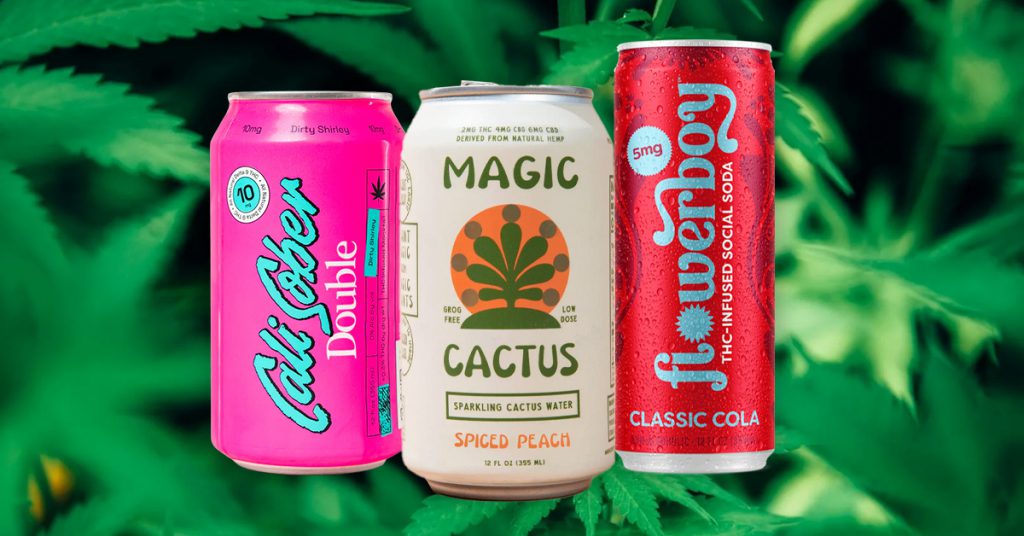
Three hemp-derived THC brands – Cali Sober, Flowerboy and Magic Cactus – have lined up new financing rounds of under $2 million, respectively, which include buy-in from both existing cannabis industry investors and new venture-backed dollars.
The institutional investor support comes even amidst crosswinds; while the category has grown overall, more states are limiting or banning the sales of the drinks.
Tennessee, Kentucky and Texas stand as the most prominent states to recently clarify, tighten or ban (pending a governor’s signature) hemp-based THC drinks. They join larger states like Colorado and California that already have restrictions in place.
Tennessee, which does not allow medicinal or recreational marijuana, had nevertheless become a beachhead for intoxicating hemp beverages. A recent bill signed into law has placed oversight of the category into the three-tier system, tightened some regulations and essentially closed the door to direct-to-consumer sales.
Kentucky’s recent move banned THC drinks from on-premise locations like bars and restaurants, as well as direct-to-consumers (DTC), limiting beverage sales to liquor stores.
Texas’ more punitive legislative action to outright ban intoxicating hemp products has drawn the ire of many in the cannabis industry. The passed legislation awaits a decision by Governor Abbott to sign into law or veto, which he must do by June 22.
Despite the shrinking opportunities in some markets, investors don’t appear to be shaken – even in Texas, with its pending ban.
“I’m still super excited,” said Chrissy Liotta Edwards, who gathered funds via a special-purpose investment vehicle (SPV), Arsenal Venture Partners, to invest $120,000 in Dallas-based Cali Sober’s $1 million round.
That investment will come alongside between $150,000 to $250,000 from VC firm Flightplan Ventures, where Liotta Edwards is managing director. Dallas-based 2 The Moon Ventures (an investor in energy brand G.O.A.T. Fuel) is also expected to join the investment group, according to Liotta Edwards.
Arsenal Venture Partners is a “pro-freedom” SPV primarily focused on defense and aerospace businesses, Liotta Edwards said. “I went out of its way a little bit on this one because I had so much interest from my investor base, which, interestingly enough, is not just exceedingly Republican, but very conservative Trump Republicans.”
The political leaning of her investor base defies a narrative that cannabis industry investment comes from the liberal wing of the political spectrum. It is also in opposition to some of the rhetoric used by Texas Lt. Gov. Dan Patrick as he has pushed for the outright ban.
One selling point for Liotta Edwards was the brand’s decision to pursue and own the trademark of “Cali Sober” – a phrase often used for people who abstain from alcohol, but consume cannabis – on beverages and apparel, opening licensing opportunities and IP to build the brand around.
Cali Sober is preparing for the potential ban of all intoxicating hemp products in Texas by lining up a new co-packer and moving operations out of state.
“It’s really sad seeing the real-life effect of [the Texas legislation], because we’re literally having conversations about firing our teammates,” she said. “That’s just horribly upsetting. These are people that we work with whose jobs are just going away because we can’t operate here.”
Amid the possible setback in its home market, Cali Sober has been futureproofing itself by targeting states that don’t have recreational marijuana legislation. States with legal cannabis have been places where hemp-derived brands have struggled to remain on shelves, Liotta Edwards said.
“For a company this small, you would recommend that a brand win its market and then grow from there. But in this case, growing and expanding through the three-tier system amongst multiple select states is the best way to hedge against regulation.”
Utilizing Beer Distributors To Build New Opportunities
This is the strategy category newcomer Flowerboy is taking as it expands its business from DTC to beverage-alcohol distribution.
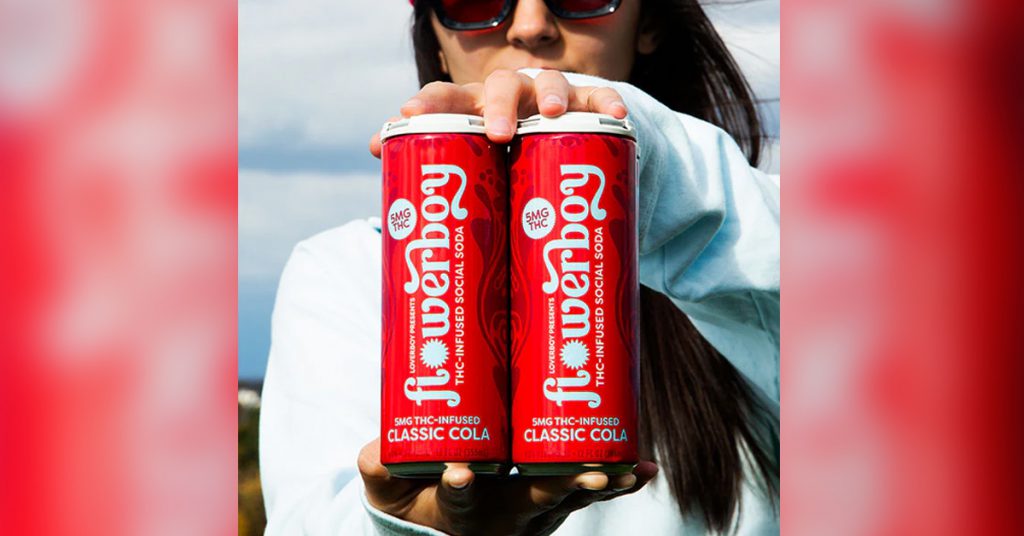
Flowerboy is the intoxicating hemp-based “social soda” spinoff brand of ready-to-drink (RTD) cocktail and hard tea purveyor Loverboy, which launched with three SKUs in December. Founder Kyle Cooke said he has been tracking the cannabis drink category since 2019.
“The total addressable market for THC-infused beverages is going to be the incremental consumer that is not a THC user,” he said. “It is someone looking for a substitute or alternative to alcohol. That is the consumer we’ve already identified at Loverboy.”
After bootstrapping Flowerboy’s launch late last year, the brand is in the midst of a $1.75 million fundraising round. It has already closed $1 million from cannabis investment group Delta Emerald Ventures and is trying to raise an additional $750,000 via a SAFE note.
The company has already begun selling in New Jersey, where it sees a path forward in partnering with the state’s large body of independent alcohol retailers.
“We have a pretty big network through Loverboy,” Cooke said. “We benefit from five years under our belts working with beer wholesalers. We understand the quirks, the needs, the wants, and the blocking and tackling that will make those relationships successful.”
The brand is focused on turning to wholesalers who are “still interested in building brands,” Cooke said. In that vein, Flowerboy is launching with about 12 distributors this month as it looks to “overlay” its state-by-state strategy in markets like Illinois, Minnesota and Wisconsin that are more hospitable to hemp-derived THC drinks.
Investment Helps Brands Stay Nimble
Immediate regulatory uncertainty might spook some investors, but at least one founder hopes that adding a few future-focused funds might reassure the rest of the financial class.
When Arizona-based founder Jonny Locarni set out to raise a round for his brand Magic Cactus, he faced skepticism from VCs who “didn’t understand the category” and “couldn’t derisk it enough” to feel comfortable funding the brand, he said.
He eventually got Tonic Ventures and Listen Ventures to sign onto his $1.5 million round, which opened the door to many investor groups coming back to Locarni, seeking to add on.
“Listen has a lot of respect in the functional space, having invested in Calm and Jolie showerheads,” he said, noting the firm hosted an April adult non-alcoholic alternative conference, So Curious.
Between Listen and Tonic Ventures – which lists beverage brands Olipop, Slate Milk and Leisure Hydration in its portfolio – Magic Cactus was able to raise what it needed to grow while staying optimistic about future funding rounds.
“Mainstream consumer VCs are now coming in with enough comfort to make a large bet,” he said. Locarni expects more institutional investors in the space in the next 12 to 18 months.
The key point to selling the category to investors is honesty that there will continue to be some turbulence around where hemp drinks can be sold, he said. “On a five-to-10-year basis, this industry is moving forward with mass adoption.”
Until now, Magic Cactus has kept about 75% of the business DTC. The new investment is going toward “rapidly building out its wholesale business” and hiring a small sales team that can use the brand’s digital tracking to target key markets to go deeper in retail, Locarni said.
Nashville has proven to be a successful DTC market for Magic Cactus. Tennessee’s recent legislative move allows Magic Cactus to pursue distribution with beer wholesalers and retail opportunities with package stores.
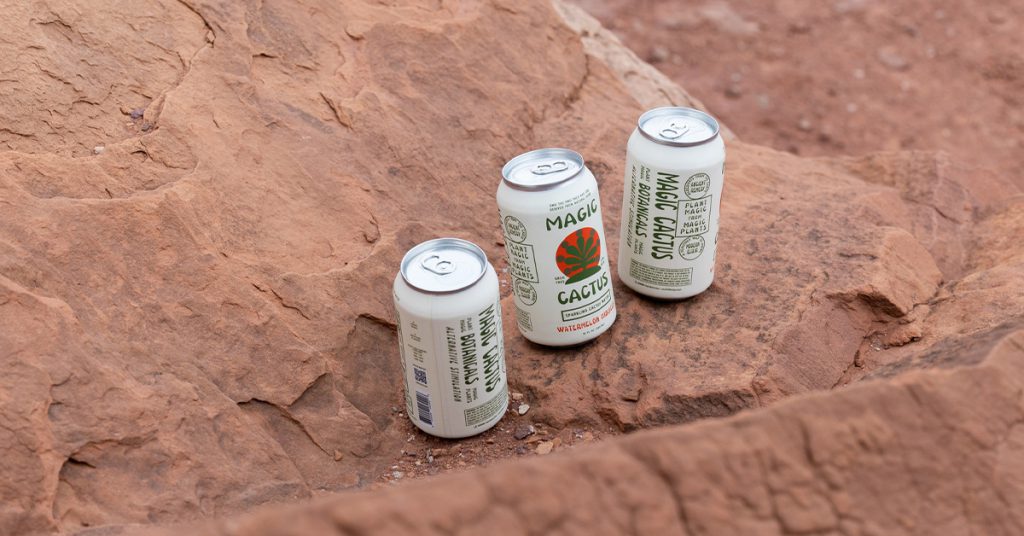
The plan is to own the low-dose market, particularly as more brands increase their potency. Locarni believes that Magic Cactus’ 2.5mg hemp-derived THC, paired with non-psychoactive cannabinoids CBG and CBD, is more appealing to consumers who are moving away from alcohol but aren’t heavy cannabis users. The positioning is a “defensible moat” that doesn’t chase the normal cannabis beverage consumer, Locarni said.
“If our goal was to achieve the highest possible sales, we would have a five milligram, 10 milligram or, maybe, a 20 milligram in some markets because there is a lot of pressure from the liquor store owners who say the data is showing that higher dose products are the top sellers,” he said.
“As more brands come and chase that data, we can just own this entry-level shelf that’s sessionable,” he added. “In the long term, it can win.”