
Search across the BevNET CPG Media network including BevNET, Nosh, Brewbound, Taste Radio, Nombase and CPG Jobs.
CBC 2024: Rob Day on the Importance of Marketing, Challenge of Staying Relevant
Transcript
Note: Transcripts are automatically generated and may contain inaccuracies and spelling errors.
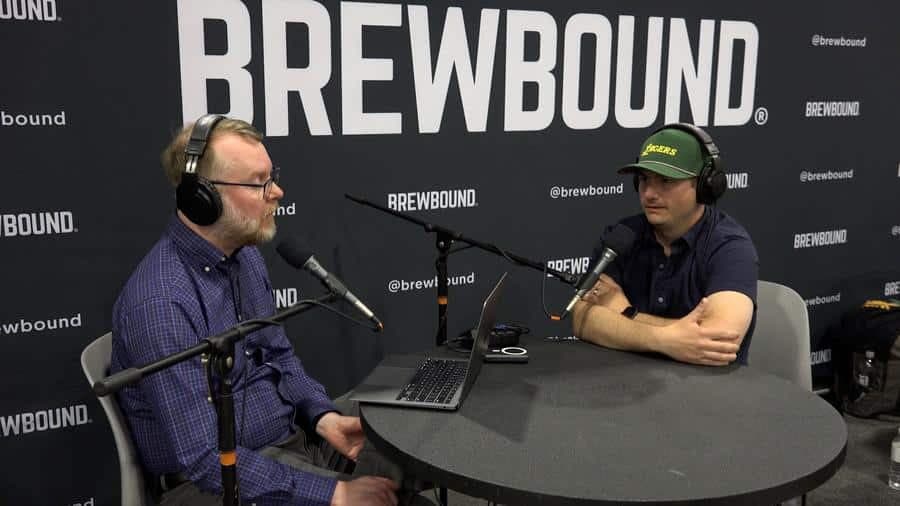
Speaker 1 [00:10] This is Justin Kendall, and I'm live to tape at the Craft Brewers Conference in Las Vegas, and our next guest is someone that I've worked pretty closely with over the years. You were at Jack's Abbey. You were at Lord Hobo, and now you're a free agent. So welcome, Rob Day.
Speaker 2 [00:28] It's so good to be here. Thanks, Justin.
Speaker 1 [00:29] I'm pleased to have you. So. I mentioned you're a free agent. What are you looking for next?
Speaker 2 [00:36] Right now, I think we are at an interesting time in craft beer, where, of course, everyone talks a little bit about the numbers and doom and gloom, but to me it is the most competitive and puzzle-driven marketing we could possibly be getting into. So I believe there's gonna be some people who really roll up their sleeves and do some of the most creative marketing we've seen in this business to date as a now mature industry. Everyone talks about connecting with consumers, and it's gotten harder and harder and harder, and now is the time to be really clever and start solving those problems and doing the hard work to get there. And to me, that's probably the most exciting thing we could be doing. So yeah, I'm, I'm working with a few clients now, open to some others, but I'm a problem solver and I'm a traditional marketer prior to beer, and I've been doing this for 7 years, and I don't want all of this knowledge to go to waste.
Speaker 1 [01:24] Yeah, not, neither do I. So it, it's great to have the connection. And I, I think that you're right. This is a moment that isn't gonna solve itself, and it's gonna take some creativity. And so, why do you think that that was, you know, we've gotten to the point that we're in where, um, you know. I, I guess, you know, when you think about it, there wasn't a lot of marketing that needed to be done in those middle 2010s and now we are at that point and it's definitely, you know, post-pandemic where. You see the shift and like a lot of people got comfortable at home and now, you know, you, it, it takes more to speak to those people. They're not just coming to you. So what, what are you seeing as, as like a big need or a solve there?
Speaker 2 [02:12] Yeah, I think that's the, that's the epitome of how we've evolved right now and it happened a little bit faster because of the pandemic, but this was already occurring. So you mentioned like the early 2000s, beer was novel. So and you think about marketing, you think about your why first. Why do you exist? Why does anybody care? In the early days, why? was just because it was interesting. It was new. Craft beer wasn't everywhere. There weren't 4 breweries in a small town. So just exploring even a, a poorly lit factory space with not working bathrooms, that was cool, and that was fun. That was your why. We're making better beer than the Goliaths. The David Goliath story is a great myth to tell, and this experience is something you've never had before. That's all gone now. So we've nearly 10,000 breweries. The experiences are getting upped everywhere you go, and then outside of beer, the competition has evolved to an extreme level in every type of Substance, and non-elk, elk, THC, every possible category is now getting more and more competitive and more choice than ever, and our consumers, we were talking about it earlier, no one has one social media app this day. They don't have one network, so everyone was bemoaning the days of like, oh, network TV is gone, it's hard to find people. I have to advertise on cable. I have to buy out of home. I'm going back in time because I don't think what we're dealing with is unique. Other industries have all been through this. And now that our consumers' attention is divided, and it's not just cool enough to be a brewery, you have to find that connection point and reestablish your why. And I think that's what a lot of people are coming to terms with because it happened pretty quickly, but it was already happening around them. And when that hits, It can be a harsh
Speaker 1 [03:52] reality. You mentioned sort of the blueprint that we saw for a lot of craft breweries out there, which was like industrial space, does the bathroom work? Well, sometimes, you know, that, that sort of thing, and it was a vibe and it, it, it worked, but. I, it, it's definitely shifted where that's not like. That doesn't work for everybody now. And Bart Watson pointed it out today, and he pointed it out last year, and he probably pointed it out the year before, but he's talked a lot about reinvention. So, what do you see as a potential next step evolution, you know, reinvention out there for craft brewers?
Speaker 2 [04:35] Yeah, I think mainly it's gonna start with that introspection, understanding why you exist and what matters, and where you, where you're strongest, where do you have permission to play, and we're not really comfortable with that idea yet. Uh, breweries sometimes want to do everything. We saw this a bit with seltzer. It got hot, everyone jumps in. It wasn't right for everybody, and being comfortable and curated in what you do and focused is gonna be super important because the end result of quality versus quantity on the business side is going to matter a lot more. I think we get that on the beer side now. Fewer beers, higher quality, a lot more attention to detail, and the education is there for it. I think that evolution is coming to the business side where you might look at reviews as a way to, to test your space, but Most of the people are in the middle. They don't leave reviews, but they leave with a feeling. And are they coming back or not? And in your own space, you can create that brand experience that you're trying to tell, and it's not only powerful for your hospitality business, but those people leave with this innate feeling of who your brand is, and they are more likely to advocate for you outside of your space and purchase your product off the shelf. And wherever and however you can create that connection point, media. Uh, advertising, real life experience, events, sponsorship, whatever it is, figuring out that mix for each business and being focused on it, I think that's where we're heading. I,
Speaker 1 [05:53] I think you touched on something there that I, I think is gonna be so important in the next wave, which is experiential, and I, I think that a lot of folks need to do that introspective work to look at their space to. Figure out what they want to offer, you know, what experience they wanna give beyond, you know, come in, get a flight, you know, sit on a, you know, hard chair, you know, yeah, like I, I think that there's, there's gotta be a lot of introspection in that. And I think that there are folks who are doing it well. I mean, if you look at Taleaa as an example phenomenal example, yeah, I, I think that that's one of those standout examples of providing an experience that is different, you know, catering to, uh, an audience that. Doesn't typically get catered to.
Speaker 2 [06:46] Yeah, and you nailed it. And if you hear them talk, they're, they're experience driven. They're, they know why they exist. They know who they're talking to, and they try to bring it to every aspect of their business, and you can see it working, and that's, that's what people really need to be doing more than ever,
Speaker 1 [07:01] well. We mentioned that you're a free agent, you know, are you looking to stay in this space? Are you looking for like the 9 to 5, which I'm sure isn't 9 to 5 really in, in, in like one of those positions, or are you comfortable doing something like consulting, you know, and taking sort of a step back and, and, you know, just reimagining what your work has been in the past.
Speaker 2 [07:27] That's actually sort of what I've come to terms with this week, um. I think my longest strength is in development. It's, it's tough for me to hand something off and walk away. Uh, I like to see things through completion, so that'll probably be the most difficult personality thing I have to overcome on the consulting side. But I'm working with a couple of people already. I think there's a lot of help that's needed, and with stretched resources, having someone like me do a single project to tune. Your team and make you more efficient going forward. That's probably the best use of my skill set, uh, in the current climate. Now, dream job comes up, sure, I might raise my hand for that, but I, I really think there's a lot of help to be done at those mid-tier companies who they know they have to come to terms with this, but maybe can't afford to hire a full director VP of marketing level person, and they, they may not even need it. So maybe a fraction of my time, uh, helping those people is really the best use.
Speaker 1 [08:17] I think in times when, when things get tough, you know. I think that There's a knee-jerk reaction that marketing is usually one of the first parts of the business that gets pulled back from when really, you know, that outward. You know, selling yourself needs to be there. So what do craft brand owners need to know about marketing that maybe they're, they're not thinking about in these moments?
Speaker 2 [08:47] That's an awesome question, and I'll, it could have a really long answer, so I'm gonna cut that short because no one wants my marketing nerd answer. Uh, but ultimately, a lot of people see marketing as that final piece, the promotional portion, the Instagram post, the event, like, that's not all marketing is. To me, it's so much more important, the groundwork for that, the strategic vision and understanding how you create connection points. So marketing is four P's, it's product, price, promotion, and placement. That's the basic first thing they teach you in marketing class, and understanding the strategy that leads to those outward expressions of your brand is probably the most important thing a professional marketer could bring to the table. Every brewer starts a little bit intuitive on that nature. They created this business. They know why they exist. Over time, that can get lost and muddy. And that's where professional help can just refocus you or tune you up or catch you up. And a lot of people know how to promote themselves. They know in those first two years, especially, what got them motivated, why are they here? Why are they excited about this? And they can, they can sell themselves like it's their story. And then business gets bigger and they kind of lose touch with it, and you see it all the time and it's not for lack of trying, but that's where I believe the professional marketing strategy aspect is where they can really change how they approach the category of marketing and be stronger business people.
Speaker 1 [10:03] I think that's a great place to leave it, Rob. Thanks for doing this. I really appreciate it.
Speaker 2 [10:08] Good to be here.