
Search across the BevNET CPG Media network including BevNET, Nosh, Brewbound, Taste Radio, Nombase and CPG Jobs.
CBC 2024: Not Your Hobby Marketing Solution's Julie Rhodes on Marketing Tips & Tricks
Transcript
Note: Transcripts are automatically generated and may contain inaccuracies and spelling errors.
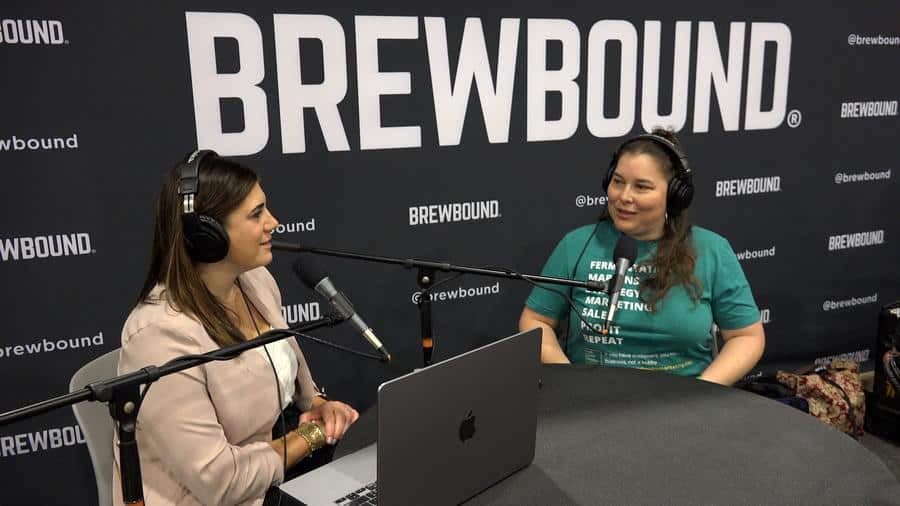
Speaker 1 [00:10] Hello and welcome to the Brewbound podcast recording live and in person on the Craft Brewers Convention trade show floor. So excited to be here in the Brewbound podcast on location studio, but, uh, even more exciting than that is the guest who is sitting right next to me, uh, Your friend and mine, one of this industry's bright shining lights, Julie Rhodes, founder of Not Your Hobby Marketing Solutions. Julie, how you
Speaker 2 [00:34] doing? I'm wonderful. I'm super excited to be here next to you. Oh, I am
Speaker 1 [00:39] so glad that you're here. I feel like you and I have chatted a lot lately, which has been really nice
Speaker 2 [00:43] for me. It's been a treat for me. Oh,
Speaker 1 [00:45] look at us. Look at us. So Julie, you recently and excellently participated in our new Q&A series Brewbound Around with. So you did such a good job answering those questions that I wanted to make sure that we were talking about something different today. So I have us getting into the nitty gritty marketing stuff.
Speaker 2 [01:03] Oh, that, that's great. I love talking shop about this, and I just spoke yesterday, so this is
Speaker 1 [01:08] great. It's good, good, good. Perfect, perfect. Well, so Julie, like I am a former marketeer, uh, and I have always appreciated the name of your consulting firm. Thank you. You're welcome. Thank you. Uh, I have many thoughts about how you landed on it that I will keep to myself right now, but you give us the backstory and we'll see if, if my, my thoughts line up.
Speaker 2 [01:29] OK, so, um, it was something that popped into my head probably 67 years ago when I was thinking about starting a business, um, and it's really through like friends and family. Um, that, you know, I would talk about business in some way and they're like, Julie, nobody knows that stuff. I was like, what? What are you talking about? Everybody knows this stuff. I don't, they're like, you just need to teach this. And I was like, OK. And at the time it was kind of, you know, when we were seeing that huge peak of like openings, you know, and there were a lot of home brewers that were entering the space, um, and a lot of people were like, I just want to take my hobby to like a professional level, and I just kept hearing it over and over and over again. And I thought, oh gosh, I'm a sales lady, right? I'm a marketing lady. I was like, wait a second. If you file for a business, it's a little bit different. You have to treat it a little bit differently. So, I was like, gosh, this is not their hobby anymore. And it just sort of stuck in my brain. And a lot of people told me it was silly for me to name my company that. They were like, that's a mouthful. Nobody's gonna remember it. It's too much. Your URL is going to be too long, you know, all that stuff. And I was like, you know, it just kept coming back to me over and over again. So I thought, well, You know, uh, my tagline is if you have customers, you have a business, not a hobby, so there is a little bit different, you know, delineation of once you file for that DBA and that license, it's kind of a different ballgame.
Speaker 1 [02:50] It, the, everything changes once that happens. So that's not at all what I was thinking. I was thinking that, well, you know, I feel like maybe this is colored by. Many of my own experiences, but that people just think, oh, marketing's just like fun and silly. Anybody can do it.
Speaker 2 [03:06] Exactly. Um, it is so much more nuanced than that. And honestly, uh, conferences like this are a great place for people to have that aha moment. Um, because a lot of the times, uh, you know, people that might not be able to hire out for like a full-time marketer or have a marketing team, and they're like, oh, this person is an extrovert. They'd be great at marketing. They just sort of throw them in. And then they attend something like, you know, the marketing sessions here at the conference. They're like, wait a second, hang on, there's channels, there's strategies, there's copywriting, there's, you know, content creation. Um, it really is a gateway to connect with consumers and it's way more nuanced than, than most people think. And side note, this is funny about my business name. Um, I thought when I first got started that I was just going to be doing marketing consulting and so that was the DBA that I took out. Um, and now my name is synonymous with my company, so I don't want to change it even though I do full business consulting. Yeah,
Speaker 1 [04:02] you do so, so much. Well, so let's stay on, uh, the idea of marketing for a minute. So thanks to social media, marketing has kind of become democratized to the point where sometimes it ends up the responsibility of very junior team members or interns, and I'm not trying to shade them at all. Uh, I'm sure many are really talented and really smart and capable, but why should that not be the case?
Speaker 2 [04:25] Oh gosh, um, if you think about it this way, um, this is what I tell people all the time. I hopefully this analogy helps a little bit. You have to think about dating your audience, right? So like you have a first date, you have a first impression, you want to make a good first impression, and then you want that person to like hang out with you more. So it sort of depends on the environment, like the conversation, and so if you think about marketing as a conversation um between your brand. And your target audience, um, you want them to like you. You want them to hang out with you more, right? And then hopefully, you want to be in a committed relationship with that brand in, in order of like to earn word of mouth marketing or to earn brand loyalty, things like that. So, if you think about it as a relationship role and not so much a promotion role, um, I think it will help people sort of wrap their brains around, you know, how much strategy actually needs to go into it.
Speaker 1 [05:20] That's really, really helpful, yeah, yeah, I mean that seems like a great way for especially for craft brewers to really think about it because it seems it's daunting, you know, there's so much that you can do.
Speaker 2 [05:31] It is and you know today's consumer, especially with the younger generations, um, we find that they don't want in your face branding. You know, like how the beer industry used to be like decades ago, where you had like mascots and logos and, you know, neon signs. Like it's a little bit different, right? They want a more personal connection. They want the brand to be human. Um, they want to get to know a brand. So, when you can learn how to connect with them, whether it's social media, email, your website, um, you know, articles, I, I still, people laugh at me. I'm like, blogging is not dead. Blog about your brewery. I think it's great. Um, but it allows people to get them to know you in a more personal way, and that really helps foster that like brand connection. Yeah.
Speaker 1 [06:17] Well, so budgets are stretched really thin these days. What are some of the best bangs for your buck in digital marketing?
Speaker 2 [06:23] Oh, digital advertising. OK. Short answer, straight to the point. Digital advertising.
Speaker 1 [06:29] Tell me more. Um,
Speaker 2 [06:30] so start with social. Um, that's the easiest like gateway first baby step. Just like
Speaker 1 [06:35] paid promoted Instagram posts.
Speaker 2 [06:37] Don't boost. I'm gonna give everybody a hot tip. Stop boosting your posts. Please don't waste money on that. Um, you're gonna get a lot better, uh, results from your ads if you do like a native ad campaign from the beginning and keep them running for a long time. Um, also think about, you know, you don't have to have something specific going on in social, um, to promote it, like an event. You can run just brand awareness ads that let people know who you are at any given time. Um, you're also going to get more data with native ad campaigns. So, stay away from boosting, um, but social media ads like Facebook, Instagram are a great way to start. Um, if you're doing a lot of private event business, don't forget about Pinterest. That's still very relevant, um, to business marketing strategy. Um, for breweries and beyond, um, second thing would be like Google, you know, PPC ads. That's a, um, I've been doing Google ads for longer than I want to admit on, on live feed, but, um. Uh, the interface is much easier than it used to be. So it's really easy to get started. It's almost like plug and play. They just sort of click, you know, you click through and it walks you through. It's easier than people think. So, definitely get into that space.
Speaker 1 [07:51] Awesome. And if you have a little bit of money, you can splurge. What's the most worth it in digital advertising?
Speaker 2 [07:55] Um, I would say if you can hire a content creator of some kind, and I don't mean you have to hire somebody full time. You could even do, uh, like a 1099 contractor, a college student that wants to build up their, um, portfolio. It could be part time, it could be full time, you know, whatever it is. But I think, um, the higher quality content that you have for especially social, but you also need content for email, you know, websites, um, advertising, all those things. So, um, the better media. That you have, especially short form video, if you can find somebody that's great at capturing and editing short form video, you'd be in really good shape,
Speaker 1 [08:32] um, because that is, that is a skill. It is a skill. I do not have, yes,
Speaker 2 [08:36] and I think, um, a, a big problem that I see currently is that, um, a lot of people that don't know a lot about marketing drastically underestimate, um, how time consuming content creation can be, um, so finding a. Good quality person and just, you know, fair warning to everybody you're gonna pay for what you get so you know it's a good place to splurge.
Speaker 1 [08:57] Awesome. I mean that that makes so much sense. Uh, I do wanna call out one thing I've noticed that you and Jason are both wearing, uh, customized, not your hobby, sneakers. The is are the, is this a CBC debut?
Speaker 2 [09:13] It is of this of this version. I debuted some last year. They're sort of like, they look like Chuck Taylor's, but they're not. Well, they look really, I don't even know. They're very comfortable and at this point in my um era that I'm in as a as a human. I need comfort in my footwear, especially, um, for CBC, but yeah, we try to, it's become kind of a tradition. We try to do a different brand of shoes.
Speaker 1 [09:38] I love
Speaker 2 [09:39] this.
Speaker 1 [09:40] I
Speaker 2 [09:40] love this. They are for sale on my website too.
Speaker 1 [09:42] Oh my God, that's crazy.
Speaker 2 [09:44] Like anybody wants a shoe from a consultant. Like come on, but they're fun. They're fun.
Speaker 1 [09:48] They're amazing. I love this. Yeah, thank you. You're welcome. All right, well, let's wrap. What is one takeaway you wish our audience would keep with them after they hear this conversation?
Speaker 2 [09:59] Um, I cannot, uh, heavily express enough the reliance on financial literacy, literacy and business strategy. Um, I, what I see and hear, because you know I love data as much as you guys do know yeah, yeah, big data nerd, um, and I do go to a lot of events and I, I read a lot, obviously, you know that about me too. Um, all signs lead to, you got to get your house in order. You need to get some strategy and some plans going. You need to make sure you're, you know, behind the scenes, finance admin. Do you know your margins? Do you know your cash flow? Do you know your cogs, all those things, and then. How can you kind of double down on the things that you wouldn't think to double down on right now, which is marketing? I'm a little biased, but don't get me wrong. Usually, you know, there's peaks and valleys to the market, right? And usually people think like, oh, when it's a valley, I've got to pull back on a lot of things. Um, don't do that. Almost like what Fawn Weaver said the other day, just don't listen to everybody else when they say pull back. Um, it's like when the stock market goes down and you're supposed to buy everything on sale, when the market goes down, double down on marketing because it will pay off in spades. It's a long term investment.
Speaker 1 [11:11] Perfect. Julie, thank you so much for taking the time. I know this is a busy week for you, so I'm glad you found, found a couple of minutes for us.
Speaker 2 [11:16] Well, thank you for having me. I was super excited about this. A great way to wrap up day three.
Speaker 1 [11:20] I love that.