Search across the BevNET CPG Media network including BevNET, Nosh, Brewbound, Taste Radio, Nombase and CPG Jobs.
Brewbound Pitch Slam 13 Semifinal Round
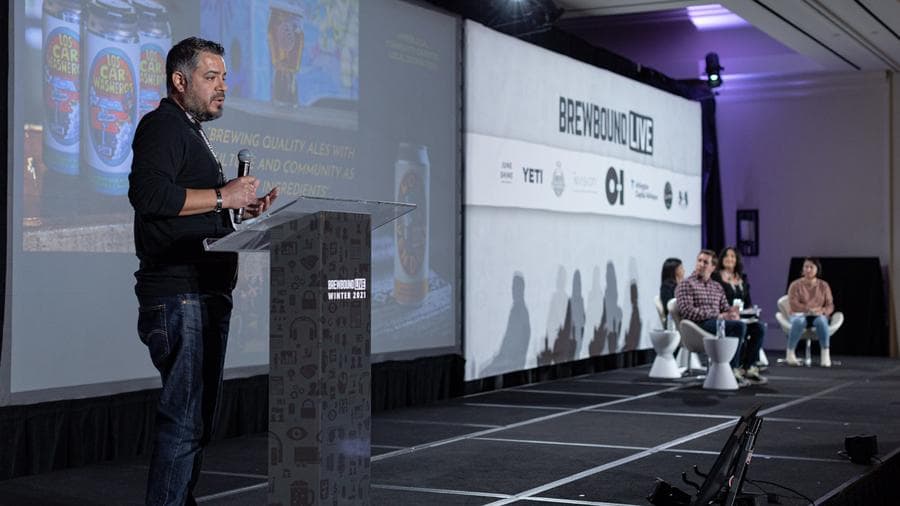
The morning of day one, up to 12 semi-finalists take part in the opening round of back-to-back pitches. Each pitch is only 2 minutes with immediate feedback from the judges. Six finalists are chosen by the judges at the end of the day to continue to the finals.
Ryan Lake, Director, Arlington Capital Advisors
Veronica Vega, Director of Product Development, Deschutes Brewery
Mallika Monteiro, EVP, Chief Growth, Strategy & Digital Officer, Constellation Brands
Sean Ro, Co-Founder, Lunar Hard Seltzer
Transcript
Note: Transcripts are automatically generated and may contain inaccuracies and spelling errors.
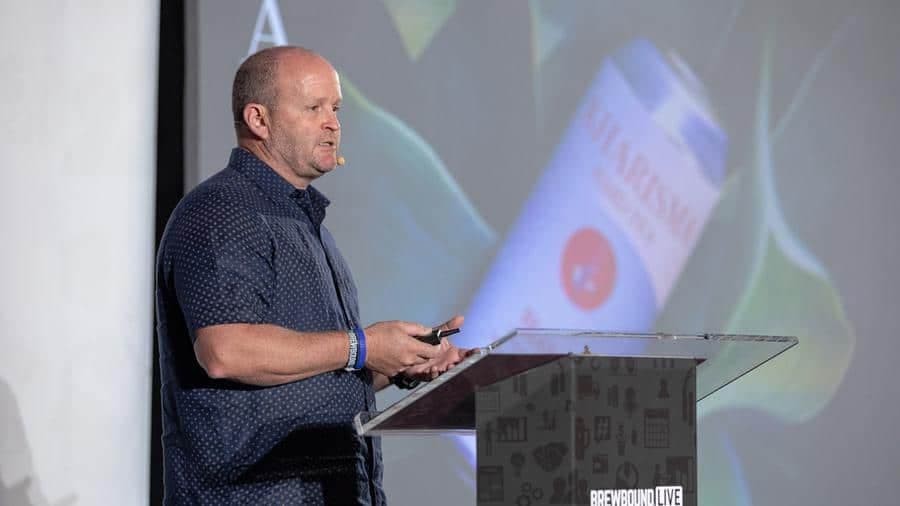
Bill Gillies [00:11] We're kicking off the pitch slam with a semi-final round in which entrepreneurs from 12 brands will have 2 minutes to deliver their best elevator pitch. Our judges will provide approximately 2 to 3 minutes of feedback following each pitch. The judges have already sampled the products. Just to note there's no Q&A between the contestants and the judges in the semifinal round. After all the brands are presented, the judges will pick 5 brands to move on to the final round, which takes place tomorrow. The 6th finalists will be chosen by audience vote. At the end of today's semi-final round, we're going to show a list of all the participating, all the participating brands and a number next to their name. Live stream viewers will have an opportunity to vote by texting the number corresponding to their favorite brand to a phone number that will provide after all the semi-finalists have presented. You can also call the phone number to vote. As I mentioned, we're going to show the phone number at the end of the semifinal round. You'll have until 10:00 a.m. Pacific Time. That's 1:00 p.m. Eastern Time, to vote. We'll announce our six finalists on the main stage today at 12 p.m. Pacific Time. All right, let's meet our panel of esteemed judges, beginning with Ryan Lake, who's a principal at Arlington Capital Advisors. Ryan has over 20 years of investment banking and commercial banking experience and has sourced, structured, and negotiated debt and equity transactions for beverage and restaurant companies. Then we have Molica Montero, who is the executive vice president and chief growth strategy and digital officer for Constellation Brands. In her role, Malika is responsible for consumer and category insights, innovation, and new product development across beer, wine and spirits, and the company's strategy development and business transformation functions. It's a very minor role that Moloch has. Next we have Sean Rowe, who is the co-founder of Lunar, the first Asian American craft hard seltzer made with real fruit juice and premium ingredients from Asia. Lunar was the winner of Brew Baun's Pitch Slam 12 last year. Congratulations once again. And finally we have Veronica Vega who is the director of product development for Deschutes Brewery where she oversees new innovations, their pilot brewery and barrel program. Veronica, great to have you back. All right. Let's get to our first contestant for Bre Brewbound Pitch Slam 13. That's Bill Gillies, who is the founder and CEO of Big Country Foods. Bill, come on up to the stage. Is this song. All right. Hey y'all, just note your timer is right there, OK. Hey y'all, I know it's early, but it's time to get fired up. My name's Bill Gillies, and I'm the founder and CEO of Big Country Beverage. I'm here to talk about the newest addition to our hard seltzer line, Big Country Sparkling cocktails. So these are hard seltzer-based cocktails, so they're easy drinking. The idea was to create a beverage with a complexity of a cocktail, but have that easy drinking, hard seltzer vibe to it. And I think we nailed it here. It has 90 calories, 0 g of sugar, and ABV of 4.5%, so you can load up the cooler, take a float down the river, and be fine all day long. Now there's some other folks doing some similar things to us, but not like, but not like us. We've got a, a big difference and I'm going to tell you why. First, our mixology is top of the line. I went out and hired one of the top mixologists in the world. In fact, he was voted in the top 100 mixologists. His name is Ricky Kobia, and he brings to the table this special talent for combining unique flavors that are very balanced. So I think that right there is a big attraction to our product 2. Um, we love our branding. Uh, I mean, who can resist the nostalgia of the old West? Uh, makes you, when you pick up a can, makes you feel like letting out a little yee-haw. Third Our cocktails are certified organic and that's not easy to do, but we felt like it was really important to produce sustainable products, so we went down and got them organic certified. Fourth, we don't outsource our production. We do everything in-house, um, at our brewery in Austin, Texas. And lastly, we're fair trade certified, so we're giving back to the farmers on every can we sell. So if you find yourself out roaming the country, and be sure to pick up some Calpoke and Jenny Lane, and I got the gong. So thank you. All right, well done, Bill. Um, Malika, I'm pretty sure I heard you say yeehaw when you sampled the products this morning. No, in all seriousness, you know, sparkling cocktails, um, definitely a category of interest. Um, I'm just wondering what you think of the overall pitch and presentation and the opportunity for a big country.
Speaker 2 [05:21] I think I did say yeehaw, when you taste cocktails at 7:30 in the morning, that's the reaction you get. I loved the packaging and the liquid. The liquid is really balanced. It's not too sweet, and I think there's a market for products that have a little bit more sophistication and a different level of delivery of aroma and flavor, and I think the packaging has a strong point of view. It stands out on the shelves. It won't get lost in the clutter of the rest of the category.
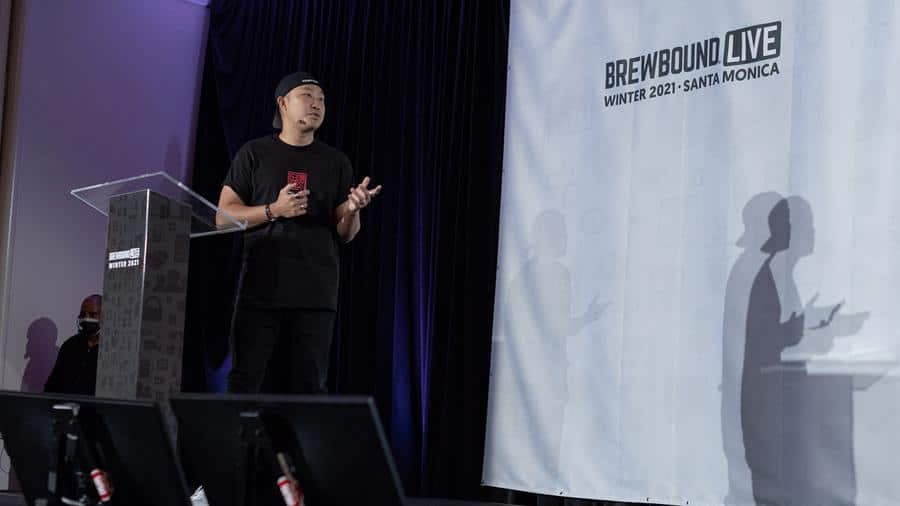
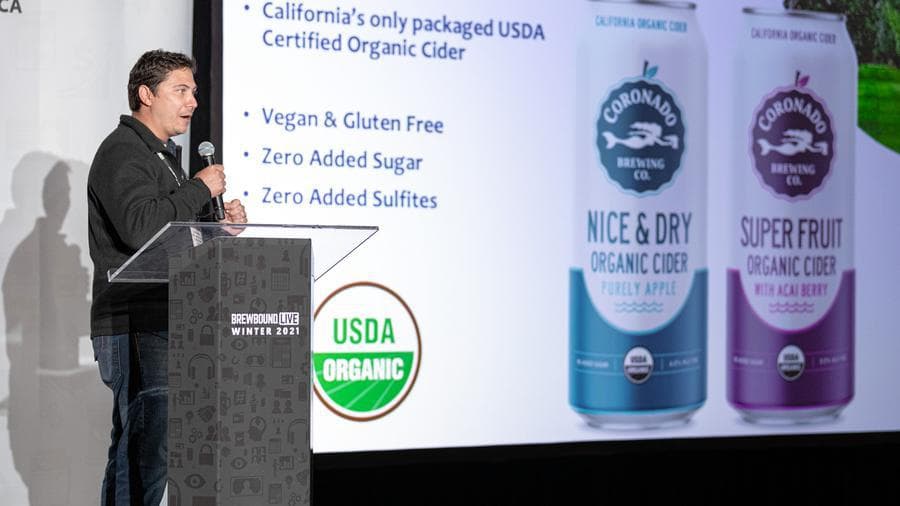
Bill Gillies [05:49] Ryan, you're nodding your head in agreement again, you know, sparkling cocktails, the blurring of lines in terms of what is beer and what is not and what people are looking for these days in terms of the growth opportunity for this brand and the categories as a whole, you know, what are your thoughts? Yeah, I like the packaging a lot. I like the fact that it seems like they're playing off more of a gin occasion than vodka, which I think is smart. Um, I did struggle with, I had a hard time finding the big country brand on the package. It felt like the subbrand was more prominent, um, so that could be a limiting factor in the future. Veronica, uh, going back to the taste of the product, um, it's always gonna be, uh, an important thing for cocktails to taste what people expect them to taste like. Um, what are your thoughts? Yeah, I thought for the grapefruit in particular, I was really searching for, for the grapefruit flavor. I thought it needed to be a little bit more pronounced. Um, I get that it's a sparkling cocktail, but you still, even though You have sparkling in there and you want a light experience. You don't want to search for something like grapefruit that is the prominent flavor, so I would just continue to work on getting the flavors to pop, um, a little bit of like, I, I sensed a little fermentation kind of um uh challenges that could be addressed too. So um I put effort on that because the branding, I think really is attractive. It's kind of a lifestyle type of brand, and I do agree that big country should be a little bit more prominent. Sean, when you guys won the competition last year, there was a lot of comments about knowing who you are and what you're all about and it being very clear in terms of the brand proposition. Are you seeing that in big country? I think so, especially seeing Bill in person. I think it's very evident that the branding and the packaging and all of it is a good representation of him as a person, at least just from the vibe. Um, I think the yeehaw definitely helps. For sure. All right, great work and great stuff, Bill. Thank you. All right, up next, oh yes, absolutely. All right, up next we have Clinton Smith who is the chief commercial officer of Coronado Brewing Company. Clinton, come on up to the stage. Em cocktails. Your 2-minute timer is right there. Good morning. My name is Clinton Smith. I'm the chief commercial officer at Coronado Brewing Company. Uh, we recently, as a brewery just celebrated our 25th year of business, and in those 25 years we've seen some highs and some lows, but we're at a really great point. We're in the state of California. We resonate statewide. We're in the top 20, and we're one of the very few craft brewers growing, but we understand that drinkers are growing across categories at a faster rate than ever before. And at the end of the day when we know we have to innovate, we got to do something that we're passionate about and that we love and something that our team was excited about is cider. It's tried and true and it's been around for hundreds of years, but if we're going to do something, we have to do it special. So we're introducing Coronado Hard cider, California's very first packaged USDA organic hard cider. So there's nothing like this in the market of California. If you look at California, the state of the United States, it's about $10 billion of organic goods consumed annually. 40% of that is done in the state of California. And when you look at cider, if you look at all the regionals in the state which make up over 50% of the share, they're growing at high rates. So we're looking to zero in on a consumer who values organic and is into cider, and it's what we're passionate about. So we want to come in and really strategically build out distribution in the 1st quarter and we'll start opening chain distribution in the state of California. And we just feel that with our distributor partners we're bringing something that we know they're looking for the consumer, but it doesn't exist up until now. So vegan and gluten-free, zero added sugar, zero added sulfites, which are so important nowadays as transparency is key in the products that you put out in the market. We put a lot of work and time into being certified USDA organic for our cider line, and the two varieties, nice and dry, which is just a straight apple at 6% and superfruit, are both the areas where they're growing cider flavors. You just hand that to. Well done. Ryan Clinton talked a lot about consumer demand for an essentially better for you product vegan, gluten-free, zero added sugar, organic, etc. Is that what consumers are looking for in your opinion? Yeah, part of them certainly. There's a subset that's really looking for those sort of attributes. I think it's a smart play in a lot of ways. I think cider is growing regionally. If the whole category is not growing, there's a lot of strong regional brands, so it's an interesting segment of the market. A California organic cider, Veronica, um, in terms of that sort of description of the, of the brand and the product, um, do you think that's attractive to, uh, consumers? I think anytime you can tie it back to place and tie it back to connection to your ingredients, that is, yeah, super appealing storytelling opportunity. And Sean, in terms of the flavor, I mean, I'm sure you've tried a lot of ciders in your life. Does this one want to make you go out and buy it? Definitely. I think the way I had described it is it tastes like adult apple juice in the best way possible. Like I want, I want a case of these. I'm sure we can arrange that at some point. Let's talk, Clinton. Let's talk. Monica, you know this is a, this is a product from an established brand, from an established brewery. I mean how much does that play into your thinking in terms of like the potential for this product line?
Speaker 2 [11:32] It's absolutely so important, I think, um, because you have a built-in audience and a built-in following of people who like an established brand who are willing to try something new from brands that they love, and I think that connection to the place and a story that they're telling, I think is really compelling.
Bill Gillies [11:49] One last question. You know, one of the flavors is called Superfruit. It's made with acai berry. We see superfruit and acai talked about a lot in non-elk in the food industry as well. Is that going to translate, Malika, do you think, to that beer consumer, to the cider consumer as well? Yeah,
Speaker 2 [12:03] absolutely, and I think it ties very closely to the betterment story that they're telling because it has the super fruits have a halo effect. Consumers think about them as a betterment play, and so that's what they're queuing with the entire proposition, and I think it lends itself to the rest of the story.
Bill Gillies [12:19] Great. Excellent feedback once again. On to our next participant, that's Rich Bloomfield, who is the co-founder of Funky Town Brewery. Rich, come on up to the stage. We have more than rich. We have a rich. We have, oh, just rich. OK. You only thing we have Zack on stage as well, and Greg. All right, your 2 minutes begin now.
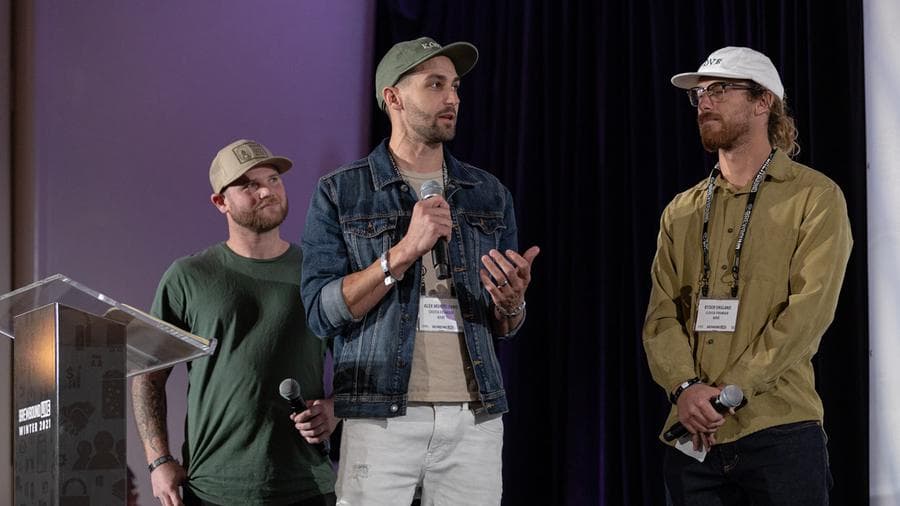
Speaker 3 [12:47] My name is Richard, here with my brothers Greg and Zach, and we're the owners of Funky Town Brewery, the newest, freshest, funkiest black-owned brewery in Chicago, Illinois. A brewery dedicated to creating a diverse cultural atmosphere for craft beer newcomers and enthusiasts alike. We're lifelong friends. I met this guy in 4th grade, I met this guy in 7th grade. We became close in high school. We went to college together at Grambling State University, and after college, the friendship continued. In 2017 we decided to start homebrewing all grain. With the goal of going pro, we've been drinking beer since college, moving on from malt liquor to the nationally distributed brands to the local craft brew. We were choosing beers by the coolest label or the funniest name, but noticed we didn't see anything that represented our environment or our culture or didn't see any labels that had someone that looked like us on them, so the vision was clear. We're going to brew beer because we love it, and we know that if more black people, more women, and more minorities are given a warm introduction to it, they will find a spot for it in their libation rotation like we did. Now, unlike other services or industries, we can build our brand identity on the shared characteristics and experiences like our love of hip hop and R&B, retro video games, sneakers, fashion, travel, and HBCUs provide perspective on growth, adaptability, diversity and inclusion, self-care, creativity and originality. We can stay true to our authentic selves. We launched on October 2nd, focusing on widespread palatability, low bitterness, and low astringency and to introduce underserved demographics to the market without turning their palate off, while also treating the craft enthusiasts to a creative pale ale and amber ale brewed with a homebrewer spirit. Our flagship pale ale hip hops and R&Brew displaying our love of nineties hip hop on the cover has tropical and citrus notes coming in at 5.5 ABV. Our amber ale, woo wop the bam, a Chicago phrase used as a conversational filler.
Bill Gillies [14:50] Well done, well done. Can you hand your microphone. Thank you. Well done. Um, Funky Town Brewery, um, I certainly remember this from, uh, from the sampling from last night, um, and I think one of the things that we talked about was that, uh, the labels are really striking. Ryan, um, in terms of the labels that you see, um, is there anything that you would say beyond, you know, some of the comments you had yesterday? I mean, is there something about this and what you're seeing right now that stands out more than, uh, what you saw yesterday? Yeah, I mean, there's a vibrancy to the labels that I love. They really stand out. You've got to be careful with the IP infringement on some of them, but I love the look of them, and I think I love craft beer, and I think anything craft beer can do to bring in a new demographic to the market is what craft beer is going to have to do to grow for the next 1020 years. So I love that angle. Veronica, this is the first beer that we've, uh, talked about this morning, um, in terms of the amber ale and the pale that you tried, uh, what are your thoughts? I loved the pale ale. The hop character was so juicy and inviting, and I, I, you, you talked about. Astringency, none of that was there. It was a really, really beautiful finish. The amber is one of those where you might have to question, are you brewing this for you as a home brewer, because brewers love their ambers, but does the public? So you do have to question that. But the paleo was on point. Malica, Rich talked a lot about the opportunity that the beer industry is missing in reaching out to minority female consumers. Um, is there still a big opportunity, do you think? I mean, is there still a big opportunity that Funky Town can fill? Absolutely,
Speaker 2 [16:32] beers are beautiful. I too loved the pale ale, um, and I love the founder. It's very much about. But oh there we go, um, I love the, the cultural relevance, the vibe, the package, the story of three friends from Chicago building something to bring um Thank you. Building something to bring people who aren't always represented in the industry into beer, I think is fantastic.
Bill Gillies [17:04] Indeed, Funky Town, you know, Sean, this feels like a really fun, fun brand. Do you get that from, from everything that you're seeing, or I mean how do you, how would you, I guess, evaluate Funky Town in terms of when you see something like this on the shelf? Are you buying it because of the packaging or are you buying it because you want to learn more about the beer? I think for craft beer, well, you know, people typically do look at the label and it communicates a vibe which is a little bit different from at least what we go through with seltzers where we need to communicate the fruit or the flavor. There's no color that signifies amber ale versus, you know, wheat beer, for example, so you get an opportunity to really communicate an energy and a vibe, and I think the Funky Town label and the packaging really does that. And I think the fact that, you know, it's very clear the BIPOC ownership and that culture and that lifestyle that you guys are going for really comes through. Um, and I think, I think it's something that the consumers really look for these days, to Monica's point. Outstanding. All right, great feedback once again. On to our fourth contestant for Brewbound Pitch Slam 13, that's Alex Maltabano, who is the founder and CEO of Koe Hard Yaramate. Alex, There he is coming up to the stage. Alright, sir, your 2 minute timer is right there.
Speaker 4 [18:30] Uh, thank you, um, So Oh, sorry. Um, so we created, uh, Covey. Uh, we, we named our company Covey inspired by, uh, the Yerbamate's first cultivators, the Guarani, uh, and Kove means the art of living. And about a year ago we launched the world's first hard yerba mate, which is made from plants and made for living, and that means something different to each of us, whether that's working with a local farmer or brewing the next big thing, there's one thing we can all agree upon, and that's wanting to know what we consume. So we created a naturally fermented beverage that's made with real cane sugar, real yerba mate, and doesn't contain any fake artificial flavors or sweeteners. Yerba mate is uh is rooted in culture. It's deeply, deeply rooted in culture. It's Sorry, um, Oh, sorry guys. Um, alright, so, We've been really excited to launch the world's first hardybamate. It's made with real organic ingredients. We're organic, vegan, gluten-free, low in calorie, carb, and sugar. You could say that we check all the boxes. We have been so excited to launch the world's first, and we've been growing 70% month over month. We've launched one tasting room. We have two more coming in line, and we're launching 8 states by the end of the year. We just recently
Bill Gillies [20:31] Michael. Uh, before we get to the judges, just a quick note. I mentioned earlier that you can call to vote for your favorite brand after the semifinal round is over. You cannot call. You can only text. Sorry, that's just a quick tech update. Koey. So if we can pull the slide up again so we can see the cans, that'd be awesome. Veronica, you know, we saw a lot of really interesting flavors mango colada, passion berry, mojito, lemon iced tea. You know, what do you think of the formulation of these products? I thought these were really, really tasty. Um, they totally hit on whatever flavor was like a mojito was the mint was there. I didn't have to search for it. The mate, mate overall can have a really grassy type of flavor and all of these um masks that are integrated in a way were super appealing. Yeah, Ma is still, I think, not necessarily the, doesn't necessarily have the highest household penetration in the United States, but it does definitely reach certain consumers. Ryan, in terms of reaching those consumers, do you think that Kove is sort of positioned in the right place?