Search across the BevNET CPG Media network including BevNET, Nosh, Brewbound, Taste Radio, Nombase and CPG Jobs.
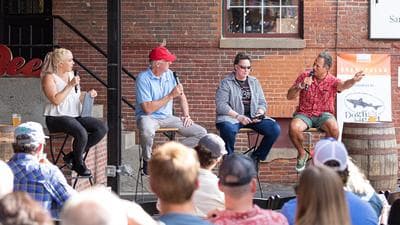
Brew Talks Minneapolis 2022 CBC: Panel 1: The Future is Now with the Intersection of Crypto and NFTs in Brewery Taprooms
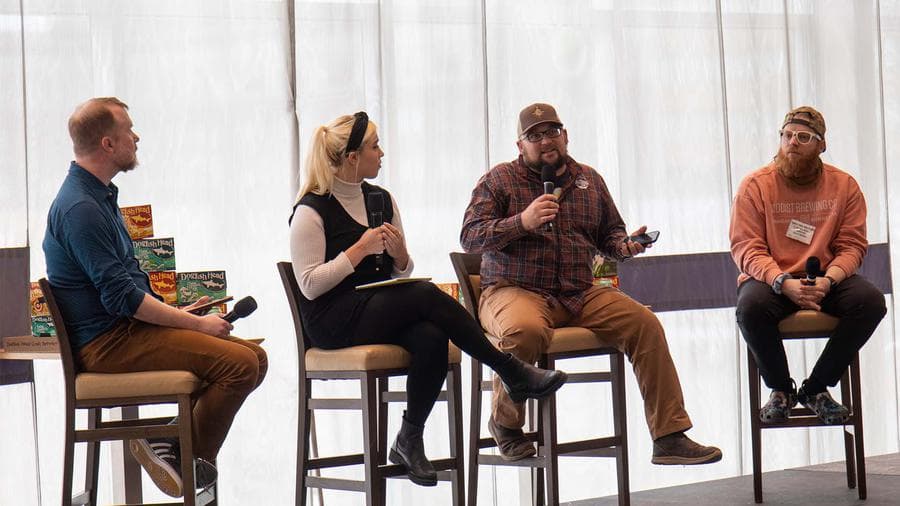
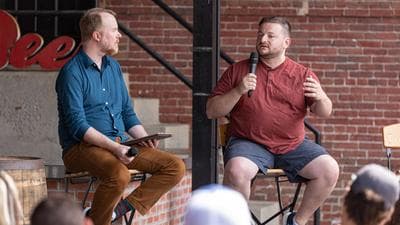
Kurtis Cummings, Founder & CEO, Switchyard Brewing
Daniel Paul Wellendorf, Co-Owner & Head of Marketing, Modist Brewing
Transcript
Note: Transcripts are automatically generated and may contain inaccuracies and spelling errors.
Justin Kendall [00:20] Hey everyone. Welcome to Brew Talks presented by Dogfish Head and Lily Pad. My name is Justin Kendall, and I am the editor of Brewbound, and we are live from Minneapolis, Minnesota at Target Target Field, home of the Minnesota professional baseball team. We can't name. I'm joined by my colleague Zoe Locata. Thanks for being here, Zoe.
Speaker 2 [00:44] Hello, everyone. This is
Justin Kendall [00:45] Zoe's 1 year Brewbound anniversary and 2nd CBC.
Speaker 2 [00:50] Yeah, I'm very excited to celebrate with everybody here.
Justin Kendall [00:54] So please give it up for the Brewbound team, my colleague Jess Infante down here who deserves all the credit for holding it down at Brewbound, our AV team for putting this together, our events team, the Boston Beer events team, so and bringing us to beautiful Target Field. So give it up for them, please. We've got 3 big conversations for you. We're going to start off talking crypto and NFTs because they're creeping into brewery taprooms and brewery business, and it's something you all want to know about and I want to know more about because I don't know that much about it. We're also going to be talking about accelerator programs for upstart breweries through Boston Beers Brewing, the American Dream program and Target's accelerator program. So stick around after a little networking break after this first panel. Then we're going to bring you a third panel on residency programs, uh, one that was really successful in Chicago at Haymarket Brewery. So hang around for that as well. So, let's get, uh, some thank yous out to our sponsors. Encompass, Scott Laboratories, Reyes Beer Division, Omega Engineering, Vicinity Brew, as well as Spectrum, Eclipse, Brew One, and Azaa from Barthoas Groups. We could not do this without them. We could not do this without your support as well. Some of the proceeds of this event is going to the Minnesota Craft Brewers Guild, so give it up for the guild. So ready or not, web 3 is intersecting with craft breweries. We've got NFTs. We've got crypto being accepted in taprooms. And really there's got to be folks who jump in at the beginning and we've got two speakers here who are jumping right in headfirst. We're going to start with Kurtis Cummings, the founder and CEO of Switchyard Brewing in Indianapolis. Thanks for being here, Kurtis. Hey,
Speaker 3 [02:57] not a problem,
Justin Kendall [02:59] Kurtis. Switchyard began accepting cryptocurrency in its tap taprooms, I think, last month. So you're going to share a little case study on how that's been going. We also have Daniel Paul Wellendorf, one of the co-founders and head of marketing for Modist Brewing here in Minneapolis. Thanks for being here, man.
Speaker 4 [03:19] Thanks for having me.
Justin Kendall [03:20] So Modist released a beer with an NFT component and augmented reality as well, so you're going to talk about that in a little bit. So before we get started, we've got to plug our text line. If you have questions for these guys, hit us up at 617-336-8560. We'll get you some answers and let's get going with Kurtis. Switchyard began accepting crypto payments within its taproom a month ago, as we said. How difficult was it to get set up and how has it worked out so far?
Speaker 3 [03:54] Yeah, so we, um, had a few headaches getting into it. There's not really a whole lot of support out there right now. Like there's not a 1-800 number you can call and get tech support for, for setting up Bitcoin in your tap room. Um, but the, but the Bitcoin community, um, uh, shout out to the Indie Bitcoin Club. Those guys were incredibly helpful, um, and just really forward thinking. lack of better words, engineers, you know, whether they're engineers by trade or by education, these, these folks have, um, just really adopted, uh, this technology, and, um, you know, they, they, they see a similar vision that we do. Um, it's, uh, you know, it's, uh, why we're learning just as much as we can. Um, I mean, I can't tell you how many YouTube videos I've watched about cryptocurrency and read white papers and Um, but it, it, it, it was not easy by any means.
Speaker 2 [04:55] And Even if you don't know a lot about crypto, I think most people know that it can be a bit like volatile sometimes. So how do you approach crypto and price?
Speaker 3 [05:05] Well, I mean, so our crypto holdings are really set up for For a long-term type investment, uh, a strategy, you know, we're not immediately converting those to fiat currency. And for those that don't know, because these are some newer terms, I get it, fiat currency is basically just any currency that you're used to, like the US dollar is a fiat currency. It's something that's not actually tied to a tangible good, right? Like the US dollar used to be tied to gold, but it's not anymore. Um, the US dollar is really just tied to the strength of our economy and the strength of our military force. Um, so really the, the way we see it is we're, these are not a lot of transactions, right? Like the first day we did it, we didn't, you know, It's essentially the same as like taking a check in the taproom, right? Like last year we accepted two checks, paper checks, and we've already done 10 times that in cryptocurrency transactions within a month.
Justin Kendall [06:01] So wow, that, that's pretty impressive. I mean, we were talking before this about cash drawers. I mean, do, do both of you even have that many cash drawers anymore?
Speaker 4 [06:14] We, we still have cash drawers whether or not they're used. I think 95% of our, uh, transactions are digital now.
Speaker 3 [06:22] We just pulled our, uh, we used, so we started the brewery. I'll never, I'll never forget this. So when we first started the brewery 4 years ago, I forgot to put change in the cash drawers. So I had to run over to the ATM and like withdraw money from my like personal account to like put $250 in each one of the drawers, and that was 4 drawers is what we started with, and we're down to just 1 now, yeah.
Justin Kendall [06:43] I think a lot of people are probably going through that as well. Dan, has Modist, uh, Daniel, I should say, as Modist accepted crypto payments, or are you guys considering accepting cry crypto payments in your brewery?
Speaker 4 [06:57] It's not on our radar right now. Um, but that, you know, I'm looking forward to the opportunity to learn from Kurtis and his experience because it, you know, the, the thing that I'll, you know, bring to this conversation is just kind of what Our entrance into this crypto world and the blockchain world, like what, you know, meant to us, and I like You know, I, even though we got a lot of flak for what we did, which we'll talk about, I still believe that crypto is the future. So if you're not considering it, then I feel like you're just going to be kind of behind the wave when it all kind of hits.
Speaker 3 [07:34] So I think I'll, I'll piggyback off that because a stat that I pulled up that I think is really interesting is, um, the estimate of of, of, of cryptocurrency users in the United States was 11% as of May 2021. A good comparison to that would be between smartphone adoption and cryptocurrency adoption, that in the span of 8 years, smartphone adoption went from 11% to 80%. So, you know, we are still super early in the crypto game right now, you know, you talked about Web 3.0, and I think that if for those of you that are, you know, older than like if you were born. 1987 or earlier, you probably remember like Web 1.0, which was, you know, you come home, you hop on the computer, you're on like a dial-up bulletin board or something, and it was a very one-way means of communication. Then we had Web 2.0 where we had, well I guess Web 1.0 would even, you know, throw AOL, CompuServe, you know, those things into that, but Web 2.0 is what we understand now, right? It's more of a two-way communication. It's uh there's a lot more interactivity. There's the cloud, like every type of cloud service that's out there, and now we're talking Web 3.0, and it's hard for people to imagine what that is because we are so, so early into it. But for us to adopt it this early, for you guys to adopt it this early, I mean, we're kind of trailblazers in a sense for it.
Speaker 4 [09:00] And there's a lot of like proof that this is a thing, right? 30% of millennials have a crypto wallet. That's like, you know, almost what I'm no mathematologist.
Speaker 3 [09:09] That's one in over half of the Super Bowl commercials here were so or the big game. I'm not sure if we're legally allowed to say that. Oops, sorry if I got you guys in trouble.
Speaker 4 [09:19] If you look, if you look historically, anytime there's been like so much brainpower and money being thrown at a thing, it's going to be a thing. You know, it's the same thing with social media. I feel like this is 2010.
Speaker 3 [09:35] Well we can talk about like Bitcoin versus Dogecoin versus Ethereum, Litecoin, right, but I think we'll all remember, like if you're old enough, you'll remember like back in the day there was the HD DVD versus Blu-ray, right? And only one technology they essentially did the same thing but only one technology actually ended up superior, and that was Blu-ray. That's what we all know, and Uh, I, that's what I think about Bitcoin. I think that that specific methodology is actually going to reign superior and it's gonna, you know, I mean, if you ask anyone at any age range, if you say, hey, what's Bitcoin, probably, I mean, just a raise of hands from the audience. I mean, you came to a crypto podcast, but for just a raise of hands, who has heard of Bitcoin?
Speaker 2 [10:22] OK, so anyone watching our live stream, that is basically everyone in this room,
Speaker 3 [10:26] right? But that's my point, right?
Speaker 2 [10:28] Yeah, and Daniel, you could give us like an example of how crypto is being used because you've personally had some history with it and sports betting.
Speaker 4 [10:37] Yeah, so, uh, maybe not, me and some friends, maybe some friends. Uh, we used to, like, back in 2010, used to move money through crypto. Um, and it was like, The value of crypto back then was because it could move money internationally without changing a currency. You move it into a cryptocurrency and then that, you know, money can get moved anywhere in the world, and this is like, you know, something that is still valuable to this day. Like most of the money sent internationally, or I think it's almost half of the money sent internationally. is sent through crypto these days because of you save on fees, you don't have to, like, you don't have to work with these big centralized banks that are trying to ding you all of the time. Um, so back then, um, it, it had the same benefit, but it was like, so volatile that literally you would move, within seconds, you would move it from one account, US dollars, crypto. And then to another account, the whole transaction would take 2 to 3 minutes, and that transaction would move hundreds of dollars one way or another. And so it's like sometimes you move it and you're like, sweet, you know, like my money just grew and then sometimes you're like damn, that was expensive. So it's kind of exciting that it's, it's still considered volatile, but compared to 2010 it's pretty stable.
Justin Kendall [12:01] I want to stick with you, Daniel. Uh, Modist released hex code, a beer that featured augmented reality and an NFT component. Tell us a little bit about that experience because I think that it, it You, you sort of hinted at a little bit of blowback for that. Tell us what that was like. Tell us like how that beer performed and how that all worked.
Speaker 4 [12:25] Sure, so Hexode was a project. It was a collaboration with uh A local virtual reality laboratory called REM 5. And for those who are out of town, go to REM 5. It's so dope. It's like a bowling alley, but you get, it's VR so you get a pod and then you can play whatever games, and it's like, it's so cool. So they, they were launching this new exhibit called Quantum Mirror, which is an infinity Mirror with a It's an artist named Adrian Stein. He's from Guatemala but now Chicago based, and they were launching this thing called Quantum Mirror, and they wanted like a really cool way to advertise the Quantum Mirror exhibit. So Adrian, the artist, is also a digital artist. And so, and we have done projects with REM 5 before, we've had, you know, labels that are entirely designed in virtual reality, and then we like turn them into two dimensional printing and put them on a beer can. Um, and then you can, you know, like, there's, you can go into virtual reality and play with the label at REM 5. so we had a relationship with them. And then we kind of like stumbled on hex code and like, OK, well, so for this, for this is basically an advertisement for this exhibit, what are we going to do? Um, and we, we stumbled on the idea of having an augmented reality option. So there's, we, we built an Instagram filter. So if you scan at the front of the can labels just a QR code, if you scan and it takes you to Instagram and you can, there's basically like a digital person that pops out of the can and spins around, they're meditating and, um, and it was just kind of like a fun, cute thing to be like, oh, that's cool. Um, but there's also an NFT attached to it. So There's an entry raffle format. If you entered the raffle, you have a chance to win this NFT which is uh, was just a, a digital art piece from Adrian, that, uh, that you could, you know, enter for free to win. But the fact that there is an NFT attached to it, People didn't like it, because there's a lot of like, bad juju around NFTs right now because of the environmental aspect of how how energy intensive the world of crypto is. And so we were kind of blindsided by how many people we thought, you know, we kind of went in naively. Um, thinking, OK, we're just doing this cool thing. It's got all these layers, it's really cool. And then, and we put it out, thinking, wow, people are going to be really excited about this. And then here they come, the comments are like, oh God, we're like, did we just kill the planet? I think, I think we, I think we just killed the planet. Oh my God, we just killed the planet. And so, that's just kind of how it went. And then in that moment, we're just like, OK, so now what do we do? And so, Um, we could talk more about that, but basically, we, you know, we just, we didn't discard the project, we could have given up, but we, the, the NFT hadn't been minted yet, and excuse me, this is like getting into layers that um aren't easily digestible. It hadn't been minted yet, so we, we basically minted it on um a cryptocurrency that was more eco-friendly. To appease people who had a problem with us, because we also have a reputation of being an environmentally friendly, friendly brewery. And so people are just like, what?
Speaker 3 [15:42] I think it's interesting because we also received a little bit of kickback, you know, some negative comments regarding it, and I mean, You know this is Partially why we named a chief crypto officer of our company because, um, you know, one of our part-time staff members, uh, who, um, is a full-time engineer and he has been, you know, just the spearhead of this, and, um, you know, I went to Michael and I said, Michael, like what are your thoughts on this, you know, and he wrote up like an entire like. Like what I would consider a college level report over, um, you know, Bitcoin and the environment and, you know, the, the, the type of we're using Bitcoin on the, on the lightning network, not straight Bitcoin, so not layer one Bitcoin, um, and. The fact of the matter is, is that like with Bitcoin transactions, specifically, if someone's gonna be mining Bitcoin, it's actually really cost prohibitive to mine Bitcoin at current, uh, at current, um, at current power, like cost, right? Like per, uh, per kilowatt. You need to implement some sort of sustainable, uh, power, um, because otherwise you're basically upside down. It's just not a good business decision.
Speaker 2 [17:02] I mean, based on the consumer feedback that you got for that project, Daniel, would you do it again? Like, what did you learn from that? And do you see it as NFT still being beneficial?
Speaker 4 [17:18] I would, um, I think that, you know, the more I learn about NFTs and crypto, the more I, I feel like if people If people understand the value of it, which I don't, I don't think that there, there's no single source, and that's like part of the appeal, that is like advertising how NFTs or cryptocurrency or whatever could be a good thing for people. Uh, if people understand the value and the conversation is going to change from like, What we're doing wrong to like how we can make this better. You know, so, so I think that there, there will be, as, as years go by, there'll be more investment, uh, you know, in the idea that this is like a good thing. And so if, you know, maybe we could have spent more time, um, You know, talk about the benefits of this project and how it was good for the artist. I mean, like, we work with a lot of artists, we're a brewery, um, we, we want to pay artists, we want, uh, we want to see artists be successful. That's like a big part of our philosophy. And so for the artist at the artist level, NFCs are really important, you know, like the, you know, instead of like putting your, you know, creating a music and putting it on Spotify and getting fucking pennies, sorry, can I swear? I don't know, it's fine. I think you can, um. Like, you can, you can, you know, mint it in this digital world, and then have rights to it and distribute it how you see fit. And so for the artist, it's like a groundbreaking thing. Um, so that's kind of where we were and it's like, oh, this is a great thing for Adrian, like thinking about the individual, but then also, you know, musicians and artists everywhere, it's good for them. Um. And that idea can be scaled to countless industries, I think
Speaker 3 [19:00] if you want to like dig, like if we're going to dig down a little bit further on the on the energy usage. You know, no one's really questioning how much energy Visa, Mastercard, Discover, Amex are using to process hundreds of thousands of transactions per second all across the globe. I mean, that's got to take a lot of energy to do that too, I imagine. Now I don't know how much it is. I don't think anybody's studied it, but
Speaker 4 [19:23] Right, I think that I went down that path when people started, like, people were commenting on Twitter or Instagram. I'm like, well, how many, you know, my first thought is like, how much energy did that cost, you know, like there's no way of knowing. And so in that moment, you know, like, do I want to get into a pissing match with this person who has a problem, you know, based on, you know, maybe they've done the research, maybe they, maybe they haven't. It's, but I don't feel personally responsible for like, Like validating their research, where they're coming from. I just want to make sure that one of our customers feels heard. It's like, hey, I get you, like, I, you know, like, this is, this is a concern. Thank you for bringing it up. Um, we're going to look into it and we're, we're just going to do what we can with this project. And we were able to find Um, a cryptocurrency was that, that fit our values as an environmentally friendly company, we were able to make sure that it was carbon neutral to the ability that, um, uh, to, you know, to what we could trace, and then also to that individual to say like, hey, you know, we feel you, this is, this is a big deal. Let's make sure that we're all, you know, thinking through everything together and
Speaker 3 [20:28] Well, I mean, I, I wonder back in the day when we were actually mining gold, silver. I mean, I'm sure we still are, I guess. I don't know how much gold's left in the world right now, um, but that uses a lot of energy too, right? Like not only, um, manpower, but it also uses, you know, fossil fuels. It's, you know, we're disrupting the earth. I mean, there's, there's a lot to be concerned with there too.
Justin Kendall [20:52] So we've got an audience question here for you, Curtis. Um, you stated that the value of it, um, you stated Bitcoin is more stable now. Uh, the asker of this question says the value of Bitcoin has lost 18% in the last month. Does the cool factor of accepting crypto outweigh the foregone margins?
Speaker 3 [21:14] No, not at all for me. I mean, again, we're looking at the long term, like we're looking at the 10 year plan, not the. You know, we're not converting this over and making a quick buck. That's not what we're doing. I mean, this, literally every single crypto transaction that we have goes through our own node that we host, and, uh, it's a full node, so it holds the entire, uh, the entire blockchain and, um, as soon as the transaction, um, clears, it goes, uh, we dump it onto a cold wallet, onto a ledger that just sits in a safe deposit box coincidentally at a bank.
Justin Kendall [21:49] And for those who do have questions, the text number is 617-336-8560. There's another one here that wants to, can you go a little deeper on what it means to mine Bitcoin? Break it down for them as quickly as you can.
Speaker 3 [22:06] Well, when you mine one Bitcoin, it takes a lot of, um, Most people use graphics cards, like really high-end graphics cards, and they are basically computers are working out really difficult equations and you just sit and let it do its thing and it takes a while, um, and so that's how you end up mining one Bitcoin and that goes into the blockchain for people to transact.
Speaker 2 [22:36] Um On that, Curtis, you guys also created a brewery treasury, which is how you take in all of those crypto payments. How do you view the payments that are in that treasury and can you explain like how that all works?
Speaker 3 [22:50] Yeah, again, I mean, we, um, for the, for the treasury, I mean this is, you know, for any corporation or LLC, I mean you're either gonna open a savings account which garners. What, like 0.025% interest, um, or you're going to open up, um, you know, you're gonna invest your money into the stock market. I mean, the, this is just basically we're side streaming a few transactions per month, um, and it's just sitting there and either it's gonna lose value or it's gonna gain value, but either way, we're riding it and, um, I think that we're optimistic to think that it's going to gain value. Again, you know, we think that there's gonna be more, um, You know, uh, we are in Bloomington, Indiana, so it's actually home of IU, um, and anytime you go to an IU basketball game, there are companies spending so much money advertising at these college basketball games because they know their market, right? These are crypto wallet companies advertising at College basketball games. I mean, you're not just going to do that if there's not a Potential there.
Justin Kendall [23:58] I think a lot of people might be sitting there and, and a little bit skeptical of these things and unsure of, you know, anytime there's new tech, it's, it, it can be intimidating. So I, I'll start with you, Daniel, whether it's setting up crypto payments or launching an NFT beer with augmented reality, what advice do you have for folks who are, are, you know, maybe a little hesitant to jump in, you know, would you say, you know. Jump in, would you say, you know, stay back? What, what do you think at this point?
Speaker 4 [24:33] I, I feel like you shouldn't ever do anything unless you really believe in it. That's a broad statement. Um. But, you know, one of the, one of the missteps that we had is that we really believed in this project, but I had yet to know if I really believed in NFTs. And so, all of a sudden, someone who doesn't believe in NFTs, who passionately is on that side of things, challenges you, you like, you get slapped in the face, you're like, OK, well, I just was I naively entered a thing that I didn't have, you know, enough legs to stand on. And so I would say if you, you know, there's a lot of reason to believe that, that crypto, the crypto world is the future. There's a lot of reasons to believe that decentralizing the internet is a good thing. It's like, you know, there's a power to the people element to it that could, you know, like no one loves the How much power is consolidated in Web 2.0. I mean, you have a couple players that could, that determine everything. And so the next, the next level of that would be more power to people like you and me and everyone. Uh. But those are all like kind of beliefs that I've kind of, you know, come to find as I explored because I was getting challenged. Uh, so if you don't firmly have those beliefs, just, just lay off, let other people do it. Let people like me just go and fuck up and, and then learn to learn about it.
Justin Kendall [26:16] Kurtis, you're clearly passionate about this. So what, what would you say to those folks?
Speaker 3 [26:22] I love that you brought up beliefs because I think beliefs in business is really important, um, you know, any major decision that we make at Sweatyard, we kind of look at our guiding principles of our business and we see if it really aligns with those guiding principles, and you're right, like if it doesn't, then you probably shouldn't do it. And, um, you know, we could apply this to a lot of different things, you know, whether it's opening another taproom or if it's, hey, should we, it could be something as simple as, hey, should we start running specials during the week, you know, you kind of have to look at every decision and go back to it, but. Um, you know, It's my belief that this is going to be the future. I feel like I have, uh, I'm validated in that belief because I see larger corporations like Starbucks, um, you know, beginning to accept crypto, specifically Bitcoin, you know, in different countries, and they're piloting it at different stores throughout the United States. Other major retail, uh, other major retailers doing the same thing and You know, Starbucks is a great example of that because like the Starbucks app, you load money into the wallet and people a lot of times don't even think of Starbucks as a coffee company anymore. They're actually a bank because of how much money is loaded into their app that essentially is a digital currency, right, because That company realized that their per transaction charge was like 4 or $5 per swipe. You're getting 2.7% plus 30 cents or whatever it is. It makes way more sense for a customer to load $50. That way you only have one-time transaction fee, and then they come back. Not only does it build brand loyalty, but then it also has less transaction fees and you save a ton, right? So.
Speaker 4 [28:04] The
Speaker 3 [28:04] advice
Speaker 4 [28:05] and you can pass those savings on to your exactly yeah,
Speaker 3 [28:08] yeah. So The advice part is before anyone considers getting into this, you have to be super knowledgeable about what you're doing because it is so easy to screw up and you can lose a lot of money really fast. Um, it's, you know, just like any other emerging technology, there are bad actors out there that will, um, that will just, you know, take you for a run and, um, so definitely, you know, partner up with your local university, get someone you trust, you know, um. You know, your keys, your crypto, uh, that's what I would advise.
Speaker 2 [28:45] As we're wrapping up our conversation here, we all kind of know what the state of craft beer looks like right now. Everyone's looking, where can we get new consumers? Based on your experiences, do you see this as being an effective way to bring in more drinkers? Are you seeing new consumers coming in?
Speaker 3 [29:00] Love this question. Thank you, because I recently, um, so for a few years now I've been using this app called Brewery Explorer, and They just updated the app and it's really neat that we're having this conversation now because in the new app basically what they've done is they've injected they've they've used the Ethereum blockchain actually integrated into the app. So when a consumer goes and they check into a brewery, now it's geotagged, you have to be literally in the brewery or very, very close, you have to check in and when you check in you get a bottle cap, and a bottle cap is essentially a form of currency and that goes to your Account in the app. Well, once you collect so many bottle caps, now we're actually the first brewery. I'll actually send you the contact information because I think you guys would love this too. Uh, we're the first brewery that when you go to the brewery and you check in after you get so many bottle caps, you can redeem it for things like a cuzzi or, you know, a free flight or if depending upon state law what it allows, right? But it's essentially a digital gift card and just like our crypto, you just, you can edit your point of sale to where, you know, you edit and pay using whatever payment. Payment method it is, but I think it's important to like also kind of think about is, you know, PayPal, they're adopting crypto. I think you're going to start seeing native integrations within point of sale systems. I think that's when you're really going to start, um, seeing a lot of momentum. And I just read that even Apple is, uh, they recently acquired a company to allow native crypto payments using the touchless, uh, Apple Pay. Like, think about that. Like that immediately gains access to how many millions of users, uh, like, basically overnight, so.
Speaker 2 [30:51] And do you see new consumers coming to you guys as well at Modist from this?
Speaker 4 [30:56] I don't know, uh, because of hex code. I don't know. The other thing that's part of the story is that hex code was a, uh, pineapple coconut marshmallow lager, and so we like, we like we didn't know if people liked it, and I don't know, we, we put too many variables in that beer and you know, whatever. So, uh, I don't see very many uh return hex code customers, no, um. But as far as like the metaverse as a whole, like having a role in breweries fortune, absolutely. Um, I think the, the, the point of sale crypto transactions, that's going to be determined from the big players, whether or not they have enough buy-in to make it convenient, because right now, to accept a cry crypto payment. I wouldn't consider convenient convenient versus Visa or Mastercard. They've been in the game a long time. It's really fast. It's really easy. It's like that's going to be like that for a while.
Speaker 3 [31:55] So what's kind of cool is the Cash App actually just the month that we launched accepting Bitcoin in our taproom, the Cash App actually natively now accepts Bitcoin over Lightning Network, which is what we're accepting. So I mean think about how many users the Cash App has, right? So it is, I mean, it's pretty damn quick and Yeah, I think kind of like you alluded to, the more Uh, the more integrations we see, um, but I think,
Speaker 4 [32:24] I mean, that's
Speaker 3 [32:24] 5
Speaker 4 [32:25] years, I don't know, yeah,
Speaker 3 [32:26] we'll be watching this in the next 5 years, like 5 years from now and being like, oh, that's cool.
Speaker 4 [32:30] Like, yeah, we're gonna look smart. I've never looked that's the best and that
Justin Kendall [32:36] is hopefully y'all are going to look smart on the end of this or you're going to be into a new frontier, whether that's the metaverse or wherever. But for now, we're going to hit. The beer stand and get some more beers, get some food. If you're watching at home, hang out, watch the live. Stay tuned on the live stream. We've got two more panels coming up. Next one on accelerator accelerator programs, so stay tuned.