
Brewbound Podcast
The Brewbound Podcast is an extension of Brewbound's leading B2B beer industry reporting, featuring interviews with beer industry executives and entrepreneurs, along with highlights and commentary from the weekly news. New episodes are released every week. Subscribe on Apple Podcasts or your streaming platform of choice.
Podcasts

April 4, 20191 hr 6 mins
Brewbound Podcast Episode 30: NBWA Chief Economist Lester Jones Explains ‘Cognitive Beer Dissonance’
NBWA chief economist Lester Jones has a theory: The beer industry is suffering from cognitive dissonance.
“Cognitive dissonance, in psychology, is this mental discomfort that everyone experiences when they have … contradictory beliefs and facts that send them into a state of confusion,” he told the Brewbound Podcast.
Despite the ongoing narratives that beer sales are slumping and millennial consumers are cutting their alcohol consumption, there isn’t enough data that paints an accurate picture of the current landscape to say definitively that those phenomena are actually occurring, Jones said.
To make his point, Jones argued that the growing popularity of hard seltzer, hard kombucha, and other non-traditional products could be part of the reason why sales of standard beer are declining.
However, that doesn’t mean that millennial consumers are wreaking havoc on the alcohol industry.
“They will find brands that they like; they will become brand loyal consumers,” he said of millennial drinkers. “They will change the face of the beer industry and 10 years from now we will look back on millennials and say – you know what, they actually behave like everyone else did.”
In episode 30 of the Brewbound Podcast, Jones explains how the NBWA’s monthly “Beer Purchaser’s Index” can help predict future industry trends, and how beer professionals can use it to make more informed decisions. He also explains his “cognitive beer dissonance” theory and gives us all a reason to believe that the industry is actually pretty healthy.
Listen to episode 30 of the Brewbound Podcast above, as well as on iTunes, Google Play, Stitcher, Spotify, and Soundcloud. New episodes of the Brewbound Podcast, which is co-hosted by Chris Furnari and Justin Kendall, are published every Thursday.
Episode 31, featuring Revolution Brewing chief commercial officer Donn Bichsel, will be released on Thursday, April 11.
For questions, comments or suggestions, please email [email protected].
Show Notes:
0:00 – 20:25: Furnari and Kendall introduce episode 30, discuss a recent encounter with baseball legend Wade Boggs and discuss the latest news
20:25 – 54:00 Furnari and Kendall interview Lester Jones
54:00 – 1:07: Furnari and Kendall share their takeaways from the interview + segments
Listen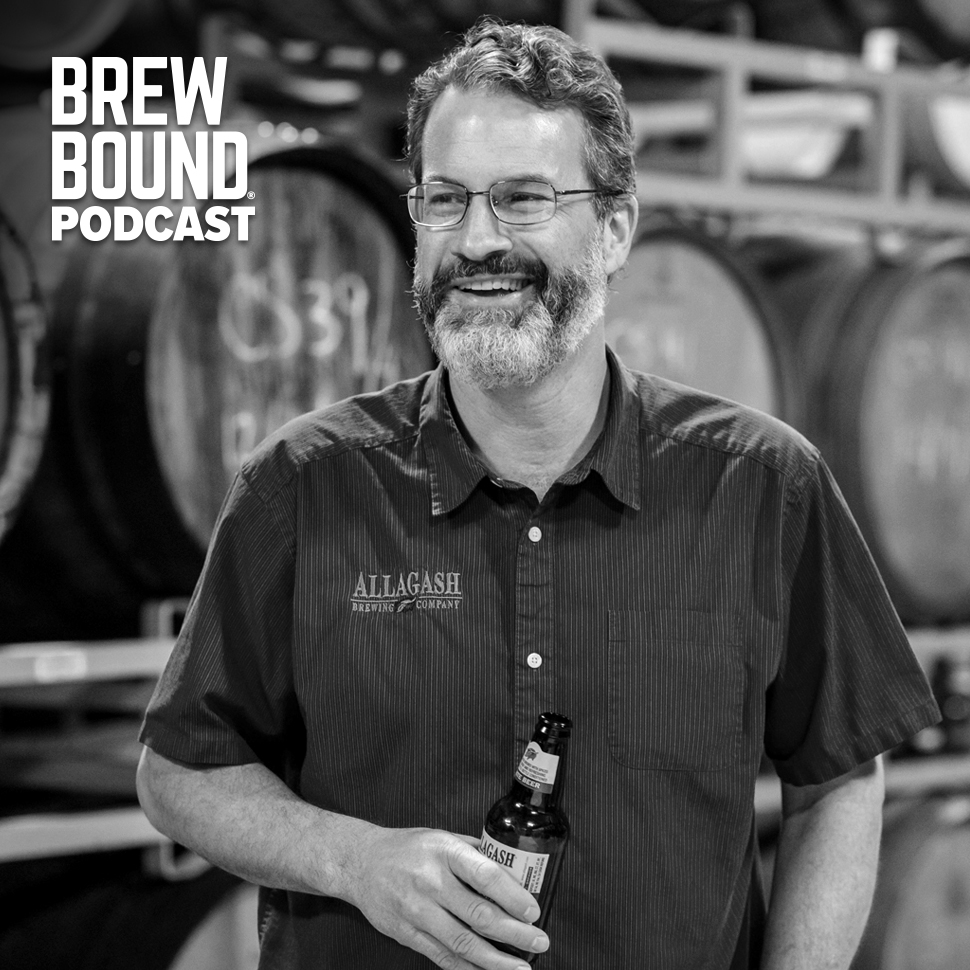
March 28, 20191 hr 11 mins
Brewbound Podcast Episode 29: Rob Tod on Building Brands and Introducing Cans
In a beer industry littered with hazy IPAs, one cloudy brew stands above the rest.
Allagash White, the ubiquitous Belgian-style witbier made in Maine and sold in just 17 states, is the eighth-largest craft brand, sold on draft, in the entire U.S., according to research firm Nielsen.
“It’s a very, very strong brand on-premise, but we are probably selling 75 percent of our beer on-premise,” Allagash Brewing founder Rob Tod told Brewbound editors Chris Furnari and Justin Kendall during episode 29 of the Brewbound Podcast.
According to Tod, Allagash White is one of only two top-10 craft beer brands growing sales on-premise.
But the brand’s impressive on-premise presence hasn’t necessarily led to strong sales at grocery and liquor stores, as only a quarter of the Allagash White business occurs off-premise.
That’s likely to change, thanks to the introduction of canned packages, which rolled out in February.
“I think people kind of view us as a special occasion beer on the off-sale,” Tod said. “We want to use cans to bring Allagash White to really every occasion on the off-sale.”
In episode 29 of the Brewbound Podcast, Furnari and Kendall chat with Tod about how the addition of canned packages will transform the Allagash business in the years to come, how the company is repositioning itself off-premise, why it invests disproportionately in quality-control measures and how it approaches innovation without chasing trends.
Listen to episode 29 of the Brewbound Podcast above, as well as on iTunes, Google Play, Stitcher, Spotify, and Soundcloud. New episodes of the Brewbound Podcast, which is co-hosted by Furnari and Kendall, are published every Thursday.
Episode 30, featuring NBWA chief economist Lester Jones, will be released on Thursday, April 4.
For questions, comments or suggestions, please email [email protected].
Show Notes:
0:00 – 16:45: Chris Furnari and Justin Kendall introduce episode 29, discuss recent people moves and provide an update on #Corntroversy
16:45 – 1:00:10 Furnari and Kendall interview Rob Tod
1:00:10 – 1:11:35: Furnari and Kendall share their takeaways from the interview
Listen
February 7, 20191 hr 12 mins
Brewbound Podcast Episode 22: Russian River’s Natalie Cilurzo on Managing Debt and Buying Out Investors
In 1997, the late rapper Notorious B.I.G. posthumously released the chart-topping hit “Mo’ Money, Mo’ Problems.”
Biggie’s maxim — one that speaks to the issues that can arise as profits grow — comes to mind when Russian River Brewing co-founder Natalie Cilurzo explains the difficulty of convincing early-stage investors to sell their stakes in one the world’s most highly acclaimed beer companies.
“The bigger your company gets, and the more successful it becomes, and the better your cash flows, and the bigger your profits, and the bigger your dividends — the less likely you are going to have investors that want to sell out,” she said.
According to Cilurzo, who co-owns the brewery with husband Vinnie Cilurzo, Russian River Brewing bought most of the company’s early investors out between 2012 and 2014. At that time, craft beer sales were growing double-digits and startups were flooding the market trying to get a piece of the action.
“We ended up having to pay a lot of money to successfully make them whole and buy everybody out,” she said, noting that conversations were “difficult.”
In order to reclaim all of their interest in Russian River, the Cilurzos’ went to the bank and put up their “life and limb” as collateral.
“We didn’t own land, and so you don’t have really valuable property,” she said. “All you have are all of your assets tied up in your business.”
In episode 22 of the Brewbound Podcast, Cilurzo sits down for a wide-ranging conversation that examines the process of managing debt, buying out investors, building a $50 million brewery, exploring industry trends and more.
Also in this episode: Brewbound editors Chris Furnari and Justin Kendall discuss Anheuser-Busch’s Super Bowl LIII commercials and Sierra Nevada’s first-ever acquisition. They also give their Warm Shelf/Cold Box nominations of the week, and play a game of “Did Andy Crouch Tweet That?”
Listen to episode 22 of the Brewbound Podcast above, as well as on iTunes, Google Play, Stitcher, Spotify, and Soundcloud. New episodes of the Brewbound Podcast, which is co-hosted by Furnari and Kendall, are published every Thursday.
Episode 23, featuring Beer Advocate founders Jason and Todd Alström, will be released on Thursday, February 14. For questions, comments or suggestions, please email [email protected].
Listen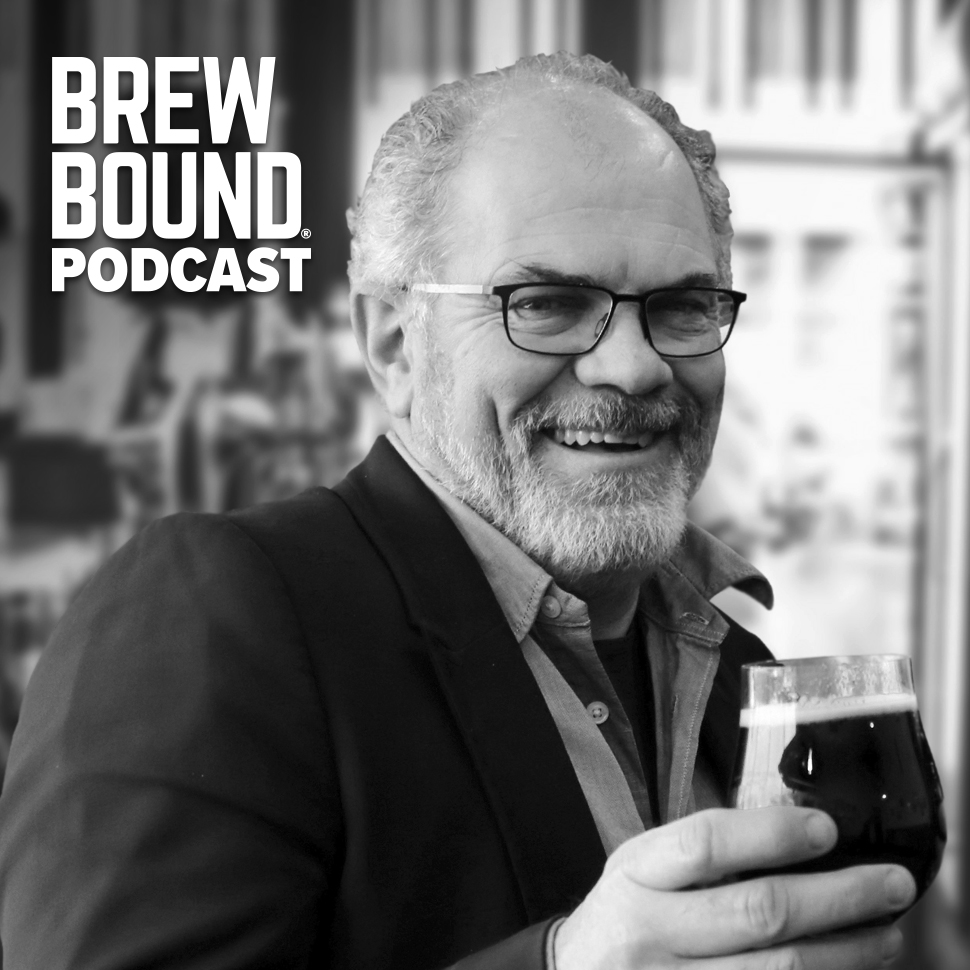
January 31, 20191 hr 2 mins
Brewbound Podcast Episode 21: Fergal Murray on Building Iconic Brands and US Brewing Trends
Fergal Murray spent 31 years with Diageo Ireland, as both a Guinness master brewer and a global brand ambassador. During that time, he poured perfect pints of the iconic Irish Dry Stout for former President Barack Obama, Queen Elizabeth II, Jimmy Fallon, and Tom Cruise, among many other international dignitaries and celebrities.
But his brewing industry expertise stretches far beyond the draft handle.
Over the course of his more-than-three-decades career with Diageo, Murray worked alongside the global marketing and sales teams to help drive awareness of the Guinness brand, and to educate wholesalers and retailers across the world.
These days, Murray is consulting for small breweries and distilleries across the world, most notably with Wachusett Brewing in Westminster, Massachusetts.
On a recent trip to the U.S., Murray stopped by the Brewbound offices to chat about building brands on-premise, the emerging non-alcoholic beer trend, and the tug of war between the desire to satiate consumer demand for innovative products with the need to hone and perfect core recipes.
“Every high-performance something or other comes out with something new with an improvement,” he said. “Brewer — tell me what you’ve done to make your beer better.”
In episode 21 of the Brewbound Podcast, Murray discusses the changes to the American beer scene that he’s witnessed during his long career in beer, his latest collaboration with Wachusett and innovations that could drive future category growth.
Also in this episode: Brewbound editors Chris Furnari and Justin Kendall share their takeaways from the 16th Annual Beer Business Daily Summit in San Diego.
Listen to episode 21 of the Brewbound Podcast above, as well as on iTunes, Google Play, Stitcher, Spotify, and Soundcloud. New episodes of the Brewbound Podcast, which is co-hosted by Furnari and Kendall, are published every Thursday.
Episode 22, featuring Russian River Brewing co-owner Natalie Cilurzo, will be released on Thursday, February 7.
For questions, comments or suggestions, please email [email protected].
Listen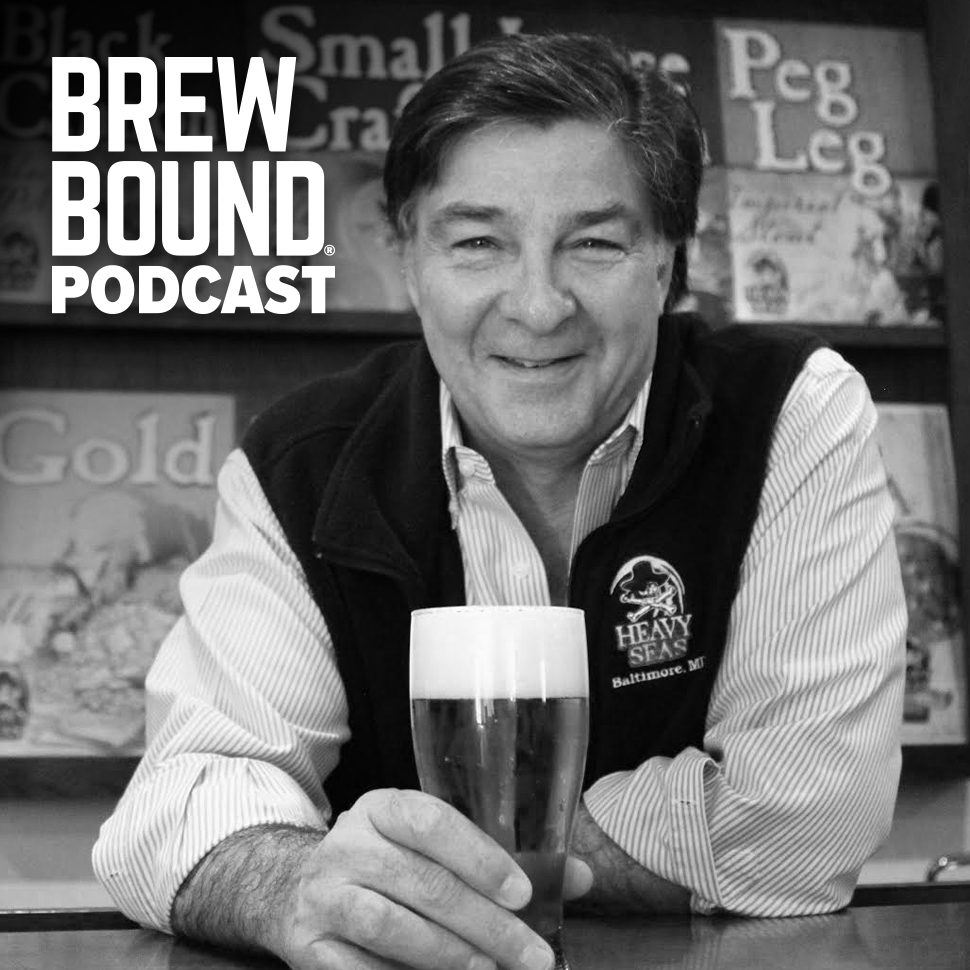
November 22, 201840 mins
Brewbound Podcast Episode Episode 11: Hugh Sisson on Craft Beer’s Forthcoming ‘Market Correction’
In episode 11 of the Brewbound Podcast, editor Chris Furnari interviews Hugh Sisson, the founder and managing partner of Heavy Seas Beer in Baltimore, Maryland.
In the mid-’80s, Sisson successfully lobbied the Maryland General Assembly to pass legislation required to open a brewpub in Maryland, and he opened the state’s first pub brewery, called Sisson’s.
In 1994, he left Sisson’s to launch Clipper City Brewing Company, which is more widely known as Heavy Seas. Today, his company’s products are sold in 20 states as well as Washington, D.C.
During the interview, Hugh discusses how his company is evolving amid increasing competition within the craft beer segment, and he explains the headwinds facing regional breweries. He also talks about trends that he’s paying close attention to and shares his vision of how the beer category will continue to mature in the coming years.
Listen to episode 11 of the Brewbound Podcast above, as well as on iTunes. The episode is also available on Google Play, Stitcher, Spotify, and Soundcloud. New episodes of the Brewbound Podcast, which is co-hosted by Furnari and Kendall, are published every Thursday.
Episode 11, featuring The Brewer’s Table Jake Maddux, will be released on Thursday, November 28.
For questions, comments or suggestions, please email [email protected].
Listen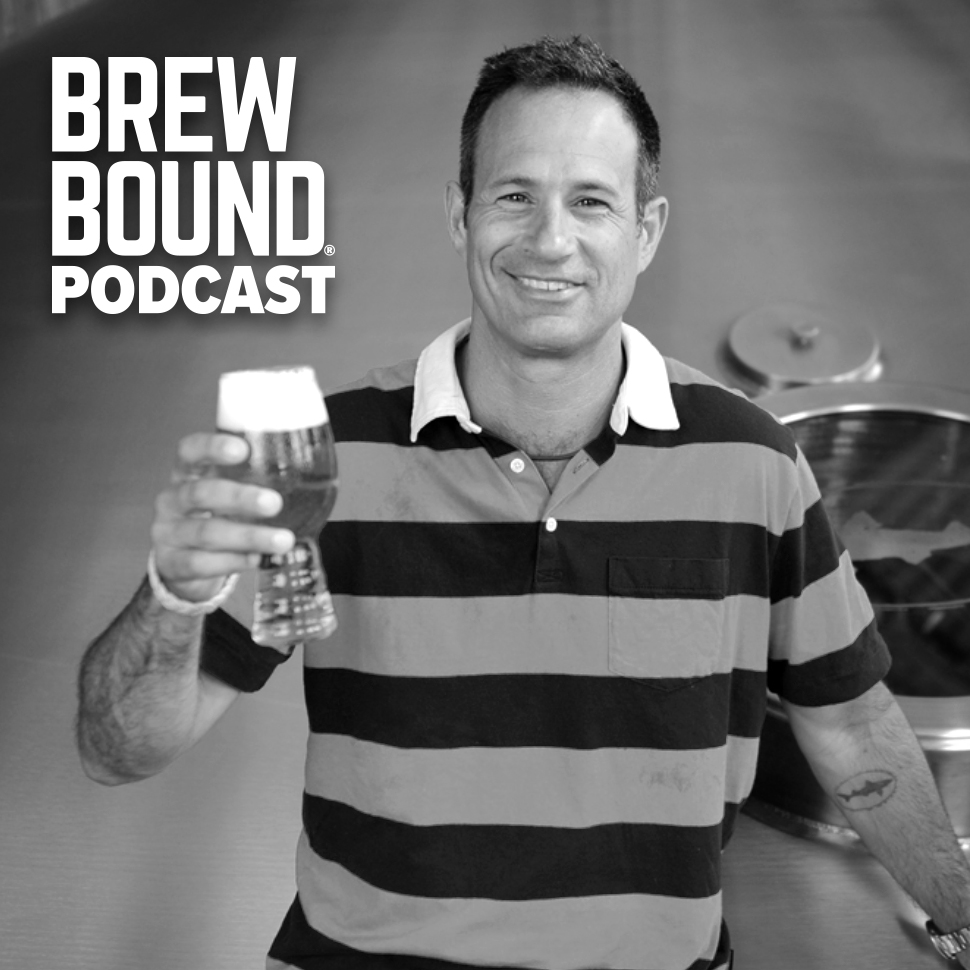
October 18, 201855 mins
Brewbound Podcast Episode 006: Sam Calagione on Craft Beer’s ‘Smiling Jaws of Death’
Delaware’s Dogfish Head Craft Brewery is bucking industry trends, growing off-premise volume sales at a double-digit clip, while many other similarly sized craft beer companies struggle to stay out of the red.
So how is Dogfish doing it?
If you asked co-founder and CEO Sam Calagione, he’d tell you that a relentless focus on producing high-quality and well-differentiated beers has helped his company avoid being chewed up by what he calls the “smiling jaws of death.”
“There is the lower jaw, that has tons and tons of tiny teeth – which are the local and hyperlocal breweries, mostly oriented toward the tasting room,” he said. “And then the top level, there are the big ass teeth. The volume brands that are either indie brands like Dogfish, and Sam Adams, and Sierra, and Yuengling, and Bell’s. And then affiliate brands, that are really owned by global conglomerates, but market themselves like they are American indie craft breweries.”
Calagione believes that, as the industry approaches 7,000 craft breweries, successful beer companies will need to either remain small and hyperlocal or be forced to invest large amounts of money in an effort to “break through the noise of the top 50 brands,” and “go up the ladder of your distributors.”
“There are very little opportunities in-between,” he told Brewbound. “There are breweries that are over their skis in terms of investment in their equipment, but also over their skis in terms of five, 10, 20-state distribution networks, but they don’t have the resources to support a broad geographic distribution base.”
In episode six of the Brewbound Podcast, editor Chris Furnari and Calagione discuss how Dogfish Head is “navigating the noise” of 7,000 small breweries, how other craft breweries can grow without taking on too much debt, and how Dogfish Head has financed its own expansion in recent years.
Throughout the conversation, conducted during Dogfish Head’s annual distributor meeting last month in Baltimore, Calagione explains the benefits of remaining a small, taproom-focused brewery in today’s competitive marketplace, why he is bullish on the Brewers Association’s independent craft brewer seal, and how he envisions the marketplace evolving in the coming years.
Also in this episode: Furnari and Brewbound assistant editor Justin Kendall share the latest news and run down segments.
Listen to episode six of the Brewbound Podcast above, as well as on iTunes. The episode is also available on Google Play, Stitcher, Spotify, and Soundcloud. New episodes of the Brewbound Podcast, which is co-hosted by Furnari and Kendall, are published every Thursday.
Episode seven, featuring Hops & Grain founder Josh Hare, will be released on Thursday, October 25.
For questions, comments or suggestions, please email [email protected].
Listen