
Brewbound Podcast
The Brewbound Podcast is an extension of Brewbound's leading B2B beer industry reporting, featuring interviews with beer industry executives and entrepreneurs, along with highlights and commentary from the weekly news. New episodes are released every week. Subscribe on Apple Podcasts or your streaming platform of choice.
Podcasts

January 3, 20191 hr 10 mins
Brewbound Podcast Episode 17: Brewery Ommegang President on Brut IPAs and Life After Game of Thrones
Brewery Ommegang, owned by Belgium’s Duvel Moortgat, was searching for a way to compete in an overcrowded IPA segment when it stumbled across the emerging Brut IPA trend.
Marked by Champagne-like characteristics, Brut IPAs combine hoppy flavors and aromas with the more effervescent mouthfeel that many Belgian beers exhibit.
“Could we find a way to fuse the flavors of American hop culture and Belgian brewing and the highly attenuated, effervescent kind of brew styles that Duvel, our parent company, and we are most known for,” Brewery Ommegang president Doug Campbell told the Brewbound Podcast in November.
The Cooperstown, New York-based craft brewery didn’t hatch the idea of a sparkling IPA. The style originated in San Francisco, at Social Kitchen & Brewery, where brewmaster Kim Sturdavant used an enzyme called amyloglucosidase to create a dry IPA with no residual sugar.
Months later, after a handful of West Coast breweries experimented with the new style, Brewery Ommegang began brewing test batches using the same amylase enzyme.
According to Campbell, a “pleasant side effect” of using the enzyme is that Ommegang’s take on the new style, which checks in at 6.3 percent ABV, only has 140 calories per 12 ounces.
“That was not our intent by any means,” he said. “I do think it is in fact what we set out to do. If you look at it, it is crystal clear, bubbly and effervescent. If you did smash together Hennepin or more appropriately Duvel and an IPA, I would think that what is in your hand would be pretty close to it.”
Fewer calories notwithstanding, Campbell believes that the new style of beer will become “a bigger component of the marketplace,” because Ommegang specializes in making more effervescent beers.
“We didn’t set out to conform to a trend,” he said. “I am happy, I suppose, that the trend is a thing, I suppose that helps us sell the beer in.”
In episode 17 of the Brewbound Podcast, Campbell discusses the Brut IPA trend, how Brewery Ommegang plans to help build awareness around the new style, and the challenges of building an entirely new product category. He also discusses strategies for executing successful partnerships – such as the one Ommegang had with HBO and the Game of Thrones series – as well as a consumer shift toward prioritizing proximity over quality when making purchasing decisions.
Also in this episode: Brewbound editors Chris Furnari and Justin Kendall share Brewbound’s most-read stories in 2018, and the final news clips that crossed the Brewbound desks before the end of the year. Furnari and Kendall also introduce two new segments, and share their 2019 New Year’s resolutions.
Listen to episode 17 of the Brewbound Podcast above, as well as on iTunes, Google Play, Stitcher, Spotify, and Soundcloud. New episodes of the Brewbound Podcast, which is co-hosted by Furnari and Kendall, are published every Thursday.
Episode 17, featuring Artisanal Brewers Collective founder Tony Yanow, who also co-founded Golden Road Brewing, will be released on Thursday, January 10.
For questions, comments or suggestions, please email [email protected].
Listen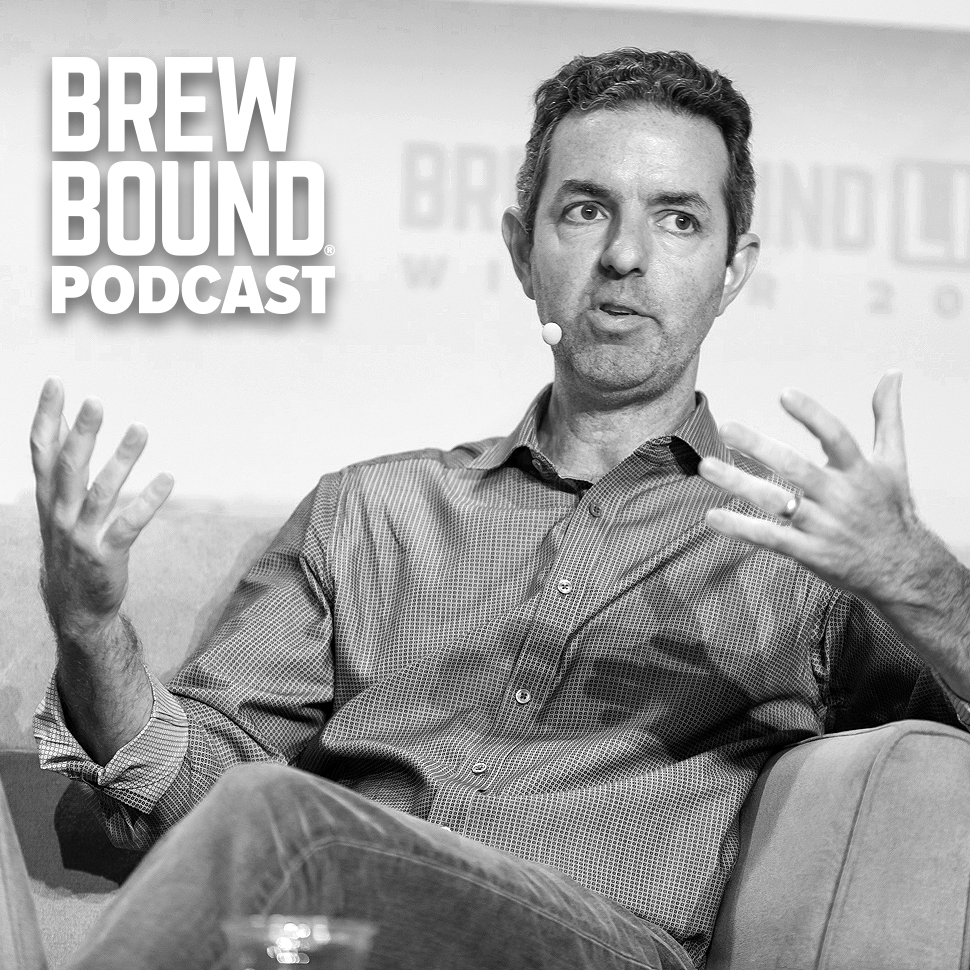
December 27, 20181 hr
Brewbound Podcast Episode 16: Eric Ottaway on the Global Craft Landscape and Product Innovation
Speaking to hundreds of attendees who traveled to Santa Monica for the Brewbound Live business conference in November, Brooklyn Brewery CEO Eric Ottaway addressed a number of top-of-mind issues that beer industry professionals are keeping a close eye on as they prepare to flip their calendars to 2019.
Chief among them, however, was increasing consumer interest in functional or “better-for-you” products such as low- or no-alcohol beer and kombucha.
“I think that opportunity is enormous,” he said.
In 2016, Brooklyn Brewery sold a minority stake to Kirin Brewery. The Japanese beer producer’s parent company, Kirin Holdings, already has “a number of investments in the health and wellness space,” Ottaway noted, and Brooklyn is “having some real interesting conversations” about how the broader consumer trend toward healthier lifestyles will impact beer.
“The consumer is looking for ways to improve themselves, ways to improve their health and ways to live better, and I think that space is virtually unlimited,” he said.
Ottaway believes that more beer companies need to “start thinking bigger,” and look beyond beer as a means of staying competitive.
“If you look at some of the more successful companies that operate in the brewing space, they are actually multi-beverage, multi-segment, multi-brand companies,” he said, pointing to Boston Beer Company, which makes alcoholic tea and seltzer products, as well as hard cider, as an example.
Ottaway’s comments at Brewbound Live came just days before Brooklyn Brewery launched its first alcohol-free beer, Special Effects, in Sweden.
In episode 16 of the Brewbound Podcast, Brooklyn Brewery CEO Eric Ottaway discusses the growing consumer interest in low- and no-alcohol products, the overall state of the beer business, his company’s global partnership strategy and the shrinking international opportunities for U.S. craft breweries.
Also in this episode: Brewbound editors Chris Furnari and Justin Kendall discuss the latest news, including information about Anheuser-Busch InBev’s recent partnership with Canadian cannabis company Tilray, layoffs at Oregon’s Deschutes Brewery, the Brewers Association’s “craft brewer” definition change and ongoing legal disputes for the Craft Beer Cellar retail franchise.
Listen to episode 16 of the Brewbound Podcast above, as well as on iTunes. The episode is also available on Google Play, Stitcher, Spotify, and Soundcloud. New episodes of the Brewbound Podcast, which is co-hosted by Furnari and Kendall, are published every Thursday.
Episode 17, featuring Brewery Ommegang president Doug Campbell, will be released on Thursday, January 3, 2019.
For questions, comments or suggestions, please email [email protected].
Listen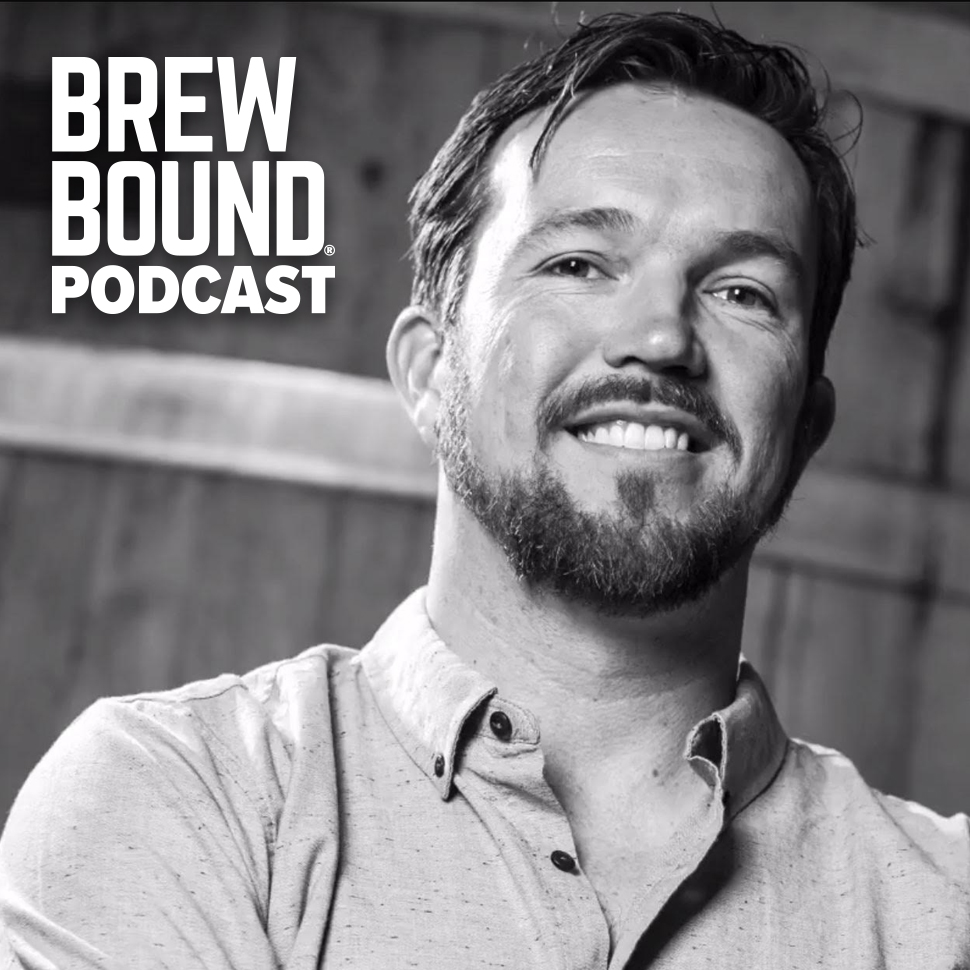
December 20, 201854 mins
Brewbound Podcast Episode 15: Jim Woods on Pivots and Perseverance
Jim Woods, the founder of Bay Area-based Woods Beer Co., opened his first brewpub location in San Francisco’s Mission District in 2012.
But in the six years leading up to the opening of what he calls the “Woods Cervecería,” Woods had been selling a yerba mate-infused IPA called MateVeza, as well as two other offerings, that were brewed under contract and distributed to a handful of Western states.
That exercise – brewing bigger batches of beer, partnering with distributors in non-local markets, and attempting to sell consumers on a relatively unknown brand – proved to be both costly and inefficient.
“I was doing a lot of ride-alongs and growing the business, but I wasn’t seeing the kind of growth that I wanted to,” Woods said.
“I just didn’t feel like I was making an impact or doing anything for my brand,” he added, noting the daily visits to retail accounts such as Whole Foods.
So Woods did what any smart entrepreneur would: He pivoted.
“I wasn’t seeing the scalability and I wasn’t breaking into the awareness of the customer that I wanted to, solely through being on the shelves,” he said.
In 2012, Woods — who now oversees five locations throughout San Francisco and Oakland – began focusing his resources on a taproom-focused business model that enabled him to have a “more tangible relationship with the customer.”
“Having a mecca, a brick-and-mortar where people can, you know, slip on a puddle and fall into the arms of their future wife,” he said.
In episode 15 of the Brewbound Podcast, Woods discusses his company’s shift from a distribution-focused business model to a retail-minded operation. He also talks about the difficulty of trying to build a new product segment – in his case yerba mate-infused beer – and the challenges small breweries face now that thousands of competitors have flooded the space.
Also in this episode: Brewbound editors Chris Furnari and Justin Kendall share the latest news, including information about a new co-packing facility in New Hampshire, details about equipment manufacturer DME’s receivership, and an update on Drizly’s latest round of funding.
Listen to episode 15 of the Brewbound Podcast above, as well as on iTunes. The episode is also available on Google Play, Stitcher, Spotify, and Soundcloud. New episodes of the Brewbound Podcast, which is co-hosted by Furnari and Kendall, are published every Thursday.
Episode 16, featuring Brooklyn Brewery CEO Eric Ottaway, will be released on Thursday, December 27.
For questions, comments or suggestions, please email [email protected].
Listen
December 13, 201856 mins
Brewbound Podcast Episode 14: Sizing Up Hard Seltzer with the Founders of Briggs
As an increasing number of consumers shift toward more “functional’ or “better-for-you” drinks with fewer calories, small beer companies are beginning to look toward an emerging hard seltzer category as a potential driver of future growth.
In the last two weeks, four craft breweries – Oskar Blues, Perrin Brewing, NoDa Brewing, and Platform Beer Company – have introduced or announced plans to bring alcoholic seltzers to the market.
Although the category is dominated by larger brands such as White Claw, made by Mark Anthony Brands, or Truly Spiked & Sparkling, which is produced by Boston Beer Company, a growing number of smaller companies are now getting in on the action.
One of those companies is Briggs Hard Seltzer, a Boston-area startup that is exclusively focused on the production of hard seltzer made with 100 percent real fruit.
Two longtime friends, Michael Kurson and Neil Quigley, founded the company in 2016. The duo launched their first product, a cranberry-flavored hard seltzer, in 2017.
The company has since rebranded and reformulated its original product and added two additional flavors — grapefruit and pineapple – to its portfolio.
Earlier this year, Kurson and Quigley stopped by the Brewbound offices to sample their products and share their entrepreneurial story with our Brewbound Podcast listeners.
In episode 14, Kurson and Quigley discuss the emerging alcoholic seltzer category, and the opportunities they see for a higher-end brand to gain market share.
Also in this episode: Brewbound editors Chris Furnari and Justin Kendall share the latest news, including details about layoffs at Anheuser-Busch, another update on the Trillium Brewing controversy and new data from the Brewers Association. Furnari and Kendall also celebrate the return of segments, including the debut of “Seriously, WTF?”
Listen to episode 14 of the Brewbound Podcast above, as well as on iTunes. The episode is also available on Google Play, Stitcher, Spotify, and Soundcloud. New episodes of the Brewbound Podcast, which is co-hosted by Furnari and Kendall, are published every Thursday.
Episode 15, featuring Woods Beer Company founder Jim Woods, will be released on Thursday, December 20.
For questions, comments or suggestions, please email [email protected].
Listen
December 6, 201845 mins
Brewbound Podcast Episode 13: Dan Kopman on Three-Tier Challenges and his 35-Year Career in Beer
Dan Kopman got his start in the brewing industry in 1983, as a trainee brewer at Young’s Brewery in London. Eight years later, he opened The Saint Louis Brewery, makers of Schlafly beer, with co-founder Tom Schlafly.
In the 35 years that Kopman has been actively involved in the beer business, he’s witnessed a profound amount of change.
“I’ve realized, only recently, that anything goes,” he said during a Brewbound Podcast interview recorded at the Beer Institute’s annual meeting in June.
“It’s exciting because now I’ve realized that we don’t have to live within that straight jacket,” he added, referring to the ability to innovate with non-traditional brewing ingredients.
In early 2012, Kopman and Schlafly sold a 60 percent stake in The Saint Louis Brewery to private equity firm Sage Capital. Kopman departed the company in late 2016, and just a few months later he was recruited to become the CEO of Heavy Seas Beer in Baltimore, Maryland.
At Heavy Seas, he’s been tasked with helping breathe new life into a 23-year-old brand that is struggling to compete with thousands of new startups.
“The opinion leaders, thought leaders in our industry have written us off,” he said. “We are done. We are toast. We might as well shut the doors. But that doesn’t have to happen at all. There is no reason why we can’t take the brand that we have and breathe life into that and make that exciting for consumers again and make the place where we go to work everyday vibrant and interesting and dynamic.”
In episode 13 of the Brewbound Podcast, Kopman discusses his experience launching and building Schlafly Beer in the early days of craft, the amount of change that’s occurred in the industry since the early 1990s – and the impact that’s had on the three-tier system — and he also shares lessons for other beer entrepreneurs.
Also in this episode: Brewbound editor Chris Furnari shares the latest news items, including information about a new hard seltzer product from Oskar Blues, an update on the Pabst-MillerCoors contract brewing lawsuit, and details about Boston-area craft brewery Trillium Brewing, whose labor practices and brewing methods are under scrutiny after accusations were lodged by a self-described former employee in an online beer forum.
Listen to episode 13 of the Brewbound Podcast above, as well as on iTunes. The episode is also available on Google Play, Stitcher, Spotify, and Soundcloud. New episodes of the Brewbound Podcast, which is co-hosted by Furnari and Brewbound editor Justin Kendall, are published every Thursday.
Episode 14, featuring the founders of Briggs Hard Seltzer, will be released on Thursday, December 13.
For questions, comments or suggestions, please email [email protected].
Listen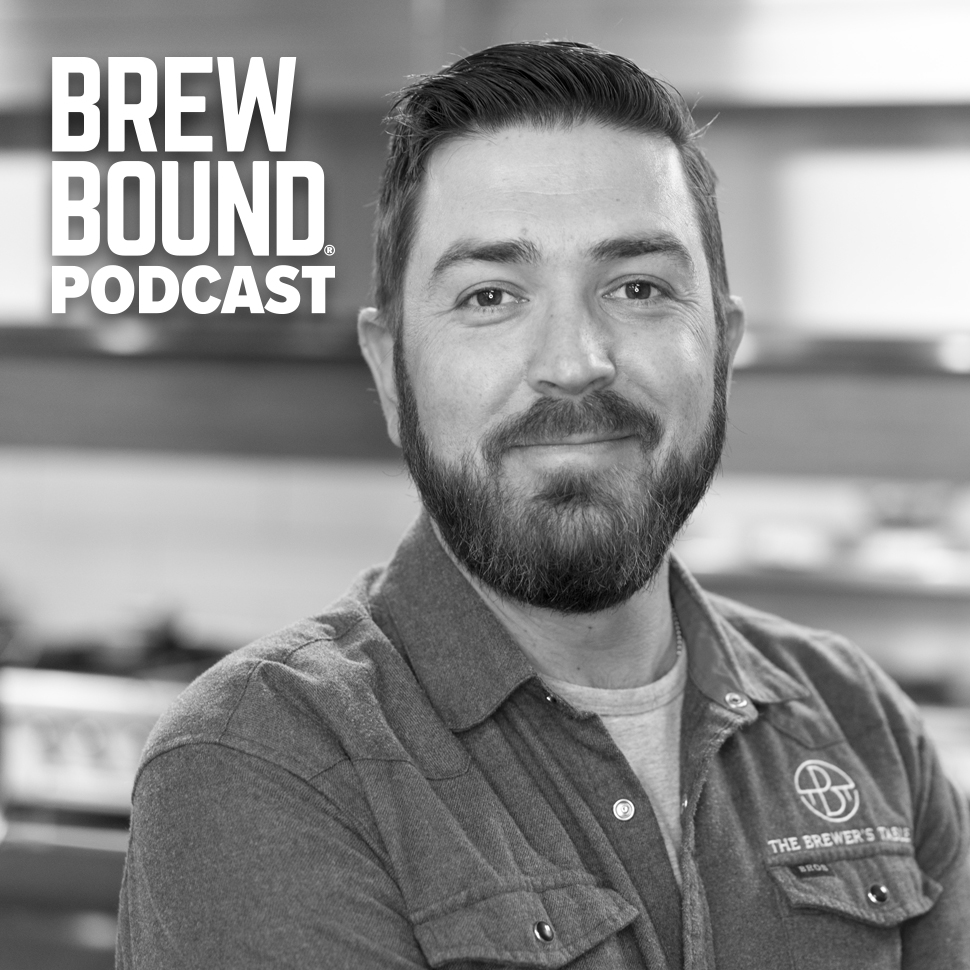
November 29, 201840 mins
Brewbound Podcast Episode 12: Jake Maddux on His Fortuitous Foray Into Beer and James Beard Award Aspirations
Jake Maddux, the founder of The Brewer’s Table in Austin, Texas, has one of the greatest stories about getting into the brewing business.
As a 25-year-old former U.S. Marine, Maddux moved to the San Francisco Bay Area to work at a winery. He found a roommate on Craigslist and later discovered that her uncle was Fritz Maytag, the former owner of Anchor Brewing Company.
“My jaw dropped,” he said. “I was sitting there on the couch after work. I was a little drunk. I was a little stoned, and all of a sudden I’m passed a cell phone and Fritz Maytag on the other end of it.”
So, Maddux asked him for a job.
The gig with Anchor eventually led to a stint with New Belgium before Maddux moved to Austin, where he helped open a small brewery called Thirsty Planet Brewing Company, and later The Brewer’s Table.
In episode 12 of the Brewbound Podcast, editor Chris Furnari interviews Maddux, who discusses how The Brewer’s’ Table is redefining food and beer pairings. He also talks about his goals for the business and why he is hell-bent on winning a James Beard Award.
Listen to episode 12 of the Brewbound Podcast above, as well as on iTunes. The episode is also available on Google Play, Stitcher, Spotify, and Soundcloud. New episodes of the Brewbound Podcast, which is co-hosted by Furnari and Brewbound editor Justin Kendall, are published every Thursday.
Episode 13 will be released on Thursday, December 6.
For questions, comments or suggestions, please email [email protected].
Listen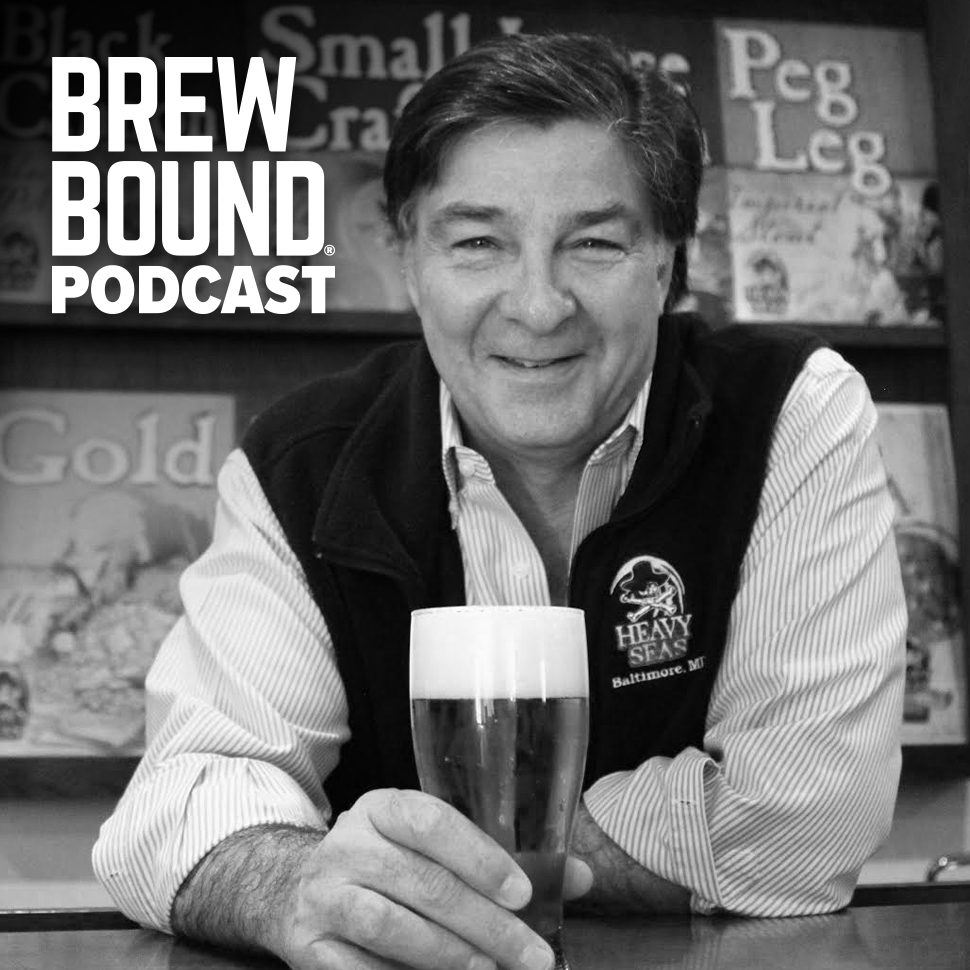
November 22, 201840 mins
Brewbound Podcast Episode Episode 11: Hugh Sisson on Craft Beer’s Forthcoming ‘Market Correction’
In episode 11 of the Brewbound Podcast, editor Chris Furnari interviews Hugh Sisson, the founder and managing partner of Heavy Seas Beer in Baltimore, Maryland.
In the mid-’80s, Sisson successfully lobbied the Maryland General Assembly to pass legislation required to open a brewpub in Maryland, and he opened the state’s first pub brewery, called Sisson’s.
In 1994, he left Sisson’s to launch Clipper City Brewing Company, which is more widely known as Heavy Seas. Today, his company’s products are sold in 20 states as well as Washington, D.C.
During the interview, Hugh discusses how his company is evolving amid increasing competition within the craft beer segment, and he explains the headwinds facing regional breweries. He also talks about trends that he’s paying close attention to and shares his vision of how the beer category will continue to mature in the coming years.
Listen to episode 11 of the Brewbound Podcast above, as well as on iTunes. The episode is also available on Google Play, Stitcher, Spotify, and Soundcloud. New episodes of the Brewbound Podcast, which is co-hosted by Furnari and Kendall, are published every Thursday.
Episode 11, featuring The Brewer’s Table Jake Maddux, will be released on Thursday, November 28.
For questions, comments or suggestions, please email [email protected].
Listen