[00:00:00] Jessica Infante: Sazerac, the Super Bowl, Fat Tire. There's no such thing as a slow news day in the total Beer Industry. Next on the Brewbound Podcast. Hello and welcome to the Brewbound Podcast, episode 99. My name is Justin Kendall and I am the editor of Brewbound and I am joined by Brewbound managing editor, Jessica Infante. What's up, Jess?
[00:00:31] Sarah Bettman: Hey, nothing. How are you?
[00:00:33] Jessica Infante: I'm doing great. And also joining us is Zoe Licata, Brewbound reporter extraordinaire. What's up, Zoe?
[00:00:41] Brewbound Podcast: Hello. How's it going?
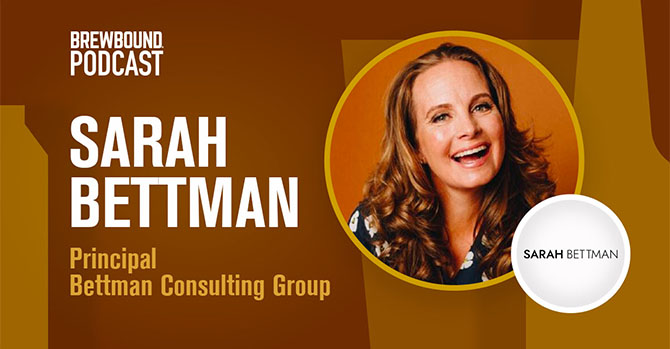
[00:00:43] Jessica Infante: It's going. This week is the Jess and Zoe show, as you both will be interviewing Sarah Bettman of the Bettman Consulting Group, which helps companies recognize privileges in company culture and identify room for improvement within diversity, equity, and inclusion. Sarah was one of the featured speakers, I think, at the Women in Beer Conference that you attended, Zoe, and I heard nothing but good things about her talk.
[00:01:11] Brewbound Podcast: Yeah, yeah. What is usually a very big and complicated topic, Sarah addressed it in a very manageable way that I think got everyone in the room pretty much, which was a predominantly female and also predominantly white room, very motivated to check your own privileges, but make some changes at your own workplaces. And she's just a good human. And we had a really great chat with her. So I'm excited for everyone to hear it.
[00:01:39] Jessica Infante: So stay tuned for that. And as I teased at the top of the show, there's no such thing as a slow news day here. And we'll start with Sazerac suing RNDC. This is the other shoe dropping as just earlier this month, I believe it was, Sazerac announced changes to its distribution network, heading to several beer distributors, including the Reyes Beer Division. And Jess, you were on the story on Monday. Why are they suing him?
[00:02:11] Sarah Bettman: They are suing them for a few reasons, 38.6 million of them to be exact. Sazerac has filed this lawsuit against RNDC for unpaid invoices chiefly, their alleging breach of contract. But it sounds like the divorce between these two started a couple of years ago and it's pretty messy. Back in 2001 in the lawsuit, which, you know, Sazerac's lawyers have prepared themselves. And I did reach out to RNDC who told me they don't comment on ongoing litigation, which is standard. But in this lawsuit from Sazerac's lawyers, they claim that Sazerac had been asking RNDC to help promote its products a little bit better than they had been and incentivize their sales force to sell Sazerac's offerings. Now, Sazerac's portfolio is huge. Their biggest seller is Fireball, Fireball cinnamon whiskey, but they also make Buffalo Trace bourbon, Corazon tequila, the 99 brand of things. which, if you are of a certain age and have dabbled in the drinking of alcohol, have probably had a tangle with once or twice. For me, it's 99 bananas. We're no longer friends. They also make Pappy Van Winkle, which is a big deal, highly sought after, very expensive, very rare, and that will come into play in a little bit. But basically, Sazerac was asking RNDC to sell their products a little bit better than they had been. And they say that because RNDC refused, Sazerac had to invest as much as $100 million of their own money to create a field marketing sales force. They've invested in a whole bunch of new employees to push their products. and things had gotten so bad between the two companies that Sazerac pushed for a new global agreement between them that went into effect in 2021 that would have given RNDC a flat fee per case of every Sazerac product sold plus special bonuses for volume goals on things like Fireball. Another thing that came up in this lawsuit is that Sazerac's accusing RNDC of employing the practice of tie-in sales, which basically means RNDC reps would go to their retail accounts and say, I know you want Pappy Van Winkle, but you can't have it unless you also take, you know, brand X, Y, and Z from our portfolio. And a lot of times these weren't Sazerac products. Now this is illegal. And it's also gotten a lot of buzz lately as the U.S. Department of Treasury Alcohol and Tobacco Tax and Trade Bureau, otherwise known as the TTB, has called it out as something that they're going to scrutinize more than they have been lately. So Sazerac, rightfully concerned about hearing that their products are involved in tie-in sales, because that's a huge no-no. Then, you know, this global agreement goes into effect. RNDC abides by it, Sazerac says, for about two quarters or six months. Then they just basically go back to business as usual and ignore it. Then RNDC terminates Sazerac last summer. That negated the contract. They were operating as a supplier and distributor, but without a contract. And then finally, a few months later, Sazerac terminated RNDC. And we began to find out, you know, last week, the week before, where they were going, which is to beer wholesalers, which is interesting. RNDC, one of the largest wine and spirits wholesalers in the country in almost every single state. So to walk away from a partner like that, I feel like Sazerac probably had to feel like they were at the end of their rope.
[00:05:37] Jessica Infante: If these allegations are true, this sounds like a very toxic relationship.
[00:05:43] Sarah Bettman: Super toxic.
[00:05:44] Jessica Infante: The dollar figure is going to increase because, according to Sazerac, allegedly further unpaid invoices of $48 million will become due following the filing of the complaint.
[00:05:55] Sarah Bettman: Yeah, a lot of money.
[00:05:57] Jessica Infante: And so, yes, these moves to beer distributors really started in August with them moving to Columbia Distributing in Washington state and Eagle Rock in Colorado. And there's just a whole host of states, others. You can read it all at Brewvan.com. But this isn't just about, you know, hitting that convenience channel a little harder. lot more deep-seated issues here than any of us knew about when the story first hit. But now we know more and we're going to know a whole lot more once RNDC files its response.
[00:06:33] Sarah Bettman: Yeah, so stay tuned. Should be an interesting one.
[00:06:36] SPEAKER_??: Yeah.
[00:06:36] Jessica Infante: Also, uh, this week and some news that we knew was coming, but didn't quite know how soon, but how soon is now, uh, Molson Coors, their Superbowl push has begun. They're going to focus on Miller Lite and Coors Lite. And this campaign that they're doing evokes a little bit of the taste great, less filling with great taste and taste refreshing. So maybe they're remixing a little bit there.
[00:07:03] Brewbound Podcast: I've been waiting for the shoe to finally drop and for us to finally start getting in all the Super Bowl news because this is the, as everyone knows, this is the year where Anheuser-Busch has said it's foregoing its exclusivity contract. And so it's kind of fair game for anyone else in Bev-Alk to jump on a national ad spot for the Super Bowl if they want. So Molson Coors has kind of created their own friendly competition for the game, and they're putting together Coors Light and Miller Light to see who will get the spot for the game. And so you can be either Team Miller, which is all about the great taste, their tagline is, the big game hasn't tasted this great in 30 years, or you could be Team Coors, which is all about being refreshing. That was similar tagline, just being, hasn't been this refreshing in 30 years. Molson Coors let their distributors know early this morning that this is their strategy. They're gonna have a full page spread in the New York Times to kick it off, as well as some big billboards and some social media stuff. But we're finally seeing things happening. And this is, I mean, it makes sense from a beer perspective for Molson Coors. These are their top two beer brands in off-premise channels. Moore's Light is number one and Miller Light is number two. So the top two are battling it out. We did also learn the retail strategy is a little bit different than what is happening with the big national spot. They're actually going with five brands that they're highlighting. They're Coors Banquet, Coors Light, Miller Light, Blue Moon, and Busy Hard Seltzer. They're really trying to get after the big, large display game that Bud Light has kind of dominated for a little while. They've called it a $30 million opportunity. And wherever any amount of those brands are available at retailers, whether it's all five or just a handful of them, they're going to be pushing those that started hitting retailers January 9th, just in time for playoff season. So those will be at your stores.
[00:09:14] Jessica Infante: And Molson Coors won't be alone. Heineken 00 and Marvel Studios apparently are joining forces for a big game ad, a Super Bowl ad. I think I can say that legally. They can't. You're allowed to.
[00:09:28] Sarah Bettman: You don't have to call it the Super Bowl.
[00:09:30] Jessica Infante: Yeah. But they've got a 36 second ad for the non-alcoholic beer. So that tells you a little bit about where things are going at this point for Heineken. Heineken 00 is a major priority for them.
[00:09:43] Sarah Bettman: Yeah, and this commercial is something we touched on a little bit last week in our coverage from our buddies at Beer Business Daily's Beer Industry Summit. It's like a cocaine game that they're doing with the new Ant-Man and the Wasp, Quantumania. I feel like I sound like somebody who has seen precisely zero Marvel movies because that is who I am. But yeah, continuation of last week's commercial debut during the college football championship game.
[00:10:12] Jessica Infante: Not even Paul Rudd can bring Jess to a Marvel movie.
[00:10:16] Sarah Bettman: I've seen Wonder Woman. Is that Marvel?
[00:10:18] Jessica Infante: No, it's not.
[00:10:20] Sarah Bettman: No.
[00:10:21] Jessica Infante: Sorry. God.
[00:10:23] Sarah Bettman: Sorry. Sorry. Sorry to everyone. But yeah, what's interesting to me about our friends at Molson Coors is TAC here. Why is Topo Chico not on this point of sale?
[00:10:34] Jessica Infante: It's a great question.
[00:10:35] Sarah Bettman: Right? Great question. Or simply, and maybe they think they don't need the boost.
[00:10:40] Jessica Infante: It's not national yet, right?
[00:10:42] Sarah Bettman: Topo is national. Is it national now? It went national last year.
[00:10:47] Brewbound Podcast: Which is interesting to me because I feel like a big part of the strategy for regional spots last year anyway, was trying to get a more diverse consumer base. And those two brands speak to a more diverse consumer base. So it seems like a bit of a change in strategy a little bit.
[00:11:08] Sarah Bettman: Yeah, interesting. I mean, having displays like that that are branded with like five beers blew my mind a little because that's not really something you see. So good luck to them. Hope it pays off. Are we allowed to say that? I don't know. I'm just being polite here. I don't personally care what really happens.
[00:11:23] Jessica Infante: You don't have a vested interest. I don't. Let's talk about Fat Tire. Rebrand, reformulation, restyling, whatever you want to call it. New Belgium is new you for Fat Tire.
[00:11:37] Sarah Bettman: Fat Tire, a standard bearer of the early craft beer revolution. I was going to say OG, and that's just not a good luck for a nerdy white lady. getting a remake, a makeover, whatever you want to call it. The beer itself has gotten some tweaks. The packaging is completely new. Still the same malt bill. I had a nice conversation with New Belgium's VP of Marketing, Kyle Bradshaw, last week, and he said it's very similar to original Fat Tire, and yet drinks a little bit crisper, is brighter in color, cleaner finish, floral notes on the nose. So that sounds to me like something a few other beers have also gone through. We covered Jim Cook's announcement during GBF last fall that Boston Lager was getting, in their words, remastered, to go through the same stuff, lighter, brighter. I think this is just another example of a classic beer brand. revamping one of its heritage brands in order to appeal to changing drinker preferences. Back in the 80s and early 90s, these beers tasted like nothing else available in the commercial market. And people really liked them, but tastes change and people are really more into things that are, you know, refreshing and light and easy to drink. If, you know, current scan data tells us anything like, you know, how popular Michelob Ultra is and how attractive hard seltzers were. But one of the big changes here to the packaging is a big call out of New Belgium's climate change efforts. They tout that the beer is low impact, high quality, and carbon neutral. The design looks very different from the last iteration with the color blocked red and blue. We've got white cans that have a big blue oval that have Fat Tire ale. notably missing here is the word amber, and I thought that was really interesting. In my interview with Kyle, he did say it still could be considered an amber ale, but also potentially a golden ale. And I looked at the IRI scan data for both Kraft Ambers and Kraft Goldens. And Goldens are like four and a half percent of all Kraft dollars where Ambers are a little under 2%. Obviously these both pale in comparison to IPAs, which are close to 45%. And, you know, in the end of 2019, Fat Tire was New Belgium's bestseller in IRI data. And now it's dropped down to third behind Voodoo Ranger Imperial IPA. and Voodoo Ranger Juice Force. And it just, I don't know, this makes sense to me. They've been riding the IPA train so, so long and so successfully that I think it makes sense to look around your portfolio and see what could use some zhuzhing up. And that was Fat Tire.
[00:14:29] Jessica Infante: Yep, I was just looking at bump Williams consulting data and gold nail was one of the styles that they said was making a comeback, albeit dollars seem to be down about 2% or so a little more than 2%. But ambers were down 9.8%. Exactly.
[00:14:45] Sarah Bettman: Yeah. Now, did you guys receive your packages of Fat Tire 2.0?
[00:14:51] Jessica Infante: I did.
[00:14:53] Sarah Bettman: Have you tried it yet?
[00:14:54] Jessica Infante: Not yet. I got a very big queue at this point that's causing a lot of anxiety with people over the fridge space. So, you know, myself included, it's, it's a little bit overflowing. I have had a lot of non-alcoholic beer, which I will say like story that's going to be on brew bound in the very near future on a Rick's near beer, the non-alcoholic beer from Texas by Josh hair, one of the founders or the founder of hops and grain. If you're looking for another non-alc option to add to your mix, The pills, really good.
[00:15:28] Sarah Bettman: Good to know.
[00:15:29] Jessica Infante: I've got more non-alcoholic beer to drink too.
[00:15:32] Sarah Bettman: Could you use a beer fridge?
[00:15:34] Jessica Infante: Yeah, I absolutely could.
[00:15:36] Brewbound Podcast: I think we all need beer fridges.
[00:15:38] Jessica Infante: Yeah, it would make a lot of people in this home happier. which also, you know, we get a lot of stuff like, and this is a tangent, but another story that you'll see soon on brew bound is we're going to dive into the new dead guy IPA from rogue. I'm going to talk with Dharma Tam about that, but he said, I think Zoe got one too. He sent us a box with dirt in it, and you gotta dig through the dirt to get to a coffin, which included a new can of the dead guy IPA.
[00:16:14] Brewbound Podcast: It was the most Dharma package ever. I was confused at first because I got the box, like the regular package box, and it was a little dirty. And I was like, oh, they must have like, the package people, they must have like a dirty truck or something. Like, this is kind of weird. But to open a box and have literal piles of basically mulch was, oh my God, quite a surprise.
[00:16:42] Jessica Infante: It was a very unpopular package.
[00:16:45] Brewbound Podcast: Yes. My roommates were not super supportive of the dirt box, but the little coffin that fits the can, I will have to add the coffin to my decor somewhere because it's very cute.
[00:16:58] Jessica Infante: Oh, I have it right next to a toy wrestling ring and a Michael Myers action figure.
[00:17:06] Sarah Bettman: Perfect. Is the Undertaker involved in the wrestling situation?
[00:17:09] Jessica Infante: He will be. Yeah, I have just the one to go next to it.
[00:17:13] Sarah Bettman: Guys, not to brag, but I did not get the dead guy package of dirt. And I am thrilled to pieces about that because
[00:17:21] Jessica Infante: Ryan is thrilled to pieces about that.
[00:17:24] Sarah Bettman: My husband is the world's neatest person. You know, he's he's come down a couple notches in the 12 years that we've been 12, 10, 10 years that we've been living together. But yeah, no, like I think he would break out in hives at the idea of me carrying a box full of dirt upstairs to our third floor condo. So thank you, Dharma, for sparing me. I really appreciate that. Yeah. But I do love dead guy.
[00:17:50] Jessica Infante: So while we're on the craft beer front, the Brewers Association is increasing member Jess and Justin, you and I took this story and you broke down the increase in price here. And I went clear down a rabbit hole of what dues mean to the Brewers Association, which is their second highest source of revenue. But that source of revenue is down, I think, more than $600,000 over the last five years. They peaked in 2019 with membership dues of more than $5 million. But that was the peak. And when you Rely on that and events, which is their number one source of revenue. And they discontinued saver as an event. There's no more saver, so no money there.
[00:18:41] Sarah Bettman: All right, P. Yep. Needs its own box of dirt.
[00:18:44] Jessica Infante: Yeah. You got to make up that somewhere. And I guess, you know, the members, which they haven't increased in 18 years, they said.
[00:18:52] Sarah Bettman: Yeah. I mean, the increase in dues rates seems pretty reasonable to me. And these are tiered by how many volumes you produce every year. If you're under 500 barrels, your dues are going up 30 bucks. Same if you produce between 501 and 2,500 barrels. Those rates are going to go up to 325 a year. But then larger breweries than that have a flat rate and then they also pay a per barrel rate. So the flat rate for breweries making between 60,000 and 150,000 barrels isn't going to increase to $605. But yeah, for smaller brewers, your dues are only going up 30 bucks a year. If you're larger, it's going to be a little bit more than that. But if you want to get locked in at the 2022 rates, you can pay in full by February 1st. And the BA actually rolled this out in November, but we missed it. And I didn't see many other trades cover it as well. So glad we were able to call that out before this happened.
[00:19:51] Jessica Infante: Yeah, and just get a better sense of what it means to them. One last craft note before we get to our last bit of news, which is a lot of news, but John Mallett is ending his 20 year tenure at Bells Brewery. So kudos to him for making it that long in this business.
[00:20:10] Sarah Bettman: I hope he enjoys his retirement.
[00:20:12] Brewbound Podcast: I think he said that he's going to be boating and spending time with family, which sounds lovely.
[00:20:19] Jessica Infante: Well, we didn't go boating, but there were plenty of boats around the breakers in West Palm Beach, Florida. We went to Beer Business Daily's Beer Industry Summit. Big takeaway I have, we are in a total Beer Industry now, not just a total beverage alcohol industry. And A lot of this is going to be shaped in the hyperspeed of the next two, three, five years by what PepsiCo and Coca-Cola do in driving the shift. And to some degree, Keurig, Dr. Pepper and Monster, which both have already made investments in the Bev-Alk space, KDP with Athletic for a minority stake in that business, Monster acquiring Canarchy and now the Beast Unleashed being for lack of a better word, unleashed upon us. But that was one of my major takeaways there.
[00:21:14] Sarah Bettman: Yeah, no, that's a perfectly valid and very correct takeaway. The gates are open, the horses are out of barns, the lines are blurred. I don't know how many more terrible metaphors I can call into service here. But yeah, basically, hard diet Coke went
[00:21:31] Jessica Infante: Well, and Christa Fonsey of Columbia Distributing had a great point. And the conversation was about blue cloud distribution. And that's, you know, Pepsi's distribution arm for products such as Hard Mountain Dew made by Boston Beer or Lipton Hard Tea from FIFCO USA and some other products that are undoubtedly down the line. But His point, Pepsi has the money to figure this out. If you don't think they're going to figure it out, they are going to figure it out. They're going to be in this business if they want to be in this business. And they clearly do from setting up a distribution operation, which is not cheap and not easy to do. And they are making a go of it. And shout out to the guy at Walmart who had five, 12 packs of hard Mountain Dew on Friday that I saw here in Iowa. You should have like tried to get an invitation. I should have got an interview with that guy because I'll just show back up at four o'clock at Walmart on Friday and just see what's going on, because he couldn't even carry them all. He had to have a worker helping him.
[00:22:38] Sarah Bettman: Oh my goodness. Yeah. No, I mean like Pepsi's not here to play, as you said. It'll be interesting to see how else their portfolio grows. Interesting to me that, you know, how many of these wholesalers have been in existence since the repeal of prohibition. So it's fascinating to me to see it happen in real time. But, you know, the MBWA members are not terribly pleased about this and, We've talked at length about that and why that is. The thing that I think is most interesting is that these are new to world products. It's not like they're being taken from somebody else's portfolio. So be interesting to see what else they come up with. They're not doing this just to sell two things.
[00:23:22] Jessica Infante: No, we'll see. They got to fill that truck. And will it be some traditional alcoholic beverages that, you know, from suppliers who need a route to market? There is definitely a need for route to market for a lot of suppliers out there because we're seeing consolidation happen all the time. Beer Business Daily reported on Hensley Beverage in Arizona acquiring Premier in New Mexico. And that's our first distributor deal of the year. So consolidation is happening. And the other point that Harry Schumacher made in his opening remarks was, Look at these market caps of these companies. PepsiCo and Coca-Cola have a bigger market cap than any of the beverage alcohol players. And so the idea of any of the beverage alcohol players acquiring either of those companies, not so much, but could a Pepsi or Coke acquire whatever beverage alcohol company they want? Probably. Probably. Will they? I don't know.
[00:24:32] Sarah Bettman: I don't want to be a naysayer. I don't think so, but we'll see.
[00:24:38] Jessica Infante: Anything is possible in the total Beer Industry, Jess.
[00:24:42] Sarah Bettman: Anything is possible in the total Beer Industry, Thunderdome. Yeah. It's funny to, you know, we've talked about this too. It's interesting to see Coke and Pepsi each approach this in different ways. You know, Pepsi building Blue Cloud from the ground up and also recruiting, you know, brands. But Coke is doing something different where they're licensing their brands out to Molson Coors and Constellation. Does there come a point where Coke is like, well, we could do this ourselves and they take those brands back? Yeah, like that could happen.
[00:25:13] Jessica Infante: Yeah. It's a licensing deal.
[00:25:15] Sarah Bettman: Yeah. We'll see.
[00:25:16] Jessica Infante: Yeah. The other point that sort of stuck for me was Bump Williams said that retailers he's talking with are wanting to take on as many RTDs, ready to drink offerings, however you define it, that they can. And that's going to cut into the beer shelf set. And he put a 20%, around 20% figure on that. We'll see if that happens in the spring resets, you know, resets can get pushed, but that's a lot.
[00:25:48] Sarah Bettman: That is a lot. Another thing that Bump talked about was how beer producers are taking a lot of price right now. And he's concerned that it could turn off frequent beer drinkers. And Dave Williams, also of the Bump Williams Consulting Group, was on the Today Show a couple of days ago. I don't know if you guys saw that. Yeah.
[00:26:08] Jessica Infante: I missed that.
[00:26:09] Sarah Bettman: Oh, I will send you the link. I'm talking about this very subject and Dave pointed out that beer is taking much more price than wine and spirits have. So that plays into what Bump and that panel talked about with consumers doing what they called stupid beer math, where you start thinking, OK, well, I can pay this much for this amount of beer, or I can buy a bottle of whatever spirit and get this many drinks out of it. So I think a lot of people are just thinking, you know, everything's getting more expensive, so maybe consumers won't mind and they'll just pony up and pay it. But wine and spirits aren't doing that. So you really got to think about how strong is your brand and how loyal are your drinkers. And what we've seen in, you know, this current stage of capitalism is that nobody's loyal.
[00:26:57] Jessica Infante: It gets worse. The numbers are bearing out in the consumer price index that the Bureau of Labor Statistics puts out. A few months ago, we could have said, you know, beer is trailing overall inflation. Now we're at a point where beer is outpacing total inflation as of December. Beer at home is plus 8.6%, I believe, at home, and that's outpacing spirits. and wine as well. And then it's also up in the, well, it's in the on premise, but you know, away from home, but not to the level at home. Your take home beer is costing so much more package retail, whatever.
[00:27:40] Brewbound Podcast: Yeah. Overall inflation is 6.5%. So that's over two points above for a beer at home.
[00:27:48] SPEAKER_??: Yeah.
[00:27:49] Jessica Infante: And we'll wrap this up shortly here, but the other topic they hit on was skew and supplier rationalization. And one of the wholesalers on the panel mentioned that they do it in late June and they do it in late December. And I believe that was Breakthrough Beverage, Nevada. was talking about their process. And ultimately it ends up being about 300 SKUs a year are cut. And they also talked about doing a supplier rationalization where they, or Chesapeake Beverage did. Chesapeake Beverage was talking about, you know, they look at their suppliers as well and cut them loose if they're underperforming. And I fear with the shelf sets getting cut the way they are, that we're heading for a lot of people looking for new homes.
[00:28:39] Sarah Bettman: Yeah. And I think there's been a lot of reasons of late that make it an easy decision for wholesalers. If you've had a lot of out-of-stock issues, like, sorry, don't really want to deal with that anymore. But yeah, you know, as you mentioned a little bit ago, the consolidation makes that difficult. There's fewer homes to go to. We also used our nefarious back channels to stay for the Wine and Spirit Summit the next day. And they also had a wholesaler panel with leaders from Winebow, Fine Wine and Spirits, and the Allied Beverage Group. And they talked about their own approach to skew rationalization, which involves if you're gonna add one new thing, you're gonna take out two old things, which is really a rule that I should be applying to my closet. But yeah, tough competition on that side of the world.
[00:29:27] Jessica Infante: the Marie Kondo of the Beer Industry.
[00:29:31] Brewbound Podcast: Seriously.
[00:29:32] Jessica Infante: And then you wrote about the Michelob Ultra trajectory that was shared, which is on pace to take over Bud Light by 2027.
[00:29:45] Sarah Bettman: Yeah, AB's U.S. CMO Benoit Garbe said that, yeah, McAltra is going to be their top beer brand by 2027. And interesting to see what will happen in the years in between now and then because something else that has a lot of firepower behind it is Modelo Especial, which Bud Light, Modelo, and McUltra are the top three beer brands nationwide. So we'll see what happens. But we talked a little bit about the re-imagining of Boston Lager and Fat Tire and Dead Guy. They're hoping to do the same, no recipe changes, but they're hoping to look at Bud Light with fresh eyes in the next few years. So he spoke a lot about that. That I thought was pretty interesting as a marketing nerd. But yeah, the big news there was was Mick Ultra's future.
[00:30:33] Jessica Infante: And we'll wrap it up with hard seltzer, because why not? We probably should. Phil Rossi from A-Claw, Mark Anthony Brands' number one hard seltzer or the nation's number one hard seltzer basically said that they're back to growth and that we are in the process of moving from the gold rush phase of seltzer to a more a tighter Beer Industry where it's a couple of top players and then, you know, a few other top brands, but everything else sort of falling off afterward. And I'm not sure if that's necessarily going to happen. Uh, he said that it took, I think, 10 years in energy drinks. And that seems to be the comparison that they keep going back to. So yeah, the claw is apparently back.
[00:31:30] Sarah Bettman: Yeah, White Claw gained 16 share points in 2022, which is huge because they went through their time in the barrel before Truly did. And it's interesting to see that they're now, you know, clawing their way, sorry, clawing their way back to growth, but they have gotten there. And something that, like you said, Phil pointed out was, you know, in energy drinks, there's top two huge brands. He clocks Red Bull at 38% share, Monster at 28% share. On the hard seltzer side, White Claws got a 53% share and Truly is 24%.
[00:32:01] Jessica Infante: The other point that I would maybe make is they ran through a period where they didn't have enough production to keep up. And so they were focused on just certain brands rather than the innovation cycle that we saw with Truly. And I kind of think that they actually benefited from not being able to innovate so much, like throw out, you know, punch and, you know, whatever it was, you know, at the time, like, and chase all these different dragons. I kind of feel like they benefited from that because they were able to zero in and now they've got they can do things like surf and the vodka seltzer that they're going to put out and those sort of things, they seem more disciplined almost.
[00:32:52] Sarah Bettman: Totally. I think you're absolutely right. Yeah. Like when, when Truly was innovating, like a breakneck pace, White Claw was staying the course and now they have, you know, filled in and done those things. They've got like White Claw Refresher, which I want to say does some lemonade-y stuff. There's now White Claw Surf, which is fruitier. But yeah, they really kind of forced drinkers of their brand to hang out with the core for a long time when, you know, Truly drinkers were probably feeling a little bit of whiplash.
[00:33:20] Jessica Infante: And they apparently are coming back.
[00:33:23] Sarah Bettman: Yeah.
[00:33:24] Jessica Infante: Or they're at least gaining share of the space.
[00:33:28] Sarah Bettman: That was new news to me from Phil's talk was White Claw Vodka Soda in a can and also similar to Truly, White Claw branded big bottles of vodka. Interesting.
[00:33:38] Jessica Infante: Yeah. So that's a lot of the news that's out there right now. I'm sure there's probably something more in our inboxes at this very moment. But with that, let's get to our featured interview with Sarah Bettman.
[00:33:54] Brewbound Podcast: Sarah Bettman has dedicated years to diversity, equity, and inclusion, including fostering DEI in leadership programs at BevElk and tech companies. And she's guided Constellation Brands in its internal DEI efforts as director of diversity inclusion before now working as a leadership development speaker, coach, and consultant. And she's here joining us today to talk about all the DEI topics that are impacting beer and how companies can avoid just checking off boxes. So Sarah, thank you for joining us.
[00:34:27] New Belgium: Thank you so much for having me.
[00:34:30] Brewbound Podcast: So I know as we were talking about a little before starting recording, DEI covers a lot, but can you give us a glimpse into what specifically you are addressing when you're talking to companies about DEI and what work you do with them?
[00:34:44] New Belgium: Yeah, no, I appreciate that because it is huge. And there are people doing amazing work in different spaces. For us, ours is about timing. So we work with companies that are just getting started, or teams that are just getting started and want to do this well. and we focus on mindset, behavior change, leadership development. So the fundamentals of creating a high-performing team, a high-performing culture, being a great leader haven't changed. What's changed is you now need to overlay that with things like demographic difference, home life, COVID blew the doors off, the work stays at work and home stays at home. And so a leader needs to be much more fluid in all the different things going on. and learning how to learn about things they may not have known about. And frankly, a lot of business would never touch with a 10 foot pole. So we work really in that early, early stages to help people get from head to heart so they make effective, lasting and meaningful change.
[00:35:41] Sarah Bettman: Sarah, you've worked with companies across beer, wine, and spirits. You were the DEI director for Constellation, which has a vast portfolio touching all of those categories. But what DEI topics are at the front of mind for beer specifically right now? You know, whether it's what companies are asking the most about, the conflicts that you see pop up the most within Beer Industry, because it's been a weird time. So what's it like out there?
[00:36:04] New Belgium: Let me start with talking about what is happening in Beer Industry, because I think it's one of these things that is important to get to why bother even doing this. So in my experience, alcohol beverage in general, but definitely the Beer Business has been somewhat insulated. You hired from within, you competed within, and the standards of behavior, the practices, all were defined from within. Maybe there was someone doing something a little bit different, adjacent that a company would consider. But frankly, it was pretty insulated. With acquisition, growth, a lot of internet, frankly, a lot of different things, I feel like the Beer Business is being called to rise up. Now, if you need CDL, we can't attend a beer meeting without talking about hiring for CDL. You're not competing against other beer companies for drivers, you're competing against FedEx and UPS. FedEx and UPS started this conversation 10 years ago. I was hired by FedEx to lead a team through an inclusive culture experience 10 years ago. So the employees that have worked for FedEx, if your Beer Business or your distributorship is not having behaviors that FedEx figured out a long time ago are not cool, they're not going to stay. So hiring turnover, that's one thing. And then a lot of Beer Business is competing against CPG, is competing against larger beverage. And if you have strategic partners like a Delta or a Marriott, or a Walmart, they're asking about what you're doing in DEI. So there's a lot of stuff going on in the Beer Business that I don't think leaders necessarily had to navigate, or maybe it was just the noise. But now you will lose a contract if you're allowed to, or in a state you're allowed to, because you're not doing this or working for the environment. You will lose talent. if you don't say the right thing or do the right thing. And I know we'll talk about that a little bit later. So it's starting to become higher priority because the cost and consequences are getting higher. So what are some of the things that I'm seeing? And the noise one, I don't even know how to begin. I get this is something I need to be doing. I don't know how to begin. And I'm seeing people get skewered left and right for trying to do well, good intentions, and we're just not giving people a break, which I tend to agree. That's why I create Beer Business, Batman Consulting Group, so that you're doing authentic, meaningful change that reduces the chance of having it impact your brand. The other thing that's been really, really interesting is I usually get called or brought in by the younger generation, the emerging leaders in the organization. They want to do it. The senior leadership from an older generation, let's be frank, wants to do as well, but how they do it is different. And the context and the ability to change and shift and look at themselves in the mirror is a little bit harder for that older generation who was raised under a command and control type of model of leadership. You don't talk about personal things at work, just the values of leadership are fundamentally different. So I'm even seeing a dissonance within organizations that emerging leaders really wanna be an inclusive place and senior leaders want to as well, but how you do it and how fast you move feels a little bit wonky.
[00:39:13] Brewbound Podcast: I wanna step back for a second. And when we're talking about diversity, equity, inclusion, in most senses, I feel like the number one thing that people think about is like race, and then gender might be the second thing. But especially, I mean, you spoke at the Alliance for Women in Beer event that I got to go to, and you were bringing up lots of other topics that aren't even within that, but it's still a part of DAI. So what are things that leadership, when you're talking to them, should be thinking about that's not just those big gender, race, topics?
[00:39:44] New Belgium: Yeah, well, let me first say race and gender are visible difference, right? We can see it generally, right? We can't know a person's race just by looking at them. So I also want to be really clear about that. But usually a starting point, a good assumption is a woman looks like a woman and a person of color, you can guess. But let me be explicitly clear. We can absolutely get that wrong. But in the basics of bias and how our brains work, it's much easier to teach people how to learn about difference when they can know that they're dealing with someone who's different. So an adult can know they're dealing with a child and might speak to them differently. And you might learn how to speak to your toddler. Then you have to relearn how to speak to your tween. And then you have to relearn how you speak to your teen. Like those are visible differences that help you learn how to be in relationship with someone who's different. But there are many versions of difference. And I would argue probably most of your listeners, if they're leaders, have learned about leading introvert versus extrovert. If your company uses tools like DISC, you've learned about different personality styles, communication styles. That is certainly part of difference, but in the diversity and equity world, it's driven by EEOC, which is also driven by the dynamics of census, which are race, gender, ability, and veteran status. Right, so even gender identity and census and EEOC is binary, male and female, they don't even have choices for non-binary. So just know there is a tangible definition in working that is demographic related. When working with teams, I think it's important to note that when you talk about difference in thought, I ask people, close your eyes. Who's around the table? If they all look like you, that's not difference of thought. You can also have incredible diversity and have similarity of thought. And so being able to understand and distinguish both invisible difference and visible difference is a good starting point. The key for us and for leaders is to learn about difference, learn about people who are having different experiences that you may never understand. So I forgot to have children. I know a lot about kids. I see them all the time. I love kids. But I need to acknowledge I will never understand, and certainly during COVID, what it's like to be a parent. I never will. I just never have that experience. That doesn't mean the experience of parents are any less valid. And I think that's really important that we talk about. So if a company starts with demographic difference, that's fine. But if they're doing it with only a focus and not translating it to, oh, well, then I learn about someone who celebrate Kwanzaa or maybe if I'm Christian study, learn about some Hanukkah. If you can apply that in multiple different areas, it's important. But I will say a lot of companies say, well, we support difference of thought. In my mind, that is a red herring because it's keeping people from looking at the hard stuff, which tends to be demographic difference.
[00:42:39] Brewbound Podcast: Something that you pointed out during that Alliance of Women and Beards speech that I think we don't really talk about so much is that it's not always when we're dealing with issues of inclusivity or something, it's not always the people who are different and have the most privilege that are possibly knocking people down. It's sometimes people within your own group or wherever you're in that could be. And so like you talked about, you were a firefighter before this, which was a really male-dominated field, not necessarily, supporting fellow women in that space because you had this called a scarcity mindset. Can you explain what is creating that and how you change that mindset?
[00:43:16] New Belgium: Yeah, and I want to be really clear. I'm going to talk about women's experience because, well, I'm a woman. But the scarcity mindset happens to men. It shows up a little different. So I'll start with men for a second, then I'll go back to my story. So men can feel at the top that they don't necessarily want to support others, that my spot is tenuous and I need to fight for it. But their spot at the table is fundamentally secure if they're part of the majority group. And by the way, I say in majority group on purpose, if it's a group of women and there's one male at the table, we give more grace to people like us, right? And we all know men at the table who have egregious behavior, who get to keep their seat at the table, right? This is an example of this. For women, and I've coached hundreds of women around the world, and it seems to be consistent, it's this feeling of a couple things. One, that this place at the table is tenuous. I've got to fight, I got to prove it. Even when I've done leadership development programs with women globally, they're like, why did I get to be here? they show up trying to prove that they get to be at the leadership development program. So there's this idea of I need to prove why I get to be there and I need to have value. It feels tenuous. So when I was a firefighter, one of the things I'm not proud of this, but I think it's an important story to tell is that I would say I'm not here to make this a better place for women. I'm just doing my job. I want to save lives, make a difference, whatever we're doing. I'm not here to pave a way for other women, which is a great example of To me, bringing other women would have created greater risk. This dynamic shows for anyone who's different and not part of the majority. So if it's a younger person that gets a seat at the table, they may not bring that younger generation with them. If it's a non-white person, it may not be that. Whoever, frankly, if it's a wine person, right, at a beer table, they might not bring them up. So just these dynamics of human nature, majority, minority, these sorts of things, it can create a feeling that that's tenuous. The other thing that is important to note in this is it means women also don't ask for their pay. So a lot of women are at that table, but at a discount because they were so grateful for the opportunity. They didn't ask for the pay of their peers. They didn't negotiate. They didn't debate. So anyone who is listening to this and wants to do something, go look at your higher level tables and make sure women are getting paid comparably to the others because they may not have asked for what they deserve, what they're worth or stuff like that. Opposite though of that is an abundance mindset. I should say one of the other things that I think led to this too, is when women's rights movements started to come, it was like women were allowed, but they still came in masculine. Pantsuits, shoulder pads, short hair. Like I remember my mom growing up, when I was growing up, my mom was grown. And being able to, you know, she would act very masculine and women's leadership would be very masculine-esque. And so it was okay that women were in the room, but their authentic femininity wasn't allowed in the room. So there's this desire to show up a certain way and twist yourselves in to fit in. And that has significant consequences story for another time. So abundance mindset is being able to say there's plenty of room for us here. And if I get in trouble for creating opportunity for others, then I don't want to sit at this table in the first place. It's a understanding that if I'm not welcome, if femininity isn't welcome, or culture isn't welcome, or whatever it is isn't welcome, then I'm not going to try to fight my way onto this, this, at this table. more times than not i don't think it happens that way i think that's the fear we carry ourselves that people come to the table and we invite others and you start to hear fresh voices fresh ideas and these opportunities it starts to become fun so in our course privileges your superpower when you start opening doors for others I mean, many of us have mentored people that have gone on and done greater things, far greater than maybe we have, and we're stoked about it. It's pretty awesome. As we keep doing that, it starts to fulfill this sense of abundance and that seat at the table, whether it's tenuous or not, actually becomes irrelevant because you want to be there because it's a funnel to help others to grow versus this thing you're trying to hang on and protect, which frankly is not a stoked way to work.
[00:47:34] Sarah Bettman: Something that struck me while you were sharing your firefighter experience was how at the time you were thinking, I'm not necessarily here to make this better for women, which I understand your mixed feelings about having had that sentiment. But sometimes when you think about being the first woman on a team or the first person of color, that comes with so many expectations and weight. You didn't just get to be Sarah, a firefighter. You were Sarah, the woman firefighter. When somebody is in one of those situations, how can they balance that and how can they make sure that they get to be their own authentic self rather than having to represent for everybody that belongs to this group that they're also a part of?
[00:48:15] New Belgium: Yeah, and that's a tough one. And it's actually shared across different groups that it is a privilege to have an identity that is your own. It's important for all of us to know that. So even as a firefighter, I was a white woman out in other spaces and corporate spaces. I get to be Sarah Bettman. That's a huge privilege that other people in other groups don't necessarily have for what you just described. This one's tough because it really boils down to why are you there? Are you there to break the glass ceiling, to fight the fight, to start paving a path? Great. If you're exhausted and you just want to do good work because you're a great marketer or you're a great salesperson, that needs to be okay too. that weight isn't always on us as much as we think it is. Now, there's some environments where it is. The power dynamic between different groups is just too huge. And the fundamental question comes, is this the place I can make the most change and affect difference? If you can't, then that's a decision you have to make. For some people, it's like, bring it on. I am going to turn this and make a difference. For others, it might actually be an issue of No, I don't have it in me. I just want to do great work, provide for my family. And so I'm going to move. I'm going to go someplace different where maybe there's a bit more understanding and it's still a bit messy, but at least it's a warm enough audience that we can grow together and I can bring people. So it's a great question. Again, it's tough. It's what motivates you. I am not an activist DEI consultant because I don't believe activism or engaging with people creates the behavior change that sometimes we want. Now, I know some brilliant activists, especially community organizers and such that really can change hearts and minds in very powerful ways. I just don't happen to be that. And so we have to choose who are we? How can we influence who listens? How do we affect change and leverage and put all energy there? Because if we try to do it all places or places where it won't be accepted, we'll just exhaust ourself even more.
[00:50:14] Sarah Bettman: Gotcha. Now, also during that women in beer speech that I was not lucky enough to have heard, thankfully Zoe was my emissary in the room, but, you know, you noted that creating a more inclusive workforce requires recognizing the systems that give some people a headstart, like a marathon, you know, like there's different starting times and waves and corrals and all of that. How does a company create a more level playing field when people have different societal, cultural, and economic starting points?
[00:50:40] New Belgium: Yeah, well, the first step is just knowing that, right? Just know that my frame of reference is my frame of reference. So I'm college educated. I had a dad that was a corporate consultant that afforded me a lot of things from exposure to communities around being in work. My dad always taught me he was a of the greatest generation, so somewhat older, and first in, last out, the values of the workplace. I got the rulebook. I got the rulebook. And I have to recognize not everyone did. And when we're in an environment where I've got my personal experience, and that's the frame of reference, and then I'm with a lot of people like me, we can assume that's truth. But if you're in an organization with people where their first time going to college, they may not have gotten the rulebook and the ideas of showing up on time, delivering tools. They may not have been mentored or given those sorts of things. Socio-economically, we saw this during COVID. A lot of executives went to their houses in different places, big houses where early career professionals were in apartments trying to work with three other people. So be able to say, oh, huh, First, awareness. Okay, that's different. And then what are the consequences? Well, the consequences are your early career professionals are working their behinds off, trying to have a good meeting with their roommate over there and someone in the bathroom trying to take a call in a high rise that they can't leave. While an executive leader that has better means or even just lives in the suburbs can go out, can walk, have any number of spaces. The same dynamic we saw with parents and then trying to navigate coded with kids so first is knowing there's a problem and awareness and some of it as simple as someone saying hey this is really hard and saying tell me more why even if it's not your experience understand it's theirs then look at the implications. What does that mean if that's true? What does that mean if, wow, our early career professionals are not doing well? So what that meant for some of the employees at Constellation is they were allowed to go to different places in their parents' houses and work far away. That was OK. The company supported it. And then finally, it's important to then take actions that are meaningful to help address these. Sometimes they're not major changes that need to happen, but sometimes we don't do it because we think we're bending towards a certain group or we're giving one group one thing or another. But it's important in this case to talk about equity and equality. Equality is everything's equal. And I used to work with a travel company that primarily ran boats. And I use this analogy with them, like in your company or in your boats, you have life jackets. Equality is everyone gets medium life jackets, right? Great. We are equal. Well, for me, that sucks because then the life jacket is going to come up over my head because I'm going to fall through because I'm smaller. So that's not going to be awesome. And if anyone's larger, they're not going to fit in the life jacket. So it goes back to what's the goal? The goal is to save lives. So when you say the goal is to save lives and your population has different sizes, including kids, then you either expend more for a life jacket that allows every different size to fit, or you buy different life jackets for different goals and you measure success by saying how many people didn't drown when the boat sank. So when we start looking at some of these privileges that we have to talk about, we have to remember that the systems have been designed by the majority group, no judgment, but sometimes they don't serve the other groups as well. And you have to go back to what is the fundamental goal for a lot of our clients. They just want stoked employees that are happy to work. Okay. So that means some might need to work from home. Some might need to leave at three to pick up their kids. Some might need, they want a monetary bonus because they're saving for a house. That doesn't mean that everyone has to get a monetary bonus or everyone has to work from home or now we change our schedule from six to three. It means you're giving people what they need to be incredibly successful, which goes back to what I recently said, that awareness that everyone has different tools and experiences, have that conversation. I was actually talking to one of my clients and one of the great ideas, I can take zero credit for this, that their leader of culture had was to create wealth training and teach people about how to create wealth and retirement. They get retirement benefits, but they weren't raised in a family dynamic that used retirement as a tool to create wealth. So we got to teach it. And that's how we break some of these things for the hourly workers that may not have had that experience. A brilliant example of a company seeing a need, seeing an opportunity that's getting missed by a large population that is a no brainer for the executives that have been doing it for years.
[00:55:20] Brewbound Podcast: I want to transition to a specific topic, something that's been talked about a lot in beer recently. And that was results from more than a year ago, we had both been called the reckoning in beer. And that was a lot of people came forward, mostly women with their personal stories of discrimination and harassment and more within their jobs in the Beer Industry. How have you seen that? impact on the beverage alcohol space and what does that look like right now? Have there been some concrete changes or is it kind of a mixed bag?
[00:55:54] New Belgium: I'm shaking my head. Yes and no. It's definitely a mixed bag. I've seen kind of three groups. There's one group that goes, oh crap, almost four. I don't know if I'm allowed to swear on this podcast. You can swear. Yes. We're very profane. Good. Well, they say, oh shit, right? This is a problem and not my house. Like, holy shit, our women are going through this. Our women are not feeling safe. No, this has to stop now. And what did they start to do? So that's the awareness of the problem. Then you start to learn what's really happening. And that's really uncomfortable because we have shame. You might recall, even for me as it relates to different groups, of when I didn't do things great, right? So you have to navigate what I call the oh shit moment. I was like, oh God, that thing that they complained, I know I did that just two years ago because I didn't know what I didn't know. Now I'm not talking about the egregious stuff, but calling someone a nickname or commenting on looks, these things that start to make us feel like we're too scared to take action. Then they start to talk to the people in their organization, not just women, because it's not just women who saw this. Others saw this and didn't necessarily do anything about it or didn't feel safe, including men, because the culture was so strong and against it that they said, we got to change our culture and let's define above the line, below the line behaviors and hold people accountable. meaning letting the people that go, go that do below the line. You can't hold people accountable for behaviors if you haven't defined the behaviors. So that's something that's really important. So a lot of people, the roots of our work is in culture. And my first thing, this is to that earlier question of, do you have a mission and vision? If you don't, then you don't have a why bother for doing this. So a lot of these companies didn't have a why bother and didn't have a structure to performance manage against bad behavior. Everyone has a culture, whether it's written on a wall or not. The question is, is it the culture that's going to get you where you're going? So that's one group. The second group is a group that wrote grand statements, wonderful things, and we all rolled our eyes. And I saw this, I'm going to use this outdoor industry as an example. There's a bike company that pretty well known that wrote a big statement after George Floyd was murdered. It's like full page, all the things they're going to do. And my eyeballs rolled right out of my head because this company is very Eurocentric cycling. They're not even inclusive to mountain bikers. So how in the hell are they going to be inclusive to black people or to women or things outside the Eurocentric cycling values of precision and focus? And it's very different, right? So where they were saying they were going to go was so far away. So we've seen companies that have done that. Like you're looking at them like, I don't think you know what you just said and what it's going to take to change. Now, those are great clients for me, because they at least want to do something. They're doing what they think they should do. And they may be just they're doing what everyone else is doing. And they haven't thought through actually, what do we need to do going back to why bother, what's the issue we have to really address, and then doing meaningful action based on what you've learned. And then the final group is just kind of head in the ground, like not in my house. And the version of not in my house is, yeah, this isn't even here. It's them. We didn't get called for it, so we're fine. That can't be happening here. Our crews, they love their jobs. They're awesome. Women can't be experiencing that. And unfortunately, that's a really hard place to be in because you have to convince them it's happening. And I will work with that company, but it's so hard. I'd rather have someone go, oh, shit, OK, there is a problem. And now I want to do something, but I want to do it well. That's a better client. The ones that are like, yeah, it's not happening in my house. The implications will show in other ways. And the Beer Business, I believe, will have a referendum. That company won't last or they'll need to take action. But you can't make anyone change if they don't want to.
[00:59:34] Sarah Bettman: Yeah. I mean, one thing that bubbled up a lot, particularly during consumers at that time, was that you would hear people say like, well, if their beer is good, why should I care? Or, you know, they largely were able to separate the product from the workers who make the product. And, you know, they insisted that, you know, I like to drink beer to forget about all of this shit. Like, don't bring it into beer, keep it separate. How can bad acting breweries be held accountable if some consumers don't care?
[01:00:04] New Belgium: They can't and I mean, football's going through this right now, right in this minute.
[01:00:08] Sarah Bettman: Sure.
[01:00:09] New Belgium: And here's the thing. They can't. And that's the thing. And then that goes back to that fundamental choice. If it's a woman or someone who's different from the majority group in the culture, it's like, I'm not going to work there. So I'll use an example, Hobby Lobby. Hobby Lobby is not an inclusive environment. They're anti-LGBTQ. They're proud of it. It's in their values. It's in their mission. Their version of Christianity does not believe in LGBTQ people. That it's a choice, it's abomination of God, all sorts of things. They are in integrity. People are like, well, why would you talk about them? They're not inclusion. Because what they say on the outside is absolutely what's on the inside. So hopefully, no one who's LGBTQ or an ally will work for them. No one will buy from them. But here's the thing, if it's the only craft store and you're a crafter, you're going to go there. Or maybe the people in the community, people are awesome and you still choose to go there, but at least they're in integrity. What we don't want is those breweries to say they're inclusive just to look good and respond to their customers and then treat people like shit on the inside. And here's my belief, and this is where I have to sit, is fundamentally that'll play out in the end. Hobby lobby is good with their choice, right? They're a successful business, it's fine. If someone has aspirations for doing work in other places, that behavior will become less fine. And then that voting will be done with dollars, it'll be in the community, maybe it's in a PR issue, maybe they won't get a partnership with a Beer Business like Marriott, or Delta or all these other companies that are working on this. I have to believe it'll work itself in the end. And what my ask is, and this is not an easy ask, is that anyone who's struggling in that environment really consider changing? Because there's a lot of brewers that maybe aren't there yet, but are starting to make the change. And then it's really fun because you can be part of an influence that change. So it's a tough topic, but this topic is not easy. There's no part of this that's easy, but that's, I hate to say it. If there's no motivation for them to change, they're just not going to.
[01:02:14] Brewbound Podcast: Related to this when you're putting those like 3 buckets of people, the people who kind of put their head down, maybe leadership is open to making changes, but staff may not or there's some conflict. And whenever you're talking about anything related to D. I. people tend to feel. like they're personally being attacked when changes come or they're like, I'm not one of these people. Why do I have to start making changes or why, why is any of this happening? How do you as a company approach making these changes and changing the message or something when there's some of that resistance or making sure you're not feeling like this is a personal thing against individuals?
[01:02:55] New Belgium: Yeah, I think this is really important. If anyone's been in a long-term relationship, they've already done this, right? Whether it's a significant other, a kid, Beer Business partner, a friend. There is some time we have all been in a relationship where someone says, when you do X, it sucks. And the first thing we do is go to shame, and we may come out with, yeah, but, yeah, but, and then go explaining our intentions, that's not what I meant, blah, blah, blah. And that never ends well. But if we're going to be in a long term relationship, at some point we learn that doesn't work. And then we pause and we consider what are they saying? And if that's true, what does that actually mean? Because I want to be in good relationship with you. I want to be able to support you, whatever, whatever the relationship dynamic is. So then when we hear that, it's like, ah, shit. Okay, then what should I do differently? tell me more. And then a lot of times then we move on to, and this is a little bit of the kind of hero's journey of, of those ship moment, we onto relief. Now we know, and if we know people will tell us that we have toilet paper on our shoe, or when we say things, it makes us look not great. Or when we do things in relationship, we actually, once we navigate all that, if we can process and internalize it, which by the way, this is the fundamentals of emotional intelligence and fundamentals of leadership, we eventually get to a place of relief, like now I know. And I can fix it. I can be in relationship for you and stop doing that thing or try to do better and other things. So first of all, I think it's just starting with yourself and being comfortable with that process and learning about different and then modeling it for others, walking the halls and showing what inclusion looks like. And one of the activities we do with our clients once they get the values is what's the core belief behind the values and what are the behaviors above the line and below the line of those behaviors? Because if I walk the halls of your business, I want to see those behaviors. And if I can't see them, then they're not embedded far enough. And that which we permit, we promote. So the bad behavior of managers, the bad behavior of front lines, if senior leadership is not taking it down to the front line, it's not going to work. If any of you read the case study and some of the noise around Southwest and what happened over the holidays, the difference between the CEO before, he was an operational leader. He was walking the halls. He modeled the behavior. He was very visible. That stopped with the next CEO. And so managers and leaders stopped doing things because they figured, well, we don't see the CEO doing it. We're not going to do it. So we have to walk our talk, but we first have to define those behaviors through our values and what are above the line and what are below the line, and then hold people accountable. So celebrate the ones who do it well, highlight them on podcasts, highlight them in newsletters, and then below the line have a very clear path. If you do this, then, which is HR 101.
[01:05:42] Sarah Bettman: I'm glad you brought up Southwest because I had a book in grad school that showcased Southwest as an example of employee branding, meaning that they took such good care of their employees that their employees became the greatest ambassadors and they empowered them to make decisions and they could act with autonomy. And it just sounded like all of that completely shit the bed. I am just glad I was not trying to get on a plane. One thing that we're starting to hear a lot lately is that times are really tough out there for small craft breweries. We are hearing of a lot of closings and a lot of these companies are just in a fight to survive right now. So how can they prioritize their culture and their DEI efforts at a time when there's questions about how to even keep the lights on?
[01:06:28] New Belgium: Yeah, I think this is a great question. And when I get a lot, I think one is going back to why bother? Why bother is a discussion over beers. Why bother even doing this? How do we feel if we find out our women are getting treated like the women that were came out in The Great Reckoning? How would we feel if what we're hearing about black people is happening to our black employees? Or what's happening to transgender people is happening to our transgender employees? Like that's where it starts is honest conversation. If you feel like you can't have it, then you bring a facilitator. I always start with an executive offsite because I don't know what you're going to need on the back end. I don't know what conversation you're going to be able to have. So I'm not okay with giving a whole big process. It's only until we've had that why bother conversation and what are the issues, but you might find actually, there's a lot of things you can do that costs you very little money and may cost you time. walking the halls, being at the morning huddles. I mean, in some of these small craft breweries, you get to, you know enough of the people, but still the silos are there, bottling versus brewing versus other operations, right? They're still there. So how do you break down the silos? And it doesn't mean throwing a pizza party. It means like, hey, how's it going? And I think everyone should ask these two questions of their team and the people that they work with. Why are you stoked to work here? Why do you love working here? Okay, then you'll know what gets them up in the morning, what has them give 110% because when we're stoked, we love to work and we work hard. It's really fun. The second is what keeps you up at night. That sometimes those are rumors. So it's a communication strategy to dispel rumors. Maybe it's fear about pay. Maybe it's needing worry about not spending enough time with kids. Oh, well, why don't we do a job share thing, we turn two FTs into one FT through a job share program. We've solved that problem and we've reduced by one FT and we haven't laid anyone off. And you don't think, and this is hard, when you're in stress, it's hard to be creative and think, because we're exhausted, we're being run by hormones, and there's a lot going on there. But I think in chaos is creativity and opportunity, and it's not expensive. It starts with a simple conversation.
[01:08:35] Brewbound Podcast: The last thing I want to talk about is with any of these changes, especially when you're making big structural changes, it takes time. It's not really a fast process. And when you're dealing with any sort of topic that might have a consumer reaction, they're looking for something to happen fast. And a company's reputation can be impacted pretty quickly. So what advice are you giving to people in these leadership positions for how they can balance making actual impactful and authentic changes and not being performative with still giving people what they want in a timely manner?
[01:09:11] New Belgium: Oh my God, I love this question so much. First and foremost, DEI is culture change. It is not structural change. It is not HR change. It is not operational change. It starts with culture. It starts with leadership development, and it starts with a series of behavior changes. And I think a lot of people jump in that it's structural change. We have to change our hiring process. So we have to change all this stuff. Yes, those probably need to change, but it's identifying the needed behavior change. As I've described over and over that awareness, learn what's going on in your organization. The structural changes start to float to the top to say, yeah, we got to make a difference. And then you can make that stuff happen. And the structural changes are meant to enable and support the cultural change. What's so important in this is if you want to be authentic, it needs to absolutely be done in micro moments. So this is not a grand communication thing. This is not a reorg. This is how you show up in each moment. Do you show up a meeting knowing, noticing that someone's getting interrupted and say, hang on, you know, Amanda was about to say something. I want to hear what she has to say. Again, no shame, but recognizing Amanda's not being heard because she keeps getting interrupted. That's first and foremost. If you're clear about your why bother, If you start to listen, and so for our organizations, we build culture councils or inclusion council, whatever the name fits, where it brings leadership together with employees to start talking about what are the problems we face in very honest peer-led conversations. This is key. If anyone out there has resource groups that are just social clubs or event planners, you are missing a huge opportunity because we believe the brilliance is in your organization. So if a leader can know, that people in the organization have thoughts on things that are going on in the world, and they can come together and talk to each other, that's powerful and you can solve any problem. Then again, as things start to bubble up, I'll give you an example of something that happened at Constellation. One of our leaders recognized that in our hiring process, we asked name and we didn't ask for pronouns, and we didn't ask for pronunciation. This person happens to be transgender and said, I didn't know what name they were going to call me. My dead name? or my actual name, right? And I didn't know how to identify without an awkward moment. So the amount of stress that person went into when they went in for their interview was totally mitigated because he proposed to the team, why don't we just create in that, you know, entry worksheet pronouns, preferred name. So someone like Andrea or Andrea knows what they're going to be called. A Jen versus Jennifer knows what they're going to be called. So it's not just for people with ethnic sounding names or transgender names. And so very simple solutions that cost no money and frankly no extra time other than to change the worksheet make huge amount of difference to signals to people that you get it, you get what's going on, you're trying to make their life easier. So rarely, especially in going back to the great reckoning, This idea of it's just been a year. It's just been a year. It can take that long just to build awareness and understand what's going on. And we always say go slow to go fast. So don't jump in just because the company next door is doing something really cool and jump and do that until you understand why it's important for you to do it. Define the why bother. And if you can't define the why bother, then just don't do it. It's okay. You'll do less harm than good.
[01:12:37] Brewbound Podcast: Well, I think that is a perfect way to end it. So thank you, Sarah, for sharing your wisdom on all of this and taking the time to talk to us about a very important topic. We appreciate it.
[01:12:47] New Belgium: Of course. Thanks for having me.
[01:12:50] Jessica Infante: And that's our show for this week. Thanks to Sarah Bettman for joining the show. Thanks to Jess and Zoe for holding it down. Thanks to our one man audio team, Joe. And thanks to all of you for listening. We will be back next week for Brewbound Podcast episode number 100 with our special guest, Sean McNulty, who writes the Brewbound Insider Newsletter. We'll talk with you then.