[00:00:00] Justin Kendall: Heading to CBC? Kick things off the day before at Brewbound's meetup at Love City Brewing in Philly, Sunday, April 19th from 5 to 7 p.m. Connect with beer industry leaders, grab a drink, and catch up with the Brewbound team. It's free to attend and walking distance from the convention center. Head to Brewbound.com slash lovecity.rsvp. And don't forget to catch the Brewbound team at booth 956 during CBC. Next on the Brewbound Podcast, how a finished drink is finding relevance in the US. Hello and welcome to the Brewbound Podcast. I'm Justin Kendall.
[00:00:48] Zoe Licata: And I'm Zoe Licata.
[00:00:49] Justin Kendall: And it's just the two of us this week. Jess is sitting out. She'll be back probably next week. We've got a lot to talk about though, before we get to this week's featured interview, which you did with Evan Burns from the Finnish Long Drink.
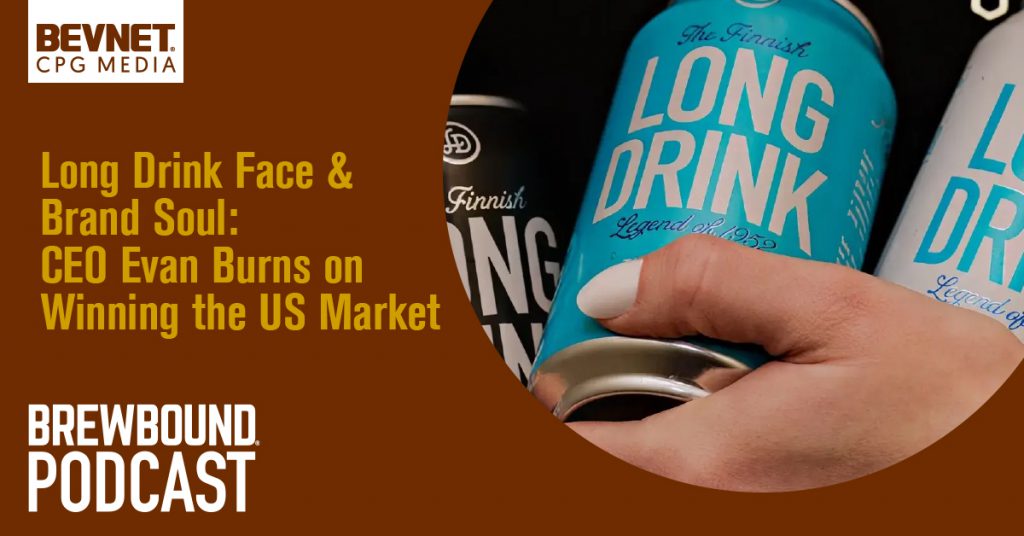
[00:01:03] Zoe Licata: Yeah, got to catch up with Evan who was one of the co-founders of Long Drink, which if you're unfamiliar, they're those blue and white cans that essentially make a canned RTT version of a gin-based beverage that is popular in Finland. But they have been around for a minute now and while there have been some similar beverages and plenty of RTDs since they started, they have had a bit more sticking power than others. So we got to catch up on what that is, how they're approaching innovation, how they are working with celebrities and a bunch of various other things. So a fun chat worth listening to.
[00:01:44] Justin Kendall: I didn't see any Long Drink hats this past Sunday, did you?
[00:01:48] Zoe Licata: No, no Long Drink cats, but I think last time was because Miles Teller was a fan of one of the teams. There was no Long Drink celebrity fans of either the Seahawks or the Pats this year. That we know of. Yes, that made it onto the TV broadcast.
[00:02:06] Justin Kendall: And we're sitting with Taylor Swift. I imagine that played a major role in Miles Teller getting on camera in that hat.
[00:02:14] Zoe Licata: Yeah, this year, it seemed like the major celebrity box was Kardashians, along with Lewis Hamilton, who has a non-alcoholic tequila brand. So he was definitely not going to be celebrating an alcoholic RTD. So yeah, no big broadcast attention for any BevElk folks from the field, at least.
[00:02:35] Justin Kendall: Okay, I don't want to start this podcast on a sour note. We will talk a little bit about the Super Bowl. We'll talk about the ads a little bit, not too much because that's pretty well worn ground at this point. But how you doing?
[00:02:50] Zoe Licata: I'm only talking about this because we did talk about it before. So I will acknowledge that yes, we lost. And yes, I'm upset about it. And yes, it was embarrassing. But I feel like me and my respective Pats fans, at least in my immediate circle, are taking it a little bit better than expected because we didn't even think we were gonna be there in the first place, so that helps. But yeah, that was not great. May have shut it off in the third quarter, but we made it through.
[00:03:19] Justin Kendall: You've got a young core, you've got a nice young quarterback. You'll be back. You're fine.
[00:03:24] Zoe Licata: Yeah. Hopefully he's not too traumatized. We'll see. The comparison that I like to keep seeing is that Jason Tatum and the Celtics did a terrible job and lost in the finals in 2022. And then they came back and they won it. So I'm just going to use a bit of delusion and optimism to say that we can do it again.
[00:03:43] Justin Kendall: And if we're sticking with that optimism, Jason Tatum might even be back this season.
[00:03:48] Zoe Licata: Yeah, you never know what could happen. Boston sports, they keep you going. There's already another team that you can pay attention to so you can kind of forget about the other ones. So that's the benefit of having a strong sports city.
[00:04:00] Justin Kendall: And it's almost spring. We're so close to spring. Get some spring training going.
[00:04:06] Zoe Licata: Please, I need sunshine. I need outdoor sports where it won't freeze all of your limbs when you're watching outside. Yeah, it is very much needed here.
[00:04:20] Justin Kendall: This Super Bowl, it felt like the Bev Alk discussion, the buzz coming out of it. really muted. Yeah, we don't already seen the ads. So you've already got that five day four day head start where it's like not a surprise anymore. If you've seen the ads, and really there aren't that many. I mean, other than Anheuser-Busch, doing three ads and Svedka, Sazerac getting a Svedka ad, which widely panned, not much going on. And like I said, we've seen them, we've talked about them. The Horse Eagle Budweiser American Icons ad took first place in USA Today's Ad Meter. I don't know that I was too surprised by that given the 250th anniversary of the US, AB's 150th anniversary. I was clearly wrong on the teasers. Not a frog. Definitely a baby eagle CGI or otherwise, but yeah that proved popular I saw mixed reviews of the Bud Light ad some some mixed reviews of the Michelob ultra ad All three those ads placed in the top ten of the USA Today poll I should say and some publications Didn't even rate them
[00:05:41] Zoe Licata: Yeah, there was mixed reviews across the board. But there was a weird combination this year of there wasn't a lot of pre-game hype for a lot of ads. We didn't hear from most folks. I mean, it was just, what, two years ago when Molson Coors made a huge Super Bowl push and there was nothing from them other than their regular advertising this year. Same with Constellation Brands. A couple of regional spots from some other folks. And then there was a lot of internet chatter, just the ads weren't hitting the same this year. And I'm curious if that is the nature of the ads themselves. There's a lot of AI, which people have a lot of feelings about, maybe not a just good crop of ads. If it's the fact that people are seeing these ads earlier because there have been more and more digital releases rather than just the broadcast release. Or if it's just the nature of marketing today is so outrageous year round that maybe it's not a big of a deal because you can see even wilder ads the other 364 days a year.
[00:06:43] Justin Kendall: Yeah, I've had this conversation with a friend where it's like, do these ads lose the buzz because they're out earlier? Or are you getting more ROI by putting them out there? I mean, if you're spending $10 million or whatever it was per 30 second spot. you're going to want that ROI. But if you put an ad out there and it's not that good, then you've got five to six days before you're going to run this on Super Bowl Sunday. And it's just going to hit, you know, like a dud. I get that some people like that excitement of seeing them for the first time on Super Bowl Sunday. And maybe that's just a particular age group too, because My mom is not on any social presence and she's not gonna seek out these ads So she's gonna be the one seeing them for the first time. So like a boomer generation But to me it just doesn't have that same buzz that same feel and like you said Before we had like an emulsion cores that and you didn't know what they were gonna do necessarily. So it was kind of a surprise. I Remember seeing the corn syrup ads For the first time, while the Super Bowl was playing and that became like a big deal, obviously became a lawsuit, became very tense situation in the industry. And I think that's what sort of colors my view is. That hit so hard and it became such a story in the aftermath, at least for us and our fellow trade publications. But I don't know. I can see both sides of this where it's like, I'm spending this money. I need to get as much buzz rolling into this as I can. I don't know. I feel like they've lost their luster a bit.
[00:08:26] Zoe Licata: Yeah. Were there any that stood out to you?
[00:08:29] Justin Kendall: I really liked the Redfin ad, the Won't You Be My Neighbor, with Lady Gaga singing Mr. Rogers, Won't You Be My Neighbor. And one that surprised me, I didn't expect it, was the Mandalorian Grogu ad for the film that's coming up, Star Wars. Series and I didn't expect it to be a Budweiser spoof which I get what they were going for You know, it's a Super Bowl spot. The Clydesdales are sort of associated with the Super Bowl You've got the Tauntauns playing that role for these two characters and you got Sam Elliott Doing the voiceover, but I saw a lot of Star Wars fans who did not like it
[00:09:10] Zoe Licata: I didn't even realize that it was a Bud Light spoof until I saw the internet talking about it.
[00:09:16] Evan Burns: Yeah.
[00:09:16] Zoe Licata: Which is funny. But you know Star Wars fans. I can say as a Star Wars fan, Star Wars fans can get a little passionate about things.
[00:09:26] Justin Kendall: Kind of precious.
[00:09:27] Zoe Licata: Yes. Yeah. I was a fan of the Pepsi ad, which we saw most of in the weeks leading up to the Super Bowl.
[00:09:35] Justin Kendall: Oh yeah.
[00:09:36] Zoe Licata: But that had a similar energy to some things we've seen in the past where it's poking a bit of fun at your competitor, but doing it in a positive way. I know they put out news release ahead of time pointing out that they were not going to use AI, which was very much what Coke has been doing. And anytime you have animals in there, like a polar bear who's going through a crisis, it's going to be entertaining. I saw a lot of positive feedback for the Liquid IV ad. A lot of bathroom humor this year, which I would love if we got away from, but that one had a little bit of that. People seem to appreciate the fun but educational nature of that one.
[00:10:16] Justin Kendall: I saw some hate for that Poppy ad.
[00:10:18] Zoe Licata: The poppy ad yeah hate for the poppy ad mixed feelings for the manscaped ad I actually didn't mind the manscaped ad That was one of Lawrence's favorites the Pringles ad was very strange Pringles is strange, but that was another one They like we saw that ahead of time and not just like on a trade press side, so I don't know mixed feelings, but I think the halftime show had so much buzz around it that also deterred from people not really paying attention or remembering certain ads because they were really focused on that show. That had like insane viewership numbers. It honestly was quite impressive how many people were watching that. So I'm sure that's a factor as well.
[00:11:05] Justin Kendall: Absolutely. Great halftime show.
[00:11:08] Zoe Licata: Love some Bad Bunny.
[00:11:10] Finnish Long: Yeah. This episode is brought to you by the Craft Brewers Conference, where big ideas, bold beers, and brutally honest shop talk collide. Join thousands of industry pros leveling up their game. Don't miss it. Register now at craftbrewersconference.com.
[00:11:31] Justin Kendall: Let's talk about something else you love, and that's cider. How was Cider Con?
[00:11:36] Zoe Licata: CiderCon is interesting. CiderCon is always a good time. It's always one of my favorite events just because cider is still such a relatively small industry and so most folks know each other. It's very similar to craft but on a much smaller scale and it's generally a positive community gathering of folks celebrating things that happened in the past year and looking forward to the year ahead. I will say that it felt a little bit different than I expected. And the reason for that, and I've talked to several attendees who had similar feelings, was that you would expect this to be a huge celebration, a huge rallying of folks because CIDR had a really great year last year, especially in the context of how greater beverage alcohol was doing, how Total Beer was doing. It was one of the few segments to record growth last year. And the event did start out that way. The general session shared a lot of positive data about how CIDR is doing, but the general environment of things didn't feel like it was that sort of event. And I think it was a mix of attendance being down. CIDR is going through a lot of financial pressures right now. It's a super agricultural based industry that's extremely impacted by increased prices from imports. The effects of immigration policies are really hurting orchards. So that is all impacting these folks and their businesses. It's harder to justify spending money to go places. Also, it's an industry that is super concentrated in the Pacific Northwest. Traveling to where this event was, which was in Providence, Rhode Island this year, is not the easiest in general. It's a small city, you can't really get there super direct from anywhere, especially the West Coast. And so I think that all kind of factored into it being slightly different. Something I was really looking forward to was that British Association President and CEO Bart Watson was speaking during the general session. As everyone on this podcast is aware, we hear Bart all the time. We're fans of Bart, I think it's fair for us to say, of how he presents things to folks and the reception of him being there was not as positive by all attendees of the event. And I can't say how big this feeling was, but there was a feeling among some that, you know, why are we trying to get advice or bring in beer and particularly craft beer when they're down and we're up? What can we really learn from them? Are they just coming in and trying to, you know, figure out what we're doing well and like use us while they can and then put us to the side? And so it was really interesting to hear folks have that feeling and say, you know, why are we, quote unquote, letting the enemy into our territory, which is totally different than many, many other conversations we've heard at any other industry event.
[00:14:23] Justin Kendall: Oh, man. Not to mention the fact that Kraft dwarfs Cider in size.
[00:14:29] Zoe Licata: Yes.
[00:14:30] Justin Kendall: Sure. Size, volume, share.
[00:14:33] Zoe Licata: Yes. Cider is a very, very, very tiny segment still. There are, I think, over a thousand cideries now. There are lots of cideries out there, but compare that to the nine, 10,000 craft breweries that are out there. And I think there is a tremendous benefit for those folks to hear from other industries about what they've seen worked. I mean, Bart talked about it in his remarks on stage. Kraft made some mistakes. Kraft figured out that their growth wasn't going to last forever. And when it did slow down or came to a halt, it happened very quickly. And Kraft had to adapt and they didn't adapt as quickly as it probably could have. And so that has been slowly happening. And so Cider has the opportunity to learn from those mistakes and see how it can better set up its businesses. So if things do adjust or change, it can adapt a bit faster. And it seems like the American Cider Association is very much on board with trying to expand those communications across associations, to expand how they are talking about different segments and the overall beer category and ciders place in it. But convincing members that that is important is a harder process.
[00:15:49] Justin Kendall: There's so many similarities, so many things that can be learned both ways, too. But to sort of have that mindset that, well, we're growing now, you know, what do we have to learn from you is like, well, you know, Kraft's been here before, like you laid out. And Kraft producers can show you some of the pitfalls to avoid along the way here.
[00:16:11] Zoe Licata: Yeah, and there are so many similarities for the consumer base itself when it comes to Craft Insider and there was a great seminar during the event that brought in a local retailer, a local distributor, and they talked about how they are actively speaking with craft consumers and hearing their preferences and steering them towards cider products as well and saying, here are some similarities between these products. Here is how you can use both of these products. Here's how you can use a cider instead of maybe a wine for your celebrations. There are ways that they are encouraging consumption of cider, but also still speaking to that consumer that is very similar to that craft consumer that maybe you can get them to expand their cart with beer-centric, meaning craft beer and hard cider products. So yeah, it's going to be really interesting to see how members continue to respond to these efforts. The ACA and the BA are going to continue to work together, particularly on legislative efforts. Monica said she has kind of warmed Bart up in a neutral stance to some things where he was maybe negative on some legislative things before. She didn't specify what those things were. And BART has mentioned that they're actually going to introduce some legislation that they think they can work with CIDR on, particularly when it comes to costs of production for folks. So that work is going to continue. I think Craft Beer and CIDR, and particularly those two trade associations, are in very similar places right now when it comes to just the makeup of their members and also the still relatively new leadership changes and wanting to figure out how they can make their trade associations better address their members in different ways. And seeing them work together, I think is going to be a general positive. But yeah, you gotta, you gotta convince folks of it. Insider is a very, just like the Star Wars fans, they're a very passionate group of people. And so you got to navigate the politics of that as well.
[00:18:07] Justin Kendall: That's fair. You can read all of Zoe's coverage over at Brewbound.com. Become an insider today for full access. But, uh, any other CiderCon takeaways before we get to the featured interview?
[00:18:20] Zoe Licata: I would say the same thing that I always tell folks after I come back from CiderCon is just, I highly recommend looking at just what Cider is providing out there because it is a much more diverse segment that I think a lot of folks, even craft beer folks are aware of. And traditional dry bottled ciders were the fastest growing cider subsegment last year. And so that I think is really fascinating to see that consumers are not only just going to cider, but they're going for that specific subsegment. It's fascinating. worth exploring what is out there and diving deeper into what is really driving some of that cider growth, because it is such a, just like craft beer, it is such a more vast segment than it appears on the surface.
[00:19:08] Justin Kendall: Well, thanks for going. I know it wasn't that far for you to travel this year, but I'm glad that we had representation there. And it sounds like it was, is worth going to.
[00:19:21] Zoe Licata: Yeah, and even with it being different than I expected, it was definitely definitely worthwhile. And thank you again to the ACA for letting us go and covering it. It's definitely worth paying attention to.
[00:19:33] Justin Kendall: Well, let's get to our featured interview. It's Zoe with Evan Burns from the Finnish Long Drink.
[00:19:42] Zoe Licata: Our next guest is behind a brand that folks have been seeing for a while now, but has really had some sticking power while other brands have come and gone. And so we want to find out what is happening there, how they're connecting with consumers. And that is why we have Evan Burns, who is the co-founder and CEO of The Finnish Long Drink. Welcome, Evan.
[00:20:03] Brewbound Podcast: Thanks for having me. Happy to be back.
[00:20:05] Zoe Licata: Thanks for joining. We've been keeping tabs and getting updates from you for, it feels like a good minute now and you're still here.
[00:20:12] Brewbound Podcast: For better, for worse, we're trying. People seem to like the liquid, so we just keep selling it.
[00:20:18] Zoe Licata: Yeah. So for anyone who is unfamiliar, give us the quick spiel. What is the Finnish Long Drink? What are you guys all about?
[00:20:25] Brewbound Podcast: Yeah, so Long Drink is its own category. The Finnish government invented it back in 1952 for the Olympics. It's supposed to be a kind of one-off thing is my understanding. My Finnish co-founders always tell the story better than I do, but it grew into this massive product after the Olympics where one of the biggest consumed products in the country, alcohol products in the country. It is a canned liquor. They call it an RTD in America, but it's not a cocktail in Finland. It's not something you can make at a bar. People say it tastes like different types of citrus. I think I always people ask, what's a Long Drink? I'm like, a Long Drink's a Long Drink, just like mezcal mezcal or vodka's vodka. So the challenge and the fun thing that we have is trying to build a new category and create that curiosity where people try it. And we've been in the US for about seven years now as the Finnish Long Drink.
[00:21:08] Zoe Licata: How has that evolution been of introducing folks? Are people more familiar with what this is at this point?
[00:21:15] Brewbound Podcast: It's definitely growing quite a bit. The main driver of people finding out about the product is truly their friends. Like it's unique, right? You've got this great backstory of invented for the Olympics by the Finnish government. It's grown into a whole category over there. The Finnish Long Drink is a new startup brand that myself and three other Finnish guys co-founded seven or so years ago. And so that's got something to it, right? It's a story that we lovingly call internally has a soul. And we think that a lot of customers these days in the age of too many influencers, too many celebrities, too many flavors, where it's kind of a grab for money often and a grab for share, not a grab for a soul in there or a story that people resonate with. We think customers want that. So we've been really blessed to have a lot of our fans just be incredibly excited and want to go be like, you got to try this Long Drink thing I found out about. And I think it's also true that we Americans, we love to find foods from other cultures and then share them with our friends and family. So that's even more fun when it's an alcoholic drink. So it's always cool to be like, oh, I found this drink. It's like this big thing in Finland. You got to try it. So I think that drives a lot of what the attention is. And I think it's also why it sticks, too. over the years I've been on a few different podcasts and done a few press interviews and I'm often kind of saying that I think the industry needs to spend much more time building brands and building stories that have soul instead of just chasing what reports say and consulting say on an Excel file that says, hey, we surveyed 20,000 people and they like lemon, you know, or they like lime. And like, sure, that's probably true, but like, that's not where real staying power comes from.
[00:22:45] Zoe Licata: Lots to dive into there. We're definitely gonna touch on the celebrity piece as well. But when it comes to that, it's almost like a cool factor, right? If you know what this is, if you've heard a lot on Drake, you can introduce it to someone that adds a bit more of like a prestige both to you as a consumer and to the product itself. How are you communicating your brand's identity or that kind of brand culture to consumers beyond? I mean, it's a pretty simple, straightforward package. Where does that brand messaging come across to consumers?
[00:23:18] Brewbound Podcast: You know, there's this interesting experience we call the Long Drink phase, and we do tons of tastings. Our biggest alignment on marketing is tastings, whether it's on-premise, on-premise festivals, you name it. When you go to do a tasting, you find a new customer who's never had it before. They're like, what's a Long Drink? And you're like, look, just try it. It's the biggest concept in Finland, category in Finland, it's new to America, give it a try. The first face they make is confusion. Like, what the heck is this? I have no concept. Is it a seltzer? Is it a beer? Is it vodka? What is it? And, you know, like with any food, they take a little bitty sip. Just like when you try a new piece of food, you like take a little bite to see if you like it. So it's a little sip. And then it's after the confusion face, they're surprised because it's not what they expected. and then generally a smile of delight. at this or try and then they'll turn the can and they're going to read the story in the background of the product. So that then becomes a currency that they can tell their friends. So it's cool. It's different. I'm confused. I'm surprised. I'm delighted that I've got something I can then tell my friend which sticks because people remember stories.
[00:24:25] Zoe Licata: How would you describe what that core consumer base looks like? Is there something there? Is this a bit more universal?
[00:24:32] Brewbound Podcast: You know, in Finland, when you go there, and I encourage people to go to Finland, it's a really cool place. When we started this kind of company that's become a major advocate for the Finnish culture and the Finnish brand, I always kind of joke like, you know, Sweden has IKEA, Finland has the Finnish Long Drink. And so it's really evolving that way where people are connecting a brand to a country and a culture. When you go to Finland, like, Long Drink are everywhere. I mean, they have their own aisle in grocery stores, liquor stores, whatever it might be. And so when we talk about trying to connect and who the types of customers are, like, in Finland, it's everybody. It's all different ethnicities. It's men, women, all age ranges. I mean, it basically follows the same curve on any of those as the population. And that's been true in America, too. We thought it would probably settle into a certain group because it's such a big country, the U.S. is. But it's everything. I mean, it's, you know, dive bars, it's fancy restaurants, it's community golf courses, it's fancy ones that are private, it's young a hold, it's men, women, and it varies because it's more about what are the pockets where it becomes well-known, and then it becomes something that's people's go-to, it's their daily drinker. It's not occasion-based, it's not just summer. People will be like, I'm a Long Drink drinker, just like they have the other thing, like, oh, I drink this, and they're a loyalist. And we've not been around that Long Drink the US, but if you look at seven years, and you look at same store sales at a lot of bars or independent liquor stores, or now have some groceries too, the sales on the same skew keep going up. So it's not something that people are trying and then running away to, but I think it goes back to the flavor. And then more importantly, there's something there, there, there's a story, there's a soul to it. And think about the best American alcohol brands. They all have something to it. It's like, oh yeah, I'm a, I'm a this whiskey drinker, I'm a that vodka drinker. Like it's part of your identity. And so I think we've been able to kind of capture that among people, but it doesn't, it really is because it's a category. We've been really lucky that it's a lot of different people who try it, which leads to a pretty good audience for us, but we have a lot of work to do because when you're something to everybody, it means you have to really spend a lot of time them in their own community, being available in their local grocery store, their local bars, wherever that might be, to where you can create that moment of curiosity.
[00:26:27] Zoe Licata: When you're operating in a new category or creating this new category, beyond consumers, you also have to kind of navigate operating in new space with like your retail partners and your distribution partners. What is the ideal placement for Long Drink? And do retailers understand more of where that fits in within their lineups now?
[00:26:48] Brewbound Podcast: Yeah, I think people have been learning a lot in the past few years. Something that frankly even shocked me, if you look at 2021 versus 2025, the amount of share of RTDs, whether it's wine, spirits, or beer, that was spirit continues to grow. That really shocked me because they're more expensive. The taxes make spirit-based RTDs a lot more expensive. And you have people from all different backgrounds, income levels, choosing to pay up and stay with these more premium options. And let's just be honest, like if you're looking at an eight pack of an RRTD, which a lot of times it's $1899, $1999 for high noons or Long Drink or surf sides, like that's That's not cheap. There's a lot cheaper products, especially in the beer, that you can get for $20. You can get 20, 30 cans of something. It's shocking how often people are, maybe they're not getting rid of their 30-pack of beer, but they're adding this supplementally. That I would not have guessed, and I think shows that the size of this market could be much bigger than we've expected. The other thing that's a tailwind is these state laws. which control the go-to-market on spirit-based RTDs are changing every year in every state. And consumers want them. It's got to be 90% plus consumers want the ability to get spirit-based RTDs where they can get malt-based RTDs of the same ABV. So I think that the retailers recognize this. They're like, wow, I'd rather sell you a $20 pack than a $10 pack. especially if it's going to expand my cart. And if you're especially going to come back and you're going to buy it again because you were happy, the incentives align and they're smart and they're learning that because money always talks. And I think that the state laws are making that easier for retailers of all types to put these products available to their customers.
[00:28:22] Zoe Licata: So is this being placed among other RTDs, spirits-based RTDs? Are you wanting the cold box space? Where's your ideal placement?
[00:28:30] Brewbound Podcast: Really, we end up often being by beer or other spirit-based RTBs. And those are getting merged a lot. I mean, you have some of these major retailers, one of the retailers calls it the F&B fast-moving beverage, which is like, what are these alcoholic spirit, not even spirit-based, these alcoholic beverages that aren't traditional beer, maybe, or they're not wine or they're not a bottle of spirits, but they're fast-moving beverages that fit into this new, very large category, but it's not just defined by the base. But generally by fast-moving beer, by seltzers, by spirit RTBs.
[00:28:59] Zoe Licata: Is there a particular channel that you all are really focused on or that you found particular strength in?
[00:29:06] Brewbound Podcast: Grocery has been great for us. Independence has been great. The thing that I think everybody's learning also in the spirit of RTD space is convenience can be huge. And the states that made that an attractive regulatory space have done really, really well. And so we're definitely investing a lot more behind that. You look at a lot of distributors we work with, they're also investing aggressively into the convenience space. And everybody's talking about convenience. It's not new. But again, I would say a lot of people, especially in traditional spirits companies, really underestimate the volume that can come out of a convenience store or a bodega. Because that's not true with vodka, right? You're not selling a pallet of bottled vodka through a gas station. Maybe some states who do, but that's not an often thing. That can happen a lot. through things that look and act like beer, which RTDs often look and act like beer from a velocity and volume standpoint. So I think there's a big rush into that space. And the cool thing is the retailers seem to be really embracing that and asking how can they create a set that's going to create the best value and the most optionality for their customers.
[00:30:03] Zoe Licata: And at the end of the day, consumers aren't really going in necessarily being, oh, I'm prioritizing, I want this spirits-based product first, necessarily. They're looking for, is this the flavor that I want? Is this the ABV that I want? Is this at the store that I'm at or in a convenient package or price point?
[00:30:20] Brewbound Podcast: I think it's true though. I will say, I think that, because what you said is what everybody in the industry talks about and is true. I just think it underweights the importance of lifestyle marketing and brand to consumption. There certainly are people that buy certain packages because that's high ABV. There's no doubt about that. But the question would be is if a different product that shows up with the same ABV and same flavor profile sitting right next to the leader and it's 10% cheaper, are they going to stay with that? And the answer is generally no because they're drinking it because it's high ABV. And so you can be high ABV, but still be a brand and an identity, a lifestyle that people want to buy first. So that's kind of the thing that I was making the point a few minutes ago of we have too many decisions to be made off of spreadsheets and research reports of these package size, the flavor profile of the season, the ABV things. Like right now everybody's talking about how high ABV percentages are. Like for sure that's true, but like just raising the ABV does not solve for it, right? Like we have an ABV. because there's been a high BV product like that in Finland for decades. And it's a different consumption pattern. It's a different consumer. But we're not running around saying, oh, we have an 8.5% ABV product. Our consumer is saying, hey, look, cool. It's cool that you have that. But we like the brand. And we're willing to stick with that, even if maybe somebody else is a little bit higher in ABV or the price is a little bit different. And it's even in college campuses. We're blown away how often these college campuses were selling $16, $17 six-packs. of 8.5% Long Drink, which is obviously spirit-based. I'm like, I couldn't have done that in college. So I'm blown away how much that is, but I think they're not, I don't think, I'm fairly certain they're doing it because they believe in the brand and it's got a little cachet, it's cool, it's somewhat mysterious. It's got a story behind it instead of just, I'm drinking this because it's got a lot of alcohol in it.
[00:32:02] Zoe Licata: Yeah, there's this thing happening, particularly in beer right now, that industry members are trying to wrap their heads around, where folks are saying that we are paying attention to price, we're paying attention to what's happening in the economy, but there's still a lot of prioritization to premium price products and consumers are still saying we're going to buy those products. And so trying to understand why that's happening. I think that brand aspect explains a lot of that reasoning for that conflict of consumers are willing to pay even though they're not on a broader base scale if they are connecting to your brand.
[00:32:37] Brewbound Podcast: I think that's right. And I think it's not just true for us. I think it's true for brands across beer, wine, spirits, whatever that might be.
[00:32:44] Zoe Licata: For sure. Now that you've been in the US for seven years, how has the Long Drink evolved in that time? What do you look like now compared to when you first came in?
[00:32:54] Brewbound Podcast: Luckily, we sell a lot more of it. There's more to go. The funny thing we're always grappling with is because it's built a new category, people don't know what a Long Drink is. I think any interviewer, I'm always saying that. No one, if you've not heard of Long Drink, you're not walking into a store saying, where's your Long Drink at? Now, if you and I got together and launched Evidence Always Tequila, we might get lucky if we put it in a store, because somebody walks in the door saying, I want some tequila. They might say, oh, look, that's a cool bottle or whatever. So the hurdle rate of trial is significantly higher. Where I think we are today versus five years ago, or especially seven years ago, there's enough people out there that are fans. I mean, we sold 100 million cans in the past 12 months or so. It's not a ton, but it's enough floating around out there where people can generally find, you know, somebody in their network or extended network who's heard of it. And then maybe some of them have tried it. We may be like maybe 5% brand awareness. So for us, it's like, we've got a little bit to hold. We have retailers that are very supportive. The consumers are very loyal. I mean, they're drinking the same thing they were, same flavor profile they were, same package format they were seven years ago. So for us, it's a game of how do we just start to build out that awareness, right? How do you drive that availability? Where you walk into the bar, it's not, oh, Do you have a Long Drink? It's like, oh, yeah, I have a Long Drink and I want that one. You have my favorite. You have the high BV or you have the zero sugar version.
[00:34:11] Zoe Licata: So how has that portfolio evolved now? What does your lineup look like these days?
[00:34:16] Brewbound Podcast: Yeah, I mean, look, we have one flavor called citrus, which is, it comes in traditional version. It comes in a zero sugar, zero carb version. It comes in 8.5% version. That's like 75% of our volume. So, you know, this goes back to where Long Drink is not an RTD. RTDs are generally cans meant to deliver a flavor profile, high sessional experience. Long Drink is its own thing. Like it is not a machine to deliver. a bunch of different flavors. It's a brand and it's a brand built around this category that was created in Finland. If you go back to it, people are not going to buy a variety pack of Long Drink because they want to take it to a party like, oh, flavor survey. They're like, I'm a Long Drink zero drinker. We think honestly Coca-Cola is a great analogy. People are Coke zero drinkers or they're Diet Coke drinkers or they're Coke original drinkers. They do not cross over that often. Some people do, but they'll do begrudgingly. I'm drinking Diet Coke. I do not want the regular Coke. We see the same thing. We offer the high ABV, we offer the zero sugar, we have the traditional. There's very little crossover between the folks we're cool with because we get to serve different types of folks. Now, we did add 16-ounce cans when they made that available. It became federally legal last year, so that's been really a fun hit on all those three. We do also have a variety pack, a 12-pack variety pack of three additional flavors, but we launched that really because we saw that there was occasions Outside of the people saying, hey, that's my go to, I'm a Long Drink zero fan, that's my go to, or they were going to parties or they were hosting. We're like, look, we might as well take that occasion also. But I don't think there's not going to be a scenario where we wake up in five years and we have like 30 flavors like a lot of the seltzers did.
[00:35:45] Zoe Licata: Right. So what are you looking ahead to in this year, the year after, what are kind of your main priorities for the business?
[00:35:53] Brewbound Podcast: They're both exciting and challenging for us, but they're not that crazy, they're not that unexpected. It is, how do we drive on-premise visibility? So getting in there, getting on the menu, having the posters up, creating curiosity about what a Long Drink is. Two, how do we really empower our fans with cool experiences to give them opportunities to tell their friends and family about it. And then three, it's off-premise, both grocery, independent and convenience, building that visibility, right? Like in RTD, if you look at the brands that win, and I think it's something like, 10 brands make up 82% of all volume in Spirit RTD right now. Those brands, whether markets they're in, they have great visibility. They are displayed in merchandise like beer. It's just that simple. When we're working with our whole centers, we're like, whatever you do with beer and seltzer, it's the same playbook. Get it in, get it eye level, get it cold, get it displayed, make sure it's restocked quickly because that's exactly how it works. And I think that's another cool thing the industry has learned in the past three or four years is, Just because it's spirit-based doesn't mean it needs to be treated differently than high-velocity canned items, whether it's soda or beer. And I think it's led to a really cool outbreak of a lot of brands. I'm friends with the Surfside folks, and Galveston with High Noon, they've done that, right? And it's like, hmm. If it sits next to beer, and there's enough of it, and it's competitively priced, even though it's a more premium product, and I can find it in the cold box also like people buy it and they stick with it and the volumes are just terrific. If people would have said five years ago that there'd be multiple 30 million plus, you know, 25, 30, 30 million case brands in spirit, the people never have believed that.
[00:37:20] Zoe Licata: Both of those brands you listed are also brands that have been able to find a way into the on premise.
[00:37:26] Brewbound Podcast: Yeah.
[00:37:26] Zoe Licata: How much of your business is in on premise right now?
[00:37:30] Brewbound Podcast: It's about 25%. And frankly, in some of our more developed markets where we have higher brand awareness, it's actually more. So we think that's a really important channel. I mean, this is a number where I don't know if it's accurate, but we're gonna pretend it is. I think it's more than 50% of our trial. It could be even like 60 or 70% of our trial happens on premise. But I understand why. If you and I are sitting with two or three of our friends at a bar, and one person orders a Long Drink, we're like, oh, what's that? And they're like, oh, I love it, you gotta try it. So then all of a sudden there's that moment where a friend is introducing you as opposed to just seeing an interview or a billboard or something.
[00:37:58] Zoe Licata: Right. I mean, it's so easy. I'll just have what you're having and then you're introduced to a new product as well.
[00:38:03] Brewbound Podcast: Yeah, exactly.
[00:38:05] Zoe Licata: What is it that you think is key to having that sticking power in the on-premise like some of those other brands have? Because not everybody has been able to do that, especially when it comes to those spirits-based canned products.
[00:38:19] Brewbound Podcast: I think it has to have a really specific, dedicated investment, both with the wholesalers and with the supplier. Because it's just a different level of service and the ROI is there. There's other folks in the industry I'll advise or I get advice from, and we debate this a lot, and the ROI is there. Well, it might not show up in the first three months, in the first quarter of the investment and tastings, point of sale, promotions. If you have a product that the customer actually likes and will stick with, you're making an investment where it's a little bit more upfront, but they're going to stick with you. They're going to be coming in every Friday or every game day and they're going to be like, yep, I'll have a bucket of Long Drink or whatever that might be. But it can't be an afterthought. Just like it's very obvious in mass market and grocery, that can't be something you meet. You have to have a team, you have to have budgets, investment, planning cycles. On-premise is the same thing. And I think we've also crossed the Rubicon here, where it's no longer a question that Spirit RTD can be a major player. Like you just said, those two brands have been terrific on-premise. I mean, we're about 25% of our volume is on-premise. But again, if you've gone five years ago, people would say, oh, no, no, no, it's for grab-and-go's, right? And that's got to be like 1% of the volume of on-premise volume is grab-and-go. It is people buying, drinking, consuming with their friends in real life.
[00:39:31] Zoe Licata: Yeah, I would challenge anyone who believes that still to just go to a bar right now and just see the amount of people who have a high noon or something in their hands. It's insane.
[00:39:42] Brewbound Podcast: Honestly. I mean, like, you know, we're both younger. Like I was I was at a major like a top 10 grocery yesterday with the buyers and they're really, really sophisticated and really smart. And we were just kind of bantering after the meeting was sort of complete. We were like, oh, you know, what do you think the long term staying power of RTDs are? I'm like, look, I don't know. But I've not been to a party or larger get-together where people are in their mid-20s in the past two or three years where everyone's not drinking an RTD. And I'm not saying they're all drinking Long Drink. That's obviously not true, but they're drinking RTDs and some beer, but they're not drinking wine at scale. They're not drinking other things at scale like they used to. So I do think if we look over the next, kind of what the future looks like, their RTD space is going to continue to grow a lot.
[00:40:24] Zoe Licata: Absolutely. I want to touch into this one aspect that you all have. And you mentioned, you know, laundry gets away from some of the mass influencer use and celebrity user messaging that comes across to folks. But you do have some celebrity investors on board. How have those partnerships came about? And how do you use those in a way that is different than some we've seen?
[00:40:46] Brewbound Podcast: It's a great question. Look, I think there's a really good opportunity when the vibes of the brand and the vibes of the investor or the celebrity or the influencer work together. That's amazing, right? There's been some really good examples that have done very well in the past 10 years, but there's also been The lot of examples that didn't work is when it was just a brand and a celebrity thrown together like, oh, this is free reach or free advertising. Consumers are way too sophisticated for that now. This is not 2014 when Kim Kardashian would post on Instagram and your website crashed. Those days are long gone. Every influencer, every celebrity, they're promoting multiple brands. A lot of them have their own brands. There's nothing wrong with that. But I think if you can find real authenticity, consumers can get really excited and sometimes even more excited because there's so much, you know, people make the joke about AI slop. There's so much like influencer slop these days that if the consumer is like, wow, that's really time relevant. The brands really match up. It's clever. That actually might be more relevant than it was five years ago because it sticks out amongst the crowd of nonsense. For us, we never got into this because again, we're not, Trying to create a new story. We're taking this really cool category that's created in Finland It's got the story for some reason, you know I never really blew up in America people in Finland haven't really done until my Finnish co-founder said let's do that You know all the all the quote-unquote celebrity investors and Long Drink folks that one way or another came to us like Miles Teller was one of the first ones he really came in kind of right at day one more or less and When he came in, he was like, I want to be a part of this. I love the brand. I think it tastes great. I'm not a big promotions guy, but I think it's just great. I want to be a part of it. And then one thing after another, his friends started trying, and they started wanting to be a part of it. So if you really look at any one of our quote, unquote, celebrity investors, there's always a story about how one of the other ones introduced them, like, oh, that'd be fun to be a part of this with you. And that story, I think, is much more interesting to consumers than just, oh, this person's in it to get paid money.
[00:42:36] Zoe Licata: I think the culture of influencers and celebrity has changed so much where you're, you almost assume that if they have any sort of product, they have been given it or just there's some sort of sponsorship deal happening there at that point. So it does need that kind of extra step to be like, Oh no, I promise you, I actually am endorsing this product or believe in that product. There's a totally different space. How else are you connecting with consumers in some of those like more digital spaces? Do you have a specific social media strategy that you think is working or is that just not necessarily the best way to connect with consumers at this point?
[00:43:14] Brewbound Podcast: Yeah, it's also tough when you can't, and social media is really powerful, it's tough when you can't sell things online. And not that we want to, right? It's heavy liquid. I think the way the three-tier system is set up is great, but the way we think about social media is really three things that we measure. Number one, what is the frequency with which we can hit interested people? So if somebody has said, they've come to our Instagram page, they've gone to our website, they've had some type of touchpoint with us, how can we digitally tell them the story and take them down that journey? the background, the history, maybe they have other friends involved in it, maybe it's some type of interest like hockey or golf, which we invest a lot in. So how do we have multiple touch points in that frequency? Two is obviously just reach. How can we expand our reach in the right areas? And then three is how can we activate them to talk about us? Like we measure every week the amount of people who've tagged us talking about the brand. So I don't just mean like tagging the comments, I mean like posting like, I've got a Long Drink here and I'm tagging it, right? And like, we want that to be as organic as possible. But if that's going up, we think it's sort of a fun proxy for word of mouth. Because not everybody's going to tag you, that's crazy, right? But like if it's going up 50%, hey, you're probably getting talked about more 50%. So we're trying to pay attention to that more and more and do things that can create a reason why customers want to talk and share about us online.
[00:44:24] Zoe Licata: It takes a lot of investment to actually have a useful social media presence.
[00:44:29] Brewbound Podcast: Yeah, totally.
[00:44:30] Zoe Licata: A lot of brands have to figure out, how can I make that investment worth it? And so hard to really measure necessarily if it is or not. So that's really really cool way to actually be able to track something, have something tangible to come out of such a continuously changing space.
[00:44:47] Brewbound Podcast: We don't have this figured out either, and it's always a great discussion debate around it. But since you can't, there's something to enjoy about e-commerce, you can't take every dollar and trace it through to the absolute ROI. So there has to be a little bit of faith that the creatives work. And of course you can test creative at the engagement rate, but the faith that the creative's interesting, that you're creating curiosity, and then also you've got the points of distribution where if they see it in that zip code, you're actually visible. So one of the things we spend a lot of time on too, this may be a better answer to your question. We very much spend time where there's good points of distribution and good visibility, we want to make sure our ads are running around that. So if we have a whole zip code where nobody's carrying Long Drink, it's really not as true anymore as it used to be, why would we spend money there? We should spend the money where places are selling it. And of course, they'll go on the map and every place it sells in the country is listed, so they can go find the place that's closest to them or their favorite spot. But if it's not sold anywhere nearby, what's the point of spending ad dollars? That also helps rationalize, like, oh, we know we're spending, where they can go to the map, find all the places that sell Long Drink, what they're carrying, and go in and get what they're looking for.
[00:45:46] Zoe Licata: So the last thing I wanted to touch on with you since we have you here and a lot of folks are looking to anybody who is able to find growth right now that is able to connect with consumers right now, how they can best do that. You talked a lot about it with the brand and brand is really important, but is there any other guidance or tips that you have for how to best operate in beverage alcohol right now? What are we missing or what are you seeing that could potentially help beverage alcohol?
[00:46:15] Brewbound Podcast: It's a really good question. I think that the industry is not as bad as everybody makes it out to be. I mean, anybody who thinks that people, that college kids aren't drinking, go to a Big Ten or an SEC school and go to the college bars on a Wednesday, Thursday, Friday or Saturday night and like, good luck to wiggle your way in there. So people are still drinking. The thing that I would challenge our industry, and this includes us, is how do we live the mantra of fast is slow and slow is fast, right? It's easy to go fast, to be like, let's do the innovation, let's do whatever the report said, whatever. Passion fruit is the flavor of the year or something. Those are the quick hits. But going slow and saying, how are we going to methodically build something that's built to last and that scales with honest connectivity with our customers? That's where brands that get to the 50, 100, 150 million cases and brands like beer and RTV, that's how they win. I think all of us have to be like, hmm, like maybe I can't win the moment every single second, but I can win the relationship with the customer. And if you look at brands that stick, I mean, they won't go through a bunch of lists of, of, uh, advertising kids, but think in your mind, think of that one or two ad campaign, number one or two ad campaign that you've seen over the past 20 years, that just really made you be like, that is a awesome brand. Like it resonates with me. I felt something right. Like that's what we need to get really good as an industry and not just go for that quick hit.
[00:47:40] Zoe Licata: Right. It's almost the same idea as having something that goes viral or something that it can become a meme. Like that has power in the moment, but it's not going to end up with folks at the end of day coming back in and back again.
[00:47:52] Brewbound Podcast: Yeah, that's right. It can be a great booster rocket. Everybody wants to do that. There's no reason not to do that, but it has to be built on a foundation of how we're going to build something of substance over time.
[00:48:02] Zoe Licata: Well, Evan, I really appreciate it. Thank you again for coming back and chatting with us. And we will keep tabs on what continues to go on with Long Drink.
[00:48:10] Brewbound Podcast: Appreciate it. We're new to the industry more or less still. We're just trying to figure out things as they go. Like I told you before we started, we're just selling alcohol, right? So we're trying to have fun with it too.
[00:48:22] Evan Burns: Great. Thanks so much. And that's our show for this week. Thank you for listening. The Brewbound Podcast is a production of BevNET CPG. Our audio engineer for the Brewbound Podcast is Joe Cracci. Our technical director is Joshua Pratt and our video editor is Ryan Galang. Our social marketing manager is Amanda Smerlinski. Our designer is Amanda Huang. If you enjoyed this episode, please share it with your colleagues and friends and review us on your listening platform of choice. You can find our work at Brewbound.com. And we also welcome feedback and suggestions at podcastatbrewbound.com. On behalf of the entire Brewbound Podcast team, thank you for listening. We'll be back next week.