[00:00:00] Jessica Infante: Heading to CBC? Kick things off the day before at Brewbound's meetup at Love City Brewing in Philly, Sunday, April 19th from 5 to 7 p.m. Connect with beer industry leaders, grab a drink, and catch up with the Brewbound team. It's free to attend and walking distance from the convention center. Head to Brewbound.com slash lovecity.rsvp. And don't forget to catch the Brewbound team at booth 956 during CBC.
[00:00:28] Zoe Licata: How will Surfside keep its foot on the gas this fall? Find out on the Brewbound Podcast. Welcome back to the Brew Brewbound Podcast. I am one of your co-hosts, Jessica Infante. And I'm Zoe Licata.
[00:00:51] Stateside Vodka: Zoe, it's just you and me. I know. Justin is out in the sticks of Fort Collins doing some fun things out there. So stay tuned for what he gets up to with the folks at New Belgium. It's just the two of us, both in this intro and in our upcoming interview for this episode. Girl power, I say.
[00:01:12] Zoe Licata: I am jealous of Justin. I love Fort Collins. Super cute little town. Yeah.
[00:01:16] Stateside Vodka: Never been.
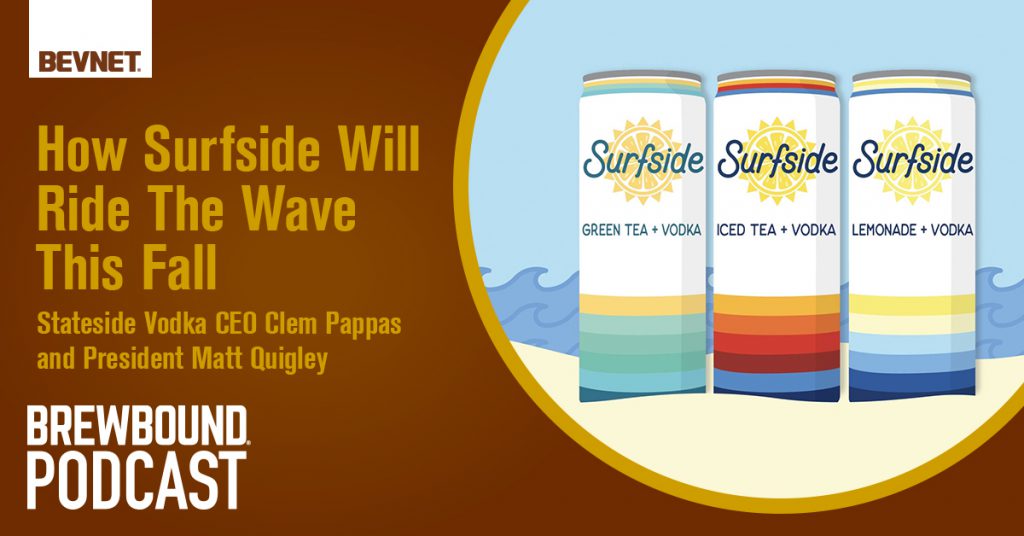
[00:01:17] Zoe Licata: One day. One day. One day. Well, you... Did you come to... Kalamazoo. Kalamazoo. That's where you went to see our fine friends at New Belgium and Bells. Makes sense. Well, we have so much to talk about this week, but I'm really excited for y'all to hear our featured interview, which Zoe and I have already recorded. We are talking to Clem Pappas and Matt Quigley, who are the co-founders of Stateside Vodka, which has taken the RTD segment by storm with its Surfside hard teas and lemonades. Really great talk with those guys. That feels like it was a million lifetimes ago based on the pace of the news cycle. But the one thing that really sticks out in my head from our conversation was that they described their brand as being built in the parking lots South Philadelphia, which It's an extremely evocative image if you know anything South Philadelphia.
[00:02:07] Stateside Vodka: Yeah. No, it was a fun conversation talking about how they've been able to sustain growth, how they're dealing with kind of increases in competition directed right at what they're good at, and how they're really incorporating the entire Stateside Vodka brand into the culture South Philadelphia and the sports scene there. Lots of fun, fun little nuggets in that chat.
[00:02:30] Zoe Licata: So many fun little nuggets. We talk a lot about college football, what they're going to be doing this fall, and basically how, and when they say the parking lots South Philadelphia, they're not like hanging out at like commuter park and rides. They're talking about tailgating with fans at the multi sports Sports Complex. which is a very logical way to start, a booze brand. So that is coming up. But first we do need to plug quite a few things because we've got a lot going on next week. Wow. It's here already. Next week, Zoe and I are taking to the skies to Denver for the Great American Beer Festival. I'm sure you're sick of hearing about how excited I am. And I might be one of the only people who is this excited to go to a beer festival in 2025. But look, it's been a while and I need this. Okay. I'm very excited for you. Thank you. Thank you. The last time I attended GBF, I was with child and could not partake and also could not tell anybody because I had only known for like a week.
[00:03:29] Stateside Vodka: Now you can drink beer and spirits and ciders and canned cocktails and basically anything your heart could desire.
[00:03:38] Zoe Licata: Oh my God, it's going to be booze town Jess's day of glory. So yes, we will be at two sessions of the fest. We will be hanging around Denver for like a day and a half. If you want to grab a beer, say hi, you can drop a note to call it like what, news at Brewbound.com. I don't know why I act like these are different email addresses. They kind of all go to the same place.
[00:04:00] Stateside Vodka: We have some different ones, but yeah, it's the easiest. Just any communication is easiest through news at Brewbound.com. For sure.
[00:04:08] Zoe Licata: Then after Denver, you and me are going to be flying to Vegas for the National Beer Wholesalers Association Conference where Justin will meet us. It's not like we're the only ones that get to have all the fun, but as previously mentioned, he's in Fort Collins right now, so don't worry about him.
[00:04:25] Stateside Vodka: Yeah, we're bringing Brewbound Podcast on location back. It's been a little bit, it's been said CBC. So we're going to be outside of the trade show floor, which we know in Vegas is massive and there's a lot going on there. So in one of your, I assume several trips over to there, you can come by the booth and check out where you're going to be recording some podcasts, conversations. recording some summaries of what we're seeing at the MBWA annual convention and from the leadership of MBWA. So a lot going on and we want to see you. So come by.
[00:04:58] Zoe Licata: Yeah. And if you really want to make sure you get time to sit down on the mics with us, drop a note to podcast at Brewbound.com. We are planners and we like to have a plan going in. So we can arrange anything in advance, we're happy to do it. We've got a couple slots to chat left, so definitely hit us up if you are interested in that. And we also, not all that far away, which is frightening, we'll have Brewbound Live. We'll be back in Marina Del Rey at the Marriott. And I know we've been pulling out different speakers to highlight on the podcast in the past couple months and weeks. Both of us could not remember if we had shouted out our good friend, Burkhard Nessen of Rabobank. But we're going to do it again. So Burkhardt, I'm sure you've heard him. He's a friend of the pod. We hit up Burkhardt for all sorts of data needs, but he does a really great job parsing demographic stuff and generational issues. So he is going to be bringing all of that to the Brewbound Live stage to talk about Gen Z, what the heck is up with them? When are they going to start resembling more normal drinkers? And I think Burkhardt will probably put your mind at ease a lot. I think a lot of his research has shown, no, they're not giving up drinking. They're just doing things a little bit differently and they absolutely will still eventually be a lucrative market for the Bevalk industry.
[00:06:16] Stateside Vodka: Yeah, he came out with a really great report earlier this year that we reported on that kind of dispelled some myths that surround Gen Z drinking habits and what is impacting their behaviors. So he's going to have some more tidbits kind of expanding on that initial report that are going to be really useful for folks.
[00:06:33] Zoe Licata: Cool. Well, those are all of our plugs.
[00:06:35] Stateside Vodka: Zoe, how was your weekend? My weekend was lovely. Sports-wise went great. Patriots totally obliterated the Panthers. What? Yeah. Shocking. I mean, the Panthers are terrible, but. That was my next question. Yes. Yeah. But it's nice to actually enjoy a Patriots game for the first time in a really long time.
[00:06:52] Zoe Licata: I love this for you.
[00:06:53] Stateside Vodka: Thank you. And then we had a farewell to a local dive bar, Eddie C's in Maverick Square, East Boston, had its last day Sunday. So we made two final stops there. They are shutting down and it's getting turned into a country bar. That's what the news is, yeah. So not sure what that's going to look like. They're adding a rooftop. It's going to be a much different vibe. Eddie C's, how would I describe Eddie C's? Eddie C's, it's the epitome of a dive bar. It's skinny. It's dark. The men's bathroom sign is written on a piece of cardboard and taped with duct tape. How sticky is the floor? I feel like it's so far past sticky that it's almost unsticky now.
[00:07:36] Zoe Licata: Makes sense. That's perfect and disgusting.
[00:07:39] Stateside Vodka: Yeah. One of the places where they have $3 PBR on draft, but you're probably not ordering drafts just to be safe. You're still ordering bottles, but bottles are only going to run you like $3 or $4. So a great place, great bartending staff. Kim is this older woman who's been there forever and she was in there almost every time I was in there. So I'm hoping she's going to have a relaxing retirement now. But yeah, a lot of people came into, we were there on the last night, last night as we're recording this. And a lot of folks who had gone when they were in college, or it was one of the first places they'd gone out as a legal drinking consumer, and they wanted to come back for the last one. So there's tons of folks there. I haven't seen it that crowded, I think ever. So farewell to Eddie C's.
[00:08:28] Zoe Licata: Oh, farewell to Eddie C's. May the angels lead you in. Yeah. Do you know anything about the country bar that's coming?
[00:08:34] Stateside Vodka: I don't. I just know that they're trying to make it a hipper spot. Maverick Square is in an area that is entirely different than it was just, I don't know, 10 years ago.
[00:08:46] Zoe Licata: It's like the front line of gentrification.
[00:08:47] Stateside Vodka: Yeah, exactly. There are so many new condos, there are giant apartment complexes there. There are a bunch of brand new restaurants. It's also right by Tall Ship, which is the big new fancy outdoor venue for all the youths. So it's definitely going to be a spot that speaks more to that consumer base and that lifestyle than what LACs does.
[00:09:10] Zoe Licata: We have two. One is already open and one is coming. Two country bars coming to my town. Which I don't, for the life of me, understand, because you know my town, Zoe. I live in Salem, Massachusetts. It's very spooky. I want to say we probably have a higher population of goth people than pretty much anywhere else. And I just don't know who they think is going to go to these country bars.
[00:09:32] Stateside Vodka: Yeah. And Boston is also just a weird place in general for country bars. I mean, we had Nash Bar that opened a couple of years ago. That has since closed. It no longer exists. But that was a place that was having line dancing upstairs. And it was very much like a Nashville-esque bar. But it was in the Boston Theater District. And it just was a kind of a weird spot. Is Loretta's still open? Loretta's is still open, very much open. I think that is just kept alive primarily by people going there after Red Sox games or before Red Sox games, which also shout out Red Sox or hopefully when this when this airs, we are currently playing against the Yankees in the first wildcard round. Don't quote me on that. But I know we are in the playoffs now. This is very exciting. And the city is very excited. But it could go horribly wrong in just a few days.
[00:10:24] Zoe Licata: We'll see. I have heard it was shaping up to be the Yankees.
[00:10:27] Stateside Vodka: Yeah. Wow. It will be starting Tuesday. So tomorrow's we're recording this game one of three games. They're all in New York. Really? They don't move? No, because it's this weird wild card setup where technically they're not into the next round yet, so they don't get home field advantage and yeah.
[00:10:48] Zoe Licata: Well, I mean, I pay attention to the Red Sox lately because when they win, my daughter gets a free kid's meal at the 99, which is her favorite place.
[00:10:57] Stateside Vodka: So glad that the 99 still does this. Great deal. Great deal. And it's not that I dislike the Red Sox.
[00:11:03] Zoe Licata: I support them with my emotions, but. Mom does not have time.
[00:11:09] Stateside Vodka: Did you have any exciting non-sport activities this weekend?
[00:11:12] Zoe Licata: I had so many exciting non-sport activities, most of which you saw photographic evidence of. Yes. Yeah. Like I said, I live in Salem and this is our crazy tourism season. People call it September, but it starts even earlier. It's been kind of bonkers since like Labor Day. We have what's called Mayor's Night out on the last Friday of September, which is supposed to be a way for Salem residents and Salem kids to enjoy the town and its festivities before the tourists descend on us. So like the businesses do trick-or-treat for the kids. A lot of the attractions will be open for free for residents. So, you know, we dressed up my daughter and I dressed up myself and we went trick-or-treating and it's cute because she doesn't want to like go all night, you know, she's two, so she can't. So we just hit up a few places that we wanted to hit up. She was dressed as Alan Cumming from the Traders and one person recognized her. Hey, nice, right, right. So I repurposed last year, she was Cher Horowitz from Clueless. So I took that same, you know, yellow plaid top and skirt. And then I found a really fun, spooky black lace cape for her to wear. And I got her a cute little like bat hair clip, which looks like one of the outfits that Alan wears. If you Google Alan Cummings, yellow tartan, you'll see it. And honestly, like, I think I nailed it. She looks great. She looks great. And I got myself a cape, so I was a traitor. Some people saw her and were like, oh, Clueless. I was like, yes and no. She took her first piece of candy, one of like the little mini, mini, mini Twix's, and she just nursed it the whole time. So she picked up more candy, but she didn't eat it all. It was really like best case scenario. But then we went into one of the wax museums in town. Cause I have never done any of this. I've lived here for eight years and I've never participated in the spooky economy.
[00:12:59] Stateside Vodka: I've gone on a couple of like ghost walking tours. Yeah. I mean, totally fair. Cause it's just so chaotic and, It's not like a casual, relaxing experience.
[00:13:10] Zoe Licata: No, it is wall-to-wall people. Some weekends in October are like Times Square on New Year's Eve. But we ducked into this little museum. They described it as just being like a thing you walk through. So I was like, we could do that and check it out. And it was not like a wax museum, like famous people wax museum. It was like the history of Salem. And it was the most revisionist shit I could imagine. And like, of course it is, they're not going to be real like, hey, none of them were witches. We just executed 19 innocent people. But that's the truth. And there was one little like vignette scene that was describing our trade that happened here. And I'm going to paraphrase the sign, but it said Salem participated in the infamous triangular trade with sugar and molasses and didn't mention the third thing in the infamous triangular trade. So history alive, well, full of lies here. And that was my weekend.
[00:14:09] Stateside Vodka: I mean, minus that part, sounds lovely.
[00:14:11] Zoe Licata: Yeah, good times were had by all. We also did another walk downtown on Saturday just to kind of see the sights before it gets like really just too busy. And yeah, it was fun. I got to think about what our family costume is going to be for Halloween.
[00:14:22] Stateside Vodka: Halloween. I haven't put a single thought into costumes this year. I'm stressed. I don't know. I really don't know what it's going to be like, because Halloween's on a Friday. I know, which is great, but also could be terrible. It also means my birthday weekend is totally, totally dedicated to Halloween this year. Yeah, sorry, buddy. It's fine. I'll survive.
[00:14:45] Zoe Licata: You'll survive. You understand it. Yeah. You know, as noted and as Bruban Insiders can read on the website today, Sarkana, EVP of Bev Alkscott Scanlon noted that we are right now on the march to Halloween and hoping that scans will turn around by then. He noted that Halloween is typically an RTD holiday with a little bit of a boost for beer.
[00:15:05] Stateside Vodka: So I mean, it really helps that they have bright neon green liquid and other sort of kind of spooky related alcohol. So I mean, it's spirits, it's ghosts.
[00:15:19] Zoe Licata: I didn't even think about that. I feel like there's been a lot of Halloween packaging this year. We've seen that Angry Orchard pack. Alligash has done Haunted House for years, but I think they were really a leader on this.
[00:15:34] Stateside Vodka: Garage Beer is doing a spooky pack. Yeah, they have all this like zombie packaging that is kind of the Kelsey brothers, but technically they can't say that Travis is also there. So he has a mask on. Yeah, lots of spooky decor.
[00:15:50] Zoe Licata: I feel as though Halloween has become increasingly more commercialized. Not that it was ever not a commercial pursuit, but you see way more limited edition flavors and packaging and posts and all sorts of stuff, so.
[00:16:05] Stateside Vodka: Yeah, I mean, it's a holiday that is mainly kind of around consumerism at the end of the day, because it's getting candy and having special food and beverages. So yeah, I feel like people are really taking advantage of that.
[00:16:19] Zoe Licata: buying an outfit you only wear one day.
[00:16:21] Stateside Vodka: Yeah, exactly.
[00:16:23] Zoe Licata: But it's fun. It is fun. It's very fun and spooky. So what else did we have in news this week? It's been one of those weird times where it feels as though not much happened, but I know a lot happened. you will probably feel a little bit of deja vu with this one. I certainly did writing it. But earlier in September, Iron Hill, which is a mid-Atlantic brewpub chain that to me always seemed to be the exception to the rule. You know, like we had seen other major national brewpub chains or regional brewpub chains too in serious decline, like Boston Beer Works eventually evaporated with the pandemic. Old Chicago has closed a lot of locations as has Rock Bottom. I'm sure there are more that I'm not even thinking of, but Iron Hill was always sending out press releases at least a couple of times a year announcing new locations opening. They also have a model that was slightly different because they were selling their beers into retail in a couple markets. And earlier this month they announced that they were closing three stores and then all of a sudden last Thursday, the day the podcast comes out, I feel like that keeps happening with news. Big news stories break the day the podcast comes out and then we've got a whole week to wait to talk about them. But Iron Hill closed everything. And the difference in these two closing occasions was wildly different. On September 10th, they sent out a press release to say, hello, media, we are closing three stores, but this is just going to set us up for success. And you know, that works sometimes. And then two weeks later, they were closing all their stores down with absolutely no notice to their employees.
[00:18:09] Stateside Vodka: Yeah. It was a very quick turnaround and very different messaging. And you were able to speak to one of those affected employees about how they found out about all of this. And it wasn't something they were prepared for at all.
[00:18:22] Zoe Licata: No, not at all. Yeah. I spoke with Kelly, who was a bartender at the Greenville, South Carolina location. They had 16 stores across five different states. And Kelly said she had absolutely no notice and she was like really angry. Understandably so. She was really gracious with her time and, you know, she explained to me she's prepared for this, you know, she works in the industry, she kind of knows how it goes, so she's got savings and she's fine and she knows exactly all the things she's got to do to line up her next gig, but she was really concerned for her co-workers who have families and obligations and all sorts of other things. And she was really upset that they were given absolutely no notice. She woke up to a message on a group chat from their HQ on their internal communications app saying, Hey, we're closed. That's the end. She sent me the note and it mentioned that they were preparing to file for bankruptcy. I hadn't found anything at the time. We can dig back into that, but basically explained that they were no longer financially viable. And they needed to keep this under wraps. And that's why they waited till the last possible minute, because I guess they had been trying to figure out another funding source. And if word had gotten out that they were in trouble, it would be very hard for them to get that extra funding source. And so this was the way to do it. they didn't file war notices in any of the states they operate in. And I guess if you read between the lines, you could maybe think that they don't have enough full-time employees to merit a war notice. I'm not really sure what the threshold is there when you have not full-time workers. But yeah, it's just another really shitty sign of the times.
[00:20:00] Stateside Vodka: And also a sign that when we talked about a couple of times that no one is really invincible from what's going on with beer right now. It's still affecting some of these folks that have had pretty large volume output. Just because you had that even through COVID and everything, it doesn't mean you're immune to all the financial obligations that are happening for crafters right now. And just the on-premise and on-premise impact, it's It's unavoidable.
[00:20:31] Zoe Licata: It really is. And the brewpub segment's been interesting because they were really the hardest hit in the early days of COVID. And looking at BA data, brewpubs accounted for 6.6% of all craft beer volume last year. The country has about 3,500 brewpubs. They produce a combined million and a half barrels. And for the first time since 2010, closings finally outpaced openings last year. but the number of brew pubs has increased. So more of them are closing than opening, but their numbers are increasing because other craft breweries are turning to food service as a way to drive revenue. So you'll have breweries that are converting from taproom brewers to brew pubs. And that's just another sign of the times that beer is not going to be enough to pay the bills.
[00:21:19] Stateside Vodka: Yeah. Consumers want more from the places that they're going to and you can't just keep them there forever just by serving beer. Unfortunate to all the employees affected by that and we'll keep tabs to see if there's any updates. I mean, they've left the door open that potentially something could happen in the future. So we will see.
[00:21:38] Zoe Licata: They did. And if you are one of those affected employees, I feel like this is so tacky, but it's true. Our job board, I just feel like it's tacky to say, Hey, you lost your job. Go to our website, but really go to our website. The job board on Brewbound.com is robust and updated regularly. So there are jobs out there, even though the state of the industry is a little shaky. There are certainly people hiring good employees in service and brewing. So check it out. For sure.
[00:22:08] Clem Pappas: This episode is brought to you by the Craft Brewers Conference, where big ideas, bold beers, and brutally honest shop talk collide. Join thousands of industry pros leveling up their game. Don't miss it. Register now at craftbrewersconference.com. You had a fun story this week.
[00:22:31] Zoe Licata: Yeah. That I think plays in a lot of the areas of the various sandboxes we have talked about today.
[00:22:38] Stateside Vodka: Yeah. So coming from a company that was founded the 110 years before Iron Hill, Martinelli's is the company that you probably know from making apple juice or non-alcoholic sparkling cider. They have gotten into hard cider and technically gotten back into hard cider. They came out with a line at the end of last year of these lower-ish or medium-range ABV hard ciders in a few flavors, marking their return of alcohol being in their portfolio pretty permanently for the first time since the prohibition. So they originally started as a hard cider company in 1868. Then, of course, alcohol went away for a little bit, kind of, legally, and they stopped doing that and switched to non-alcoholic, and that has been their bread and butter for a while. But I had a really interesting conversation with their president and CEO, Gun Rooter, and he was talking about how Martinelli's, yes, is a well-known name. It's a staple for a lot of households. But once consumers have grown up out of being a kid and wanting apple juice, they kind of forget about Martinelli's or they're not really buying it. They don't see a big purpose in buying a non-alcoholic cider. until they're older and potentially have kids of their own, and then they're buying it for their own kids. And so Martinelli's wanted to find a way of how can we speak to some of those consumers who are in their 20s and 30s who know our brand, they're familiar with our quality of product, but we don't necessarily have a product that fits an occasion they need right now. And hard cider seems to fit that. They're drinking alcohol, despite what people say, and they like flavor forward things. They like high quality products. They like slightly more premium products. And so introducing this 1868 hard cider under the Martinelli's name.
[00:24:34] Zoe Licata: Awesome. I loved reading your story because, you know, you touched on how people have these like positive warm fuzzies to the Martinelli's brand. And I thought back to when I was in eighth grade, my softball team was undefeated for no help from me. I'm just going for the ride. I'm the world's least athletic person. But at that last game where we, you know, finished the year, 16 and 0 or whatever it was, our parents bought like a case of those little Martinelli like half-ish sparkling cider and like shook them up and sprayed us with them on the pitcher's mound and like we each got our own little bottle and I kept that empty little cider bottle until we like moved out of the house I grew up in.
[00:25:13] Stateside Vodka: One of my core middle school memories was we spent a New Year's Eve at my friend's house with a bunch of us and we spent most of the night watching A Thousand Ways to Die which really speaks to the year that it was. I think it was probably like 2009 or 10, maybe. And we had Martinelli's sparkling cider because we wanted to feel like we were drinking champagne on New Year's Eve. So cute. Yeah. So it really is a part of all these moments in your life. And it's funny that it's just kind of around all the time. And then you don't really think about it for a little bit.
[00:25:51] Zoe Licata: I had not thought about that empty sparkling cider bottle until today.
[00:25:54] Stateside Vodka: Yeah, they're trying to find a solution for that. And gun was really honest in the conversation to being like, we admittedly, nobody on our team has been involved in beverage alcohol before. We're still new to this, we're trying to figure out the best way to approach this. And so they're only in California right now. They're navigating the three-tier system for the first time because non-alcoholic products like cider don't have to go through beer distributors. Now they're having to figure out their distribution network. They're going mainly with the AB network in California, so they're now fully across the state. But he said it was slower than we expected it to be, just figuring out how that network was going to work and creating those partnerships. Because as everyone who works in alcohol knows, the three-tier system, it's not simple. It's not straightforward always. And so having to navigate those relationships was something that they were not used to. And so they're figuring that out. They've learned a lot in the past. Now it's been almost a year and will potentially in the future, if all things go well, continue to expand into some other states.
[00:26:58] Zoe Licata: The learning curve is so steep. Yeah. So it'll be interesting to see what they continue to do because the cider segment is one of those weird little bright spots.
[00:27:08] Stateside Vodka: Yeah, Cider's doing really well right now. And Cider's also in a place right now where it's not just the past few years, it's regional cideries were driving a lot of the growth while national brands were getting hit really hard. And now some of those national brands have also figured out how to get back some of that growth and speak to consumers again. And so it's kind of an open playing field for brands to figure out how they can connect with consumers. actually participate in a segment that's still small but has a lot of growth opportunity and is going up while a bunch of other beer segments are not necessarily in the same spot.
[00:27:45] Zoe Licata: Well, you can read those stories and more at Brewbound.com. Insiders get access to all of them plus our full newsletter archive. And we hope you'll consider joining us on the insider adventure because we've learned that our podcast audience is a little split. So some people are, some people aren't. If you are, thank you so much. And if you aren't, thank you so much for listening. And let's get to that featured interview with the crew from Surfside. Our guests this week need almost no introduction. If you are familiar with the Bev Alk industry, I am so thrilled to have with us here today, the leadership team behind Stateside Vodka Surfside. We have co-founders Clem Pappas, who's the CEO. Clem, how are you doing?
[00:28:27] Matt Quigley: Doing great. Thanks for having us.
[00:28:28] Zoe Licata: Oh, thanks for being here. And we also are so lucky to have president Matt Quigley. Matt, how are you today?
[00:28:35] Brewbound Podcast: Pretty well. Thanks for having us.
[00:28:36] Zoe Licata: So glad you guys are here. You know, to put a timestamp on this conversation, it is Wednesday, September 17th. The final bit of Memorial Day to Labor Day summer scan data is in. And I feel like saying like, Surfside had quite a summer. It feels a lot like saying the sky is blue. You know, your dollar and volume gains are well into triple digits in every weekly Circona report we received. Now that we've really closed the door on summer 2025, how much Surfside was sold?
[00:29:03] Matt Quigley: Yeah, so we are on a year-to-date basis coming up on about 8 million cases. In terms of depletions, obviously, I know everybody looks at Cercana or maybe Nielsen. So that doesn't capture everything, obviously, doesn't capture the on-premise, doesn't capture control, doesn't capture a lot of the non-chain stuff. But yeah, it was a great summer for us. You know, just looking at our pure depletion numbers, we're up between 140 and 150% year-to-date on Surfside. So super excited. It was obviously a great season for us. We're excited for the remainder of the year as well and have a lot of momentum going into football season and holidays.
[00:29:42] Stateside Vodka: You guys were in, I feel like the last time we talked this moment of, okay, we're really here, we're growing and now we're want more people outside of just where you started to know who you are. How did this year and how that momentum continued compared to just what your expectations were?
[00:30:00] Matt Quigley: You know, we budgeted to be up about 100% on the Surfside brand, and so we're doing a little bit better than that. I think as we've gone through the year and started to lap some, you know, bigger and bigger comps, you know, the percentages have slowed down, but the case and the dollar gains have continued to increase. So I think overall we've exceeded in the year, we're like, man, we're up like 400% and it was like, you know, and not sure, but obviously I've given you the numbers. So we're thrilled with the momentum and, you know, for us emerging as kind of a, you know, Philly slash Northeastern brand and, you know, not being an established, you know, long-term supplier, kind of building all this out, you know, I like to say building the airplane as we fly it, it's a, it's a tricky business. You know, there are always areas for improvement, but by and large, you've got to be thrilled with the results and feel very lucky and blessed to be where we are.
[00:30:56] Zoe Licata: I do want to talk a little bit about the geography. So as you mentioned, you're Philly born, stronghold in the Northeast. I became familiar with the brand the summer that I was on maternity leave.
[00:31:06] Matt Quigley: You're a Jersey Shore person, I'm aware. Oh yeah, I know. I know the background. I'm a listener.
[00:31:09] Zoe Licata: I probably talk about it way too much. But yeah, like the summer that I was at my family's house down the shore, I noticed when I was on maternity leave. hadn't been drinking for quite a long time. And I was like, what does everybody have? All my friends only drank Surfside. They were white club people, then they became high noon people, and now they're Surfside people. So obviously you've got the hometown loyalty, but you rolled this brand out nationwide pretty fast and furious. So how did that go? And were there any unexpected encounters along the way in new markets, either good or bad? Is anything surprising you between here and the rest of the country?
[00:31:44] Brewbound Podcast: I think you're going to always run into surprises, right? And, you know, specifically when we're primarily aligned with the beer network across America and not one specific, you know, alignment of the house. So we've got a lot of different distributors in the mix, and it's almost like You know, when you move in with new roommates, like everybody hopes for a great situation and then sometimes it works out and sometimes it doesn't. And so, you know, they're not all created equal, but that's the challenge of building our brand and keeping the pedal down. And so, you know, looking for areas for improvement that, you know, we thought were going to be incredible situations. And for one reason or the next, you know, we thought that there was additional growth opportunities, other places. And then on the marketing side, it's a competitive landscape. You know, there are a lot of brands that have been doing this for a whole, whole long time and we're quote unquote, the new kids on the block. And so running up against that kind of competition is going to be met with its challenges. And so we just have to continue to take that head on and readjust when we see opportunities to make those adjustments for the organization.
[00:32:52] Matt Quigley: Yeah, I would say, you know, we kind of bucked a little bit of conventional wisdom in that all the kind of standard industry advice that you usually hear is like, go slow on your expansion, don't spread yourself too thin, go kind of one territory at a time, really develop it. And we kind of said, hey, like, we got something here. And we felt like, We innovated into, you know, there's been hard tea, but not sort of this exact vodka based 100 calories, two grams of sugar. And we really felt like, you know, with the success that you saw at the Jersey Shore, like we really felt like we had a tiger by the tail. And we kind of foresaw that this could be one of the next big things. And so one of our learnings, because our vodka soda is extremely popular in our home market, But when we started trying to shop that around to distributors outside of our market and retailers outside of our market, it was kind of like, hey, I've got 500 new vodka sodas, right, four or five years ago. And they were just like, we don't need another one, right? Everybody was coming out with one. And so we felt like, hey, we got something and opportunity is not a lengthy visitor. And so let's go out and push this. And so it's been an ambitious strategy. I mean, it's been difficult at times and it hasn't been without its stumbles. But ultimately, I think we made the right decision because now, you know, we're in a position where everybody's pouring into this category, right? It's the hot category. We're in that gold rush phase of of the life cycle of this kind of category. And I'm glad we went as fast as we did because, you know, we'd probably be boxed out of a lot of places at this point if we hadn't.
[00:34:27] Stateside Vodka: Yeah, the momentum and just the buzz that Spirit Space Hartease have had this summer and just this past year has been pretty wild to watch. And a part of that is because there's now a very large competitor in the mix with Boston Beer's Suncruiser, which I have the bias of Boston. I see it all over the place. They've really invested in a lot of marketing for that. How has that kind of really increased competition affected what's going on with Surfside and that share of a still relatively small, but very popular segment?
[00:35:04] Brewbound Podcast: Yeah, there's always going to be competition in any industry when something becomes popular. And so, you know, we weren't naive to think that we would, you know, be in existence without any competitors for ever and ever, if I could, you know, wave a magic wand, I'm sure I would, I would take that. But it also raises awareness. And so Some of these competing brands that have come into the space have brought other people into the category that might not have seen that. And it's also an incredible catalyst of, you know, of motivation. And so, you know, we're not a publicly traded company. Yes, we're very fortunate to have grown to 300 employees, you know, and counting since our inception. But we have the ability to work on the weekends. We have the ability to stay in our office and continue to do it. And we have the ability to turn on a dime and do stuff that's a little different that big organizations can't. And so we knew it was coming, but I think we've reacted really, really well to it. And our employees have kind of rallied behind that war drum and are showing up every single day and putting in longer hours and whatnot. So we'll see how it all shakes out, right? There's always gonna be that competitor out there that is nipping at you. And, you know, they've done a pretty nice job at getting that brand out there. And we'll have to see what kind of staying power it has.
[00:36:19] Zoe Licata: Do you guys share any wholesalers?
[00:36:21] Brewbound Podcast: For sure.
[00:36:22] Zoe Licata: Wow.
[00:36:23] Matt Quigley: Yeah, quite a few. I'd say more often than not. We're aligned with a fair amount of Molson Coors, which is mostly where they are, right? So yeah, there's quite a few of them. But it's a double-edged sword, right? Competition is hard. At the same point, I think it does bring more attention to the category. It brings more credibility to the category in a certain way, especially with chain buyers and distributors when they see that, hey, Boston Beer's getting into this, Anheuser-Busch's getting into this, Gallo's getting into this, right? We have the luxury of walking in and saying, hey, we were the first to market with this. We were the first mover. So it helps us in that way. But, you know, certainly it's a ground we're out there every day and everybody's fighting for share. But I think we're in the gold rush phase of this category now. And I think when that ultimately settles out a few years from now, the important thing is that we maintain our leadership position. And some are going to make it. I mean, it's kind of like you look at the malt seltzer now and kind of White Claw did a great job of maintaining their leadership position. And I think that's a model for us, right? When the dust settles, we want to be the brand that's on top and kind of the go-to choice for the category.
[00:37:30] Zoe Licata: That's a great North Star to follow because you can also see it now that as the dust has settled a little bit, they didn't get too distracted by too much innovation, which I think was the downfall of a lot of big brands in that space.
[00:37:43] Matt Quigley: And they didn't get crazy on price, right? I mean, that's another thing. We have a lot of competition that's out there using the price lever. And again, we will do what we need to do, obviously, to get a TPR to be in an ad or be on a display. But we're not doing crazy deals, right? We think that hurts brand equity. And so we're much more interested, and I'm sure we'll get into it. And Matt's been working really hard on all the experiential marketing that we're doing and the sports marketing. that brand equity from that side of the equation rather than, you know, sort of throwing trade dollars at it.
[00:38:16] Zoe Licata: I'm glad you brought that up because I took a spin through Surfside's Instagram profile and there's a lot of baseball and a lot of golf. One very cool wakeboarding influencer. How has this helped shape the drinker base?
[00:38:29] Brewbound Podcast: It's just a nice intersection of a perfect opportunity to sit and have a drink that walks and talks like a beer and a nice moment of trialing. And so maybe we cut our teeth South Philadelphia with the first deal being with South Philadelphia Phillies. And we just realized that it's a really nice opportunity to expose the brand to new drinkers and then also cement that occasion with individuals that had seen the brand already or had adopted it already and weave that into the fabric of what it means to be going to a ball game or what it means to be going to a hockey event or whatnot, or on the golf course with your friends and whatnot. So, you know, we think that that kind of cultural moment is almost as important as what's inside the can. You have to have a really nice package. And what has to be inside has to be incredible nowadays. And you have to also have an organization that's talented through and through. But if you're not tapping into the cultural identity of the consumer, then what is the brand actually saying? And this brand has evolved dramatically from where we set it out to. And we kind of, I don't want to say we took a laissez-faire approach on its upbringing, but we really gave it its own space to evolve and have its own identity. And that identity is made up not just by myself and Clement, but with So many of the individuals that sit on our marketing and branding and partnership team, and then the consumers across the nation. And so, you know, we're really proud of the fact that it's kind of taken on a life of its own. And, um, and it resonates with so many different consumers in that regard.
[00:40:08] Matt Quigley: I think authenticity is big too. And hopefully, you know, if you're browsing our social media, you, you see that it's not overly produced. It's not ad agency stuff. We've never hired an agency. We've never hired a graphic design firm. You know, everything we do is in-house. So it is authentic. And the people that are running these accounts and creating the content are, you know, people that are fans of the brand and people that are living it. And, you know, we're reposting consumers that are sharing cool moments of them experiencing the brand. So I think that authentic connection is big. And I think, you know, we realize, as Matt pointed out, baseball in particular, but we'll get into some of the other stuff, is just a really perfect occasion. You think about a hot summer day, you're out to see a ballgame and you just get or pretzel or whatever it is. It's just, it really goes really, really perfectly with that occasion. And so we sort of recognized that early on. We were lucky to have a great kind of hometown partnership with the Phillies and we kind of tried to replicate that model in as many places as we could.
[00:41:13] Stateside Vodka: And we just found out a few weeks ago that you guys are kind of upping the ante on being, you know, a part of sports entertainment with the news that Xfinity Live is now going to be Stateside Live, which is at this huge Sports Complex South Philadelphia, basically by all of the sporting arenas that you need to go to. How did that come about and what is the ROI on a massive deal like that?
[00:41:39] Brewbound Podcast: I feel like I should have my confetti and something fun, you know, like flashing lights here. But you're just in my, you know, my guest room on this interview. You know, Clem can weigh in on it. But to me and leading our partnership team, I think it's definitely the largest and going to be the most impactful marketing deal of my professional career. And so getting that one across the finish line was really rewarding for myself as a businessman South Philadelphia. and also, you know, a deeply rooted sports fan. And if you follow any of the stories or, you know, heard any any grumblings, I mean, we really built this brand in the parking lot South Philadelphia. And before we had the ability or the money to be inside Citizens Bank Park or, you know, inside Xfinity Live, which, you know, now Stateside Live, we were throwing tailgates in G-Lot. And if it was baseball, it was K-Lot. And we were making a ruckus until they invited us in. And so I just started asking the simple questions to Comcast, who controls the marketing rights at the live property. What are they looking for out of their next partner? What are their needs? And I listened. And the one thing that kept coming back around is that we are looking for a partner that has cultural identity that resonates with South Philadelphia fan. And we want to give them the best experience possible. And I said, look, no further. I think we can do that. And it took a long time and a lot of conversations and, you know, structuring the deal. But we we got it done. And I, I think it'll be an incredible mechanism for to continue our presence here. But, you know, there's a lot of stuff coming South Philadelphia over the next year. And, you know, other teams travel really, really well. And I think it'll be a springboard as we roll out additional brands and also shine a light on the existing brands, specifically Stateside Vodka, which was the foundation of this organization, as we start to push that on a national spectrum.
[00:43:34] Zoe Licata: I have a very important question. Have you met Gritty?
[00:43:39] Brewbound Podcast: I have. Yes.
[00:43:42] Zoe Licata: Is it as cool as they think it is? You do have an official relationship with the Phillies. You're obviously smack dab in the middle of all of the sports venues. Any other official relationships with official Philly teams?
[00:43:57] Matt Quigley: Yeah, the Flyers, which is owned by Comcast as well. So this deal, and Matt, correct me if I'm wrong, but this deal with Stateside Live is part of the Flyers deal within that arena, which was formerly known as Wells Fargo Arena. Now it's going to be Xfinity Mobile Arena.
[00:44:13] Zoe Licata: Your banner plane game was strong this summer. I loved particularly the no bubbles, no troubles tagline on some of the planes that I saw on the beach. But what's on the docket for programming for the fall and winter?
[00:44:37] Matt Quigley: where we've gotten into college and particularly college football and doing partnerships with them. So we're really excited and I'll let Matt take it from there.
[00:44:48] Brewbound Podcast: Look, we're kids from Jersey, we've been sitting our butts in the sand for years and years and years. So, I mean, we didn't need a masterclass at college to think about that one because we've just been watching it forever and whatnot. But just looking at how, you know, events transition at the end of baseball and what could be relevant going into the fall and the winter and whatnot. we really wanted to bridge that gap with college partnerships. And we started, our very first partnership was with University of Alabama, and it's been incredibly successful. This year, we kind of went on the warpath and signed just over 20 different schools. And I mean, some of them are of note, Penn State, Florida State, Clemson, Oregon, Old Miss, CU, you know, I could go on and on. And we were really looking at those schools that had just incredible student population, but had powerhouse sports, you know, would have nationally televised games and just a really nice student culture around that. And so that was one component of it. And in addition, we've been pretty bullish on NHL and probably because of just finding our way with the Flyers and Comcast and whatnot and learning.
[00:45:57] Matt Quigley: And a hockey crowd is a drinking crowd. Oh, for sure. Exactly.
[00:46:00] Brewbound Podcast: Right. I go to a lot of basketball games, too, with Clem. You know, we have a beer or so. It's a school night. You go home. It's not a big thing. I don't know what happens at hockey arenas. You know, I go in there and all of a sudden you're in like a warp and, you know, different a different galaxy for, you know, a couple hours. So but we have signed about 14 different NHL teams. And so and they're kind of spread across the country. So we're really just trying to tap a whole breadth of different type of consumers and not trying to pigeonhole ourselves into, oh, we're only this golf brand. And so it can only be for golfers, or it can only be for people that like baseball. The goal was let's span the calendar year. And let's also talk to a lot of different consumers simultaneously and let them decide what the product is for them and just give it enough room so they can create, you know, what it means to them and why they like it. And so that's been our our kind of, you know, the big sketch for the marketing department. And, you know, so far, so good. We'll see how this season plays out.
[00:47:05] Matt Quigley: Yeah, that emotional connection with the university programs. I mean, listen, we're from Philly. There's a big emotional connection with with the Eagles. Don't get me wrong. But, man, people are just really loyal to their university and their football team. And I have to be honest, I never saw it coming. I'm old enough. I'm like Gen X. So I was of a generation where we didn't have credit cards. We didn't have mom and dad's credit card. We had like whatever dollars we had, we had to work a job on the side. And it was like, okay, Milwaukee's best is on sale, you know? And that was what we drank. And we're obviously a premium offering, but you know, we're seeing tremendous traction with the LDA crowd and certainly, you know, college towns. And we saw that starting to pop last year, I would say it was the first big year, you know, particularly in places like Virginia and Florida, when kids came back to school, we just got, we saw a huge pop in these college towns. And so like kind of the lights came on for us that, Hey, this wasn't an audience that we were necessarily targeting. Cause we didn't think they had the income for it, but they're definitely a great customer for us. Obviously, that's the coveted demographic as well, right? Because you get in early with somebody and hopefully you keep them for a long time.
[00:48:15] Zoe Licata: Well, and the landscape there has changed so much lately. Like I remember when I was in college, my school, I went to Syracuse, we had beer sales in the carrier dome where our football and basketball and lacrosse teams played. And we were one of the only ones back then, but today that's really different.
[00:48:31] Matt Quigley: And it's evolving rapidly, right? We still run up against these like, well, we'll carry malt-based seltzers, but we won't carry spirit-based ones. So it's still shaking out in various places, but it's definitely, much more lenient than it was. I agree.
[00:48:46] Stateside Vodka: So that's how you're looking forward to your marketing plans. But what about innovation? How are you approaching that going into next year?
[00:48:53] Matt Quigley: Yeah, I think we've tried to take a careful approach. I mean, you know, to Jess's point earlier, I think we've seen other brands over innovate and over skew proliferate and start to confuse the situation. So we've been really thoughtful that we have three category lines. Now we have iced tea, lemonade and green tea. We're not ready to announce it, but I promise I will let you know as soon as we are, but we will have one other one that we will be coming out with. But, you know, we really try to keep those packs kind of clean and consistent and different color schemes and very obvious, like this is this, this is this. You're not going to get confused. The yellow ones, lemonade, the blue ones, iced tea, the green ones, green tea, and really kind of put, you know, slightly different variations on a theme so that there's consistency across the brand, but there's not confusion. Right. And we've seen that with other know, other brands out there where it's like, well, I don't know which pack is which and which one has the mango and which one has the cherry. So we want to keep innovating and keep things fresh, but we don't want to over innovate. So I would say we're taking a cautious approach there. And then, you know, the other big thing that's on our minds is, as I'm sure you're aware, there was a TTB regulation that only allowed us either in a 12 ounce Standard or slim can or then we had to go all the way up to a 24 ounce and it had ever this resealable Crazy lid on it. And so that got relaxed Unfortunately, it didn't get it relaxed in time for this year But we are as we speak transitioning from the 24 ounce can to the 19 to with a traditional Top on it and we're really excited about that particularly in markets where RTD spirits are permissible to sell in the convenience channel because that 24 ounce, first of all, it's a lot of liquid. There's a lot of excise tax. It's a high cost of goods. The lid adds even more cost of goods. We were seeing ourselves on the shelf at like $4.99, $5.99. And now we think we'll be closer to like $3.99 in most markets.
[00:50:54] Zoe Licata: That's going to be huge for you guys. I'm excited to see how much volume that drives.
[00:50:58] Brewbound Podcast: And different on the venue side, too, for that package, we work pretty aggressively to get the product at a correct price point for the consumer. So it's approachable, you know, if they're trialing for the first time, just being conscious of the experience. And so playing some of those games with different concessionaires of, you know, staying within the bounds of their margin is important to us. And we think it's going to be a big growth driver for the next couple of years and on the venue side, as well as You're not walking up and looking at a $30 purchase for a single can, which believe me, it's out there, which is wild. As a younger person would never have been able to afford that. And so we want the product to be approachable to everybody for that matter. And we think that this will be a nice mechanism for that.
[00:51:46] Zoe Licata: Awesome. I think that's a perfect place to leave it. Matt, Clem, this has been a delight. Thank you so much for joining us. Always great to catch up with you guys.
[00:51:53] Matt Quigley: Likewise. Thank you so much for having us. It's been really fun. Yeah, thank you very much.
[00:51:57] Zoe Licata: Thank you. That's our show for this week. Thank you so much for listening. If you enjoy the Brewbound Podcast, please rate it five stars and leave a review on your podcast platform of choice so more people can find the show. As always, a big thank you to Joe, Joshua, Ryan, and the whole Brewbound PevNet technical team and to Justin and Zoe for being great co-hosts. We will see you back here next week.