[00:00:00] Justin Kendall: Heading to CBC? Kick things off the day before at Brewbound's meetup at Love City Brewing in Philly, Sunday, April 19th from 5 to 7 p.m. Connect with beer industry leaders, grab a drink, and catch up with the Brewbound Live. It's free to attend and walking distance from the convention center. Head to Brewbound.com slash lovecity.rsvp. And don't forget to catch the Brewbound Live at booth 956 during CBC.
[00:00:28] Jessica Infante: Next on the Brewbound Podcast, tips to own your home market. Hello and welcome back to the Brewbound Podcast. I'm Jessica Infante, one of your co-hosts and joining me today is Justin Kendall. He's back. You and I have talked several times now, but the podcast audience hasn't heard you. So how you doing?
[00:00:59] Justin Kendall: I'm doing all right. It's good to be back.
[00:01:01] Jessica Infante: Yeah.
[00:01:02] Justin Kendall: I mean, I don't mind not working for a couple of months, but... It's pretty nice, right?
[00:01:07] Jessica Infante: And I hate to bust your bubble, but I think you were only gone for like a month and a half.
[00:01:11] Justin Kendall: That's true. But it was the longest period that I've been off since I've been at Brewbound, which is, I think, 10 years this year in September.
[00:01:21] Jessica Infante: It is 10 years for you in September. Wow. What are we going to do? I don't know.
[00:01:27] Justin Kendall: I have no idea, but it'll be fun.
[00:01:29] Jessica Infante: Well, welcome back. How's the family?
[00:01:32] Justin Kendall: Good for the most part.
[00:01:34] Jessica Infante: Good.
[00:01:35] Justin Kendall: And I mean, you all mentioned it on this podcast. We have a new child. Daphne has joined us and she is pretty cool, although very loud.
[00:01:45] Jessica Infante: Well, you know, that's the language of the babies. It's volume and tears. I love her name, and I think Daphne and Sophie sound really cute together.
[00:01:54] Justin Kendall: It was a good choice by Marcy.
[00:01:57] Jessica Infante: Great job, you guys.
[00:01:58] Justin Kendall: Yeah, well, give her all the credit for picking the name on this one.
[00:02:02] Jessica Infante: Definitely. And how's Marcy? She's doing well. Yeah. Good.
[00:02:06] Justin Kendall: You know, it's all those things with a new baby where they don't poop for a week and then you have to call the doctor or something like that.
[00:02:13] Jessica Infante: That does happen with them.
[00:02:16] Justin Kendall: Yeah. But progress was made today.
[00:02:19] Jessica Infante: Oh, congratulations to Miss Daphne.
[00:02:21] Justin Kendall: Yep. Living that life.
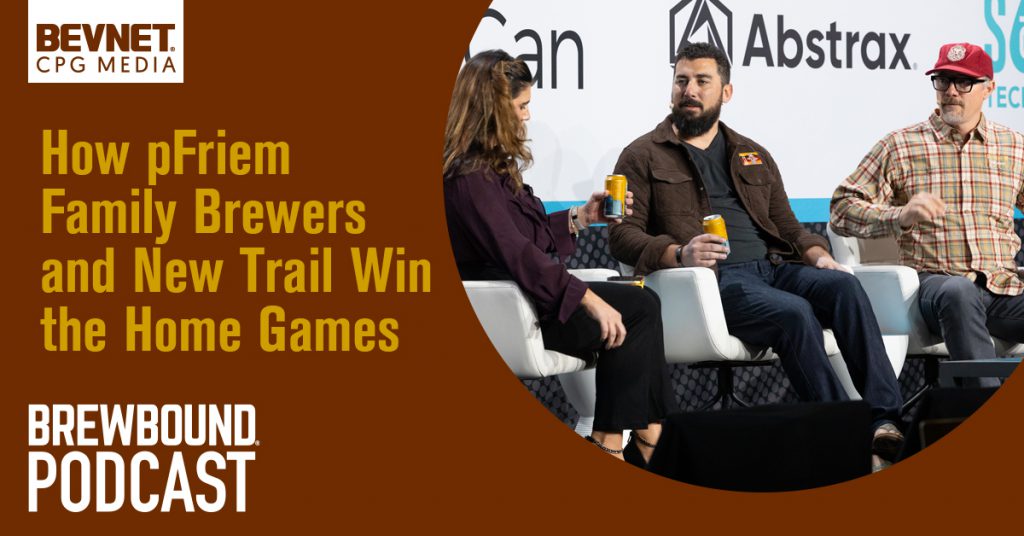
[00:02:23] Jessica Infante: Yeah, that is the life. All right. Well, before we get too far down the rabbit hole of diapers, that it's not what the people are here for. The people are here for the beer news. So this week we did something a little different. I don't know that we've ever really done this before, but the featured conversation on this week's podcast episode is actually a conversation from Brewbound Live last month. A talk I had with leaders from New Trail Brewing. We have COO Mike LaRosa and we have CEO Rudy Kellner of Frame Brewing in Oregon. I feel like I previewed this on this podcast. I recapped it on the podcast. And because I just talked about it so much, we're just going to let you listen to the whole damn thing. Why not? Right? Great chat with those guys. Really talked a lot about how their two breweries have been able to find great success through distribution, but in a relatively small-ish footprint, not straying too far from their home states. So great talk. I think a lot of really valuable info there. So we'll get to that.
[00:03:19] Justin Kendall: And you mentioned good chemistry between the two of them.
[00:03:21] Jessica Infante: Like, I don't even think I had to be there. They could have just conducted that conversation without me. You know what? I love helping people make new friends.
[00:03:31] Justin Kendall: Good.
[00:03:31] Jessica Infante: Yeah. Is friend matchmaker a thing? Could I do that?
[00:03:34] Justin Kendall: You should be. Right? Especially in these times of lack of socialization. Everybody's beating the drum of socialization, especially our friend Lester Jones.
[00:03:46] Jessica Infante: Lester Jones big time. But he has plenty of friends. He doesn't need my help.
[00:03:49] Justin Kendall: Well, but I mean, he's old school, so he's in the bars, you know, he's going out and maybe it's the younger people that need it. I was watching, I can't remember what it was. It was some news program. They were talking about old school personals making a comeback, like written personals, no picture. I love that. People are trying to connect. They're finding old school ways, analog ways of doing it. Dating to me sounds frightening.
[00:04:17] Jessica Infante: Horrific. I want no part of that. I'm glad I never had to do it. I just met a fellow in the basement of a frat house and 19 years later, here we are. But meeting new friends is hard too. Like I've tried for so long to make friends in my town and it was just, it's tough.
[00:04:35] Justin Kendall: Yeah, don't let people tell you that Iowa nice is a real thing or anything because we moved here and our neighbors, the nicest ones are the oldest ones.
[00:04:47] Jessica Infante: I mean, you know, they probably make good friends too.
[00:04:49] Justin Kendall: Yeah, they're all right. It's not like we're hanging out, but I mean, they're at least friendly and they talk. There are other people that just don't even wave. It's weird.
[00:04:58] Jessica Infante: Weird. Yeah. I thought having a kid in daycare would help, but no, everybody's in the same, like, I am just trying to survive mode. Like, you know, you say hi to other parents at drop-off, but we're not buds. No, but I can make other people friends. I had lunch with our friend Ricard Nesson last week in Boston. And I actually dressed myself for daycare because I was driving right in after dropping off Cora and her teachers were like, wow, you look so pretty. Which is just a sign that I apparently am turning up there most mornings looking like a bridge troll. So maybe this is part of my problem.
[00:05:37] Justin Kendall: You and me both.
[00:05:38] Jessica Infante: That's why the moms don't want to be my friend. I can't make friends for myself, but I can make friends for you. So, you know, shoot me an email.
[00:05:45] Justin Kendall: Maybe this is a thing. If it's not already a thing, you should make it a thing and make the money.
[00:05:50] Jessica Infante: What I think I'm really good at is connecting other women in beer, because there's not a whole lot of us, and I know a lot of them. So if I meet somebody, I'm like, oh, you would be really great friends with this person. And then I introduce them, and they get along like a house on fire. So I have a skill. Yeah. Well, there's a lot going on at Brewbound.com. Justin, you're like a day and a half back in, and I feel like we have covered a lot of ground here on news. You had a story today about a lawsuit against Rogue. Tell me about it.
[00:06:17] Justin Kendall: Well, a former employee is suing the company saying that they violated the Warn Act, which requires you to give 60 days notice before a plant closure or mass layoff of 50 people. And we all know that didn't happen in Rogue's case because they just shut the doors on November 14th and pretty much called it there. They had some employees stick around, I think like a handful for, Maybe even less than that. Yeah, for a few weeks after to wrap things up. But the majority of them were let go without any notice. And I have searched the Warren tracker over and over again and nothing's showing up there. So that story's up. We've got that story on Pat Cobran's, the maker of Big Sips and their victory over buzz balls in the, uh, what was it? A trademark lawsuit over the packaging.
[00:07:13] Jessica Infante: Yeah, Buzzballs had filed a lawsuit against Big Sips, I think a couple other brands too. And Big Sips challenged on the merits of their patent and was able to be declared successful by the USPTO. Apparently you can't own the notion of small round drinking vessels. So there's that. Zoe brought up a great point on Instagram. Zoe is not with us because she's at the Beer, Wine, and Spirit Summit on Coronado Island. So nobody feel bad for her because we got clobbered with a blizzard here in Massachusetts over the weekend. So she's missing all of that. But she and our coworker, Spirits editor, Ferron Salniker were there and I guess they were chatting and Zoe had posted that big sips and big jugs, it's younger but larger brother. probably that container in particular, but this rise of, you know, hard sports drinks. Really, I think we can trace it all back to Borg's. Borg's everywhere.
[00:08:15] Justin Kendall: That's fair. Even Big Jugs is like a smaller version of a Borg, right?
[00:08:19] Jessica Infante: Yeah. Same size and everything. It's got a handle. So I'm sure we'll hear way more from Zoe next week when she's back. We also had news break that RNDC, Republic National Distributing Company, was able to secure additional funding to shore things up, which I bet they must feel pretty relieved about. You know, news broke last week, obviously, that we covered on the pod that The Reyes Beverage Group and RNDC are in talks to sell RNDC operations in seven markets to Reyes. Go back an episode and hear more about that there. And also leadership changes at Leinenkugel. Leinenkugel is the famed, very old Wisconsin beer brand dating back to, I think, right after the Civil War. Has been owned by Molson Coors for close to 40 years now. Change at the top, incoming president Katie Leinenkugel will be taking the reins from her cousin, Tony Buhair, who is going to be leaving after three years at the top. And you can read all of that and more at Brewbound.com. I know we try to get as much news as we can into the podcast, but there's actually so much more of it on the website and in our newsletter. And the best way to access any of that is to become a Brewbound Insider.
[00:09:30] Justin Kendall: And we'll have more on the Beer Industry Summit from Zoe and Farron. By the time you're listening to this, we'll have the first Reporter's Notebook out and probably the second by the end of that.
[00:09:43] Jessica Infante: Zoe moves quick, so you will definitely be reading all of that soon.
[00:09:47] Mike LaRosa: This episode is brought to you by the Craft Brewers Conference, where big ideas, bold beers, and brutally honest shop talk collide. Join thousands of industry pros leveling up their game. Don't miss it. Register now at CraftBrewersConference.com.
[00:10:08] Justin Kendall: Coming back in fresh, it feels like so much happened, even in the two-week span. I was gonna come back two weeks earlier than I did, and thankfully you told me to stay out. That ended up being such a great decision, but there's so much that you all covered.
[00:10:24] Jessica Infante: I mean, I would have told you to take more time, but I know you, and you would not have wanted to take more time than you have.
[00:10:30] Justin Kendall: I don't know. I was starting to feel like a retiree.
[00:10:34] Jessica Infante: It's funny that you think you missed a lot of news. Cause I don't feel that way. Like when we were talking about what to do for the pod this week, you were like, well, let's just talk about the news. And I was like, there's not that much.
[00:10:43] Justin Kendall: Well, the RNDC stuff happened and it felt like one thing after another was hitting right after it was like, you know, I'll take the extra two weeks. And it was like the Seattle cider deal with two towns and just like the snowball. Dolph from Heineken is stepping down, but it is a little bit like being an unfrozen person too when you come back and there's like all this nostalgia. It's like, was I in a coma in like 1988 and like, You wake up and like AB's running Super Bowl ads that probably have the frogs back in them. That's definitely a frog. The Most Interesting Man, Dos Equis commercials are running now on like all sports programming. I saw the commercial multiple times over the weekend. You got Christopher Walken, an 82 year old man in Wilson Coors commercials. It was a good commercial, but it was also like our spokespeople in beer now are octogenarians.
[00:11:42] Jessica Infante: I'm glad you bring up the Most Interesting man because we got that press release under embargo last week. And I was like, all right, good for you guys. I didn't rush to cover it because I didn't think it was, for lack of a better word, all Most Interesting. And then it was everywhere. And then I was like, did I make a mistake? And did a little gut check with a few of our other friends. And they were like, no, you did not make a mistake. It's just a slow news day. And that's why this is everywhere. The Most Interesting man, Look, there's only like two stories I really remember hearing in graduate school. One is the foundation of Viagra, which we're not going to get into, but the other is this, is that the Most Interesting man is, you know, a character actor and his wife happens to be a commercial casting director who was the commercial casting director on this commercial. And the brand people at the time, and this is going back 20 years, had wanted the Most Interesting man in the world to be some young hot guy, which I could see. But she talked him out of it and was like, no, you need somebody who has lived a life and has gravitas. And I know just the guy, my out-of-work actor husband. And I think she was right. I understand what they're trying to do.
[00:12:56] Justin Kendall: The residuals on that had to be great too.
[00:12:59] Jessica Infante: Must've been great. Worked out well for that family. Was it worth it for me to drop tens of thousands of dollars on a master's degree to only remember that? Probably not. But Justin, you're right. What are we doing? Have we run out of ideas?
[00:13:16] Justin Kendall: It's what it feels like, right?
[00:13:18] Jessica Infante: Mm-hmm.
[00:13:18] Justin Kendall: I'm nostalgia coated. I am definitely of a nostalgia generation. You totally are. If you grew up in the late 70s, 1980s, everything is so built into you from that era where you're like, If you were a boy growing up, it's like Star Wars and Transformers and Teenage Mutant Ninja Turtles and wrestling and, you know, all that stuff. He-Man that you live this like nostalgia, pop culture life, and it like circles back. And I can't remember how many years they say it is. It's like every like 20 years, people are nostalgic for something. It's like the perfect time to hit on that nostalgic bone. But This industry is running on a treadmill, it feels like, instead of moving forward. And so we have these ideas that come back around. And while they are iconic ideas, they may be good commercials, I don't know that they're reaching that next generation of drinker in a way that we need to be. It doesn't feel like this has the pulse of pop culture.
[00:14:24] Jessica Infante: And are those drinkers that we're trying to reach, like the 21 to 25 year olds, are they watching live sports and seeing commercials? Is that where they are right now?
[00:14:34] Justin Kendall: Of any of the programming, I imagine live sports is the one that is most valuable because people want to see it live. They're not going to watch a prerecorded game, usually.
[00:14:45] Jessica Infante: No, that would be sad.
[00:14:47] Justin Kendall: But are they even watching sports?
[00:14:49] Jessica Infante: Is my question. Nostalgia is an important driver because life today is really hard. So you obviously want to think about a time where you weren't worrying about your baby pooping or making your mortgage payment or like who knows what else. That's obviously part of this. But if you want to get younger people into the game, I feel like playing into the older people's nostalgia is not it. I can't take credit for this. My husband brought it up, but he was once was like, do you feel like Fleetwood Mac becomes a thing like every two years? And the kids think they're discovering them for the first time. And I was like, yes. Remember like the skateboarding guy that introduced Fleetwood Mac to a whole new generation. And then two years later it was something else. And then right now here we're stuck in that viral loop where the Piano Man to Silver Springs audio is everywhere and everybody is copying it. Like, I think you got to trick the kids into thinking that this is something new, maybe, and they think that they're discovering it.
[00:15:51] Justin Kendall: Look at stranger things. and how music charts off of that show. You've got Kate Bush running up the hill, how that charted after it appeared in the show. There was another song recently, I think, that popped because of it. I can't remember what it was. And here I watch Stranger Things. But talk about nostalgia coded. But it's a show built on nostalgia.
[00:16:16] Jessica Infante: Right. Because it's set in what, like the 80s?
[00:16:19] Justin Kendall: Yeah.
[00:16:19] Jessica Infante: I don't know, like, is this what we need? Is this just helping, like, the people in charge at these big beer companies feel better? Because they're thinking about, yeah, this really worked 20 years ago when shit was great. Let's do it again.
[00:16:34] Justin Kendall: Well, it's like the taste great, less filling thing.
[00:16:36] Jessica Infante: Yeah, but that makes sense.
[00:16:37] Justin Kendall: I think Molson Coors tried to bring it back and do like the Miller Lite All-Stars or something like that. I remember this from a distributor convention that they had two years ago, but then I don't feel like it took off like it could have. But then are we just talking about old ideas again, you know, and where are the fresh ideas that are going to help this industry move forward? Exactly.
[00:17:03] Jessica Infante: Zoe went to a conference maybe last year and it was a marketing conference, I think like the Stout Collective hosted it. And there was like a brand strategist speaker who pointed out that Gen Z right now, like the elder Gen Z members who are able to drink are really nostalgic for like the late 90s, like Y2K era because in their minds it was a time when we didn't all have cell phones and we weren't all under the surveillance of our peers. So they think like, hey, it must have been great to interrupt that and in a lot of ways they're right and that's why they got into stuff that was cool back then. But I think we all kind of need to accept that these guys drink differently. They're not going to be doing weekend-long beer binges the way that we used to and we've got to figure out what they want show them that these products can help fill that need state for them.
[00:18:01] Justin Kendall: I know these are Anheuser-Busch's biggest brands. I know everything that they put out for this Super Bowl, those are their biggest brands. But say you maybe stumbled into a deal for a company that has ties to younger consumers and is fresh and hasn't had the eyeballs on them before in a way that you might be able to put focus and attention on them before. Wouldn't you want to make a big splash?
[00:18:33] Jessica Infante: I see where you're going. I'm picking up on this beat.
[00:18:36] Justin Kendall: And I think the box you are putting forth here makes a lot of sense. I don't know when the deal closes. I can't remember off the top of my head. It's been a little while, so I'm in Q1. Yeah, maybe that's part of the issue here, but I don't know, man. It seems like an opportunity that you could make for that brand, for Cutwater, for Neutral, for any of those brands that might connect in a different way to a different consumer.
[00:19:00] Jessica Infante: No, let's just keep trotting out bug light and hope that people forget why they hated it.
[00:19:06] Justin Kendall: And it's the ideas. If those are frogs under, if you haven't seen the commercial, it's like a bunch of Clydesdales in a barn and there's a metal bucket that's moving. And of course, what could fit under that metal bucket? Frog, I guess. Maybe. Maybe.
[00:19:26] Jessica Infante: What if it's the gecko?
[00:19:32] Justin Kendall: We'll just merge everything.
[00:19:34] Jessica Infante: What was their other reptile?
[00:19:36] Justin Kendall: Oh, the Iguana or something?
[00:19:39] Jessica Infante: The Iguanas. I totally understand why the AB marketing team is nostalgic for those days when they ran Super Bowl ads and they owned it from top to bottom. But maybe the world moved on. I'm not trying to make anybody feel bad. And I highly doubt they listen to our podcast.
[00:19:57] Justin Kendall: No, I highly doubt they do or care. Or care. It's like the Most Interesting man too. Have you seen the ad yet? So he's got amnesia and he's gardening and doing all these mundane tasks in like a suburban neighborhood. And he ends up in the garage and sees a Dos Equis bottle in the back of his fridge and it triggers him. And all these memories flood back of being like the Most Interesting man. And then a helicopter flies overhead and throws down a rope and he grabs it and flies off and then The ad ends with him at the table, of course, doing the whole monologue thing, you know, about drinking Dos Equis. And he's next to a younger woman, at least one from my recollection. And she's got like this hundred mile stare looking off. If I'm remembering right, she's just looking off into the distance, not at him, like talking to the camera. And I'm like, that makes him look like the Most Interesting man. It's like this old gas bag at the bar, like just talking. And she's just like, I would rather be anywhere else than here right now, but you're buying me drinks. So I guess I'll sit here.
[00:21:13] Jessica Infante: Well, as long as we're not, you know, giving the old men the aspirational idea that all of the young women want to listen to them prattle on. Sometimes old ideas are good, but we really need some new ones. You know what, Lester would probably champion this because he is always talking about making sure that we don't forget the boomers. Yeah.
[00:21:34] Justin Kendall: We shouldn't forget the boomers, but we should also maybe put a different foot forward when we're trying to reach new audiences. I think that also takes us to another thing about this industry is getting new voices and new blood, which I think we did here with Rudy and Mike from Frame and New Trail. So let's get to that conversation.
[00:22:00] Jessica Infante: Both Freem Family Brewers and New Trail Brewing achieved double-digit volume growth in 2024 and are knocking on the door of 50,000 barrels in a relatively tight distribution footprint. Please welcome to the stage, Rudy Kellner, CEO and co-founder of Freem Family Brewers, and Mike LaRosa, COO and partner of New Trail Brewing. Got you a beer. I love how the word is out to just bring me a beer. It's pretty easy. I mean, it's not hard to figure out. It's really not. I'm psyched about this one, because when I attended your distributor meeting last year, this was not ready yet, but it was coming. No, we were still piloting it at that time, right? Yeah. Yeah, you were. And look, I think we're even now, because I had a hellacious time getting home from that, and you had a tough time getting here. So cheers, bud.
[00:22:59] Rudy Kellner: Very true. It's hard to be in the middle of nowhere.
[00:23:01] Jessica Infante: Look at us now.
[00:23:02] Rudy Kellner: Cheers.
[00:23:06] Jessica Infante: Okay, so both of you, like we know 2024 is pretty much like lights out for both your breweries, but how is 2025 shaping up?
[00:23:17] Rudy Kellner: Really well. I mean, I don't know if you heard, but we were named Craft Brewer of the Year by Brewbound. Really?
[00:23:22] Jessica Infante: Who's that? Whose idea was that? I don't know.
[00:23:26] Rudy Kellner: Some organization of some sort. No, it's looking well. We're looking at about an 18% growth. We'll end the year 53, 55,000 barrels sold. Really strong.
[00:23:38] Jessica Infante: Nice, well, I shouldn't tell you this, but I'm gonna. It was a very tough call between two breweries represented on the stage for Craft Brewery of the Year. But, Rudy, how's 2025 for you guys?
[00:23:47] Family Brewers: It's good, not as good as last year. We'll talk about why and how, but we're happy we're growing. We're growing high single digits in a really challenging market. We've done some different things in 2025. We've expanded retail. We've invested into some more nascent, further away markets, which we'll get into as well. We're blessed to be growing significantly above market still, and just in different ways, which we'll get into today.
[00:24:16] Jessica Infante: Yeah, totally, amazing. Well, can you each detail your distribution footprint and share what percentage thereabouts each state accounts for in volume?
[00:24:25] Family Brewers: Sure. For us, our footprint is heavily weighted to the Pacific Northwest. It always has been. We're 13 years old. We've been in this since 2013, 2012. We started really just in Oregon and Washington. And for the first You know, nine years or so, we only sold beer in meaningful volumes in Oregon and Washington. Oregon and Washington represent about 95% of our distribution footprint currently. We opened Idaho about three years ago with Scout, now Idaho Wine Merchants, and Hayden. And then we we entered in in San Diego and Las LA LA as well quite recently So but you know, Idaho LA and San Diego a little bit of Vegas represent only about 5% of our business It's a very important 5% But the vast majority of our of our sales are at home.
[00:25:21] Jessica Infante: So what are the benefits of being in Vegas?
[00:25:23] SPEAKER_??: I
[00:25:23] Family Brewers: It's a really good question. I think for us it was opportunistic. We see a lot of folks from Oregon, from the Northwest, spend time in Vegas, following sports, spending money, having a really good time. Part of our view of who we are is we're based in this cool little vacation town in the Columbia River Gorge and Hood River. And a lot of folks associate Hood River with a good time. It's a vacation town. No one's ever gone there and not had a good time. So part of the reason we're in Vegas is we want to be places where people make memories. So that was kind of the idea behind that.
[00:26:05] Jessica Infante: Awesome. Great. Mike, how about Neutro's footprint?
[00:26:08] Rudy Kellner: We're five states, about 80% to 85% of that's in Pennsylvania for our volume. We have Maryland at about 5-ish percent, New Jersey at about 5-ish percent, West Virginia at about 3%, and Delaware at 1% to 2%.
[00:26:27] Jessica Infante: Mostly tiny.
[00:26:28] Rudy Kellner: Yeah, there's more chickens than there are people in Delaware. I don't know if you know that. That's a wild fact about Delaware. Yeah. Wow. Big Tyson plant down there.
[00:26:35] Jessica Infante: They're dead chickens.
[00:26:40] Rudy Kellner: They are dead chickens at some point. Tasty, but you know.
[00:26:44] Jessica Infante: Well, what was attractive to you and your business partners about these distribution strategies? Both of you. I don't know who wants to jump on that first.
[00:26:51] Rudy Kellner: Yeah, I mean, we talk in a lot of metaphors about that. And one of the ones that we always come back to is about floorboards. We want to establish as many floorboards as possible for our distribution footprint, so that if we were to lose something or lose one of those floorboards, there's somewhere else to stand. We want to be deep, local, and really resonate in a home in a local market. So for us, when we started eight years ago, we were thinking local was the 10 counties that surrounded Williamsport. As time went on, we're like, well, could local be larger? Could it Could Philadelphia? Could Philadelphia be local to us? Can Pittsburgh or Erie be local to us? So it just grew and grew and grew. Awesome.
[00:27:32] Jessica Infante: Rudy, how about for you guys?
[00:27:34] Family Brewers: We came into existence in the later innings of the big boom, right? It was like rounding second base in the boom in 2013, call it. We could argue about the years. We had a sense then that At some point in time, there's going to be really, really good beer everywhere. And that if you can't win the home games, it's going to be really hard to win the away games. We also were, frankly, limited by... We're all family-owned. We don't have any outside funding. This has been a scrappy, organically built operation. which at some point has constrained our growth, but also today, especially sitting here, has been a wonderful gift because we haven't had the ability to get over our skis, from an investment standpoint or geographic standpoint, to all the layers. So for us, being organically funded and playing the really, really long game in this business, And coupled with the feeling that at some point there's going to be pretty good beer everywhere, it all sort of came back to the idea of you've got to be strong at home. That's what matters first and foremost.
[00:28:45] Rudy Kellner: I mean, in 2013, you would have had all the opportunity in the world to go wide. It was really, really popular at the time to make 5,000, 10,000 barrels and try to hit larger markets, Denver Could Philadelphia or whatever. I mean, those opportunities must have been presented to you.
[00:29:02] Family Brewers: They were presented, but we also knew that Oregon drinkers were really loyal to Oregon beer, and we wanted to become the next Oregon beer. And that market is super competitive, and we spent so much of our sales and marketing resource establishing credibility in Oregon, and then very slowly starting to establish credibility in Washington, that really the idea of being pulled away from home was never real. The opportunities were there, right? I'm sure that those markets are larger in terms of people and how much alcohol is consumed than our home market, but we were so focused on getting deeper and deeper and deeper and building a longstanding brand that by the time that was done, there was really no money to go stretch anywhere else.
[00:29:52] Rudy Kellner: No, totally. I 100% agree with your strategy there. I mean, we feel entirely the same.
[00:30:00] SPEAKER_??: Yeah.
[00:30:00] Jessica Infante: You want to do the rest?
[00:30:01] Rudy Kellner: I don't know. Do you? You want me to?
[00:30:02] Jessica Infante: We're done. All right. And the Pitch Slam winner is? We had our prep call, and I was like, I didn't even need to be there. These guys just got on like a house on fire. It was actually very cool to see. So, I mean, Rudy, you mentioned like Oregon drinkers, loyalty to Oregon brands. And to me, Pennsylvania has a lot of the same going on, but that's like generational, like.
[00:30:21] Rudy Kellner: Yeah. I mean, we have, we have some of the largest breweries in the country in our state. And, you know, you, when you're in Pennsylvania and you say lager, it means one thing. It means yingling, you know? So, and we have a really, really solid, um, uh, beer culture in Pennsylvania. Philadelphia, I think, is one of the best beer markets in the world. Home of CBC next year. Sure is.
[00:30:41] Jessica Infante: Do you find that that PA loyalty extends to Kraft as well?
[00:30:44] Rudy Kellner: I think so. And I mean, Philadelphia had all of the opportunities in the world in the early 10s. Everybody was dropping great beer into that city, and it really helped develop and build that culture up. But as Rudy was saying, the writing was on the wall that at some point, beer was just going to get better year over year, brewery over brewery. So I think having a network of really good local breweries that can produce beer is really important.
[00:31:12] Jessica Infante: That dovetails perfectly with this next audience question, which is a great one. With many craft drinkers tending to explore across brands, how do you create loyalty for repeat purchase in your local craft brand?
[00:31:24] Family Brewers: I mean, for us, it's been, this is going to be a boring answer, right? And I think a lot of the, man, a lot of the things I'm hearing last couple of days were, we're looking for easy answers. We're looking for like, we're looking for hope, right? Like, oh my God, you know, they're going to start drinking again, or young people are going to go out and, I I come here, too, with the hope to find more hope. It makes it easy. We spent a long time sailing downwind. Some of the challenge here is we're looking at the future and being like, oh, my God, we're going to be sailing into the wind for a while. I mean, I think you've got to embrace that. You know, for us, you know, it's kind of a roundabout answer to your question, but, you know, for us, it's been religious focus on quality, religious focus on, like, actually running the business. And, you know, we spent a lot of time and energy and money running the business before it became obvious that all of us in this room have to spend more time, like, running the business. You know, the markets are tougher now than they have been for all the reasons we talked about last couple of days. They're going to continue being tougher for a long period of time. And if we're not all worried about running the business and running a better business today than we were yesterday, we're kind of fucked. So for us, it was built around the idea of quality and making world-class beer. But secondarily, and now primarily, we are obsessed with running a better business because I think that's absolutely essential.
[00:32:48] Jessica Infante: totally table stakes right now, just as quality was 10, 12 years ago.
[00:32:52] Rudy Kellner: I could have given the same answer. I mean, that's exactly what I would have said. So we're good people, good marketing, good beer. We don't think it's that hard.
[00:33:01] Jessica Infante: Yeah. I think you just angered a good many people.
[00:33:06] Rudy Kellner: I'm sorry.
[00:33:07] Jessica Infante: Well, so in 2020, when the on-premise closed down and that was not available to craft breweries, you saw a lot of breweries opening new markets that were probably a little too far away just because they knew it would be a good way to source growth, or they thought it would be an easy way to source growth. And I have noticed a lot of those breweries, at least the ones that came to Massachusetts where I live, are pulling back. So knowing that you guys aren't going to do that, what levers do you lean on for growth when you know you're not going to be able to just say, hey, we're going to Texas?
[00:33:37] Rudy Kellner: Yeah, I mean, for us, it's all about velocity. We want to see people pull more beer off the shelf. We hope that it's neutral. But our sales director has this phrase that he's got the whole sales team on. It's don't go chasing unicorns. You know where the beer is sold. Go and try to increase your accounts by 1% to 2%. You're not going to find another account. You know the account that can sell five halves a week or whatever. Get that sale, keep it, and grow it.
[00:34:07] Jessica Infante: Nice. Rudy, how about for you guys?
[00:34:08] Family Brewers: I mean, you know, for us, I think we always come back to the realization of there's a tremendous amount of beer that's consumed in Oregon and Washington, right? And for me, like, when we have, you know, there's a lot of easy, like, oh, you know, let's ship, you know, pallets of beer to this place and, you know, open that market and open this market. That's very tactical. That is not sustainable. There's very little scale in that approach. You're checking some boxes to get through a week, a month, a quarter, or whatever the time period you're trying to solve for. We always try to solve for a very long time period. For me, it's like... Why would I rather not invest more resource to try to get freem pills in our handles everywhere in Portland? Why would I spend that money trying to ship beer to a place that we have very little brand stickiness? People don't know what's there, and they don't care about freem in the Midwest. Am I bummed about that? Kind of a little emotionally but but that's not central to our to our strategy. That's not central to the reality of the market today I want every single, you know bar owner in Portland to have the opportunity to put free pills in Iran to me That's like that's the win
[00:35:22] Jessica Infante: Cool. Great audience question. How did you go about establishing credibility in your first ten years and does it look different today? Is it different for younger new to category drinkers? What do they care about versus what us old gals cared about when craft beer was newish?
[00:35:43] Family Brewers: I don't think it's really that different. I'll give another boring answer. I'm super boring about this, but it's being on the street, being in front of customers. and making the, you know, the bartenders believe, right? Like, who are our best salespeople? It's the bartender, right? And it's still the case. We, you know, we've had, you know, some legendary folks represent our brand. You know, you guys are like Matt Kowalsinski, right? Matt was on the street for the first five or six years every single day selling draft handles and just being, you know, being himself and making the bartenders believe, and they started selling Freedom to everybody else. For me, I don't think that changes. We fundamentally believe you have to build a brand in the on-premise, in the beer category. I have a hard time believing how you build a brand in Safeway. I think that's like, when you get there, wow, great, congratulations, you're selling a lot of beer. But we've been very much on-premise focused and we've very much been focused on investing into our sales force.
[00:36:51] Rudy Kellner: Yeah, I mean in the early years for us, my business partner Dave and I were on the street a few times a week just going out trying to windshield warrior it and win tap handles and win accounts and it helped. Rudy's not wrong, the bartenders are some of the best people that sell our brand.
[00:37:10] Jessica Infante: For sure, the original influencers as it were.
[00:37:12] Rudy Kellner: Yeah, early adapters, you know.
[00:37:14] Jessica Infante: Yeah. Well, so something that struck me when we were prepping is the difference in your markets. Like Rudy, Pacific Northwest, super chain heavy. Mike, you're on the Northeast, which is very independent. And how you build a sales team to go to market varies. What do your sales teams look like?
[00:37:29] Rudy Kellner: I mean, Rudy and I were talking about it before we got on stage. Our sales teams are entirely different by size. I hold about 20 salespeople, and Rudy said you had seven. So I mean, it's just boots on the ground if you're going independent. And for us, we have to worry about both paradigms. Like, our salespeople have to be able to sit with Sheetz and Wegmans and provide them what their wants and needs, but they also need to be able to, you know, get in their car, go down the street and go to the independent retailer and build a display and rotate the beer and do it all. Like, it just comes down to putting boots on the ground and having a really talented team to do it.
[00:38:06] Family Brewers: Yeah. I think your sales organization has to be a reflection of two things. Number one, your brand identity, who you are, what you stand for, what is the ethos of the company. Your salespeople have to be able to carry that flag naturally, right? And organically. It can't just be like, oh yeah, I'm the pickleball guy or whatever. You've got to hire the people who live it, who are it. And we're lucky enough to you know have have them at frame and then the second thing is you know your sales organization It's got to be a reflection of the the channel that you're serving But you know I'll say you know for us it was it was you know, we we took a long time like we it took us you 10 years to hire our first key account manager. Which is, knowing what I know now, we could have gotten there earlier, but we also, frankly, couldn't fulfill the demand that we were generating in the on-premise. So if we had hired a key account manager in year five, we'd be behind the eight ball, and Ferber and others would be really mad at me, because we'd be shorting them orders. So I think you have to really understand Who you are and kind of what you're capable of and build that sales organization, you know around it.
[00:39:18] Rudy Kellner: What's your spread again? I'm sorry, but I don't remember from our prep about 70 30. Okay, we're not too dissimilar. Yeah, we're about 80 70 30 Package. Yeah, so we're about 80 20. So yeah.
[00:39:29] Jessica Infante: Yeah Awesome. Well, so speaking of the demand how often are you guys fending off distributors who want to bring your beers to new new markets?
[00:39:37] SPEAKER_??: I
[00:39:37] Rudy Kellner: I mean, in the early days, it seemed like it was a weekly email or a phone call. Anymore, I mean, as the landscape of beer has changed, I think that wholesalers are certainly a little bit more reluctant to pull in another brand into their portfolio. And honestly, we've gotten pickier, too. And both of our approaches has been pretty obvious. Every growth that we do is extremely deliberate and calculated and thought out. And I'm not just going to pick up and sign with a wholesaler to start sending beer to Denver.
[00:40:08] Family Brewers: Yeah, same for us. I think being deliberate and knowing what you're looking for out of further away markets. In the Northwest, there's another feature that we have to manage in the Northwest, which is extreme seasonality. Our sales fluctuate by about 50% in the wintertime. It's really, really dark in Portland. 16 hours a day in the middle of the winter. So people drink a lot less beer, they go out less, there's less parties, less games outside. So one of the reasons we look for further away markets is to tamper some of the seasonality, the weather seasonality, which is one of the reasons why LA, San Diego, Vegas are interesting, right? Because there's seemingly less seasonality there and it's always nice down here. Does January happen in Vegas? I don't know. I hope maybe we should find out. Let's go.
[00:41:05] Jessica Infante: Peel trip. What would it take for you to want to add a new state and what might that hypothetical launch look like?
[00:41:13] Rudy Kellner: Yeah, I mean, we start with the question of like, is there room for us, right? Does this market need a hazy IPA? Is the wholesaler, who's in the house? Who's against the house? Who are they selling against? And then the questions about what their sales infrastructure or logistics infrastructure looks like. KPIs those things we start to dig and dig and dig further down that that rabbit hole and then we we want to look at you know, what is a Realistic and attainable goal for an agreement on volume, you know, what what's actually gonna happen here and what sort of mutual Financial decision do we need to make as a partnership to ensure that to happen? You know, how many how many sales reps are we gonna have what sort of? What incentives do we need to provide to your team, the wholesalers team, in order to get it done? It's a long process.
[00:42:09] Family Brewers: You know, for us, it's all about, to me, like the wholesaler, you know, and I think Jesse said a lot of those things just now, same JR, you know, a lot of this is like matching. Size matters, right? You don't wanna be the smallest brand in a really, really big wholesaler's book, right? It's a mismatch. You also don't wanna be the biggest brand in a small wholesaler's book, right? That's a mismatch, right? Because then you're pulling them along and you're begging them to make investments and there's problems. So to me, a lot of this is about matching the size of, the wholesaler, and also being realistic about how much it's gonna take for you to invest to actually make this relationship work. I think you can't be opportunistic and really tactical about this, unless you agree that it's just gonna be an opportunistic, tactical thing, and there's no targets, it's just gonna be like, I'll ship you beer once in a while, whatever. But I think what we're looking for is long-term relationships, and we wanna go to places where we think the brand is gonna work. You know, and that's why, you know, I think the heat map for us really is just emanates out of the Northwest. And it's, you know, it's kind of linear, you know, looks like the radar, right? It doesn't make sense for us to go far away. Because like I said, there's good beer everywhere. And, you know, the brand doesn't translate very well, you know, into faraway places. There's, there's a lot of beer between us and that point.
[00:43:26] Rudy Kellner: I learned yesterday that gas is expensive.
[00:43:29] Family Brewers: Beer is heavy. I didn't realize that.
[00:43:34] Rudy Kellner: It was $7.69 at a gas station. I paid $2.85 to get to the airport. Crazy.
[00:43:45] Jessica Infante: Let's talk about your networks. How cohesive is your distributor network?
[00:43:53] Rudy Kellner: We're a hodgepodge. I was sitting with my partners this morning looking over those questions, and I was like, I don't know, by volume or by number of wholesalers, there's no trend. We can't say that we're definitively in AB houses, or definitively in Molson Chorus houses, or we're all independent craft wholesalers. We've always tried to align ourselves with the wholesaler that makes the most sense for that region.
[00:44:19] Family Brewers: 100%. For us, it's been very organic. When we see that we outgrow wholesalers, we start pushing because, again, we never want to be the biggest brand in anybody's book, I think, fundamentally, unless wholesalers respond and they're able to grow with us. It's been a bit of a hodgepodge. It's been very organic. Do you have small craft wholesalers?
[00:44:46] Rudy Kellner: We do, yeah, absolutely. And so, I mean, you have to be moving into top positions for that one. Yeah, I mean, we're in the same boat that way.
[00:44:52] Family Brewers: Yeah, which is, you know, I mean, I think then you have to find a way to level up the relationship. For sure. You know, and again, I think it was said on the previous panel, this is a relationship, this is like you get what you, you know, you get what you put in. You just can't send an email and expect to have things done. You've got to know people and you've got to be able to invest in these relationships. Yeah, 100%.
[00:45:13] Jessica Infante: So how does this strategy of distribution simplicity bleed through to other areas of the business? Does it affect your portfolio strategy?
[00:45:21] Rudy Kellner: You know, I was talking with my partners this morning about that question. And I asked them the question, do you think what we do is simple? And ultimately, what we came up with or what I was trying to figure out is that all the decisions that we made along the way in the moment seemed really, really difficult. But I look back on it and how simple the path was. We were doing a ton of LTOs, weekly drops. And that was the primary driver of our business in the early day. And over time, we had to grasp more and more of a core flagship. And we had a flagship, but it was 20% of our production or 15% of our production at the time.
[00:46:03] Jessica Infante: And what is it now?
[00:46:03] Rudy Kellner: Well, brand family is probably close to 60%. So it's a significant part of what we do. But it seemed so difficult to depart from this goldfish brain to start focusing and doubling down on flagship growth. And we looked back on that decision like, well, duh, why didn't we do it sooner?
[00:46:23] Jessica Infante: Well, but when you started, that was the play. That's what everybody did. It was like rotationation all the way down. So you weren't alone.
[00:46:30] Rudy Kellner: No, we weren't, but I guess we made the decision to move that way, and it certainly affects our portfolio. And we still do the one-off LTOs. We're, I don't know, maybe close to 50 releases in LTO a year. So we still have both. You're keeping it spicy. We do keep it spicy, you know.
[00:46:49] Family Brewers: Yeah, I mean, for us, our footprint, again, I come back to this idea, for all of us here, unless you live in some remote island that I don't know about, or maybe Alaska, right? But there's a lot of demand in your home markets. There just is. And I love sports. If you can't win the home games, you're never going to be able to be effective winning away games. I think that's a truth. It's universal. The other thing I'd say, and I don't mean to be demeaning to the sales folks in the room, our guys included, but I think if your strategy is is sales-driven, you probably should rethink your strategy. Your strategy has to be driven by the market, by the consumer, and you have to be fluent in segmenting your market. I think a lot of expansion and a lot of overextension happens when you are extremely sales-driven, You forget that you need to segment your market. Who is your customer? Who are you? You stop asking those questions and you're going after the next PO, the next whatever. That's tactical. That's not strategic. And that's a really, really slippery slope. So that's been, you know, that's why we've always stayed home is there's a lot of beer. And if you can't be effective convincing people 100 miles away that you have something to offer, how the hell are you gonna be effective convincing people 1,000 miles away that you care about you? Like, let's be real.
[00:48:26] Jessica Infante: Word. Let's get into your taprooms a little bit. How important is the taproom business to the overall company? And go, sorry.
[00:48:35] Rudy Kellner: We love our taproom, but as we've grown, we're in a small town. We're 30,000 people in our city. We're 100,000 in the county. We're three hours to every major metropolitan in the mid-Atlantic. It provides its revenue, but the revenue percentage is less and less each year because the wholesale is growing year over year over year. It's certainly important to engage the customer at the taproom. and we love that, but we're not gonna be the brewery that goes out and sets up 10 tap rooms Could Philadelphia Can Pittsburgh and New York and whatever. It's just not our model. We wanna win where we're winning.
[00:49:11] Jessica Infante: Cool. Rudy, how about you guys? You've got a few.
[00:49:13] Family Brewers: We have two now. It took us 13 years to build our second, but we finally did it, which we love it. Come visit in Portland, just south of Portland, Milwaukee. No, for us it's actually really important. One of the key associations that people in the Northwest have of FREEM is that wonderful vacation they took to Hood River. They had a great time, they had a great meal, had some beer, and now they know the brand. Josh, Josh FREEM, my business partner, he is, you know, first time we met, we started talking about this project, he's like, look, if we're gonna be putting my beer, you know, my beer, he's, you know. If we're gonna be putting our beer on the table, it better fucking have, there's gotta be great service and there's gotta be great food. And he was kind of ahead of it. Today, we're seeing beer sales in both of our locations as a percentage of overall sales go down. People come for experiences, they come for food. It's essential that we give them a full experience. So that's one of the things we're learning and that I think also translates into the reality of the market today.
[00:50:16] Jessica Infante: Amazing. I mean, Mike, I've been to New Trail. Rudy, I've not been to Freem, but I've looked on a map. You're both kind of far away from major, major population centers, but Rudy, you mentioned the good vibes associated with vacation in Hood River, and you guys are so close to hiking and all that stuff. Are those good vibes what are connecting your brand to consumers in the bigger cities?
[00:50:37] Rudy Kellner: I think so. We talk about trying to be authentic. My business partners and I, we're all hikers, skiers, mountain bikers. I grew up in the scouting program. I got my Eagle Scout. I camped every month from the time I was 11 until my early 20s. That's what translates through to the brand for us. We want to be the outdoors brand.
[00:51:01] Family Brewers: Yeah, and for us, it's been about the Pacific Northwest experience. We don't describe ourselves like that, but we try to live it and represent that in a credible and authentic way.
[00:51:14] Jessica Infante: Guys, this was perfect. Great note to end this conference on. I am so glad that you both made the trek to come out here, and I can't wait to see what's next for both of you. Thanks for having us. Thank you. OK, how about a round for these guys? And that's our show for this week. Thank you for listening. The Brewbound Podcast is a production of BevNET CPG. Our audio engineer for the Brewbound Podcast is Joe Cracci. Our technical director is Joshua Pratt and our video editor is Ryan Galang. Our social marketing manager is Amanda Smerlinski. Our designer is Amanda Huang. If you enjoyed this episode, please share it with your colleagues and friends and review us on your listening platform of choice. You can find our work at Brewbound.com. And we also welcome feedback and suggestions at podcast at Brewbound.com. On behalf of the entire Brewbound Podcast team, thank you for listening. We'll be back next week.