[00:00:00] Justin Kendall: Heading to CBC? Kick things off the day before at Brewbound's meetup at Love City Brewing in Philly, Sunday, April 19th from 5 to 7 p.m. Connect with beer industry leaders, grab a drink, and catch up with the Brewbound team. It's free to attend and walking distance from the convention center. Head to Brewbound.com slash lovecity.rsvp. And don't forget to catch the Brewbound team at booth 956 during CBC. We're back in the Learning Lounge talking slushies next on the Brewbound Podcast. Hello and welcome to the Brewbound Podcast. I'm Justin Kendall. I'm Jessica Infante.
[00:00:49] Zoe Licata: And I'm Zoe Licata.
[00:00:50] Justin Kendall: And we are now past the 4th of July. Did you all do your part in helping the beer category return to growth, return to flat?
[00:01:01] Erik Schmid: Unsure, because I drank a bunch of surf sides.
[00:01:05] Red Bus: I'll count it. So in short, no. Goes on a beer truck, right?
[00:01:09] Erik Schmid: Yeah. Not in New Jersey. Goes to a spirits house. So a lot of my friends were parroting something they saw somewhere, which was that like, I assume Surfside's PR agency seeded this, but like New Jersey was expected to consume 6 million gallons of Surfside on the 4th of July. I've been trying to figure out where it came from just because it's so weird to hear that from quote unquote normal people. But I wonder if it was true.
[00:01:35] Justin Kendall: It sounds like a local news thing.
[00:01:36] Erik Schmid: Yeah, it does.
[00:01:38] Justin Kendall: It does. Did they talk to local Surfside drinkers?
[00:01:43] Erik Schmid: I have no idea. I guess maybe they just quantified how much was allotted to get delivered on like the third.
[00:01:50] Zoe Licata: I had a TikTok pop up on my feed yesterday of this woman who was saying, please help me justify this purchase. And she had bought like $160 Surfside shaped Bluetooth speaker. And people in the comments were like, that makes sense. That's good. That's cute. So apparently there's some hardcore Surfside fans who really think it's worth having $100 Surfside speaker.
[00:02:13] Justin Kendall: It seems justifiable.
[00:02:16] Zoe Licata: Someone did the math and like, well, if you listen to, you know, 10,000 songs and then it's only this many cents per song or something. Girl math.
[00:02:26] Erik Schmid: Yeah, man. I mean, I just hope it's like a good quality thing, because, you know, I feel like those branded Bluetooth speakers are usually done on the cheap and not great. But not that I'm saying anything about Surfside's swag game.
[00:02:39] Zoe Licata: You'd get kicked out of the state.
[00:02:41] Erik Schmid: Probably.
[00:02:42] Zoe Licata: I don't think I contributed anything to the beer category this holiday, now that I think about it. Apologies to beer. I used this weekend mostly to make a significant dent in our stock of random things we have around the house. I did not go to a single liquor store and was drinking a decent amount of mostly THC beverages because I had just gotten some of the new nowadays lemonades like the day before, 4th of July. Those were really tasty and they're like five milligrams, so it's pretty low dose. share those with some friends who are big fans of that. So that's kind of where our summer has been leaning.
[00:03:21] Justin Kendall: It's funny. I had sort of the same experience a couple of weeks ago, so I wasn't able to leave the house really much this weekend. But I got together with some friends and they were drinking Coors Light, Natty Light, but also for those who weren't drinking beer, they had THC beverages from, I want to say a Wisconsin brewery that I cannot remember the name of right now. And they were 10 milligrams. And so that's what I was drinking. And I don't know if that makes me a lightweight here, but I was, I was sipping on it. But by the end of the night, I was, I was feeling good.
[00:04:00] Zoe Licata: 10 milligrams is a decent amount, especially if you're not doing that consistently, that's a lot. I would say an average, chill, casual consumer, I would say probably you want to aim more like two to five milligrams, and then you can move up from there.
[00:04:18] Justin Kendall: That's usually what I would do. That's been my history, but this was all that was available. So it was that or Natty Light, and I went cannabis route.
[00:04:29] Erik Schmid: Fair enough. So none of us really did much for the beer industry. And you know what? I had some Modellos. There have been Modellos around. There you go. You know what I saw this morning? We went on a walk in the morning, and the liquor store right by my house that we covered their surfside stocking extensively last summer was getting their delivery from Shorepoint, which is the local Molson Coors house, and obviously also Constellation, stacks and stacks and stacks of Modello bottles, which are not being tariffed. Wow.
[00:05:01] Zoe Licata: Yeah. I was going to say my one beer contribution was I had a meat gelato with modelo in it at a Mexican restaurant on Sunday. Nice. Nice.
[00:05:12] Justin Kendall: What's the beach scene like there? What are you seeing on the beach? What are you seeing in the skies?
[00:05:19] Erik Schmid: Great question. Honestly, on the beach, there's not really any kind of resounding theme. I think I see the most surf sides, but it's not. Every group of neighbors that I spotted had mostly all different things. I have seen a good amount of Suncruiser. Seems to have infiltrated my friend's circle. They say they like it, it's fine. In terms of the skies, I've seen consistent surfside banner planes that say 100 calories, zero bubbles. So they're really leaning into the not carbonated aspect. A lot of Miller Lite planes. I did see a banner plane for something called Spiked Aid, which I think we're going to talk about later, which appears to be like a hard take on Gatorade. and some White Claw, but that's kind of it. So we'll see what the rest of the summer holds. I assume like the first weekend we were here, there was really nothing in the way of banner planes except for Surfside. But hard to say. I've not seen anything for wine.
[00:06:16] Justin Kendall: How much longer are you there?
[00:06:18] Erik Schmid: Till the beginning of next month.
[00:06:20] Justin Kendall: Okay. So we got some time here.
[00:06:23] Erik Schmid: We've got some time to count planes.
[00:06:26] Justin Kendall: Maybe we'll turn this into a weekly feature.
[00:06:29] Erik Schmid: Right? Core is actually super helpful because if we're on the beach and she sees one, she goes, plane, flag, plane, flag.
[00:06:37] Justin Kendall: The target demo.
[00:06:41] Erik Schmid: Exactly.
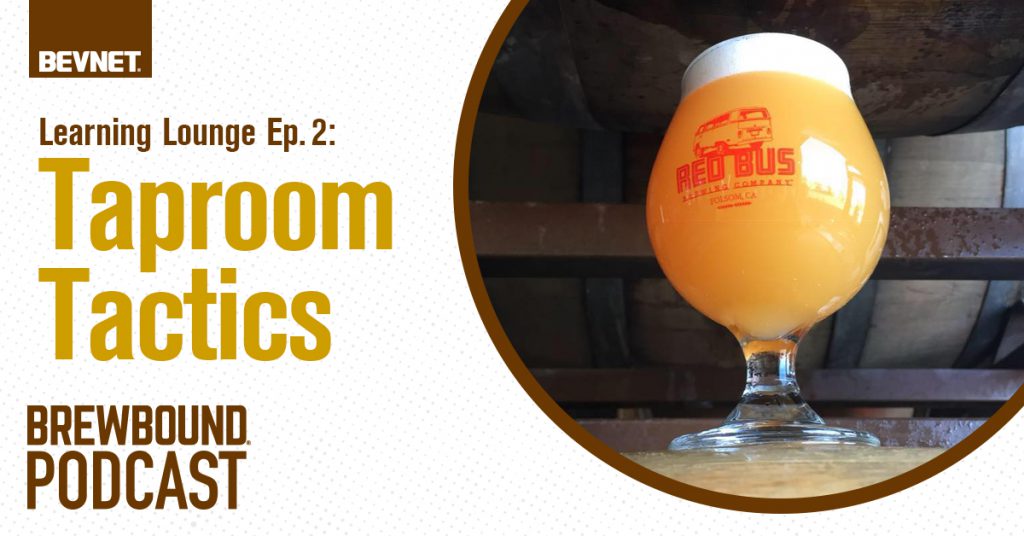
[00:06:42] Justin Kendall: Very cute. Well, this week we're going to return to the Learning Lounge as part of our Taproom Tactics series. We're going to have a conversation with Erik Schmid. He is the founder and owner of Red Bus Brewing in Folsom, California. And they have really driven incremental sales by adding slushies, alcoholic slushies around 6% ABV and profitable too.
[00:07:09] Erik Schmid: Yeah, I had noticed Eric comment about this in a Facebook group for craft beer professionals. called Craft Beer Professionals. And I just was like, that's so interesting, because it's a simple thing. I think he said they ordered their machine off Amazon and they use the base from their hard seltzer mix. They add ice, put it in the slushing machine, they sell it for like 10 bucks a pint-ish, and it does really, really well for them. And it also brings in other people who probably wouldn't be going to the tavern, people who don't drink beer. So they only do it seasonally, but in Northern California where they are, it gets really hot. So from like May to September, the slushie machine is on and going.
[00:07:51] Justin Kendall: And this is number two in our series. Last week, we talked to Chuck Garrity from Death of the Fox about They're basically being a total beverage company, or their desire to be a total beverage company, and that started with adding coffee early on. And that's now become the dominant portion of their business. So you can go back and listen to that. We have more conversations coming up in the next couple of weeks. We're gonna be talking about Airbnb spaces that are helping provide supplemental income for breweries.
[00:08:25] Erik Schmid: Yeah, we talked to Worth Brewing in Iowa about that. I thought that was an important conversation to have because admittedly they're not really in like a big tourist destination. So like when you hear of like a Lawson's Finest Liquids having an onsite Airbnb, that makes sense. People love going to Vermont kind of at all times of the year. But this has just really been helping drive some revenue for the brewery, for people who happen to be, you know, visiting family, passing through trying to need a place to stay. If you're not in a super heavy tourist destination and you thought this could never happen for you, fret not, maybe it could. But if you're doing something in your Taproom Tactics's driving a surprising amount of sales, we'd love to hear about it. So drop us a note at podcastatbrewbound.com.
[00:09:05] Justin Kendall: Yeah, absolutely. That is the one thing that we're really hoping is to build out more of this series down the road. So please reach out, we'd love to hear from you. We'd also love to see you in, would you call it sunny Marina Del Rey in December? Let's hope it's sunny. I'm hoping for sunny. December 10th and 11th, we'll be back in Marina Del Rey for Brewdown Live, our end of year business conference. We're lining up speakers now. We have. Kaylee Theriault from NIQ, Mary Mills from Three Tier Beverages, and we're lining up more speakers. We had some conversations with the folks at New Trail Brewing. They're going to be joining us. We've got others who are on the line, uh, not ready to announce them yet, but stay tuned for an actual official speaker announcement in the coming weeks. And the room block is open now, so you could reserve your room now for a discounted rate. And you may be hearing from our team too, as far as getting a discounted ticket. So check your emails. So with that, let's get to the news of the week. And let's start with just kind of a real quick recap of RNDC. They are laying off more than 1,700 workers in California. This is the fallout of their exit from the Golden State, which will take effect on September 1st. We've seen their supplier exodus continue from them. And you can read all about that at Brewbound.com. Our colleague, Ferron Salniker, is doing a great job of keeping track of things there. But those numbers came from a Warn Notice Act notice, I guess you would say, to the state, just laying out that 1,756 workers would be affected by those cuts. That's so many people.
[00:11:03] Zoe Licata: And those are all from different locations across California. So there's a breakdown of how many people at each location in Ferrin's coverage, but it's affecting everybody in every sort of part of the company and across the entire state.
[00:11:20] Erik Schmid: Yeah. And if you missed our conversation on the podcast with Ferrin and Vinepear contributor and Fingers newsletter editor, Dave Infante, about this very topic. Scroll back a couple episodes, you'll find it in our feed. Extensive chat with those two about what is going on with RNDC in California, what it means for other brands, and what might happen next.
[00:11:39] Justin Kendall: Just really sucks too, because there's a lot of consolidation going on in the state, and there are a lot of people who are going to be looking for jobs. not just these folks, but unfortunately a lot of folks who are just caught up in consolidation. And, you know, you hear the term synergy and you kind of know what that means.
[00:12:00] Erik Schmid: Yeah, usually nothing good.
[00:12:02] Justin Kendall: Yeah. Let's talk a little bit about what's been going on. And we've seen a lot of closures, some bankruptcy sales, some intellectual property being picked up. And one of the stories that jumped out at us was the Palmetto brewing and the saga of Made by the Water, which seems to be slowly falling apart.
[00:12:27] Erik Schmid: Yeah, unwinding. I mean, lots more questions than there are answers at this point. But basically, Palmetto was founded over 30 years ago in South Carolina. It was acquired by the Catawba Valley Brewing team in 2017. And then that Catawba Palmetto rollup was acquired by Made by the Water in 2021. Made by the Water seemed like things were going great. They were really climbing up the BA volume charts, which doesn't paint the full picture. So you could see that and not really know what's happening on the inside, but backed by a family-owned private equity office out of, I want to say Alabama, but they had owned Oyster City Brewing in Florida and then used that to start making these acquisitions. So they acquired Catawba Palmetto, and then they merged with Fulberg in 2022. And that is kind of when stuff went off the rails, that brewery had millions and millions of dollars invested in it and getting it back up to speed after Hurricane Katrina. And then the former CEO of Made by the Water, who I've not been able to get in touch with, told me that, you know, it had to be, it was inoperational due to disputes with the city about water. He claimed that crime was an issue in the neighborhood, so nobody wanted to work their overnight shift. And then they moved to contract production. And then I want to say, while I was out last year, you guys covered the brand just ceasing to exist completely.
[00:13:58] Justin Kendall: Which is a very noteworthy story, as you point out, because Foberg had the backing of the Benson family, and Gail Benson and her husband, Tom, acquired, I want to say, the majority stake in the Dixie beer brand, rebranded it Foberg, invested in that brewing facility, millions of dollars, major facility to produce in New Orleans, and things just fell apart.
[00:14:29] Erik Schmid: Yeah.
[00:14:30] Justin Kendall: Made by the water came in. It seemed like they were going to produce there. And I want to say that once they closed, that facility was sold for pennies on the dollar. They just parted out there. just a rough end there. And it's kind of wild to think because Gail Benson is worth more than $7 billion. Yeah.
[00:14:50] Zoe Licata: The brewery, like even with its original name, had been around for so long, since like the very beginning of the 1900s. It's like, yeah, well over a century. Yeah. very old brewery that had a big legacy to it. And I remember when the sale happened, they really emphasized that we're doing this because we still want to keep Faubourg around. We want to keep its legacy alive. And its ending has been very murky. It's been very unclear about what was happening. We had asked when we were able to get in contact with some of the Made by the Water leadership about what was going on, and they had tried to reassure us and people that this is just changes that happen when you're integrating companies and we're going to reopen some locations of some of these other breweries we have. We're just kind of transitioning and moving things around and it seems like things weren't exactly how they were sharing they were and now it's just kind of had a very unceremonious end.
[00:15:52] Erik Schmid: Yeah, definitely. And take it back to the Palmetto aspect here, because that's the newest news, is that Made by the Water took on a debt that the owners had had. It was almost $7.5 million that dated back to 2017. And Made by the Water had agreed to pay it, and then all of a sudden they were not, and they pushed their repayment deadline out and out, and the loan was matured. And then they were making payments. They made about 15 months worth of payments. under a million dollars, though, and then they stopped again. And the court docs are interesting because they do say that both parties involved agreed to not let this go on the official court record unless Made by the Water stops making payments. And then they did, and now it is on the record. So we'll see, but Palmetto closed. You could read it in there. So their Facebook post announcing their closing date, like they were not happy about this. I believe they called it a bitter outcome and apologized to the people who had supported them all these years. So you got to wonder what the family who had sold to Made by the Water feels right now, the Piates. They founded Catawba Valley decades ago. I read back through all the coverage of the time that they were acquired, and they really said, like, we believe that they share the same values as us, and we have the same mission, and we know our brand is in the right hands, and we know we're doing right by our people. And a few months later, once the job cuts start, you can find other news stories that I linked to in our story about Palmetto that really say the opposite. So it's just a bummer all the way around, because I'm sure all three of us have had conversations with me by the water leadership, where Zoe, you mentioned it, they just keep saying, No, this is normal, this is good, really good, like really positive, really optimistic. And it's almost like, do you see the same industry that we see? Because that's not really what's happening right now. But they popped in the BA's top 50 volume rankings for a couple years.
[00:17:41] Zoe Licata: Yeah. I'm sure part of this too is that when Made by the Water signed on to do this, this was kind of right after the pandemic or right around then. So I'm sure there was some viewpoint of, oh, this is a temporary time for beer to be in this situation. We're going to capitalize now while things are down so that when it returns to normal, then we can really be at an advantage. And as we've seen, that's not really what happened. The industry is really totally different now. It has bit a lot of people in the butt because of that, just kind of waiting for things to get better when it doesn't just happen like that.
[00:18:18] Justin Kendall: A hundred percent. So Catawba still has an Asheville location listed on its website that appears to still be running or operational.
[00:18:29] Erik Schmid: And that's it.
[00:18:30] Justin Kendall: And then Oyster City has three locations.
[00:18:34] Erik Schmid: Yeah, I think one says it's temporarily closed. I'm not sure what that means.
[00:18:37] Justin Kendall: Okay.
[00:18:38] Erik Schmid: But that's it. Catawba had like six locations when they were acquired.
[00:18:42] Justin Kendall: Add them to the... take it with a grain of salt when they say that they're going to open a new tap room after closing an old one.
[00:18:51] Erik Schmid: There were several instances where if you Google Made by the Water, they say, like, we're reopening or we're looking for a new location. And that never happened.
[00:18:59] Red Bus: Yeah.
[00:19:00] Erik Schmid: The Catawba was supposed to find a new tap room in Charlotte, and they didn't. And Catawba's production facility in Morganton, North Carolina, was like a major economic driver for that tiny town. And when they closed it, like a ton of people lost their jobs.
[00:19:14] Justin Kendall: Brutal.
[00:19:16] Erik Schmid: Bummers. All the way around.
[00:19:18] Justin Kendall: We also have another closure in Denver, True Brewing, the heavy metal, I don't even know that I would call it themed, heavy metal craft brewery.
[00:19:28] Erik Schmid: I think that's right.
[00:19:30] Justin Kendall: They're closing up shop on July 12th, so you've still got a chance to make it over there if you're listening to this now and you're in the Denver area. Founder Nick Nunz wrote on all of social media, he kind of penned a farewell to the brewery and one of my It feels weird to say that I have a favorite line from a brewery closing announcement, but this one is unlike any other that I've ever seen. And he wrote, it hasn't been an easy choice, but this brewery has run its course. And for a huge number of reasons, it's the right time to send this thing off into the lake, trailed by a fiery arrow. Hell yeah. Extremely heavy metal.
[00:20:13] Erik Schmid: Viking death.
[00:20:14] Justin Kendall: Yeah, that is the most metal.
[00:20:16] Erik Schmid: And Nick's closure announcement, I thought, was just a really great piece of prose. So, no, not weird to have a favorite line.
[00:20:23] Justin Kendall: Yeah, and there are several within here. True opened in 2011. He described it as a mediocre business plan, no professional brewing experience, and way less money than I needed, which is probably a familiar theme to a lot of folks out there. And he said that he had no grander machinations than making some good beer and listening to the music I liked. This kind of hits y'all in the feels because it sounds like they gave it their all and he thanked his wife, thanked the staff, thanks the head brewer and co-owner for making the beer better. Just really a heartfelt send-off. So best of luck to them in all that is next.
[00:21:06] Erik Schmid: I very much appreciated when Nick noted that the beer had never been better than when he stopped making it.
[00:21:13] Justin Kendall: That's a great realization.
[00:21:15] Erik Schmid: Good to know your strengths and weaknesses.
[00:21:18] In Episode: In Episode is brought to you by the Craft Brewers Conference, where big ideas, bold beers, and brutally honest shop talk collide. Join thousands of industry pros leveling up their game. Don't miss it. Register now at CraftBrewersConference.com.
[00:21:38] Justin Kendall: We also have the conclusion, we think, to the Alamo Beer Company saga, which is the San Antonio, Texas craft brewery that had entered Chapter 11 bankruptcy reorganization in, I want to say February, and has reemerged with a new owner. Sounds like Australia-headquartered private equity firm, SKJ Capital. They made the winning bid of $3.75 million, which topped Houston St. Arnold Brewing, which bid $3.6 million. Sounds like they were the only other bidder in this process. So this is a new life for the 28-year-old craft brewery, and we will see what happens next. But one of the things that really stood out to me about this story was They have what seems like a pretty decent pop culture connection coming up, and I'm guessing a licensing deal, with King of the Hill, which is the animated series that was on Fox and it's getting rebooted in August on Hulu. They've got a King of the Hill beer, which is Alamo beer, which, if you watch the show, Hank Hill and his buds drink Alamo beer. And this is gonna hit Texas retailers, including HEB stores on July 28th. So I just thought that that was something very strange to see is they're going through this bankruptcy process and they emerge and they have basically this licensing deal already cooked.
[00:23:19] Erik Schmid: Yeah, I was surprised that King of the Hill went off the air. I think I just assume that all of those shows are just on in perpetuity, like The Simpsons. And when it was on, was the beer called Alamo back then, when Alamo was still in existence? So, all right, interesting. And I just want to know what this Australian private equity firm thinks they're doing. Like St. Arnold, I would trust. I would trust St. Arnold to acquire this company and run it the way it should be run. I have questions about our friends from Down Under.
[00:23:52] Zoe Licata: It feels kind of random, right? Like it just seems like, why would they be interested in this craft brewery of all craft breweries?
[00:24:03] Erik Schmid: Maybe they're King of the Hill fans.
[00:24:05] Zoe Licata: Maybe.
[00:24:06] Justin Kendall: The last bit of intellectual property on the move is O'Fallon, the Missouri brewery that went out of business last year, is being brought back by St. Louis' Urban Chestnut, which had its own bankruptcy or financial issues that it dealt with, and so it has emerged from those with a new investor, and they're bringing back O'Fallon, starting with their seasonal pumpkin beer. So look for that this fall.
[00:24:34] Erik Schmid: the people of the internet seem to be excited about it.
[00:24:38] Justin Kendall: And you can read all of that at Brewbound.com. You can also check out Zoe's feature on Topatopa. They just keep on growing 10 years in. You can check out my feature on Founders Brewing and their innovation strategy that they're implementing. Reverse engineering new brands. So that's what's going on there. But before we get out of here to our featured interview, let's play Another Round of Tabbing Out. And Jess, I'm gonna let you lead this one because you set it up at the start of In Episode.
[00:25:08] Erik Schmid: Oh yeah, so we noticed in the skies this weekend, spiked aid is a thing that is paying to advertise over my beach. One in the sky and then I saw one on a boat. There's like a boat with a digital billboard that drives up and down the coast, but I couldn't quite tell what it said and it looked like spiked aloe to me. And I was like, if we're making hard aloe juice, I don't know what stage of total beverage that that means we're at here. But anyway, it is a vodka-based RTD meant to mimic Gatorade. It clocks in 4.5 ABV, 100 calories. But that's not all. There's also something called Vodkaid, which is another vodka-based Gatorade-inspired ABV. That one's 5% ABV. Their website has icons on it for golf, pickleball, and bowling. And I don't know, man, to me, one of those things is not like the others, but I'm also not the world's sportiest person. And then of course we have what we know, New Belgium's light strike, which is another 5% ABV RTD drink that is meant to mimic a sports beverage. So we've got three riffs on a hard Gatorade. I have many thoughts, but I want to know, do you guys want Another Round of this or are you going to tap out?
[00:26:21] Zoe Licata: I'm Tabbing Out. simply because this does the opposite of what I want a Gatorade or a similar beverage to do so I don't quite see the point of it for me personally. I'm normally drinking Gatorade the day after I've been drinking alcoholic beverages. So I don't really want more alcohol during that time. We might have predicted this happening a year or two ago when we were really in the depths of everything can be alcohol now. And there was definitely spiked Gatorade on that list of what could be coming in the future. So it makes sense that it would happen eventually and everyone's hopping on it, but I'm okay.
[00:27:01] Justin Kendall: think I want this. Somebody might want it. I don't want it. I'm not the sportiest person either, but I just can't imagine getting off the treadmill and being like, time to crush, you know, a vodka or, I mean, I could see it as like a sipper.
[00:27:17] Zoe Licata: Yeah, I see where this can also stem of there was a bunch of drinks. I don't know if it was the end of last year where it started to be really big, or the year before everyone was promoting electrolytes in their beverages. That was really big. And I remember when Sean Belanger was talking about the launch of LightStrike and the research process, and he said that their Gen Z panels that they were doing were super excited about it. And this idea of something they didn't have, but they were familiar with. So there seems to be some consumer base, however big or small, that does see this as something they would drink, that's something they're interested in, something that's actually new in a marketplace that seems to be a lot of recycling of things. Like, are you going to drink like three or four spiked Gatorades? I don't think so, right?
[00:28:08] Erik Schmid: What is that going to do to your electrolytes? I don't know. I just don't get who the audience is here.
[00:28:13] Justin Kendall: I'm trying to figure out the occasion.
[00:28:16] Erik Schmid: Right? Well, I mean, the TTB is probably a shell of its former self. Who knows what you can tell all the recovery and electrolytes and mineral shit you want. Maybe that's why we're seeing this.
[00:28:31] Justin Kendall: I feel like there's an offset there that would be against that, theoretically.
[00:28:36] Zoe Licata: Hopefully.
[00:28:37] Justin Kendall: Theoretically.
[00:28:38] Zoe Licata: There's something about how a lot of consumers, particularly younger consumers, are focused on the effects of alcohol on themselves, on their body. And so the concept that something may not be as hurtful, you might not have as many feelings, not literally health-wise hurtful, but just like how you physically are feeling, it's being counteracted more because you have some sort of quote-unquote benefit there. There's a lot of quotes going on here. But there's something there where the consumers are leaning towards more things where like you could have something that isn't going to be as brutal on you as a typical alcoholic beverage. And so people may be intrigued by that. There's so many re-drink supplements out there now, or like post-drinking supplements that consumers are leaning towards that, okay, maybe if you give us something that's packaged together, they might be into it. I don't know.
[00:29:34] Erik Schmid: Yeah, I think that nugget of information is absolutely informing the creative brief behind a bunch of these. Like the people are already doing this, so how can we get them to give us those dollars? You remember when Kanarchy acquired that electrolyte drink? Revitalite. Revitalite, there we go. Was that a preventer or a hangover cure?
[00:29:52] Justin Kendall: It's supposed to be a hangover cure.
[00:29:54] Erik Schmid: Okay, so there you go. I mean, there's all of that stuff. Then there's all of like the liquid IV stuff. Like I think, big hydration is probably a huge factor for our BevNET buddies. Yeah.
[00:30:07] Justin Kendall: Even Pedialyte sort of played into this too, right?
[00:30:10] Erik Schmid: Oh yeah. They were getting real cute with transit ads when I used to ride the T in Boston.
[00:30:18] Zoe Licata: Yeah, they still do a lot of those commercials where it's, it's for kids, but here's an adult struggling, laying on their kitchen floor, drinking a beer in the light. I see the ads all the time, especially on like social media platforms for Z-biotics a lot, which are a pre-alcohol drink.
[00:30:36] Erik Schmid: I hear them on podcasts.
[00:30:38] Zoe Licata: They're expensive. They're like over a hundred dollars for, I think like 10 to 12 tiny little bottles. They'll drink that, who knows what else they'll drink and spend their money on.
[00:30:52] Erik Schmid: You could also just buy a bottle of B12 Complex and call it a day.
[00:30:57] Justin Kendall: Okay. The one thing we might be underselling here is the resealable nature of these products.
[00:31:04] Erik Schmid: Yeah. So that's only Lightstrike. The other two are cans.
[00:31:07] Justin Kendall: Oh. Like Slim Cans. Well, nevermind then.
[00:31:09] Erik Schmid: But yeah, that is definitely something. The one thing that I have not seen across any of these brands that I would like to see is God, I can't think of his name, but like the Purple Mountain Rush. That is my like go-to Gatorade flavor, like the light purpley one. It's not great. I don't really know what the flavor is. It's like the frost purple. That's what I like.
[00:31:32] Justin Kendall: Should we get to an adjacent conversation? Sure.
[00:31:36] Zoe Licata: Slushies?
[00:31:37] Justin Kendall: Yeah.
[00:31:38] Zoe Licata: Kind of.
[00:31:39] Justin Kendall: Well, let's talk slushies with Red Bus Brewings, Erik Schmid.
[00:31:45] Erik Schmid: Welcome back to the Brewbound Podcast. I am so excited for our next guest. We have with us owner and founder of Red Bus Brewing in Folsom, California, Erik Schmid. Eric, how are you doing?
[00:31:55] Brewbound Podcast: Erik Schmid I'm doing great. Thanks for having me on.
[00:31:56] Erik Schmid: Danielle Pletka Yeah, thanks for joining us. So by now we've probably got a couple episodes up on the feed, just highlighting different taproom revenue streams. And you caught my eye on a Facebook group, a bunch of people talking about beer slushie machines. And I thought you had really great you know, just like practical advice. But what was interesting to me, and I think this is a fun way to frame this conversation is, you know, you noted that you were really hesitant to add a slushie machine to the mix, but ultimately you relented. What made you change your mind?
[00:32:26] Brewbound Podcast: Bottom line made me change my mind. It's no secret that we're all struggling a little bit out there in terms of just trying to capture more market share. There's only so many beer drinkers out there. So it looked like a way and a relatively inexpensive way to go and try and capture some other individuals in the taproom or have people that were coming bring other people with them that maybe would have been hesitant before because we didn't offer them something that they wanted.
[00:32:51] Justin Kendall: How incremental have slushies been to your taproom sales?
[00:32:57] Brewbound Podcast: We only run them in the warm months. In the Sacramento area here, it can get really hot in the summer. It's been over 100 this weekend. It'll be 99 today. We run them May through whenever it cools down in September. They make up about 5% or 6% of all of our beverage sales, which is pretty good. Actually, I'm sorry, it's more than that. It's about 10% of beverage sales and about 5% of overall sales. No, it's not nothing. And yeah, it's been a pleasant surprise and not too troublesome to actually administer and run.
[00:33:32] Erik Schmid: Awesome. So I do want to get into how many different flavors you have available, but I think right now I do want to dig into pricing because I think that's very important. How did you figure out how to price a slushie?
[00:33:44] Brewbound Podcast: Well, I'm certainly not the first one to be doing it here in the Sacramento area. So I kind of looked around and saw what other people were charging. I think it also depends on the base that you're using. Some folks are using sour beers, wine. If they've got a wine license, they'll make like a rose kind of thing. But we opted for just a base seltzer that we make. And then we fruit it with real fruit concentrate. We get it from Western American foods out here. So they're not, I mean, they're not super cheap to make. And then you got the machine running and it's, you know, keeping it cold all the time. There's some power requirements there that cost the machine. So we ended up at $10 for a 16 ounce slushie. We serve it in a plastic cup with a straw. It just makes sense. And those are 6% ABV? Roughly, yeah. So we make like an eight and a half, 9% base seltzer that we dilute for our carbonated seltzers that are on tap, usually just one. And then we use the rest for the slushie machine. It's just super easy that way.
[00:34:47] Erik Schmid: I feel like 10 bucks is super fair for that.
[00:34:50] Brewbound Podcast: Yeah, I'm actually considering going up because even on some of the feedback on that same post, you found my comments, there were others that were. a decent amount higher. So that's something we'll look at.
[00:35:04] Erik Schmid: Well, so what kinds perform the best? Are there any flavors that have been total duds?
[00:35:08] Brewbound Podcast: Yeah, we've had some total duds. I'm trying to remember what some of them were. The ones that sell the best are kind of the simplest ones, honestly. There's a fruit punch one we used. It's got a variety of real fruit juice in it that's pretty popular. Strawberry, mango. We've done margarita flavors that have been pretty popular. We don't spend a whole lot of time, you know, like we do with beer recipes, trying to dial everything in because the slushies are so simple. It's just a, it's a sugary fruit concentrate that's added to it. So we just kind of add it to taste and go. Yeah, pomegranate, I don't think was super popular. The ones that are more reddish in color or pink in color seem to sell better. I don't know, maybe we're just trying to get that 7-Eleven crowd. Margaritas ones were good. We've done a pina colada one before with some real coconut. the vanilla and that kind of thing. But yeah, I know other places that'll do it with, you know, like the Amaretti pumps and you just get a base one and you can flavor it any way you want. We didn't want to do that because it's just too much of a mess. And then you never know what's going to happen with customers there.
[00:36:12] Justin Kendall: I want to circle back on pricing and profitability. Can you take us through how profitable these drinks are?
[00:36:19] Brewbound Podcast: I'd have to look at the, you know, specific numbers to give you percentages. You know, we're making our seltzer with just a cane sugar base and we use the kvite, the Lutra strain to make it a dry strain. And it's very inexpensive compared to a beer. I mean, it's roughly the cost of making like a five and a half percent beer without any hops. But then you have to add in the concentrate after that. So I think our cost per slushy is probably like $1.50, $1.75. So there's a decent amount of margin there. I think it's probably about the same as beer when a beer is priced at say $8.50.
[00:36:58] Erik Schmid: Nice. And then how long does it take you to make a batch of that base? Gotta be only a couple days, right?
[00:37:05] Brewbound Podcast: We ferment it pretty warm. It takes a little while for it to clean up, so I'd say safely three weeks. Oh, okay. We just make a bunch. We keg a bunch of it still with a slushie machine, and then we carbonate up the rest for making other seltzers, which we do keg by keg. We add flavoring keg by keg. We can make a 7 or 10-barrel batch of 8%. Seltzer will almost last us throughout the summer on just a single batch. Goes a long way.
[00:37:36] Justin Kendall: What have you learned about the folks who are ordering these? Like, who's the typical customer?
[00:37:42] Brewbound Podcast: A lot of females. We get a lot of women in the brewery that drink them, but that's not exclusively to women. We're in a very recreational based town here in Folsom. We have a lake just below us here where we're located with a lot of paddle boarding and cycling. It's a very, very outdoorsy kind of town. And we just completed a big patio out front where it's kind of hot out there. So it's, it's a lot of people kind of escaping the heat or kind of a post ride or post paddle type of thing. We also added wine. to our portfolio about a year ago. We got our O2 and started blending our own wines here. I would say the impact on consumers is greater from the slushies than it is even with wine and cider, just because it's kind of a unique thing. It's not, people that don't go to breweries all the time, or even that do, don't always expect a slushie machine sitting there. They all look at it and ask, well, what the hell is that? Are those alcoholic? You know, can a kid have one? No. It's been great at bringing in people that are non-beer drinkers, I guess is what I would say to really answer your question. And while we got a kick from the wine and the cider, for sure, I would say the slushies, the word travels faster, I think. They photograph well. They're an interesting item that people can share on social media. We haven't gone as far as little umbrellas or a dollop of whipped cream on top, but you certainly could depending on how fancy you wanted to get.
[00:39:12] Erik Schmid: Yeah. And when you mentioned that red or pink does better, I mean, the first thing I thought of was like, oh, that's the Instagram effect because everybody, you see it and you want to post it and then other people see it and then they come. But something that just crossed my mind right now is that For context, I right now I'm at the Jersey Shore at my family's house where I'll stay for a month and a lot of bars here do frozen drinks. But I don't think they're that common to find out and about unless you're in a beachy place, right? So you must be one of the few places to get a drink like this in the area.
[00:39:41] Brewbound Podcast: No, several breweries do this. Yeah, I certainly wasn't the first here to do it. I can't take any credit for coming up with it in the area. A lot of breweries will use a sour base and do it with a fruited sour of some sort. We tried that. The problem is it oxidizes so fast that you only get a few hours with it. If it's not gone, you can't use it the next day. That was the real advantage with using seltzer to do it is it doesn't oxidize like that. It doesn't really have any fall off flavor-wise over a couple of days.
[00:40:16] Justin Kendall: If there's somebody out there who's on the fence about getting in and doing this, what advice would you give them?
[00:40:23] Brewbound Podcast: I'd say give it a try. I mean, especially if you're already making your own seltzer. I mean, you can do it with cider and other things if you wanted to, but on a brewery license here in California, doing it with a seltzer is the easiest way to do it and stay compliant with kind of the beer rules. You know, I invested, and I have to look back exactly what it cost me, but I invested in just an Amazon machine that was seven or 800 bucks. It's got two, I think they're three and a half gallon tubs on them. So you have to fill them quite frequently. But I mean, it's really not that big of a deal. How long did that take to pay for itself? Six weeks, probably, when we started. I keep waiting for it to break, and it won't.
[00:41:10] Justin Kendall: Did you get the extra insurance on it?
[00:41:12] Brewbound Podcast: No, I probably should have. And then, you know, we had to order quite a few of the little wearable parts just to have money. And there's little gaskets and seals that go at the back and they wear out kind of fast. But, you know, once we took it apart and cleaned it a few times, it's really not a complicated machine the way it comes apart and goes back together. And it's, like I said, it's been, finished out little machine for us. So even if I had to buy one every two years, it still wouldn't be that bad of an investment at all.
[00:41:44] Justin Kendall: So you mentioned that you run these typically, I wanna say, May to September?
[00:41:49] Brewbound Podcast: Yeah, that's when it gets hot here. Once we start hitting the 90s consistently, we'll break it out.
[00:41:54] Justin Kendall: So in the months that you're not doing slushies, how are you making up for that revenue that you would otherwise be getting through the slushies?
[00:42:03] Brewbound Podcast: That's a good question. I'm not really sure that we are. Maybe some of it's through our, you know, just regular seltzer sales. And the other advantage to slushies is they're gluten-free. That's one of the things that we kind of struggle with as a brewery is coming up with gluten-free options for people. So, you know, I'm thinking maybe those folks are drinking cider or wine or seltzer when they're not drinking the seltzer slushies. Or maybe they're, you know, maybe I'm not getting those people at the brewery because they're not out in the heat doing something before they want to get a cold drink. So that's a really good question I don't have an answer for. I think we're all looking for that answer too. Yeah, I mean, I can tell you from experience that some of our, you know, our club people that are here regularly will switch over to the slushies or have them fairly often when we have them on. And then, you know, they'll go back to their drinking beer and the in the cooler months, but I don't know if that's typical of all the slushy consumers.
[00:42:59] Erik Schmid: What kind of training did you have to do for your team to get them up to speed on the new machine?
[00:43:03] Brewbound Podcast: Oh, geez, not a lot. I have one guy that runs my taproom. He does the cleaning. We do it once a week. There was a little bit of a learning curve there, but not much in my brewer. I kind of have that figured out now. For the taproom staff, There's a little bit of temperature monitoring with the machine to make sure the ice is consistent or just the consistency of the slushie is right. And it'll depend a little on how much fruit concentrate we go on in there. So the sugar gravity will have an effect on how well or not well that it freezes. So sometimes you have to adjust the temperature up or down, you know, if it gets too thick or too thin, but we've trained them all to do that. And then there's a little bit of a cycle at nighttime where you switch from frozen into just a cool mode. So it's not sitting there running at freezing temperatures all night. It has a, just kind of a cool setting where you can set it just above freezing. And that way the machine doesn't work as hard and it saves you a little on electricity. So, I mean, Really, you're grabbing a handle and pouring. We had to show them where the rest of the slushies stored in the walk-in so they can refill it. My brewer pre-mixes it all, so they're not mixing it or having to deal with formulating it. They're really just going and finding a food-grade bucket with slushie in it to fill the machine out of the walk-in during busy times. Easy. Very easy. Are there days when the slushies are out selling beer? No, I wouldn't say they outsell the beer, but Friday nights we have live music on the patio. And if it's 80, 85 degrees out there, I mean, you know, probably 25% of the drinks that are going out there are slushies.
[00:44:45] Justin Kendall: Okay.
[00:44:46] Brewbound Podcast: That's a pretty good ratio. It helps the pocketbook, but it's tough on my soul. The other thing is, when we first started, we added a lot. They were very sugary. Yeah. Very sugary. We started with putting dextrose in there along with the fruit, and they were over-the-top sugary. We've cut that way, way, way, way, way back. So now there's just kind of a hint of fruit in there. Some people really loved them sweet like that. Other people didn't, and we just made the decision to kind of cut the sugar content way, way back.
[00:45:22] Erik Schmid: I think that was for the best, for sure.
[00:45:24] Brewbound Podcast: Yeah. I couldn't even imagine the hangovers that people were getting from the really sugary slushies.
[00:45:32] Erik Schmid: What other pitfalls do people need to avoid? I feel like we covered a lot, but what have we maybe not asked you that you wish you had known when you began your slushie journey?
[00:45:42] Brewbound Podcast: I don't know. It's kind of a no-brainer for the cost involved. We already have the equipment to make the seltzer. All of us do. If you're not already making a seltzer, you could try it with something else to see how it goes. It's just really hard with beer because it goes bad so fast with oxidation. If you're worried about a machine that's a little more reliable, you can always spend a little more and buy a machine that's probably a little more stout or maybe a little more commercial oriented, but ours has been fine. Training the staff's really not been a problem. I can't really see a pitfall.
[00:46:17] Erik Schmid: Great, great. Well, since we have you, what else is new at Red Vest? What do you see in this summer other than slushies?
[00:46:23] Brewbound Podcast: Yeah, we just got constructing a whole new like thousand square foot patio and a new pizza kitchen in a shipping container out there with it. We just rolled out about three weeks ago. We opened a little pizza restaurant out there where we do our own dough. It's a brick oven fired. We're not necessarily using wood. And it's really just a continuation of what we did during COVID. We had to form our own little catering company back then and we did pizzas then. And this is kind of the formal version of that. So that's been fun. And now we're trying to market a little more and get the word out that we're doing it and see if we can get, you know, kind of the pizza consumers here along with the beer drinkers going forward.
[00:47:06] Erik Schmid: Fantastic. Well, Eric, thank you so much for joining us. We know you'Red Bus, so we really appreciate the time. And it's been great getting to know you and Redbus.
[00:47:14] Brewbound Podcast: Thank you. Yeah, it's my pleasure. It was super fun.
[00:47:16] Erik Schmid: That's our show for this week. Thank you so much for listening. If you enjoy the Brewbound Podcast, please rate it five stars and leave a review on your podcast platform of choice so more people can find the show. As always, a huge thank you to Joe, Joshua, Ryan, and the whole Brewbound BevNET technical team. And of course, to Justin and Zoe for being great co-hosts. We will see you back here next week.