[00:00:00] Justin Kendall: Heading to CBC? Kick things off the day before at Brewbound's meetup at Love City Brewing in Philly, Sunday, April 19th from 5 to 7 p.m. Connect with beer industry leaders, grab a drink, and catch up with the Brewbound team. It's free to attend and walking distance from the convention center. Head to Brewbound.com slash lovecity.rsvp. And don't forget to catch the Brewbound team at booth 956 during CBC.
[00:00:28] Jessica Infante: Can embracing families improve your taproom business? Find out next on the Brewbound Podcast. Hi, welcome back to the Brewbound Podcast. I'm Jessica Infante.
[00:00:49] Zoe Licata: And I'm Zoe Licata.
[00:00:51] Jessica Infante: And it's just us today. Justin is taking a much deserved summer break week. So Zoe, it's you and me. How you doing?
[00:00:59] Zoe Licata: I'm good. I am fresh off of my own travels to Chicago and happy to be back. Mostly.
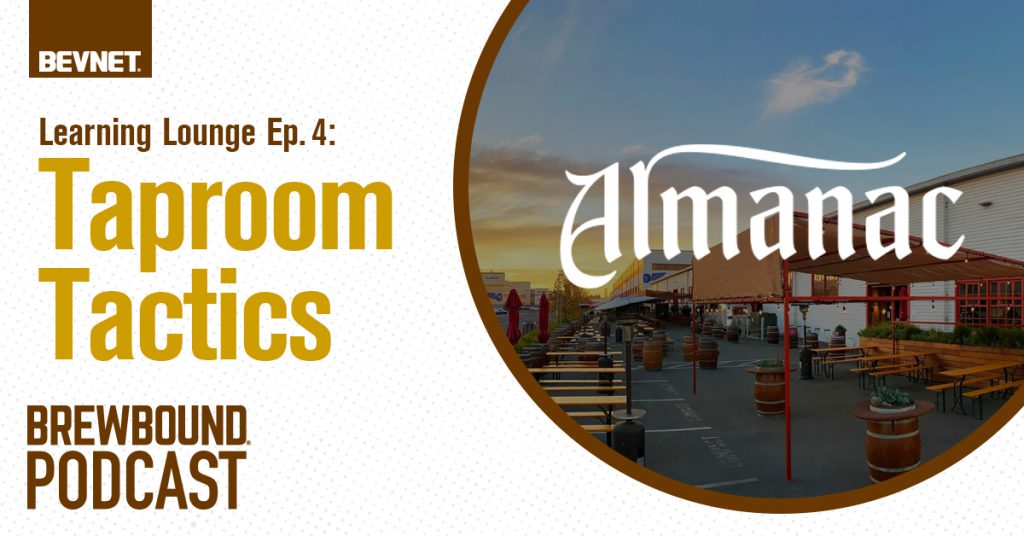
[00:01:07] Jessica Infante: Mostly. Well, welcome back. I love Chicago. Great place to visit in the summer. Yeah, it was a lot of fun. So this week is the final episode of our Learning Lounge Taproom Tactics series, and we are checking in with Almanac Beer. We are talking to EVP of Sales, Kevin Scoles, all about their full-throated embrace of families and making their taproom family friendly to the point where they even ditched the word taproom and have renamed their Alameda facility Almanac Adventureland. Great chat with Kevin, had a great time. And if you've been listening along for the past few weeks, it's been a four-part series where we are just checking in with various leaders of breweries who are doing things a little bit differently in ways to kind of juice taproom revenue. So we have talked to Kevin about them really making the brewery much more family friendly, which has really done well for them. You'll hear Kevin talk all about it, but ever since they really made this pivot and added some kid-friendlier elements. Business has been booming, which is super cool to see. We've spoken to Worth Brewing about adding an onsite Airbnb as a way to add some passive income. We chatted with Red Bus Brewing in California about slushies, super fun. And we kicked all of this off with Death of the Fox from New Jersey about their coffee business. So just a couple of different ways that can draw in some extra dollars. We would love to repeat this Learning Lounge idea where we do a few conversations focused around helping listeners learn about a particular topic. So if you liked the format, thought it was helpful, or if you have suggestions for future series, drop a note to podcast at brewbound.com. Would love to hear your thoughts. And as always, we're always trying to make sure the podcast is as good as it can be for all of our listeners. And you can help by sending us feedback to that same email address, podcastatbrewbound.com, rating the show five stars and leaving a review on your podcast platform of choice. That's going to help other people find this show. Huge shout out to my new favorite person, cooper5446, for these super kind words on Apple Podcasts. That review really made my day. I don't know what this says about me, but glad you liked the show. So Zoe, you're back from Chicago. We did a little bit about it, but tell me more because I know you had a really great time. I know you saw some friends of the pod while you were there, but most importantly, you and Lawrence went to a Sox game. Yeah. How did that go? Yeah, we went to three, three Sox games. That's more about Sox games than I've been to in the past four years. Yeah.
[00:03:32] Zoe Licata: It was the most I've ever been, and I don't think I've ever done back-to-back before, but three in a row was next level. But the Red Sox are very rarely at Wrigley Field. And Fred of the Pods, Don Bixle from Three Terp Beverages, Chicago guy, also a Cubs season ticket holder, he came to visit Boston with the two of us, went out with him and had some good old Guinness and got to chatting and he said, well, you have to take my tickets for some of these games because it doesn't happen very often. Lawrence is a very big baseball guy and so we actually made it happen and it was great. It was a lot of fun. We lost the first two games and it was looking a little daunting and questioning, is it our fault? Can we never show our faces at an away game ever again? But then they won the last one in very exciting fashion. It was a good time. And we also fit in some beer related stuff while we were there too. Got to check out the new pilot project location in Wrigleyville, which is a really cool spot. They had just gotten their liquor license like two days before we had gotten there. So it timed out perfectly. And we went to the Open Gate Chicago location. Got to have some of the Guinness that they were brewing there and some of their beer cocktails and things. So that was a fun spot to check out too. A really good time. Lots of beers, lots of baseball, lots of enjoying summer in Chicago.
[00:04:58] Jessica Infante: Awesome. How was Donna's Pickle Beer?
[00:05:01] Zoe Licata: Donna's pickle beer was delicious. It's not too overpowering with dill, which is my main criticism with a lot of pickle beers. So it was delicious. And that's one of the newer additions to the Pilot Project lineup. So if you're unfamiliar with Pilot Project, they're a brewery incubator based out of Chicago. They also have big operations in Milwaukee now. but they basically kind of do a Shark Tank style process of bringing on brands across beverage, alcohol, not just beer, and help them with everything from their recipe development to their marketing and brand building to production and distribution relationships. So we've seen some folks come out of there like Funkytown, who won the Pitch Slam a few years ago. And they are continuing to Brewing and New brands like Donna's and create some of their own brands too. So they have this new Devious canned cocktail line that was originally created at Pilot Project. They have some Mexican style beer that they created there. So they're starting to get into new things, expand, and are trying to have way more tap rooms around the place. So this is the first that's popping up of the new additions, but there are more to come. Real close by and I'm never going to say no to a pickle beer ever.
[00:06:18] Jessica Infante: No, nor should you. Delicious. Pickles like super having a moment right now. I think it's through a confluence of a few different things like pickle ball. My mom went to Costco yesterday. I'm staying at my mom's house for a few weeks at the Jersey Shore. And she took a picture. She didn't buy, but she took a picture of these like pickle ball snacks from some major snack brand. I now can't remember. Maybe it was us. some kind of like snack ball form, crunchy, pickle flavored, but also pickle ball themed. I feel like you and I are long overdue for a flight of pickle beers and apparently pickle snacks.
[00:06:51] Zoe Licata: Absolutely. The pickleball explosion has definitely helped extend the pickle popularity. I'm not complaining.
[00:06:59] Jessica Infante: Right? But they also have nothing to do with each other. It's just a name. Unless there's something that goes on in pickleball, I don't know about that.
[00:07:05] Zoe Licata: No, absolutely nothing whatsoever occurs related to the food and the sport, but it's just got pickles on people's minds.
[00:07:15] Jessica Infante: Well, you did mention the Brewbound Pitch Lamb in there, and we would be remiss if we did not give Brewbound Live a shout out. That will be coming up before you know it, December 10th and 11th in beautiful Marina del Rey, California. We have announced a couple speakers, some of whom I am super excited about. We are going to be doing a panel featuring Sophia D'Angelo, who is the founder and CEO Boston Experiential Group and also Austin Experiential Group. There's a joke here somewhere that I don't, I don't think I have the ability to find on the fly, but basically so started the agency in Boston and then moved herself to Austin. She has done some amazing brand activations with athletic brewing. So Sophia is going to be joined on stage by athletic marketing director, Rosalie Kennedy, talking about things that they've done to really bring the athletic brand to life, including like a pop-up fitness studio and bar they did in Austin a few years ago. Full disclosure, these are both really good friends of mine, but I don't think there's really any nepotism here because I think they are two of the sharpest minds to be able to talk about this topic and they just happen to be my buds. So I'm really excited to welcome them to the conference. If you want to figure out ways to juice your IRL interactions with consumers, definitely one not to miss. So consider joining us in LA in December.
[00:08:28] Zoe Licata: Yeah, things are really shaping up. This is the time of year where we start to really finalize things and make some big announcements. So keep up with Brewbound.com, with our social media channels, with LinkedIn, because we're going to continue to roll out speaker announcements.
[00:08:42] Jessica Infante: And the room block is open. So that's definitely the best way to make sure you're getting the best rate to stay on site at the Marina Del Rey Marriott. Cool. Well, while you were in Chicago, I, again, was Still in New Jersey and watching the skies. And Banner Plain population this weekend was not quite as robust as in the past, but super like core beer heavy, which was interesting. I saw Plains advertising Pacifico, Michelob Ultra, and Miller Lite, not surprising. Jersey Shore is a stronghold for Pacifico. So it's been fun to watch that develop over the years. They've got a lot of tap handle placements, bars on the beach, which is cool. Surfside was back with no bubbles, no troubles, which I enjoy, and also shipwreck rum. I guess that makes sense. Never heard. I don't really dabble in the rum these days, but yeah, pretty standard Jersey Shore weekend. I can't say I was on the beach all that much. My daughter has become, I wouldn't call it a runner, but her favorite beach activity is for me to chase her up and down the ramp to the beach over the dunes. It is not my favorite beach activity. I got my steps in. It's very cute. Super cute. Well, before we get to our featured interview, let's cover some news though. You had a great profile last week on Callie Craft. You caught up with CEO and founder Blaine Landberg, who I believe is attending Brewbound Live, which would be great to host him. But what's up with them? Because I know they've got a lot of stuff in the works.
[00:10:09] Zoe Licata: A lot, a lot. Yeah, I've been kind of spoiled lately where I've been doing some pretty positive beer stories and talking to folks that are getting creative and finding growth in this chaotic market. And I had a lengthy conversation with Blaine because they have so much going on. Part of that is all these tap rooms that they have. They are renovating some spaces. They're expanding some spaces. And each space has a kind of a different feel unique to where they are located and the consumers there. So they have a new space that's opening up by the UC Davis campus. And it's in an area that used to be known for having a pretty big social scene and had a pretty iconic bar over there. And then that kind of got shut down and torn down and now they're trying to redevelop it. And it's right by some of the athletic facilities. So it seems like a really great spot to bring in folks who are either traveling for the games or have students who are over there, a legal drinking age, of course. And they're going to have tons and tons of beers on tap and some fun food stuff going on. But that's just one of the locations. They also have a fun kind of rooftop and more upscale cocktails and beers location opening up more downtown. That one is still going to have beers on top, but it's going to be more focused on cocktails and some unique food combinations. And then they have their kind of main space they had to change up recently. The building got bought and is being torn down and re-put together. And so with that transition, they're still there. They still get to keep their business there, but they moved their taproom to an outdoor beer garden. And just by making that switch from an indoor space to an outdoor space, they've seen some double-digit boosts in sales. So it's been a lot of adjustments and flexibility and catering to what are consumers looking for in each area. And it seems to be working out really well for them. And so they're going to continue to do that moving forward. They're also changing up their innovation plan and their portfolio plan a little bit. So Blaine referred to it as killing our zombies. They are cutting back on some of their SKUs that even if they're treasured SKUs or they've been around for a while, they're realizing they're not not really doing what they need to be doing and they need to focus on just a few stuff. So they're really focused on kind of three core beer options, three core RTT options, which we'll also talk about in a second, and three seasonals. And they're really trying to say, okay, if we put all of our thought behind just these few, mainly in 16 ounce cans, how is that going to really be able to help balance out our portfolio better? And in the RTD space, they just, within the last year, added the Heritage Brewery and Distillery to their company. They acquired that and have maintained some of that portfolio. Included in that portfolio is a line of pretty high ABV RTDs. And Blaine and Mitty, you know, they're not necessarily products that I would have created originally myself or I would even be consuming as a consumer, but it made him realize that there is a market for these products. And there's also a white space within RTDs that they could make their own products for. So he talked a lot about beer. We look at the spirit space and malt-based RTD market sometimes as like, I don't know if I have a voice in that, if that makes any sense for me. It's a lot of really big companies involved in that. It's a lot of big names. It seems pretty crowded. That doesn't make a lot of sense to me. And then when he started having conversations with retailers and seeing how consumers were interacting with Heretics brands, he realized, one, there's a space for independent folks because there's no one really speaking to the consumers who are looking for a more local version of that. And there's also a space for some more kind of craft-centric flavored So not necessarily a super high APV or high sugar, but something that it's consumers looking for a slightly elevated product. And so we found a lot of crossovers between what that product could be and what they've been doing already on the beer side and are excited to launch that next year. That's just a snippet of everything they have going on, but they have a lot going on.
[00:14:20] Jessica Infante: Yeah, then that was a great story. I particularly love Blaine calling it killing the zombies because I know there's often a lot of hesitation to cut skews, particularly if they're products that you have shelf placements for. Why would you get rid of them? But here's the thing. It's like, I don't know how much this will resonate with our audience, but just go with it. When you need a haircut, when your hair is kind of like dead at the ends and you want it to grow long, it might seem counterintuitive to cut off more than you wanted, but that's what gets to the healthier hair and makes it grow faster. So super similar. Like I know it'd be hard to say like, well, we have placements right now. Why would we get rid of them? I think that shows your retailer partners that you're operating in good faith and you want them to do well just as much as you want yourself to do well. You don't want to sit on these products that are out in the market and just aren't moving. You know, if they're not growing. I wouldn't say that they're dead, but maybe they're in this weird, not alive, not dead land like zombies. And maybe it's time to, uh, I don't know. How do you kill a zombie? You hit it in the head?
[00:15:22] Zoe Licata: No, I don't really. Yeah. Like beheaded maybe? Maybe. But yeah, he also spoke a lot and I didn't get to include as much of this in the story because it's, like I said, a lot going on, but they've been working really closely with Ray's, their distribution partner. And he admitted, you know, most people haven't really looked at them as being super strong when it comes to craft beer. And he said they've done a lot to fix that lately. And they have really given them a lot of tools to be able to better analyze their portfolio and where they're putting their beers. And he said, whatever partner you have, talk to them, see what tools they have, see how they could help you with your business plans. It's not just a tool to get your product to the retailer. It can actually help you in those placement decisions. And you can help each other with different incentives and things. I mean, he brought up They have a whole AI system that can track how many products are on which shelves in each stores. And he said, well, look, find a store that has like four different SKUs of this one cider brand. And if you can give us two of those SKUs for our own cider brand, then we can give you an incentive. And it's working in very specific individual levels of retailer and SKU and it has helped them and it's helped their distributors. It's a lot of just collaboration and using whatever tools you have out there to define whatever small bits of growth is out there.
[00:16:46] Jessica Infante: Very cool. And generally as a role, fairly anti-AI, but that seems like a good application of it.
[00:16:53] Zoe Licata: Yeah. I don't think that one is necessarily taking away too many jobs because I don't know a human that can store all of that information and access it very quickly. So that one will let slide.
[00:17:04] Jessica Infante: Totally. Awesome to hear what's up with them. Can't wait to chat more with Blaine later this year at the conference. On the East Coast, we had a story that broke late last week. We ended up posting the story on brewband.com on Monday, but New England Brewing Company, which is like there. old, like around for a long time. They opened in 2002. I don't want to admit how long ago that was because it's the year that I graduated from high school, but they've been doing really well recording a pretty solid, solid year over year volume growth the past couple of years. And they've been on the hunt for a second location, finally found one nearby in Connecticut. And they acquired the facility that did belong to Stony Creek And it sounds like this is going to allow New England Brewing Company, NEPCO, to... NEPCO is going to up production by 50%. They're going to operate two breweries, two taprooms, but the new facility in Brantford, Connecticut will become their central brewing operations location and company HQ. So congrats to them. Sounds like Stony Creek is saying goodbye. They don't really say as much. They have not answered my emails, but this seems like it's as happy an ending of a story as can be because the facility is still going to be making beer. People seem excited about it from social media. People are looking forward to this nice tap room right on the Brantford River near the Connecticut coastline. Lovely. Good luck to all involved. Yeah. I mean, that's mostly just here so that this entire podcast episode isn't entirely focused on Northern California. But one more news story back in California that we didn't get to cover on last week's pod because of the timing. Last week, sad to report that Jack McAuliffe, one of the co-founders of New Albion Brewing Company, which is largely regarded as one of the very first craft brewers in this country, Jack passed away at the age of 80. If you're not familiar with the story, basically there kind of is no craft beer without Jack. And I really encourage you to find a few of the profile pieces that are out there about him. We made our news obit free for all to read on Brewbound.com, so you can check that out. And then there's some links in there to other things to get to know him a little bit better. But Jack had, like many other early craft pioneers, encountered fuller-flavored beers while he was abroad. In Jack's case, he was stationed in Scotland while he was in the US Navy. and came home and home brewed and figured out how to cobble together a brew system. He founded the brewery in Northern California in Sonoma with co-founders Susie Stern and Jane Zimmerman. And they were cranking out English style beers out of Northern California for six years and eventually were able to inspire Ken Grossman, who went on to found Sierra Nevada. Jack himself took a lot of inspiration from Fritz Maytag at Anchor. And historian Maureen Ogle put it, I'm paraphrasing because I'm not directly quoting because my brain's not that sharp, but Maureen said that New Albion was the most important brewery ever to fail. So raise a glass to Jack if you are having a beer anytime in the next day or two. And yeah, I think this entire industry owes him an enormous debt of gratitude. And I checked in with his daughter, Renee DeLuca. She occasionally revives New Albion beer on special production runs. Nothing planned right now, but you can follow along her blog, The Brewer's Daughter. She's on Facebook and she will update. But shout out to Jack. Well, before we get to the featured interview, Zoe, you mentioned a really great beer cocktail you had in Chicago. Please tell me about it.
[00:20:30] Zoe Licata: Yes. So while I was at the Guinness Open Gate facility, I was very excited to see the menu. They had a whole section that was just beer cocktails. So that's their answer to anyone looking for something a little bit different. Oh, that's fun. Yeah. And I, of course, had to go with the Open Gate meat gelato. I love a michelada. I will drink it if I see it anywhere. They had two options and the one that I went with was made with the Open Gate Fonio stout that was made in collaboration with Brooklyn Brewery. We talked about Fonio. It's a climate resistant, drought resistant grain from West Africa that's been used in a bunch of different beers in the past couple of years, spearheaded mainly by Garrett Oliver from Brooklyn Brewery. And so this was made with that and with this tamarind and it was so delicious. It had a tahini rim that had orange zest included in it so it was like spicy and salty and citrusy. It was gorgeous. I'll post it on my Instagram, at beerswithzoe. You can see what that looks like because it's also just worth seeing how beautiful that drink was. But it was absolutely delicious. And I'm advocating for more places to have beer cocktail lists because I was very into it. Wait, so a Michelada stout?
[00:21:53] Jessica Infante: Yes. That sounds very different to me, but I also maybe I'm just out of the loop. Do you see that often?
[00:22:00] Zoe Licata: I don't see it very often. The closest you see is sometimes people will have like a Medela Negra in a michelada. This was a very light stout, thanks to the Fonio. It was kind of like halfway between what you'd think of more like a lager and a stout in terms of the flavor of it and the lightness of it, but it worked really well and I was very into it. I also had had the stout on its own right before that and it was delicious.
[00:22:28] Jessica Infante: Nice. Before we hop on, you said that anybody who thinks Gen Z isn't drinking anymore needs to visit Chicago. What else did you notice?
[00:22:36] Zoe Licata: Yeah, I mean, I think this was also because we were mainly a lot in the Wrigleyville area, but that whole area is kind of, I compared it to like a slightly smaller version of Broadway in Nashville. There's tons of bars and restaurants just all lined up on this one street, lots of outdoor spaces. And most of the people around were probably around my age or slightly younger. Gen Z was out and about and they were drinking. They were drinking beers and they were drinking high noons and hard teas, but they were definitely drinking. So any doubters, you're going to the wrong places because they're out and about.
[00:23:16] Jessica Infante: So is Don hanging out at like the 22-year-old bars?
[00:23:20] Zoe Licata: Sometimes, but no, we did also go to some very dark and dingy dive bars. That was more of the Don scene, which is very fun. Shout out to Delilah's, which was a very cool spot. Highly recommend. Got some $3 hams.
[00:23:36] Jessica Infante: Oh, perfect. Cool. Well, we covered one aspect of the youth out drinking, and in our featured interview, we're going to talk about the other much younger youth hanging out at Tap Room. So here is my conversation with Almanac Beer's Kevin Scoles about their full-throated pivot to family-friendly Almanac Adventureland. I am so excited to welcome our next guest to the Brewbound Podcast this week. His brewery made a decision recently that sparked a good deal of conversation among me, Justin, and Zoe. And so I'm just glad that we have the man here himself to talk about it. Our guest today is Kevin Scoles, Executive Vice President of Sales for Almanac Beer, which you may or may not have heard recently re-imagined its own premise hospitality operations as Almanac Adventureland. And we are going to talk all about it. But first, Kevin, how are you doing?
[00:24:27] Almanac Beer: Thank you, Jess. Doing great. As you know, I've got a brand new daughter at home, so she's certainly keeping me on my toes and summer season is always busy time of year for us. We just recently opened up a second location, which is taking quite a bit of my time as well. So staying busy, but all really wonderful things.
[00:24:46] Jessica Infante: Amazing. You are far more awake and alert than I was at this particular point in time. So offline, you're going to have to tell me your secrets, but congrats to you and the family.
[00:24:56] Almanac Beer: I've learned to get used to five to six hours of sleep. And, you know, I think it's in the attitude. If I know that's what I'm going to get going in, then I'm not disappointed if I fall short of eight, which is pretty much every night.
[00:25:08] Jessica Infante: Oh, that's the way to do it, for sure. I had a good friend who told me she realized that she could function on low sleep as long as she was fed, and her husband could function on low amounts of food as long as he got to sleep. So you figure out where your strengths and weaknesses are. Great combo. Absolutely. Gosh. Well, fitting, because today we are really going to talk about how you guys have super embraced your family-friendly nature, and you have really leaned into that in terms of making the brewery taproom a much more welcoming place for families with kids. And I know this topic has been beat halfway to death, but I see all sides of it. I get it. I know there are people who see breweries as a place to go and enjoy an adult alcoholic beverage, and that's part of it, the experience for sure. And perhaps some of those people don't really want to be around the under 21 crowd, let alone the under five crowd. But then there are also people that see breweries, particularly craft breweries in their neighborhoods, as community gathering spaces. And that's, to me, that's what you guys have done. But before we dig in too far, tell me about your now two taproom locations. Where are they? How are they different from each other? And what is life generally like to be hanging out at Almanac?
[00:26:19] Almanac Beer: Absolutely. Yeah. And you know, it's funny, the word Taproom Tactics actually something we purposefully tried to disassociate ourselves with. And, you know, really, we feel like there isn't any sort of differentiation in the term taproom. And for us, while we certainly still are a brewery, we look at making delicious beer as the starting point, especially being located here in the East Bay, where we have so many great breweries within just a stone's throw of where We're located with Ghost Town and Original Pattern and Cellar Maker. And making great beer is kind of what allows you to open your doors. And so then where do you differentiate yourselves? For us, it's creating those community spaces. And the term Tapper we feel like is really limiting. And so we've tried to gravitate away from that with places like Almanac Adventureland and our new West Oakland Clubhouse. For West Oakland, a little bit of a different vibe than you get here in Alameda, West Oakland. We're next to a brand new minor league baseball team called the Oakland Ballers that have taken the East Bay by storm and the theme clubhouse really ties into a couple of different things. Well, being in a baseball neighborhood, but also the community aspect. You think of a clubhouse and gathering with friends and community for us again. It's one of those chicken and egg things. You know what came first? shifting our position for how our brand is presented on our own properties or the community showing up to our own properties and us embracing them by some of these changes. And really, it's kind of a combination of both things, Jess.
[00:28:01] Jessica Infante: So when we shifted the mindset here to Adventureland, you added, I want to say, sandbox.
[00:28:07] Almanac Beer: Yeah, we've got two sandboxes on site Almanac Adventureland. We have arcade games, pinball machines. We've got two bounce houses. We have a giant 25-foot projector screen. Once a quarter, we do professional wrestling events where we've got a full-size wrestling ring on the property. You know, we pride ourselves that you could not enjoy craft beer or really care about craft beer at all and still come to Almanac Beer property, and have a really great time and find something that you'd appreciate.
[00:28:41] Jessica Infante: Great. So what was Almanac like before you decided to embrace being a family-friendly destination? What did your, for lack of a better word, what was your taproom like? What were the vibes?
[00:28:49] Almanac Beer: Great question, you know, and I think it makes sense to kind of go back to our origin story to talk about what the vibes were like at the Tap Room and Almanac Beer just celebrated our 14th anniversary.
[00:29:00] Jessica Infante: Congrats, happy birthday.
[00:29:02] Almanac Beer: Yeah, won't see this, but I am holding the first bottle of beer we ever packaged, which was a 750 ml, hand numbered, hand bottled, you know, bottle conditioned beer. We packaged 300 cases of it. Almanac, the name is actually a tie into the farmer's almanac, which some of your listeners may or may not be familiar with. And it's essentially a historic reference of weather patterns that farmers will use to help them know when to supplement water, plant their crops, so on and so forth. Our goal from launch has always been to draw that one-to-one connection between ingredient and end product. And here we were, you know, going back 14 years ago, there was a great craft beer scene in the Bay Area. Here we are in the home of the farm-to-table movement, but a lot of people weren't talking about the fact that ingredients mattered. And just like a really great jazz composition or a really delicious meal, a beer is only going to be as good as the sum of its parts. So our goal from day one has been to draw that one-to-one connection from ingredient to end product. And when you showed up to Almanac Beer one of our locations five, six, seven, eight years ago, it was very much about the beer. The beer was the moment, you know, craft beer enthusiasts were showing up here to taste our latest GABF gold medal winning beer for mixed culture fermentation. You know, local beer and brewing clubs were showing up to have meetings here. You know, certainly industry colleagues were showing up here. We were. Our locations were what we like to say, kind of part of the craft beer echo chamber where it really was an industry within itself that was supporting itself and. as time has gone on a natural evolution started to take place and that was really when we moved to Alameda in 2018 which is where our brewery is located and where Almanac Adventureland is located. After moving this location we started to notice that on a typical Saturday and Sunday you'd go out to the beer garden or to our main tap room at the time and it wouldn't feel like a typical craft brewery crowd. And what do I mean by that? It wasn't people that all looked and talked like I do. And it wasn't people who were all necessarily there for the beer. It was a snapshot of our community. It was young families. It was old retired couples. It was people out on a first date. So these changes that we've made gravitating towards Adventureland have really been honoring the guests that started to come on site at the brewery. a lot of locations and are kid friendly but we felt like it's almost like hey your kid shows up here's a piece of duct tape for you to put on their mouth make sure they're quiet and in the corner and with so much support from the local community and families we wanted to let them know that they should feel welcome here and that's where we started to introduce things like the sandboxes and arcade games and movie nights.
[00:32:12] Jessica Infante: I love that because kids have a right to exist in public. This happens in Europe. I've said this a million times on this podcast. I don't need to get into it. But if you listen to this podcast, you know that I'm a new-ish mom. I have a two-year-old and we don't go out anymore because I know what other people think about encountering kids at breweries and in public. So I just, you know, rather than having to chase her or have her get mad that she's confined to a table, we just don't really go anywhere, which kind of sucks because I like going to breweries and drinking beer, previously was one of my major hobbies. Also happens to be my job, which makes things a little tough in terms of unplugging and unwinding. But yeah, I love that you're embracing it. And I understand when breweries make time restrictions, I personally have no problem with that when it's 21 plus after six or eight or whatever, that's totally fine. And my kid doesn't need to be out late anyway. But it's sometimes the way those messages are delivered, that immediately feel slightly hostile to parents. And I know that I'm not the parent that's the target of the message. You know, I don't let her roam freely wherever she wants to go. I don't let her throw rocks. I am pretty much a helicopter when we're in public because I know, I get it. But it's tough to see that. You know, like a brewery by where I spend most of the year, my regular home up in Mass had recently opened and From the jump, they were like, hey parents, control your kids. And it's like, that doesn't feel nice. So the fact that you guys are embracing it, I love. I think it's very cool.
[00:33:41] Almanac Beer: That's part of the genius behind the sandboxes and these different activation areas that we've built is because we really think it allows the full community to coexist. And if you are bringing your family or your kids on site, then you're hanging out by one of the 20 by 20 foot sandboxes. And your kids are generally staying in that spot as well, because that's where the fun's taking place. So unlike a lot of breweries where it's you know, kids bouncing off the walls and climbing on tables. We don't necessarily get that here because there are activities for young people to do as well. Yeah, you've got an outlet for them.
[00:34:18] Jessica Infante: It's perfect.
[00:34:19] Almanac Beer: Absolutely.
[00:34:20] Jessica Infante: And if there's anything I've noticed from the now four weeks we've spent at the beach with my family and like all my friends from growing up here all have kids around the same age, Kids fucking love sand. Oh, absolutely. Every weekend is like a mountain of sand toys comes out and they super can occupy themselves, which is really nice.
[00:34:37] Almanac Beer: What's not to love? I mean, you're spending your summer at the beach. I think the beach is one of the most grounding places you could be. And I think kids feel that when they're playing in the sand as well. And our locations are about creating a vibe and creating a feeling and creating enthusiasm when you're on the property. And that's something that's very much palpable when you show up on a Saturday there's anywhere between 2,000 and 3,000 people that will come through our single Adventureland location on a typical Saturday. And you very much get that feeling of fun, almost like you're at the beach where everybody is there to enjoy themselves and have a good time.
[00:35:17] Jessica Infante: Yeah, well, so how has the business changed since you made this more family friendly transformation?
[00:35:23] Almanac Beer: Sure. And what's funny, Jess, is this has been kind of a gradual transformation for us. And while, you know, going back three months ago, we actually put Adventureland on the side of the brewery instead of tap room, that really encapsulated all the changes that we've made. And we've, over the last two years, our business has absolutely exploded where every month we're having a record month followed by another record month, followed by another record month. And that just boils down to the strong support we get not only from the Alameda community, but really the Bay Area community in general. People are traveling to come out and spend time at an Almanac Beer really view this as a third space where people aren't just getting out, sitting down for 30 or 45 minutes and moving on to their next location. They're spending half a day on property, hanging out. And for us, a lot of those ethos, go back to our wholesale side of the business as well. You know, for the longest time, as you know better than anybody, all there was in craft beer was growth. And here we were taking market share year after year from macro beer. And then a handful of years ago, that really stopped in its tracks and actually started to go backwards a little bit. And we took a good hard look and wondered, okay, why is that? and we felt like there was one big miss that we made as a community of craft breweries and you know for the longest time we made great headwinds marketing things that really 10 to 12% of consumers care about. You know, hand bottled releases like our first release that tells you exactly where the blackberries were picked from, where the grain comes from. All those things that are important to creating a delicious beer and still very much part of what we do aren't necessarily things that we market. And what we think about when we're creating either brands that are going into the wholesale marketplace or our own properties is what we call the other 90%. Talking about the other 90% of consumers. So what are the consumers outside of the craft beer echo chamber looking for? and experience when they go to a property or what are they looking for in product when they purchase something off the shelf. And that really steers the direction of the brands that we create. And it also steers the direction of the properties and the themes around those properties we create as well.
[00:37:50] Jessica Infante: Awesome. Well, so it sounds like the switch is going really well. And I would be remiss if we didn't talk a little bit more about maybe the logistics or the specifics as part of this is going to be the final episode in our Learning Lounge Taproom Tactics series. And it's done well for Almanac. So if another brewery out there is thinking about being a little bit more family-friendly, what do they need to do and what do they need to know?
[00:38:17] Almanac Beer: Well, I think the first thing is embracing your guests. So like I mentioned, we don't, you know, we just didn't say we're family friendly and slap a sign on the building saying kids are welcome. We started building sandboxes. We started adding pinball machines and arcade games. come book out a private event space at the brewery and have a bounce house or a ball pit included in that. So I think really providing things for families to enjoy is the big part of that equation versus just saying, hey, you're welcome to come hang out here. We know it's just a warehouse in an industrial zone, you know, in the area of town. And here's one color sheet for you guys to color while you're on site is really embracing it and and providing experience for your guests and and that changes whether you're a young family that's coming on site or you're an older couple that's on site those experiences and what that guest is looking for might be slightly different. So our biggest suggestion would be to lean in and provide those experiences for people and for them to enjoy and then like we touched base on earlier I think that helps other guests enjoy themselves because kids aren't bored and just running around the brewery unattended. They're focused, they're having fun, they're doing activities and that creates a great vibe overall and not just a space that you're going to that feels chaotic or like a daycare center for lack of better term.
[00:39:48] Jessica Infante: What you guys have done, it's almost more of a mission than a thing that you did. I assume that the team had to have some conversations and you all kind of realized, hey, families in our community like coming here. How can we be more hospitable to them? So I think it's something that you need buy-in on. You can't just... throw up a, I would say a water table or like a pickler triangle, but I do not think you should have either of these things in a brewery. But you can't just add some stuff for kids and call it a day. Like, you know, you gotta walk the walk on this one, right? You can't just say, oh, well, we did this thing for the kids. Where are they?
[00:40:22] Almanac Beer: Absolutely. And I think that buy-in comes from staff as well. Having staff understand the change in direction and how we're marketing the brand is really, really important. One recent change that we made is changing the title of people who are pouring beer at Almanac from a beer tender, which is a very common term used in the industry, to hospitality specialists. was just a small tweak to let our staff know what's most important to us is providing a great experience, great customer service when people are on site. You could always learn more about beer knowledge, and that's something we could train people on. But what we want our team members to really lean into is the hospitality side of things and making guests feel welcome. We pride ourselves that all of our locations are considered a safe space, and we have all ethnicities hanging out. We have members of LGBTQ plus community hanging out, and everybody is here together. And it really feels like a melting pot of the community that we're in here in the East Bay.
[00:41:28] Jessica Infante: Great. Were there any changes in the way that you train the staff?
[00:41:32] Almanac Beer: Again, really leaning into the hospitality piece of it. For us, our Alameda location is so busy on the weekends, there isn't necessarily a lot of time and consumers aren't necessarily looking for a breakdown of hot varietals when they're ordering their beer. What they're wanting to do is get through the line in a timely manner and then go back out to the beer garden and have a great time with the group of 20 or 30 friends that they're happy to hang out there with. So that was the big shift for our staff and really providing our guests what they're looking for in terms of experience. And that's different weekdays versus weekends when you've got, you know, a couple hundred people on property versus a couple thousand people on property. What we're focused on on a staff is really providing a smooth, fun experience that keeps people enjoying what they're here for. And that's spending time with their neighbors and friends that are also on site.
[00:42:27] Jessica Infante: Awesome. How does the crowd vary between different either day parts or days of the week? What do you see in terms of the people who are visiting?
[00:42:35] Almanac Beer: It doesn't vary a lot. You know, I'll walk outside here now this morning during the week and at 12 noon we'll have a group of moms that will show up with 20 strollers that come here on a weekly basis. It could be 8 p.m. on a Saturday night and families are still hanging out. Maybe we've got a movie night playing. In fact, this Saturday we've got Disney Plains playing on a giant 25-foot projection screen, but we're also partnering with a local museum, Air Force Museum, to bring out an actual fighter jet cockpit that people could take pictures in. That's a real, live, full-size fighter jet cockpit. They park on property so families can take pictures in the cockpit, then watch the movie at 8 p.m. So it really is a varied audience from start to finish. Half of our sales at the tap room, Little Secret, are things other than Almanac Beer. Literally 50% of our sales are wine, slushies, event related fees, guest beer taps that we feature as well. So again, for us, it's about trying to provide an experience for any guest that comes on site, whether they enjoy Almanac Beer they enjoy craft beer, we hope that they could come hang out and enjoy themselves here.
[00:43:57] Jessica Infante: Wow. I'm glad you brought up the menu, actually. Let's dig in on that a little bit. How have you made any tweaks or changed the menu to account for the fact that you are welcoming people of all ages?
[00:44:07] Almanac Beer: Sure. So Kid Slushies is a great, yeah, great item to highlight there. And I would say three out of the four Saturdays of the month in terms of volume, Kid Slushies is our number one selling item. We'll sell more Kid Slushies than particular beer or adult slushies. So that's one way we've really leaned in into family-friendly environment. Certainly the snacks that we're offering on-site and our N.A. program as well. But I think even going beyond kids just talking about families in general, you know, a whole family will show up to a location. Odds are they're not all craft beer enthusiasts. maybe somebody loves wine, maybe somebody loves a frozen drink that has some alcohol content. So trying to provide that experience for every guest on site is something we really try and focus on and that has exhibited itself in a balanced menu. Certainly when we made these changes going back a couple years ago, it was something we were a little bit nervous about because you make great margin on your own beer and that's something that's difficult to give up. But what we have found as time has gone on and we've widened this approach to having products available that everybody can enjoy is we've continued to grow our category of our own beer that we're selling while also introducing all these other new categories that weren't a part of our menu beforehand.
[00:45:34] Jessica Infante: That's huge. What's the feedback been like from the families who like to visit?
[00:45:39] Almanac Beer: It depends on where they live. If they're in Alameda, the feedback is we'll see you tomorrow. If they're in the Greater Bay Area, it's when are you guys going to open up another location closer to us. So we feel really lucky that we get great feedback and support from the community. And they've exhibited that in Yelp ratings, but also just firsthand contacts and a lot of events. We host a lot of events with the community just in general. typical, on average, every week we'll have at least three to four baby showers on site, which is wild.
[00:46:14] Jessica Infante: That is wild.
[00:46:15] Almanac Beer: Yeah, I think that's not something I necessarily expected when we launched our event program. But we just had credit karma for a full property buyout this past week. The Golden State Warriors do a yearly event with us. We've worked with Airbnb and Square and lots of corporate companies as well. And I believe the reason why they come here is because all of their team members have something they could enjoy and again when you're here with a group of people whether it's you know two or four hundred co-workers or a couple thousand people on a Saturday the feeling really becomes palpable and that's that's actually why we decided to put Adventureland on the side of the building because we were like gosh we've got all this activation on site and when you're here on a Saturday It really doesn't feel like a brewery. It feels more like an amusement park or a destination for the community. And so that's when we shifted and said, well, let's just put that plain as could be on the side of our building and switch from Almanac Beer Company, which is what it used to say, to Almanac Adventureland.
[00:47:21] Jessica Infante: I love that.
[00:47:22] Almanac Beer: But we've also removed the beer company from our own labels as well. So our beers in the wholesale marketplace no longer say Almanac Beer Company. They just say Almanac.
[00:47:33] Jessica Infante: Wow. Well, since I have you, let's talk about what's going on in wholesale. What trends are you noticing this summer?
[00:47:38] Almanac Beer: I'd say this has been one of the more challenging years in terms of wholesale for us. We've been lucky where we've really bucked the trends post-COVID and have seen double digit growth year over year with our wholesale division. But there's been a lot of change, especially in the IR division here in the Bay Area, a lot of places that historically have supported craft have started to go out of business, which is so horrible to see. Whether you're talking about City Beer Store or Beer Revolution, these classic locations that really created the scene that we're all very thankful for, are having trouble surviving. That certainly affects our wholesale business. What we've done internally is really focused on chain partnerships. that has driven growth for us. Working with Costco, we do a collaboration beer with Costco called Gold Star Love that is available strictly for their consumers. But we also create great partnerships with Safeway and Total Wine, Betmo, Whole Foods, et cetera. So focusing on chain partnerships, providing value for them in terms of the products that we're making available to them has been the area that we've seen the most benefit and especially counteractivating that IR channel that has seen such a drastic pullback and a drastic change the way they're merchandising and marketing items and shelf space, all those good things.
[00:49:09] Jessica Infante: What have you guys changed up lately in terms of portfolio? I know at launch, the big bottles were huge. So how has that evolved?
[00:49:17] Almanac Beer: That's been a gradual evolution too. So like you mentioned, when we first launched Almanac, All we released were 750 mls, hand-numbered bottles, very much a beer that was meant to be the moment. Purchase this beer, take it to a gathering with friends, sit down, analyze it. That gravitated towards 375 ml bottles that became a little bit more consumer-friendly. And in 2018, we went to all cans. We were actually the first brewery in the U.S. to package mixed culture fermentation. beer into cans wow yeah, yeah, and that kind of launched a shift in terms of how we presented our brands to and wholesale we stopped talking about hot for idols so much we stopped talking about pH levels in our sour beer we stopped talking about where the fruit was sourced from we could still telling you that we purchased 6,000 pounds of peaches from Blossom Bluff Orchards right outside of Visalia, but that wasn't marketed on the package itself. So kind of going back to what we talked about earlier, the other 90% of consumers, and that's really the way we started marketing our brand. Love, which is our hazy IPA was the first brand to really lean into that other 90% thought process. And that is, you know, marketing terms that people can gravitate towards, like a beer called love that beer in particular, a little bit lower in ABV. than most hazies on the market, coming in at 6.1% ABV. It's actually more of a hybrid beer than a true hazy, because we use a colchise on it. Oh, nice. But there's very, yeah, specific reason for that. It made a really drinkable, palatable beer. And, you know, shocker, we're in the business of selling beer, so we want to create recipes that people can enjoy and sit down and have two to three of. And we felt like, a lot of the hazes in the market that really leaned in to London number three were over viscous and gave you a gut bomb after you would have one or two you had to move on to something lighter. So creating recipes that people could sit back and enjoy you know a second or third helping of has been a focus of ours but really the way the brand is presented and I think our most recent launch plays into that really nicely and it's a beer called hugs. Hugs in terms of style is a Hefenweizen, not necessarily a style of beer that our peers are knocking down chain partners doors to introduce. Certainly wheat beer has seen a nice rise and fruited wheat beer has seen a nice rise. I'm thankful to a lot of the work from Cali Squeeze and Firestone. But for us, what does Hefenweizen mean? It's a beer style that just about every consumer on the planet knows what to expect my mom who hates correct, you know, I hate the strong word, but doesn't gravitate towards craft beer at all certainly not towards any hoppy craft beers, but what does she know she knows what to expect from a half and if she goes to a location, they've got to have to rise on tap. She's going to order it so last summer we put the have to rise on tap at adventure land. didn't release it to the wholesale marketplace, and it quickly became our third best-selling beer that we are offering. So we felt like, gosh, there's really some links here, and the general public really understands what this beer means. So we launched Hugs. Again, give it a name that people can relate to. Who can't relate to a nice, warm, welcoming hug? My goodness, I think we all love that. But we also switched the romance and the copy and the descriptors we use on the beers. And that's a way we feel like we move outside of the craft beer echo chamber too. You go to the grocery store, oftentimes those descriptors at the top of the can are describing the flavor of the beer. Dank, tropical, juicy. How many times can we all read that on the side of a can of IPA or, you know, banana, clove on a hefeweizen. Hugs that we just introduced, the descriptor is smiles for miles. Our most recent IPA that we introduced, Big Love, which is a double IPA. The descriptor is whole lot of love. So again, trying to come up with terms that connect with people, that people read and kind of gives them that fuzzy feeling on the inside. We figure most consumers are smart enough to know what to expect flavor-wise from a beer, depending on the style. So, we've really leaned our branding into more of lifestyle branding than descriptive branding, like so many breweries have done for years.
[00:54:01] Jessica Infante: That's really smart, because having been a person who has had to explain a beer with all the traditional beer words to people, you feel the boredom glazing over. If you're my friends, the like eye rolling, deep sighing, and maybe some contempt. I think I was that person for a very long time. So these sound like super smart changes, but also like, can you just imagine saying, Hey, would you like a hug? Who's going to say no? Count me in for two. Exactly. Well, Kevin, this has been awesome. It's been so great to hear what's going with Albanac, all the changes you guys have made. Like I told you over email, if I lived in the Bay Area, you would see me, Cora, and my husband there every weekend. So it's just really nice to hear what you've done and the changes that you've been making. And I love that the community's on board. That's great.
[00:54:48] Almanac Beer: Amazing. Thank you, Jess. Yeah, I think the tagline we lean into is craft is community. And that's our focus as we move into the future, not only on our own properties, but also the brands we're sending out into the wholesale marketplace as well.
[00:55:02] Jessica Infante: Perfect. Well, thanks again for your time. And that's our show for this week. Thank you so much for listening. If you enjoy the Brewbound Podcast, please rate it five stars and leave a review on your podcast platform of choice so more people could find the show. As always, a big thank you to Joe, Joshua, Ryan, and the whole Brewbound BevNET technical team, and to Justin and Zoe for being great co-hosts. As always, we will see you back here next week.