[00:00:00] Chelsea Rhoads: Heading to CBC? Kick things off the Body before at Brewbound's meetup at Love City Brewing in Philly, Sunday, April 19th from 5 to 7 p.m. Connect with beer industry leaders, grab a drink, and catch up with the Brewbound team. It's free to attend and walking distance from the convention center. Head to Brewbound.com slash lovecity.rsvp. And don't forget to catch the Brewbound team at booth 956 during CBC.
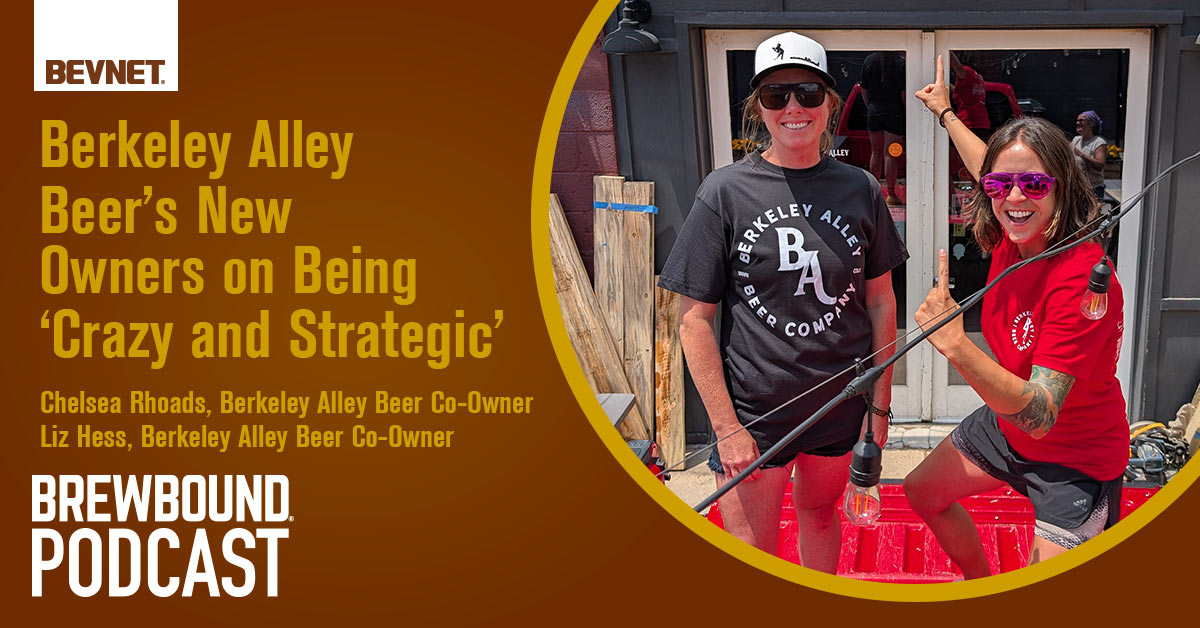
[00:00:28] Zoe Licata: Two podcast hosts have taken the plunge and bought a brewery, but don't worry, it's none of us. Find out who next on the Brewbound podcast. Hello and welcome to the Brewbound podcast. I'm Zoe Licata, and I'm alone. You just got me this week. Jess is on vacation and Justin is back, but he is tackling one of the many earnings calls that is happening this month. So you just got me. I hope that's okay. I promise I won't get drunk on the power of being able to talk about whatever I want. I'll stay within reason. Still going to follow a similar pattern here. We're going to talk through some headlines and then we're going to get into our featured interview of the week. Jess got to tackle this week's interview before she took off on her well-deserved vacation. I'm really excited for you guys to listen to it. She spoke with the co-hosts of the Body By Beer podcast, Chelsea Rhoads and Liz Hess. They recently announced that they were acquiring Denver's Berkeley Alley Beer Company They're going to put their own spin on the spot, make it into their own brewery and be brewery owners for the first time. They've both had their own careers at different breweries for a while. They've been talking about beer on this podcast, and now they're ready to have their own space and turn it into a community gathering hub. I'm sure many of you listening have a lot of questions on why on earth somebody is buying a brewery in 2025. Trust me, they have some legitimate reasons. You're going to want to hear why. So make sure you stay tuned to listen to that. And I have to plug Brewbound Live. I don't think Justin Justin would let me do this ever again if I did not. Make sure you are coming to Marina Del Rey, California on December 10th and 11th for Brewbound Live. It's happening again. It's going to be great again. We're going to have amazing stage content. We're going to have incredible networking opportunities. You're going to be able to schedule one-to-one meetings with retailers and with distributors. Where else can you do that? It's pretty spectacular. I'm not exaggerating, guys. This is actually a really fun time. I really enjoy Brewbound Live. It's worth all the stress of trying to put together a program for you all so that you can have the best time possible and maximize your time there in Marina Del Rey. We have been announcing some speakers over the past few weeks. We have Sophia D'Angelo, who's the founder and CEO of Boston Experiential Group. She's going to be able to talk about how you can create different events and different experiences for consumers, whether it's at your taproom or other collaborations. Really helpful because we know at this time, Consumers are looking for experiences. How do you do that? How do you get them to come and spend their money? She's going to be super insightful for that. We also have some data presentations going on. We have Kaylee Theriot from NIQ. We have Mary Mills from Three Tier Beverages, and we have Andrew Hummel from CGA. All super smart folks, going to have some really great insights. We know data is important, but also what can you learn from that data? They're going to help analyze it for you and share it with you. And then we recently announced that the athletic brewing director of marketing, Rosalie Kennedy, is going to join us on stage. We know athletic is massive, but how are they staying relevant? How are they connecting with consumers beyond just being a non-alcoholic beer? Rosalie is going to have some great insights for you all. So make sure you check out brewboundlive.com. You can see other speakers as we continue to announce them. And you can check out our room block for the hotel that is now open. We're staying at the gorgeous Marina Del Mare Marriott. That's where we've been the past couple of years. It's also where the conference is happening. Make sure you go get your discounted rooms. It's on a first come first serve basis, makes it nice and easy, and it's a gorgeous spot. So again, brewboundlive.com. Check it out. Be there December 10th and 11th in Marina Del Rey. Now let's jump into some of the headlines and what is going on in the beer industry this past week. Like I said at the top, it's earnings season again. I don't know why I always feel like I'm caught off guard by it or that it just happened, but I guess it really is. It's every three months. I shouldn't be surprised. It's pretty frequent. And the most recent earnings call to kind of kick off this chunk was Boston Beer Company had their call on Thursday. It was their second quarter of the 2025 fiscal year, and it wasn't that great, but we kind of expected that, right? The Q2, we know, has been challenged by a lot of things. We have all of these macroeconomic trends that are happening. We have tariffs. We have immigration policies. We have just the general economy, inflation, all of those things that are impacting consumers and in turn impacting how they are buying things, how they are interacting with beer. And then we also had, as Jim Cook pointed out on Thursday's call, not so great weather in the second quarter. And so that just did not help beer. But what was relatively strong during the quarter was Suncruiser, which is the vodka-based Hard Tea brand from Boston Beer. They more than tripled their distribution points for Suncruiser over the past few months, and it is now up triple digits in scan data. This is a product that launched last year and turned national in 2025. So of course, take that scan data with a grain of salt. It is going into many more distribution points than it was in a year ago. But CEO Michael Spillane said that this is going to be the next iconic brand for Boston Beer. Suncruiser was one of the top volume gainers in Spears-based RTTs this year and already has 4% share of that segment, according to Jim Cook. So it's really on fire right now, unlike its sibling brand and fellow hard tea brand, Twisted Tea. It's really a tale of two teas that is going on at Boston Beer Company. So Twisted Tea was actually down in Q2, and it seemed to be a trend among all F&Bs in the quarter. We're going to dive into it in a conversation in a later episode of the Brewbound podcast, but F&Bs were really surprisingly hit hard in Q2, more than some folks were expecting, more than Boston Beer leadership was expecting. They admitted on the earnings call. And it was quite a stark contrast between what is happening with that brand in Q2 2025 versus Q2 2024. Looking back at just a year ago when we were talking about Twisted Tea as the real juggernaut for Boston Beer, it's this 20 plus year old brand that was still able to find shelf space, still able to generate growth for Boston Beer. That's not really the case right now. And Jim Cook pointed to a couple of things that are happening there. One of them is Twisted lost a good handful of displays, specifically around Memorial Day. He said, just going around in his own observations, he was surprised that a lot of retailers had given space that was previously given to Twisted Tea and some other large brands. switched it over to Spirits-based RTDs. He admitted, yes, okay, that can benefit Suncruiser and has a little bit, but it's a lot of the other competitors in that space too, whether they're large brands like Gallo's High Noon, or there's some smaller brands, some more independent or regional brands. And Jim Cook said he believes this change is going to balance out eventually, but it definitely impacted Q2 for Twisted Tea. Another really interesting point he had is they may have overpriced Twisted Tea. He admitted that they had risen price a significant amount for Twisted Tea over the past few years during the COVID-19 pandemic. The offering had price-wise been between more domestic beer and craft beer, and the consumer base for Twisted Tea definitely leaned more towards consumers who were also buying domestic beer. Now, Twisted Tea is more priced similar to Sam Adams. And Jim said, hey, that might actually be a problem. We might have underestimated what impact that could have on the brand. Consumers who are going for Twisted Tea are not necessarily looking for that more premium price point. The consumers that are looking for that premium price point, they're probably going to go for a SunCruiser. they're not necessarily going to pay that much for a Twisted Tea. And so he said they might have to make some price adjustments for that brand. Still, leadership said, you know, we're not too worried about cannibalization between the two tea brands. Twisted Tea is for a different consumer than Suncruiser. Suncruiser is more of that premium, again, premium customer, premium price product. And I think he said the total cannibalization or the total impact that other brands had on Twisted Tea was about 20% of the brand's declines. And that's not just from Suncruiser, that is from other competitors as well. So it doesn't seem to be necessarily the case, according to Boston Beer, that Suncruiser is stealing Twisted Tea. It's just there's a lot going on to the F&B segment right now. There's a lot going on to Twisted Tea, and that is a ginormous brand. So anything that the hard tea segment feels, anything that F&Bs feel, Twisted Tea is going to feel it even stronger because it has such a large share of that segment. Michael Spillane, the Boston Beer CEO, also touched on any sort of criticism around Suncruiser. It's a vodka-based RTD. It's vodka-based tea. They're hot right now, but is this going to be the next hard seltzer? Are we going to see something similar to what is still happening with Truly, where it just cannot keep up with that growth and it hasn't quite found its complete bottom yet? And Michael said, you know what? No. He admitted and acknowledged that they have made mistakes in the past and they have learned from those and they're going to do things quote unquote, right this time. And one of the ways they're making sure that happens and that Suncruiser doesn't become another just quick fad is they really built it in the on-premise. So they focused Suncruiser's rollout in the on-premise, built and found the consumer there. And then once the consumer tries the product, Classic, it happens with beer, it's how we talked many times about that's where you build brands, then they'll go and they'll buy the product. So he said that is really what is going to make the difference for Suncruiser and they're going to continue to lean into that on-premise focus moving forward as they continue to expand that brand. So we have coverage of the actual numbers. I won't dive into them on the podcast. I know that can get a little heady. So go on to Brewbound.com. You can see all of the financials for Boston Beer's Q2 and for the first half of the year. See some other brand highlights. Dogfish Head got a positive shout out, which was really great to see. They actually recorded growth. It was the first time in several years that they were able to record growth in Q2. So check out what's driving that and some other details on what's happening with Beer Company, as well as some adjusted guidance and factory tariffs. So check out all of that coverage. We also on top of all the earnings calls that are happening recently, we are also having a lot of data dumps. It is July. It's almost the end of July. It's going to be August basically by the time you're listening to this podcast. It means we're at the halfway mark of the year. It means we're having a lot of data come in to show us how the first half of 2025 went. Like I mentioned, and we talked about a bunch, so I'm not going to go into too much detail, It was a tough first half of the year. Can't sugarcoat it too much. It was not great. And the Brewers Association recently came out with their mid-year report based on survey of members, and it wasn't great for craft beer specifically either. Craft volume is down 5% through the first half of the year, according to BA staff economist, Matt Gasiok. This year, if this year continues to be in decline for the full year, this will mark the third consecutive year of craft volume declines. So that all began in 2023 and that continued decline of the kind of post pandemic era of this is what craft beer looks like now. Matt said, you know, there are still breweries that are out there that are finding marginal growth, but there are also many that, you know, Q2 was not great. It really depends on what brewery you talk to to see what is going on this year, what is happening. Because as we talked about on this podcast, I've had some great conversations with some breweries that are finding insane growth right now that are finding ways to connect with consumers to still grow, to still find a way to make this a really great business. But then there are others who just it's for a myriad of reasons. It's not possible right now. And this survey from the BAA shows that it really is varying among members too. About half of respondents, 49%, said their production has grown in 2025, and then 47% said their production has declined. So it's nearly a 50-50 split. It really depends on what breweries you're talking to, what consumers you're catering to, what size you are. A lot of the volume gains were more towards the smaller breweries, which is the majority of the BAA's members. 50% of the breweries that produced less than 1,000 barrels annually said they have reported growth. 43% of those smaller breweries said they have reported volume decline so far this year. So you can't really generalize about what's happening in craft. You kind of have to dive in on a brewery size level, on a focus level to see what is really happening in that segment. So make sure you check out Justin Fonte's coverage of that report. It has more details on what members are saying and what is going on through the first half of the year. We also are going to have lots of data coming in this week from Cercana's monthly scans report. We have some data from CGA. We also got some distributor information from Goldman Sachs last week, diving into why they're actually feeling a bit more positive about what's happening at beer. Exciting. I know positive news. Thank you. And it was 4th of July that is kind of driving some of this better feeling about the potential of beer this summer. So you can check out all those survey results. Take your time, go through all those data reports. It's a lot. There's a lot going on there, but definitely worth diving into all of it at Brewbound.com. Now before we go into our featured interview of the week, I did want to give one shout out to Roundhead Brewery. They are located in the greater Boston area. I got to check out their brewery for the first time on Sunday, and it was a really big event because they were celebrating Peruvian Independence Day, which is actually on Monday, July 28th, so the Body I'm recording this right now. but their big celebration was on Sunday. And it was such a lively taproom experience. It was so much fun. I haven't had that much fun at a brewery in such a long time. And it came down to just the fact that Roundhead was creating this community experience for consumers who connected with the brewery, which is co-founded by a man from Peru. really into making sure that that brewery connects with Peruvian consumers. We did a round with Luis Espinoza and Craig Panzer, the co-founders, earlier this year in March, and they detailed all about what went into founding that brewery. It's the first Latino-owned brewery in Massachusetts, but make sure you check out that Q&A. They're a brewery that everything from the beers they make to the community events they participate in always comes down to making sure they're connecting with Peruvian culture and with that community. And yesterday was such a highlight of the purpose that they have behind their brewery of creating this space for folks. There was live music, there was people dancing for hours and hours nonstop, smiles everywhere. Yes, people were also enjoying delicious beer that was inspired by Peruvian brewing history and ingredients. But it was really just everyone there to have a really fun time and the brewery was serving as this hub for them to have this celebration. I was there with my roommate who is Peruvian and she said that was one of the best things she has ever done since living in the city. And she's been here for eight or nine years now. So it really is a testament to Roundhand and to the potential of breweries where you can be this space where people can have a great time. And yes, they're there for delicious beer, and it was really good beer. They're there for delicious beer, they're there for great food, but they're also there because they know that is a great, safe gathering space to celebrate who they are, to celebrate just being together with folks. It was so much fun. And I want to see other breweries do more events where you're just there to have a great time. So now that my ramblings are over, we can head into this week's featured interview of the week. So I'll pass it over to Jess.
[00:17:49] Liz Hess: I am so excited to welcome our next two guests who are no strangers to beer, but their story is certainly super interesting. We've got the now proud co-owners of Denver's Berkeley Alley Beer, Chelsea Rhoads. Hi, Chelsea. How you doing? Chelsea Rhoads Hi. Good. Doing great. How are you? Good. Thanks. And Liz Hess is also here. Liz is at The Brewery. Liz, what's going on today?
[00:18:12] the Body: Liz Hess So many things. It's a good day. They're happy to be here. Thanks for having us.
[00:18:16] Liz Hess: Oh, well, thank you so much for joining me. So not only did you guys just acquire a Denver Brewery, which we're going to get into, but you also have your own beer podcast, the Body By Beer podcast. And I just always think it's so fascinating to talk to people who also do this because it's a weird thing to do. I scrolled through the Body episodes and you guys do something really different. It's not just the usual conversations with founders. You do a bunch of different stuff. You recently experimented on which beers create the best ice cream floats, which is really fun. But in all of that and everything you see in the craft beer industry, I have to ask, what on earth made you look at everything around us right now and think, ah, yes, I want to own one of these businesses?
[00:18:58] Body By: Is that not the million dollar question? Liz likes to say we're crazy. I like to say we're crazy and strategic. You know, it kind of hit this point where we've had the podcast going, we're getting a good following. We love what we're doing with it. Getting actually into the brewing space when we've been in it for so long and actually owning our own brewery, which is kind of the next logical step, right? We get to take the show to the brewery. We get to take the ingredients within the brewing, within what we're making, within what we're serving, and then tell those stories. And it actually allows us to expand our storytelling further than just doing the interviews and collab brews, right? We get to bring in different products, different ingredients, and tell those stories with it. and kind of push the marketing boundaries away from your stereotypical just like look at this picture of our beer into really all of the why's behind what we're doing and that just didn't really make sense without the brewery and I've been looking and Liz Hess been looking for probably five plus years on actually buying a brewery and this one to put bluntly just kind of kept working out the other ones didn't and we were just like oh well it's not the time and this one just kept working and probably about 10 days before we closed we both were like Oh, shit. Like, I think this is actually going to go through. Like, oh man, now we really got to rally in. So it just kind of, I mean, let's jump in, but it just kind of felt like the next logical step for what we're doing. And I felt right and it kept working. So we just went with it.
[00:20:26] the Body: It did feel right. I'm going to add in a tagline of, I think we finally hit this point with the show, right? We love talking to brewers. We love talking to founders, tapper managers, marketers, food and beer people, you know, and then looking at the fun and historical side of beer. And then at the same time, right, we're talking to more brewers and we're like, you know, we really want to take this a step further. So hold my beer, watch this, right? In a crashing or scary time, like, Let's see what we can do, especially in this cute and awesome neighborhood of Tennyson Street in Denver. I mean, there is such a community focus in this area, and it's small. It's nothing big. It's very tangible, right? We're talking 30 people inside, 30 people outside. Thankfully, Denver has a lot of nice weather, so we can utilize that. And it's a four-barrel system, so we get a chance to really play and learn and really get our feet wet. So I'm looking forward to that. I'm not saying it's not scary times as far as like expense goes, because it is. But we think that we can push people to come in and expand that by offering more than just beer, right? We get to expand that community focus beyond beer with food. We're getting a brew pub license and bringing people in that way and expanding upon events as well. So it's not just about geeking out about beer anymore, right? We get to bring that beer and food pairing to life. And we're really excited about that part.
[00:21:58] Liz Hess: So, I mean, you've both worked at breweries before and you met at your corporate jobs and we could dig in on that a little bit in a second. Like Liz, you worked at Resolute. Chelsea, you were at Four Noses. What were you doing at those breweries? Liz, do you want to start?
[00:22:10] the Body: Sure. Yeah. So I did mostly just beer tending, but I was in the tap room of Arvada and there was a bit of disconnect for the back of the house when it came to how that was getting taken care of. So it was a lot of, hey, like, I can take that responsibility on. And I just had a conversation with somebody yesterday that was like, oh, I hate it when the bartenders go in the back and they feel like they have to touch everything. And admittedly, it may have began that way, but there was such an intense intrigue to it. It was like, OK, how do we do this right on the cold side of things in the back of the house? Because I do feel like at some points, not always, it often gets overlooked. And so I was able to take that on and gain quite a bit of experience with that. So that's really my experience. And then I love to bartend. Anything behind the bar, I love chatting with people and I love chatting about beer and food. So that, I think that that's just in my blood or something. That part's easy. Raised in the bar. Yeah. So as far as like the brewing goes, you know, uh, I do, I do have some experience, uh, enough to be dangerous. And I mean, I've been here every day for however many days it's been, you know, doing whatever I can practicing. taking things on, putting things off, checking safety, and then just working more with my palate as well. I was just talking to the mouth guy this morning. That was a lot of fun. I'm super optimistic. I don't want to come off as overly confident, but at the same time, I'm optimistically confident that it's not only going to be fun, but we're going to pull it off.
[00:23:51] Liz Hess: Awesome. Chelsea, what were you doing at Four Noses?
[00:23:54] Body By: So I jumped on for noses as the original front of the house person. It was Tommy, they had a head brewer, and then it was me. We kind of just roughed it out at the very beginning, went through a lot of the opening. pains and tears and blood, sweats, all of that with Tommy and fell in love with the entrepreneurship side, fell in love with the craft beer industry side. I mean, we owe, I owe a lot of my experience, my knowledge, my growth of even just where I am today with the whole Four Noses family. And then Went around, worked at a couple other breweries, worked at Upslope for a while, managed Resolute, then went into the consulting and the podcasting aspects. Did some consulting with Monolith Brewing, what was that, two years ago, before they got opened up, and a handful of other breweries going forward. And in between that space was the tech that we talked about. So we have a decent amount of startup experience, and this is kind of the space we have the most. long-term experience in as well.
[00:24:55] Liz Hess: Which is huge because I mean, craft brewing and startups of any kind really are a different beast all together than what many people ever have to deal with in their professional lives. So to have experience in both of those areas is huge for you guys. So let's dig in on that corporate job. You worked in data analysis, right? That's really important. And I think that skill set sometimes evades a lot of newer entrants into craft beer. How important is that task in particular to anybody getting started?
[00:25:28] Body By: Yeah, I think where Liz and I sit within the data analysis stuff, and we worked within pet care data, we think about things in a very logistical data focused problem solving. which I do think is going to be really good for us. There's a quote I always heard about craft beer spaces, how many people start up breweries and they never get out of the hobby stage. They do it because they love brewing. We love beer. It's not that we necessarily have had enough experience to be like, we absolutely love brewing. That's the pace where we're really excited to expand and grow. And so we get to approach this with more of a business mindset, more of the data, and really focusing on making decisions on the customer's needs and what they're wanting for. A big part of our business model is implementing a lot of NA options and different options for people moving forward. And that's coming from the space. That's what the people are wanting. That's not going to hit our ego of we don't want to breathe this. It's what the people want. That's really how we make the bulk of our decisions. And I think that comes from us having a tech startup and focusing on those type of decision making versus just passion forward.
[00:26:35] Liz Hess: And you are now the third owners of the brewery that's in this space, right? Yeah. So Berkeley Alley started out as Da Stieg, correct? Da Stieg. Da Stieg, thank you. I mean, Denver's such a mature beer scene that I think a lot of people maybe know the biggest names and not always the smaller names. So what has been the story of this space since its founding?
[00:27:02] the Body: From what I know, you know, just Steve started out, there was a lot of Belgian styles coming through. And small, they were able to rotate through those. It was a one barrel system, I believe, is what they had. And then when Berkeley Alley took over in 21, they actually bought True's old four barrel system and upgraded it. So they wanted to get bigger batches out. And I believe it went from an eight tap to a 16 tap as well. So that just goes along with that system. And so that's a little bit of the history that I know, but I know for Berkeley Alley well. So they kept that Belgian style going. So a couple of recipes that have been in this building for what, 11 years, you know, are hanging on the wall right behind me and in the kegs behind me. I know we're gonna keep a couple. I love a Belgian and would love to perfect that. That'd be pretty cool.
[00:28:02] Liz Hess: Looking through your beer list right now, everything seems super approachable, but super sessionable, which is really nice. And you've got a really great blend. I don't know how up-to-date this is, but you've got a Belgian wheat, a dark Mexican lager, Czech pilsner, super interesting, West Coast pilsner. You've got something for everyone almost. What do you think is going to be the hook that you're hanging the hat on here in terms of styles? Is that a phrase? Did I just make that up? Is that nonsense?
[00:28:32] Body By: Probably. Yeah, I mean, we want to make sure we're keeping true. I mean, like you said, it's a place that has a lot of history to it. We're going to always make sure we have at least a Belgian on, whether it's going to be like a Cezanne or a Belgian Strong, and keeping that alive within it. But we also know there's, again, going into the numbers, there's styles that sell, and you have to make sure that you have some of those styles on. I don't see us being extremely style focused. As far as just being like, oh, we're all about hazes, or we're all about APAs, or all about Belgians, we like having a nice, well-rounded lineup, and that's definitely going to be sticking with the menu trend. And then in addition, bringing in those NAs, gluten-free options, and our vision with it is putting those Everyone has them, right? Like everyone talks about having NAs on, but to us it feels like a secondary thought. The gluten-free feels like a secondary thought. We're going to be really incorporating that into the core values of we'll have gluten-free flights available and we'll have NA flights available because it's not just having one can available in the cooler that you walk over and you grab and you crack it yourself. We're going to have these on tap and we're going to make them a very inclusive part of who we are and what we serve as offerings. Everyone feels very welcome, whether they're drinking or not. We don't care. We just want you hanging out with us. We don't care if it's alcohol. We don't care if it's kombucha. Just come hang out with us.
[00:29:58] Liz Hess: Awesome. Who do you see as being the taproom's primary clientele?
[00:30:02] Body By: I mean there's so many locals in the area it's such a busy street, but it's also very trendy area where we want to be tapping in on people that are coming in the Tennyson's notorious for putting up awesome events right this weekend coming up they've got a beer fest they've got the tennis and street fair they have. First Friday is what happened last Friday, I believe. There's a lot of events going through the area, so we're hoping to bring in new people all the time. We love seeing new faces and hearing new stories, but there's a lot of people in the area, so there's going to be a lot of residentials as well, and hoping to draw in a lot of the women crowd. Women founded brewery and having different options outside of just your heavy IPA menu and bringing in a variety. We want to be really welcoming to all.
[00:30:46] Liz Hess: love that. It's one of those things where it's like, I wish we didn't have to call this out and be like, hey, you're a brewery owned by two women. I wish we didn't have to do that. But until it becomes less of a rarity, I think it's usually my take on this is to just treat it like it's normal and not mention it. But sometimes you've got to mention it. So I think what we've seen It sounds like you're following a little bit of that same trajectory, where it's you find styles that are more approachable to people who aren't the typical craft beer drinker. And that's how you can bring them in and give them an experience that's a little different from the typical craft beer experience. So I'm really excited to see what you guys are able to do. And I'm sorry, I just called you both guys. I know different people have different feelings about that, but guys just falls out of my mouth for everybody, men, women, inanimate objects. What do you hope to bring to the Denver beer scene as two women co-owning a brewery? What impact do you think you're going to be able to have?
[00:31:47] Body By: Storytelling, the storytelling is such a big piece of what gave us the courage to continue taking this leap further and further into the craft beer space and being open for all the stories, right? The craft beer space is for us, we're so much about the community and it's just been such a supportive community since we've always been in it. We love how cooperative and helpful everyone is and keeping that alive across multiple beverages, right? We're going to be opening for coffee also in the mornings, offering like a matcha flights. How do you bring that coolness of craft beer into different drinks within the same place? And we're hoping that makes a big impact. And we think the way to get that impact is stories. We love telling stories.
[00:32:30] the Body: And I think you actually said it, Jess. It's giving that craft beer experience, but also to maybe for some more approachable drinks. Have that craft beer sense of community that we're all talking about right now where You get to talk about the beer and talk about how they came up with the recipe, but we're also talking about how gluten-free is available and any is available. And it's just really friendly and chatty and even sometimes about random things. I don't even think it has to stand out or stand on a pedestal. I don't think Chelsea Rhoads I are looking for that by any means, but maybe also because of the story. that little bit of craziness, maybe that's the part that sticks out. I don't know. I hope it's more than that, but I like the more approachable concepts. And so they don't have to be mutually exclusive is what I'm saying. It's like craft beer flows into all of that, right? That heart and soul of sharing and collaborating flows into many things.
[00:33:32] Liz Hess: Awesome. Well, you mentioned the coffee thing. And one, I think that's genius. And two, I do want to dig in a little bit there. Sometimes people have one set idea in their head of what a brewery is and what it can be. And that's, I don't want us to go down this rabbit hole, but this week there was a story in the New York Times about kids in tap rooms and some breweries trying to limit that. And I think you get the people who say, well, like I'm coming here to drink beer. I don't want to be around kids. then there's also, you know, if that's if you see a brewery as one thing, as one place to go drink an intoxicating substance. But my hunch is that both of you will think this, as do I. Breweries aren't just that, breweries are a third space for communities and for people to gather. So by offering morning service with coffee, by doing all these things, you're really establishing yourselves within your community as being a gathering spot. So what can you do to help your clients overcome the idea that, oh, I just go to a brewery like to have a drink at night? what's the communication for, hey, we've got coffee?
[00:34:30] Berkeley Alley: Uppers and downers? I don't know. Maybe not, maybe not.
[00:34:35] Body By: I have traveled all over the world together with friends, and that's like always our joke is we love drinking and eating, but we got to get those shots of espresso in because you can't just drink all day. And then you're like, I got to get the upper downer. I think the language is going to come out again within the stories, within being open, within having those offerings feel like they're actually intended to be there. There is intentionality behind it versus just a second thought, like going through, when we talked earlier, I have a newborn and going months without drinking. And when I go in and I'm like, oh, can I get a water? And it comes in a crappy plastic cup. That doesn't make me feel included. Within the concept, like my joke is when I go into Avery, I would literally ask for their big ass snifters because I love those glasses. And I'm like, can I just drink water out of that, please? Like, I want to feel like I'm part of the table and I want to feel included in this. And when I get a crappy plastic cup, that doesn't make me feel included in part of it. So that in itself is just going to continue that feeling of you're meant to be here. It's not about one specific drink. It's not about beer. It's about all of it together. And it's really about being there for the stories and storytelling and sharing those memories together. choked forever. I love when you go into those breweries or restaurants and you can just feel the love. Like you just walk in and you know there's love and history behind it and that's what I hope people get to walk into our place and feel.
[00:36:10] Liz Hess: Chelsea, I love that you just mentioned the sad plastic water bottle experience. Because the last time I was in Denver, I was pregnant. And we walked into one of my favorite spots to visit whenever I'm in town. And I said, hey, what do you have that's non-alcoholic? And the bartender, who was easily like 15 years younger than me, because I was of advanced maternal age, was like, we're a lager house. You can have a water. And it was just like, dude, that's like really not cool. Like deeply disappointing. It's making sure that everybody feels like they're all along for the ride, I think is huge. Whether or not they're drinking something with an ABV. So I love that this is part of the plan from the jump. In some states like where I am in New Jersey, breweries couldn't sell things that they didn't make. So there's some of that at play. That's different now. But there's really no excuses now. It's not just here you must drink our 8% imperial IPA or get the fuck out. That's just not a thing anymore. So I love that you're changing the narrative. I also, you know, I'm sorry, we're kind of all over the place here, but this is just how my brain works. And I was looking through your podcast and I just find it really fun. Like in addition to the different kinds of episodes you have, like the Body By Pure title to me is just kind of really funny. I think that we're really changing the way that we think of women in beer. I think there was a very narrow idea a few years ago, and now with what you've been able to do in terms of elevating various stories and doing it in a fun way, there's Girl Beer who won the Brew Band Pitch Slam late last year, that they're really taking the same approach. I think we're able to take the narrative back for ourselves. Does that sound right? Is that kind of the way that you see yourselves right now?
[00:37:59] Body By: do something different, right? I don't necessarily sit on YouTube and watch brewing videos, but I watch people having fun. I like learning about how the flavors go together. We kind of just took the pieces we're most passionate about and where we have the most expertise and started making videos and having fun with it. You're going to see more brewing stuff because now we have a brewery and we're brewing, but it's still going to be What pieces do we have fun with it about? We're probably still not going to be the place you go to to, like, learn how to homebrew. I think that's a little more structured than we are currently usually at.
[00:38:40] the Body: I also want to piggyback on what you said about taking it back, or rather, I would say, painting our own picture of how we see the space. I don't think that because we just drink beer, it's out of this maybe pint glass that whether or not my beer tender knew to put head on it or not, and I'm just sipping at the bar, you know, slunched over having this beer and belching in the background. Does that happen? Sure. But like, there's a way, at least for me, like, you can make it cute. You can make it pretty. Maybe things that some guys aren't going to do, and maybe some women would. We like to do that. And we like to have fun with it. I don't see it as a game, but there's definitely like that funness that goes behind it. Hence why you get the logo. I'm not a designer. Chelsea designed that herself. And when she first presented it to me, I was like, I love that because I can relate to it. Right? Like it's not just this straight, narrow, boring thing. Not saying all glassware is like that, but. I think for me, that's us painting the picture of how we see the space. It's fun, it's interesting, but it also can be like cute and poppy. And maybe I say cute too much, but again, I just, I don't care. Cause I think it's cute and it can be cute and it can be fun. So painting our own picture. So that's what I came up with.
[00:40:08] Liz Hess: I'm not mad about it. I welcome the cute. I feel as though the Brewbound podcast could use more references to cute. So thank you. Good. I feel like I can pick out a woman-designed taproom from a mile away. I don't know if this is a worthwhile talent, but you always, when there's purse hooks under the bar, when the chairs aren't the most uncomfortable things you have ever felt, and when there's just a little bit more warmth than just like the, traditional industrial park experience, now hopefully of your. So I think it goes a long way into just adding a little bit of creature comforts to the space.
[00:40:50] the Body: Makes it cozy.
[00:40:51] Body By: Makes it cozy. That was kind of the first thing we went for, right? We're like, we have to make this look like women own it. We're not done with the remodel by any means, but we're like, we have to get it to at least that point where you walk in and you go, this is women owned. Like this fits the narrative that has been said. We haven't got to the website yet. So sorry that you had to jump on that. I'm almost done. I'm going to take pictures today.
[00:41:17] Liz Hess: So while I have you both, I feel like this is a great time to just ask, what are the vibes in Denver craft beer right now? What are people feeling? Is it the same malaise that's everywhere else?
[00:41:29] Body By: Yeah, I mean, you hear of breweries closing and some are, I feel like there's a handful of people are like, oh, that's not surprising. But lately we've had a couple that have just kind of hit the community hard that I don't think any of us really expected to. to close they felt like they were the breweries that were doing everything right and they still weren't able to survive and that that hurts right i mean we all kind of know the ones that you're not as surprised but to kind of be the more idealized ones and have them still throwing in the the towel doesn't feel good we definitely we can open our phones and be like oh god what did we do why did we choose this but at the same time it's like
[00:42:13] the Body: Well, and maybe they just didn't want to anymore. And that's okay too.
[00:42:17] Body By: I think our timeliness helps us. But it is like it's small. I think a lot of like those medium, the small to mediums that scaled because they were able to just pump out a bunch of beer and then they went into distribution and that was 50, 60% of all of their revenue. And when that all crashed in a year's span, how do you recover? you have contracts you have, you have equipment that's too big, you have staffing that you can't use anymore, and distribution shut down like you're just really screwed. If your revenue's been coming in from your tap room and you're only so big, you didn't get hit as hard because you really sat on your locals to keep you up and your regulars to keep you afloat. A lot of those regulars are still coming in, right? This place is, like I said, it's a four-barrel, like it was brought up. There isn't a big distribution chain coming out of it, so to have distribution die, well, it doesn't hurt the four-barrel system. We weren't there anyways to have all these tariffs on aluminum.
[00:43:20] Liz Hess: I'm glad you brought this up because I should have asked you from the jump. What's our strategy here? Are we going to sell almost everything over our own bar?
[00:43:26] Body By: Yeah. We've actually talked about getting, for just getting reps in. If we start getting to where we have more Beer Company in than out, then use that as a marketing sell point and sell the kegs off at cost, basically, to get our name out and get into the places we really want to be. And with other business owners and probably a lot of women that we want to have our names with, but we know they can't pay $200 a keg, especially when they can get any Coors product for $75. But maybe we can sell it to them for like 100 and 120, whatever the margins come out on where we're basically just like cover our costs and like, let's call it a day and be growing together. But for the most part, it's going to be all just stuff going over the bar and doing events. We're really excited about getting some really cool events going on and bringing people in and building that community further.
[00:44:20] Liz Hess: So before I let you go, and maybe this is too far down the road to ask, and I don't assume you would be pouring at the festival, but how do you see GABF week turning out for Berkeley Alley? Other than me coming by, because that will happen.
[00:44:34] the Body: Yes. Yes. Yes, please. Oh my God. If we could get a beer in, I would be blown away.
[00:44:40] Liz Hess: Well, before I let you guys go, and I feel like I already said that, but as our final final, what are you most looking forward to about the next year of being the stewards of this brewery?
[00:44:51] the Body: Totally for me, it's looking back there and being like, yeah, those are mine. And people are excited and they can have an NA with them or they can have a gluten-free with them or they can just come in Amanda Huang out. So I'm really excited about the art of it right now and not thinking about business. But I am at the same time.
[00:45:13] Body By: Chelsea, how about you? It's that community love vibe to have people walk in and just be like, this place is loved. I feel welcomed. I'm happy to be here. I want to be here. It's getting the space and the events and the people and everything to that point where you just walk in and you're like, this place just feels good. And it's not that it doesn't have it. It's like Liz was saying. Those are hers when they're when it gets to the point where those are her beers up on the menu. But like when it's our vibe in that taproom completely and it's our our love, it's our love is the way to put it. Like the place has been very loved over all the years. We don't want to take away from that. It's just getting our love included in it. The best feeling walking into those little places and you're just like, oh, this place is so cool.
[00:46:03] Liz Hess: Well, I cannot wait to get out there to visit and have a beer with you both in person. Thank you so much for joining us. This was a lovely chat. Always so good to talk to people who are excited and optimistic and upbeat about something. So thank you both.
[00:46:18] Berkeley Alley: Thank you for having us. Yeah, thanks for having us.
[00:46:22] Liz Hess: That's our show for this week. Thank you so much for listening. If you enjoy the Brewbound podcast, please rate it five stars and leave a review on your podcast platform of choice so more people can find the show. As always, the biggest thank you to Joe, Joshua, Ryan, and the whole Brewbound BevNET technical team that makes this such a high quality show every week and to Justin and Zoe for being great co-hosts. As always, we will see you back here next week.