[00:00:00] Justin Kendall: Heading to CBC? Kick things off the day before at Brewbound's meetup at Love City Brewing in Philly, Sunday, April 19th from 5 to 7 p.m. Connect with beer industry leaders, grab a drink, and catch up with the Brewbound team. It's free to attend and walking distance from the convention center. Head to Brewbound.com slash lovecity.rsvp. And don't forget to catch the Brewbound team at booth 956 during CBC. Next on the Brewbound Podcast, a St. Patrick's Day primer with Guinness. Hello and welcome to the Brewbound Podcast. I'm Justin Kendall.
[00:00:47] Jessica Infante: I'm Jessica Infante. And I'm Zoe Licata.
[00:00:50] Justin Kendall: And this week we're bringing you an interview with Guinness National Ambassador for the Open Gate Brewery, Ryan Wagner. So stick around for that. But first, we're back together and you all are not traveling anymore. How was the New England Beer Summit?
[00:01:05] Jessica Infante: It was good. Always a great event. The main guild puts it on, but breweries from all over New England come. Always a good turnout. Always great to go to Portland. We had fun, right? I had fun. Did you have fun?
[00:01:18] Ryan Wagner: Yeah, it was a good time. We got to, we brought some mics this time, so we got to do some podcast interviews while we were there, which is a new thing. So yeah, look out for those conversations in a few weeks or so, but yeah, it was a good time.
[00:01:31] Justin Kendall: Any standouts of the trip other than time together?
[00:01:35] Ryan Wagner: Sam Calagione throwing hats at people?
[00:01:37] Jessica Infante: That did happen. I had a couple of different beers from Arona Brewing that were really good and then outside of the conference stopped by Sacred Profane's Portland location with my fam because we turned it into a little weekend trip. And I am always a sucker for a dark lager and Brienne and crew did not disappoint.
[00:02:00] Justin Kendall: Nothing to add.
[00:02:01] Ryan Wagner: No, it was a great time. It was a much different vibe than my trip earlier in the week, which is all about constellations. So totally different.
[00:02:12] Jessica Infante: You bookended your week in a pretty wild beer way.
[00:02:16] Justin Kendall: Yeah, you're a bit of a road warrior last week. So maybe we should jump into that first. So let's get into the news of the week. And Zoe, what you're alluding to here is Constellation Brands Gold Network Summit, which took place in the early part of the week. And it also happened to coincide with the implementation or not of tariffs.
[00:02:37] Ryan Wagner: Yeah, it took place. The majority of it took place on Tuesday, which was the day that Trump announced again that, OK, tariffs are going to be happening for goods from Canada and Mexico. And that was the thought throughout the entire day and during all the presentations. Turns out later on, no, they're delayed again. But there was, surprisingly or not, not a whole lot of discussion about them. Given this is Constellation, their entire beer portfolio is Mexican import brands. So they are probably going to be the most impacted out of the majority of the beer folks that we talk about by Mexican tariffs. And the leadership made very brief comments on it, just saying, our messaging is still the same. We're going to do what we have to do to counter any effects by it. They can't really necessarily move production. locked into having to produce in Mexico. So this is not something where they could get around it with a lot of the other larger beer giants have said like, hey, we're we produce mostly for our U.S. supply is made in the U.S. So we're OK. But the Constellation Brands has been resistant to be outspoken about the real impact of these tariffs.
[00:03:55] Justin Kendall: I think that's one of the keys is this is my consent decree. It's not a choice. It's something that they have to do is produce in Mexico. And there's no workaround for something like that.
[00:04:08] Ryan Wagner: Yeah, they have, they're stuck. So yeah, it's a situation they can't necessarily avoid, but they're kind of taking the approach of when we get there, when it happens, then we'll tell you what's going to happen. But right now we're just focused on the plans that we have for our brands and we'll see what actually happens with tariffs.
[00:04:30] Jessica Infante: So one of their plans I find really interesting. Can you tell us who may or may not be invited to the Corona Beach this coming year?
[00:04:37] Ryan Wagner: Yeah. Yeah. So we, you might be familiar with the Corona advertising for, I think it's the past couple of years now, have been a lot of celebrities on the Corona Beach. And Malika, who you may know, she was on a Brewbound Live stage a couple of years ago. She is, I want to get her title exactly right, because it's a bit of a lengthy one.
[00:04:59] Jessica Infante: She's like the managing director of beer brands.
[00:05:03] Ryan Wagner: Yes. Malika Montero, who is the beer brands EVP and managing director, she shared that the beach has gotten crowded, is her words. They've kind of lost, she admitted they lost the feeling of the beach, the image of the beach. It's not something where you just have a bunch of celebrities there and it's this actual physical location. It's more of a feeling. And the only thing, I'm paraphrasing here, but the only celebrity you need at the beach is Corona. And so the big marketing around Corona for this next year, which is going to premiere during the MLB opening day, is La Playa Awaits. So like the beach awaits you, just get a Corona and you're going to experience the beach, you're going to be there. They're avoiding trying to make this like Just Hard vacation beer, but it's just wherever you are, if you're on a rooftop in a city or you're, um, some of their ads are like helping build a community bar or someone who likes to, to help the elderly in their town, like wherever you are, if you have a constellation, you're rewarding yourself. You have a Corona, you're rewarding yourself. You are at the beach. So yeah, it's totally a different approach, which I think is necessary as they talked about. Corona is the only beer brand family within their portfolio that isn't really recording growth, while all of those other brands, Modelo, Pacifico, even Victoria are recording pretty significant growth. And so their big focus is how can we get Corona back into a similar growth stage. And that means maybe getting away from some of those celebrities and connecting more directly with consumers. Bye, Snoop. Bye, Snoop. They're not completely getting away with celebrities. They did tease a couple of partnerships that will be announced later on, but the beach itself is going to look different.
[00:06:54] Justin Kendall: But Warren Buffett's still on the beach.
[00:06:56] Ryan Wagner: I would assume. I don't think he can live anywhere else.
[00:06:59] Justin Kendall: All right. Well, I really hope Warren Buffett ends up in some commercials. Why not at this point? All right, well, look for more coverage from the Constellation Brands Network Summit, more on Pacifico, Victoria, Modelo.
[00:07:14] Ryan Wagner: Yep. Comments from basically all of their leadership. There's tons of stuff out there, so that should all be on the site by the time you're listening to this.
[00:07:21] Justin Kendall: And we'll talk about one more thing later in the show on Around With and Tabbing Out. Let's talk about the Brewers Association because they released their annual report. Jess, you jumped on this and... Oh, they sure did. Oh, yeah.
[00:07:33] Jessica Infante: Yeah. So, I mean, look, 2024 was painful for Craft Beer, but it was just as painful, maybe even a little bit more so for the trade org that represents them. Tough year for the BA. Revenue declined 8.5%. Driving that was events revenue, which declined 11.2%. Events are far and away the biggest revenue driver for them. Events only brought in $12.2 million last year, which was a pretty sharp drop. The last report covering 2023, event revenue declined again that year, but just 2%. So they've had a bumpy road back since the pandemic. Basically, they used to have four signature events. They are down to two. And, you know, they kept the biggest two, the Great American Beer Festival and the Craft Beer Conference, but they've now lost. They canceled Savor, the food and beer pairing event, canceled that a few years ago, and now they are losing Homebrew Con. So to a few reasons, you know, they initially had put the event itself on hiatus, folded parts of it into the GABF, but now the American Brewers Association is splitting off to become an independent group. So they're going to lose revenue from those membership dues as well.
[00:08:43] Justin Kendall: They've taken a number of, of measures to try and course correct to, we've talked about all of this sort of ad nauseum at this point though, you know, they've re revamped great American beer festival. They've got new leadership. They've pared down their senior management team. They've, they've done a number of things. They've got new leadership in Bart Watson. So there's, there's so many like little interwoven stories within this report.
[00:09:13] Jessica Infante: Yeah. Yeah. And there's a lot here. I mean, revenue also, I mean, revenue from a professional membership also declined. This was the first year they had split their membership dues revenue in the annual report. Ostensibly, I would assume because of that impending split. And AHA, American Brewers Association revenue declined 15.4% to just under a million dollars last year. And then professional membership dues had the smallest decline of any of the revenue drivers, which is something. They went down 2.3% to a touch over $3 million. So a tough year for them. And you said it, they're doing a lot. They're really trying to figure it out. But a lot of things have changed since this organization was established, another thing that's no longer nearly as big as I'm sure it used to be for them. But they make some money from publishing and selling books and who's buying books?
[00:10:09] Ryan Wagner: It's also that weird conundrum where when an industry is having a tough time, Some of the first things to go are like members like what memberships you pay for We've heard it on like individual guild levels as to that. They've been having some difficulties there But that's also the time that those companies sometimes need these trade organizations the most and so how do you balance that as that kind of organization where you might need to Provide more resources, but you don't have them yourself.
[00:10:40] Jessica Infante: Yeah, it's a really really tricky situation and So I did ask how things are looking for CBC this year, which will be next month in Indianapolis. They told me that they are on track for 10,000 attendees, which I think is up from last year. So it seems like people are really excited about the location this year. That is interesting because I don't know that I personally share that, but we'll get you there. But I mean, last year was Vegas and Vegas is expensive. So this year Indie, we'll see.
[00:11:14] Justin Kendall: We'll be there and we'll be recording podcasts on the floor. We'll be covering everything so you can find us. I don't have our booth number.
[00:11:22] Jessica Infante: I think it's 512.
[00:11:23] Justin Kendall: It is 512, I believe. If not, you know, we're in the 500 somewhere. I think you're right. I think it's booth 512. So we will be there. Check us out.
[00:11:36] Brewbound Podcast: This episode is brought to you by the Craft Beer Conference, where big ideas, bold beers, and brutally honest shop talk collide. Join thousands of industry pros leveling up their game. Don't miss it. Register now at craftbrewersconference.com.
[00:11:56] Justin Kendall: Maybe we should just hop in and play around with or Tabbing Out. And we've got a whole bunch of new FNBs and RTDs come to market from Boston Beer and Constellation Brands. And I want to start with Constellation Brands you got to try this firsthand, Zoe, right?
[00:12:14] Ryan Wagner: Yes. Yes, I did.
[00:12:15] Justin Kendall: So this is Rule of Five hard punch.
[00:12:19] Ryan Wagner: Yeah, so this is a new 6% ABV hard punch that is in Just Hard few markets right now. Justin, you can get your hands on it if you'd like to. It's in Des Moines, Iowa, as well as Madison and Milwaukee and Minneapolis and in Tampa, Florida. That's available in a variety pack with four flavors, as well as 24 ounce single serves of strawberry, watermelon, lemon punch. and cherry pineapple orange punch. I tried the, I believe it was the passion fruit mango lime flavor while in the... That's one flavor. That is one flavor.
[00:12:59] Jessica Infante: That's so many things.
[00:13:00] Ryan Wagner: Yeah. I guess the idea is like punch is a lot of juices mixed together type thing. I tried it while in the brand floor, which if you've never been, I assume most people have not been to the Gold Network Summit. It provides a huge room filled with massive displays for all of Constellation's brands.
[00:13:18] Justin Kendall: I would describe past ones as shit shows when it comes to this because chaotic.
[00:13:23] Ryan Wagner: There's a lot going on. There was like someone what had a remote control like mini Corona blimp going around. There's people who are doing dog caricatures. There was photo ops with the recruiter with a baseball player known as the big sexy if you guys remember him back in the day. He's still hanging around. So there was a lot going on. But within all of that chaos, kind of right in the center was this little mock bar set up with some neon signs for Rule of Five hard punch. It was definitely a punch. It was definitely very colorful liquid, very flavorful. But there was not a lot of talk. There was no talk on stage about it. And there was not really any discussions about what's going on with it. So I'm not sure how, where this fits within Constellation's priorities right now. But I'm curious to know y'all's perspective. I don't know if I want to give an actual review of the flavor itself. I don't know if I should share.
[00:14:26] Justin Kendall: No, we don't have to put you on the spot with that.
[00:14:29] Ryan Wagner: I was a little confused. I'm not, I'm, I want to lean towards Tabbing Out on Another Round punch out there. Cause didn't we already do this, but I'm curious what you guys think of Rule of Five.
[00:14:42] Justin Kendall: I don't know what to think, but I will say the proposition seems a little more clear than their previous, which one, which was a shift. Is that still around? Yeah. Do you, did you see this?
[00:14:55] Ryan Wagner: Yes, Shift was still around, as was The Drop, which is their Lemon Drop inspired. So those were still around. They didn't really talk about them on stage that much. The biggest Beyond Beer stuff that got attention was the Aguas Frescas, which are going to go national this year. They had a regional launch the past couple of years. And the Chilatas. So those Modelo extensions are getting the majority of the attention. But Shift was still there. I feel like I'm here for the drop.
[00:15:23] Jessica Infante: That makes sense to me. Drop is solid. You know, like it's like a like RTD variation on a cocktail. Rule of Five, I don't know if I can get as on board with that. To me, it just sounds like there's a lot happening.
[00:15:35] Ryan Wagner: There is a lot. And I should also tell you what the five they're referring to is. It's these five components, they call them in it, which are sour, sweet, strong flavor, weak flavor and spice.
[00:15:49] Justin Kendall: I googled Rule of Five and there are a lot of Rule of Five. There are a lot of Rule of Five.
[00:15:54] Ryan Wagner: Yeah. It's their quote unquote signature take on the historic recipe for punch. I don't know what their historic recipe is, but I did not know there was one. Me neither.
[00:16:02] Jessica Infante: Look, there's a lid for every pot and I hope the people who will enjoy this drink are able to find it.
[00:16:09] Ryan Wagner: Our industry colleague Dave Infante pointed out that maybe this could be of interest to fans of like beatbox and the like who've had these super flavor forward bright colored beverages, but this one is a little bit lower on the ABV scale than some of the beatbox offerings.
[00:16:27] Jessica Infante: What's the package format?
[00:16:29] Ryan Wagner: It's cans. Cans. Yeah. Cool. So it's 12 ounce can variety pack or 24 ounce single serve.
[00:16:36] Justin Kendall: Since it's in Des Moines, I'll just say that I'm in on it for now until I try it, and then we'll see how in I am.
[00:16:44] Ryan Wagner: Let us know if you see anybody at the gas station or something holding one.
[00:16:48] Justin Kendall: I'm going to try and find this to see if I can actually see it, but it really raises questions about what they're seeing in the numbers that make them think that Des Moines is the market for this. We see this from companies all the time. Boston Beer's doing it too. They've got Sinless Spirits, which is launching in April. It's 4, 5% ABV vodka-based cocktail flavors, cranberry, black cherry, pineapple, and peach. And it's launching in Massachusetts, of course, Fresno, California, and Omaha, Nebraska, 100 calories, and then They've got Just Hard Squeezed, which is going to four markets, Charleston and Myrtle Beach, South Carolina, Austin, Texas, and Rhode Island. But Just Hard Squeezed is 4.2% ABV. It's bubble-free, so it's playing in that space. And both of these come as they are paring back their portfolio Just Hard little bit. They've killed off Slinger's Signature Cocktails, which was 8% ABV, C-store focused brand. And then General Admission, which was the confusing non-alc beer.
[00:18:01] Ryan Wagner: What was it? Beer fruit juice hybrid kind of.
[00:18:03] Justin Kendall: Yeah.
[00:18:03] Ryan Wagner: It kind of was like watered down fruit beer.
[00:18:08] Justin Kendall: Which you and I saw at GABF, which I imagine they were just like, fuck this, we're getting rid of this.
[00:18:14] Ryan Wagner: Yeah, they had a pretty big setup.
[00:18:16] Justin Kendall: everywhere.
[00:18:17] Ryan Wagner: Yeah, Boston Beer had basically every brand had a pretty massive setup and yeah, General Admission was part of the sports section, I believe.
[00:18:25] Jessica Infante: And General Admission is not out.
[00:18:27] Justin Kendall: Yeah.
[00:18:28] Jessica Infante: But Sinless is not.
[00:18:30] Justin Kendall: These are ABV, yeah, around four or 5% each.
[00:18:35] Jessica Infante: I don't know what's wrong with me, but I hear sinless and I just assume it's NA, which is clearly not true. That's fair.
[00:18:39] Justin Kendall: That's because they've promoted it with zero sugar, zero carbs, 100 calories. So you're thinking, oh, well, they call it an indulgent cocktail crafted with big, bold flavor and made with premium vodka.
[00:18:56] Jessica Infante: You can't cost something that's a hundred calories indulgent. Get the fuck out of here with that. Like this is just confusing. This is borrowing the worst parts of diet culture and mixing them up. It's very weird.
[00:19:08] Justin Kendall: I don't know about these. I feel like we're going to have this same conversation about them that we had with some of the other brands. I'm sure that this is about maintaining some shelf space, right?
[00:19:25] Ryan Wagner: It must be. I'm just curious what they have seen that makes them believe that these are going to perform better than what they had already. Not that what they had already was doing great, but I don't quite understand how they are different enough from what they were already offering to make it worth trying Another Round again. And they have talked, and specifically Jim has talked a lot about how launching a new brand is really hard without some sort of existing brand to support it. And it seems like even when they did have that extra support, like the, the Spears-based versions of Truly or the, even like the Slingers, I feel like had a backing, right? They came out of something else, but.
[00:20:12] Jessica Infante: No, but they had those Jim Beam FMVs. Justin, did you get the official yes or no on those? Are they still among us?
[00:20:19] Justin Kendall: Which one? The Jim Beam. I didn't know.
[00:20:23] Ryan Wagner: So yeah. So even when you have this extra backing from with like the Truly brand name, it's still hard. And they took them out of market. The tequila based versions were in market for less than a year from the national launch.
[00:20:35] Jessica Infante: The problem with the Truly brand name is that it's probably got a ton of baggage with wholesalers right now.
[00:20:39] Justin Kendall: Totally. Well, and Slinger's even got two years and then they said that they were expanding it. And then, of course, it's it's dead now. but these are innovation. They came out of the innovation incubator. This is their test and learn strategy. I get it to a degree. It's just some of this, maybe we're just fucking jaded at this point.
[00:21:03] Ryan Wagner: Maybe, but share a little bit, but it's true that sugar and carbs are not sins. Yeah. It just feels very deja vu of like, okay, there's some new ones again. How long are they going to last?
[00:21:16] Justin Kendall: So that brings us to our last one before we get to our interview, and I didn't have this listed, but Crystal Light. Crystal Light. And Jess, you have a history with this.
[00:21:31] Jessica Infante: Do I? Yeah, well, so Crystal Light Vodka Refreshers is a collaboration of sorts, licensing deal between Kraft Heinz, which owns Crystal Light, and the Barrel One Collective, which is the parent company of Mass Bay and Finest Kind. I checked in to see which side of that family tree this came up through and it started with the Mass Bay crew about a year ago. And some of the intel that they had was that nearly one in five Crystal Light drinkers uses it to mix cocktails. And I would like to call shenanigans on that because it's got to be way higher. I mean this is what we saw with Fresca Mixed, right? Like when Constellation Brands rolled out Fresca Mixed, they said half of Fresca users use it to mix with alcohol. To me, this makes sense. It's an interesting product. It's like 3.8% alcohol, 77 calories a serving. So what kind of flavor is going to be there? This was really interesting. It's lightly carbonated, but it's nitrogenated. So the bubbles are going to be smaller and smoother. Interesting to me that they went with any carbonation at all because that's kind of the vibe these days is that the kids do not like the bubbles, but they say it's going to play with Gen X and millennial women, but they assume it's, you know, zero carbs, zero sugar attributes could potentially get it some buy-in with the Gen Z crew. but I mean, hey, I've been there. I have mixed vodka and Crystal Light of varying flavors. The red raspberry, whatever was used to be my fave. And, uh, it's look, I would make a joke here, but I'm going to keep it to myself because it, is rude. This is a lot harder to hide from your parents than a tiny little tub of Crystal Light.
[00:23:24] Justin Kendall: That's my question, is will the Crystal Light mixers of the world be willing to just give up the mixing game?
[00:23:35] Jessica Infante: Well, I don't know. Are there still Crystal Light mixers of the world? I don't know.
[00:23:40] Justin Kendall: Are they boomers?
[00:23:44] Jessica Infante: Like to me, Crystal Light are drinkers, are boomers, but that's just because like, and you know what? Not even a boomer, a mother of boomers. My grandma loved Crystal Light. She's been gone now for 25 years. So we can't ask her if she would drink this, but I didn't have to think she would not.
[00:24:06] Ryan Wagner: I, I'm really mixed on this and no pun intended to mixing Crystal Light, but I, I feel like there has the potential to do really well because if it is targeting such a specific audience of, you know, Gen X millennial women who I, who I associate with Crystal Light a lot of like more like older Gen X or like everyone's mom had Crystal Light in the cupboard cupboard all the time. Like, you know, and they are loyal to whatever flavor they like. And that is also a demographic that has some of the most buying power. So you are targeting people who are spending money, who are doing the shopping, who can give your brand money. And we talk about that specific demographic group a lot of like that, that is something that people need to key in on that haven't fully capitalized on yet. But it's the convenience factor of Crystal Light that I feel like doesn't fully translate, even though I realize they're trying to make it more convenient by mixing it for you, putting in a can for you. The idea of, yes, I can just grab a packet and I can make whatever I want with it, that seems to be the biggest appeal of the initial mixing. Or I could do whatever flavor I wanted. I know plenty of people who have many, many boxes in their cabinets.
[00:25:30] Jessica Infante: Yeah, I wonder if this like some of this insight comes from like is water talk still a thing?
[00:25:36] Ryan Wagner: Totally. I feel like that's probably where this idea initially was sparked was seeing so many folks because they have so many different hydration powders and things nowadays that people are making beverages with.
[00:25:51] Jessica Infante: But how connected is water talk to like the Utah dirty soda culture? Because I don't know that any of those people are going to be drinking a Vodka Refreshers.
[00:26:01] Justin Kendall: I just wonder where we are on the crossover beverage continuum at this point that we've reached Crystal Light in our evolution.
[00:26:09] Ryan Wagner: I mean, I feel like there's got to be at least a couple more. Yeah, there's still... Does Minute Maid have anything yet? I feel like they're probably... They do? Yeah. Like through Redtree. Oh, yeah. It's like a wine spritzer. I can't even keep track of all of them anymore. But there's... If it is somehow related to a beverage, it'll eventually be Like I'm sure Prime will probably eventually come out with an alcohol.
[00:26:33] Jessica Infante: So this is Kraft Heinz's first foray into alcohol. And I just like to do a quick check, ran down the list of brands on their Wikipedia page and obviously it's Wikipedia, so take with a grain of salt, but like Mio, M-I-O, that like water additive situation. The little like squeezy liquid ones, yeah. Sure, that will be coming next. For sure.
[00:26:56] Justin Kendall: Man, Barrel One's really, really like embraced this with first come Duncan, now Crystal Light.
[00:27:04] Jessica Infante: Well, but even before then, Arctic Chill was a collaboration with Polar. They had a lot coming up.
[00:27:09] Justin Kendall: A lot. Kudos to them for inking these deals if they work out.
[00:27:16] Jessica Infante: I mean I think kind of like we're at the point in the life cycle of these products where you just got to like churn and burn. Like find a brand that hasn't been alcoholized yet and just do it and see what happens.
[00:27:27] Ryan Wagner: Try it out. And then you might find some random market where it worked out. It seems like a lot of these things, not a lot, but a handful of these brands that we've talked about that we've kind of been hesitant to fully jump on board with, are still around because they found a couple really niche markets where they've been able to really find success.
[00:27:48] Justin Kendall: It's fascinating just to see the divergent strategies at this point. You have Small Craft Beer essentially partnering with Kraft Heinz on this at this point, and then Boston Beer and Constellation going back to new-to-world brands. Who knows? Who knows what works at this point?
[00:28:07] Jessica Infante: Tough time to be a wholesaler. Yeah.
[00:28:10] Justin Kendall: Well, with that, let's get to something that does work, and that's Guinness and our interview with Ryan Wagner.
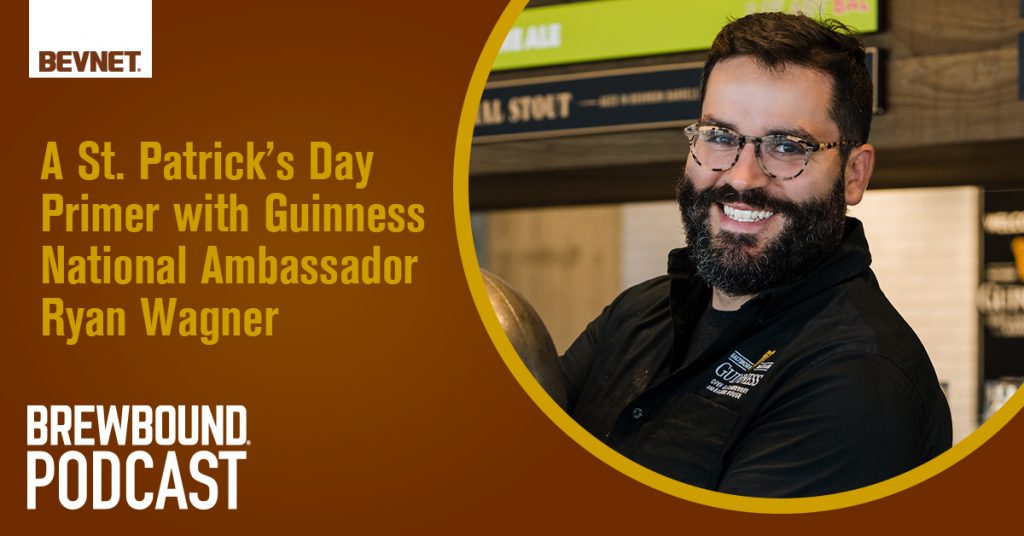
[00:28:20] Jessica Infante: One of beer's bright spots these days is actually very dark. So dark you mostly can't see through it. So here to tell us all about Guinness' recent success is National Ambassador Ryan Wagner. Ryan, welcome to the Brew Brewbound Podcast. How are you?
[00:28:35] Constellation Brands: I'm doing well. Thanks so much for having me.
[00:28:36] Jessica Infante: Oh, so glad you're here. It is the season. So we know you're real busy. So let's just hop in so we can get you back out to the spreading of the stout merriment.
[00:28:45] Constellation Brands: Ambassadoring.
[00:28:47] Jessica Infante: Ambassadoring. Well, so how much preparation goes into St. Patrick's Day for your team? What does it start? What's the playbook look like? This is like your Super Bowl. So
[00:28:56] Constellation Brands: Yeah for us I mean it is you know it's a month-long celebration and in reality when we think about you know the off-premise and making sure our beer is where it needs to be and showing up in stores as early as we can I mean it's mid-February through the end of March is really kind of the high point of the season the busiest time but in terms of preparation you know we'll start talking about next St. Patrick's Day on March 18th it feels like It's a constant evolution. It's a constant conversation. And there's always a goal of making this St. Patrick's Day bigger than last. And last St. Patrick's Day was always the biggest one we've ever done. So there's this constant flow of always trying to outdo ourselves. And luckily for us, I mean, as you mentioned, Guinness is on a different level right now. It's a lot of fun to work on the brand. It's always fun to work on the brand, but working on Guinness right now with so much energy, so much attention, and so much passion really being exhibited kind of across the drinking landscape, it's a blast.
[00:29:49] Justin Kendall: Guinness is synonymous with St. Patrick's Day. How much of the business or what percentage of Guinness's business takes part during that holiday?
[00:29:58] Constellation Brands: It's amazing. I don't even know that we could put a specific number on it, but the important thing for us and what I've been blown away by, especially this year over the last 12 months, it seems like every month is kind of outdoing the month before it. So in talking to, you know, some of my friends out in the industry, folks that sell our beer from a distributor standpoint, from the retail standpoint, the conversations that we're having are centered around like what is St. Patrick's Day 2025 going to look like? Because January and February were bigger than we've ever had. The holiday season was the biggest that we ever had. The summertime, people really discovered Guinness and how impactful it can be even during those warm weather months. So, you know, March is obviously the biggest month that we have on the calendar. I don't know that I have a specific number in terms of percentage. There's no doubt that that is our biggest time of the year. But every other time of year is starting to catch up to it a little bit, which in our world is a really nice problem to have.
[00:30:52] Justin Kendall: So you mentioned that you're rolling off some of the biggest times for the brand.
[00:30:56] Constellation Brands: What's driving that? I think it's a lot of things all coming together at the right time. You know, a few happy accidents, but I think a lot of it is years and years and years. of driving home consistent messaging. A lot of it focused around quality, making sure that the people that are pouring our beer in the on premise have the tools that they need, have the knowledge that they need to deliver that beautiful pint every single time someone orders it. You know, focusing on glassware, the importance of our tap handle showing up the way that we want them to show up. I also think that we've done a really great job and huge tip of the cap to our national brand team and the work that's being done from a marketing standpoint, reaching out to parts of the beer industry and parts of the consumer base that maybe we hadn't spent enough time talking to, whether that's a younger demographic, whether that's women specifically, whether that is the people that are looking for occasion centered around going to the beach, going to a cookout, tailgating before a game or before a concert. There still is, frankly, a lot of folks that when they think about Guinness, they think of a dark Irish pub. That's the first thing that pops to mind, and I completely understand that. There's a lot more to this beer and there's a lot more to the brand Guinness than simply that dark pub. I think the other thing that's really working for us is for years now. I mean, I've been on the brand eight years and for way longer than that, we've been trying to drive the messaging home that Guinness draft stout in particular is lower in calorie than you might expect, sits lighter on your stomach than you might expect. You know, it's a better for you option, I think, in a world where especially younger drinkers are looking for something that is more sessionable. Guinness drafts out at 4.2% alcohol, certainly fits that bill, but also that little bit lower in calorie, little bit lighter in body. It's built on, you know, those tenants. And then the last thing I'll point out, and maybe most importantly, Guinness is an experiential brand. We always have been. That idea of gathering together with friends, being inside of a pub, being inside of your favorite bar, gathering to watch the game. Over the last few years, I think we've been pulled apart more than ever before. And people are looking less about what's in the glass and more about what's happening around it. It's not about the consumable, it's about the experiential. And Guinness, I think, fits that mold really, really strongly to bring people to the table about something that isn't just the beer in the glass.
[00:33:15] Jessica Infante: So you mentioned happy accidents and we probably talk about the splitting the G phenomenon a little too much on this podcast, but what's it like to have your brand be involved in like a genuinely viral moment that you guys didn't start, right?
[00:33:28] Constellation Brands: No, and it's, it is amazing. You know, it's a bit like holding a beautiful flower. You don't want to breathe too hard on it. You just kind of want to let it do what it's going to do. You know, I think what is most exciting for us is that this year Guinness is celebrating 266 years of doing business of brewing beer throughout the entirety of that 266 years and in every corner of the world, right? As we sit here today, Guinness beer is sold in more than 180 countries on earth. In every one of those places, there are rituals. There are things that are unique about Guinness and that part of the world. Whether you're thinking about Jamaican milk punch, or the way the beer is enjoyed across West Africa, the way that Malaysians enjoy the beer, the way that it's enjoyed in Korea. There are so many different facets to Guinness when we look at it globally. And I think the latest phenomenon, if we can call it that, is just the next in a long line of people finding new and different and exciting ways to engage with the beer, to engage with the brand. You know, I think as long as people are drinking responsibly, that's the most important thing for us. There's no bad way to enjoy a Guinness, as long as you're with the people and things you love most.
[00:34:31] Jessica Infante: So the On Premise channel has been on a little bit of a roller coaster since the pandemic, and you mentioned how people have been apart for a while and are beginning to come back together. What has Guinness's journey back from those shutdowns been like?
[00:34:43] Constellation Brands: It's a great question, and I don't know that we have the full answer yet. I think a lot of folks in our industry are still reading the tea leaves, for lack of a better way to put it. Saw an article not too long ago that said that the number one Craft Beer in the United States right now is no beer, that there are more empty tap handles or empty draft lines than the number one Craft Beer in the US, which is Just Hard wild statistic. You know, working for Guinness, and even more than working for Guinness, serving on the Craft Beer quality subcommittee for the Brewers Association, the idea of enjoying a pint on draft is magical to me. It's something that is a huge part of my journey through beer, through this industry, through the hospitality world. And so I think that we were pulled away from that, and it's been a slow return to discovering the magic of Craft Beer. But I think Guinness has been uniquely positioned to continue that drive, to lead the way in returning people to the pubs, returning people to the taps. Because again, we're a pub brand. We always have been. You know, I think if you look at the discovery of consumers finding beer among different brands, most of the time you're going to discover it in the off premise and then maybe you see it in the on premise. is a brand that you will always discover in the on-premise and then maybe find it in the off. So for us, it was critical that we invest as much as we could, that we reinvest resources and time and money into the on-premise as soon as we were able to again. And we've bounced back. We think there's a hell of a lot of room for growth. We're going to continue to chase that down. But with a focus on quality, with a focus on training, And with a focus on engaging not just consumers, but the people that are pouring our beer, they are every bit as important as the people who are ordering it, buying it, storing it, delivering it. The people that are pouring it really have. that last bit of magical interaction between the tap and the customer. So we're going to continue to drive that interaction between our brand and the people that pour the beer. I think that's really where we need to re-engage is with the people behind the pine.
[00:36:38] Justin Kendall: One of the things that this phenomenon that you just talked about a little bit ago has done is it's opened up the brand to a lot of new consumers. that maybe had some misconceptions about the brand. Throughout this viral moment, what have you learned about the consumer's view of the brand and who these people are that are trying it for the first time?
[00:37:02] Constellation Brands: It's everybody, right? I mean, it's celebrities. I feel like I can't turn my phone on without someone tagging me on an Instagram post or I would say TikTok, but I'm an elder millennial. I haven't quite figured that out yet. But yeah, I mean, it is everywhere. I saw a post the other day, I won't mention who it was, but it was a very famous organization in a different part of the beverage world. taking advantage of that same thing. So, I mean, it has grown even outside of Guinness to really become a cultural moment, not Just Hard Guinness moment. I think what we've learned is that, again, you know, I mentioned it earlier, but the more you can create an experience around what you're selling, the more you can create an experience around ordering the beer, watching it pour, building that perfect crafted pint in a beautiful Guinness glass. Because that's the other thing. What we're talking about does not work unless it's in a Guinness glass, right? So that's been a huge part of this as well. There are bars and restaurants that feel very strongly about using their own glassware, using non-branded glassware. All of a sudden, we're hearing from those accounts that are saying, hey, we need some Guinness glassware. We love pouring your beer, but now all of a sudden, there's more impetus to bring in the glassware. So I think what we've learned about the consumer is that when they latch onto something, when they create something and take ownership of something, they're going to demand that it's available. They're going to demand that it's represented. And I think that's what I love most about it is that this is something that is wholly created and owned by the consumer. And the more we drive quality, the more those pints look great, the more the glassware is perfect, the more the bartenders know how to talk about it and the stories to tell and everything else, the richer that experience becomes around Just Split the G. I think it's about so many other aspects that become part of that visit to the pub.
[00:38:53] Jessica Infante: Something I find really fascinating about Guinness' current, like, wave of success lately is that when you're talking to these on-premise accounts, and let's say they don't have a nitro tap handle on right now, how do you overcome the hurdle of convincing them to bring it on? What are those conversations like?
[00:39:11] Constellation Brands: And I mean that in a very positive way. For those who may not be familiar with that term, once you put a keg of Guinness in and you get your system pouring correctly, that handle typically is not going anywhere. And this time of year, especially around St. Patrick's Day, there are lots of bars and restaurants that are reaching out to us, hey, it's St. Patrick's Day, I'd love to get a keg of Guinness on. And what we're really excited about this year is with all the attention, all the excitement, all the energy that's around Guinness, I think this year more than any other, we're going to see those tap handles that we introduced over the last few weeks leading into St. Patrick's Day stick around into April, into May, into the summertime. The actual conversion of a CO2 line into a nitrogenated line is really simple. It's a pretty straightforward effort. If you're on a long draw system, you already have a blender box, which means you already have blended gas. So the gas equation becomes really simple. If you're on a direct draw box, which we're seeing less and less, frankly, but if you're on a direct draw box, it's just about working with the gas supplier you already have and bringing in a canister of mixed gas. And I also think that the proliferation of nitrogenated beverages throughout the beverage industry, not just in beer, has made the conversation a little bit easier. But then, you know, making sure that the faucet is correct, making sure that the coupler is correct, right? Guinness draft stout. does not use a standard D coupler like we use in the US, it uses a U coupler. But again, over the last 10 years, working as diligently as we have, and it's been longer than that, but working as diligently as we have with our distributors, with their draft install teams, to say, hey, that should never be an objection. You know, we might hear it, oh, it's going to be a little tough. No, it's really simple. We can do it in a matter of hour, two hours. So it is a relatively easy conversation, but it's a heck of a lot easier when everybody coming into the bar is asking when they're going to start pouring Guinness.
[00:40:56] Jessica Infante: And we talked a little bit about the crafting of the pint. And there's gotta be some bartender education there. What does that look like for you guys?
[00:41:05] Constellation Brands: My favorite thing about the two-part pour is that as I've traveled this country, I've been in thousands of pubs. You mentioned our mutual friend, Mike Reardon. Mike has been in probably five times that. The man is indefatigable. As we've gone into these pubs, what's remarkable is that 99% of bartenders that pour a pint of Guinness know you're supposed to do something. Not all of them know exactly what it is, but 99% know that I'm supposed to do something different here. And when you, it's not enough to just say, hey, pour this in two parts. It's the education and the storytelling behind here's why, right? Finding the why and sharing the why is a huge component of what makes Guinness what it is, what makes Guinness Guinness, not just the how, but the why. So sharing that every time you take the moment to craft that perfect two-part pour, when you let the beer settle, when you let the consumer, the guests that order the beer, see that surge and settle, that beautiful process that takes place once that nitrogen is released in the beer, You're part of more than 200 years of bartending history. This isn't a new thing, right? The two-part pour dates back to the early 1800s. Guinness draft stout only debuted in 1959. So that two-part pour predates Guinness draft stout by 150 years. So when you take the time and you understand this is how this beer has always been served, This is how we made ourselves unique and iconic. And it was out of necessity then, and it still is to some extent. A one-part pour of Guinness draft stout is going to have an imbalanced head to liquid ratio. It's going to be a little bit too big. The head is where a lot of the bitterness lives. That's where a lot of the richness that people identify with the beer live, despite the fact that the body of the beer itself is actually very light in body. So if you throw that balance off, it's going to impact the drinking experience. Once bartenders get it, once they lock in, once they understand the story behind it, they're all in. They're as committed as anybody to make sure that the beer looks perfect. And I think what has also been hugely beneficial over the last couple of years is how passionate your average Guinness consumer has become. Simply put, Guinness fans will find the best pint of Guinness. So if you want to be one of those bars, we've got the tools, we've got the tricks, we've got the education for you. And more than ever before, we're hearing from bars, hey, come out, let's talk to our staff, let's figure this out.
[00:43:27] Jessica Infante: Last week I was having a conversation with Allagash founder, Rob Todd, and I was telling him that we were prepping for this conversation. And he said, you know, it's funny, Allagash does really well in Irish pubs, which got me thinking, what other on-premise classes of trade does Guinness do well in, in addition to Irish pubs?
[00:43:43] Constellation Brands: First of all, Rob Todd, one of the all-time gentlemen in beer. He is one of my favorite people. Great to hear his name. Guinness does well in a number of different places. So people often forget the global nature of Guinness. I touched on it a little bit earlier. But when you look across Guinness's world, we have a huge impact in places like West Africa, throughout the Caribbean, Southeast Asia. So anywhere that locks into that storytelling moment, Number one, spicy food from the Caribbean, really delicious, flavorful food from West Africa, all of the heat and flavor from Korean cuisine or Malaysian cuisine. When you pair that with a stout, oh my gosh, is it magical. It's like one of the most amazing food and beer moments in the world. So I think anywhere that can authentically tell a Guinness story is going to do well with Guinness. It loves an Irish pub, right? We know that. But it also loves a sports pub. It also loves a neighborhood bar. I am an absolute fanatic when it comes to dive bars. I think dive bars are, you know, the best place to get a beer in the world. And I'm living in Chicago right now, which is a city of pubs. There's no doubt about it. When you have a Guinness handle in a neighborhood pub where you have the same folks coming in one night a week, two nights a week, hanging out, they know the pub, they know the bartenders, this is their home turf. There's something very spiritual about a Guinness handle doing well in a place like that. And I think if you look at Irish pubs in Ireland, if you look, well, I guess they're just pubs. But if you look at the pubs in Ireland, they are the centers of their community. They always have been. That idea of going somewhere that you need to celebrate, somewhere you mourn, somewhere you gather. I think there's an amazing video that was floating around Instagram where the pub is the answer to all life's questions. Good day, pub. Bad day, pub. Right? That idea of if you're having a drink, you're going to go to your pub, you're going to gather with friends, that is a huge part of what makes pubs in Ireland so unique. And when you look at the beer industry, the alcohol industry in the United States, it's almost the inverse, where so much of the product is being sold to take home. I think that pubs where Guinness exists are always gonna be those where people want to come and gather. So I think there really is no limit. I'm also loving what I'm seeing right now, where you've got like elevated dining, elevated cuisine, and Guinness draft might be one of two or three beers that are on tap. Those sorts of things really get us jazzed up and fired up as well, because Guinness can have its moment. It doesn't have to be, you know, at the end of a tower of 30 taps. We love that too. But some of those more unique, especially food-driven moments, that's what we're excited about right now.
[00:46:21] Jessica Infante: Well, and you talk about pairing Guinness and food and I don't think there's really anything that you could replicate in any other, you know, category of beverage that you can with Guinness and say oysters, you know, like I think Guinness is really singular. in all of its product attributes in terms of food pairing, so.
[00:46:39] Constellation Brands: There's no doubt. I mean, the oldest food and beer pairing in recorded history, we use this line all the time. Somebody's going to end up calling me out on it, and I can't wait. But in 1837, Benjamin Disraeli, who would later become the UK prime minister, gave an interview to a newspaper where he said the greatest day of his life ended with a dinner of oysters in Guinness. So I mean, this is going back 100, what, 80 years at this point. So yeah, I mean, I think Guinness and food, Guinness beer and food, Man, is that important? It's so, so important. And for a long time, right, when you thought about Guinness, you thought about that beautiful pint of Guinness draft on its own at the end of a beautiful bar, kind of dim lights, rich wood, like all that. Now we're starting to see, hey, let's bring some chefs to the table. Let's bring some people that are really making change and have a strong voice in the culinary world. We've started bringing our beer to things like food and wines, right? Where nobody expects to see us, but the minute we put together a really curated food experience alongside Guinness, it's like a switch flips. So we've really done an immense amount of work to make people realize that it's not just about the pint. Again, it's about everything happening around that pint. Awesome.
[00:47:49] Jessica Infante: Well, Ryan, we wish you strength in the coming days and weeks to get through this marathon that's waiting for you. I am sure many pints along the way will help and we know you're really busy, so we appreciate all the time you took to join us. Super interesting conversation.
[00:48:03] Constellation Brands: Oh my gosh. Anytime. Thank you for having us. And again, I hope everybody drinks responsibly, finds a pint of Guinness draft sat out there in the world. Please shoot me a message on Instagram. If, uh, if the pint's not looking great, I'll, I'll make my way out there and see what we can do.
[00:48:16] Jessica Infante: What service? Well, that is our show for this week. Thank you so much to Ryan for joining us, Justin, Zoe, the whole Brewbound BevNET crew. If you enjoyed this podcast, please like rate and review us. And we will be back again next week with a fresh episode.