
Search across the BevNET CPG Media network including BevNET, Nosh, Brewbound, Taste Radio, Nombase and CPG Jobs.
Brewbound Podcast
The Brewbound Podcast is an extension of Brewbound's leading B2B beer industry reporting, featuring interviews with beer industry executives and entrepreneurs, along with highlights and commentary from the weekly news. New episodes are released every week. Subscribe on Apple Podcasts or your streaming platform of choice.
Podcasts
October 31, 201937 mins
Brewbound Podcast S2 E3: Deschutes Leaders Discuss the Brewery’s Evolution and Growing Competition
“Death by 1,000 cuts.”
That’s how Deschutes Brewery founder Gary Fish describes craft beer’s current competitive landscape, as more venerable, regional breweries, such as his 30-year-old Bend, Oregon-based company, compete with a cohort of more than 7,500 small craft breweries.
To Fish, the “800 pound gorilla” Deschutes is going up against is no longer Anheuser-Busch InBev, but these thousands of small, local breweries. So how does an established regional player such as Deschutes — the 10th largest craft brewing company in 2018, according to the Brewers Association — stay ahead of the horde?
“The way to compete, from our perspective, is through innovation,” Fish told his company’s wholesalers last month during a national sales meeting in Portland. “It’s getting in front of them. Increasing the amount, the frequency and the volume of our conversations with our consumer, and listening to what they’re providing us, so we can get them the flavors, the concepts, the brands that they truly value.”
For Deschutes, like many other brewers, innovation is taking the company to avenues beyond beer, with plans to launch Modified Theory, a new line of flavored malt beverages inspired by trends in craft cocktails and mixology, next year. Asked if he ever thought Deschutes would morph into a “beverage company,” Fish said he’s never ruled anything out.
“I spent a lot of the last 32 years paralyzed by fear, so the idea that we would morph into this, I never thought negatively about it, but I also never thought that we’d be more than a beer company,” he said. “We make our own cider, we have our own whiskey, we have already become an adult beverage company, much more than just a beer company. So whether or not it was predicted, we’re already there. So the transition to some of these more than beer products seems a very natural one at this point.”
In Episode 3 of the Brewbound Podcast’s second season, editor Justin Kendall leads a panel discussion with Fish, Pacific Northwest general manager Chris Hudson, regional sales director Stacy Denbow and former Columbia Distributing chairman Ed Maletis. They discuss Deschutes’ evolution into a beverage company, how difficult it is to get mindshare and focus in 2019 and giving consumers what they want.
Listen to Episode 3 above, as well as on iTunes, Google Play, Stitcher, Spotify, and Soundcloud. New episodes of the Brewbound Podcast are published Thursdays.
For questions, comments or suggestions, please email [email protected].
Listen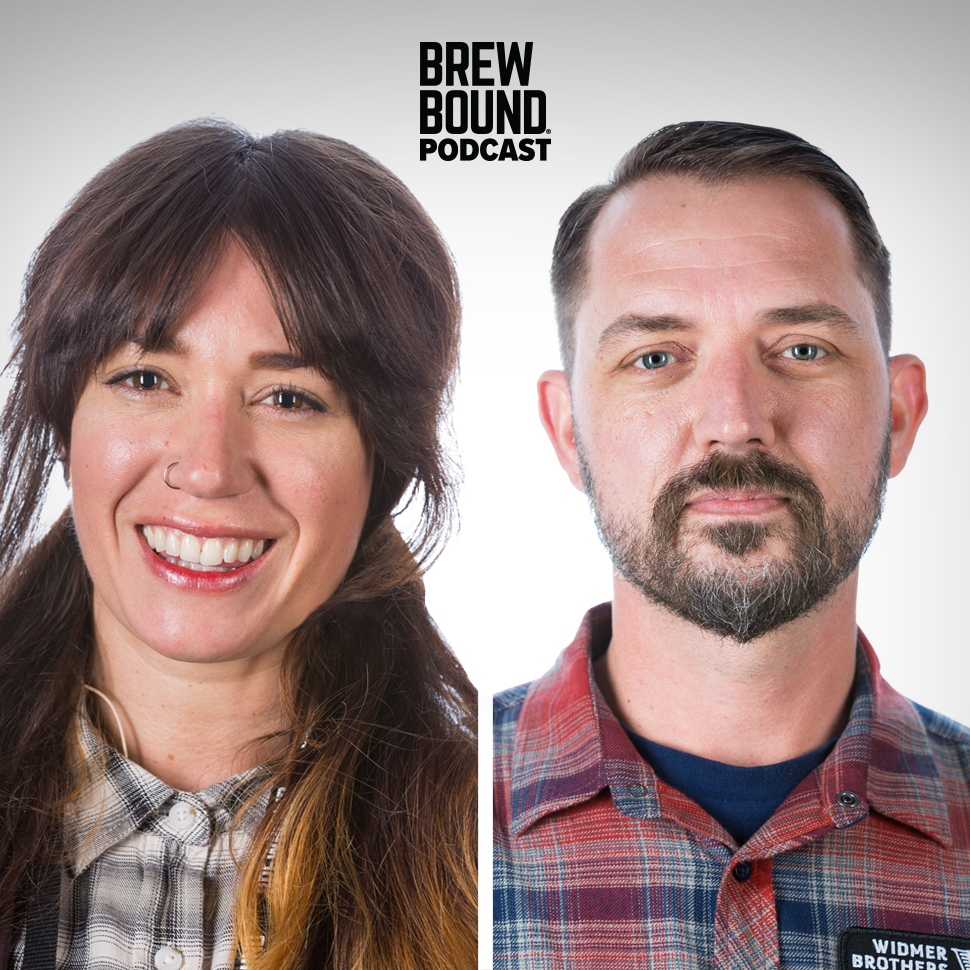
October 24, 201935 mins
Brewbound Podcast S2 E2: pH Experiment Co-Founders Karmen Olson and Thomas Bleigh on Innovation, Failure and Success
pH Experiment co-founders Karmen Olson and Thomas Bleigh have a license to fail. Of course, that’s not their objective — not with Craft Brew Alliance’s stated goal of generating $25 million in revenue by 2025 from its innovation arm.
But if they do fail, the goal is to fail fast, learn from it and push forward.
The clearest example of that was the pH Experiment’s clear IPA — which wasn’t clear. The beer proved to be a “pressure test” on the feedback the division’s leaders expect to get from their consumer focus group members, who resoundingly replied that the beer was a dud.
For Olson and Bleigh, that’s the kind of feedback they desire, not a “promissory note on kindness.” The duo want their focus group members, who they call co-creators, to go on the ride of winning and losing with them.
According to Olson, it’s part of the pH Experiment’s mission to be “comfortable being uncomfortable.”
Bleigh added that if the division is truly going to cause a paradigm shift in the industry, then it has to “play in the margins.”
In Episode 2 of the Brewbound Podcast’s second season, Olson and Bleigh discuss the pH Experiment’s holistic approach to innovation with Brewbound editor Justin Kendall, who last month visited pH’s Portland, Oregon headquarters — located inside the former Widmer Brothers pub space.
Listen to Episode 2 above, as well as on iTunes, Google Play, Stitcher, Spotify, and Soundcloud. New episodes of the Brewbound Podcast are published Thursdays.
For questions, comments or suggestions, please email [email protected].
Listen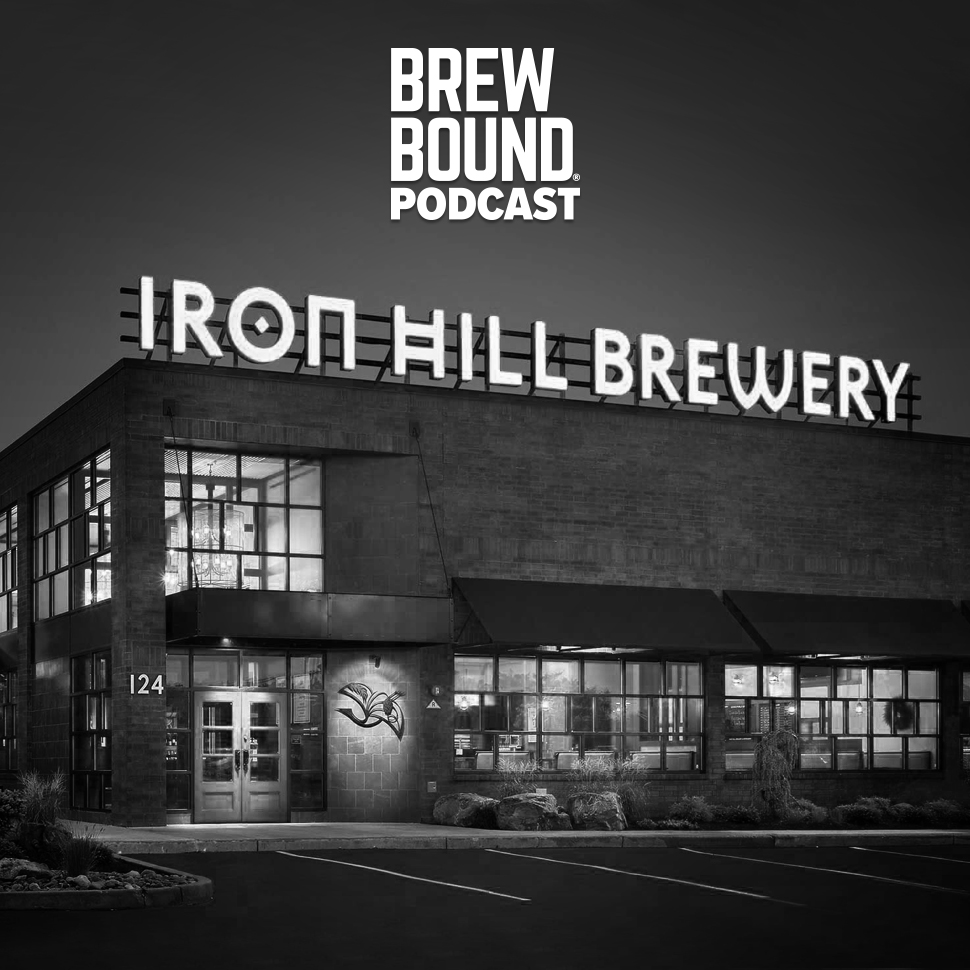
May 16, 20191 hr 15 mins
Brewbound Podcast Episode 36: Iron Hill Brewery on Future Growth Plans and Innovation
Iron Hill Brewery, which opened its first brewpub in 1996, is considering a sizable expansion that would grow the company’s footprint to 50 locations.
“We’re going to get far past 20 [locations] by 2020, but that’s our first milestone,” Iron Hill CEO Kim Boerema shared during a recent interview for the Brewbound Podcast.
“We have ambitions to look all the way from Atlanta to Boston,” he added, noting that the company would identify locations located primarily on the East Coast.
If and when it does reach 50 locations across more than just four states – it currently operates 16 locations throughout Delaware, Pennsylvania, South Carolina, and New Jersey – the company will be in the “logistics business,” according to Boerema.
But even when Iron Hill expanded with a second location, the business changed considerably, founder Mark Edelson said.
“It’s the only time in the history of your business where, overnight, you will double your business,” he said.
“You all of a sudden have twice as much work to do, and you’re not ever prepared for it. So it’s always the biggest tipping point,” he added.
That’s a relevant lesson for today’s taproom-focused brewery owners, many of whom are considering business models built around multiple locations.
And when companies do make the jump from a single outpost, into a second or third location, Edelson suggests spending extra time training staff so everything runs smoothly from Day One.
In episode 36 of the Brewbound Podcast, Edelson and Boerema discuss the opportunities and challenges of running a brewpub chain at a time when brewery taprooms have become so popular, and explain how they see the taproom-focused business model evolving.
Listen to episode 36 of the Brewbound Podcast above, as well as on iTunes, Google Play, Stitcher, Spotify, and Soundcloud. New episodes of the Brewbound Podcast, which is co-hosted by Chris Furnari and Justin Kendall, are published every Thursday.
Episode 37, featuring Keith Villa, the creator of Blue Moon and the founder of cannabis-infused beer company Ceria Beverages, will be released on Thursday, May 23.
For questions, comments or suggestions, please email [email protected].
Show Notes:
0:00 – 23:10: Furnari and Justin Kendall introduce episode 36 and discuss the latest news
23:30 – 51:40: Furnari interviews Mark Edelson and Kim Boerema
51:40 – 1:15:51: Furnari and Kendall share their takeaways from the interview and rundown segments
Listen
May 9, 20191 hr 20 mins
Brewbound Podcast Episode 35: Sean Lawson on the Brewery that Sip of Sunshine Built
Want to know how to constantly sell out of your flagship product?
You could try asking Lawson’s Finest Liquids founder Sean Lawson, but even he’s not entirely sure why drinkers come back time and time again for his popular Sip of Sunshine double IPA.
“I wish I knew,” he said during a recent interview for the Brewbound Podcast.
“For me, I think the best answer to maintaining that is to really maintain a focus on trying to create the best beer in the world.”
Nevertheless, there are some simple yet incredibly effective strategies Lawson has deployed that contribute to the success of Sip.
One of the factors that helped push sales of Sip of Sunshine beyond $6.7 million in the convenience channel alone last year, according to IRI, was a commitment to freshness.
“[We] demand that our beer is kept cold all the time and that we get it to the customer as fresh as possible,” he said.
In episode 35 of the Brewbound Podcast, Lawson discusses the Sip of Sunshine business and explains how his company approaches innovation. He also shares advice for brewery owners looking to expand and talks about how to entice customers to visit the taproom.
Listen to episode 35 of the Brewbound Podcast above, as well as on iTunes, Google Play, Stitcher, Spotify, and Soundcloud. New episodes of the Brewbound Podcast, which is co-hosted by Chris Furnari and Justin Kendall, are published every Thursday.
Episode 36, which features an interview with Iron Hill Brewery’s Mark Edelson and Kim Boerema, will be released on Thursday, May 16.
For questions, comments or suggestions, please email [email protected].
Show Notes:
0:00 – 17:30: Furnari and Kendall introduce episode 35 and discuss the latest news
17:30 – 58:15: Furnari interviews Sean Lawson
58:15 – 1:20:10: Furnari and Kendall share their takeaways from the interview and rundown segments
Listen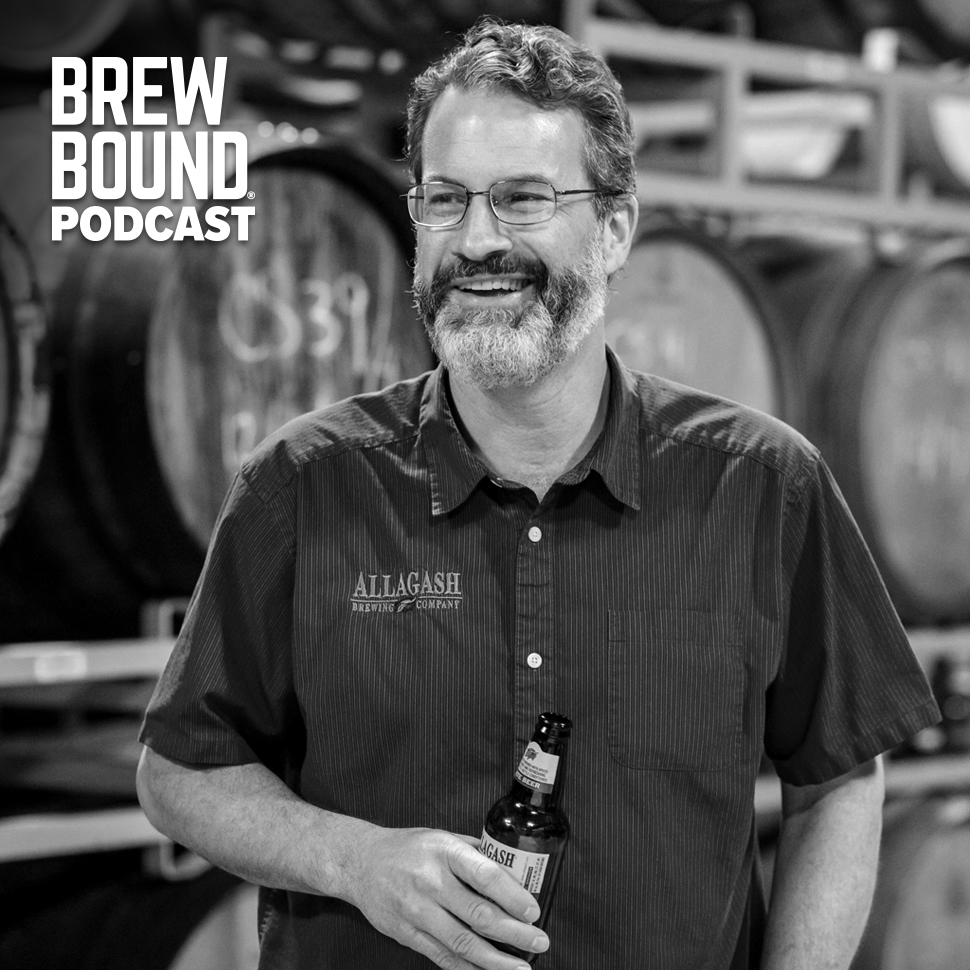
March 28, 20191 hr 11 mins
Brewbound Podcast Episode 29: Rob Tod on Building Brands and Introducing Cans
In a beer industry littered with hazy IPAs, one cloudy brew stands above the rest.
Allagash White, the ubiquitous Belgian-style witbier made in Maine and sold in just 17 states, is the eighth-largest craft brand, sold on draft, in the entire U.S., according to research firm Nielsen.
“It’s a very, very strong brand on-premise, but we are probably selling 75 percent of our beer on-premise,” Allagash Brewing founder Rob Tod told Brewbound editors Chris Furnari and Justin Kendall during episode 29 of the Brewbound Podcast.
According to Tod, Allagash White is one of only two top-10 craft beer brands growing sales on-premise.
But the brand’s impressive on-premise presence hasn’t necessarily led to strong sales at grocery and liquor stores, as only a quarter of the Allagash White business occurs off-premise.
That’s likely to change, thanks to the introduction of canned packages, which rolled out in February.
“I think people kind of view us as a special occasion beer on the off-sale,” Tod said. “We want to use cans to bring Allagash White to really every occasion on the off-sale.”
In episode 29 of the Brewbound Podcast, Furnari and Kendall chat with Tod about how the addition of canned packages will transform the Allagash business in the years to come, how the company is repositioning itself off-premise, why it invests disproportionately in quality-control measures and how it approaches innovation without chasing trends.
Listen to episode 29 of the Brewbound Podcast above, as well as on iTunes, Google Play, Stitcher, Spotify, and Soundcloud. New episodes of the Brewbound Podcast, which is co-hosted by Furnari and Kendall, are published every Thursday.
Episode 30, featuring NBWA chief economist Lester Jones, will be released on Thursday, April 4.
For questions, comments or suggestions, please email [email protected].
Show Notes:
0:00 – 16:45: Chris Furnari and Justin Kendall introduce episode 29, discuss recent people moves and provide an update on #Corntroversy
16:45 – 1:00:10 Furnari and Kendall interview Rob Tod
1:00:10 – 1:11:35: Furnari and Kendall share their takeaways from the interview
Listen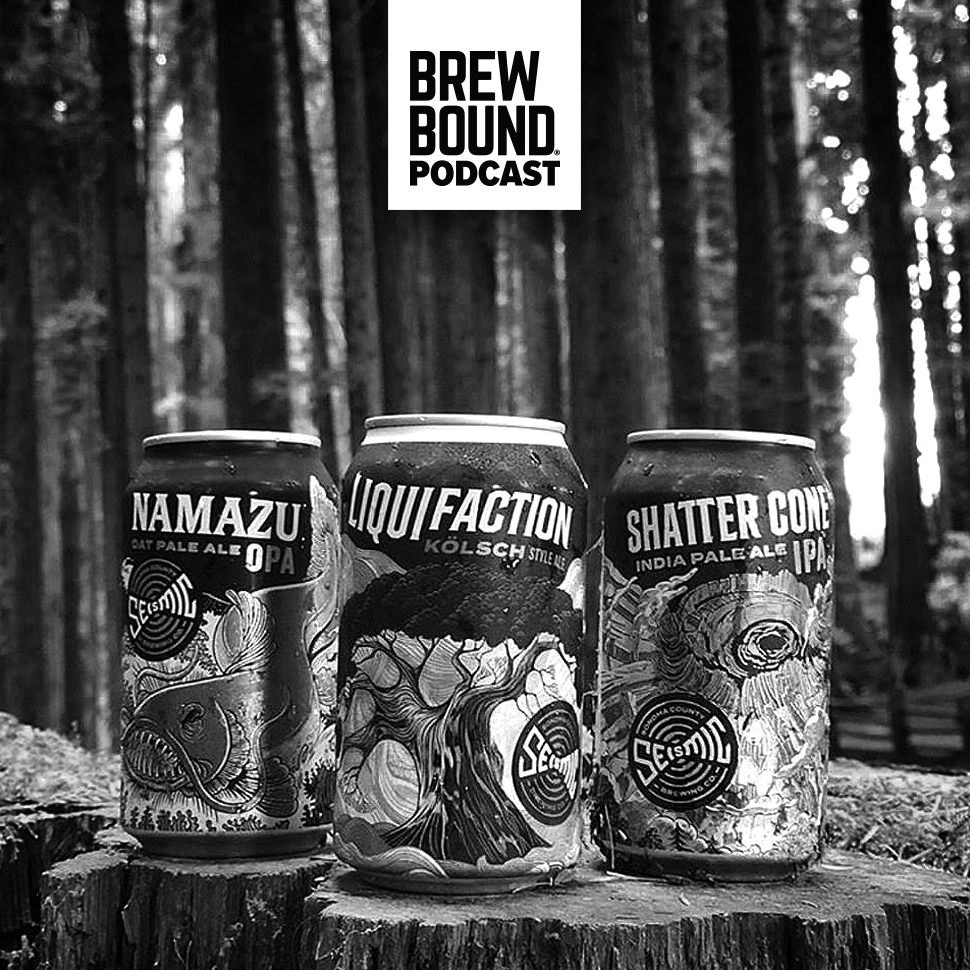
February 21, 20191 hr 12 mins
Brewbound Podcast Episode 24: Seismic Brewing on Sustainability and Selling Beer in Wine Country
Even as the U.S. craft beer industry swells past 7,000 breweries, you’d be hard-pressed to find a startup focusing as much energy on sustainability as Sonoma County’s Seismic Brewing Company.
Launched in 2017, Santa Rosa, California-based Seismic is the brainchild of Chris Jackson and Patrick Delves, former college roommates with a passion for the beer and wine industries. (Jackson’s father Jess created the well-known Kendall-Jackson wine label in 1982.)
Their initial discussions about opening a brewery in late 2014 – when the segment was growing double-digits and there were half as many breweries operating – centered around the idea of building a sustainability-minded brand.
“We decided, what do we want Seismic to be, at the beginning of this,” Delves said. “Two of the pillars that we build our business on are [being] uncompromising on quality, as well as being sustainable from the ground up.”
As part of their effort to build out a sustainable brewery from the onset, Jackson and Delves invested in technology from Cambrian Innovation, provider of wastewater solutions to industrial producers.
Located onsite at the brewery, Cambrian’s EcoVolt Mini, a water treatment system, enables Seismic to reuse industrial process water and lower its water usage rate.
“Industry average is roughly six-to-seven barrels of water to one barrel of beer, and we are currently hovering around three-and-a-half to four to one,” Delves said.
In episode 24 of the Brewbound Podcast, which was recorded at the end of 2018, Jackson and Delves discuss Seismic’s sustainability efforts, what it’s like to sell beer in wine country, early entrepreneurial lessons they’ve learned, and how the emerging cannabis industry could disrupt the alcohol sector, among other topics.
Also in this episode: Brewbound editors Chris Furnari and Justin Kendall talk about Anheuser-Busch InBev’s latest acquisition and discuss a pair of compromise bills in Texas that could finally give manufacturing breweries the right to sell beer to-go.
Listen to episode 24 of the Brewbound Podcast above, as well as on iTunes, Google Play, Stitcher, Spotify, and Soundcloud. New episodes of the Brewbound Podcast, which is co-hosted by Furnari and Kendall, are published every Thursday.
Episode 25, featuring Bissell Brothers Brewing co-founder Peter Bissell, will be released on Thursday, February 28.
For questions, comments or suggestions, please email [email protected].
Listen
January 31, 20191 hr 2 mins
Brewbound Podcast Episode 21: Fergal Murray on Building Iconic Brands and US Brewing Trends
Fergal Murray spent 31 years with Diageo Ireland, as both a Guinness master brewer and a global brand ambassador. During that time, he poured perfect pints of the iconic Irish Dry Stout for former President Barack Obama, Queen Elizabeth II, Jimmy Fallon, and Tom Cruise, among many other international dignitaries and celebrities.
But his brewing industry expertise stretches far beyond the draft handle.
Over the course of his more-than-three-decades career with Diageo, Murray worked alongside the global marketing and sales teams to help drive awareness of the Guinness brand, and to educate wholesalers and retailers across the world.
These days, Murray is consulting for small breweries and distilleries across the world, most notably with Wachusett Brewing in Westminster, Massachusetts.
On a recent trip to the U.S., Murray stopped by the Brewbound offices to chat about building brands on-premise, the emerging non-alcoholic beer trend, and the tug of war between the desire to satiate consumer demand for innovative products with the need to hone and perfect core recipes.
“Every high-performance something or other comes out with something new with an improvement,” he said. “Brewer — tell me what you’ve done to make your beer better.”
In episode 21 of the Brewbound Podcast, Murray discusses the changes to the American beer scene that he’s witnessed during his long career in beer, his latest collaboration with Wachusett and innovations that could drive future category growth.
Also in this episode: Brewbound editors Chris Furnari and Justin Kendall share their takeaways from the 16th Annual Beer Business Daily Summit in San Diego.
Listen to episode 21 of the Brewbound Podcast above, as well as on iTunes, Google Play, Stitcher, Spotify, and Soundcloud. New episodes of the Brewbound Podcast, which is co-hosted by Furnari and Kendall, are published every Thursday.
Episode 22, featuring Russian River Brewing co-owner Natalie Cilurzo, will be released on Thursday, February 7.
For questions, comments or suggestions, please email [email protected].
Listen