
Search across the BevNET CPG Media network including BevNET, Nosh, Brewbound, Taste Radio, Nombase and CPG Jobs.
Brewbound Podcast
The Brewbound Podcast is an extension of Brewbound's leading B2B beer industry reporting, featuring interviews with beer industry executives and entrepreneurs, along with highlights and commentary from the weekly news. New episodes are released every week. Subscribe on Apple Podcasts or your streaming platform of choice.
Podcasts

January 7, 202136 mins
Brewbound Podcast: A New Year
This week’s edition of the Brewbound Podcast looks back at headlines from late December 2020 and the start of the new year.
The Brewbound Team discuss the federal government making the excise tax cuts permanent; the U.S. Departments of Agriculture and Health and Human Services maintaining the daily servings of alcohol at two drinkers per day for men; the Sheehan family lawsuit; and Brewers Association chief economist Bart Watson’s 2020 recap.
Listen to the episode above, or find it on popular platforms such as iTunes, Google Play, Stitcher and Spotify.
New episodes of the Brewbound Podcast are published every other Thursday.
Email [email protected] with questions, comments or suggestions for future shows and guests.
Editor’s Note: This podcast was recorded days before the attempted insurrection at the U.S. Capitol on Wednesday.
Listen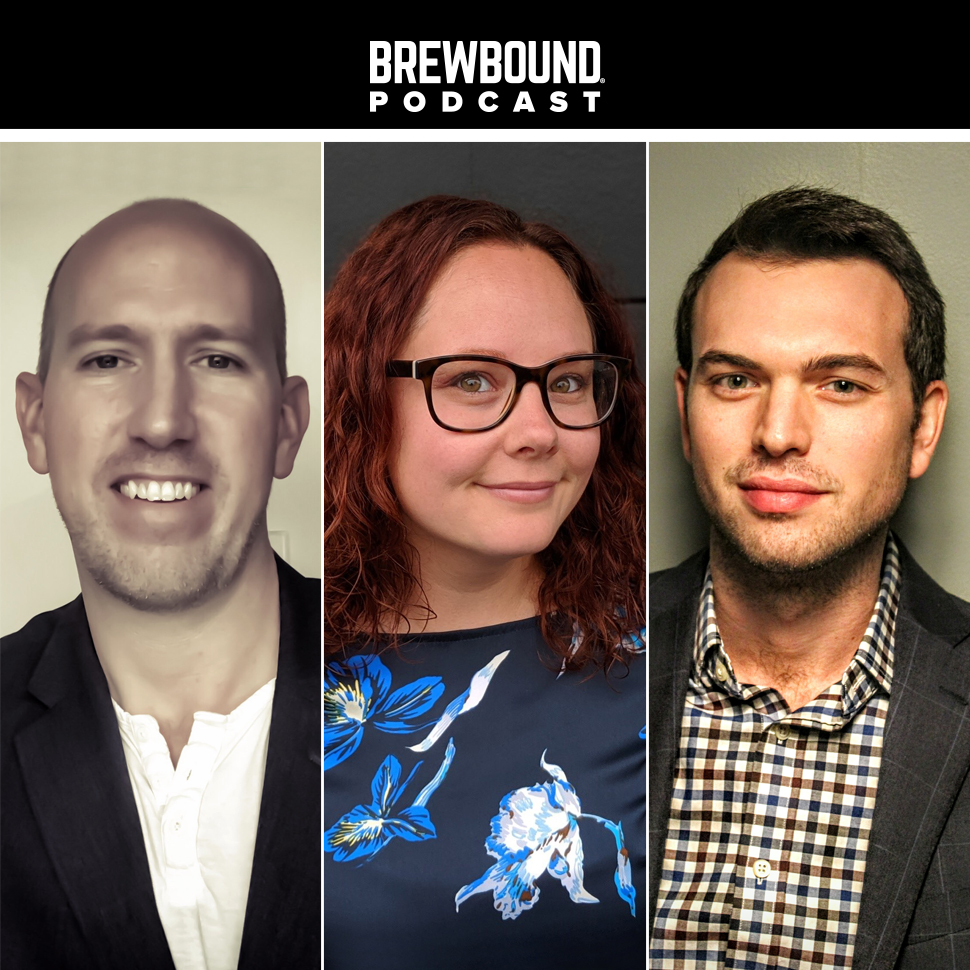
November 19, 202057 mins
Brewbound Podcast: A Canadian Cannabis Company Swallows Sweetwater
In early November, Canadian cannabis company Aphria struck a $300 million deal to acquire Atlanta’s Sweetwater Brewing Company — the maker of the 420 Extra Pale Ale brand and other cannabis-themed products.
This week’s edition of the Brewbound Podcast discusses the opportunities and challenges ahead for the combined company, the size of the cannabeer market and more with:
Liz Connors, director of analytics for Headset, a firm that tracks cannabis data and analytics;
Rick Maturo, associate director of client services for the cannabis practice at Nielsen;
And Sean McNulty, host of the Selling Craft Beer podcast.
McNulty and the Brewbound team also discuss growing e-commerce player goPuff’s deal to acquire BevMo, Tree House branching out in Massachusetts, Mark Anthony investing in another production facility to make White Claw, Diageo recalling Guinness 0.0 and more.
Listen to the episode above, or find it on popular platforms such as iTunes, Google Play, Stitcher and Spotify.
New episodes of the Brewbound Podcast are published every other Thursday.
Email [email protected] with questions, comments or suggestions for future shows and guests.
Listen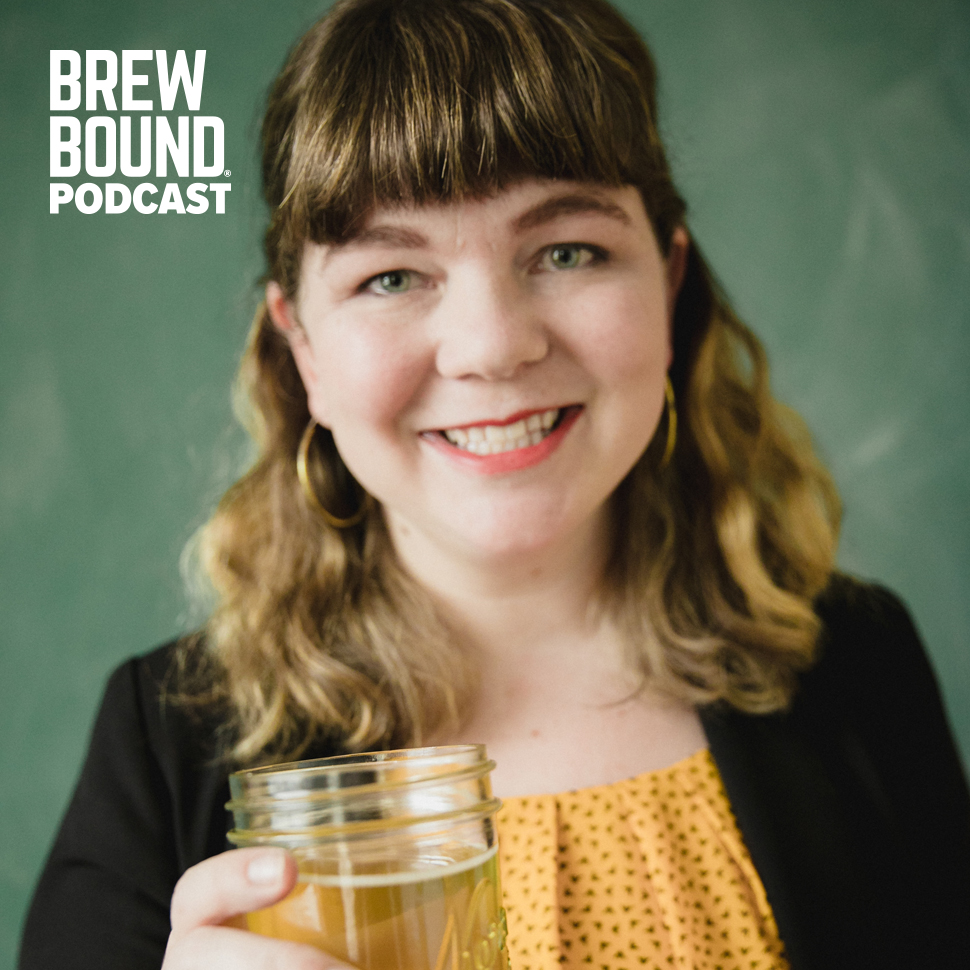
February 20, 202049 mins
Brewbound Podcast: The American Cider Association’s Michelle McGrath Discusses the Industry’s Goals and Challenges in 2020
Cider is always taking people by surprise, according to American Cider Association (ACA) executive director Michelle McGrath.
“CiderCon always beats the expectations of people who have never been here before,” McGrath said of the annual gathering of hundreds of cideries from around the globe, which was held last month in Oakland, California. “We are the premier professional conference for the cider industry in the world.”
In Episode 3 of the Brewbound Podcast’s third season, McGrath shared the organization’s goals and challenges as cider fights for share in an increasingly crowded alcoholic beverage marketplace.
This 2020 edition of CiderCon was the organization’s first since rebranding as the ACA and dropping the United States Association of Cider Makers moniker, a switch McGrath believes was necessary due to the organization’s increased lobbying efforts in Washington, D.C.
“We had more conversations with Congress than we’ve ever had before,” McGrath said. “When you’re trying to explain to somebody who you are and you lose them about halfway through the name, it’s not a very effective lobbying tool.”
When the ACA meets with lawmakers, the organization is advocating on the behalf of both large and small cideries, so McGrath and her team must thread the needle between the concerns of low-volume, orchard-based cideries and global producers.
“We’ve got hundreds of cidery members; our membership has increased 30% in the last couple years,” she said. “We’re representing not only hundreds of small, mom-and-pop cideries across the land, but also the vast majority of the volume of cider produced in this country.”
One issue that affects cider makers of all sizes is the federal Alcohol and TobaccoTax and Trade Bureau’s regulations regarding cider packaging, which prohibits cider makers from packaging cider above 7% ABV in 12 oz. cans. With more consumers gravitating toward canned offerings, cider makers find themselves in a difficult spot to meet the demands of the market.
“A lot of our members, they don’t necessarily want to go into cans, they believe their product demands a higher price point in a bottle and represents the type of cider that they make,” McGrath added. “But the market is perhaps forcing many of them into cans, so that’s a challenge because cider is not allowed to pack in a 12 oz. can if it’s above 7% ABV, due to the federal standards of fill, so this is something that we’ve been working on.”
Another issue facing cider makers is overcoming false assumptions that all ciders are alike..
“People don’t realize that it’s that diverse,” McGrath said. “They say ‘I’ve had a cider; I don’t like it,’ but they never say ‘I’ve had a beer, I don’t like it.’ They usually taste several styles of beer.”
Listen to the latest episode above, or find it on popular platforms such as iTunes, Google Play, Stitcher and Spotify. New episodes of the Brewbound Podcast are published Thursdays.
For questions, comments or suggestions, please email [email protected].
Listen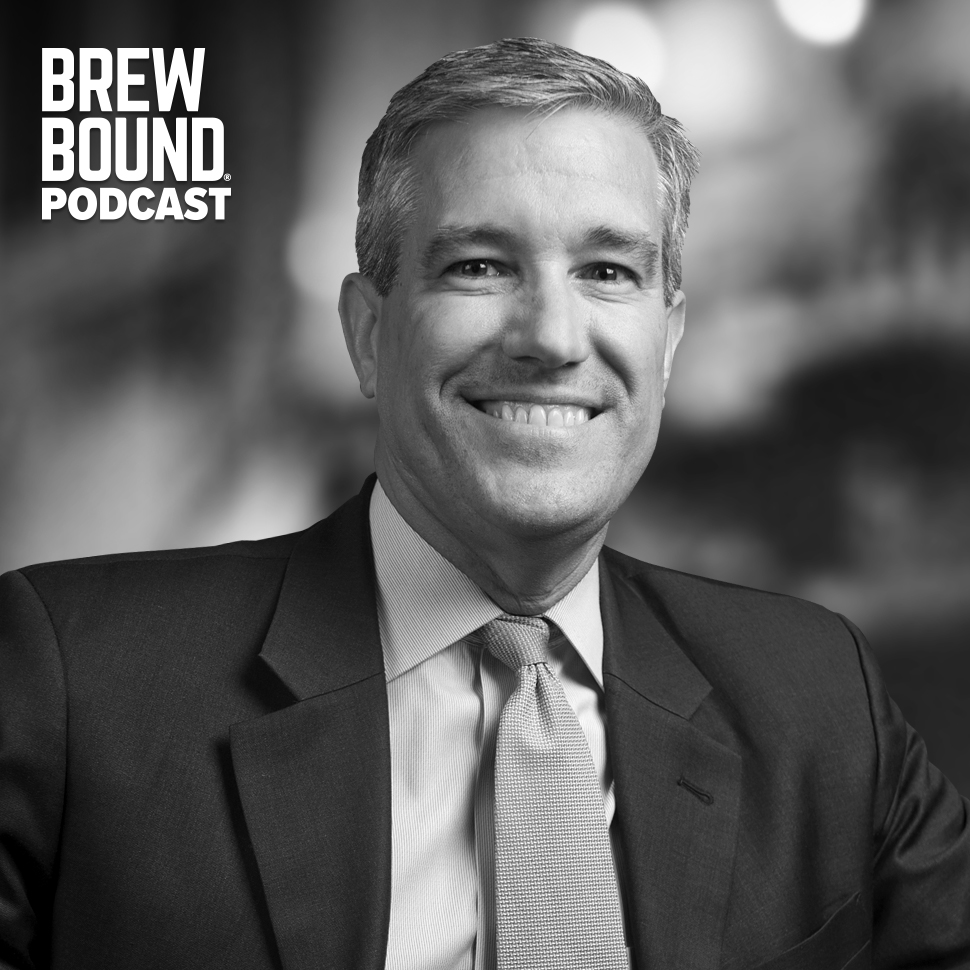
July 18, 201959 mins
Brewbound Podcast Episode 45: Jim McGreevy on Tax Reform and Tariffs
If you ask Beer Institute CEO Jim McGreevy to describe his organization, you’ll get a pretty succinct answer.
“We only do federal policy, but we do it very well,” he told Brewbound Podcast hosts Chris Furnari and Justin Kendall during a recent interview.
The Beer Institute – long seen as a trade association for large beer companies such as Anheuser-Busch, MillerCoors, Heineken USA, and Constellation Brands — has in recent years played a key role in shaping policy that impacts small brewers.
“We’re helping them on some of the most critical things that are happening in their business,” he said, noting the BI’s involvement in crafting and eventually helping pass the Craft Beverage Modernization and Tax Reform Act (CBMTRA).
When McGreevy joined the BI five years ago, the industry was divided on the issue of how to reform federal excise taxes. Small brewers didn’t think large brewers and importers needed a break, while large brewers worried about violating WTO policies.
“That battle had been raging for about eight years,” McGreevy said.
Under his leadership, the BI and the Brewers Association (BA), which represents the interests of small U.S. brewers, came together on a compromise bill (CBMTRA) that was eventually signed into law in 2017.
CBMTRA was included in the Tax Cuts and Jobs Act, and its passage marked the first time since 1990 that the federal excise tax on alcohol had been adjusted.
However, the lower rates are set to sunset at the end of 2019, and now both trade groups are fighting to make the tax cuts permanent.
In episode 45 of the Brewbound Podcast, McGreevy discusses his group’s effort to extend tax cuts for all brewers and importers. He also discusses the importance of fighting aluminum and steel tariffs, explains what it’s like to work in Washington, D.C., as a lobbyist in the Trump era, and provides an update on an industry-wide advertising initiative aimed at improving the health of the beer category.
Listen to episode 45 of the Brewbound Podcast above, as well as on iTunes, Google Play, Stitcher, Spotify, and Soundcloud. New episodes of the Brewbound Podcast, which is co-hosted by Chris Furnari and Justin Kendall, are published every Thursday.
Episode 46 will be released on Thursday, July 25.
For questions, comments or suggestions, please email [email protected].
Show Notes:
0:00 – 16:40: Chris Furnari and Justin Kendall introduce episode 45, discuss the constant barrage of hard seltzer content hitting the internet, and read the latest headlines.
16:40 – 41:25: Furnari and Kendall interview Beer Institute CEO Jim McGreevy.
41:25 – 1:01:10: Furnari and Kendall share takeaways from the interview, and select their four-pack of summer activities to do with a beer.
Listen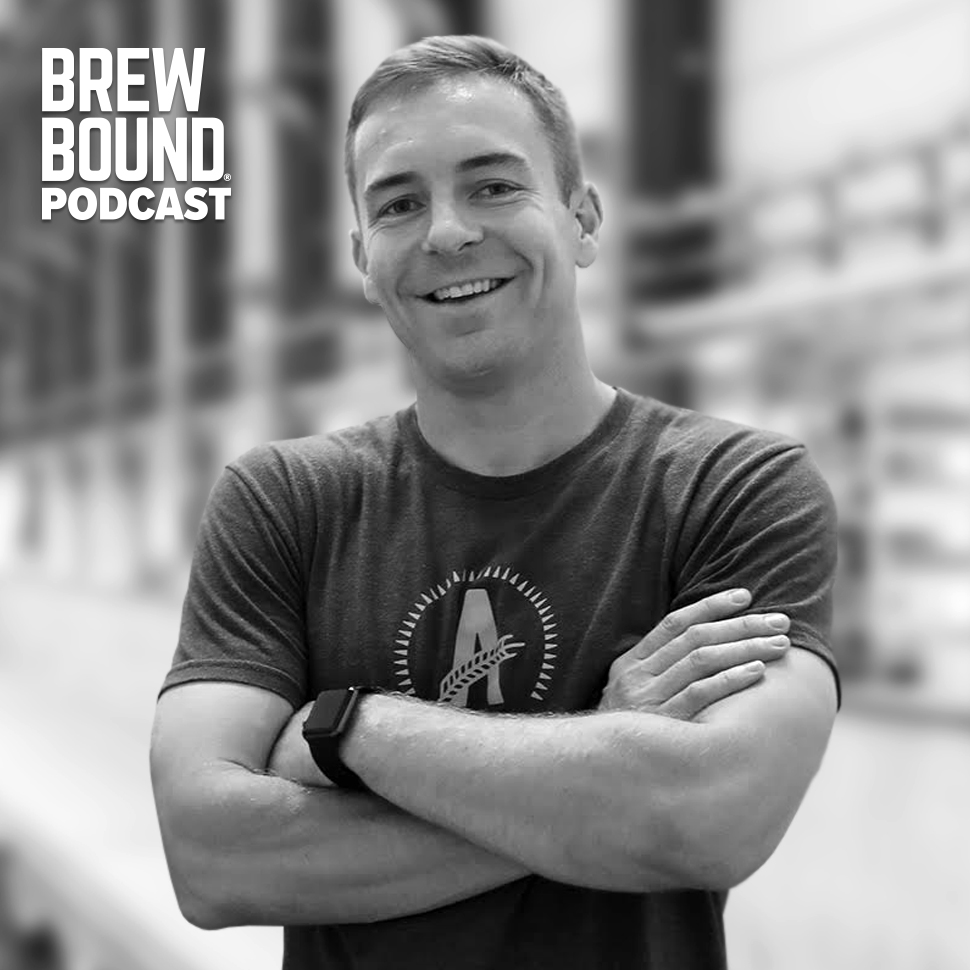
June 13, 201959 mins
Brewbound Podcast Episode 40: Athletic Brewing’s Bill Shufelt on the Future of Non-Alcoholic Craft Beer
Prior to launching Athletic Brewing in 2017, co-founder Bill Shufelt spent about 12 years working in the hedge fund world. During that time, he found that drinking alcohol, staying up late and waking up early made it difficult to maintain a healthy lifestyle.
So Shufelt went sober. And in the process of abstaining from the craft beers he had grown to love, Shufelt wondered why nobody was making a high-quality, non-alcoholic option for craft drinkers.
His idea was to produce a fully fermented beer to under 0.5 percent ABV without the need for dealcoholization equipment.
“If any of the traditional technologies worked, to make a good non-alcoholic beer, one of these very well-funded mega breweries or craft breweries would already be making it that way,” he said.
Shufelt, along with co-founder John Walker, experimented with hundreds of batches of homebrew before dialing in their process. About a year ago, Athletic brought a range of non-alcoholic craft beer to market, from golden ales to goses.
The company’s timing was perfect, as a growing number of consumers are beginning to cut back on boozing. According to Nielsen, 66 percent of legal-drinking-age consumers between the ages of 21 and 34 are making efforts to reduce their overall consumption. At the same time, 25 percent of beer drinkers are more interested in consuming alcoholic beverages that were produced with wellness in mind versus “a couple years ago,” the firm recently told Brewbound.
So what does the future hold for non-alcoholic craft beer?
“In the next five or 10 years, it’s going to be everywhere,” Shufelt contends.
In episode 40 of the Brewbound Podcast, Shufelt discusses his outlook on the emerging non-alcoholic beer sector in the U.S., and the occasions in which his products — and others like it — play.
Listen to episode 40 of the Brewbound Podcast above, as well as on iTunes, Google Play, Stitcher, Spotify, and Soundcloud. New episodes of the Brewbound Podcast, which is co-hosted by Chris Furnari and Justin Kendall, are published every Thursday.
Episode 41, featuring Matt Katase, the co-founder of The Brew Gentlemen, will be released on Thursday, June 20.
For questions, comments or suggestions, please email [email protected].
Show Notes:
0:00 – 23:45: Chris Furnari and Justin Kendall introduce episode 40, discuss the Beer Institute’s annual meeting and share recent news
23:45 – 51:14: Furnari and Kendall interview Athletic Brewing co-founder Bill Shufelt
51:14 – 1:01:22: Furnari and Kendall share takeaways from the interview
Listen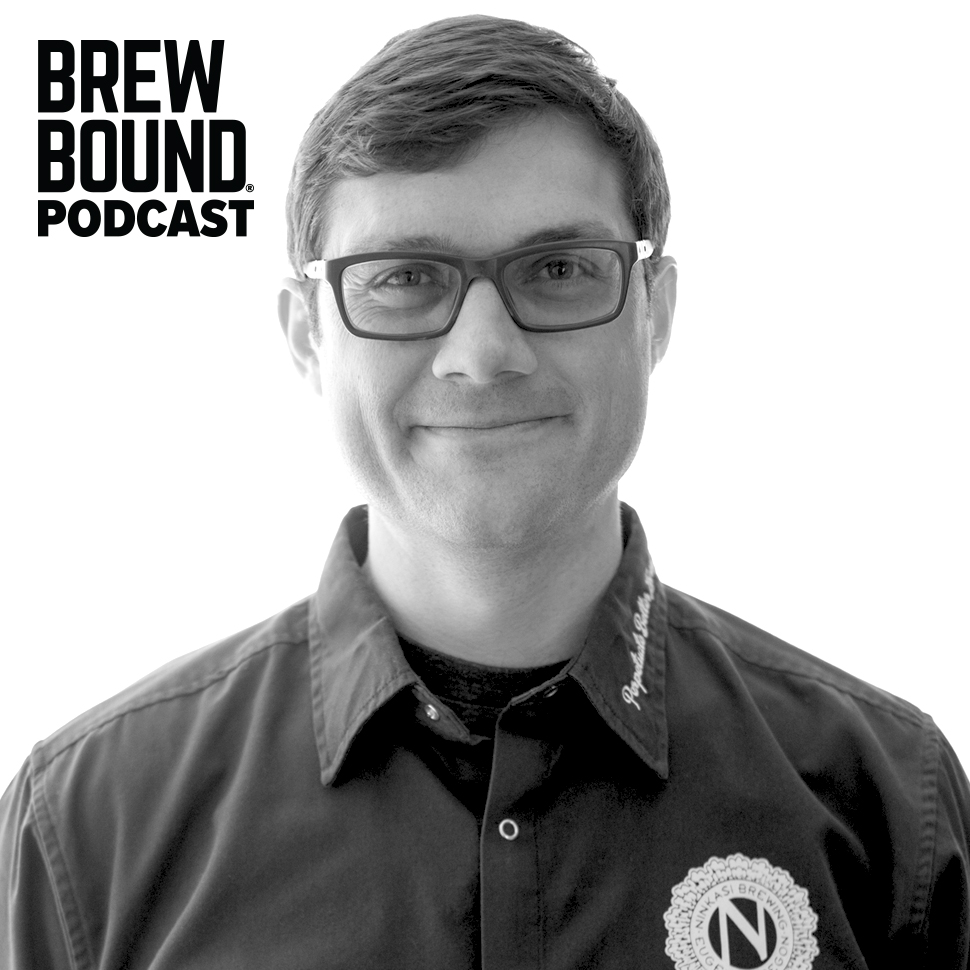
May 2, 20191 hr 21 mins
Brewbound Podcast Episode 34: Nikos Ridge on Acquisitions, Debt Management and the Future of Craft
Although Oregon’s Ninkasi Brewing has scaled production to about 100,000 barrels annually over the last 13 years, the company’s growth and expansion strategy has remained rather modest compared to some other U.S. craft breweries.
It never chased a national distribution footprint. It never attempted to build a brewery on the opposite coast. And it never took on too much debt to grow.
“In retrospect, ‘thanks former self’ for being at least somewhat moderate in scope and decision-making,” Ninkasi co-founder Nikos Ridge joked during a recent interview for the Brewbound Podcast.
Ridge — referring to his company’s tactic of selling 85 percent of its beer across three states (it has distribution in 12) and not growing too quickly — said Ninkasi always had a vision of becoming a “super-regional” craft brewery that didn’t need to rely on 20 percent year-over-year growth to service a larger chunk of debt.
“Having gone through the process of negotiating a lot of the debt through our expansion, there were a lot of models that we passed on that would have been heavily impactful,” he said.
“I can’t imagine what it’s like to try to manage 50 states of distribution where you’re thin and not really relevant across a giant territory,” he added.
That’s not to say Ninkasi didn’t tap into bank financing to fund its expanded operations. In fact, the company completed a $24 million expansion in 2014, the last year it grew by double-digits.
In 2015, the company’s growth slowed to 5 percent. Over the next two years, production declined 1 percent and 8 percent, respectively.
Nevertheless, Ridge said Ninkasi’s decision not to expand beyond its means allowed the company to explore a variety of options when it came time to determine its next move.
Ultimately, Ninkasi opted to sell a majority stake to Legacy Breweries, an upstart venture led by former Yakima Chief CEO Don Bryant that aims to acquire U.S. craft breweries.
“Certainly, de-levering as a result of this partnership and putting ourselves in a position to be making investments again – in terms of potential acquisitions and other partnership discussions – is a great result, and part of why we did it, but it wasn’t driven by the need to de-lever.”
In episode 34 of the Brewbound Podcast, Ridge shares his vision for the Legacy Breweries platform and explains some of the transaction options that are available to brewery owners. He also discusses how the proliferation of smaller craft breweries is impacting regional breweries, Ninkasi’s new hard seltzer offering, and how he sees the better-for-you alcohol space developing.
Listen to episode 34 of the Brewbound Podcast above, as well as on iTunes, Google Play, Stitcher, Spotify, and Soundcloud. New episodes of the Brewbound Podcast, which is co-hosted by Chris Furnari and Justin Kendall, are published every Thursday.
Episode 35, which features an interview with Lawson’s Finest Liquids owner Sean Lawson, will be released on Thursday, May 9.
For questions, comments or suggestions, please email [email protected].
Show Notes:
0:00 – 20:48: Furnari and Kendall introduce episode 34 and discuss the latest news
20:48 – 58:30: Furnari interview Nikos Ridge
58:30 – 1:21:31: Furnari and Kendall share their takeaways from the interview and rundown segments
Listen
April 4, 20191 hr 6 mins
Brewbound Podcast Episode 30: NBWA Chief Economist Lester Jones Explains ‘Cognitive Beer Dissonance’
NBWA chief economist Lester Jones has a theory: The beer industry is suffering from cognitive dissonance.
“Cognitive dissonance, in psychology, is this mental discomfort that everyone experiences when they have … contradictory beliefs and facts that send them into a state of confusion,” he told the Brewbound Podcast.
Despite the ongoing narratives that beer sales are slumping and millennial consumers are cutting their alcohol consumption, there isn’t enough data that paints an accurate picture of the current landscape to say definitively that those phenomena are actually occurring, Jones said.
To make his point, Jones argued that the growing popularity of hard seltzer, hard kombucha, and other non-traditional products could be part of the reason why sales of standard beer are declining.
However, that doesn’t mean that millennial consumers are wreaking havoc on the alcohol industry.
“They will find brands that they like; they will become brand loyal consumers,” he said of millennial drinkers. “They will change the face of the beer industry and 10 years from now we will look back on millennials and say – you know what, they actually behave like everyone else did.”
In episode 30 of the Brewbound Podcast, Jones explains how the NBWA’s monthly “Beer Purchaser’s Index” can help predict future industry trends, and how beer professionals can use it to make more informed decisions. He also explains his “cognitive beer dissonance” theory and gives us all a reason to believe that the industry is actually pretty healthy.
Listen to episode 30 of the Brewbound Podcast above, as well as on iTunes, Google Play, Stitcher, Spotify, and Soundcloud. New episodes of the Brewbound Podcast, which is co-hosted by Chris Furnari and Justin Kendall, are published every Thursday.
Episode 31, featuring Revolution Brewing chief commercial officer Donn Bichsel, will be released on Thursday, April 11.
For questions, comments or suggestions, please email [email protected].
Show Notes:
0:00 – 20:25: Furnari and Kendall introduce episode 30, discuss a recent encounter with baseball legend Wade Boggs and discuss the latest news
20:25 – 54:00 Furnari and Kendall interview Lester Jones
54:00 – 1:07: Furnari and Kendall share their takeaways from the interview + segments
Listen