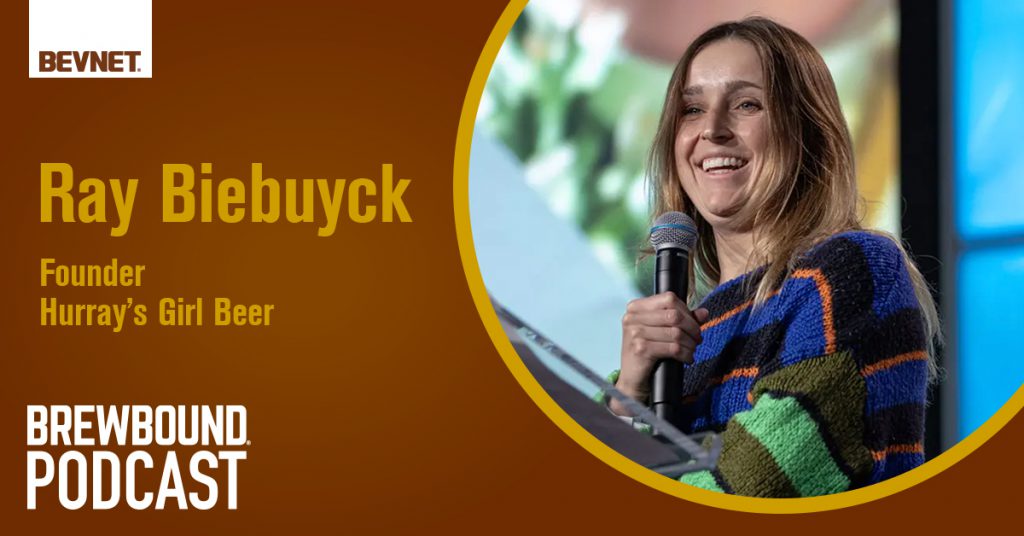
[00:00:00] Justin Kendall: Next on the Brewbound Podcast, our 2024 Pitch Slam winner, Hurray's Girl Beer. Hello and welcome to the Brewbound Podcast. I'm Justin Kendall.
[00:00:21] Jessica Infante: I'm Jessica Infante. And I'm Zoe Licata.
[00:00:24] Justin Kendall: And a huge congratulations to Zoe on the promotion
[00:00:29] Jessica Infante: Yes. Thank you. Did you know? Well, Justin told me that something was happening.
[00:00:36] Justin Kendall: Oh, I didn't know what was happening to be quite honest.
[00:00:39] Speaker 1: And right now no one else does. So we should explain. Zoe has been promoted to senior reporter. Well, well deserved. And I'm very excited for you.
[00:00:50] Jessica Infante: Yeah, I get a cool senior ad to my name now. You feel old? My roommate was like, oh, that's a really, like, nice way of them just calling you old. Great.
[00:01:03] Justin Kendall: You went from Gen Z correspondent to senior reporter. It's quite the career track.
[00:01:09] Jessica Infante: Yeah. Can't wait to dive into boomer drinking trends.
[00:01:13] Justin Kendall: I think we do that quite often.
[00:01:15] Jessica Infante: I mean, I think Lester Jones would be thrilled if you did.
[00:01:17] Justin Kendall: Yeah. Well, this week we are going to bring you an interview with our 2024 Pitch Slam winner from Hurray's Girl Beer. It's founder, Rae Bebuck. She'll be here to discuss the brand, going through the competition, where they're going from here. I really enjoyed the conversation with Rae.
[00:01:36] Jessica Infante: I had a lot of fun. Yeah, she was great. And there's been a lot of discourse around the brand and these types of brands. So it was a really interesting conversation to have. I think it's, it's worth whatever your opinions are not on it. It's definitely worth listening to that discussion.
[00:01:53] Justin Kendall: So stay tuned for that, but we will jump into the news real quick here and hit a few stories that I think they're all stories that just hit at this point. So let's start with the American Home Brewers Association split from the Brewers Association that will be coming at the end of this year.
[00:02:11] Speaker 1: Yeah, that's a big deal. So real quick for people who maybe didn't know, the American Home Brewers Association was part of the Brewers Association for like 42 years. And I want to say that AHA actually predates the BA in its current form. And the BA, if you're interested in BA history, hit up Steve Hinde's book from 2013. I believe it's called Craft Beer Revolution. He really covers the formation of the organization and it's really interesting. But what you need to know right now is that these two organizations were conjoined, even though the BA represents professional commercial brewers and the AHA represents homebrew hobbyists, and they are parting ways, which is really interesting. So Julia Herz, who's the executive director of the AHA, is going to continue to lead them. When they split off, there is a founding board that's already seated. Julia is, of course, part of it. She's also the staff liaison from that board to whatever staff the AHA eventually cobbles together. They're on the hunt right now for an association management partner that will do all the day-to-day ops that the BA was doing for them. The BA is going to give them some seed funding as they get started, also defer to them some membership payments to get them on their feet. But I think this could be a really interesting time for the AHA, and I have a feeling its members are probably kind of psyched. The questions that we asked about why and how, the answers we got back were that members had been interested in pursuing independence for a couple of years. So, a formal process began about a year ago, and the AHA committee made their recommendation for independence to the BA Board of Directors, which approved it late last year. One interesting, really nerdy in the weeds tidbit though, is that the newly independent AHA is going to be a regular independent 501C organization where the BA is a 501C6, which is a trade group. So different rules and implications apply here because now they're just going to be concerned with hobbyists and not businesses.
[00:04:08] Justin Kendall: Did you have a sense that something like this might come last year when they put the pause on homebrew con?
[00:04:15] Speaker 1: Yeah. Well, the thing that tipped me off that made me think, huh, I wonder what's happening is about this time last year when the BA board of directors, you know, organized for the year, it was revealed that the AHA used to have two seats on that board and they lost them. And there was still, you know, somebody from Shawna Cormier was on the, still is on the BA board as representing the AHA, but they had lost their official, like prescribed in the bylines, two seats. Another thing that happened, like you mentioned, was HomebrewCon, which was their signature event. And it's something that I have attended quite a few years as part of a sponsorship in my past life. But it was like the award ceremony for the National Homebrew Competition, but there were also educational seminars and social events like This is a huge deal for this community and the event had been put on pause and it was kind of subsumed into GABF a little bit. I mean, you guys said there was like an AHA part of the floor, right? Where homebrewers could pour their beers. That's cool.
[00:05:14] Jessica Infante: Yeah, it was more like almost like a mini education area too of just like you could only access, they had their own security. You could only get in there if you were a part of the AHA. So it was small, but it still had their own little section, but it did feel separate from everything else going on.
[00:05:33] Speaker 1: Yeah. I mean, that's cool, but that's still not the same as HomebrewCon. When I tell you these people are so psyched for HomebrewCon, they are so psyched for HomebrewCon. It is like the event of the year in the homebrewing social calendar.
[00:05:47] Justin Kendall: How many times have you been to HomebrewCon?
[00:05:49] Speaker 1: I have been three times.
[00:05:50] Justin Kendall: Three times?
[00:05:51] Speaker 1: Baltimore, Minnesota, and Portland, Oregon.
[00:05:55] Justin Kendall: If you ask me how many times I've been to CBC and where they were, I'm not sure that I could tell you.
[00:06:01] Speaker 1: I think I could probably tell you how many times you've been to CBC based on this ridiculous knowledge that I have of Brewers Association events, but this is a conversation we can have over a beer at the next CBC. So yeah, this is a big deal and I think it'll be good. The BA has different wants and needs, especially to get its members through this challenging time. And the AHA's members have different wants and needs from commercial brewers. So I think this will be good for everybody.
[00:06:28] Justin Kendall: And the BA has been hemorrhaging Homebrewing members for years now.
[00:06:34] Speaker 1: Yeah.
[00:06:35] Justin Kendall: What was the number? It went from like 38,000 to more than 20. 23,000. 23? Yeah.
[00:06:40] Speaker 1: And that 38,000 number, Zoe, I feel like that was in the story that we wrote about HomebrewCon being canceled, which was like maybe two years ago.
[00:06:47] Jessica Infante: That was like beginning of 2024, I think. Something like that. So, yeah.
[00:06:54] Speaker 1: Yeah. A while ago. What I've always admired about homebrewers since I became, I guess, somewhat adjacent to their community, probably like what, like 10 years ago, was that you don't have to do this. You can go to a store and buy a really delicious, already made, full flavored, interesting beer, but homebrewers do it because they really like doing it. And it's a lot of work. Like you have to really like doing it. I have tried. It does not go well because it's one of those things where I'm like, well, I could make this beer in my kitchen, make a giant mess, piss off my husband, wait several weeks, see if I did everything right. Usually find out several weeks down the road that I've made an enormous mistake and this beer now tastes like trash. Or I could just go to the store and buy a 12 pack. So hats off to you homebrewers. Keep on keepin' on.
[00:07:44] Justin Kendall: Back when I lived in Kansas City and played kickball, one of the guys on the team was a home brewer. And I remember he made a pretty good saison.
[00:07:53] Speaker 1: That must've been hard. Yeah. A long time ago, my dad took my brothers to the Sam Adams brewery on one of their visits to Boston to see a Red Sox game. And I don't know what the heck happened on this tour, but like now that I know, how the tour works, like my dad clearly fell for everything because he came home with a four pack of perfect pints, would only drink beer out of them. And he also bought a homebrewing kit and he'd been making wine forever. Like that was like a thing that my family had done. But he got really into making the homebrew. I remember drinking his Oktoberfest and like, this is really good. Like, how did you do this?
[00:08:23] Justin Kendall: If it were me, I would have bought somebody's Oktoberfest and just poured it into something.
[00:08:27] Speaker 1: And that is exactly what I would do as well.
[00:08:30] Speaker: Yeah.
[00:08:30] Justin Kendall: Well, let's talk about a couple of other stories and unfortunate news, really. And we'll start with Sapporo and Stone. They have laid off two percent of their workforce.
[00:08:40] Speaker 1: Yes, they have. We got a tip during the week that there might've been some reorganization going on and they confirmed to us that they were making broad sweeping organizational changes that will put things more in line with their, you know, their new priorities and goals. So they were very sure to say to us that this is not just arbitrary cost cutting. It's affected 2% of their employees. They have cut 1% of jobs. And they are also completely eliminating all of their e-commerce business, which I found interesting.
[00:09:12] Justin Kendall: That's one of the sneaky parts of that story.
[00:09:15] Speaker 1: Yeah. Yeah. And it's not just beer, it's their merch too. Like you can't buy anything from Stone's website anymore. They are launching a new program they're calling Brewery Exclusives, where they're brewing probably about one beer a month that you can buy just at their tap rooms. which is a common practice, but I guess they're thinking that that will satisfy people who are buying their beer online. I'm sure they have the data to back up the fact that the people who were using this, you know, this business were mostly local to their establishments. They weren't shipping to too many places within California, Virginia, where they have a brewery, DC, which is a really common DTC market, and Ohio, which they had launched in like 21.
[00:09:54] Justin Kendall: What does that say about the brewery merch business? That used to be such a big thing about this community. I still see people wearing brewery shirts whenever I go through an airport. There's always somebody probably my age or older wearing a shirt.
[00:10:12] Speaker 1: I just cleaned out my closet and got rid of a few brewery shirts this weekend, but that says more about how much crap I've accumulated. I think it's more of part of the experience of going to the brewery and getting the shirt, getting the hat, getting the whatever it is. I think there's still a market for that and clearly people are still wearing that stuff, but it's less about like going to the website and ordering it because that's not anywhere near as cool.
[00:10:39] Justin Kendall: How many brewery shirts do you own, Zoe?
[00:10:42] Jessica Infante: that I purchased myself and were not sent to me?
[00:10:44] Justin Kendall: Well, I'm guessing that number is zero, but.
[00:10:48] Jessica Infante: Technically one, I have a yonder cider sweatshirt that I purchased myself.
[00:10:53] Speaker 2: Okay.
[00:10:53] Jessica Infante: Shirts though, two. All right. I think I have an alligash and a funky town. Not a core part of my wardrobe, no.
[00:11:02] Justin Kendall: We won't go through mine. Let's talk about Monster and they held a business update recently. And the news coming out of that is they're going to take another impairment charge on their craft business.
[00:11:21] Speaker 1: Yeah. And they do these random investor updates far more than any of the other publicly traded companies we cover, which is interesting. So yeah, they're expecting another impairment. I believe their next earnings call will be late next month. and they've taken two already. But I mean, you and I talked about this, the vibe I got was that leadership maybe wasn't really sure or really didn't understand the nuances and ins and outs of the craft beer business before they acquired Canarchy, what, three years ago. Like they seemed very surprised at how all the brands in the Canarchy portfolio had pretty disparate distribution networks. They have worked to remedy that. Something I noticed in writing this story is how pared down the beers on those breweries' websites are. Like Cigar City's website only lists Hi-Li and Florida Man and nothing else.
[00:12:16] Justin Kendall: I don't know why I was sort of surprised that Florida Man of all beers got a call out on that call. I mean, clearly they're going into the higher ABV single business.
[00:12:28] Speaker 1: That's exactly why. I mean, that's the brand that can do that. So they've got two different variants of Florida Man coming out that are 9.5% coming out in large size single serve cans. They are bringing in new leadership. They said farewell to several of the legacy canarchy leaders, and they have installed Ray LaRue, who is a... The quote that our transcription software pulled from the call was pretty great, but it said like, veteran monster person who grew up with us in the streets and in the field, which makes a lot of sense if you know exactly what's being talked about, but completely out of context, that's... a wild sentence. But Ray is going to be overseeing monster brewing, which is the Bevalk wing that includes the Canarchy brands and their F&B brands. Now just the Beast, nay, the Beast Unleashed and Nasty Beast. So Ray is overseeing that and he's bringing over a bunch of monster vets to help run things.
[00:13:24] Justin Kendall: I was surprised at the way that they were speaking about their own surprise at getting into this business and being surprised that craft beer wasn't treated similar to energy drinks in the way that they're distributed.
[00:13:39] Speaker 1: Same. And honestly, energy drinks are not something I know a whole lot about just because I have never drunk them. And I forget that they're a huge part of beer distributors' businesses sometimes. But yeah, it was interesting to me that they seemed not perplexed, but like a little befuddled at the fact that craft beer really gets sold at the national account level. rather than the like store by store level, which to me, that seems crazy. Like why are energy drinks sold like that?
[00:14:09] Jessica Infante: Right. You'd think they'd be so much larger of a scale that they would just be national all the time. And because they are sometimes sold on beer wholesaler trucks, you'd think they would also have that insight into how beer selling works.
[00:14:24] Speaker 1: and because they also, they are not subject to a lot of the same regulations as beer. So you have the ability to make this even more efficient for yourselves.
[00:14:32] Jessica Infante: Right. You can kind of roll out a similar plan across the board without having to worry about certain specific state regulations and things.
[00:14:40] Speaker 1: Yeah. The business of energy drinks to me is just a wild time.
[00:14:44] Justin Kendall: How many impairment charges have they, they've taken two, right? They've taken two. Okay.
[00:14:48] Speaker 1: Yeah, so this will be third whenever it comes up.
[00:14:51] Justin Kendall: And they report earnings at the end of February? Does that sound right? They do, yeah. So something we'll be keeping an eye on. Those stories are up at Brewbound.com. If you're an insider, you can read those. You can also read our 2025 trend watch piece with leaders from Old Chicago, Winking Lizard, Breakthrough Beverage California, Beer Board, Three Tier Beverages, Carolina Premium Beverage, and more. You'll get insights on the trends that they're tracking in the new year. We've also got a story up talking to leadership at Rheingeist about launching two high ABV offshoots of Bubbles and Truth, their flagship brands. And then Zoe has a pretty extensive piece that went up earlier this week on intoxicating hemp.
[00:15:38] Jessica Infante: Yeah, we talked about some of the stuff that's in there on the podcast episode or two ago, because that was a huge topic at the Beer Industry Summit or Beer, Wine, and Spirits Summit. But yeah, I also dove into the discussion we had during Brewbound Live. it's not going away. So we might as well learn what people are saying about it, what it really is. And just for everyone listening, we're going to be referring to it as intoxicating hemp, I think for the time being. That's just the stuff that is legal through the farm bill. And that's just the easiest way to talk about these beverages. It's the hemp-derived THC that has that intoxicating effect.
[00:16:17] Speaker 1: Dude, I'm so glad you wrote that story just for my own personal edification. If you were confused by what is happening, go read Zoe's story. It's a great place to start and just get the lay of the land.
[00:16:30] Justin Kendall: Thank you. Well, before we get to the featured interview, should we play another round of tabbing out and should we mix it up a little? Usually we have a question or something and we pose it like another round or tabbing out, but I'm just going to throw something out there on something I'm either buying another round on or tabbing out on. And I'm gonna start with Fustalgia loggers. And these are the, they look like classic loggers from the 80s, 70s, that sort of feel. And I'm buying another round on them. Three Floyds is doing one. And the reason I'm buying another round is I just long for being in a tavern.
[00:17:13] Speaker 1: I really hope we can get you to a tavern. Yeah.
[00:17:16] Justin Kendall: I signed up for this Facebook group, which it's the only thing that I'm really interested in on Facebook. And it's like classic taverns, just photos of them and several of them that I've been in in Kansas City keep popping up on there. Somebody is very active in that area.
[00:17:33] Speaker 1: And I was like, I've been there. Wow. Are there any like in Des Moines? There's got to be, right?
[00:17:38] Justin Kendall: Oh, yeah. There's a tavern in my hometown here, or not my hometown, but the town I live in. Stevie Say's.
[00:17:46] Speaker 1: Nice. Yeah, I support the Fostalgia Lagers, I think. You know, whatever is helping these craft brewers like get placements and sell some modicum of volume. Cool. I mean, I appreciate a grandpa beer just as much as the next guy. This is like Pabst's entire business model, right? They acquire your grandpa's beer brand and they produce it for the modern market. And a lot of them are like super regional and they have such like, you know, important ties to their home regions. So, I mean, I think these beers, like what Three Floyds is doing, I know there's a bunch more. Maybe they will be that local grandpa beer for various other localities.
[00:18:28] Jessica Infante: I'm still a fan of, and we haven't checked in on them in a second, but that Al's non-alcoholic lager, that's their whole thing is like trying to be this kind of old school looking lager, like American lager that you'd find at any dive bar you go to or whatever, but it's non-alcoholic and the branding is very old classic retro-y.
[00:18:48] Speaker 1: It'll be interesting to see if breweries located in areas where there is a dominant brand like this that already exists and has the history, make a go of it. I don't know that anybody in our neck of the woods, Zoe, needs to do this when Narragansett exists. Right.
[00:19:03] Jessica Infante: No, I think that's some pretty steep competition going on.
[00:19:08] Justin Kendall: Well, I'm going to throw another one out there and I'm tabbing out on cannabis ads that tell me that I'm not going to have a hangover if I drink them. I just, I'm scrolling through Instagram. I just want to see, you know, the feeds that I follow. And I keep getting fed these cannabis ads where everyone tells me I will not have a hangover. And it's like, if I want to go to Tavern and have a Fostell's good lager, I might want to hang over.
[00:19:37] Speaker 1: I feel like in some ways, hangovers are nostalgic.
[00:19:41] Justin Kendall: I'm feeling nostalgic for it, apparently.
[00:19:43] Speaker 1: Apparently. I mean, look, like once, once a small human enters your life, there is no time to luxuriate in a hangover. So, yeah. I mean, did they talk about like calories or anything like that?
[00:19:53] Justin Kendall: I don't know, like the number of ads from different beverage companies, at least I think they're different beverage companies, I can't even tell because I get fed so many of them, but they feel like they're all different, but they all come back to no hangovers, no hangovers.
[00:20:08] Jessica Infante: I would also argue that I don't think there's no residual feeling after having a bunch of cannabis beverages. I don't know if that's completely true. I can definitely say I've woken up the next morning after having a couple of cannabis beverages and not felt 100%. So maybe there needs to be a new term for it, whatever the cannabis hangover is. I don't think I get ads for any of these drinks. I've been getting a lot for specifically the roadies from Cannes. They're the little pouches that they essentially say you can put over, it's like a liquid, you can pour over anything. It's almost like a syrup. Add it to any beverage. They show it like poured over ice cream. Those I cannot escape. They're everywhere. I have not had them. I know some of our BevNET colleagues had some, but they're all over my social media. Hmm. Wild.
[00:21:04] Justin Kendall: Yeah. One more before we get out of here. I'm just trying to enjoy some grabs on a Friday night, you know, some pro wrestling and what should be on the mat, but angry orchard, hard cider. And I'll be honest. I'm torn between tabbing in or tabbing out on this because the reason I want to tab in is it's not Hulk Hogan's real American lager, but tabbing out it like I'm deal with this all week, you know, like I'm covering this industry and I just want to watch some grabs.
[00:21:36] Speaker 1: Well, now you know how we feel when the Real Housewives of Salt Lake City go to the Miller Caves.
[00:21:40] Justin Kendall: Exactly. Yeah. It's just encroachment.
[00:21:43] Jessica Infante: Yeah. I mean, now we just have to watching football and having to watch all the ads we've had people send us emails about for the past two weeks. That has also been real obnoxious. And the amount of people who have texted me with the new Bud Light ad and been like, oh, can you really not drink a beer in a beer commercial? This is taking over people's minds.
[00:22:07] Speaker 1: You also have to be 25. The Angry Richard thing was interesting to me because... I think a lot of preconceived notions of CIDR would make you think that CIDR's audience is not at all wrestling's audience. But I think I support this in that it's promoting a demographic change. But have you guys seen Angry Orchard social media lately?
[00:22:27] Justin Kendall: Yeah, I was just going to mention them wilding out on Facebook.
[00:22:31] Speaker 1: Oh, they're like trying to be Wendy's of like eight years ago. And I'm sorry, but only Wendy's is Wendy's.
[00:22:36] Jessica Infante: It still has to be kind of authentic. We talked about it like a year or two ago when we were talking to the former Pabst guy who is now at Garage Beer.
[00:22:47] Justin Kendall: Yeah, Corey.
[00:22:48] Jessica Infante: Yeah, because he had done a similar thing while he was at Pabst where it was kind of like this extreme social media marketing. And the only way that it works is if it is really, if it makes sense for the brand. And this just felt totally out of nowhere. And I mean, I don't know if Angry Orchard used to be like this at all, but it feels totally different than anything they typically do.
[00:23:10] Speaker 1: I think they think the angry conveys more than it does. Like, I think that's always been like the, we are like, we're different. We're angry. Our tree makes faces. We have a gruff farmer in our commercials. How that translates to the stuff that we've been seeing lately, I really don't know.
[00:23:27] Justin Kendall: I don't want to be the one to describe it. No, but it gets back to last week's podcast which Zoe you mentioned brands sort of feeling a license to Misbehave in this new era.
[00:23:43] Jessica Infante: I didn't want to be right but unfortunately, yeah, it's I I mean, it just makes sense. There's this whole, they've been told by every owner of all these social media platforms, hey, do whatever you want. And consumers seem to be okay with that and they're into that, so they're going to lean into it. I mean, it just, it was going to happen, but it's still disappointing to see it happen in real life.
[00:24:08] Justin Kendall: Well, I think that's a good place to end it here. And let's get to our featured interview with Hooray's Girl Beer founder, Ray Beebuck.
[00:24:20] Speaker 1: Every year, the Brewbound Pitch Slam showcases up-and-coming brands in the beer and broader Bev-Alk industry, whose founders Pitch Slam panel of experts. Past winners have included standout brands like Funky Town, Crowns and Hops, and Lunar Hard Seltzer. The newest brand to join their ranks is Hooray's Girl Beer, and we are thrilled to have founder Ray Bebuck here with us to discuss. Ray, how you doing?
[00:24:45] Speaker 3: I'm doing OK. You know it's been a crazy week here in L.A. obviously and hard for that not to sort of overshadow the day to day. But you know safe team safe. All we can ask for and generally feeling heartbreaking and wound for the current environment here. So. safe.
[00:25:10] Speaker 1: Well that's the most important thing and it's been a little strange to see everything through the media and in the news when we were all just in LA together a month ago and you pitched, you won, it was amazing. I actually re-watched your pitches in both rounds to prepare for our conversation and you did so well.
[00:25:29] Speaker 3: I haven't rewatched them. I'm like too terrified to watch any video of myself, but a ton of people have sent them and they're like, oh my God, you won. And I'm like, please don't look at me.
[00:25:39] Speaker 1: No, like you, you were great. You were like really confident, but conversational and casual and just very much like owning your shit. It was awesome.
[00:25:50] Speaker 3: I like public speaking. I'm kind of into it. I don't think I've heard anyone say that.
[00:25:56] Speaker 1: Oh, that's funny. I actually, I don't mind it either, but. that makes us kind of rare, but like how much did you practice and what was going through your mind while you were on stage?
[00:26:05] Speaker 3: Nothing was, it was blank for sure. Blank mind, very little practice. I think, you know, I, but it's for good reason as a founder, you know, you're so busy balancing all of the different things in life. I think I was up at like four in the morning that day and, and practice whatever outline I had made for, for the pitch. Frankly, not a ton of practice.
[00:26:32] Speaker 1: Well, it certainly paid off. So, you know, the three of us, we get it. We know what Girl Beer is all about. But for the podcast audience at home who maybe didn't tune in, and if you didn't, go to brewrun.com and definitely watch both Ray and all the other competitors in this year's Pitch Slam. It was really a great bunch. But Ray, give the audience like a brief elevator pitch of what Girl Beer is before we really get into it, because we are going to get into it.
[00:26:55] Speaker 3: Yeah, so Hurray's Girl Beer is a brand that is reclaiming this term Girl Beer, right? It's a post-ironic, rebellious, satirical brand that is meant to create discourse and conversation both in the industry and out of the industry about women in beer, with really the intention ultimately of bringing more women to the beer category through a line of flavored light beers. So our marketing is very like liquid death vibes. We work with a lot of comedians to help with that. You know, broadly speaking, there aren't a ton of sort of humorous female focused brands, even in the broader consumer space. So it's been a lot of fun.
[00:27:43] Justin Kendall: Well, your first two offerings are a blueberry lavender and a pineapple uzu, which makes a lot of sense given that consumers of all demographics are embracing flavor. How did you land on those two?
[00:27:56] Speaker 3: Well, through kind of trial and error, I think you always start out at a point of what would me and my friends drink? What would be something that I think my friend who, you know, I have one friend named Dre, and she's extreme in her views about beer. So I'll just preface this, sorry, Dre. But, you know, she said things like, I would never have a beer on a first date. which is obviously super extreme, but I think it reflects kind of a broader sentiment of how some women feel who don't necessarily gravitate towards a beer feel like it speaks to them. So I was thinking, what would it take to get someone like Dre to come into the beer category? And so that was my jumping off point and, you know, thought through, is it a plain beer? Is it a flavored beer? And sort of tested many different flavors until we got to a point where on a blind basis within focus groups we were clearly bringing in that net new consumer who doesn't gravitate towards beer but you know also still creating a product for a beer consumer that you know they didn't necessarily have. So that was you know it's the long story short a lot of focus group testing.
[00:29:11] Justin Kendall: And can we expect sort of similar combo flavors in the future as far as your innovation goes? You know, where's your head at there? And do you have new products on tap that you're looking at?
[00:29:24] Speaker 3: Yeah, certainly. We're building out a, you know, the goal ultimately is to build out a whole line of flavored light beers, both double flavor, single flavor, you know, not necessarily narrowing ourselves, you know, probably bring in different strengths at some point as well. But we really see this being a, you know, leaning into flavor innovation within the beer category, particularly with bloggers. So we're R&Ding flavors. Actually, we had a meeting Saturday to start R&D of our next flavor and hoping to launch mixed 12 packs by end of the year. So, yeah, that's sort of where our head is.
[00:30:05] Jessica Infante: Exciting. You mentioned during your pitch how female targeted brands are typically marketed to folks. It's very, your words were like pinkwashed, pandering, out of touch. And we all know some of these products like the pink razors or the Bic for her pens that went viral a few years ago, which is just so ridiculous. But were there any particular brands or pieces of marketing that really inspired you for Horace Girl Beer, either positively or negatively, that you took into thought?
[00:30:35] Speaker 3: Yeah, I mean, certainly Liquid Death is a North Star for us. I think when you think about brands broadly today, especially if you're not a celebrity-facing brand and you're kind of going on this path without having one person as the spokesperson to really cut through noise, it's difficult. There's so many brands out there. And I think in order to do so, you need to do something that grabs attention. Like we were always really solving for, will this stand out on shelf and will this stand out in an algorithm? Those were kind of the two things that we were solving for because clearly so many consumers, particularly, you know, Gen Z millennials are finding new brands on platforms like TikTok and Instagram. And so really something that would create a story and a world that we could build online and offline. And so I think Liquid Death has done a really good job of that. Frankly, we've sort of looked outside of brands to gather inspiration. So we gathered a ton of inspiration from Brat. You know, it was sort of happening around the same time that we were finalizing a lot of our brand identity and, you know, looking at artists like Billie Eilish and how they kind of have built their world and how they speak to their consumers. So looked outside of the consumer category more than anything, honestly.
[00:31:59] Speaker 1: That's really interesting. Girl Beer27;s online presence is so important and really that should be important to any brand, but I think you guys are particularly nailing it right now. Your tone and voice online, it's subversive, it's rebellious, it's a little snarky. And this can be like a hard needle to thread, but you're doing it. How do you come up with content and do you have like a team that's helping with this?
[00:32:21] Speaker 3: me and my social media manager, Willow, which is predominantly it. We do have a fractional creative director who helped a lot with the brand identity and certainly helps pitch in on some campaigns that we do. She's at Wieden & Kennedy, the ad agency, and sort of helped mastermind the Grimace campaign. And so a combination of her, Willow does stand-up comedy, she works in film. So kind of the three of us will triage and brainstorm. And it's really I think more than anything creating a fun creative environment where like I think it's working in beer is hard. It's really hard. There are logistics for self-distributing and there's a lot of operations. You have so many e-mails to reply to. The best thing we do is create a two-hour brainstorm session once a week where we just sit around. And that's where we really found most of our content inspiration. It's kind of just going back and forth. What would we find funny? What would our friends find funny? You know, what did we see online, on Twitter, on Instagram, on TikTok that really spoke to us that week? And how could we build off of that? So there are definitely some accounts that we go to for inspiration, but that's the broad process.
[00:33:37] Speaker 1: Awesome. I think what I really most appreciate about it is that it acknowledges that there's a different way to be a woman, particularly a woman who drinks beer. You're not like the, I'm not like the other girls. It's not like that at all, but it's really leaning into and embracing this Like we can be funny, we can be weird, maybe we can even be a little bit rude. Like we don't have to be like perfectly prim, proper and polite all the time. And as somebody who has never been prim, proper or polite, it's really like nice to see a brand that also is doing this.
[00:34:12] Speaker 3: Our goal is to encapsulate as much of the spectrum of girlhood that there is. And I think for so long, women haven't been allowed to play. Right. Women have, you know, I can't remember the exact date, but way too recently that women were allowed to even get credit on their own or a mortgage on their own. Right. So it's the first time in history, arguably, that women have had this space to be financially independent, make choices that previous generations just didn't have the privilege to. And with that comes play and hobbies and humor and fun. And so I think it's the right time to create something like this and speak to those women who might not feel spoken to by the Barbie scene.
[00:35:02] Speaker 1: So I'm glad you brought that up because as you were talking, I just thought about, I was thinking back to the Barbie movie, which is the last movie I saw in theaters, which is the only movie I've seen since COVID. Wow, I have to get out more. Yeah. You know, the movie opens talking about how the only dolls available for girls were baby dolls. And it showed girls like how to model being caretakers. And that was kind of it because that was really all that was expected, you know, of us decades ago. And then Barbie came out and she was different because she had all these jobs and she had hobbies and activities and she had all these things that she did. But that also leaves like a big gap in the middle. Where is there play and fun? It's be a mom and take care of this baby or go get a job. So you're really like opening this space where we can admit that like, yeah, we like to have fun too. And you know, people talk a lot about how women control the purse strings for most households, which is true, but that's like more unpaid labor for us to do. You know, like I do all the shopping for our house and I like going grocery shopping, so that's fine. But like, it's just more fucking work. Yeah. Yeah. So sorry I took us on this tangent, but I think we already know the answer to this, but are you and the team ever concerned about alienating anybody with your copy?
[00:36:22] Speaker 3: I'm sure it does. You know, there are certainly folks who might not have had the same experiences, me or my team. And do we worry about alienating? I think we recognize that it does, but I think we hope that with time and showing sort of our authenticity and our purpose and our mission and what we're really trying to do, that we can change some minds. So these things aren't linear. It doesn't mean that if someone doesn't understand immediately right now or has different experiences, it doesn't mean that we can't speak to them and bring them in with time. So yeah, it's not intended to throw a middle finger to anyone by any means.
[00:37:11] Jessica Infante: What I really liked about going through some of your social media too is that you were doing for a while this Girl of the Week promo and it was showing or highlighting folks that it goes beyond gender of who could be the Girl of the Week but kind of like this face for Girl Beer and like Domingo from SNL is on there or like Timothee Chalamet. So Girl Beer really does go beyond, it's not just made for women, but what are you saying to men who I'm sure there's been a few who have come up to you and been like, oh, well, I can't drink a beer that's called Girl Beer.
[00:37:42] Speaker 3: I say only if your name's Connor, is that true? For those of you who don't know, we've banned all Connors from consuming our product. But, you know, I'll say why. Because this happens a lot. You know, I do a lot of sampling and demoing in the city, and we'll kind of poke at them and, you know, jest back. You know, what's what's wrong with that? Why wouldn't you? And they're like, I don't know. And sort of make them question their assumptions. But it is actually quite interesting. I'd say that is a rarity. You know, something like 40 percent of our Instagram followers right now are men. There's definitely an interesting dynamic, and it was done very intentionally so with the branding and the aesthetic to be parsed back, to be minimal, and to really speak the brand through our voice rather than, you know, aesthetics, so that many people could feel like it's for them. So I've actually found that a lot of guys are getting in on the joke. You know, I was at the waterfront the other day, and I was there, and there's a grandpa drinking our beer, and I was like, love this.
[00:38:48] Jessica Infante: Nice.
[00:38:49] Justin Kendall: Great candidate for Girl of the Week.
[00:38:53] Jessica Infante: It reminds me of that meme that's like the guy being like, I know when you say like it's for the girls and the gays, can I be one of the girls and the gays, please? It's still like a fun thing for everyone to be involved in anyway.
[00:39:06] Speaker 3: Yeah. And we found that to be true. Like that's definitely been panning out that way.
[00:39:11] Jessica Infante: Have you had conversations or any concerns about that shared by people within the industry, like retailers or anything? Have they shared any hesitation around it?
[00:39:22] Speaker 3: At least not outwardly to me, you know, it doesn't mean that they haven't felt hesitation. Usually, you know, my responses to folks who particularly like distributors, retailers, if they ask about how polarizing the name is, there's so many examples of male-focused brands that I think do similar things. Happy Dad Seltzer. necessarily call one out, but it's it's there are certainly kind of male focused brands that, you know, doing something very, very different. But, you know, I usually pose that as a question to how folks really question the assumptions that they're making around around this. You know, why is it that there is a space there's such a big space for men to have humor brands and brands like this, but not women. And I think it's an assumption worth questioning.
[00:40:16] Jessica Infante: So much of beer marketing and everything has been so focused on men and just targeted towards men that it is funny and disheartening, but at the same time, the Girl Beer stands out as like, oh, you're targeting women now, this feels different. When you're doing the same things, it's just a different audience. Yeah, exactly.
[00:40:38] Justin Kendall: And we saw it in the competition too. We had Dad Strength, which is the lower ABV IPAs and stuff. And then we had Beer Girl competing as well. And then we see it in the market. You mentioned Happy Dad. There's Mom Water. There's definitely these products that are out there in that vein.
[00:40:58] Speaker 3: Yeah, totally. And the other thing that I'll say about any sort of pushback on the name is this is a post-ironic satirical brand. It's meant to be a reclaiming of this term that has been used for so long as this pandering, mean term to describe light beers that are flavored. And so by making it our own, it's ours again, right? And so that's really the intention of this. And beyond that, the discourse is really healthy for us to be having within the industry too, because I think we're at this important juncture where we need to figure out where craft's going, where beer is going, and how we can sustain the category and bring in that new consumer. And so if you don't try something different, things won't change.
[00:41:50] Speaker 1: I'm glad you brought up the reclaiming of the term Girl Beer because I've worked in and around beer, mostly craft beer, for most of my adult life. And the way that I got in as a drinker back in the aughts, because as we previously discussed, I'm fucking old, was through fruited wheat beers. But you know what? So did everybody else. Like all of my guy friends came in through a bunch of us started to do like a 99 beer club at the local bar one summer. And we were doing it together, a co-ed group. And once we had gotten to Pete's Strawberry Blonde, the guys in the crew quit the club because they just wanted to drink that for the rest of the summer. People acting like things that have flavor are just for women is ludicrous, especially because that's what's driving the industry right now. But I wonder if anybody, like if many consumers stopped to even consider that, like, oh, I really like the skeleton IPA. because it tastes like fruit juice, you know? Or do they just think like, yeah, I drink an IPA and I'm a guy and this is for me. Like, it's just interesting. I don't know. Like before I came to Brewbound Live was at a brewery and I had a new coworker who started and we were talking about the draftless and he was the summer. And he was like, oh, that blueberry beer, we make that for the females, huh? And I was like, well, actually everybody likes it. It's quite popular right now. And I left, but then I heard he left not long after for making comments that disparaged many of the women on the team. So unfortunately it's fucking pervasive and it's gross. I love that we're doing this. And I particularly love in light of that anecdote that one of your lead beers is blueberry.
[00:43:32] Speaker 3: telepathy there. You know I think another thing to add to that and I think this is another sort of misunderstanding that I've seen is you know that somehow inherently we're saying that women can only like flavored light beers. And I think there's sort of this like marketing literacy that we all as consumers need to like think about and be a little bit more critical of. Women can drink whatever they want, like full stop. This isn't intended to say this is the only thing that, you know, women can and should drink by any means. You know, I have tons of friends in the industry who make awesome products that women love. And that's fantastic, right? It could be a double IPA, it could be a wine. It just doesn't matter. I think we've moved in this direction, especially this has been my experience as someone who's cusping between Gen Z and millennial, you know, I've been able to exist in a space where what I drink is not necessarily made fun of. And I know that there are a lot of women out there who didn't experience that. And so, you know, they might have had some other experiences in their life and their career that have informed them otherwise. But yeah, I think that's just a little tidbit to add.
[00:44:50] Speaker 1: So you've already got placements around LA, Whole Foods, BevMo. What are you doing to support those? What's your marketing strategy look like right now at this age of the brand?
[00:44:58] Speaker 3: So we have the online, the screen marketing, and the sort of in-person marketing. TikTok, we'll see where it goes. Instagram have been big pushes for us. And building a really strong creative world online has been critical. We've thought very carefully about how we bridge between online and in real life. And I think that there is an opportunity, broadly speaking, for more brands to do that. We do a lot of, for example, it's all very sort of low budget, you know, almost intentionally so. you know ad campaigns around L.A. where we go and put flyers everywhere that say outrageous things and then that drives people to go and see us online. So doing a lot of sort of in real life campaigns beyond that the typical things that every brand should be doing right. We're doing a ton of sampling and we've seen so much response and kind of sustained velocity because of that. We have a team of brand ambassadors who are predominantly comedians in L.A., which has been really fun, and they're good representations of the brand. You know, working with an all-female promotion group called the Star Girls, who are incredible. They work with these DJs and artists in L.A., and we help them put on events. That's been the kind of main pushes where we've seen success.
[00:46:23] Justin Kendall: So as you're looking to take that to the next level, how are you looking at expansion? And you've mentioned comedians. This is a whole other question. Who are you working with?
[00:46:33] Speaker 3: Yeah. So first question in terms of market expansion there's so much to chew just in Southern California obviously. So our goal is to really establish strong independent and chain retail relationships in Southern California strategically in a way that allows us to expand and grow. Whole Foods has been mentioned obviously and the team there has been incredible. And it's it's very clear that they'll help us scale into new markets and will be really that like launching off point. And hopefully you know we've had conversations with a couple of other you know big box grocers chain retailers you know regional grocery that I think will be also helpful in us looking to expand into new markets. It's just going to be that kind of critical right time. You know, we're insecure in distribution in Southern California. We want to establish a couple more of those chain retail relationships before we do expand. But yeah, hopefully that answers your first question. Your second question, who are we working with? We've actually started conversations, I won't say quite who yet, with a couple of comedians, some other athletes, musicians, artists. We're building a group of advisors. We need to come up with a better term to describe them that really represent the brand. They'll get a bit of equity in the business. But the goal is to build this community long term to get our message out. And, you know, people who really represent the brand, the humor of the brand, the subversiveness of the brand. And so, can't quite say who yet, but there are some comedians involved there, which will be really cool. And I will say, you know, maybe a Connor, we'll see. Wow.
[00:48:27] Speaker 1: What an olive branch to the Connors.
[00:48:29] Speaker 3: We're going to see if we can convince him to legally change his name, but...
[00:48:36] Speaker 1: Well, Ray, this has been an absolute delight. So glad to have had you come and chat with us. You're the first time we've done like a post-win podcast with the winner because usually the winners go on Taste Radio. And I am very happy that we get to do this ourselves. So please keep us posted. Can't wait to see what's next for you and Girl Beer and absolutely not for Connor. Yeah. Sorry, Connor. So that's our show for this week. Thank you so much to everybody for tuning in. Thank you to Justin and Zoe for coming on this audio adventure with me. Thank you, Ray, for joining us and for pitching and for everything that you've done for the brand. And thank you to our wonderful audio visual team, mostly Joe. And I don't think we have any Conners either. So look at that. We're winning. Nope. If you enjoyed this episode, we'll be back with a fresh one next week. Thank you so much.