[00:00:00] Justin Kendall: Heading to CBC? Kick things off the day before at Brewbound's meetup at Love City Brewing in Philly, Sunday, April 19th from 5 to 7 p.m. Connect with beer industry leaders, grab a drink, and catch up with the Brewbound team. It's free to attend and walking distance from the convention center. Head to Brewbound.com slash lovecity.rsvp. And don't forget to catch the Brewbound team at booth 956 during CBC. CBC is less than a month away. Get the lowdown from Bart Watson next on The Brewbound Podcast. Hello and welcome to The Brewbound Podcast. I'm Justin Kendall. I'm Jessica Infante. And Zoe is sitting out this week's intro session, but she will be joining us for the interview with Bart Watson in a little bit. So we're not totally Zoe-less this week.
[00:01:03] Brewers Association: We are not Zoe-less, nor were we Zoe-less last week, but you know, one day we'll all be back together for the top of the show. And somebody was in New York last week. Somebody was in New York last week. I was lucky enough to join the New York State Brewers Association for their annual New York State Craft Brewers Conference. It was great. Just a really well done, well produced, very impressive conference. So kudos to the Guild on all of that. I can't believe we've never been. That's so silly to me. What have we been doing?
[00:01:38] Justin Kendall: Yeah, it's absolutely silly that we haven't been attending in the past.
[00:01:42] Brewers Association: Yeah, I mean, it's just three hours west on the Mass Pike for me, so really wasn't bad. It was interesting to me to see just how many Craft Brewers New York has. No shade to the fine state of new York at all. It never is one of those things that clicks in my head as being a state with a robust Craft Brewers industry. That glory seems to go to the Colorado's, California's, Vermont's, Maine's, but New York has a really big and diverse industry, but New York's a really big and diverse state, you know? So great time. Thank you to Paul and the team for having me. You'll see coverage of it coming out over the next couple of days, but I absolutely would expect us to be there again next year.
[00:02:31] Justin Kendall: I would agree with that. And we're going to talk about New York a little later in the news portion of the show because there's a lot of things happening in the state as far as middle tier goes.
[00:02:42] Brewers Association: So many things. And you know, that didn't get discussed all that much from what I could hear because I assume, you know, the bulk of attendees really are more focused on their own taverns. Which makes sense.
[00:02:55] Justin Kendall: It makes total sense. I like those margins. Those taproom margins are great if you can get the foot traffic.
[00:03:01] Brewers Association: Right.
[00:03:02] Justin Kendall: You attended this conference, but we are going to hit the road again very soon. We are going to be at the Craft Brewers Conference next month, and we're going to go a little bit early. We're going to be there on Sunday, April 19th, and we're going to be doing an event that evening at Love City, a networking event. It's free. It's from 5 to 7 p.m. Registration is up at Brewbound.com. Join us.
[00:03:28] Brewers Association: Yeah, I'm really excited about this. It's going to be a nice way just to make sure you get to see friends Amanda Huang out before the week starts, which is always, usually devolves into madness. So I like our little Sunday time slot here. It's going to be great.
[00:03:44] Justin Kendall: And we're going to hear from Hannah Eason, the Brewers of PA executive director. She's going to join us and talk a little bit about what's going on in the state. But this is primarily a networking hangout event. So this is very chill. We know you're going to have a lot of education all week. We're going to be busy on the trade show floor. We're going to be busy on the trade show floor. We're going to be at booth 956. We're going to be recording this podcast there. If you're interested in joining us on the pod, hit us up at podcast at Brewbound.com, but we just kind of want to ease into CBC week.
[00:04:21] Brewers Association: Right. I'm excited.
[00:04:23] Justin Kendall: Stay tuned for more CBC Talk 2 in this episode, because we're going to be joined by Bart Watson. He's going to tell us how he views the event and how things are shaping up this year. But, uh, we also have to hit Brewbound Live. We're going to be doing Brewbound Live, December 9th and 10th. We're in Delray, Los Angeles. Pick your poise in there.
[00:04:44] Brewers Association: Look, I know we always talk about how great the weather is going to be in LA in December, and it almost always is never that great. Obviously better than Massachusetts in December. But this past year, it really was. It was sunny and 80. And you know what? I'm just going to put the juju out in the world for that to happen again.
[00:05:03] Justin Kendall: We're putting together the program now, so hit us up at podcastatbrewbound.com if you're interested. And we should mention, the Brewbound Job Board is out there for anyone who is looking for a job in the Craft Brewers Reyes Beverage alcohol industries. So check out Brewbound.com for your next job. But let's get into the news. And you can read these stories at Brewbound.com. You can catch up on them in the Brewbound Insider Newsletter. Let's start with the big news of the week so far, and that's Molson Coors finally got its RTD.
[00:05:40] Brewers Association: Finally, yeah. Yes, we're recording right now on Tuesday late morning, but yesterday, Monday early morning, I was, you know, up with the sun with my two-year-old and doing my scrolling and realized that Molson Coors had just sent out a press release that they were acquiring Atomic Brands, which is the maker of Monaco, which is like the godfather of spirits-based RTDs. They launched the Monaco brand line in 2012 as canned cocktails long before anything like the spirits-based RTD segment we have today existed. No financial details were shared, but what this is doing is it's really finally giving Molson Coors its spirits-based RTD. Molson Coors has a pretty wide portfolio in Beyond Beer. I think they've made it clear that they would like it to be wider. But they've got Vizzy Hard Seltzer, Topo Chico Hard Seltzer, Simply Spiked, which is the spiked version of Simply Lemonade. Nothing really with a spirit space. So this is new for them.
[00:06:44] Justin Kendall: Let's not forget that they are a beverage company.
[00:06:47] Brewers Association: Oh, they are a beverage company.
[00:06:49] Justin Kendall: They changed the name.
[00:06:50] Brewers Association: I apologize to their middle name, The Beverage Company. Yeah. One of their things that they wrote as being a big selling point for them in this deal was the fact that Monaco does really well in convenience stores.
[00:07:02] Justin Kendall: Well, they're a top five RTD, right?
[00:07:05] Brewers Association: They're the number five RTD. Yeah. By year-to-date NIQ dollar sales. When you look at Circona numbers, which is a different retailer base, things look a little different. but I cross-referenced the data so generously provided to us by the team at Three Tier Beverages and fact-checked the press release and they were correct. Top five, number five. Nothing to sneeze at.
[00:07:28] Justin Kendall: No, and if you're jumping in, might as well go with a top five player. CEO Raul Goyle, he explained that they believe they can scale it. They are largely aligned as far as networks go, so not a lot of integration they're going to have to do there. I mean, there will be some, but it doesn't sound like there's an overwhelming amount of work they're going to have to do there. We don't know a price point yet, and we don't know Where are they going to produce this once this closes, which is it summer? When did they say that this deal gets done?
[00:08:03] Brewers Association: They said coming weeks.
[00:08:04] Justin Kendall: Okay.
[00:08:05] Brewers Association: And obviously we'll find the purchase price in their SEC filings. It all comes out eventually. I think what's important about this is this comes at a time when their biggest competitor, Anheuser-Busch is the biggest player in RTDs right now, I would say, with the combination of Cutwater Spirits and now Beatbox, which closed a couple of weeks ago. So this is giving Molson Coors something to play there. It gives their wholesaler network something in this space, but obviously you just mentioned they had a lot of wholesaler overlap. So we'll see. Admittedly, Monaco is something I never think of. And apologies to them for that. But you know, they've been doing this so long that they're not really in the buzzed about conversations. Right. You don't hear them mentioned along with a buzz balls or a beat box.
[00:09:00] Justin Kendall: Well, when there was speculation on who they might do a deal with, there was talk of Surfside, of course, and somebody mentioned Athletic. But those companies were way out of Molson Coors' stated purchase price. They were talking $250 million to $350 million. Again, we don't know how much they paid here. But those brands would have been far more than this. And obviously, Beatbox, we know what was it, like 400 million plus? 490. 490. Buzzballs, anywhere from 500 million to a billion.
[00:09:38] Brewers Association: Closer to the high end on that range.
[00:09:39] Justin Kendall: Yeah. So they've chosen their horse here, and this is the horse that they're going to ride. And we don't know what will eventually come from Surfside, what their plans are. They seem pretty content at the moment to keep things in house. We don't know what happens with like an upcoming brand like Carbless. Their one that was sort of mentioned in the breath is maybe a possibility. And we don't know what's going to happen with 4Loco, but that's mostly malt based.
[00:10:08] Brewers Association: Mostly malt-based, yeah. Carblis, I would have thought that that would have been a good fit for Molson Coors, given their shared geography, but it wasn't Carblis for Molson Coors. It was Monaco. So I feel like that leaves some questions of like, who would be left to acquire Carblis? Does Constellation want to do that? I think Constellation's probably a little acquisition shy after the decade that they had.
[00:10:32] Justin Kendall: But new CEO does have an M&A track record. True. We'll see what happens when he starts in April.
[00:10:38] Brewers Association: That will be here before we know it.
[00:10:40] Justin Kendall: Yeah. There is a greater emphasis on this space. We've heard Molson Coors talking about it. I wonder if this is it, if they're done done, or if they'll look to sort of build out a portfolio here.
[00:10:53] Brewers Association: I don't know. We'll find out. I mean, what don't really they have, you know, wine-based things, but do they want that? Probably not. Do they need that? Not really.
[00:11:02] Justin Kendall: big non-alcoholic beer. They've got Blue Moon non-alc. Do they look to add to that? And I mean, we haven't seen a whole lot of MNA activity for non-alc beers.
[00:11:16] Brewers Association: No, no, we haven't. You know, the Kodo design, their beer branding newsletter came out this morning. You know, they brought up a great point, which was talking about when traditional craft and other brewers launch NA brands and they talk about them as being like, no guilt, no compromise. Like, you got to think about what that is also saying, which is basically saying, hey, with our other beers, like perhaps you should feel guilty. This has nothing to do with anything we're talking about, but it was just something interesting that I encountered this morning, which is like, yeah, maybe you don't want to remind your people that the bulk of your portfolio induces guilt. Yeah, I don't know. You're right. I mean, AB does have a ton of NA and then there's athletic and Heineken and Constellation. Molson, of course, doesn't really have a jog in this fight, but I think the read on Blue Moon NA is that it actually does pretty well.
[00:12:07] Bart Watson: It tastes good.
[00:12:08] Brewers Association: I've not had the pleasure.
[00:12:11] Bart Watson: This episode is brought to you by the Craft Brewers Conference, where big ideas, bold beers, and brutally honest shop talk collide. Join thousands of industry pros leveling up their game. Don't miss it. Register now at CraftBrewersConference.com.
[00:12:31] Justin Kendall: Well, let's keep the M&A train going here, and let's talk about the middle tier because This was a huge shakeup. Make no mistake about it. These are the biggest distributors and they are getting bigger. Southern Glazer, Wine and Spirits, and Reyes both announced major deals. Reyes we knew about, so we'll talk about that in a little bit, but let's talk about Southern Glazer and what they're doing. And it started with a deal in New York for Claire Rose on Long Island. And it continued later in the week with, well, the next week, although our friends at Beer Marketers Insights first reported that Eagle Rock in Colorado would be moving to Southern Glazer. They were going to sell to them. So this is about Southern Glazer getting more Anheuser-Busch product. They started in New York City, picking up Anheuser-Busch's wholly owned distributor there. And now they are getting even bigger in New York and they are moving to the West.
[00:13:32] Brewers Association: Yeah, well and Eagle Rock was an AB wad too until late 2020 when Eagle Rock of Georgia acquired it, which they didn't hang on to that too long, right? I feel like five years is kind of not that long a time in beverage distribution.
[00:13:50] Justin Kendall: And as our friends at Insights pointed out in the last year, Eagle Rock was one of the distributors that AB had called its team in on to sort of check on how operations were going there.
[00:14:03] Brewers Association: Hmm. Interesting. They get all that drama. We don't really ever get that. If you do want to share the drama, Jay and Fonte at BevNET.com. But yeah, like this is really interesting to me because what AB is doing with their wholly owned distribution network, it comes and goes, right? Most of the time they're selling them off to other buyers. But sometimes like we saw in Bellingham, Washington, they acquire and they add, you know, brand rights to their own existing wads, make them a little bit bigger.
[00:14:34] Justin Kendall: Advance? We're not even a week removed from them acquiring Advance in Bakersfield, California.
[00:14:41] Brewers Association: A lot happening.
[00:14:42] Justin Kendall: Yeah.
[00:14:43] Brewers Association: I believe we know the Justice Department had told them fewer than 10% of their volume had to flow through their wholly owned networks. And we know they like the wholly owned networks. You know, like Brendan Whitworth was talking about this at a Beer Business Daily Summit a few years ago, that they treat these like testing grounds. So this is where they trial new products, tweak things.
[00:15:05] Justin Kendall: That consent decree expires this summer, I think.
[00:15:08] Brewers Association: Is that what that stems from? I just assumed it was, this is what you must do. Interesting.
[00:15:16] Justin Kendall: Well, I would expect that Southern Glazer isn't done with acquiring Anheuser-Busch distributors, whether independent or not. I have no insight on this, but this has the feel of building something out. And they started with Neutral and Cutwater in California. They picked up those brands last year, and now they actually have chunks of the beer business. And the big question will be, how does a Wine and Spirits distributor handle beer?
[00:15:49] Brewers Association: Right. These are two different beasts. And this is interesting to me because for the past six years, as long as I've been around. We've seen it go the other way. You know, spirits-based brands, especially when they have products that mimic beer like RTDs, they are seeking out beer distributors like the Reyes Beverage Group because they know how to service the cold box. This seems to be a wine and spirits distributor who wants to learn the ways of the cold box. I wonder what this means for draft. How skilled are they at that? Will that even matter anymore?
[00:16:22] Justin Kendall: Well, in New York, they have Devin Duggar running the show there and Claire Rose is going to be part of that. So Devin Duggar was at Ohio Eagle in Ohio before they sold last year. So there is someone at the helm there that knows how to do this.
[00:16:42] Brewers Association: What are you thinking now if you're a craft brand in one of these houses? How much mind space are you going to get?
[00:16:48] Justin Kendall: I think this brings up a good time to plug our chat with Nicole and Izzy from Aaron Fox Schiff a few weeks back because we talked a lot about what do you do when your wholesaler sells? What are your options? And is this a time of leverage?
[00:17:06] Brewers Association: Yeah, absolutely. That was a great conversation. Should be just a few weeks back in the feed.
[00:17:11] Justin Kendall: It certainly raises those questions. And then we have the Reyes deal. They signed the purchase agreement on Friday for 11 markets, Arizona, Colorado, Florida, Hawaii, Louisiana, Maryland, Oklahoma, South Carolina, Texas, Virginia, and Washington, D.C. This is the largest Reyes deal yet, which I mean, for 11 markets, I'd say yes. And then it's expected to close in May. Arizona, Colorado, Louisiana, and Oklahoma are new markets, and this is just more RNDC fallout.
[00:17:44] Brewers Association: Yeah. The RNDC fallout is, I hate to say interesting because we're kind of seeing a company fall apart in real time, but it is interesting.
[00:17:53] Justin Kendall: We're absolutely seeing the middle tier shrink here. These are the largest players getting larger. They're betting on the big brands. And in this case with Reyes, you have them taking on more wine and spirits in these markets. And it is the exact reverse of Southern Glazer.
[00:18:14] Brewers Association: Right. In a few years, is it just the two of them left? Is that what the entire network of beverage alcohol distribution looks like? We know the powers that be in our country currently don't really care too much about antitrust and monopoly situations. So is it right now the time to just get as big as you possibly can before there's anybody around to put the brakes on that?
[00:18:38] Justin Kendall: I don't know if it would ever be completely whittled to that low, but this definitely is a disruption to root of market for smaller brands, smaller brewers, and the options become even more limited. You see Hand last year getting into California and the boutique wholesalers there going away. That's my concern is what is the route to market for these smaller brands? And we joked about selling in the tap room earlier and how important that becomes. Well, it becomes even more important when you can't even get mild self-distribution in states like Georgia.
[00:19:19] Brewers Association: Right. I think that is going to have to be the way to go for smaller Craft Brewers. And if your state doesn't have self-distribution and you're not active in your guild, right now is the time to do that, my friend. That is going to be how you are going to be able to survive any modicum of distribution.
[00:19:36] Justin Kendall: Why are we fighting over a thousand barrel brewer selling a keg to a restaurant?
[00:19:42] Brewers Association: Who the hunk knows, man. It's silly.
[00:19:45] Justin Kendall: Yeah. There's just not enough room in these houses. And these type of things, yes, possibly open up an opportunity for smaller distributors, but who's going to jump in at this point? And how do you make that math work? Because we've seen brewers give it a go, whether it was night shift distributing, or any number of crafters who have tried this route and ultimately they either sell it or they get out of it. Carl Strauss is probably a good example of new that's made it work for a very long time.
[00:20:25] Brewers Association: Yeah. Or when there's independent operators that open up boutique craft distro houses, they don't last very long either.
[00:20:33] Justin Kendall: Beer Shepherd was gone essentially overnight in Vermont last year.
[00:20:37] Brewers Association: last year, and they carried the biggest brand in the state. If that couldn't keep them afloat, this has turned into a real super doom and gloom chat.
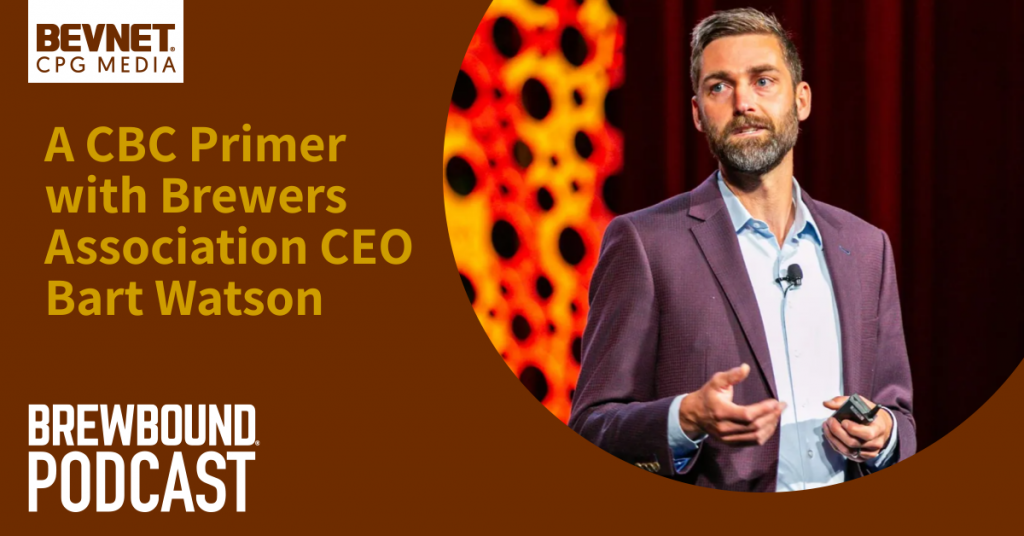
[00:20:47] Justin Kendall: So while we don't have the answers to how this is all going to shake out in the next few years, this is something that's going to be a conversation point at the Craft Brewers Conference. Before we get there, let's get to our featured interview with Bart now. The Brewers Association is changing up the Craft Brewers Conference for this year. It will take place April 20-22 in Philadelphia. This year's CBC comes at a time when the craft landscape continues to evolve with consolidation through platforms and partnerships. It also comes amid a challenging macroeconomic environment. Brewers Association President and CEO Bart Watson is joining us to discuss this year's event as well as a catch up on industry trends. Thanks for being here, Bart. Thanks for having me, Justin. Looking forward to it. Let's just get into CBC.
[00:21:40] Craft Brewers: How is this year's event shaping up? Yeah, we're super excited. As you mentioned in the opening, we've made some changes, tried to look out, see the landscape, think as empathetically as we can about our members and recognize that it's a challenge to leave your brewery for one day, let alone multiple days. And so whatever we could do to compress the schedule, to bring costs down was something that we thought members would appreciate. I think we're hearing that. in their feedback. So for those who aren't as aware, one of the big things we did is we compressed the schedule of CBC. It's really a two and a half day schedule spread out over three days. And there's more things on either end if you want to get into some of those or outside stuff. And then we lowered the price. We made it much cheaper to get in. We think CBC works best when it's the big 10 event that everybody's coming to and connecting with. And so we're trying to make sure, particularly with an East Coast location that's easy to get to for lots of people, that as many people can get there as possible. And we'll see. Brewers always wait on the registrations, which we knew before. So we won't have final numbers until closer to the event. But so far, I think it's paid off. We've seen a lot of excitement from exhibitors, from members, and I think generally heard super positive feedback.
[00:22:52] Brewbound Podcast: There's so much going on in craft right now and so much that your members are tackling on a day-to-day basis. What has been your pitch to them for why it's important for them to come to CBC this year?
[00:23:03] Craft Brewers: I think it's important to come to CBC every year, though obviously I'm a little biased. But you know, when I think about CBC, I really put it in four buckets. You've got commerce, aka the expo, you know, learn what's going on, trends, and connecting with suppliers is certainly a big part of it. I think for a lot Craft Brewers, you know, suppliers always go big and they do a lot of fun stuff, but they're also sharing what's new with their companies, new offerings, you can stay up on that. Second bucket is education. And I think we have a great lineup of education and we've really tried to focus too on things you can't get outside of CBC. know yeah there's going to be a lot of the great speakers who are on the circuit but you know we're trying to bring in new voices that you know maybe aren't going to attend the state guild event and are only going to come to cbc so we're doing some great stuff there and i think our lineup if you haven't checked it out is one of the strongest we've ever had in a variety of areas and you know in addition to we've really organized that much more than in the past so you know brewers have these experience tracks that they can really see themselves in and hopefully get a little bit more curated experience around the education. Bucket number three is networking, which I think we're also thinking about more intentionally trying to bring like-minded groups together either by size, by role. So we're really trying to think intentionally about how networking happens within CBC and so much of that happens outside as well that there's so many meetups and events that are organized by other groups. But we think networking and really connecting with your community, is a huge part of CBC. And the last bucket is fun. Beer is fun. A wise brewer told me recently that beer is equal parts science, art, and fun. And I think coming together, sharing some pints, doing some fun things, I'm super excited about our welcome reception, which we're gonna hold in the ground hall, train station. We've got a great Philly band, Snack Time, who, if anyone's a fan of Jason Kelsey's ESPN show, it's that house band. I think they're super well-known in the Philly area, but they're gonna be great, have a lot of energy and excitement. And, you know, CBC should be that week where you do all four of those things, but you come back, recharged, energized with new ideas, new energy to bring to your year. And anyone that can't find value in that, I want to know why. I mean, I want to take the challenge on to provide value in all those buckets, but we think it's a great deal and the best use of a few days that you can spend throughout the year.
[00:25:18] Justin Kendall: We've seen a lot of folks stoked on this year's keynote speaker, Will Guidara. He's the author of Unreasonable Hospitality. Hospitality has become such a bigger part of the business for Craft Brewers. I mean, it seems like an obvious fit there, but, you know, why was he the right choice for someone to speak on that? And, you know, what do you think he can impart to crappers?
[00:25:42] Craft Brewers: Yeah, the history of our keynote has, you know, gone in lots of different directions. Sometimes it's in industry, sometimes it's out of industry. And with Will, we think we really just got the perfect fit for the moment for a whole variety of reasons. For one, as you note, hospitality has become so much more important to our members' businesses. Most of them, the vast majority of our members, are brew pubs or tap rooms, and so that hospitality experience, getting butts in seats, is really the thing that makes or breaks their business. Obviously, Will is a global expert in that. I think people who aren't familiar with his work, and if you aren't, you should be checking it out. His book, Unreasonable Hospitality, is amazing, and he has a new field guide to that coming out in the near future. But Will really has a lot of insights on things that I think are more broad than just pure hospitality, on management and culture within a business, and he wraps it in just such a positive upbeat fashion. I mean he's like a hospitality business Ted Lasso where he just he really brings a spirit and a positivity that I think is going to be welcomed in craft right now as as people try to lean in do better grow and what's a challenging time but one where you know many people are still finding opportunities to thrive. So I'm super excited we got him. His schedule is crazy. He's going to have to fly off to something else immediately. But yeah, I couldn't be more excited. I think everyone in the office here has read his book multiple times and can't wait to see how he tailors that message and gives his version of Unreasonable Hospitality to our members.
[00:27:12] Brewbound Podcast: The BAA a handful of times has had that keynote speaker be someone who's not necessarily inside of Craft Brewers. Why is that something that you like to do and set up for folks?
[00:27:21] Craft Brewers: Yeah, I think again, you know, going back to kind of why CBC exists, you know, some of it is to learn the industry trends. But, you know, I think most people who are paying attention know those and we're still going to have that. I'm going to give my typical state of the industry, you know, talk about what's going on in the industry. I'm sure. your listeners know a ton of what's going on in the industry thanks to Brewbound's great coverage. I think some years it is worth looking inward and really asking what the industry is doing. We've thought about that in times past as the BA message has focused more on internal things like quality. As the industry shifts though, I think sometimes it's great to have people pick their heads up and think bigger about what's going on. One of the things we saw from what our members were asking us for in the last few years was more business resources. more resources specifically around driving traffic to their locations. And when we thought about who's somebody who can speak to not how you just do that in one particular place, but can do that globally, we couldn't have thought of a better person in the world than Will. So I think this was just a moment where we thought it was important to bring that, let's get a broader message or pick your head up message. And Will was one of the best people in the world to deliver that.
[00:28:31] Brewbound Podcast: It kind of goes back to what you've relayed for a couple of years now about craft really getting back to the business side of things. If we want to keep things sticking around, you've got to look at some of that stuff.
[00:28:42] Craft Brewers: Yeah, there's a yin and yang there. Obviously, almost everyone who's in this business is because of the beer, because of the products they make. But running a brewery is part beer and part business. And I think what we've seen is the market has tightened, and things have gotten more competitive, and the need to differentiate yourself has gone up, that the ability for a lot of breweries to do that solely with the beer has gone down. And that's not to say that some breweries aren't doing a great job of it, or you can't stand out with your beer. And beer quality is obviously still incredibly important to succeeding. But I think the business side has become more important in recent years. And you see that in the resources we're trying to put out, which, again, reflect what we get incoming you know I think of the things we are hearing about today are much more broad business-based questions than they are technical questions and some of that's a reflection of we built a great technical library and there's other groups that do a great job there people like MBA but I think some of that is just the times have changed the information about good beer is out there and running a small the whole business is so hard. So breweries are looking for any edge they can get. And we think we have a lot of resources even beyond Will at CBC that will speak to that bigger picture and hopefully give some new ideas to anyone attending to help them navigate that landscape.
[00:29:53] Justin Kendall: You're usually opening up CBC, but this year you're bookending it. So Will is the start and you're the end, at least as far as conference coverage goes. So with the state of the industry this year, can you give us a little preview of the address, what's sort of on tap for that, and how firmed up are the numbers of the last year?
[00:30:14] Craft Brewers: You know, we're still firm in the numbers. That's always a work in progress until the very end. You know, we try to make those as accurate as possible. With 9,000 breweries, it can take a while to shake through all those state reports and all the little places where we fill in the nooks and crannies. But I think it's no surprise that it's going to be a tough number this year. We're not seeing the the boom years anymore, and that's an understatement. So when it gets to the state of the industry, I think we need to try to find that fine line between reality and letting brewers know how it is. We're not going to do anyone any favors if we're papering over the challenges that we face right now or pretending that they don't exist. But at the same time, providing optimism, talking about how the community can move forward collectively, providing some insights and I don't know if I'll go as far as wisdom, but some ideas about what we see being successful out there and how brewers cannot just copy that. but understand from that playbook what opportunities might exist for their individual business. So, you know, I think we're going to see a state of the industry that hopefully finds that line of being really clear-eyed about where we are right now, but also giving some thoughts, some ideas, some optimism about how we move forward. Beer isn't going anywhere. There's lots of breweries that are still being highly successful. And I think we need to balance those two things of understanding the challenges and reminding people that this is a wonderful business still and that there's lots of opportunity going forward.
[00:31:39] Justin Kendall: So I don't want to press you too hard on the mid-year number being minus five and in the end of year, you all mentioned that you expected it to land somewhere beyond that. Do we know exactly where that landed yet?
[00:31:53] Craft Brewers: You're really pushing into Matt's world. I think I'm showing that I've I've fully done a good job of delegating some of things as a CEO that I'm not close enough to give you a number right now. And Matt and I have had some broad conversations about it as we prepare for messaging, as we think about it. And, you know, as I help him, you know, kind of in that transition process where he fully owns that stuff. But I think, you know, in kind of the contrast between those two, you know, I think that probably was a mix of things changing in the back half of the year. I think we saw a lot of tough numbers from a lot of parts of beer and beverage alcohol in the back half of the year. And I'll say secondly, Our annual survey is just much more comprehensive. I think it gives a more accurate number. And so that mid-year number we always feel good about when we put it out, but certainly has a smaller sample size and is a little bit more of a finger in the air. So I think we did see things get a little bit more challenging in the back half of the year. The good news is, and it's always a little weird to be putting out a number that's backward looking when we have new numbers, is everything we're seeing about the beginning of 26 is a little bit more positive. And that's one of those things we're gonna figure out how to work into the state of the industry too. Certainly, I don't think we're in growth mode yet again, but I think the numbers are improving. And so some of that deterioration we saw in the back half of last year has turned into improvement in the early months so far of 2026.
[00:33:09] Brewbound Podcast: When you're starting to look through all this data leading up to your state of the industry address, are there any trends that are sticking out to you that maybe we aren't talking about that might be flying under the radar?
[00:33:20] Craft Brewers: Yeah, I mean one that I always try to bring out is that the averages really hide the variation and that we're still seeing a fair amount of health from a lot of members. I think it's going to be the same as last year where more members saw decreases than they saw growth, but thousands of breweries last year grew. And I think that's something that can be easy to forget in a world where we focus, it's easy to focus on that big central tendency headline number and forget that there's a lot of micro stories that underpin that. So that's one certainly we'll be talking about at State of the Industry and building out a little bit more with greater depth of kind of what parts of the industry are growing, how, why, and looking at that. I think that's one. I think another is kind of how the businesses are shifting internally. We do some some work on that as well. You know what is the mix of different products look like. And that's been interesting to watch as well. I think you know we saw for a couple of years Craft Brewers were leaning into that kind of total beverage concept. I think that. has swung back a little bit for some as they realize how competitive those other spaces are too. And we're seeing maybe more of an emphasis on hospitality. Talking to a lot of brewpub operators, we've heard a lot about how food is going up as a percentage. Some of that is weakness in beer, but I think some of that is a renewed focus on those onsite hospitality pieces as well. So there's lots going on. And one of the other things we'll always be looking at, and we're still finalizing those numbers, is the regional variations. We're an enormous country. Yes, the national numbers tell us something. And I think there's more similarity than difference there. But we're going to be looking through and seeing which places are particularly challenged and which places maybe are thriving. And there's still a little bit more growth, because normally there's pretty wide regional variation between the top states and the bottom. And I expect to see that again this year.
[00:35:02] Justin Kendall: So we've seen this consolidation trend really pick up as far as these partnerships or these platforms that are forming. It's not really anything new in craft. We've seen it with ABV and Canarchy before, and I'm sure there are others that I'm just not thinking of at the moment, but it just feels like every week we're seeing another one of these pop up. How do you view these craft collectives as far as a trend and what they can possibly do for these businesses?
[00:35:32] Craft Brewers: Yeah, you're right. I mean, it certainly is a trend that continues. I'm sure this is recorded and will be published today, but new one reported in Brewbound this morning coming out of Chicago. So, you know, I think this is something that reflects the times. You know, we went through a period of time where brewers built a ton of capacity. and then growth stopped and I think you have a lot of companies asking whether they need that capacity or if they want to keep it how they're going to fill that capacity and so achieving scale either via partnership or some other mechanism, I think makes a lot of sense. I think it remains to be seen, you know, kind of what these look like over time. It's interesting to watch them just generally and how different companies message them, because I think within the platforms, there are different strategies and not everyone's thinking about it in the same way. Like one platform is not another platform. And so it'll be interesting to watch as best practices emerge and as we see kind of which of these platform models actually make sense. And we have some history on that, right? You know, if people trying to do certain things when they combine forces that don't work and other things that work better. And you know, one other thing I'll say is generally, I think it makes sense in a world where distribution is really pressured and kind of moving into do you have a lot of scale or are you hyper local and in a world where costs mean that scale is necessary to preserve any kind of margin anything you can do to drive down costs to do joint purchasing is something that Craft Brewers need so i think it makes a ton of sense given where we are, with capacity, with costs, with distribution. And it remains to be seen how successful it's going to be. And really, a lot of that's going to come down to how they operate, and how the brand portfolios fit together or don't, and what the nuts and bolts of they look like. And most of the operators I talk to who are doing them seem optimistic. They think this is the way forward, and they think that this is the way that they're going to survive to get through to the other end of the challenging times. And I hope that's the case. I hope it's a successful strategy for brewers who are trying it.
[00:37:32] Brewbound Podcast: You mentioned Matt earlier. That's Matt Gasiak, who's become the staff economist for the BA and is really taking on that role as you've been in the leadership role of the BA for over a year now. Now that you're in this, how has that job been? Has it been different than you expected? What has it been like?
[00:37:51] Craft Brewers: Well, first I'll say it's been great. I was pretty clear-eyed when I came into this about the challenges we would face, but also was maybe wildly optimistic, but was optimistic about the opportunity to step up. And I would say that that optimism has been fulfilled. It's been wonderful to feel like I've been able to connect with more of the industry and just do more for our association and for our members. There's a learning curve, as there are with all things when you step into a new role. Board management's one of those things that, and I don't mean management, you don't have to manage the board, but just dealing with a board is something that you don't have to do as a lowly economist and you have to do as a CEO. And that's been a learning curve, but it's been a great one, getting to engage more with our committed board members and learn from them. But running a board meeting is something that wasn't on my list of things that I had done before. But general, I think it's been good. I'm excited that I feel like we're starting to make changes, that I'm making Some of the changes that I had thought about beforehand come into fruition, changes to CBC, we're going to have changes to GABF in the coming year, changes to some of our offerings to our members. So the proof will really be in how members react to all these things, but I'm excited about what we've started to accomplish in a year and glad that I feel like I've moved out of the trial learning period and into one where we can actually implement some differences.
[00:39:04] Justin Kendall: We definitely want to get into some of those changes in a little bit, but on the pie graph of your time, what's getting the most time? What's getting the least time? Like, how are you breaking up your time at this point?
[00:39:17] Craft Brewers: Yeah, that would be fascinating. Maybe I should do that. Maybe I would have a better structure to my days if I knew. But, you know, I really think of it in kind of big buckets. There's, you know, purely external stuff dealing with other associations, you know, thinking strategically, flying to DC, which, you know, I do outside of the hill climb. So doing stuff that's external that, you know, our org needs in relation to the outside world. You know, the second big bucket is internal. working with our VPs and, you know, kind of stewarding our business. And the third big bucket is engaging with our members, which, you know, is something that I got to do as chief economist, but I'm trying to do even more as CEO, really understand, communicate, talk with our members. And then there's probably small, thin slices that are, you know, other fun things, getting to go out into the world and going to speak at BRX next week, which I'm excited about, which is SEBA's event in the UK. But that's probably the lowest bucket of time. And those three big buckets, kind of external relations, internal business management, and engaging with members are the three big buckets.
[00:40:22] Brewbound Podcast: You mentioned getting to start making some of the changes that you were thinking about. How has the BA evolved under your leadership?
[00:40:31] Craft Brewers: I'll start by saying I think the BA was doing a lot of good stuff before. So none of this is criticism of what the BA was doing previously as much as I think when I came in, it was an opportunity to look at things through a new lens, look at those things critically. And we've had a tremendous amount of change in the industry in the last few years. So it was a good opportunity and I think good timing to make that transition and say, okay, let's refresh, let's think about why this program or policy exists and what we could do to change it. And, you know, I mean, when you look at what we do, it, you know, really comes down to a few major buckets. We do events like the Craft Brewers Conference and GABF, and we've talked a little bit about some of those changes, and we can talk more if you would like. We provide benefits to members, which I think you're starting to see update and change. You know, some of it's in the type of content we produce, some of it's, you know, how it's structured, and I think you're going to see more of. in the coming years, so excited to roll out some of the new things we're going to do around business and hospitality and provide some new benefits to members. And then it's government affairs. And we've updated some of those efforts. We've shifted our hill climb. We've changed some of the issues that we're focused on. And I think some of that comes from, too, the economist lens that I brought to the role of government affairs should really be tied in hand in hand with economic performance for our members. And I think that's one thing we've done well to shift in the last year.
[00:41:55] Justin Kendall: So let's talk about some of those changes that you've done to the events. You've really worked to reshape CBC. You've worked to reshape GABF. GABF is moving from the Colorado Convention Center to Levitt Pavilion. How close are you to getting these events where you want them to be?
[00:42:15] Craft Brewers: I'll give a very two-sided answer to that. On the one hand, I think we're making changes that move us very much in the right direction. Getting GABF right size to where your festivals fit in today's society and where it fits with our org, I think was one piece of that. At the same time, I think this is an ongoing process. When you're doing a consumer event like GABF, you get new consumers every year. It's a different challenge every year. And so, you know, one of the things we're trying to do here, you know, in addition to kind of understand our members on a more minute by minute ongoing basis is understand the needs of events, consumers on an ongoing basis, and really, you know, build a culture of adaptability and change. So will GABF be at Levitt in five years looking like it looks this year? Maybe, maybe not. And you know, what we're going to try to do is evaluate how this works for the breweries who participate and whether it was valuable and an effective time of their use, whether the consumers showed up and whether they loved it, and whether, you know, in financial stewardship bucket, whether it worked for the association. So, you know, we're going to be fine tuning those things and looking at it. I firmly believe this is the step in the right direction. Is it the final form? I don't know.
[00:43:27] Brewbound Podcast: How have members been responding to changes both for GABF and some of the changes happening at the BA? Because change is always a little scary for everybody. So what have been some of the feedback that you've gotten?
[00:43:37] Craft Brewers: I've been pleased by getting really positive feedback from members. Certainly the social media chatter has been a little bit more mixed, which social media is its own thing, and I remind the team of that every day. But members, at least the ones who have been willing to tell me to my face, have been very positive. If you're one of those members who shares other thoughts, feel free to email me. I want to hear those comments too, but members get it. They understand how much things have changed in the last five to 10 years. And the idea that GABF was going to be some unicorn that could be a static entity that didn't change as everything else around us changed in how society works and how beer looks and how our members are feeling, I think was just not sustainable. So members get that and you know I got a lot of notes the day after that were some version of the of whoa and long time coming. But you know we're generally very like positive and supportive and said hey I get why you had to do this. Let me know when it is. I'm excited to come. So we're excited. There's some more changes that are going to come. You know pricing is going to look different. We're going to look a little bit differently on how we curate the breweries who are there. Hopefully deliver a better experience a little bit more why around GBF. So it's not just moving it outside, right? We're trying to think about this more holistically. And generally, I think the members get that and have been excited and have been willing to help and lean in on it.
[00:44:54] Justin Kendall: What are some of the advantages and trade-offs of a move like that from the convention center to an outdoor, I guess, park? Is that fair to say?
[00:45:04] Craft Brewers: Yeah, and you're starting to get me into event organizer, which is going to stretch my skills. But I've learned these talking points pretty well, so I think I could share. I think the biggest is control. Convention centers are great for conventions, but they are very tightly controlled environments in terms of what you can do and what vendors you can use and Levitt is much more of a canvas that we can paint on in a lot of ways that we see fit and I'll add they've been an awesome partner and it's been great to work with them. They're a fellow non-profit who I think gets what we're trying to do and super excited to be partnering with them and moving into a new space. So I think that's one. Outdoors is another one that we're excited about and we think offers some new possibilities and just new ways of attracting people and marketing people. The weather's a con, potentially, but we're excited about this. That time in October, average highs are in the high 60s, could be, hopefully will be, beautiful beer-drinking weather. If not, Coloradans are hardy people. I can imagine a snowball fight GABF being as much fun as a 68-degree GABF. You know, I think there's going to be challenges too in just moving to a new venue. We knew the convention center inside and out. We knew what we were dealing with. There's going to be a learning curve this year, but we've got a world-class events team. We've got great partner in Levitt. We've got wonderful members who are helping us think through this as well, things like our events committee. So we think the pros way outweigh the cons and are Or, obviously, we wouldn't have done this move if we didn't think that, but we think it's going to be a very positive move and one that, again, we're going to learn about and we're going to have to make iterations on.
[00:46:41] Brewbound Podcast: The environment itself almost fits with Kraft more than a convention center, right? There's less concrete, more, you know, connecting with whatever place you're in.
[00:46:51] Craft Brewers: Yeah. And without going too deep into the event demographics, you know, this used to be a much more national event and over time it's become more Colorado heavy. And, you know, we wanted to lean into what we view as a tentpole Colorado lifestyle event. right? You know, you haven't really lived in Denver until you've come to GABF, and we think that Levitt is going to be an amazing place to show that off. You know, the top of Levitt, you've got amazing views of the city and the mountain. The amphitheater, which has a world-class, like truly world-class sound system, is going to allow us to bring in some amazing entertainment. And What could be more Colorado than sitting outside on a beautiful October day, drinking a beer, listening to some music? And we think that's going to align with and promote craft as well as anything we could have ever done in the convention center.
[00:47:38] Justin Kendall: I've never rented a convention center before, but I have a feeling it's not cheap.
[00:47:42] Craft Brewers: Yeah, it's not cheap. It comes with a whole bunch of strings around hotel room nights. It's a whole little thing. And yeah, you know, anytime you move something into the convention center, then there's somebody who's telling you how much that costs. So I will say, you know, Colorado Convention Center has been a wonderful partner over the years too. We work with great convention centers every year for CBC. I'm not here to disparage convention centers, but in running a consumer event that the GABF is, getting out has been a wonderful brush And we're excited to be able then to invest that time and effort that we previously needed in managing convention centers and some of the things that comes with that into the event. And that flexibility too, that blank canvas that allows us to do some new things. I think we're going to scratch the surface this year. And in the next couple of years, we're really going to get into, okay, what are the cool things we can do now that we have more freedom and flexibility?
[00:48:28] Justin Kendall: Yeah, I've heard the Philadelphia Convention Center is lovely too. We can keep that balance, right? Yeah, no comment. With so many things on the table, you know, and being reshaped and transformed, it always sort of comes back to membership too. And membership has been a challenge for the BA in recent years. And I know that this is a board decision, but I mean, we lived through the 2010s where, you know, you were either in the BA tent or you were outside of the tent. And it feels like that conversation isn't relevant at this point. Is the board, is the BA, is there talk of changing the Craft Brewers definition or the membership?
[00:49:16] Craft Brewers: Yeah. So first, I won't speak for the board. As I've said, I've learned a lot about engaging with boards. Every board is different and they're going to have their own voice and perspective on this. I will say what our board has been focused on in recent years is the challenge of our members. And one of those is just growing beer, period. And so I think you've seen that in what our org has been doing. We're working much more closely with partners like MBWA and Beer Institute to try to find common cause and things we can do to move the needle on overall beer volumes. I think you can see that the messaging we are putting out is a more general. Pro-socialization, pro-beer, and a little bit less, you know, kind of the individual attributes that differentiate independent Craft Brewers from the wider beer community. And, you know, again, that's rooted in the problems we see of our members. You know, I think when our members... We're asking us to help differentiate them. That was the primary thing we were going to do and we were going to think about and we were going to talk about. And you know one of the things I did when I started in this role was I called as many members as I could. You know got on the phone with people I knew and people I didn't know. And one of the themes that kept coming up over and over is we need to promote and protect beer. And that's one of the things that we're trying to do, we're trying to think about, and we're not gonna be able to do alone. I mean, I think we can play a certainly play a role and our members having so many touch points around the country and being the faces of beer in so many communities can be a big part of that. But that's something that has to be done in partnership with people throughout the beer community. So that's something we're gonna do more of. I'm really excited for our National Beer Day assets and see what members think about those. We really focus those this year around socialization and reminding people kind of why they go out and drink beer. And it's, you know, it is about the beer, but it's also about the people you're with and having those moments where you can connect with the community and you can socialize. That's the kind of thing where we shared those freely with some of the people we're talking about in beer industry and said, Hey, if you want to use these outside of membership, outside of, you know, BA craft, great. Cause something that works for the whole category is going to be beneficial for our members as well.
[00:51:18] Justin Kendall: Well, we want to hop into a speed round with you real quick. And we're going to start with what's one industry term you never want to hear again?
[00:51:26] Craft Brewers: I don't like the word liquid. When people talk about the liquid, it always, it's always just like, sounds weird to me. Like it's, it's beer, just say beer. That's fair.
[00:51:36] Brewbound Podcast: What is one thing that you think will really drive craft in the next year?
[00:51:41] Craft Brewers: I think it's hyperlocal, right? It's focusing on experience, it's focusing on community. The thing, Kraft is going to win or lose with people wanting to come into breweries and then having a great experience or not having a great experience.
[00:51:53] Justin Kendall: What's one message you want crafters to take to heart this year?
[00:51:56] Craft Brewers: I think you matter, right? I think the more brewers think about how they matter in their communities, how they differentiate themselves there, that I think the more that they really think about that, what role they play, and then build on that, grow that, the more successful they will be and we will all be.
[00:52:12] Brewbound Podcast: Last for me, what is one takeaway that you want folks to have from your leadership however long it is at the BA?
[00:52:20] Craft Brewers: I want them to know that the BA is their organization and that we are highly accessible. My team was horrified by this idea, but I suggested putting my cell phone number on one of my slides at CBC to really underline, we're here. If you have ideas or questions or thoughts, we're your org and we want to pick up the phone. So I don't know that I'm going to go that far. I stole that idea from the Burger King CEO, who apparently is taking calls and emails like two hours a day. credit to him. But I want members to know that as long as I am CEO, we are listening. We might not always be able to act on your feedback or thoughts, but I will spend time on the phone with any member. I will respond to any email from a member. So if you think there's something the VA should be doing, reach out and I guarantee it will get response.
[00:53:03] Justin Kendall: It's a great place to end it. Thanks for doing this Bart.
[00:53:06] Craft Brewers: Thanks for having me. Really appreciate it.
[00:53:08] Brewers Association: And that's our show for this week. Thank you for listening. The Brewbound Podcast is a production of BevNET CPG. Our audio engineer for the Brewbound Podcast is Joe Kratchy. Our technical director is Joshua Pratt and our video editor is Ryan Galang. Our social marketing manager is Amanda Smerlinski. Our designer is Amanda Huang. If you enjoyed this episode, please share it with your colleagues and friends and review us on your listening platform of choice. You can find our work at Brewbound.com. And we also welcome feedback and suggestions at podcast at Brewbound.com. On behalf of the entire Brewbound Podcast team, thank you for listening. We'll be back next week.