[00:00:00] Jessica Infante: Heading to CBC? Kick things off the day before at Brewbound's meetup at Love City Brewing in Philly, Sunday, April 19th from 5 to 7 p.m. Connect with beer industry leaders, grab a drink, and catch up with the Brewbound team. It's free to attend and walking distance from the convention center. Head to Brewbound.com slash lovecity.rsvp. And don't forget to catch the Brewbound team at booth 956 during CBC.
[00:00:28] Zoe Licata: What's up with 42 North Brewing and Tilray's next acquisition, next on the Brewbound Podcast. Hi, and welcome to another episode of the Brewbound Podcast. I'm one of your co-hosts, Jessica Infante. And I'm Zoe Licata.
[00:00:53] North Brewing: Hi, welcome back. Thanks. It's been a while. We promised that one day like all three of us will be back together recording the top of this podcast. One day. But we have just back for now, which is great.
[00:01:07] Zoe Licata: It is nice to be back. I almost forgot how to like set up my microphone and all that jazz because it's been weeks of like, I was really sick. Then we were out of town on school vacation week. Then we got clobbered with that blizzard up here in New England. And that resulted in, you know, me having both of my housemates not at school, so not ideal recording conditions. No, not at all. No, but Justin's on his way to the airport to go to the Constellation Gold Network Summit, so expect more news out of that next week.
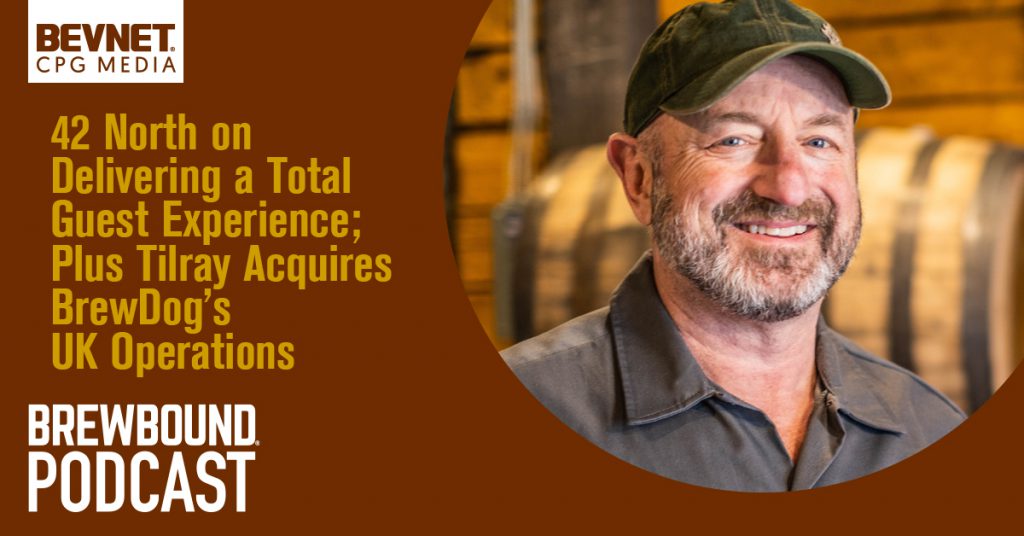
[00:01:35] North Brewing: But for now, we have plenty to talk about for this week. Oh my God, plenty. But before we dive in, we should plug our interview, which you will hear Justin's voice because he talked to 42 North Brewing founder, John Cimperman, talking about their taproom work, taproom events, food service, expanding all they're doing with their taproom. So that is a fun conversation worth listening to. And you won't totally miss out on Justin if, you know, you're the number one Justin Kendall fan or something. He does have a very soothing voice.
[00:02:08] Zoe Licata: So that is coming up. Before we get to that, so much news today. So as we alluded to at the intro, Tilray struck again. And, you know, listeners of this podcast are no strangers to the notion that Tilray really, you know, loves a distressed craft beer asset. Loves it. Can't say no. and they have brought that mentality across the pond where they have acquired some elements of BrewDog's business. Not all of it, and more will be coming, but today's news as we sit here on March 2nd is that Tilray Brands acquired BrewDog's global brands intellectual property, major production brewery in Ellen, Scotland, and 11 of its pubs in Scotland, Ireland, and the UK for 33 million pounds, which is about $44 million. So that broke today, but notably in that press release, they mentioned very high up that negotiations are ongoing for BrewDog's business in the US and Australia, and they expect to have that wrapped up in 30 days.
[00:03:12] North Brewing: Yeah, we knew that this was kind of happening, but we didn't know who the buyer was going to be. There was rumors circling that BrewDog was going to sell off their assets starting a couple weeks ago. And this came about relatively quickly with Tilray taking that up. It also comes right after Tilray also announced they were taking on some production for Carlsberg in the U.S. so Tilray Brands been really busy. They really haven't slowed down at all since they entered the Bevalk scene. I mean I don't think it's entirely surprising that they took on Brudok because it seems to follow a similar pattern that they have had in the past when it comes to Bev Elkin, specifically Beer Acquisitions, where they take on pretty notable names, but folks that are potentially in less than ideal financial situations or just not at the peak that they once were at, and BrewDog fits within that. They acquired a bunch of brands from Anheuser-Busch, from Molson Coors, and this is now the latest to join. But this is kind of their first really big international acquisition, I think is accurate to say, when it comes to beverage alcohol, for sure.
[00:04:18] Zoe Licata: So I just got off listening to a conference call they hosted with investors. And interesting stuff to come out of that was that Irwin Simon, their CEO, mentioned that they do plan to use excess capacity at the Scotland Brewery to produce some U.S. brands. He said biggest candidates right now that they think can build out in a new market are Shocktop, Sweetwater and Montauk, potentially 10 barrel as well. He also mentioned that when everything is said and done, they expect the business to be chopped down to about 13 pubs. Their website right now says 90. He said they were as big as 60. He thought that was not the way to go. The thing, though, that, you know, the discrepancy there is probably due to the fact that some of these pubs are licensed situations where it's not BrewDog that owns them, but, you know, it's in their best interest to list them on their website anyway. That's certainly what they have going on here in the US. They've got some franchise locations in Colorado, but. As far as locations in the U.S. that Erwin really wanted to make sure got kept, he shouted out Vegas, Columbus. I can't remember if he said Atlanta or not, but basically we'll know a lot more about what this deal means for BrewDog's U.S. business in a couple weeks. Today's call was mostly all about what's up in the U.K. and he feels really good about it. And he had a message to employees that from here on out, there's going to be lots of clarity and communication. We know you been feeling uncertain, so we are here to improve that for you. Also shouted out the Equity Punks, which if you have been following the BrewDog story, you certainly know that BrewDog's co-founders, James Watt and Martin Dickey, launched a crowdfunding platform years ago and raised a lot of money through it too. You know, they called it Equity for Punks and the people who bought in are called the Equity Punks. And initial reporting that we saw today indicates that those guys are not going to see any money. But that's usually the case, which is unfortunate. But Irwin thanked them for their support and said they're a huge part of the story and really a meaningful part of the brand's development. But he also talked a lot about, and this was what was really interesting to me, was He sees them being able to shift BrewDog's go-to-market strategy in the UK to mimic a little bit more of how craft brands operate in the US, because as it stands right now, BrewDog does do off-premise distribution, but all of their on-premise work was sold over their own bars. They really don't, you wouldn't, Erwin said you would never go into a regular, you know, non-BrewDog pub in the UK and find a BrewDog beer. So he wants them to start exploring that angle. wants them to get placements in in venues for events and sporting events via partnerships. So we'll see what happens. But he you know, he always is super positive and upbeat about stuff. I don't think I've ever heard the man issue a concern that he was super chipper.
[00:07:07] North Brewing: Yeah, that seems to typically be the way he goes about things. So we'll continue to monitor and see what other details come out of it and what happens with the rest of the business. Potentially who else might have been vying to buy it. All those fun and juicy details.
[00:07:22] Zoe Licata: Yeah, absolutely. More to come. Keep an eye on ProopBat.com for much more that's going to come out of this deal. This is something we're going to be talking about for a while.
[00:07:31] New York: This episode is brought to you by the Craft Brewers Conference, where big ideas, bold beers, and brutally honest shop talk collide. Join thousands of industry pros leveling up their game. Don't miss it. Register now at CraftBrewersConference.com.
[00:07:51] North Brewing: And in other acquisition news, we kind of got to mostly close the book on Anheuser-Busch InBev's acquisition of Beatbox. So you probably remember back in December, AB announced that they were going to acquire 85% of Beatbox in a $490 million deal with plans to get 100% ownership over a kind of five-year plan that We don't know the exact details on, but that is in the works. So that is officially closed as of the news came out on Friday, so that's the end of February. Not any other real details came out of that report. We've sent a bunch of questions, we've asked them, but nothing back yet. So stay tuned if there's any updates on it. But the news did follow our report from a week prior that Fusion Proof Brands, which was the parent company of Beatbox, I started laying off 158 employees according to a notice with the Texas Workforce Commission. So there are layoffs. We anticipated that happening based on AB has plenty of folks tackling everything when it comes to production, to marketing, to all that fun stuff. Stay tuned if we get any more details on those changes as well as production moves, distribution changes. We know that Beatbox had been doing a lot of kind of shifting around of its distribution network over the past few years, particularly moving from some Molson Coors houses to Anheuser-Busch houses. So there already was some in the works of them kind of aligning with Anheuser-Busch. So, there may not be a lot more work needing to be done there. But yeah, that has now happened. So, we'll continue to see how they get to that full 100% ownership. But I'm just happy we don't have to write soon to be AB owned BAPOCs anymore in our coverage of that brand because that's a mouthful.
[00:09:45] Zoe Licata: It is a mouthful. It's funny that we're talking about these two deals in this same conversation because I recently was just kind of thinking about like all these crowdfunding raises and like, when does this ever pay out for anybody? And I think the answer is BBOXX.
[00:10:00] North Brewing: Yeah.
[00:10:01] Zoe Licata: And I don't know the ins and outs of the crowd raise that they had done a few years ago, but they definitely did one.
[00:10:05] North Brewing: Definitely. There's been quite a few. So yeah, this is one of the few we've seen have actually expanded their business from there and then result in a sale. And then we wouldn't, it's not all beyond beer and kind of acquisition news. We also had some craft Brewers Association news that you covered. We have a new chair of the BA board.
[00:10:26] Zoe Licata: We do have a new chair of the BA board and that is Mr. Fred Matt of FX Matt Brewing. And the BA has board elections just about every year. They've I feel like, I don't know how I picked up the BA Board of Directors as a beat, but I feel like I kind of have, just because I find it interesting. So they've done a lot to change the makeup of the board. They've dropped from, I think it was over 20 members at one point, down to mid-teens here. And so this is where we are. Fred served a couple of terms as an at-large director, which means you don't run for office, but the other elected directors do appoint you. And then he ran in his own right as a packaging brewer representative. And now he will be the chair. So, you know, outgoing chair, Leah Cheston of Right Proper Brewing, you know, retains the title of like ex-chair or something. And she's part of the executive committee. So she's around, but you know, now Fred is able to put his spin on things and he'll address everybody at CBC, I assume next month and, and we'll see, but And that was super crafty news that came out last week. You can read all about it on Brewbound.com.
[00:11:39] North Brewing: And speaking of CBC, we are going to be returning with Brewbound Podcast on location at on the trade show floor for CBC this year. So if you're going to be headed to Philly, you're going to be at the Creppers conference. come check out the booth. We'll be recording podcast episodes there. We also are going to have some more details soon on an exciting other event happening in Philly that we're kind of co-hosting. So keep a lookout for details on those, but we want to make sure we see as many folks as possible while we're out there. If you have a pitch for Hey, you think there's somebody we should talk to while we're there or should have a conversation with or even just with yourself and you want to schedule time with us, just reach out to podcast at Brewbound.com and let us know. In a very similar vein, also, as you're listening to this podcast, we are one day or less than 24 hours out from having our own little setup at the New England Craft Brew Summit. So if you are in Portland Friday or even Thursday afternoon and we'll be around, come say hi. There's a kickoff event at Allagash we'll be at if you want to come say hello there. And then we'll be recording some podcasts on their own floor on Friday. So a lot going on.
[00:12:50] Zoe Licata: I believe you're booth number three.
[00:12:51] North Brewing: Booth number three. Yeah. Easy to remember.
[00:12:53] Zoe Licata: A lot going on.
[00:12:54] North Brewing: Yeah. So a lot going on. A lot of interviews will be coming out of all those various things on this podcast. So stay tuned for plenty of conversations. So in that vein, let's get to our interview with 42 North Brewing's John Cimperman.
[00:13:15] Jessica Infante: 42 North Brewing Company celebrated its 10th anniversary last September. The East Aurora New York-based craft brewery is navigating the same question facing many others. What's next in a fast-evolving beverage alcohol industry? Joining me to talk about the road ahead is founder John Cimperman. Thanks for being here, John. Hey, Justin. Great to see you. Great to hear from you. Great to see you as well. You're not an easy guy to pin down. In addition to founding 42 North, you're the co-founder of the Borderlands Music and Arts Festival, which will be headlined by Jack White this September, which is pretty awesome. You're also the host of the Skin in the Game podcast on Buffalo and Toronto Public Media. And you're involved in Barnstorm Sports and Entertainment, which I mean, that is quite the resume right there.
[00:14:07] John Cimperman: Well, the folks at the brewery love when I'm working on my other projects because it keeps me out of their hair. Right. You know, it's like when I come into the brewery to say, hey, guys, I have an idea. The place just clears out. So, yeah, these other projects keep me out of trouble.
[00:14:23] Jessica Infante: Let's start by talking about 42 North. What's working at the brewery right now?
[00:14:28] John Cimperman: The good news is there are some things working, Justin. And you know what we've really done, and I know a lot of our craft brewery brethren are really focused on the experience, right? The days of having GreatLiquid alone, those days are behind us. Now it's really that total guest experience. So we've really leaned into that and really focused on training our employees, making our environment as approachable and inclusive as possible, and just not taking any customer for granted, really focused on that experience, Justin.
[00:15:08] Jessica Infante: As part of those experiences, what are you trying to drive right now in the taproom? Are you bringing in events? What's building some of that momentum for you?
[00:15:17] John Cimperman: A couple of things, you know, so our gross taproom revenues, you know, our taprooms about, you know, 4,500 square feet. So we've got a pretty large taproom. Our gross numbers are back to where they were pre-COVID, which is awesome. But what we have seen is a higher percentage of that is food. And then also, A bigger percentage of that is really group events, banquets, corporate happy hours. It's much more, I guess I would call it programmed, versus your typical walk-in taproom customer, if that makes sense.
[00:15:57] Jessica Infante: What have you had to do to flip that switch to more programmed events, and how do you lean into that and make that more a part of the business going forward?
[00:16:07] John Cimperman: Yeah, well, you know, we built this reputation. And I think you mentioned kind of the, you know, the Borderland Music Festival that we were part of that was, you know, we've really built a reputation around live music and events. So we do a lot of original of Americana music and a lot of folks come back for that because it's always on the calendar, be it Friday, you know, Saturday or Sunday. The other part of it is kind of listening to our customers. We're seeing more younger families in our taproom and while we're not going to put a jungle gym in the beer garden, you know, we are leaning into whether it's programming that's family oriented, you know, smaller portions on the food side for the kids. So, you know, we look around the taproom, Justin, and we look at the demographic and we say, OK, you know, what is going to appeal to this group and bring them back? That's the key is bring them back into the taproom.
[00:17:08] Jessica Infante: With food becoming a bigger part of the revenue stream for you, How do you make that more of a priority and what are the tweaks that you do there to sort of make that shift where it becomes more of a focus?
[00:17:21] John Cimperman: I'm glad you brought up the food program because we, when we launched the tap room, you know, 10 years ago, when we launched the brewery 10 years ago, we were managing the kitchen ourselves. We were staffing it, we were doing the procurement, you know, we hired a chef. Coming out of COVID, We actually went with the restaurant in residence program. So we identified a phenomenal partner. They happen to be Western New York's most renowned barbecue joint. Fat Bob's Smokehouse, and they run our kitchen soup to nuts. I will say that has been a phenomenal change for us because they are experts on food. We're experts on beer and really the experience part of it, the event part of it, and it's made a great partnership. Anybody out there listening, if you can find that right food partner, And I can tell you, our net numbers on food now with our partner, based upon our relationship with them, are better than when we managed it all of ourselves. So food's hard. I know you talk to a lot of breweries. Food's hard. A lot of us didn't get into this to be in the quote unquote restaurant business. But what I've noticed is the food component is more important now than ever before. And for that reason, we've identified the right partner and they run our kitchen and seamlessly integrate in with our staff.
[00:18:52] Jessica Infante: It's funny you bring that up because when I talk to a lot of craft brewers out there, they don't even want to say the word restaurant when they're talking about their food program. It just kind of a bugaboo word for them. So having that partner to come in and run that side of the business that they're an expert in, as opposed to, you know, you being the expert on the beer side, that's gotta be a huge help and lift off your shoulders.
[00:19:17] John Cimperman: Huge help. And you know, we did open up a satellite location, a second location. which is in the theater district of Buffalo. And they also are our food partners up at that location. It's probably about 16, 17 miles from our flagship location. So yeah, we've been able to replicate that model and that relationship with them. And for us, it's worked. And I got to tell you, again, it does need to be more than soft pretzels and nachos. The bar has been raised on the food side for sure.
[00:19:52] Jessica Infante: What are some of the keys to making that partnership work from a profitability standpoint?
[00:19:59] John Cimperman: Open communication, constant communication, sitting down quarterly with your partner, what's working, what's not, what needs to be adjusted. It's definitely a two-way street, and sometimes the word partnership gets overused. But it really has to be a partnership. It has to be win-win for both sides. You know, they are investing in our business, right, because they're investing their people, their time, some infrastructure. We're investing in them because we're bringing in events, we're programming. So it really comes down to that communication. And I think what's also important is, from a customer perspective, when they walk into that taproom, they can't see a wall between the kitchen and the bar. You know what I mean? It's like one integrated point of sale, you know, one seamless interaction. They're not having to go two places, one to order a beer and one to order food. So, you know, it took us a few years to make it seamless, but it really has been seamless from a customer perspective as well.
[00:21:07] Jessica Infante: So we talked about what's working. What are the pain points that you're feeling right now? What are some of the biggest challenges that you're facing within the business?
[00:21:16] John Cimperman: You know, something just, I think it's what everyone is, you know, feeling. I mean, people are, you know, obviously consumption levels are down when it comes to craft beer. You know, we're making that up with some other products in the mix. You know, the never ending, revolving door of coming up with new and creative ways to get people into the taproom. That's a big challenge and always brainstorming, finding new ways. I will say from our perspective, I'm humbled to say a lot of our people have been with us for over 10 years. I know staffing can be a pain point, but that's one that Fortunately, we haven't had the turnover as others. But yeah, I just think it's the changing mindset of the customers. They're coming out earlier. They're not staying out as late. They're not consuming as much as they did back in the day.
[00:22:14] Jessica Infante: with them not consuming as much as they did when you started, you know, the mid 2010s. Oh, right.
[00:22:20] John Cimperman: We were rocking, right? Yeah, everybody was.
[00:22:23] Jessica Infante: Yeah. So how does that affect your view of pricing toward that consumer, you know, in a a very pressured economy right now. How do you sort of approach that with your menu? Do you offer some lighter styles at a cheaper price point? You know, do you keep some of the things where the cogs are much higher, the margins are much tighter, you know, how do you sort of balance things on that menu?
[00:22:50] John Cimperman: Yeah, well, it's funny you bring that up. So yeah, I mean, on the food side, we've actually launched a, you know, kind of a small plates menu, which You know, we didn't want to have a quote unquote kids menu, but a small plates menu and also adults. A lot of people are even eating less in some cases. So that checks that box in an interesting, you know, on the beer side, on any given day, we have 16 beers on draft, right? Eight of our cores and eight that rotate. I got to tell you, Justin, our number two or three beer isn't our flagship beer. It's right now. It's a, It's a 3.3% light lager. And for those brewers out there listening, it is more efficient to brew a light lager than it is a hop-infused IPA. So we've also been able to value price that pint a little bit. And it's amazing. We've been around 10 years. We still have people walk into a tap room who A, it might be their first time in a craft brewery. And those are the people who say, what's your lightest beer? Those people still exist. And we're here in Western New York. It's an interesting craft beer market because it's so heavily influenced by light Canadian lagers. Molson Canadian, Labatt Blue, those are the number one and two beers in this market. It's not Anheuser-Busch, it's Molson and it's Labatt. And I just think that's why this market hasn't had quite the market share Kraft has as other markets like Colorado, like Oregon, like Vermont. We've been at this 10 years, but we're still teaching people about Kraft beer. And to answer your question, that's been leaning into some lower ABV beers and some lighter lagers. What are the turns on that like? The turns on that, I mean, if you're talking about kind of velocity, I mean, on any given weekend, because weekend we have more of a kind of a tourist crowd in our little community. It's our number one or number two selling beer. It's a light locker. During weekdays, when we have more of our local, our walk-up crowd, our residents, you know, then it's more of our flagships and some of the bigger beers. But, you know, as far as turns, you know, we'll go through four six half barrels of a light lager on a Saturday. I mean, we move a lot of it on a weekend with kind of the tourist nature of this little town called East Aurora, New York.
[00:25:37] Jessica Infante: So I want to talk a little bit about your marketing background because you've done marketing communications for major sports franchises. You were with the Cleveland Cavaliers. You've been with the Buffalo Sabres. You've been with the Los Angeles Kings. What are some of the things that crafters can learn from these sports franchises on building loyalty and community?
[00:26:00] John Cimperman: Yeah, well, people ask me, you know, how do you go from sports marketing into craft beer? And, you know, I think to me, the simplest answer is, hey, both jobs are about putting butts in seats, right? And when I was marketing the hockey team or the NBA team, you know, my job and my staff's job was to deliver a great experience, win or lose. we couldn't affect what was happening on the court or on the ice, but we could affect the music, how you greet fans and how you treat fans and obviously the food and beverage. So there's a lot of parallels between marketing sports slash events and running a craft brewery. And again, delivering experience, putting butts in seats. What I can tell you is, and I'm a, I'm a brand person as well, meaning, you know, what does that brand stand for, right? When you see that logo, what does it stand for? And, you know, pick your favorite sports team. And when you see that logo, you know, you identify with it, right? It stands for something, whether it's history, whether it's players, whether it's an experience you had with a parent. I think the same thing with a brand for a brewery, you know, what does it stand for? What does it mean and what emotions does it convey when you see that brand. And that brand could be in the tap room, or that brand could be on a tap handle, or that brand could be on a shelf. So I think those are some of the parallels.
[00:27:35] Jessica Infante: What do you think is missing in the messaging right now for craft brewers, or beer in general?
[00:27:43] John Cimperman: Yeah, I think we really need to come together as an industry to promote the communal aspects of our beverage. Beer brings people together, and I don't think that's about nostalgic. I just think we as consumers, we as people, especially coming out of COVID, you know, we're still in some cases like this, locked on a Zoom or, you know, still working remotely. And, you know, beer is the beverage of moderation, but beer is also the beverage that brings people together, whether it's at a sporting event, you know, whether it's after a day of skiing, whether it's sitting around a fireplace like we do here in winters in Western New York. And I think, Justin, it would be great if we as an industry, micro and macro, came together to promote the benefits of beer. Think of it as what's the beer version of Got Milk as a branding cap?
[00:28:51] Jessica Infante: There's a lot of talk about socialization going on right now, though. I've heard Lester Jones from the NBWA talk about it. He's sort of the first one that springs to mind as pushing the idea that we've got to reconnect. I'm sure that I've heard it on multiple earnings calls with Molson Coors and others, but Why do you think that that's lagging? Is this just pandemic hangover? Is there something that's changed socially with folks? What is it that you think is sort of that the switch hasn't flipped back on yet?
[00:29:24] John Cimperman: Well, I do think, Justin, gradually it is coming back. We've seen that in our tap room. I think part of it is Coming out of COVID, yeah, we were all just trying to survive. And then, as you know better than I, we began chasing, beer began chasing other things. Are we chasing RTDs? Are we chasing hard seltzers? Are we chasing now THC infused beverages? So we're all focused on what's the next new product? Not all of us. but there are folks in the industry that are trying to find what's that next thing instead of us focusing on here's what we have and here's the benefits we have. I have a lot of friends and customers that, you know, are also fans of THC beverages, but even they say, John, you know, that's kind of something I like to drink when I go home by myself and they come back to beer. So, I think part of it was surviving COVID and the other was, right out of COVID, we, as Craft Beer, got hit with RTDs and all these Beyond Beer beverages and maybe lost a little bit of focus on what we had or what we do have.
[00:30:55] Jessica Infante: Do you think that there has been a lack of focus on the on-premise? Do you think that that's played a factor in what we're seeing right now?
[00:31:03] John Cimperman: I think so. You know, we've lost some draft lines. I know in our market, or our markets we have, either the draft lines never got turned back on, or in some cases are being diverted to other beverages. You know, I know that there was in the works some initiatives to provide more incentives for on-premise accounts. Here's the thing about draft, you know, we're up, we're in this age and we believe in it. Sustainability, right? Environment. There's nothing better and there's nothing more sustainable than a draft beer. So I'm not sure where some of those initiatives are to provide incentives for the on-premise, but in the meantime, We as salespeople, we as distributors, I think we also need to reinforce to those on-premise accounts that, hey, there's value in selling draft beer, right? There's sustainability in selling draft beer. And we're focused on it at 42 North. We are laser focused on draft wines. It's the best way our beer tastes, but it also, having that tap handle drives people back into our tap room as well. Do you feel like the wholesalers are on board? Some are, you know, we have a network of six distributors. Some are very focused. Some are also focused on chasing beyond beer, right? So it's my job. And every time I send out an email to our distributors, I close it with believe in beer. Just remind them, believe in beer. Hey, they've got businesses to run, right? And, There's some pretty hot RTD brands out there, so I understand where their focus sometimes lies. But, you know, we need to also be the squeaky wheel and make sure that everyone believes in beer and stay on the radar with these distributors.
[00:33:02] Jessica Infante: So we talked about Borderlands, which has been a huge opportunity for you and your company to sell your beer at this festival. How can brewers extend their reach and sales through events like that?
[00:33:18] John Cimperman: Events and experiences have been part of the DNA of 42 North since day one. And part of it is we really try to be a lifestyle brand. And what I mean by that is, you know, we want our brand to be where our customers are. And in our case, You know, it's life, the 42nd parallel, which is places like the Finger Lakes, the Great Lakes, you know, the ski hills, the mountain bike trails. So we create events in and around those venues that really talk to our target. And I'll give you a couple examples. Yes, we do collaborate now with the Borderland Music Festival. That's awesome. That reinforces our brand. We do a small 500-person Friday night music series in town as well, which the way I look at it, it adds five more nights of a Friday night in our taproom, if you can do the math on that, because it takes our brand. We can't fit 500 people at any one time in our taproom, so that helps. We do a fun, I gotta tell you this event, because this just occurred during the snowy season in Buffalo. We do an event called Brewski, which is a two and a half mile course in the woods where we have beer tasting stations every quarter mile. we had 700 people show up to that event this past weekend. Wow. It was 15 degrees. And it's just a way to, again, extend the tap room and reach your target audience, you know, in new and creative ways. So I would, yeah, encourage anybody to just, you know, think of it as a, as a remote tap room, right. And take the show on the road and, and go to where your fans are, and ultimately that helps reinforce what your brand and what your brand DNA is all about.
[00:35:19] Jessica Infante: When you look at the next 10 years ahead for 42 North, what do you think's going to be the drivers of the business?
[00:35:27] John Cimperman: Well, I'm just trying to figure out the next year. You know, we're in a good place. We're in a really supportive community. Western New York has been good to us. East Aurora has been great to us. We've really become, and I think a lot of craft breweries are really become that, you know, that community hub where people get engaged and people have birthdays and people have retirement parties. So we've established that and As I mentioned earlier, we're getting just as many five-year-olds in the taproom as 50-year-olds. I think we're pretty well set for that next generation of customer. I think it's going to really come down to leaning into that 360 hospitality, treating every customer like it's their first time there. You know, as long as we do that, we're going to be fine. And, you know, we're just, we're proud to be in this industry. People ask me, Justin Kendall the time, you know, if you were to do it all over again, would you? The answer is absolutely yes. Is it harder than we thought? Sure. I mean, when we opened, I think we were number 4,000 as brewers licensed nationally, 4,000. And everybody told me, wow, you're getting into the slave. Well, last I checked, what is it, Justin, 9,853? Yeah.
[00:37:00] Jessica Infante: Somewhere in there. Give or take.
[00:37:03] John Cimperman: Give or take any given day. But no, we're really happy with where we're at. I just think as long as we lean into the hospitality and deliver that full experience, you know, we're going to be fine. And then who knows where that takes us, right? As long as we keep our 40 people employed and we give people good experiences, I'm pretty happy with that.
[00:37:26] Jessica Infante: How has the year one vision for 42 North differed from the year 10 reality?
[00:37:34] John Cimperman: It's funny because those first five years, you know, we were growing at, like a lot of the brewery folks, you know, listening and, you know, we were going at that kind of year to year 15% growth clip. We knew that wasn't sustainable. I really think from a brand vision and what we wanted to represent and who we wanted to collaborate with, we've absolutely delivered on that year one vision. I do think though it's harder now than we thought and no one could have predicted a pandemic in the middle of that, right? And then I don't think we predicted the surge, even though it might just be short term, the surge of RTDs. So it's, yeah, it's definitely been harder. The margins, when I'm preaching to the choir here, the margins are thin and you really have to run a smart, smart business. You know, not that we were naive or a lot of us were naive, but back in 2015, you know, you opened the doors and you had to line out the door. Now you've really, really gotta work for that line at the door.
[00:38:45] Jessica Infante: Yeah, it's definitely a night and day change. I've seen breweries that were just crushing it have to fold up after five years, after 10 years. That five-year, 10-year mark has become a big one for folks. And so to make it across that is huge.
[00:39:04] John Cimperman: Well, and part of it is a lot of folks get into these five-year leases or in most cases 10-year leases right and they appreciated the value of the property because of what they do and what other businesses they attract and then now it's time for that 10-year renewal and that landlord says well the property's worth more so we're going to charge you more but then the brewery says wait a minute i'm the one who helped create it built that value so it's tough and i empathize we're We're in a fortunate position. You know, we do own our real estate and that helps when we have an understanding with our landlord, which in this case is us.
[00:39:48] Jessica Infante: Yeah, I think there's no better landlord than yourself.
[00:39:52] John Cimperman: So, but no, but you know, I'm not sure if you, you know, we built the Airbnbs into, into our brewery, boy, just before the pandemic. And, uh, We only have four Airbnb units. My only regret there is I wish we had eight because they drive people into the brewery. They're a good conversation piece. And for every wedding couple that's spending the weekend up in those Airbnbs, they'll have 60 to 80 of their friends at the brewery for the entire weekend. So that was a good investment. And we had that flexibility because, like I said, we own the building.
[00:40:31] Jessica Infante: You going to add some more Airbnbs while you're at it?
[00:40:34] John Cimperman: We don't have room for that. But Justin, you let me know when you're coming to beautiful Western New York. All right. I will. And it is both child and dog friendly. So we've got you covered.
[00:40:45] Jessica Infante: I don't know if it would be friendly enough for my dog. She's kind of nuts.
[00:40:52] John Cimperman: We'll get you two rooms.
[00:40:53] Jessica Infante: Well, I really appreciate the time, John. So thanks for taking it out. And congratulations on 10 years.
[00:41:01] John Cimperman: Yeah, well, hey, remember, Justin, believe in beer, right? We've been around for 10,000 years as a category, and I think we're going to be just fine.
[00:41:10] Zoe Licata: And that's our show for this week. Thank you for listening. The Brewbound Podcast is a production of BevNET CPG. Our audio engineer for the Brewbound Podcast is Joe Cracci. Our technical director is Joshua Pratt, and our video editor is Ryan Galang. Our social marketing manager is Amanda Smerlinski. Our designer is Amanda Huang. If you enjoyed this episode, please share it with your colleagues and friends and review us on your listening platform of choice. You can find our work at Brewbound.com. And we also welcome feedback and suggestions at podcast at Brewbound.com. On behalf of the entire Brewbound Podcast team, thank you for listening. We'll be back next week.