
Search across the BevNET CPG Media network including BevNET, Nosh, Brewbound, Taste Radio, Nombase and CPG Jobs.
Brewbound Podcast
The Brewbound Podcast is an extension of Brewbound's leading B2B beer industry reporting, featuring interviews with beer industry executives and entrepreneurs, along with highlights and commentary from the weekly news. New episodes are released every week. Subscribe on Apple Podcasts or your streaming platform of choice.
Podcasts
March 19, 202040 mins
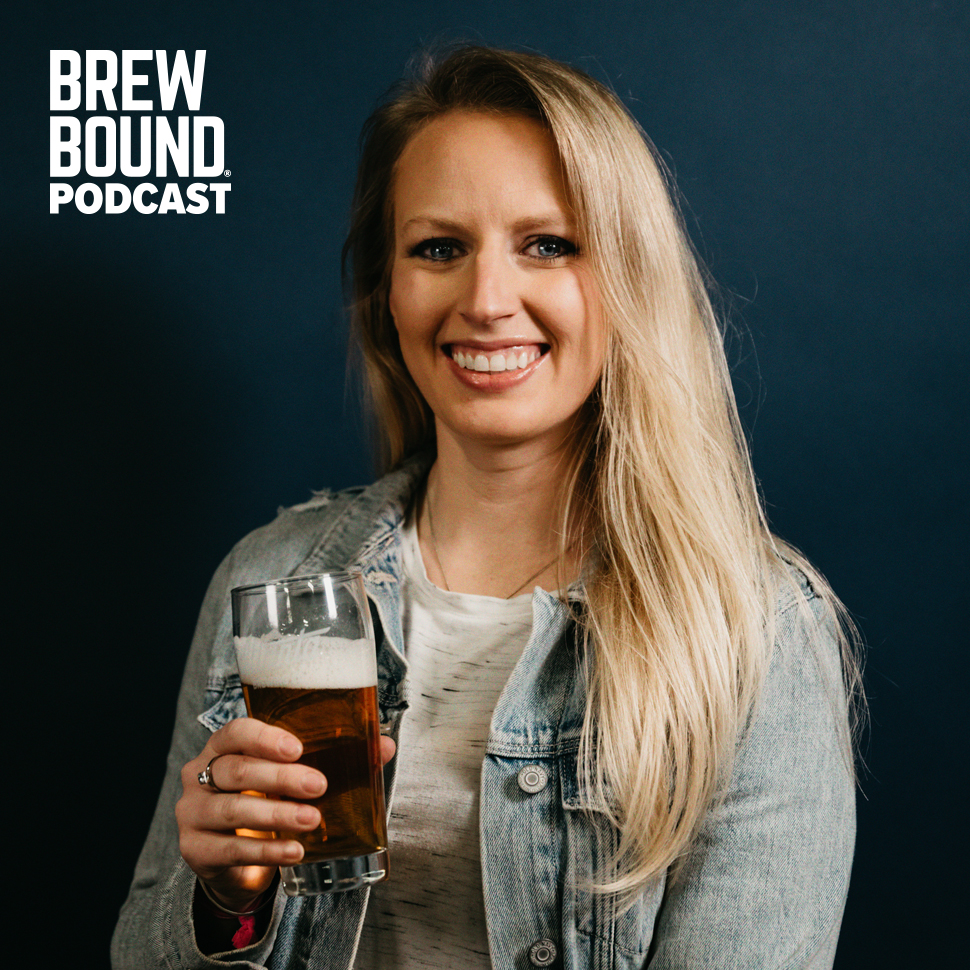
Brewbound Podcast: Atlanta Brewing Company’s Cameron Davis on Undergoing a Complete Rebrand
Atlanta Brewing Company marketing director Cameron Davis knows what it’s like to deconstruct and rebuild a legacy beer brand.
That’s what Davis and her colleagues did in 2018, taking Georgia’s oldest beer brand, the former Red Brick Brewing Company, and transforming it into Atlanta Brewing Company, a moniker the company had used until 2010, just in time for the company’s 25th anniversary.
Davis recalled that the idea to return to the brand’s roots was born out of “Tuesday Dream Time” brainstorming sessions.
“We’d sit in a room for 20 minutes and just say all of the stuff that if you could imagine anything for this company, what would it be?” she said.
Those conversations led the brewery’s leaders to wonder what if they went back to the Atlanta Brewing name.
“It didn’t make any sense to us why we weren’t already Atlanta Brewing,” she said.
There also wasn’t a lot to lose.
“We were kind of at the point where we’re rebranding or we might not be around,” Davis said. “Honestly, we had those conversations about ‘If we don’t do this, will we be around in two years? I don’t know?’ I think that’s a question that a lot of breweries ask themselves.”
In episode seven of the Brewbound Podcast’s third season, Davis shared the process for blowing up a brand, the advantages of working with an agency such as CODO Design (who recently partnered with Brewbound on a four-part Voices series on when to rebrand or refresh a craft brand) and the risk-reward of alienating existing consumers.
“You have to do what you feel is best for your company,” Davis acknowledged. “And if some people aren’t happy with it, sorry.”
Davis also shares the realities of rebranding, including the wait for seeing a sales bump.
“We’ve just now started to see those sales go up,” she said, adding that core beer sales increased 28% after the changeover and merchandise sales exploded. “It took longer than we expected but now we’re starting to get that payoff, which is great.”
Listen to the latest episode of the Brewbound Podcast above, or find it on popular podcast platforms such as iTunes, Google Play, Stitcher and Spotify. Look for new episodes of the Brewbound Podcast on Thursdays.
For questions, comments or suggestions, please email [email protected].
Listen
March 12, 202039 mins
Brewbound Podcast: FIFCO USA’s Josh Halpern on Embracing Being a Big-Small Company, Co-Creating Brands with Reality Stars and more
FIFCO USA has undergone a lot of changes since its national sales meeting in Philadelphia last October.
The company formerly known as North American Breweries — whose portfolio includes the Labatt, Genesee, Imperial, Honey Brown, Magic Hat, Pyramid and Portland Brewing beer brands, as well as offerings such as beyond beer offerings Seagram’s Escapes, Seagram’s Spiked, Hemptails and Fun Wine — named a new CEO (Rich Andrews) in December and a new CMO (Piotr Jurjewicz) earlier this month.
The company has also pivoted away from its Pura Still spiked still water offering, redirecting its resources to the popular Seagram’s Escapes brand.
A constant for FIFCO though has been chief sales officer Josh Halpern, who took center stage during the national sales meeting, starring in several skits with reality TV stars such as Chris Harrison and Cynthia Bailey, Philadelphia Phillies mascot the Philly Phanatic, and U.S. Olympic gold medal soccer player Carli Lloyd, as well as spoofs of Rocky and It’s Always Sunny in Philadelphia.
According to Halpern, doing so allows wholesalers, who are working with upwards of 70 suppliers these days, to see who he is.
“This is such a people driven business,” he explained. “I started my career at A-B, and we used to say, ‘Making friends is our business,’ right? So I just want our wholesalers to feel comfortable with who I am as a person, and I’m not afraid to show my personality.”
To Halpern, putting himself out there shows FIFCO’s wholesalers that its execs don’t take themselves too seriously, but do take the business seriously.
In Episode 6 of the Brewbound Podcast’s third season, Halpern explains how FIFCO USA came to embrace being a big-small brewery, how that leads to co-creating brands with reality TV stars and why ceding some creative control to popular platforms such as Barstool Sports to build brand equity is necessary.
“Part of that ‘Biggie Smalls’ mentality … is saying we need to give up a little bit of our ownership on the brand creative content side, make sure there’s guardrails in place and whatnot, but trust people like Barstool Sports, who have done really amazing things in the last five to 10 years, to help grow our brand equity for us and with us as well,” he said. “When you’re a company of our size, you need to relinquish a little bit of control, while at the same time have the right guardrails in place to make sure you’re very much in ownership of your brand.”
Listen to the latest episode above, or find it on popular platforms such as iTunes, Google Play, Stitcher and Spotify. New episodes of the Brewbound Podcast are published Thursdays.
For questions, comments or suggestions, please email [email protected].
Listen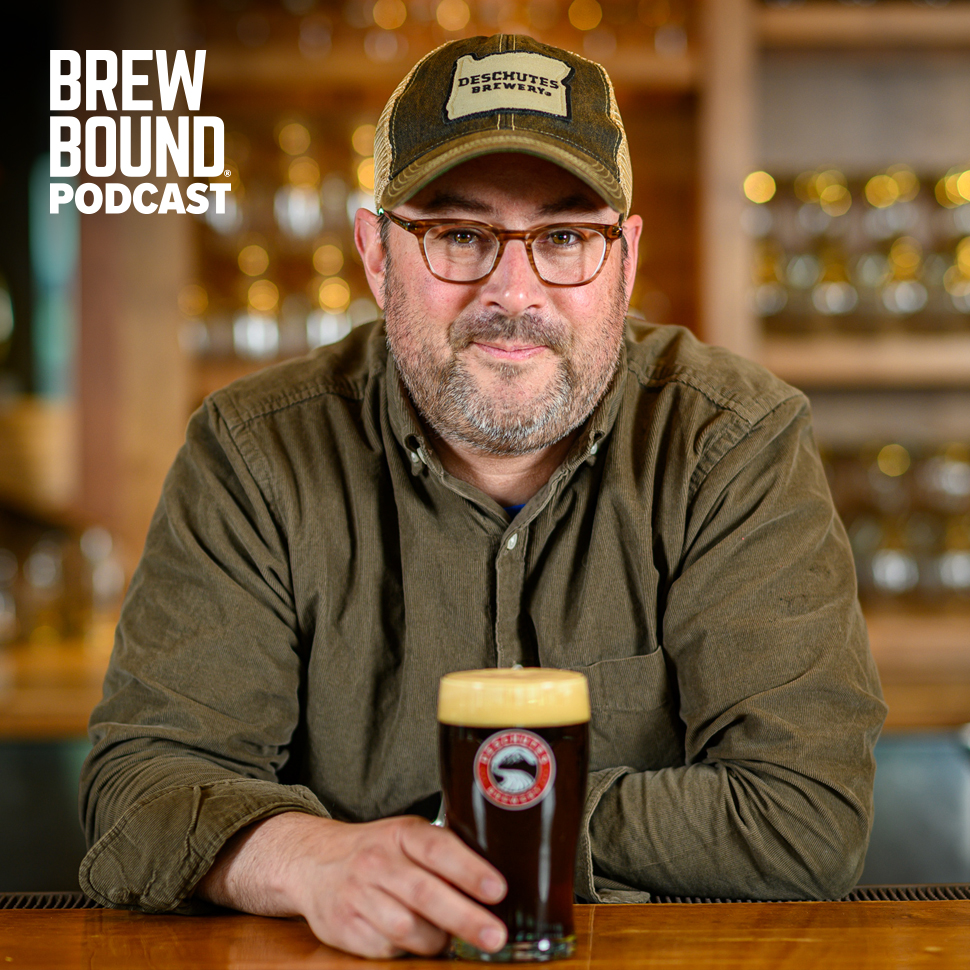
March 5, 20201 hr 3 mins
Brewbound Podcast: Deschutes Brewery’s Neal Stewart on Marketing, Innovation and Thinking Like a Wholesaler
Innovation in craft brewing is a lot like a pee-wee soccer game, with all of the players running toward the same ball.
At least, that’s how Neal Stewart, the vice president of sales and marketing for Deschutes Brewery, sees it. And that’s not a bad thing. So how do craft brewers differentiate in a crowded and more competitive climate? They need to figure out what their “superpower is” and make that their focus, he explained during Episode 5 of the Brewbound Podcast’s third season.
“What do you do really well?” Stewart asked. “Even if that kind of sounds similar to another brand, be OK with that, but really focus on that, and find a unique way of communicating that.”
That’s just one of the nuggets of knowledge shared by Stewart, who recently added the VP of sales title and responsibilities to his existing role as VP of marketing for the Bend, Oregon-headquartered craft brewery. Stewart, who joined Deschutes in April 2019, has more than two decades of experience working for some of the biggest beer companies in the U.S., including Pabst, Dogfish Head, Molson Coors, Mark Anthony Brands and Flying Dog.
In this week’s featured interview, Stewart discusses his preference for working with people with beer industry experience and who have “been through wars and been in the trenches,” the differences in starting at a large beer manufacturer versus a small craft brewery, and how craft beer has stopped being an “easy business.”
Stewart also explains why he’s adopted a wholesaler’s mindset, and why he’s embraced the dreaded question, “How does this help us sell beer?”
“For them, it’s all about efficiency and it’s all about moving boxes,” he said. “And I think that craft brewers right now need to be thinking about how do we move boxes and how do we spend our budget to do that immediately.”
Listen to the episode above, or find it on popular platforms such as iTunes, Google Play, Stitcher and Spotify. New episodes of the Brewbound Podcast are published Thursdays.
For questions, comments or suggestions, please email [email protected].
Editor’s Note: Justin Kendall is well aware that he confused Skynet with Skylab. He regrets the error and apologies to the Terminator.
Listen
October 31, 201937 mins
Brewbound Podcast S2 E3: Deschutes Leaders Discuss the Brewery’s Evolution and Growing Competition
“Death by 1,000 cuts.”
That’s how Deschutes Brewery founder Gary Fish describes craft beer’s current competitive landscape, as more venerable, regional breweries, such as his 30-year-old Bend, Oregon-based company, compete with a cohort of more than 7,500 small craft breweries.
To Fish, the “800 pound gorilla” Deschutes is going up against is no longer Anheuser-Busch InBev, but these thousands of small, local breweries. So how does an established regional player such as Deschutes — the 10th largest craft brewing company in 2018, according to the Brewers Association — stay ahead of the horde?
“The way to compete, from our perspective, is through innovation,” Fish told his company’s wholesalers last month during a national sales meeting in Portland. “It’s getting in front of them. Increasing the amount, the frequency and the volume of our conversations with our consumer, and listening to what they’re providing us, so we can get them the flavors, the concepts, the brands that they truly value.”
For Deschutes, like many other brewers, innovation is taking the company to avenues beyond beer, with plans to launch Modified Theory, a new line of flavored malt beverages inspired by trends in craft cocktails and mixology, next year. Asked if he ever thought Deschutes would morph into a “beverage company,” Fish said he’s never ruled anything out.
“I spent a lot of the last 32 years paralyzed by fear, so the idea that we would morph into this, I never thought negatively about it, but I also never thought that we’d be more than a beer company,” he said. “We make our own cider, we have our own whiskey, we have already become an adult beverage company, much more than just a beer company. So whether or not it was predicted, we’re already there. So the transition to some of these more than beer products seems a very natural one at this point.”
In Episode 3 of the Brewbound Podcast’s second season, editor Justin Kendall leads a panel discussion with Fish, Pacific Northwest general manager Chris Hudson, regional sales director Stacy Denbow and former Columbia Distributing chairman Ed Maletis. They discuss Deschutes’ evolution into a beverage company, how difficult it is to get mindshare and focus in 2019 and giving consumers what they want.
Listen to Episode 3 above, as well as on iTunes, Google Play, Stitcher, Spotify, and Soundcloud. New episodes of the Brewbound Podcast are published Thursdays.
For questions, comments or suggestions, please email [email protected].
Listen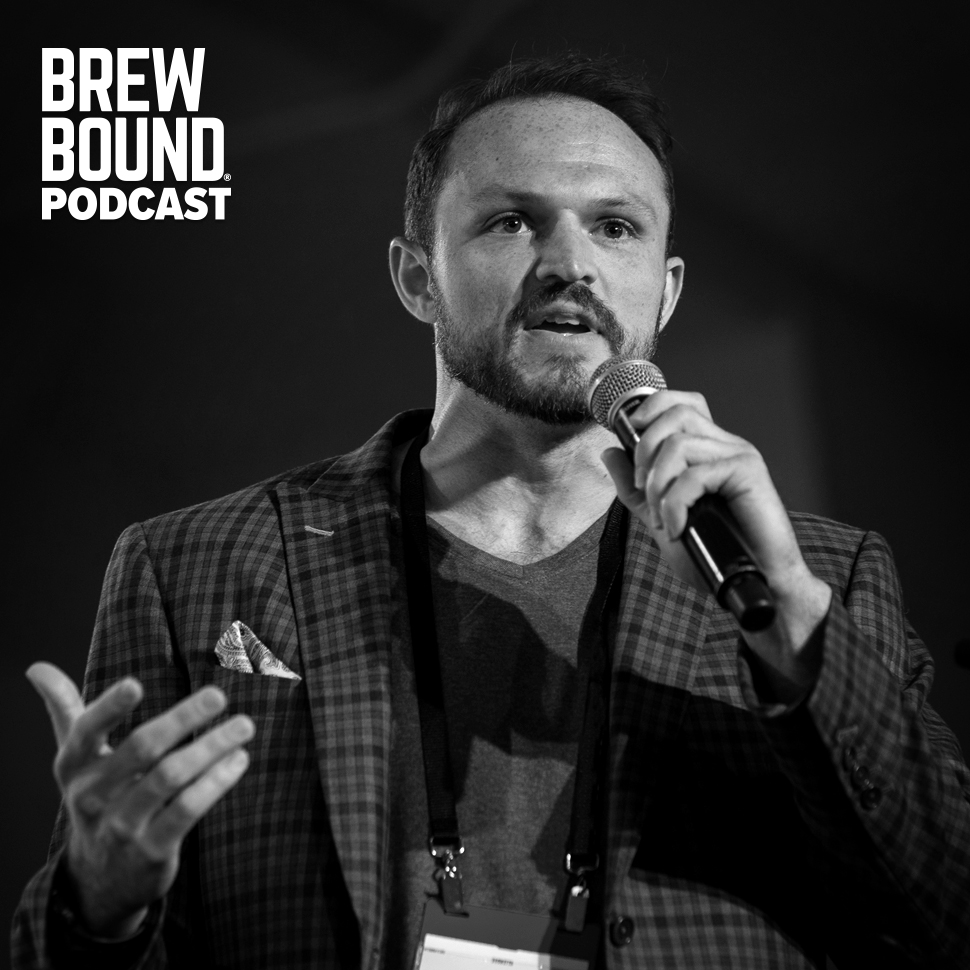
June 27, 20191 hr 21 mins
Brewbound Podcast Episode 42: John Dantzler on Buying Brewing Equipment at Bankruptcy Auctions
As an increasing number of craft beer companies close their doors, the market for used brewing equipment is heating up.
But not all that glitters is gold, especially when it comes to buying assets from a distressed brewery.
John Dantzler, the co-founder of New York City’s Torch and Crown Brewing, recently joined the Brewbound Podcast to share his experience buying used brewing equipment at a bankruptcy auction.
According to Dantzler, to maximize your value at a bankruptcy auction, brewery owners need to do their homework.
“If you are acquiring something out of bankruptcy, it is typically not going to be this pristine, brand new piece of assets,” he said.
His advice? Operate under the assumption that precision equipment such as filters, or centrifuges have “probably not been treated the right way.”
“Those are probably beyond salvageable,” he said. “But the actual stainless steel or harder assets that you can beat up a little more, that’s where we ascribed the value.”
In episode 42 of the Brewbound Podcast, Dantzler discusses the ins and outs of bankruptcy buys and explains why he’s committed to opening a production brewery in Manhattan. He also discusses what’s leading to the uptick in distressed brewery sales, and shares how his business model has evolved over the last five years to accommodate for the current marketplace realities.
Listen to episode 42 of the Brewbound Podcast above, as well as on iTunes, Google Play, Stitcher, Spotify, and Soundcloud. New episodes of the Brewbound Podcast, which is co-hosted by Chris Furnari and Justin Kendall, are published every Thursday.
Episode 43 will be released on Thursday, July 4.
For questions, comments or suggestions, please email [email protected].
Show Notes:
0:00 – 23:55: Chris Furnari and Justin Kendall introduce episode 42, discuss hard seltzers, old beer on retail shelves, and the latest news.
23:55 – 1:02:08: Furnari and Kendall interview Torch & Crown Brewing co-founder John Dantzler.
1:02:08 – 1:23:36: Furnari and Kendall share takeaways from the interview, and rundown segments
Listen
May 9, 20191 hr 20 mins
Brewbound Podcast Episode 35: Sean Lawson on the Brewery that Sip of Sunshine Built
Want to know how to constantly sell out of your flagship product?
You could try asking Lawson’s Finest Liquids founder Sean Lawson, but even he’s not entirely sure why drinkers come back time and time again for his popular Sip of Sunshine double IPA.
“I wish I knew,” he said during a recent interview for the Brewbound Podcast.
“For me, I think the best answer to maintaining that is to really maintain a focus on trying to create the best beer in the world.”
Nevertheless, there are some simple yet incredibly effective strategies Lawson has deployed that contribute to the success of Sip.
One of the factors that helped push sales of Sip of Sunshine beyond $6.7 million in the convenience channel alone last year, according to IRI, was a commitment to freshness.
“[We] demand that our beer is kept cold all the time and that we get it to the customer as fresh as possible,” he said.
In episode 35 of the Brewbound Podcast, Lawson discusses the Sip of Sunshine business and explains how his company approaches innovation. He also shares advice for brewery owners looking to expand and talks about how to entice customers to visit the taproom.
Listen to episode 35 of the Brewbound Podcast above, as well as on iTunes, Google Play, Stitcher, Spotify, and Soundcloud. New episodes of the Brewbound Podcast, which is co-hosted by Chris Furnari and Justin Kendall, are published every Thursday.
Episode 36, which features an interview with Iron Hill Brewery’s Mark Edelson and Kim Boerema, will be released on Thursday, May 16.
For questions, comments or suggestions, please email [email protected].
Show Notes:
0:00 – 17:30: Furnari and Kendall introduce episode 35 and discuss the latest news
17:30 – 58:15: Furnari interviews Sean Lawson
58:15 – 1:20:10: Furnari and Kendall share their takeaways from the interview and rundown segments
Listen
April 4, 20191 hr 6 mins
Brewbound Podcast Episode 30: NBWA Chief Economist Lester Jones Explains ‘Cognitive Beer Dissonance’
NBWA chief economist Lester Jones has a theory: The beer industry is suffering from cognitive dissonance.
“Cognitive dissonance, in psychology, is this mental discomfort that everyone experiences when they have … contradictory beliefs and facts that send them into a state of confusion,” he told the Brewbound Podcast.
Despite the ongoing narratives that beer sales are slumping and millennial consumers are cutting their alcohol consumption, there isn’t enough data that paints an accurate picture of the current landscape to say definitively that those phenomena are actually occurring, Jones said.
To make his point, Jones argued that the growing popularity of hard seltzer, hard kombucha, and other non-traditional products could be part of the reason why sales of standard beer are declining.
However, that doesn’t mean that millennial consumers are wreaking havoc on the alcohol industry.
“They will find brands that they like; they will become brand loyal consumers,” he said of millennial drinkers. “They will change the face of the beer industry and 10 years from now we will look back on millennials and say – you know what, they actually behave like everyone else did.”
In episode 30 of the Brewbound Podcast, Jones explains how the NBWA’s monthly “Beer Purchaser’s Index” can help predict future industry trends, and how beer professionals can use it to make more informed decisions. He also explains his “cognitive beer dissonance” theory and gives us all a reason to believe that the industry is actually pretty healthy.
Listen to episode 30 of the Brewbound Podcast above, as well as on iTunes, Google Play, Stitcher, Spotify, and Soundcloud. New episodes of the Brewbound Podcast, which is co-hosted by Chris Furnari and Justin Kendall, are published every Thursday.
Episode 31, featuring Revolution Brewing chief commercial officer Donn Bichsel, will be released on Thursday, April 11.
For questions, comments or suggestions, please email [email protected].
Show Notes:
0:00 – 20:25: Furnari and Kendall introduce episode 30, discuss a recent encounter with baseball legend Wade Boggs and discuss the latest news
20:25 – 54:00 Furnari and Kendall interview Lester Jones
54:00 – 1:07: Furnari and Kendall share their takeaways from the interview + segments
Listen