[00:00:00] Justin Kendall: Next on the Brewbound Podcast, Monday Night Brewing's founders take a cue from office space. Hello and welcome to the Brewbound Podcast. I'm Justin Kendall.
[00:00:20] Jessica Infante: I'm Jessica Infante.
[00:00:21] Zoe Licata: And I'm Zoe Licata.
[00:00:22] Justin Kendall: So how are we all doing this week?
[00:00:23] Zoe Licata: We're doing, you know, we're okay.
[00:00:26] Justin Kendall: Are you doing something for the Super Bowl?
[00:00:28] Zoe Licata: No, I'm not, because we're in the Super Bowl.
[00:00:31] Justin Kendall: See, isn't that a reason to do something because you're in the Super Bowl?
[00:00:34] Zoe Licata: No, no, no, no, no, no. See, this is the first time I've worked here where we've been in the Super Bowl.
[00:00:38] Justin Kendall: Really? Oh.
[00:00:39] Jessica Infante: Wow. Wow. Because you've been here a while now. I know. Is this like the longest stretch in the past like two decades that the Pats haven't been in the Super Bowl?
[00:00:46] Zoe Licata: They won like just before I started here. I think it's been the city's like eighth longest streak with no championship, which has been like, what, two years? Since the Celtics? Yes.
[00:00:58] Justin Kendall: Those poor children.
[00:01:00] Zoe Licata: Yeah. No, I can't. You can't have a party when you're in the Super Bowl because then you have people talking. You have distractions. There's so much going on. I need to be on my couch the same way I've watched most other games this season. And then in case something disastrous happens, I can ignore the world and go to bed. And if something great happens, then I can run out onto the streets or whatever. But no. I think the cookies are going to make a return this year, I think, though, after their one-year hiatus.
[00:01:29] Justin Kendall: Are you limiting the number of people that are going to be in your home for this? So it's not a party, but do you have like a guest list?
[00:01:38] Jessica Infante: Is Lawrence getting kicked out?
[00:01:40] Zoe Licata: No. If you live in the house already, you can be there.
[00:01:43] Justin Kendall: All right. Fair.
[00:01:45] Zoe Licata: That's how it's going.
[00:01:47] Justin Kendall: And what's Ryan doing?
[00:01:48] Jessica Infante: Well, Ryan is very much in Zoe's camp, too. You know, I don't know. I assume he is, but I'm not sure. We used to have, when we still lived in Boston and we were young and fun, we would go to our friend's Super Bowl party, but they have also moved out to the suburbs, so there are no Super Bowl parties.
[00:02:06] Justin Kendall: When I used to live in Boston and there would be Super Bowl parties and I'd go over there, about three quarters of the game, most people weren't watching. And then at the end, they would tune in, but they would also be heavily intoxicated by then.
[00:02:20] Jessica Infante: Right. And I like to watch the commercials. So I do not like being at parties because everybody talks during the commercials. And that's not what I want. It's not what I'm about. I'm here for the brazen capitalism and the snacks.
[00:02:35] Speaker: Of course.
[00:02:35] Zoe Licata: That's the most important part. I mean, you can still have the good snacks without having the people.
[00:02:42] Justin Kendall: It's true. You'll be on commercial watch for us then.
[00:02:45] Jessica Infante: I can be on commercial watch. Years ago, it was the year that Bruce played the halftime show. My mom and I went out for dinner. It was really nice. We saw a movie and had dinner and we caught the halftime show at the restaurant because we were at the Jersey Shore and everybody else wanted to see that too.
[00:03:03] Zoe Licata: Of course.
[00:03:04] Jessica Infante: Zoe, did you watch the Bruins game last night?
[00:03:06] Zoe Licata: No, I was keeping up to date on Twitter because we had the Grammys on. We were outnumbered by Grammy supporters in the house last night.
[00:03:13] Jessica Infante: Find it wild they have outdoor hockey games in Tampa.
[00:03:15] Zoe Licata: Yeah, well, it's apparently freezing cold in Tampa right now. So shout out to climate change. Easier to have outdoor hockey games. Shout out to climate change. But we had a goalie fight. I saw that. Very cool. Swayman got beat up a little bit, but we're not going to talk about that. Very cool to have a goalie fight.
[00:03:37] Jessica Infante: Can you imagine if you had a job where you could just like fight people? Yeah. I'm not saying I would fight you guys.
[00:03:42] Zoe Licata: They have players who are, that's basically their main responsibility. You're like the hype person. You get in a fight and you get the morale up and that's it.
[00:03:51] Jessica Infante: There was a guy on the Bruins who was the fight guy years ago. and he lived in my neighborhood. And the day after they lost the Stanley Cup, I just saw him walking around drinking, walking his dog. It was very early, like in the morning time, drinking a can of Corona. I cannot think of that man's name.
[00:04:09] Zoe Licata: Nice. Well, speaking of Corona, I am curious to see if there's going to be a higher percentage of import beer sales during, for Superbowl this year with people just wanting to watch Bad Bunny's halftime show, which I'm very excited for. He also had a great night at the Grammys last night, but might have to drink those during the Super Bowl in his honor. Not Coronas, probably some Madeas or something. Madeas, yeah, yeah, yeah.
[00:04:33] Jessica Infante: I wonder if his number one fan, Jon Hammone, will be around. I hope so, for his sake.
[00:04:38] Justin Kendall: I'm excited for you both to get to do your Super Bowl things and just to not do a Super Bowl thing, I guess. And I will probably be holding a screaming baby who wants more milk.
[00:04:50] Jessica Infante: What if this is how you find out that Bad Bunny is Daphne's soothing music?
[00:04:58] Justin Kendall: I mean, that would be the best thing.
[00:05:00] Jessica Infante: Right?
[00:05:01] Justin Kendall: I'll take some soothing music. You can only do the happy song so many times. You know what the happy song is, right?
[00:05:07] Jessica Infante: We are not a practicing household, but I know about it from you.
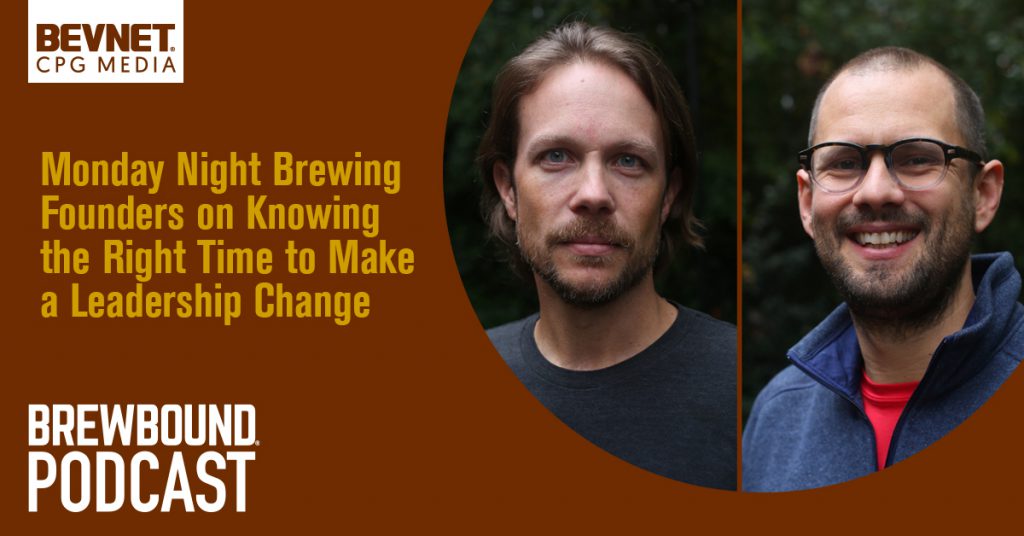
[00:05:10] Justin Kendall: Well, we got a lot to talk about this week. We've got a featured interview this week with Monday Night. Brewing's Jeff Heck and Joel Iverson. They're going to talk about the leadership transition there. Jeff passed on the CEO role to Joel, and now he is leading the charge there. Also Zoe, you're going to be on the road at cider con.
[00:05:30] Zoe Licata: Yup, headed to Providence, Rhode Island this year for CiderCon, which is the largest cider conference in the world, according to the American Cider Association, who hosts this event every year. Interesting choice in Providence, so we'll see what that environment is like for cider folks. But there's a lot going on with cider right now, so I'm looking forward to the conversations that are going to be had. We had major Acquisition news at the start of this year. Cider has been like one of the few segments within beer that has really consistently recorded growth for the past year, year and a half. So it's going to be buzzy. And Bart Watson is going to be there from the Brewers Association. So he's going to be talking during the first general session about how cider can fit into the current beverage alcohol space. So looking forward to that as well.
[00:06:17] Jessica Infante: I would be interested in how many BA members also make cider.
[00:06:20] Zoe Licata: It's definitely more in the past couple years than it was before. I remember, I think it was last CiderCon, they made a point of acknowledging there are a lot more breweries in attendance than usual. So something folks are paying a lot more attention to in the beer space.
[00:06:36] Justin Kendall: Well, we should get into the news of the week too. Let's start with Hard Soda's comeback. Al's Brew is going big into Hard Soda. They've launched Spike Pop. They're going to bring it to market in March. And they're going to sunset their boozy tea options. So this is going to be their FMB line going forward. And I got a chance to talk to Jenny rips and Maria Littlefield, the co founders of Alice brew. And they told me that they are very bullish on this emerging re-emerging segment because they think that the market has been primed by poppy and Ollie pop and culture pop and these better for you soda brands. And they think that It usually takes three to five years after a non-ALK trend hits for this to come around. And Jenny has had recipes for many of the flavors that they're launching for about a decade. So she was planning this for a long time, and she just thinks this is the right opportunity. They're not alone in doing this. As you've reported, Zoe, Stateside is bringing a couple of Tigers to the market, but that's a spirit-based option. I think it's vodka, right?
[00:07:49] Zoe Licata: high ABV vodka based.
[00:07:51] Justin Kendall: And then Boston Beer is test marketing social pop, which we tried at NBWA annual convention, and it is in Des Moines and Nashville right now. And I guess they're going to see if they can make a go of it and I think we all tried that at NBW.
[00:08:08] Zoe Licata: We did. And then there's another tea brand that is also coming out with a hard soda that we'll have more details on later this month, but it's become a thing again.
[00:08:18] Jessica Infante: 11 years later, like a cicada.
[00:08:21] Justin Kendall: Well, and this time there won't be the shock of, oh wow, there was that much sugar in it.
[00:08:26] Jessica Infante: What's the ABV on the Owls Brew line?
[00:08:28] Justin Kendall: 4.8%. Cool.
[00:08:30] Jessica Infante: Yeah, I want to say Not Your Father's was in the 5-8-ish range, like 300-ish calories a serving. I remember all of that. I was here. It was nuts. People went crazy. And then there were fast followers. And then the whole thing went boom splat. And then Hard Seltzer rose up out of its ashes like a bubbly little phoenix, which then begat some hard teas, which then begat hard tea cocktails. And now here we are. What a life cycle.
[00:09:00] Justin Kendall: Now we've got the horse race of hard soda and spiked AIDS.
[00:09:05] Jessica Infante: AIDS. Can we figure out what to call that? I don't want to call it AIDS. Like sports drinks, I guess.
[00:09:14] Zoe Licata: Like that's the only other thing I can think of. Like that's what it's trying to be without saying it.
[00:09:19] Jessica Infante: I like hard sports drinks.
[00:09:20] Zoe Licata: I think that's fine and appropriate.
[00:09:23] Justin Kendall: It just hit me what you were saying and I don't know why it took me this long, and that's why I had that horrified reaction.
[00:09:31] Jessica Infante: I mean, to be clear, what I'm saying is A-D-E, which is what some of the data providers are calling it, which I get, but that looks a lot different written down than said out loud.
[00:09:42] Justin Kendall: Yeah, a lot of regrets on this podcast already. I don't know. I'm excited to try these flavors. They've got seven flavors, Owl's Brew does, and the reason that they're bringing so many to market so soon is because they have to replace all this boozy tea product in the market. So it's basically a one-to-one swap, although they're picking up more placements.
[00:10:04] Zoe Licata: Yeah, I'm curious. They do a really great job with flavors, I feel like, and getting creative with flavors, so I think that will be a strength for them. And I didn't mind the Boston Beer Social Pops that we tried them. I'm curious to know what has to change for this time around to go better than the last time. Like, what will make it so some of these products stick around longer. I think it helps that they're attaching themselves to that kind of better for you soda craze that is happening. I think that will help more than before, but I don't know.
[00:10:35] Jessica Infante: I think that's the main point of differentiation. I think that would be very important playing in this, you know, four to five-ish percent, hundred calorie-ish sandboxes. I think the way to go for a lot of these, like, I don't know, poppy is, I don't really drink it, but it is really popular. And in one of my reality TV guilty pleasures, The Secret Lives of Mormon Wives, like poppy pops up a lot. And that's like one of the biggest things in pop culture right now.
[00:11:03] Zoe Licata: So it makes sense. I think what has been key for Poppy and Olipop and some of those beverages too is that they've made their brand and that brand messaging and connection to consumers such a key part of everything that they do that it's beyond just this is a product that I like or I appreciate the quote-unquote benefits of this product. It's I want to be a part of this product and its culture and so I think Any alcohol brands that are trying to hit on that craze also need to have as much strength with the brand itself to receive a similar type of loyalty.
[00:11:40] Justin Kendall: I'm curious what you think, too, about the marketing of this, because if you've seen some of the product images and like the models that they used for this, it's definitely trying to evoke a time like the Y2K time. And they've said that it's supposed to evoke that. I have lived that. I sort of remember what these people look like. I don't necessarily want to go back that far, you know. I mean, nostalgia is a hell of a drug.
[00:12:11] Zoe Licata: The branding reminds me a lot of some of the like ready to drink coffee, like canned coffee brands that are out there right now. Very similar, I think, imagery and like formatting on the cans. So I think that's interesting, but it's definitely very Gen Z, kind of gender neutral-ish, but aesthetically pleasing.
[00:12:35] Jessica Infante: I mean, I'm looking at your story, Justin, with these models holding hands and this looks like an ad out of like 17 from back in the late 90s or YM.
[00:12:47] Justin Kendall: Definitely does.
[00:12:47] Jessica Infante: I could keep naming magazines, but they nailed it on the late 90s Y2K. Colored sunglasses, bucket hats.
[00:12:57] Justin Kendall: As a former 17 intern, I can vouch for this. All right, well, let's talk about the Great American Beer Festival, and it's moving, but not too far away. It's going outdoors in Denver.
[00:13:12] Jessica Infante: Yeah, huge news that dropped probably like right after we recorded last week's podcast intro, so we've only missed having this last week by a little bit. The Brewers Association is moving the Great American Beer Festival to Levitt Pavilion, which is in a park in Denver, about five miles south of downtown. The fest had been held at the Colorado Convention Center since 2000, so a really long time. And if you've ever been to GABF, you know, that building, you know, the giant bear statue outside, it is in the heart of downtown Denver. It is walkable to a bazillion hotels. Mass transit runs, right? I think there's a light rail stop right there. Like my big question for how all of this is going to go down. It's just the logistics, like. Will there be buses? Will there be shuttles? Is it going to be impossible to get a Lyft or an Uber? Is everybody just going to ride their bird scooters and abandon them? I'm sure the BAs figured all this out. They have many years of experience running events, but that's what I want to know. The other big change here is the timing. This festival for years and years had been happening on a Thursday, Friday, Saturday, two sessions on Saturday, evening sessions on Thursday, Friday and Saturday and then a daytime Saturday. Now it's going to be just two daytime sessions, 12 to 4 on the Saturday and Sunday of the second weekend in October. And I don't know, it'll be interesting. This is a big, big change. Honestly, I'm glad they're doing it because Zoe, you and I went last year and I think our thoughts were broadly this could use some punching up. So they're doing it big time. It'll be interesting to see if You know, many of the changes that have happened to GABF in the last few years, I feel like every year GABF has had like a new thing about it, which has been either RTDs one year, then full strength spirits. Then, you know, and all throughout they were adding these experiential components with like themed areas. But I don't know how all of that translates to outside. I don't know if all of these other products will be coming along to the second location. The one thing I feel very crude in even bringing this up, but the one thing that was discussed almost everywhere this story went was people relieved to hear about the outdoors allowing the human aromas to disperse better than in the convention center.
[00:15:38] Zoe Licata: So we'll see. There's a plus, right? I mean, Denver weather around that time is hit or miss. So if it's as nice as it was last year, gorgeous, amazing. Beautiful.
[00:15:50] Jessica Infante: Here for it.
[00:15:51] Zoe Licata: Yeah. But you never know. It'll be happening rain or shine. So if it rains, it'll be a different situation. There's still so much that we don't know yet. So I want, I'm curious to hear what those other details are like, what those activation zones are going to look like if they bring those back, what the actual product lineup is going to look like. We could do some more digging into just what the reception of last year's change-ups were, especially when it comes to some of those product inclusions and if that seemed like it was a positive ad or not. But yeah, it's, it's a big change. And people are going to have some friction about change, but I think this festival definitely needed a pretty big refresh and bringing it literally into the fresh air could help give it that.
[00:16:34] Jessica Infante: Yeah. A paired will be returning. We did ask about that and they told us that. If memory serves, and it's obviously it's months ago now, but I don't remember thinking there were huge crowds of people to try full strength spirits. Do you?
[00:16:48] Zoe Licata: No, I mean they had their section and there was definitely people over there getting samples but there wasn't the same lines that you would see at a lot of the beer booths.
[00:16:57] Jessica Infante: I'll be interested to see if brewers like bring back their same like elaborate setups.
[00:17:01] Justin Kendall: That's got to be hard to plan for though, especially if you don't know what the weather is going to be like.
[00:17:05] Jessica Infante: Right. Because those are thousands of dollars. You don't want it getting rained on. I, me, myself, a person who likes craft beer, I don't know that I would invest the money to go to the festival as it is going to be now. I don't know. There's nothing inherently super special about the convention center, but will you get the same scope in this outdoor park that I could not get by attending a festival that I could drive to? I'm sorry to be the negative Nancy.
[00:17:37] Zoe Licata: I will say, when I went to that hard seltzer fest, which was on a teeny, teeny, tiny scale, that was outside in the pouring rain, and I had a blast. But that was also within a couple train ride stops away and- Where was that? Next to Harpoon.
[00:17:54] Justin Kendall: Oh. When I lived in Kansas City, I used to love the Parkville Microbrew Festival. It was always in the spring. It was sort of like the kickoff to the, you know, that spring to summer transition. And it was outdoors. It was rain or shine too. And I remember going in both and it was survivable.
[00:18:16] Jessica Infante: You guys are troopers.
[00:18:18] Justin Kendall: I was younger and me now would probably be a lot more crotchety.
[00:18:22] Jessica Infante: I'm sure I've been to a fest outdoors. I can't think of any.
[00:18:27] Justin Kendall: Well, we'll be keeping an eye on that and maybe even attending. At least one of us probably will be. Let's talk about scans because they're actually in the black and Scott Scanlon from Sarkana, he had a pretty interesting quote where he said, were 2025 comps so bad, some of the growth comps should have been anticipated. Did the 2025 California fires suppress sales at the start of last year? What about the 2025 ice storms at the start of the year impacting many Southern states? Is that a factor? And then he said yes to all of those questions.
[00:19:05] Zoe Licata: I think Scott was talking about the 2026 storms when he said that, but yes, that is what he said. And yes, they are all factors, but even with those factors, he seemed to be like, this is still exciting. This is potentially good news. It's looking like this year is at least following more similar patterns to 2024 than 2025. And the trends that happen at the start of the year tend to indicate what will go on through the full year. So if this is what this year is going to look like, it's going to be positive. The scans basically all through January have been positive across the board, except for a little dip for wine last in the previous scans for the kind of third week of January. But this latest week, even higher, like the highest numbers we have seen so far. double-digit growth by a lot of segments and categories. Part of that could have been some stocking up ahead of this intense weather that we saw the past couple weeks. And so there might be some pullback on that in the next week's report. But then the Super Bowl happens, so there might be some kind of bounce back right after that. So we'll see. I think a lot of this is you know, comps aren't the best for 2025. So 2026 is not necessarily having, um, it's not steep competition, I guess you could say, but it's positive. It is something to, we can actually have some, some good positive news to talk about when it comes to the scans right now.
[00:20:43] Justin Kendall: Take what we can get.
[00:20:44] Jessica Infante: Yeah. I mean, he called out a bunch of stuff last year that I, it's not that I forgot about, but like those were major events that obviously, you know, had an effect on beer sales.
[00:20:53] Justin Kendall: And it definitely carried throughout the year.
[00:20:55] Zoe Licata: So I think what's really encouraging about these two is that it's not, it's not necessarily just one or two, especially in beer. It's not just like one or two segments that is driving this and everyone else is still down. This was across the board. Beer is up. And that was pretty similar case for wine and spirits too. So it's a lifting of everybody. It's not just a, okay, we've found a couple outliers situation.
[00:21:19] Jessica Infante: Cause that's been the past like year, you know? It's like, everything's down, but like make ultras. Okay.
[00:21:25] Zoe Licata: Right. Cool. Yeah. Across nine of the top 10 beer brand families are up and most of those up pretty significantly.
[00:21:34] Justin Kendall: Very nice to see segments up other than economy.
[00:21:38] Zoe Licata: Yeah. Craft up 7.8% for dollars imports up even hard seltzer up pretty significantly. Like there it's everything.
[00:21:48] Justin Kendall: You can read all our coverage at Brewbound.com. You can become an insider to get all the news, but we've got a featured interview we should get to. And that is with Monday Night brewings, Jeff Heck and Joel Iverson. So let's get to that. Atlanta's Monday Night Brewing announced a leadership transition among two of its co-founders earlier this year. Jeff Heck, who had led the company as CEO for more than 14 years, stepped down from the role, which transitioned to co-founder Joel Iverson. Jeff and Joel are here today to discuss Jeff, how you doing? Fantastic. How you doing, Joel?
[00:22:26] Jeff Heck: It's a great day to be freezing cold in Atlanta.
[00:22:30] Justin Kendall: Well, you could be freezing cold in Iowa, so it might be an upgrade. True. Yeah. Well, Jeff, you mentioned to me before we started recording that this transition has been several years in the making. Can you tell us how those conversations started?
[00:22:46] Joel Iverson: Yeah, absolutely. So I was actually the last of our of the three co-founders, Joel and I, and then our partner, Jonathan Baker, to quit my day job when we were getting started in 2016. So we had been operating for five years, and the company had grown and felt like it was actually stable in a real business. And so I finally quit the day job and came over here full time. And in the subsequent eight years, we grew a ton and opened a bunch of locations around the Southeast. And frankly, the other thing I'd say really impacted it over that time was we didn't just build more locations, but built a phenomenal team. And so in 2023, Joel and Jonathan, I'd always talks even before we actually launched the business about wanting to give each other the space to take breaks from time to time. And so in 2023, I took three months off and my family and I went to South France, which I highly recommend if you have two partners who are willing to let you do it. And. Did very little, very little by way of work. And when I came back, I realized that the company was generally doing great. We have, again, a great group of leaders. Joel and the rest of our executive team were really firing on all cylinders. There were a handful of things to jump back into, but that just really got me thinking, you know, I kind of felt like in office space when they kind of, the bobs asked like, so what would you say you do here? Because if you can leave your job for three months and things are generally fine, it's worth asking, what would you do here? And I just have never wanted to be like the old guy who comes in with a newspaper and puts his feet up on the desk just because he's 80 years old and just wants to like be at the office. I like working and I like having something meaningful to do. So that was really the beginning of having conversations around like, Hey, it feels like we have a really great team who are really capable of running this thing and also who are really deeply culturally aligned and bought into what we're trying to do. And so that's when the conversations really started. And Joel and Jonathan and I have always been really open and transparent with each other and workshops, kind of anything and everything, nothing's off the table. And so that was really the beginning of the conversations.
[00:24:48] Justin Kendall: Joel, for you, were you always open to taking this role? Is that a role that you saw yourself in before? Frankly, no.
[00:24:59] Jeff Heck: I think my personal skill set in the brewery has been very much like the entrepreneurial jack-of-all-trades, master-of-none, right? Everything from running production at the very beginning when we started, to getting involved with the legislature and changing the beer laws in Georgia, to spearheading a lot of our unique initiatives when we're trying to do something new as a brewery, whether it's new location, new equipment, all those things. And I've generally seen myself more as a, hey, go in and tackle a specific project, and then kind of hand it off operationally. I think when Jeff jumped over to the brewery from his prior job, Jonathan and I were all over the place. Really, the place we are now is an output of what Jeff was able to institute from both a culture perspective, a systems and process, and our whole management training curriculum that we do with our team. He built all of that. So in some ways, never wanted to be CEO, but in other ways, it's a much different job, I think, now than when it was when he took over and we didn't have much of that in place. So somewhat reluctant, but actually incredibly excited about this next season for us as a brewery.
[00:26:14] Justin Kendall: I think succession planning is one thing within breweries that I'm very curious about because when you look around a lot of times it doesn't feel like folks have that next plan ready. And it seems like Monday Night's very lucky that you have three co-founders. who are seemingly willing and able to take that role. And Jeff, you started the race and Joel, you're going to take the baton next. So I just think that that is a fascinating part of this business that we haven't seen because a lot of folks are just trying to get to that first 10 years or, you know, maybe not thinking about the next 10 years. So I guess in your minds, was this always sort of part of the plan, you know, that somebody else within the founding core would be able to pick up the baton?
[00:27:04] Joel Iverson: You know, I think the broader way that we've thought about it as a executive team, then that includes not just Joel, Jonathan and I, but also several other members of our leadership team is everyone should be working to make their job irrelevant. And so I would say it's more of a broader cultural thing than a specific kind of goal or plan that we've had. And that's true for everyone from our general managers at each of our six locations to our production team is like, hey, if somebody gets hit by a bus tomorrow, who is it that's ready to step into your role? And the answer is not always clear, but if there's not a clear answer, then your job is to start working on that. And so The reality is we never had a really concrete, like explicit plan for what transition looked like. But the core was like, how do we make sure that we're culturally and missionally aligned across our leadership team so that in the event that, let's say Joel and Jonathan and I all went down in a plane crash, that there would still be torchbearers for what it is we wanna be as a company and a brewery if we're long gone. How long do you think it took you to get to that point? 12 years. I mean, a long time, a long time. And a lot of misfires. A lot of people that we thought would be those kinds of people that probably were at a different season in the company's life. But then also I'd say the company changed so much between 2017 when we opened our second location and 2025 when we opened our seventh, but basically relocated our original spot. And so when I started in 2016 as CEO, we had 20 employees and now we have 200. And so what it takes to lead an organization of 20 people is very different than what it takes to lead an organization of 200 people. You can be phenomenal at one and not great at the other. And so it's been an iterative process to be sure.
[00:28:44] Justin Kendall: it is a much different business than what it was, like you said, in 2017. And now you have your multi state operator. And that's something that, you know, you're going to take the reins of Joel, not that you haven't been involved. So when you're having those conversations on what it takes to get up to speed for this role, what are you laying out there to each other?
[00:29:07] Jeff Heck: I think one sort of, you were asking about the process earlier, I think one moment for us in that process was, I guess about a year and a half ago, it was in that summer, Jeff and Jonathan and I, we took a trip up to Portland, Maine, and we basically, I mean, this is just a testament to how amazing sort of this brewery industry is and craft beer industry is, but ended up spending about almost a day with Rob Todd from Allagash and then like a day with Steve from Maine Beer Co. And I mean, basically kind of went up there with three of us saying, hey, we're trying to figure out what's next for us as a brewery. We're trying to figure out, you know, us as founders. And I think we saw two very unique and different companies, right, between the two of those and their operating model, but both with incredibly strong cultures. I mean, I was very inspired by hearing Rob Todd be like, hey, 30 years into this, And I'm digging in and more energized than ever. Like, you know, I'm getting after it as the founder. You know, sometimes you get the founder burnout. And then watching Steve is an example of sort of like a CEO coming in behind the two founders and really kind of carrying that torch of Maine Beer Co. Carrying it and furthering it and doing some really cool things so that I think was kind of a point where we're like either we need sort of one of us in Rob Todd mode of like re-energized for the next phase of the brewery or we need like Steve that comes in to carry and further the torch and sort of started those discussions I think as we went through it it was I think I felt more and more like okay I ended up actually taking my own sabbatical about a year ago, moved to New Zealand with my family for two months. I came out of that actually the opposite of what happened with Jeff, where I was like, man, I am so energized for this next phase of the brewery and what we're going to try and do and how we're going to get there and re-energize with just my love of, I think, craft beer. its ability to create community and it ended up being kind of the thing that coming out of that and that trip to Maine that I Really felt excited about this as a possibility.
[00:31:15] Justin Kendall: Yeah, I was gonna ask How did you know that it was you Joel because like we've established there are three founders, you know And if if it wasn't you, you know, maybe it was Jonathan So, how did you determine, you know, other than maybe rock-paper-scissors, you know that it was gonna be you It would never be Jonathan it was never Jonathan
[00:31:37] Joel Iverson: If he was here, he would say it. At least one of you said it. If he was here, he'd say it. I mean, I think part of it was like a high degree of just like really, really honest, transparent conversations about, okay, what are the things that are important to us? And honestly, we have people within our team that we were, that we were talking about and who are incredibly capable. And really, I think Jonathan and I, all kidding aside, Jonathan's fully engaged in a new career path. And so that was kind of not an option. And so it was a lot of just giving each other the space to kind of go through that process. particularly for Joel. And I'd say, I mean, personally, the thing that, that did it for me was just Joel coming around and saying, like, I really want this. I want to do this. And I think one of the things I've always admired about Joel is he's not only really good at what he's good at, but also humble enough to know where like he needs help and support. And so I think the level of just self-awareness that Joel has always had and knowing that unlike where we were 10 years ago, when I joined, we have a much different and stronger cast of characters around him that supplement some of the places where he would need support and help. And our industry is so special in that the passion that comes from being a founder is really unique. And I think every industry is going to have some level of that, but I think Crack Beer is really different. And so I think Jonathan and I both kind of breathed a sigh of relief and excitement when Joel sort of said, I think I'm ready to do this. But it wasn't really us pressing him on it. It was really letting him get to that place. But I'm curious, Joel, how you experienced that process.
[00:33:02] Jeff Heck: Now, I mean, it's strange, like Jonathan and Jeff and I have had, I mean, shockingly, you know, over 14, almost 14 and a half years, we have, we've had disagreements, but we've always kind of ended up on the same page eventually about pretty much every decision since the, since we started the brewery. And part of that is just we have pretty open and honest conversation and dialogue. And I sort of, I had a sense that, okay, you know, I feel like this is not a forever thing, but for this next season of the brewery, like I want to kind of take this torch and I want to carry it, but I'm also really excited to carry it and to take us through this next phase as a brewery. And it's refreshing when you kind of have business partners that they can come back and say, all right, Joel, great. Help us understand. What are some of your weaknesses, and how are you going to compensate for those? What's your plan? I was able to come to them and say, here's what I want to do in developing our leadership team. here's some of my gaps and here's how I'm going to work on them. And it's always been a really great gift to have partners that can help you see your blind spots and help you see when you, you know, and that's, that's what it's been for us all the way along for them to, you know, the three of us were able to kind of say, Hey, I think you're off base on this item and able to have productive conversations around that. And it's been a, it's been a real gift.
[00:34:30] Justin Kendall: It's not like you haven't been around for this first chapter of the brewery, obviously, but when you're going through a transition and change is always, you know, it can be scary for your team. How do you get buy-in from them? Do you feel like you got to work for that or is that something that you're not as concerned about since you have been involved this entire time?
[00:34:55] Joel Iverson: I mean, I will say Joel built this brewery. He left his job. He took the risk before I did and really helped like literally design and build the brewery. And everybody on our team who spent any time around Joel never questions his willingness to do anything that it takes to get the job done. And so I think that was a big plus for a transition. The other thing I'd say that we really worked on was ever since I came back from my sabbatical and had the bobs asked me, what would you say you do here? I really tried intentionally not to jump back into every operational decision or place that I had operated in before. And so while we just made the announcement in the last few months, the reality is the last almost two years have been a slow transition. And then also I'd say like, so we have an executive team, which is, up until recently, myself and Joel, and then Peter, our brewmaster, and Clint, now our president and COO. And then we have a leadership team, which is a broader group of about 12, which includes our director of hospitality, our head of HR, our production operations person. So we have a broader group there. And I think one of the things that has been really helpful is just being really transparent along the way, telling them what we know and what we don't know. So that group of people has known for the last, you know, six to 12 months that my level of engagement is not going to be as high, even if I'm here. And so, you know, trying to be transparent, but also being honest when we don't have, you know, all the answers, I think has been really helpful. But I think, you know, Joel spent 15 years building goodwill with this team and has been so deeply ingrained in everything we've done along the way that it almost seems crazy that anyone else would take the mantle. And I think that includes our internal team.
[00:36:35] Justin Kendall: What's your best advice for someone who is considering doing a leadership transition like this?
[00:36:41] Joel Iverson: I mean, the biggest thing I would say is it takes time. It really takes time. I think where leadership transitions go wrong is when you get somebody with a great resume who has maybe the skills on paper, but is not a cultural fit, doesn't understand the dynamics of like how the founder team or ownership group thinks about the business of what's really important. I actually had this conversation with Clint, our president and COO, a few months ago. I said, Clint, I'm not really worried about the results. I can see the financial results on a piece of paper at the end of every month, actually real time on my phone with our POS system. I know what we're doing. What I can't see is how healthy is our culture? Are we living out our core values the way that Joel and Jonathan and I really desire for them to be? That's the part, not that I don't trust the team, but that's the part that takes a tremendous amount of trust. And I remember he kind of looked at me and said, Jeff, I thought the core values stuff was a bunch of BS when I first started. And now I know it's the heartbeat of what makes this place work. So you have my word that I will be the number one defender of our culture. And that's the kind of thing that like, it takes people time to even if they totally get it on paper, it takes people a long time to actually figure out like, what does that mean in practice? You have to kind of go through the ups and downs. And so that's one thing is like it takes time. And then two, I think for us, we sort of always knew it had to be an internal thing, in part because of that. We had to have someone internally that was going to step into leading Monday Night.
[00:38:09] Justin Kendall: When you're mapping out this next chapter, what do you see as the key points for Monday Night going forward, Joel?
[00:38:17] Jeff Heck: First one for me is not losing who we are as a craft brewery. And I think you've seen so many, I think, craft breweries just sort of, well, a ton have closed, a ton around have closed, a ton have, you know, chased the next dollar or the next, you know, I mean, think about ones that have pretty much shifted, some around us that have shifted almost all their production to THC, and craft beer is a complete afterthought for them now. And I do think that, for me, I mean, a key thing is we have to keep winning at craft beer. And that's the liquid that we're making, and it is the liquid we're making, and the spaces we're creating, and the culture we're creating. So that's kind of number one, I think, for us. we are, our purpose is to deepen relationships over some of the best beer in the world. And we've just got to keep, even when everyone else is abandoning in some ways, keep focused on that. And then I think the second thing is going to be adapting the business in ways that, you know, be being, being thoughtful and purposeful in the ways that we do adapt. I mean, even, even, It was unthinkable 14 years ago that we would have food, and now we make sourdough wood-fired pizzas in our tap rooms, and we do these things that I never would have thought that we would end up doing. But doing even those things that adapt and change, in some ways, I say like being a craft brewery for the the next generation. And that means, yes, you're going to have spirits and you're going to have some of these ancillary things, but that doesn't mean you change the heart of what a craft brewery is. I got a, I was sharing this story with Bart Watson from the Brewers Association when he was here, I guess a month and a half or two ago. And it was a text from a friend of mine from Port, and he's originally from Portland, Oregon, lives here in Atlanta now. And he said, you know, I went back, he said, I went back to Portland for the first time in a while and it really made me appreciate Monday Night Brewing and your spaces and your beer and what you guys have created. And he's like, go back to Portland. So many of these breweries are shut down now. There's more dispensaries than craft breweries. And he's like, it's kind of, it was kind of lonely and sad. Like dispensaries, you go in and you get your thing and you leave. And craft breweries like Portland Oregon, like that was the Mecca of people coming together in these communal spaces and the, the culture that was created with beer and with craft beer. And I think that sort of fired me up a little bit to this sort of call to arms of like, hey, we are going to be what a craft brewery is meant to be, which is not just making this phenomenal liquid that people love, but creating spaces and community in a way that I think other beverage manufacturers have not done in the past, and that I think doesn't exist on the sort of dispensary side the way it does in craft. So that's what gets me fired up.
[00:41:07] Justin Kendall: So I guess as someone who is coming into this role, not that you haven't been in leadership of this brewery before, but What does somebody in that position need? And how do you give new leadership the space to make those decisions and to drive this business going forward?
[00:41:27] Joel Iverson: In a lot of ways, it's continuing what we've done. I think part of it has been We pretty continually are always keeping it on, what does our org chart look like? And do people have the bandwidth and the headspace to actually do the things that we're asking them to do? And are we giving our people ways to grow and take on more responsibility? And part of the benefit of growth for us has been continued opportunities for people to take on more responsibility. I think another that we do on a really regular basis is really evaluate like, where did the skill sets of the people that are on our team overlap with the needs of the business? And so an example of that, our brewmaster, Peter Kiley, is incredible on the liquid side. Like he's remarkably creative. He can sort of turn an idea into reality like no one I've ever met. He needs the support on procurement, on scheduling, on the details of operable execution. And so making sure that we have the people that are there to provide that piece to the business and not burdening him with that. Lint, who I mentioned earlier, our President and COO. remarkably great at benchmarking operational excellence process. And then we promoted the head of our Charlotte taproom, Amanda, to director of hospitality, because Amanda is passionate about hospitality. She's passionate about programming. And so she's got a very different skill set than him, and they both really respect each other. And so I think really trying to continue to cultivate an appreciation for what the other person is, other people are good at and where you need help, I think is key. The other thing that requires is being honest about where we as a company need to continue to get better. Because if we're just sort of patting ourselves on the backs all the time and telling ourselves we're great and doing everything perfectly, well, then what are we here for? What are we doing? So I think we always want to kind of have a new mission, a new thing we're trying to tackle and trying to do that together and giving people opportunities to take ownership and responsibility for that.
[00:43:21] Jeff Heck: Yeah, from my perspective, I think we've got a great, I mean, Jeff, Jeff did an amazing job of kind of creating a culture of like, okay, you know, we, we, we put together a budget for the year, we put together kind of key performance metrics for depart, some of these things that, I mean, honestly, So, I think that's what we're going to do. I think that's what we're going to do. I think that's what we're going to do. I guess it's about 16 people across the company as sort of key leaders. And we're going to do sort of this four month leadership development course with them that I'm really excited about kind of saying, hey, guys, yes, we finally have a little bit of, you know, bandwidth and room to to go deeper into some of these areas that were the nice to have. But, you know, during covid and all the chaos of the last few years, it was like that stuff kind of got pushed to the wayside. So we're in good rhythms from a day to day business that we can do some of that stuff. And really, I think, you know, again, this next phase, what's cool is that Jeff has helped develop a really solid team and solid process. And I get to use some of my skills, which is pushing people forward and pushing us into new places and hopefully being kind of a champion for our culture and values. It's going to be really fun to push this team to just go further and further.
[00:44:52] Justin Kendall: How involved do you expect to be going forward, Jeff?
[00:44:56] Joel Iverson: Well, I still own all my equity, so I have a substantial personal interest in making sure this goes well. But also, like, look, the brewery is 1.3 miles from my house, and I see people over here all the time who are my friends and neighbors. And so Monday Night is always going to be more than just an investment or a place I pop over to get a free beer. And I love it. I don't feel like I'm stepping away from a place of disengagement or of like burnout, which is actually a huge blessing. Like I'm still incredibly passionate about what we do. We have a rhythm, Joel and Peter and Clint and I meet regularly for a couple hours just to talk about the business. Joel and Jonathan and I meet regularly to talk about it from just as owners and peers and friends. So I'll continue to be meaningfully involved. My new office is also about four minutes from here. I'm probably over here three times a week, sometimes just to get a beer and say hi to people and sometimes to jump into a specific issue. So I also, you know, there's certain things that I'm just professionally I have in my toolkit. I bill myself as a hack attorney. So I do a good amount of our legal stuff and finances and monthly financial reviews and the like. So they'll have a hard time getting rid of me.
[00:46:07] Justin Kendall: Circling back to Monday Night in the transition. Is there anything I should be asking that I didn't or that you want to get out there? Justin you don't want to ask if there's some like terrible scandal with Jeff and that's the real reason You know the first 30 minutes getting into it so let's get the real dirt
[00:46:27] Joel Iverson: You know, I just think the thing that has been such a privilege throughout this whole process, but also the last 15 years is I've seen so many companies where marriages, friendships, partnerships fall apart over time. And if they don't totally fall apart, they at the very least tend to become frayed. And I think we're just incredibly fortunate and blessed to be able to stay like our partnership stronger than ever and be able to make this transition in a way that's you know, nobody data tonight, Monday Night. And actually, when I when I posted something about it, I was really surprised that anybody noticed or cared. And so that's also been really rewarding, just to know that, like, we built something that's bigger than us that people actually care about and are engaged in. And so I've gotten asked a few times, like, Oh, are you are you feeling kind of torn up about like, stepping back? And I I'm like, no, not at all. This just means more opportunity for other people to continue to bear this torch. I mean, I think if I was to look back and say like, what's my, what's the thing I'm proudest of over the last, you know, 15 years at Monday Night, it's, it's, you know, certainly proud of the liquid we've made and of the the growth that we've had. But really, it's like, man, it's pretty remarkable to be able to step back and to say like, I trust these people with the thing that I have spent aside from my family have poured more of my life and hours into than anything else. And that's a pretty awesome thing to be able to do.
[00:47:52] Justin Kendall: I think that's a great place to end it. Thanks for doing this, Joel and Jeff. Thanks, Justin. Yeah, thank you, Justin.
[00:47:59] Jessica Infante: And that's our show for this week. Thank you for listening. The Brewbound Podcast is a production of BevNET CPG. Our audio engineer for the Brewbound Podcast is Joe Cracci. Our technical director is Joshua Pratt and our video editor is Ryan Galang. Our social marketing manager is Amanda Smerlinski. Our designer is Amanda Huang. If you enjoyed this episode, please share it with your colleagues and friends and review us on your listening platform of choice. You can find our work at Brewbound.com. And we also welcome feedback and suggestions at podcast at Brewbound.com. On behalf of the entire Brewbound podcast team, thank you for listening. We'll be back next week.